
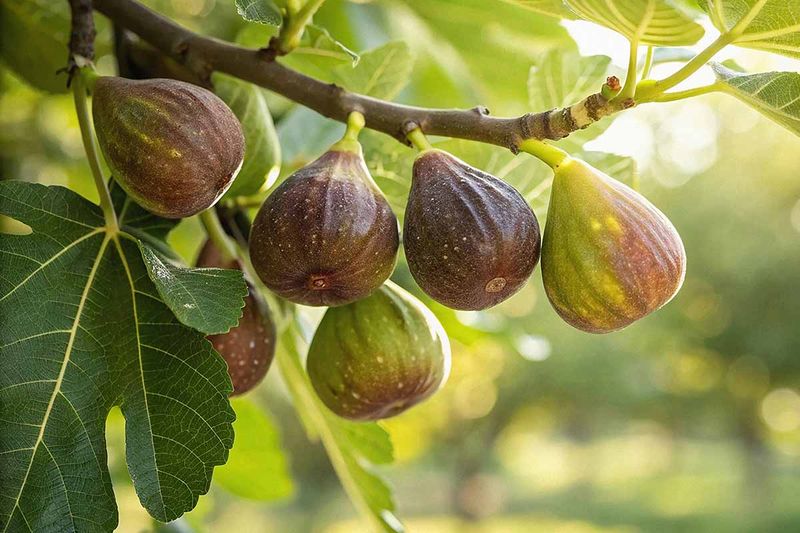
Late summer is when fig trees can either reward your patience or leave you with a branch full of fruit that never quite gets there. For many Southern gardeners in Florida and Texas, the problem is not what the tree is missing, but what it has too much of.
Excessive late-season growth, often pushed along by extra fertilizer or inconsistent watering, can keep existing figs from finishing strong. Getting a handle on that one habit can genuinely improve how many figs you actually eat this season.
The real late-season problem may be excessive vigor
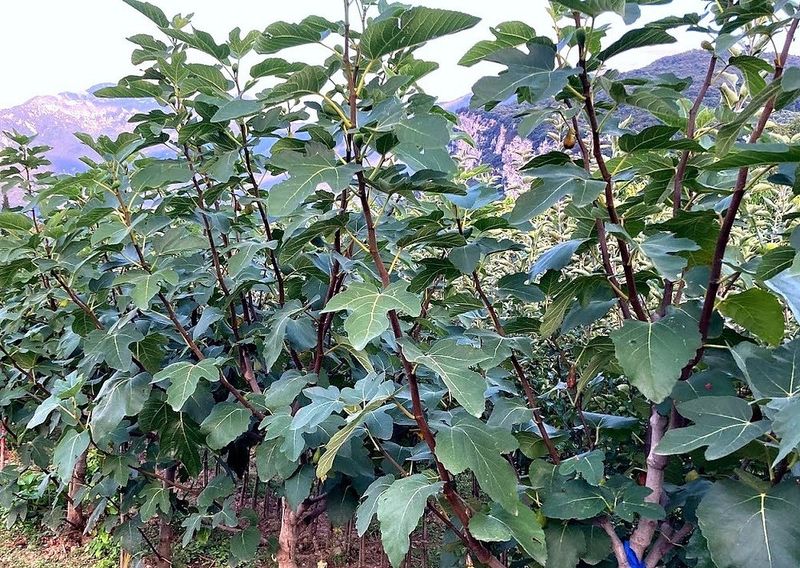
Gardeners often assume a fig tree that looks lush and full must be doing well, but late-season vigor can actually signal trouble for your fruit. When shoots keep pushing long, soft growth with wide spacing between leaf nodes and unusually dark green foliage, the tree may be getting more growth stimulation than it needs.
UGA Cooperative Extension identifies shoots with unusually long distances between leaves as a sign of excessive vigor and notes that poorly ripening fruit can be associated with excess fertilizer or drought.
That pattern is worth paying attention to because continued vegetative push late in the season means the tree is spending energy maintaining new tissue rather than finishing the fruit already on the branches. Excess nitrogen in particular can delay fruit maturity, reduce fruit quality, and leave tender new growth exposed to cold injury when temperatures drop.
Before treating anything, check the basics. Look at shoot length, leaf color, and whether the tree has been fed or watered unevenly.
Also rule out drought stress, disease pressure, poor sunlight, pollination failure, or a cultivar mismatch, since none of those problems respond to simply stopping fertilizer. The first step when you see signs of excessive vigor is to stop adding growth stimulation and let the tree focus on what is already developing.
Identify which figs still have time to ripen
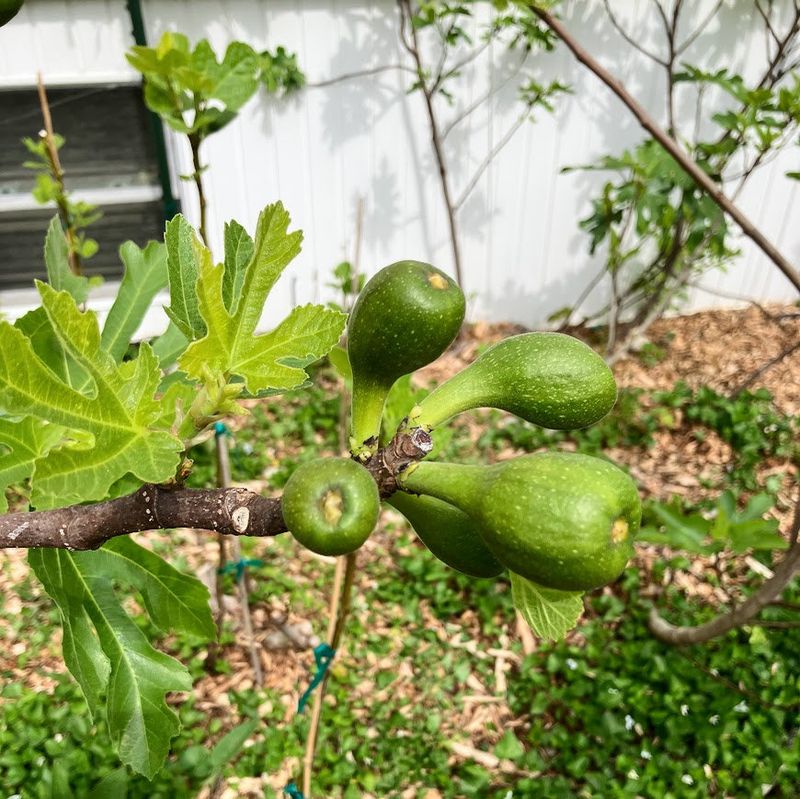
Not every fig on the tree has the same chance of making it to your kitchen. Common fig varieties can produce two distinct crops: a breba crop that develops on older wood from the previous season, and a main crop that forms on the current season’s new growth.
Penn State Extension explains that the main crop generally develops and ripens in late summer or fall, while breba figs appear earlier on year-old wood.
The practical consequence is that late-emerging figs on brand-new shoots may simply not have enough warm days left to reach full ripeness, especially as nights cool in North Florida or inland Texas. University of Maryland Extension also notes that an unusually large breba crop can reduce the tree’s capacity to develop a high-quality main crop later in the season, so crop timing matters more than most gardeners realize.
Hard pruning at this stage carries a real cost. Cutting back heavily can remove older wood needed for next year’s breba production, reduce existing fruiting wood, and stimulate a flush of new growth that will not ripen before cold arrives.
UF/IFAS recommends pruning after harvest and warns that heavy pruning can eliminate the following crop. Late-season management should focus on supporting fruit already on the tree, not on creating new opportunities that the calendar cannot deliver.
Stop late fertilizer before it encourages tender growth
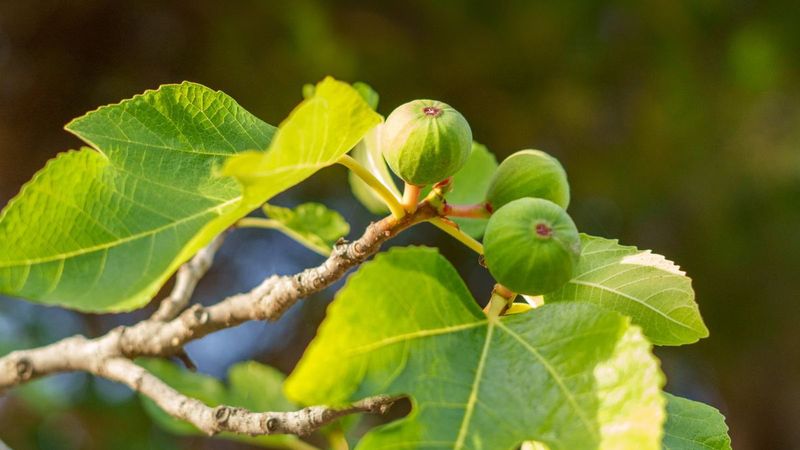
The clearest action you can take right now is to put the fertilizer away. Applying nitrogen or other growth-promoting nutrients late in the season does not push existing figs toward ripeness.
Instead, it tends to push leafy shoot growth, which delays maturity, softens fruit quality, and leaves new tissue vulnerable to the first cold snap. Alabama Cooperative Extension specifically advises against late fertilizer because it encourages new growth that may not harden before winter arrives.
Phosphorus is sometimes suggested as a fruit-forcing tool, but applying any nutrient without evidence of a deficiency can worsen the problem or create runoff issues. A soil test is the right starting point if you suspect a genuine nutrient gap.
Without one, the safest move is to simply hold off and let the tree finish the season on what it already has.
Stopping late fertilizer works best as a correction for a tree already showing signs of excessive vigor: long internodes, deep green leaves, and continued soft shoot extension late in the season. If your tree is struggling because of drought, disease, poor light, or a pollination problem, skipping fertilizer will not fix any of those.
Identify what is actually driving the poor performance before deciding that fertilizer cessation is the answer. Removing late growth stimulation may create better conditions for existing figs to finish, but it is not a universal cure.
Keep moisture even while the fruit develops
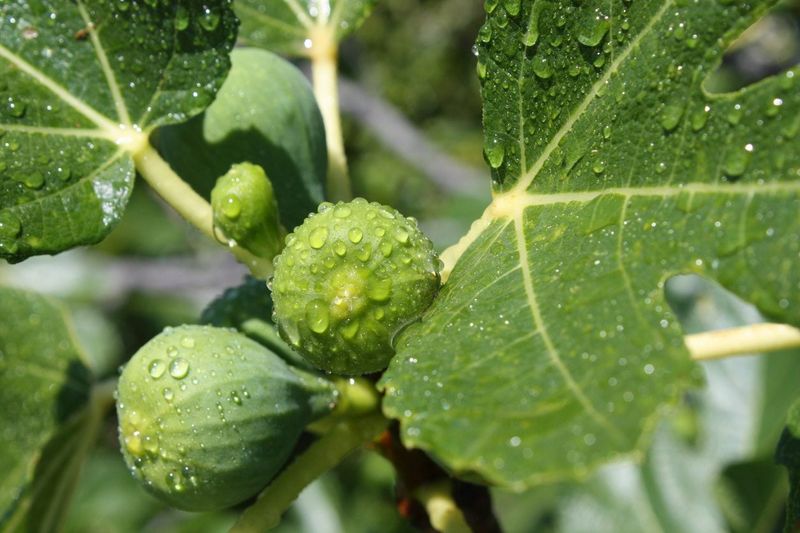
Water management during the final stretch of fig development is less about a fixed schedule and more about avoiding extremes. Established fig trees need consistent moisture at the root zone while fruit is sizing up and coloring.
UF/IFAS guidance on figs recommends deep watering around the root zone rather than frequent shallow irrigation or repeatedly wetting the trunk, and warns that constantly wet soil can damage roots and contribute to disease.
The opposite problem is just as damaging. Prolonged drought during active fruit development can reduce both yield and fruit quality.
Then, if heavy rain or a sudden deep soaking follows a dry spell, the rapid moisture swing can cause figs to split and sour right as they approach ripeness. This is a particular concern in humid parts of Florida where late-summer thunderstorms can deliver a lot of water in a short window.
Alabama Extension confirms that abrupt swings between drought and heavy irrigation can contribute to splitting near harvest.
Rather than following a fixed watering calendar, adjust based on what is actually happening. Check rainfall totals, test soil moisture a few inches below the surface, and factor in whether your tree is in the ground or a container.
Containerized figs dry out faster and need more frequent attention. As the tree slows its vegetative growth and nights cool, water needs typically decrease, but do not cut off moisture entirely while fruit is still developing.
Pinch only when warm weather still remains
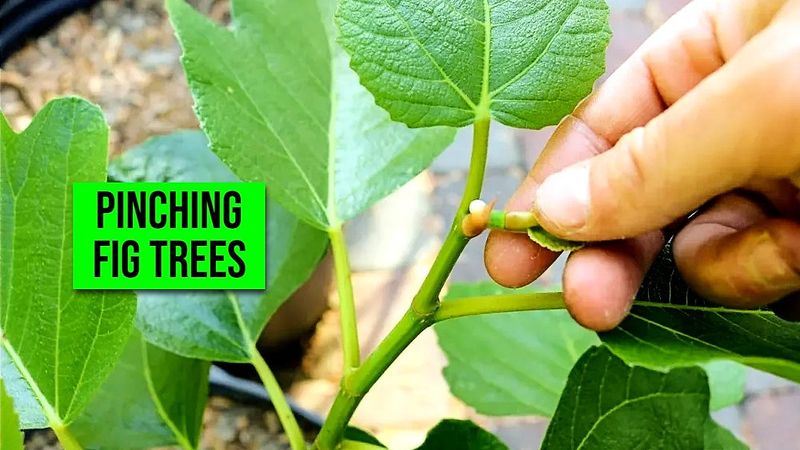
A light tip pinch is sometimes recommended as a way to encourage branching and fruiting wood on fig trees, but the timing and context matter far more than most articles let on. When a tree is actively extending soft, current-season shoots and the local season still offers substantial warmth, removing just the terminal growing point from a few of those shoots is a low-risk intervention.
UC Agriculture and Natural Resources pruning guidance describes pinching young fig shoots after approximately five or six leaves to influence branching and fruiting wood development.
Extension sources generally support earlier pinching, particularly in late spring, for encouraging lateral growth and improving total fruit production over the long run. The case for a specifically late-season pinch increasing fruit set is less firmly established.
A greenhouse study on apical-bud pinching in figs did report more fruits after the treatment, but it also found that fruiting and maturation were delayed by approximately 20 to 25 days. That delay is a meaningful tradeoff in a late season, and a greenhouse result does not transfer directly to outdoor Southern home gardens.
University of Maryland Extension notes that pinching terminal buds can force lateral growth and increase fig production, but the practical benefit depends heavily on how much warm weather remains. A pinch that makes sense in South Florida with two months of warmth left can be counterproductive in North Texas with a frost possible in six weeks.
If the tree is no longer actively pushing new growth, or if the season is winding down fast, skip the pinch entirely and focus on the adjustments that carry less risk.
Avoid corrections that sacrifice the next crop
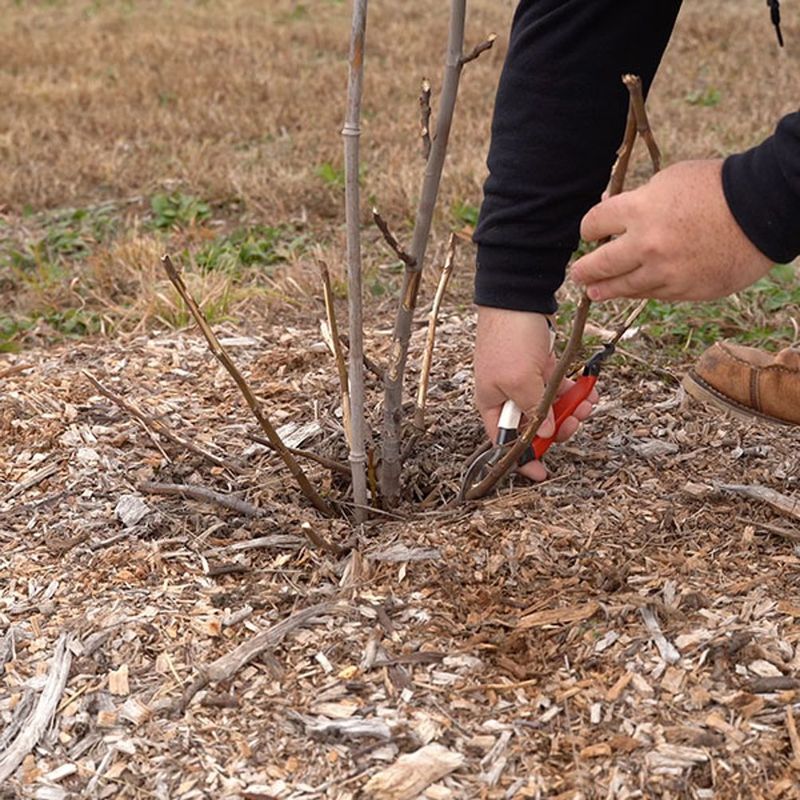
A light tip pinch on soft new growth is a very different action from hard pruning, and it is worth being clear about that line. Cutting back into older wood or removing substantial branches while fruit is still developing can eliminate the fruiting wood needed for next year’s breba crop, stimulate a flush of tender regrowth that will not harden before cold weather, and reduce the overall yield you would otherwise carry into next season.
UF/IFAS specifically cautions against heavy pruning at the wrong time and recommends waiting until after harvest.
Flooding the tree before harvest is another tempting but risky move. Sudden heavy irrigation right as figs approach ripeness can cause splitting and souring rather than bigger, sweeter fruit.
Applying phosphorus fertilizer without a soil test showing a real deficiency adds cost and potential runoff without a demonstrated benefit. Removing every small figlet from the tree is not a universal rule either; whether to thin late-forming fruit depends on cultivar behavior, frost risk, current fruit size, and how much warmth is realistically left in your area.
When a tree is not setting fruit at all, the problem may not be pruning or fertilizing. UF/IFAS Gardening Solutions recommends common fig types such as Celeste, Brown Turkey, and Ischia for Florida because they do not require pollination by the fig wasp, while Smyrna and some San Pedro types generally will not produce normally without it.
If your tree is losing leaves prematurely, fig rust may be the cause, and that calls for a disease diagnosis rather than more pruning or fertilizer. Texas A&M AgriLife Extension also notes that multitrunk training can help protect figs from freeze damage, a real concern across much of Texas that affects how and when you manage the canopy.
Harvest for quality and judge the payoff honestly
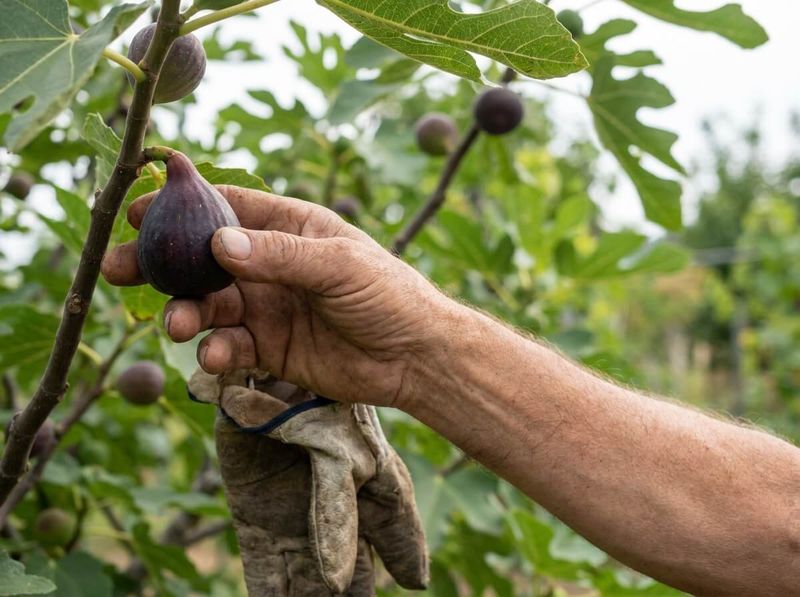
Putting all the late-season adjustments together looks like this: stop adding fertilizer if the tree is showing excessive vigor, check shoot growth and moisture before doing anything else, water deeply and evenly while fruit finishes, and pinch only the soft tips of actively extending shoots if your local season still has real warmth left. Postpone any structural pruning until after the harvest window closes, when the tree can handle it without sacrificing next year’s fruiting wood.
When figs are ready, pick them promptly. Penn State Extension advises harvesting figs when they are fully colored, softening, beginning to droop from the stem, and hanging slightly downward, because figs do not improve substantially after they come off the tree.
Leaving ripe fruit on the branch too long invites splitting, souring, and bird damage.
Always wear gloves and cover exposed skin when pruning or pinching. Published medical case documentation confirms that fig latex can cause a sun-activated skin reaction called phytophotodermatitis, producing painful blistering when sap-exposed skin is then hit by sunlight.
Wash any sap off your skin immediately and stay out of direct sun until it is gone.
The honest payoff from late-season care is not a guaranteed wave of new figs. It is a better chance that the fruit already on your tree reaches the table in good condition, which, when your fig is loaded and the season is still warm, turns out to be exactly enough.