
A few small flowers in your Florida lawn might look like weeds to your HOA. To bees and butterflies, they can be places to find food.
You do not have to let the whole yard grow wild to help. These seven native plants can fit into a tidy, planned landscape while giving pollinators more to visit.
1. Frogfruit
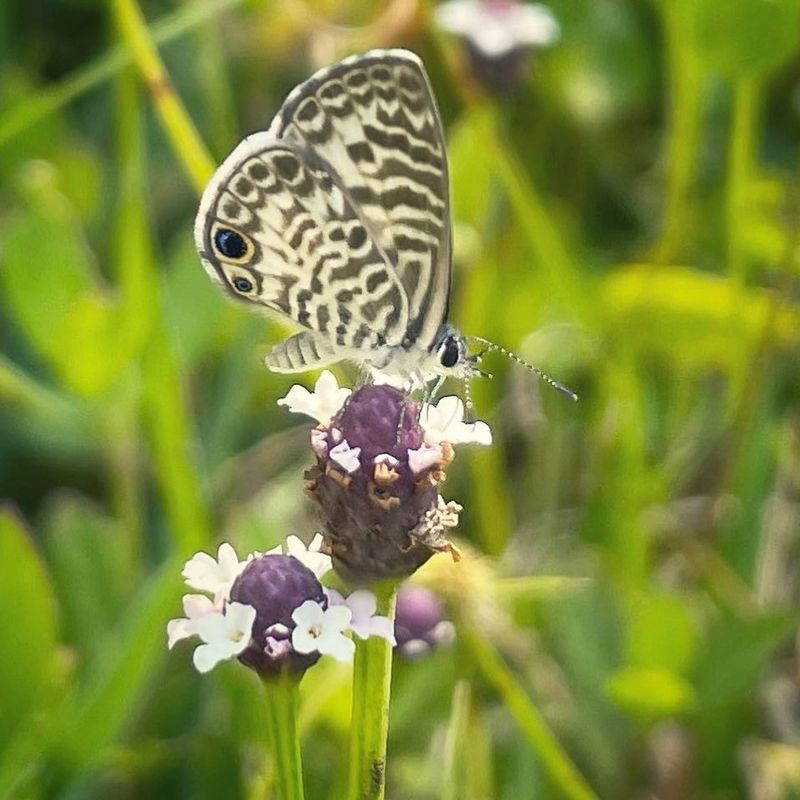
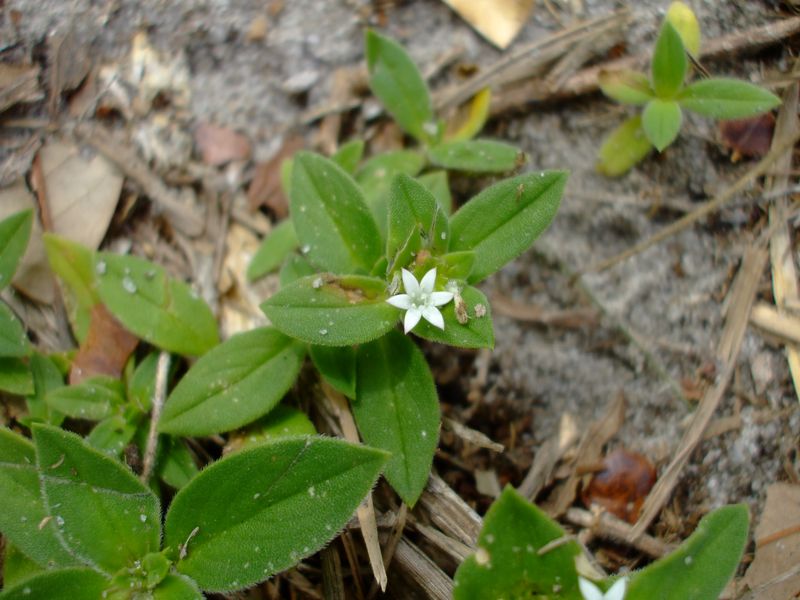
Need a lawn plant that stays low without looking like an abandoned lot? Frogfruit, also called turkey tangle fogfruit, is a creeping Florida native with tiny white-to-lavender flower heads.
Butterflies and small bees visit the blooms, while the spreading stems fill gaps that might otherwise invite less welcome weeds.
Frogfruit works best in a sunny spot where you can let it spread, such as a strip beside a walkway or a defined patch within a larger lawn. It tolerates occasional foot traffic, but it is not a direct replacement for turf on a busy play area.
Give new plants water while they establish; after that, their needs depend on your soil and rainfall. Florida’s sandy ground drains quickly, so keep an eye on fresh plugs during dry spells.
For a neater look, edge the patch and mow or trim it occasionally rather than cutting it as short as conventional turf. Leave enough flowering stems for pollinators between trims.
If your HOA has appearance rules, a clearly bordered frogfruit area is easier to present as an intentional planting than scattered growth across the lawn.
2. Sunshine Mimosa
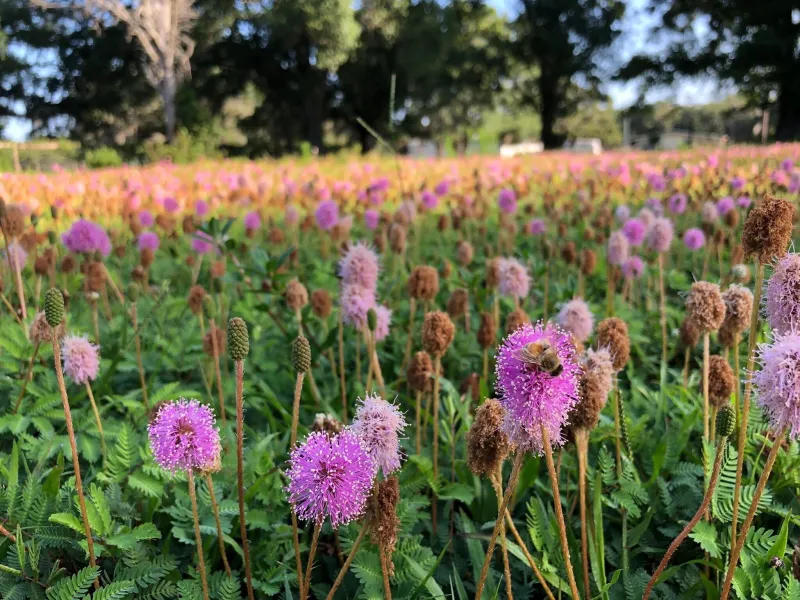
Pink powder-puff flowers are not what most people expect to see peeking through a lawn. Sunshine mimosa brings that cheerful surprise, along with nectar and pollen for visiting bees.
Its feathery leaves fold when touched, which makes this native groundcover easy to recognize even when it is not blooming.
Give sunshine mimosa a sunny, well-drained place with room to travel. It can spread by runners, so a bounded bed or lawn-alternative patch makes more sense than planting it beside delicate flowers you do not want covered.
Once established, it handles dry periods better than many thirsty ornamentals, though new plants still need regular attention until their roots take hold in sandy soil.
Its strongest selling point for a front yard is that it can create a low, continuous carpet rather than a handful of random-looking flowers. Mark the edge with pavers or a clean planting border, and pull runners that cross it.
Sunshine mimosa may die back or look thin after cold weather, especially in northern Florida, so plan for seasonal changes instead of expecting the same look every month.
3. Spanish Needles
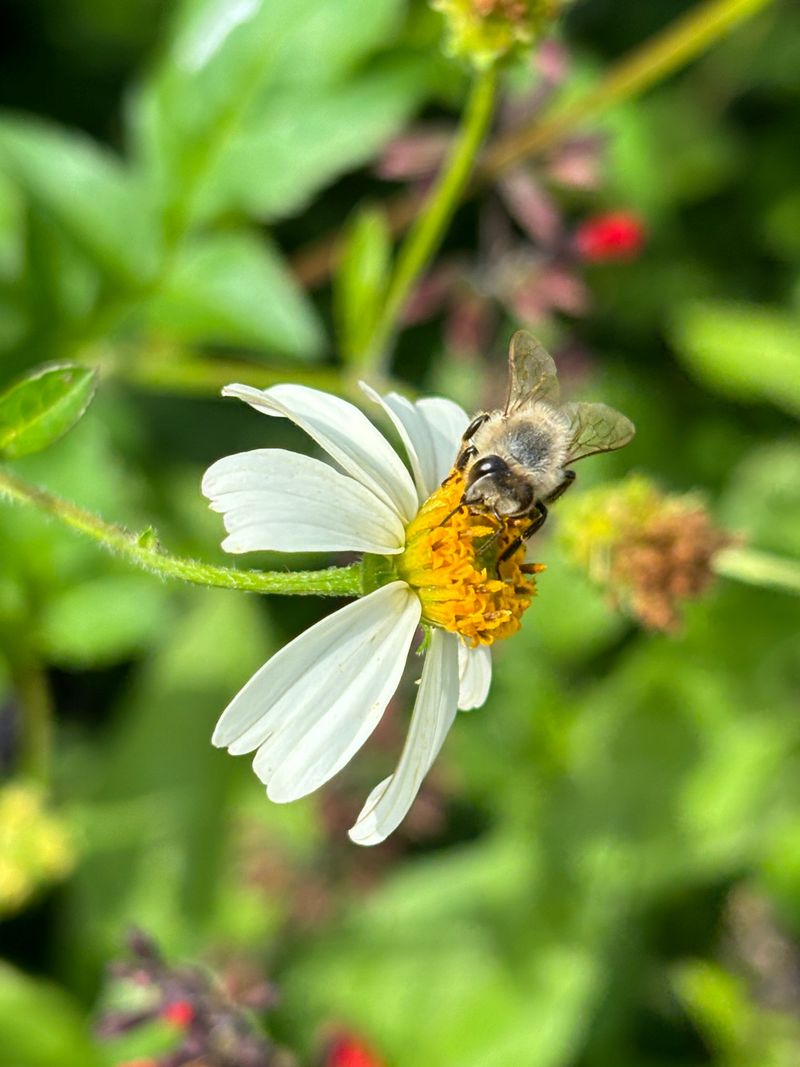
One uncut Spanish needles plant can turn a bare patch into a busy little pollinator stop. The white, daisy-like flowers of Bidens alba draw bees and butterflies, and the plant can bloom for much of Florida’s long growing season.
That steady supply of flowers is what sets it apart from plants that offer only a brief show.
There is a catch: its barbed seeds cling to socks, pet fur, and garden gloves. Spanish needles also reseeds readily.
Rather than letting it spread across the front lawn, keep a few plants in a sunny, clearly defined pollinator bed away from walkways. Snip off spent flower heads before seeds mature when you want to limit volunteers.
In sandy Florida soil, established plants often need little help. Resist the urge to fertilize them into oversized, floppy growth, and trim stems if they spill across the bed’s edge.
A short sign or a tidy border can make their purpose clear to neighbors, but check your HOA’s written landscape rules before planting in a highly visible area. Here, careful placement is the difference between a useful native flower and a genuine maintenance headache.
4. Florida Pusley
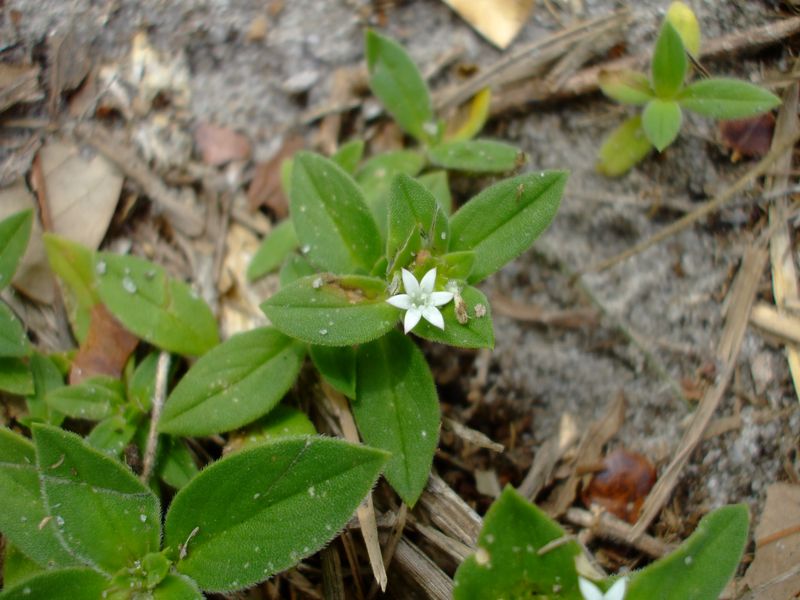
At ankle height, Florida pusley is easy to miss. Look closer and its small white flowers give tiny bees and other insects a reason to stop.
This native often appears in thin, sunny turf, particularly where Florida’s sandy soil dries out quickly.
Florida pusley is most useful as a plant to recognize and manage, not one you need to purchase for an entire yard. If a few patches bloom along a lightly used lawn edge, consider leaving them until the flowers fade.
Mow around a patch for a short period, or move the idea into a defined native planting area if your HOA expects uniformly cut turf. It does not create the smooth, durable surface needed for heavy play or frequent walking.
Be careful with identification: several similar-looking pusleys occur in Florida, including nonnative species. Check the leaves, flowers, and plant name with a local UF/IFAS Extension resource before calling a volunteer plant native.
Keeping the surrounding grass healthy and the patch’s boundary neat gives you more control over its spread, while still leaving a small place for pollinators to forage.
5. Blue-Eyed Grass
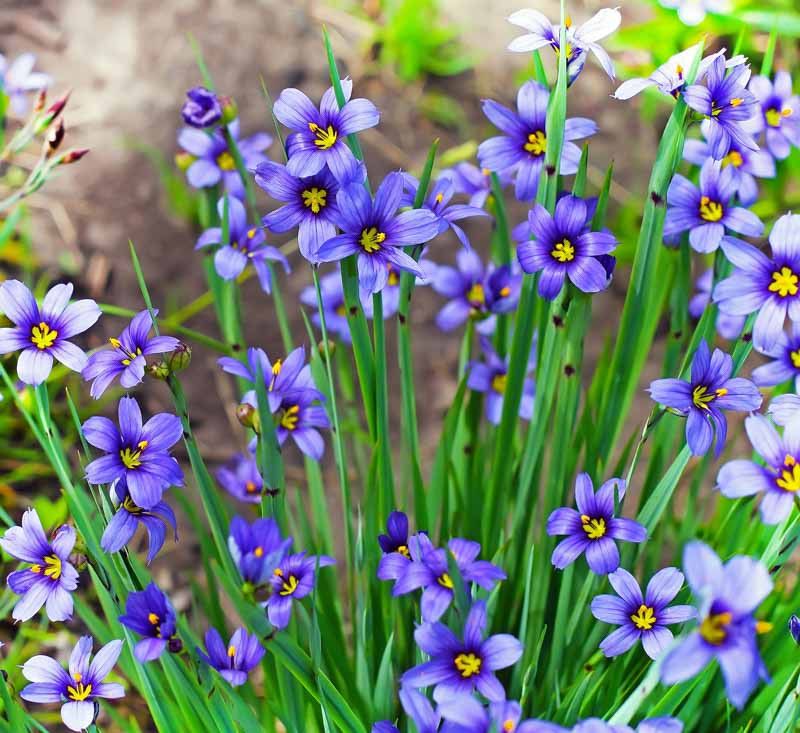
From a few steps away, blue-eyed grass can pass for an ordinary clump of lawn grass. Then its little blue-violet flowers open, each with a bright yellow center.
Despite the name, it belongs to the iris family, and its spring flowers offer pollen and nectar to small visiting insects.
Use it where a strip of turf stays a bit moister than the rest of the yard, such as the edge of a rain garden or a spot that receives regular rainfall without standing underwater for long periods. It is not the pick for the driest, most exposed stretch of sandy lawn.
Plant several together so the fine leaves and small blooms read as a deliberate feature rather than stray grass missed by the mower.
Give the clumps a marked boundary and keep mower blades away while they flower. After blooming, their narrow leaves blend quietly into a mixed native border.
Blue-eyed grass is especially useful when you want early-season color at a small scale, before many warm-season flowers reach their stride. Choose a nursery-grown plant identified by its scientific name, since other species may be sold under the same common name.
6. Lyreleaf Sage
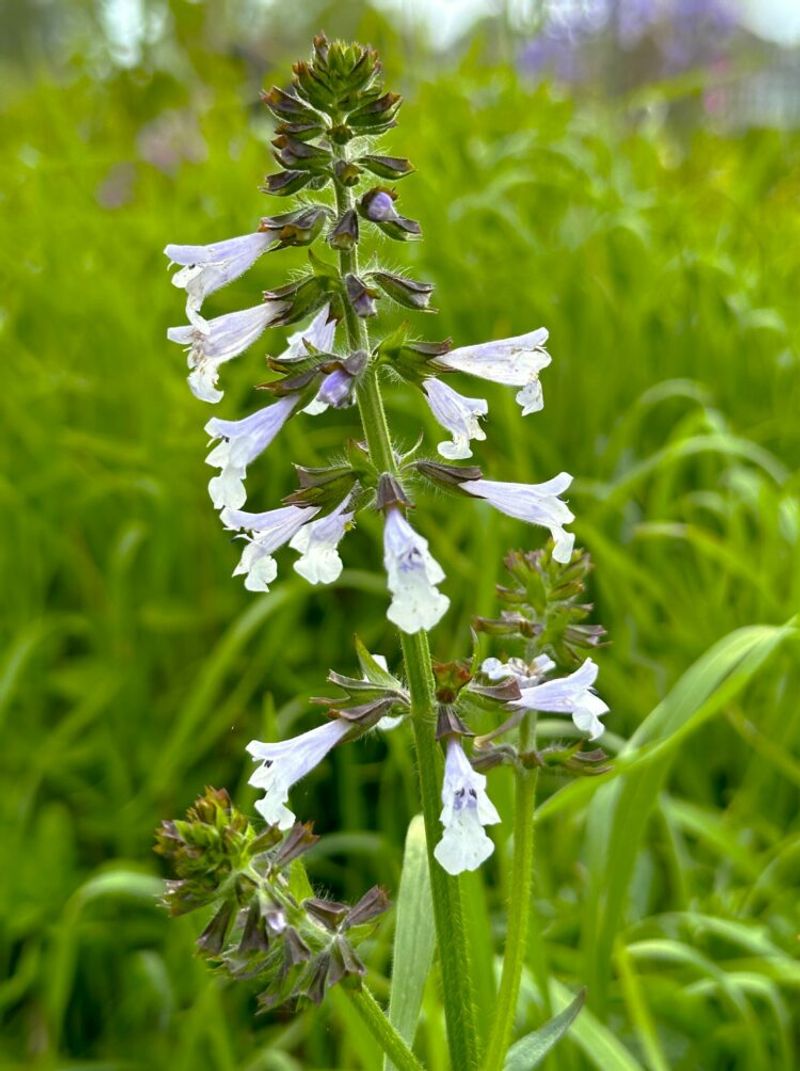
Those patterned leaves hugging the ground are worth a second look. Lyreleaf sage forms low rosettes, then sends up lavender-blue flower spikes that attract bees.
Its mix of interesting foliage and upright blooms gives it a different job from the creeping groundcovers on this list.
Try it along a partly shaded lawn edge or beneath the open canopy of a tree, where grass can struggle but the ground is not in deep shade. It can also work in a sunny spot if moisture is adequate.
Set a few plants together in a mulched border so their spring flower spikes look planned. Avoid mowing the flowering stems; once they finish, you can cut them back for a tidier appearance.
Lyreleaf sage may self-seed, which is helpful when you want a small colony and less helpful when seedlings appear beyond the border. Pull extras while they are young.
In a Florida yard, its best role is a low, flowering transition between turf and taller plants, not a substitute for a lawn that takes daily foot traffic. A simple edge helps keep that distinction clear to both visitors and landscape crews.
7. Carolina Wild Petunia
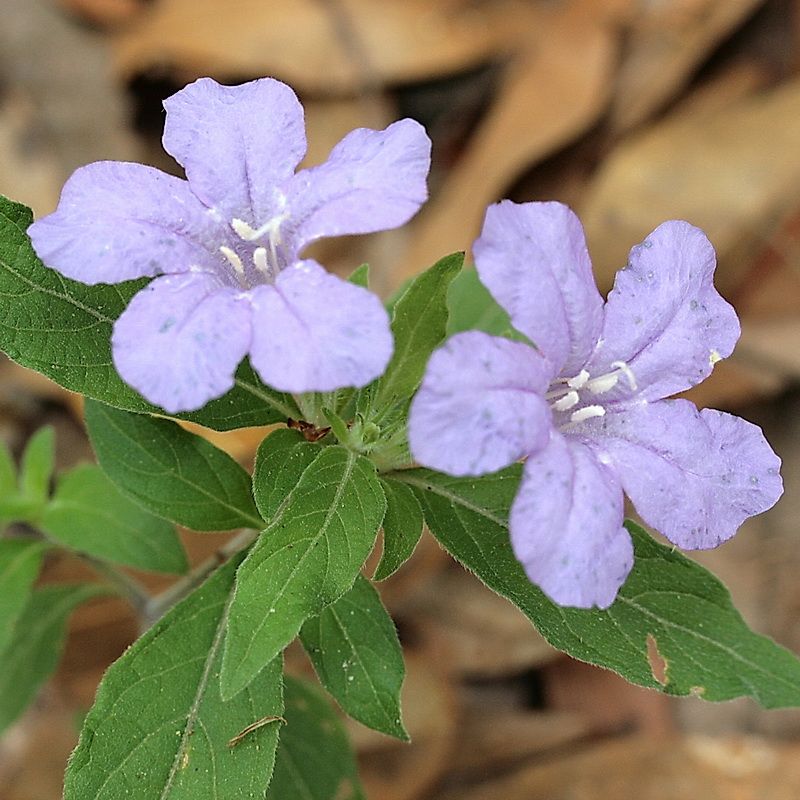
A lavender trumpet flower near the grass might make you think of an ornamental that escaped its bed. Carolina wild petunia is different: Ruellia caroliniensis is native to Florida, and its blooms can bring bees and butterflies to a sunny yard.
It offers a more upright, cottage-garden look than the mat-forming plants in this roundup.
Place it in a narrow, edged border where lawn meets a walkway or shrub bed. Give it sun to partial shade and water new plants until established.
Its flowers are often short-lived individually, but more can follow during the warm growing season. Grouping several plants makes the display easier to notice and gives pollinators a clearer target than a single stem hidden in turf.
Check the plant label carefully before buying. Carolina wild petunia is not the same plant as Mexican petunia, Ruellia simplex, which can spread aggressively and is a poor substitute for a restrained native planting.
Keep any seedlings that appear where you want them and remove those outside the bed. With a crisp edge and a little oversight, this flower can make a lawn border look cared for while adding another stop for pollinators.