
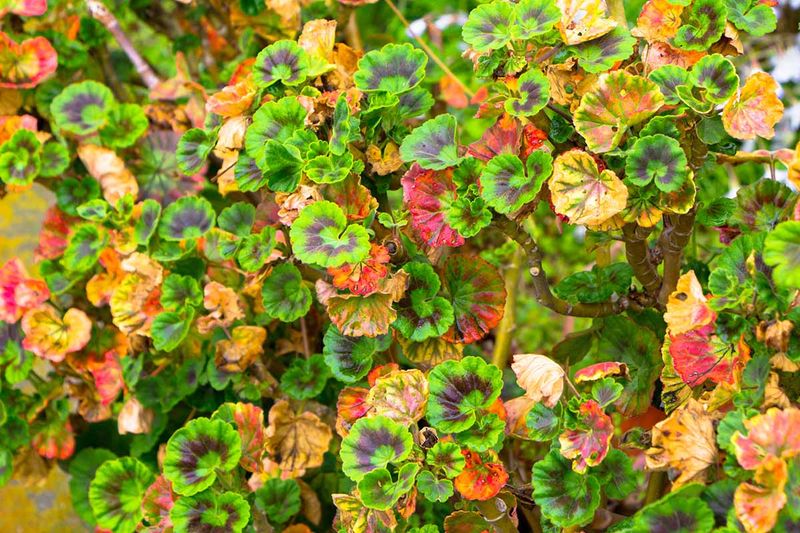
Few things are more frustrating than watching your geranium drop yellow leaves one by one, especially when you thought you were doing everything right. The plants most of us call geraniums are actually Pelargoniums, and they are generally tough, cheerful bloomers that rarely complain without a reason.
When the leaves start going yellow, the plant is signaling some kind of stress, but pinning down the exact cause takes a little detective work. Checking a handful of clues, starting with the soil, can help you figure out what needs to change before things get worse.
Yellowing signals stress, not one exact diagnosis
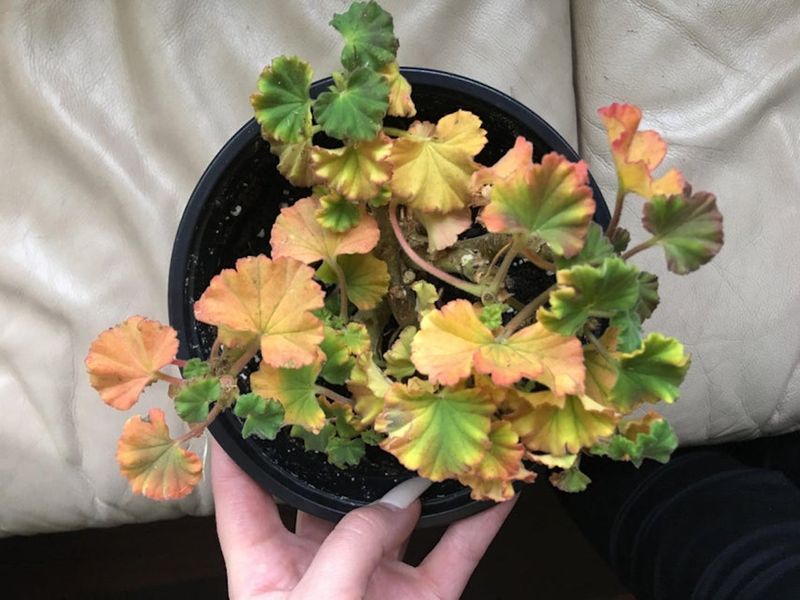
Yellow leaves on a Pelargonium can feel like a clear warning sign, but the color alone does not point to a single cause. Water stress, root damage, poor light, temperature swings, nutrition gaps, sap-feeding pests, natural leaf aging, and disease can all produce similar yellowing.
University of Florida plant health guidance reinforces that yellowing is a nonspecific symptom, meaning the leaf’s location, pattern, texture, and the condition of the soil are all needed to narrow the likely cause.
A quick note on terminology: the bedding and florist plants most people call geraniums are almost always Pelargonium, not true Geranium cranesbills. Iowa State University Extension clarifies this distinction, and all of the guidance below applies to Pelargonium specifically.
One isolated yellow leaf on the lower stem, especially an older one, may simply be the plant cycling out aging foliage. That is a normal process, not a crisis.
The situation calls for closer attention when yellowing continues to spread, moves up the plant, or shows up across multiple branches over a short period. NC State horticultural research on geraniums supports treating progressive or widespread yellowing as a reason to investigate rather than a reason to immediately water, fertilize, or prune.
Compare what you see across the whole plant before drawing any conclusions.
Check the soil and roots before changing anything
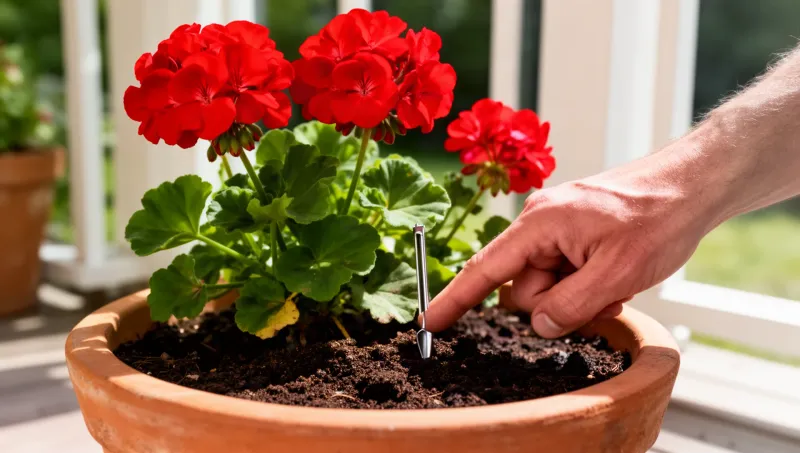
Before adjusting your watering schedule, adding fertilizer, or pulling leaves, put a finger about one to two inches into the potting mix. If it feels dry and crumbly at that depth, underwatering is a reasonable hypothesis worth testing.
If it feels evenly moist, your watering routine is probably close to correct. If it feels soggy or stays wet for days at a time, the root zone may be holding too much water, and that is the problem to address first.
Clemson Extension’s indoor geranium guide emphasizes that containers must have functioning drainage holes and should never sit in standing water for extended periods. Saturated soil cuts off the oxygen that roots need, which can lead to root rot, yellowing, wilting, and leaf drop even when you have not been watering excessively by the calendar.
The real issue is how long the root zone stays wet, not simply how often you water.
If the soil is soggy and the plant is struggling, tip the pot gently and look at the roots. Healthy roots are generally firm and light-colored; brown, black, soft, or mushy roots suggest damage has already begun.
Also check whether the drainage hole is blocked by compacted mix, mineral buildup, or a saucer that was left in place. Iowa State’s houseplant troubleshooting resource notes that a broken-down or compacted potting mix can trap moisture even when drainage holes are open, so the mix itself is worth inspecting when a plant has been in the same container for more than a season.
Read the leaf’s location, pattern, and texture
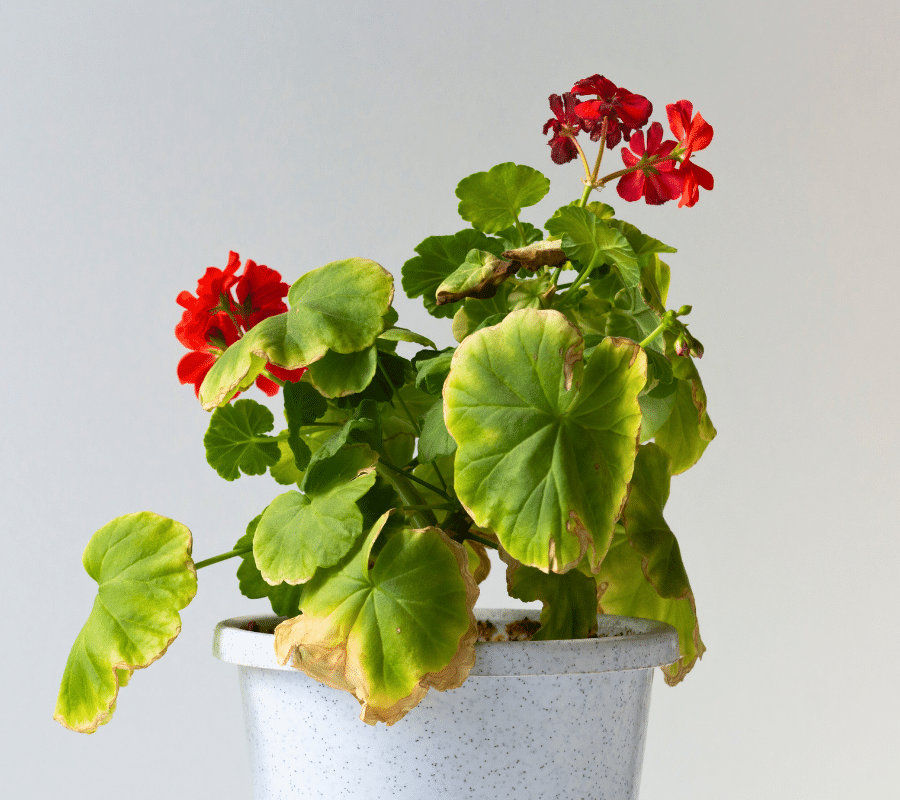
Not all yellow geranium leaves look the same, and paying attention to where yellowing appears and what the leaf feels like can help you separate one likely cause from another. Older, lower leaves that turn uniformly yellow are more consistent with natural aging, mild nutrient cycling, inadequate light reaching the bottom of the plant, or water stress than with a sudden disease outbreak.
NC State geranium research notes that lower-leaf yellowing tied to root health or light deprivation is a common pattern, and progressive yellowing across multiple leaves is more meaningful than one lone leaf changing color.
Texture and margin condition add another layer of information. Virginia Cooperative Extension’s container watering guide points out that dry, brittle foliage with brown leaf edges is more consistent with drought stress than with a plant sitting in saturated soil.
By contrast, soft, pale yellow leaves paired with persistently wet mix and slow growth suggest the root zone has been staying too wet.
Yellowing that appears between the veins while the veins themselves stay green, known as interveinal chlorosis, can indicate a micronutrient or pH-related issue. UMass Extension’s geranium nutrient reference cautions against diagnosing a specific deficiency from color alone, since nitrogen, magnesium, and other imbalances can look similar to each other and to root damage.
Use the pattern as a prompt to investigate further rather than as a prescription to add fertilizer.
Account for light, heat, and recent environmental changes
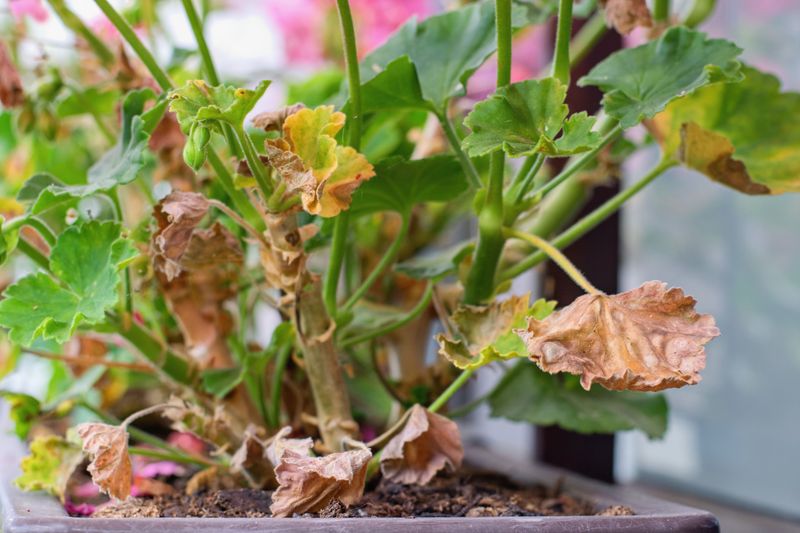
Environmental shifts can trigger yellowing or sudden leaf drop even when watering looks fine on paper. Pelargoniums generally prefer bright light and well-drained soil, and a plant moved from a sunny spot to a shadier one, or vice versa, may shed leaves while it adjusts.
Iowa State Extension’s annual geranium guide recommends making light changes gradually rather than moving a plant abruptly between very different conditions, since a sudden shift can stress the foliage and cause drop even when nothing else has changed.
Southern gardeners in Florida and Texas face an additional layer of complexity in summer. High heat increases how quickly the potting mix dries out, which can raise water demand significantly.
UC IPM’s geranium care guidance notes that ivy geraniums, in particular, may benefit from some afternoon shade protection during extreme heat, while standard upright Pelargoniums generally want as much direct light as they can get. Increased water demand from heat, however, does not make keeping the root zone constantly wet a safe strategy; fast drainage and regular moisture checks remain essential regardless of the temperature.
Clemson’s indoor geranium resource also flags temperature extremes, cold drafts, and exposure to heating or air-conditioning vents as triggers for leaf yellowing and drop. If your plant recently moved indoors, went through an unseasonable cold snap, or spent time near a vent, that environmental change is a reasonable suspect worth ruling out before assuming a watering or nutrition problem.
Separate pest clues from nutrient questions
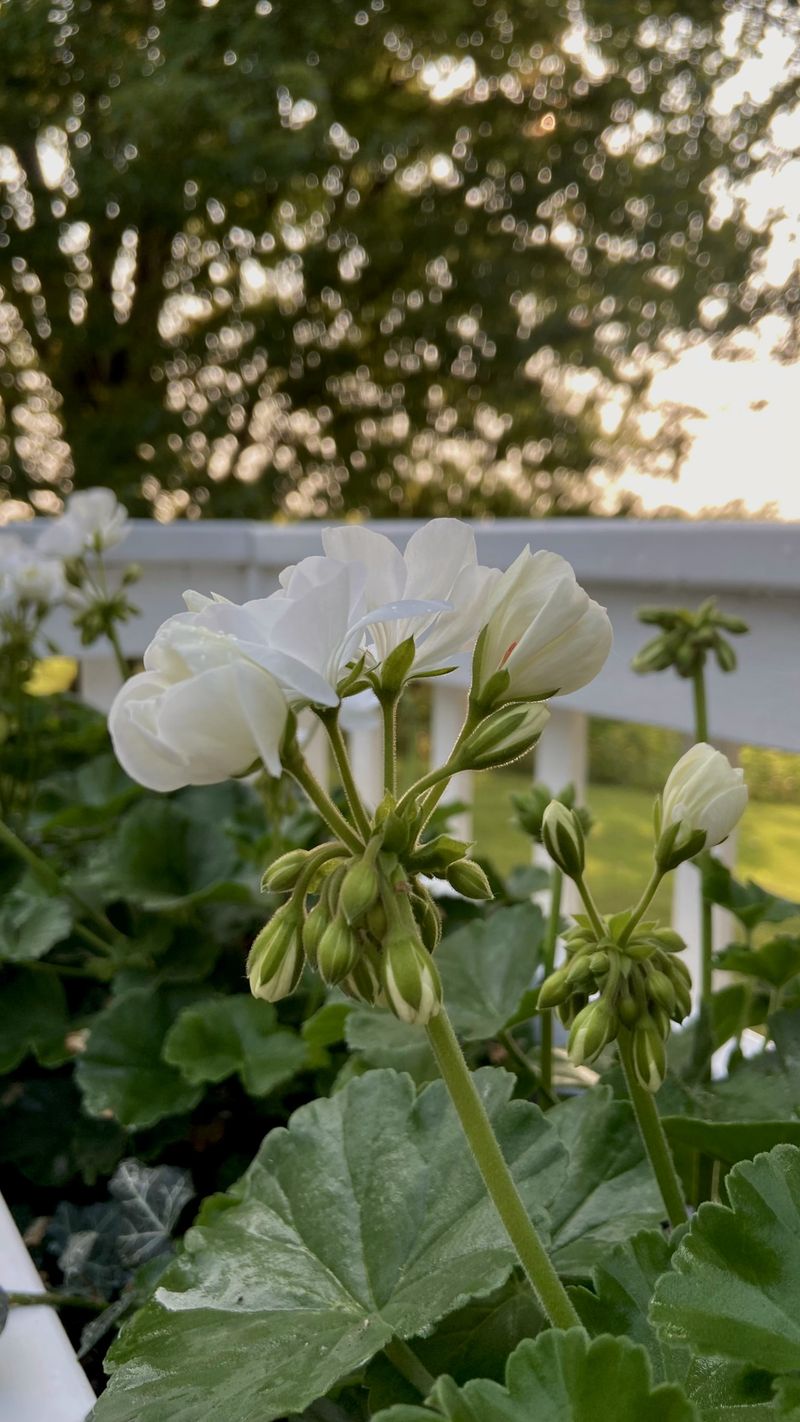
Flipping a leaf over is one of the most useful things you can do when yellowing appears. Tiny yellow speckles, a bronze or stippled sheen, fine webbing on the undersides, sticky residue on leaves or stems, or small visible insects are all signs that sap-feeding pests may be driving the problem rather than a watering or nutrition issue.
UC IPM’s houseplant pest reference identifies spider mites, whiteflies, and aphids as common culprits that produce this kind of speckled or mottled yellowing, and their damage can look surprisingly similar to drought stress or nutrient shortage from a distance.
Nutrient questions are worth raising when pests and watering problems have already been ruled out. Interveinal yellowing on newer leaves can point toward a micronutrient or pH issue, while older-leaf yellowing that starts at the leaf margins and moves inward may suggest nitrogen cycling.
UMass Extension’s geranium nitrogen deficiency reference makes clear that color alone is not enough to confirm a specific deficiency, since root damage, low light, and water stress can produce nearly identical symptoms. Reaching for Epsom salt or extra fertilizer as a first response is risky; magnesium deficiency is only one of many possible explanations, and excess fertilizer or soluble-salt buildup can injure roots and worsen yellowing.
Iowa State Extension recommends correcting watering, drainage, and light before fertilizing, and applying any product only to moist soil at the label’s recommended rate. If you do decide to fertilize, use a dilute, balanced product on a regular schedule rather than increasing the dose in response to a single yellow leaf.
Use specific disease clues instead of assuming disease
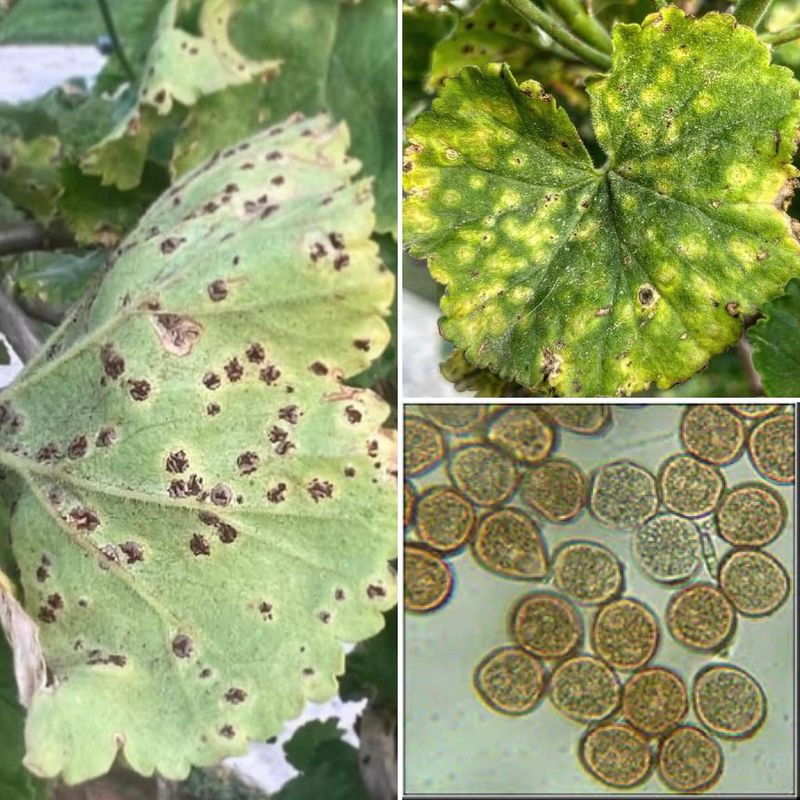
Disease is a real possibility with Pelargoniums, but it should be supported by specific visible clues rather than assumed whenever leaves turn yellow. Geranium rust is one of the more recognizable conditions: look for yellow spots on the upper surface of the leaf paired with reddish-brown or orange pustules on the underside.
Cornell Greenhouse Horticulture’s Pelargonium disease reference describes bacterial blight as producing small water-soaked spots, wedge-shaped yellow areas, severe wilting, darkened stems, and a branch-by-branch decline that distinguishes it from simple water stress.
Edema deserves its own explanation because it is frequently misidentified as a fungal disease. Penn State Extension’s edema guide describes it as a physiological disorder, not an infection, caused by an imbalance between how fast roots absorb water and how fast the leaves release it.
The result is small watery blisters or bumps on the leaf surface that later turn corky or tan. Edema does not spread from plant to plant.
The correction involves adjusting moisture levels, reducing humidity around the foliage, improving ventilation, and ensuring the plant gets adequate light and warmth, not fungicide application and not isolation.
Suspected bacterial blight or rust, by contrast, does call for a different response. UMass Extension’s bacterial blight fact sheet states that pesticide sprays do not cure confirmed bacterial blight, and infected plants may need removal and sanitation to protect nearby plants.
Clemson Extension recommends keeping foliage dry during watering and improving air circulation as preventive steps that reduce conditions favorable to several leaf diseases. Generic fungicide spraying without a confirmed diagnosis is not a reliable fix and can create other problems.
Follow a correction-first rescue sequence
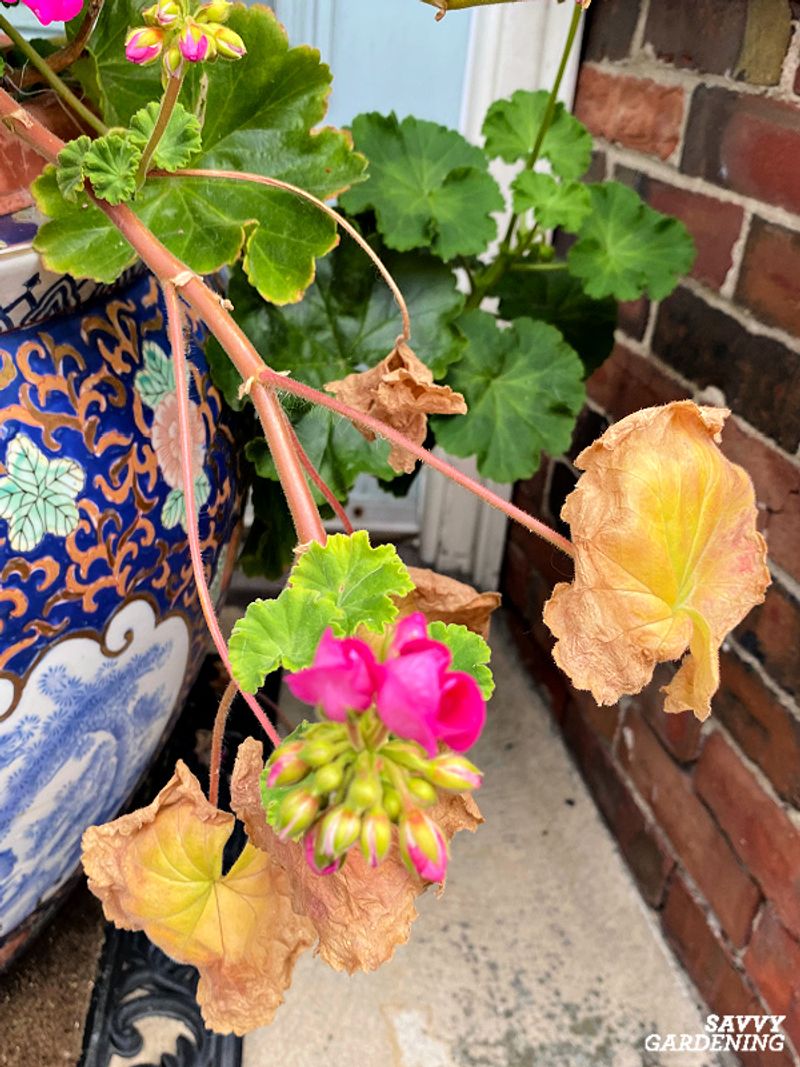
Once you have gathered clues from the soil, roots, leaf pattern, and foliage undersides, work through corrections in order rather than applying several treatments at once. Start by confirming that the potting mix has dried to about one to two inches deep before watering.
Iowa State Extension advises watering thoroughly when that depth feels dry, allowing excess water to drain completely, and then waiting until the mix dries again before the next watering. Avoid rigid calendar schedules; a container in a Florida summer may need water several times a week, while the same plant in a cooler, shadier spot may need far less.
If the soil has been staying wet, check and clear drainage holes before doing anything else. Iowa State’s houseplant culture guide and University of Florida plant health guidance both recommend inspecting roots when a plant is wilting while the soil remains wet, since that combination often points to root damage rather than drought.
A plant with significantly rotted roots may need repotting into fresh, well-draining mix before it can recover.
After correcting water and drainage, check light exposure and move the plant gradually if needed. Fertilize only after watering, drainage, and light are in reasonable order, and apply a dilute balanced product at the label’s recommended rate rather than increasing the dose.
Clemson Extension recommends removing clearly dead or diseased tissue, keeping foliage dry during watering, and improving air circulation as supportive steps. Cutting yellow leaves, spraying indiscriminately, or adding extra fertilizer cannot substitute for fixing an underlying root problem, light deficit, pest infestation, or infectious disease.
Monitor the whole pattern, not one yellow leaf
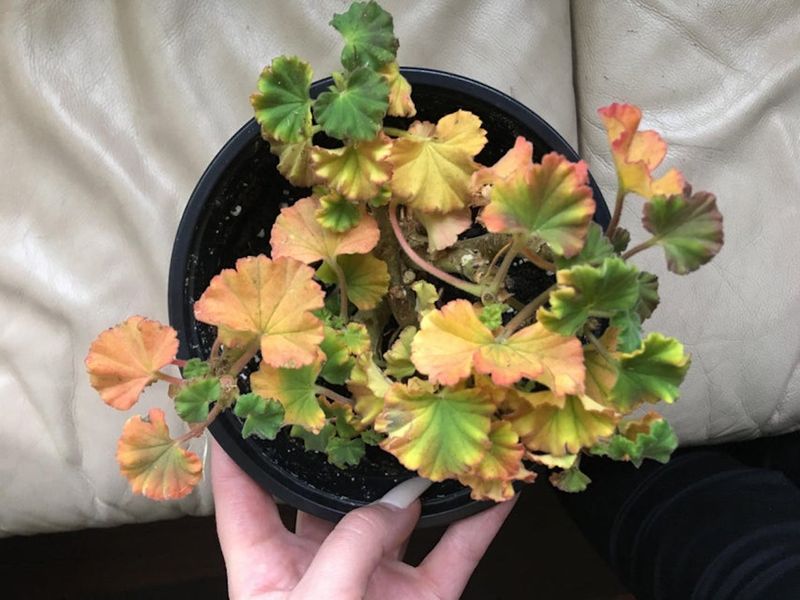
A single older yellow leaf near the base of a healthy-looking plant is often just normal aging, and pulling it off is all the response needed. The picture changes when yellowing keeps appearing on new leaves, spreads across branches, or arrives alongside soft roots, foul-smelling soil, pests under the leaves, or suspicious spots and pustules.
University of Florida’s plant diagnosis guidance frames yellowing as an alert that prompts investigation, not a verdict that names the cause on its own.
After making a correction, give the plant time and watch what happens to new growth rather than fixating on the leaves that already turned. NC State geranium research supports tracking the overall plant condition over several days or weeks as the most reliable way to tell whether a change in care is working.
Continuing decline after a reasonable correction period is a signal to escalate, whether that means repotting, seeking a pest treatment, or consulting a local extension office for help identifying a suspected disease.
Yellowing is your Pelargonium’s way of flagging that something in its environment needs attention. The plant that gets a careful look before a rushed fix almost always fares better than the one that gets extra fertilizer or a spray bottle on reflex.