
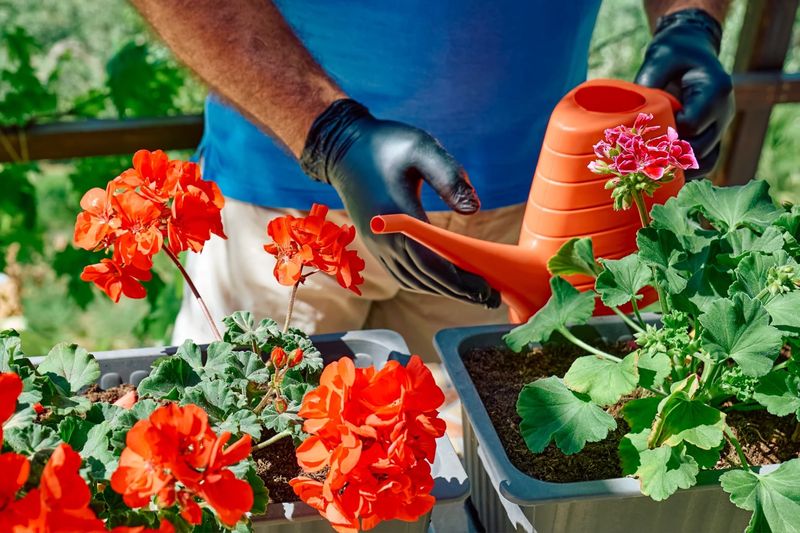
When your porch geraniums stop pushing out new blooms as fall approaches, it’s easy to assume something is seriously wrong. Most of the time, the plant is reacting to a combination of summer heat, missed feedings, and changing light rather than one single problem.
A well-timed, moderate fertilizer application can help an actively growing, underfed geranium bounce back, but it won’t override heat stress, disease, or a hard frost. Before you reach for the fertilizer bag, a quick diagnosis can save you effort and keep your plants healthier through the end of the season.
Diagnose the slowdown before reaching for fertilizer
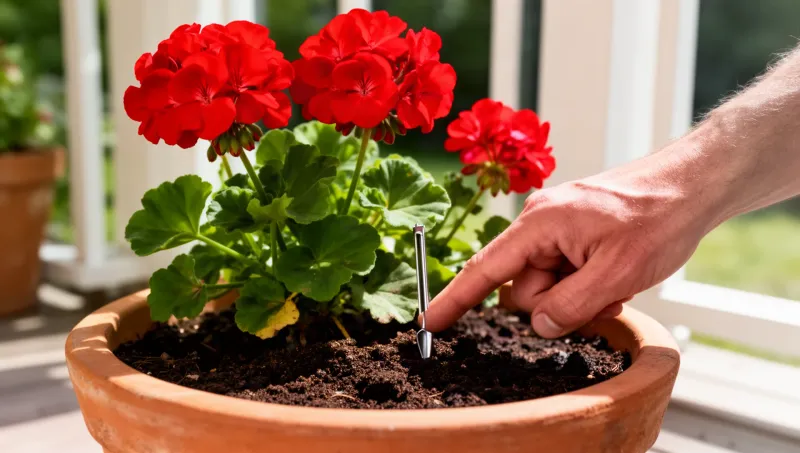
Fewer flowers on your geraniums can mean several different things, and not all of them call for fertilizer. Reduced blooming can stem from overdue feeding, but it can also reflect heat stress, high nighttime temperatures, inadequate light, inconsistent watering, poor drainage, disease pressure, or the plant simply winding down as the season shifts.
Treating hunger when the real problem is heat or drainage won’t help and may make things worse.
Start with a quick check before anything else. Look for healthy new growth at the tips of the stems.
If the plant is still pushing out fresh leaves and the roots look firm and white rather than brown and mushy, you have a reasonable candidate for a feeding reset. If growth has stalled completely or the stems feel soft at the base, the problem likely goes deeper than nutrition.
Common garden geraniums, the zonal and ivy types most Southern gardeners grow, are actually Pelargoniums, tender perennials that are genuinely sensitive to summer heat. UF/IFAS guidance on geraniums notes that these plants struggle in Florida’s summer heat and humidity and often perform best during cooler periods.
In many parts of the South, what looks like a nutrition problem in August or September may simply be a heat problem that cooler fall weather will begin to correct on its own. This article focuses on a targeted feeding decision for plants that are still actively growing and appear otherwise healthy, not a universal fix for every fading geranium.
Resume a moderate feeding schedule when nutrition is overdue
When a common zonal or ivy geranium is actively growing, looks structurally healthy, and hasn’t been fed in weeks, resuming a regular, moderate fertilizer schedule is the most practical next step. The key word is regular.
Adequate nutrition supports continued flowering over time, not as a single-dose bloom trigger. One application alone rarely produces a dramatic turnaround; consistent feeding across the remaining growing season is what keeps the plant supplied with what it needs.
For established landscape geraniums in beds, UGA Extension’s geranium guide recommends a complete fertilizer such as 10-10-10 or 8-8-8 applied every four to six weeks. Container plants generally need more frequent feeding because nutrients wash out with each watering; UGA suggests liquid fertilizer at least every three weeks or dry fertilizer every three to four weeks for pots.
Clemson Extension and Iowa State Extension offer similar ranges, though exact intervals vary by product and growing conditions. Always let the product label set the actual rate and timing rather than treating any general range as a fixed rule.
Keep in mind that this advice applies primarily to common zonal and ivy Pelargoniums. NC State’s plant profile for Pelargonium x hybridum notes these are tender perennials distinct from the hardy perennial Geranium genus.
Martha Washington or Regal types have different heat and temperature requirements and may not respond the same way to a late-season feeding push, so a single care prescription doesn’t apply across all Pelargoniums sold as geraniums.
Apply fertilizer without concentrating salts around the roots
Getting the application right matters as much as the product you choose. Before you feed, confirm the plant is not wilted and the soil is not bone dry.
Fertilizing a water-stressed plant concentrates salts in the root zone and can cause more damage than skipping the feeding entirely. Water the plant first if the soil feels very dry, let it drain fully, then apply the fertilizer as the label directs.
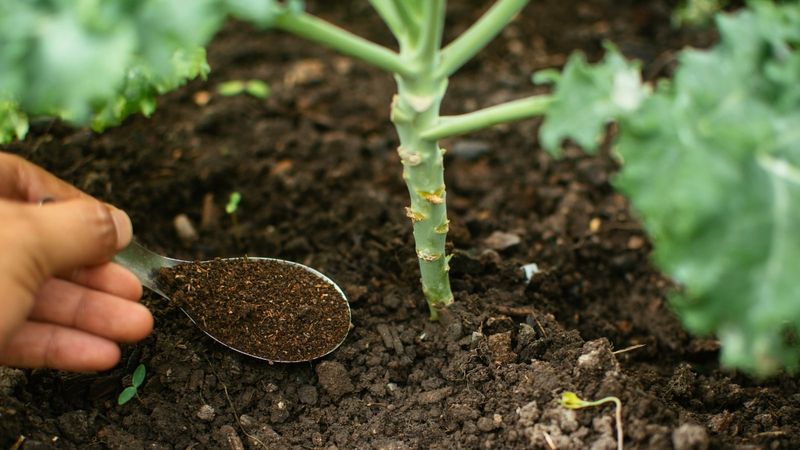
Spread or pour the fertilizer around the root zone rather than onto the leaves or stems. Texas A&M AgriLife Extension’s fertilizing guidance recommends applying nutrients to the soil where roots can take them up, then watering the product in thoroughly.
Wet foliage after fertilizer contact can cause spotting and tissue damage, so keep the application at soil level and rinse off any granules that land on leaves.
Resist the idea that a stronger product or a high-phosphorus bloom booster will produce faster results. NDSU Extension identifies high-phosphorus fertilizer as a common bloom myth, and excess fertilizer of any kind can cause soluble-salt injury that burns roots, damages foliage, inhibits growth, and actually reduces flowering.
UMass Extension’s photo documentation of soluble-salt injury on geraniums shows what over-application looks like in practice: scorched leaf margins, root damage, and stunted growth. More fertilizer does not equal more blooms; a balanced product used at the label rate is the safer and more productive path.
Check slow-release fertilizer before adding another dose
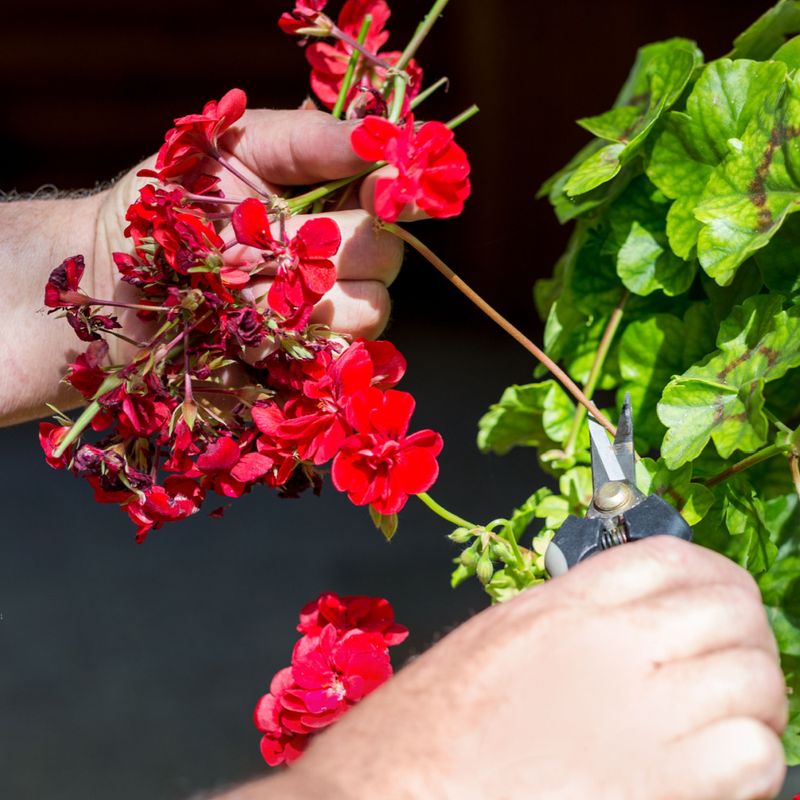
Many commercial potting mixes already contain slow-release fertilizer when you buy them, and some gardeners apply a slow-release product at planting without keeping track of when it expires. Adding another feeding on top of an active slow-release charge can push salt levels higher than the plant needs, causing the same root and foliage stress you were trying to avoid.
Before reaching for any additional fertilizer, check whether a slow-release product is already present and how long it is rated to last.
Look at the bag or tag from your potting mix, or check whether you applied a coated granular product earlier in the season. Most slow-release formulas are rated for three, six, or nine months, and the label will say so.
UF/IFAS Charlotte County’s fall geranium guidance notes that slow-release fertilizer reduces the need for frequent reapplication, particularly for container plantings. If the existing product is still within its rated window, hold off on adding more.
Once a slow-release charge has run its course, you can shift to the shorter liquid or dry fertilizer intervals appropriate for your plant’s location. Iowa State Extension’s annual geranium care page supports this layered approach, treating slow-release as a lower-maintenance baseline and supplemental feeding as a tool for when that baseline is depleted.
Skipping this check and doubling up on nutrition is one of the more common ways a well-intentioned gardener creates unnecessary stress for a plant that was otherwise on track.
Give the plant the conditions that make feeding useful
Fertilizer works best when the rest of the plant’s environment is supporting growth. If light, water, or drainage are off, nutrition alone can’t compensate.
Think of feeding as one lever among several, and the others need to be in reasonable shape before that lever does much good.
Common zonal and ivy geraniums flower most reliably with several hours of direct sun each day. Iowa State Extension recommends at least six hours of direct sun for optimum flowering, while Texas A&M’s ornamental plant guide puts the minimum closer to four hours.
Very hot, west-facing sites may need some afternoon shade during peak summer heat because excessive heat suppresses growth regardless of how well the plant is fed. As temperatures ease in fall, moving a struggling container plant to a brighter spot can make a noticeable difference.
Water when the top inch or two of soil begins to dry out, and make sure the pot or bed drains freely. Container plants sitting in saucers of standing water develop root problems that fertilizer cannot fix.
Overhead watering, especially late in the day, keeps foliage wet longer and raises disease risk, so water at the soil level when possible. Texas A&M’s EarthKind seasonal color care page and UF/IFAS geranium care guidance both reinforce good drainage as a baseline requirement.
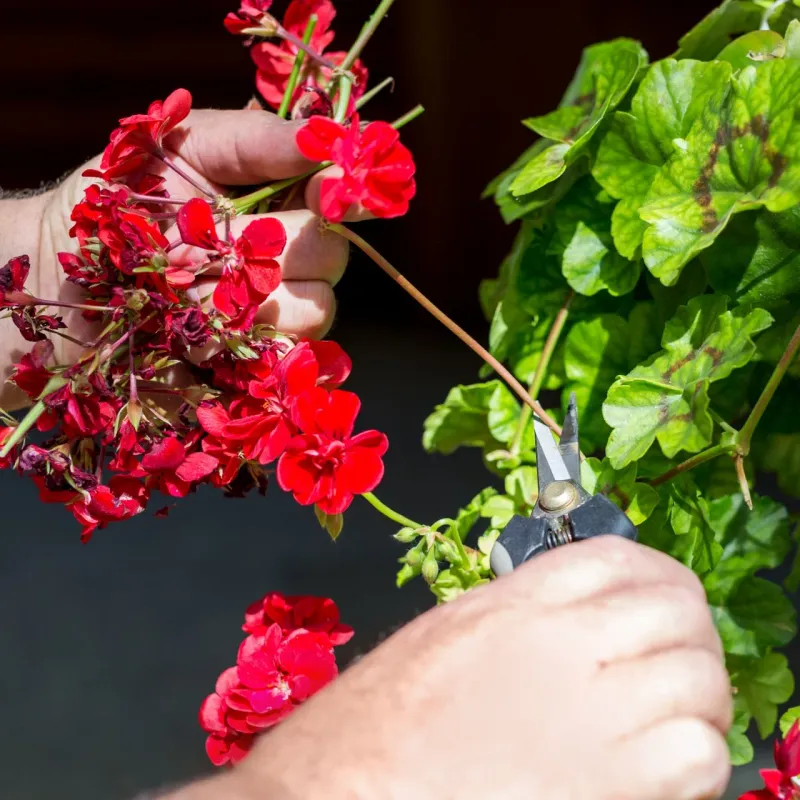
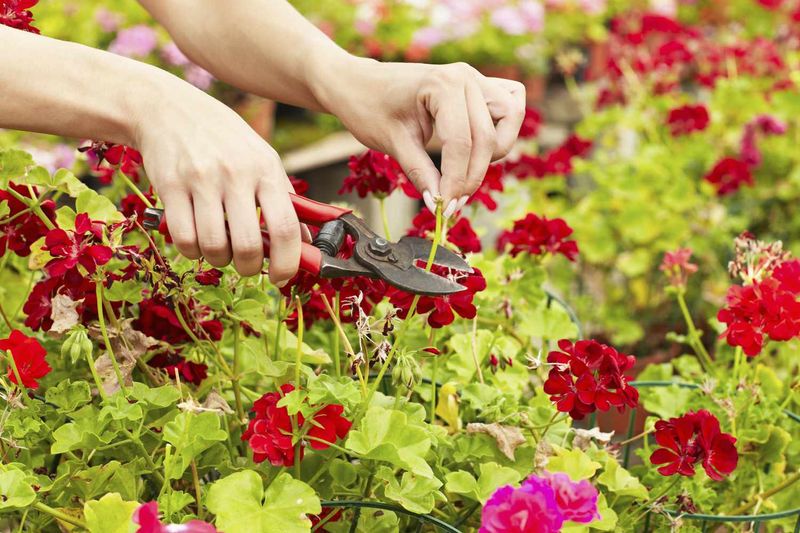
Finally, remove spent flower stalks all the way back to the stem rather than just pinching the petals. Deadheading prevents the plant from spending energy on seed production and removes aging tissue where gray mold can take hold, but it works as a companion to proper nutrition and light, not a substitute for them.
Rule out heat, disease, and cultivar differences
Before committing to another feeding cycle, run a quick stop-and-check on three factors that fertilizer cannot fix: temperature, disease, and plant type. Each one can mimic hunger or amplify the effects of an underfed plant, and feeding through any of them wastes time and may worsen the situation.
Heat is the most common culprit in the South. UF/IFAS notes that geraniums struggle in Florida’s summer heat and humidity, and UF/IFAS Extension publication FP458 describes North Florida plants fading in mid- to late summer and recovering as fall temperatures drop.
If your plant looks better as nights cool without any change in feeding, temperature was the primary driver, not nutrition. Yellow leaves are another symptom that needs context: they can signal delayed fertilization, but they can also indicate drought stress, root damage, soluble-salt buildup from over-fertilizing, or disease.
Yellowing alone is not a reliable hunger signal.
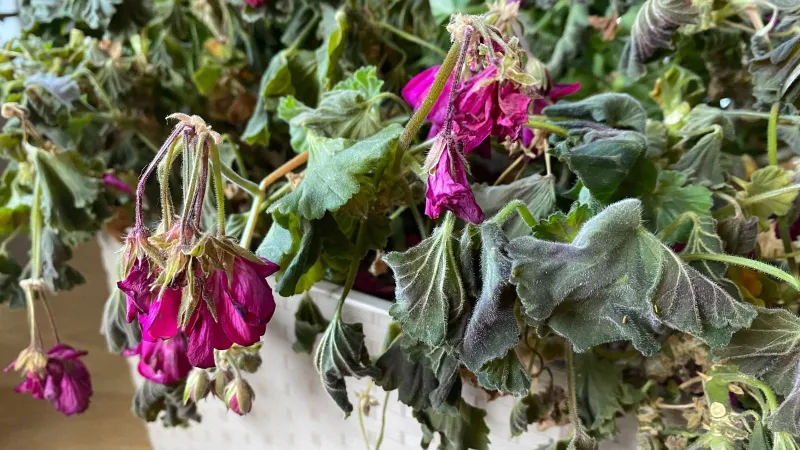
Watch for symptoms that point specifically to disease rather than nutrition: blackened or water-soaked stem bases, gray fuzzy mold on flowers or leaves, sudden wilting that doesn’t recover with watering, or rapid decline across the whole plant. Penn State Extension’s geranium disease guide and Texas A&M’s plant disease handbook entry for geraniums document several fungal and bacterial problems that look like general decline but require removal of infected tissue, not more fertilizer.
Finally, if you’re growing a Martha Washington or Regal Pelargonium rather than a common zonal or ivy type, note that Iowa State Extension identifies Regal types as less heat tolerant with different bloom requirements, so a care prescription built for zonal geraniums may not translate directly.
Use late-summer pruning only for a genuinely neglected plant
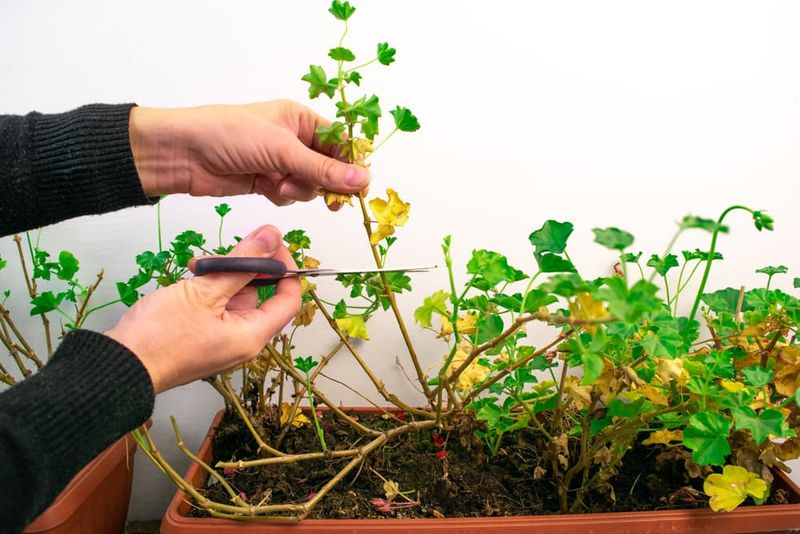
Most geraniums that have been receiving reasonable care through the season don’t need aggressive pruning in late summer. A light trim to remove dead wood and spent stalks is usually enough to tidy the plant and redirect its energy.
The more intensive approach is reserved for a specific situation: a plant that has become genuinely leggy, woody, and unproductive because it was largely neglected during the growing season.
For that neglected plant, UGA Extension’s geranium publication describes a recovery protocol that involves cutting long stems back by roughly one-half to three-quarters of their length, fertilizing at the time of pruning, and then continuing to feed at three-week intervals. During the initial recovery period, the guide recommends providing temporary light to moderate shade, then returning the plant to full sun as nights begin to cool.
This sequence gives the cut plant a chance to push out fresh, compact growth without the additional stress of full afternoon heat during the most vulnerable period.
Two important limits apply to this method. First, it works only on a plant that is still capable of recovery, meaning the root system is intact, drainage is adequate, and no significant disease is present.
Pruning a plant with rotted roots or bacterial stem blight won’t trigger regrowth; it will simply expose more damaged tissue. Second, the aggressive cut is a reset for a neglected specimen, not a general instruction to cut back every geranium that has slowed down.
A plant still producing reasonable growth and some flowers will respond better to a feeding adjustment and improved companion care than to a hard cutback that sets it further behind as frost approaches.
Treat frost as the deadline, not a problem fertilizer can solve
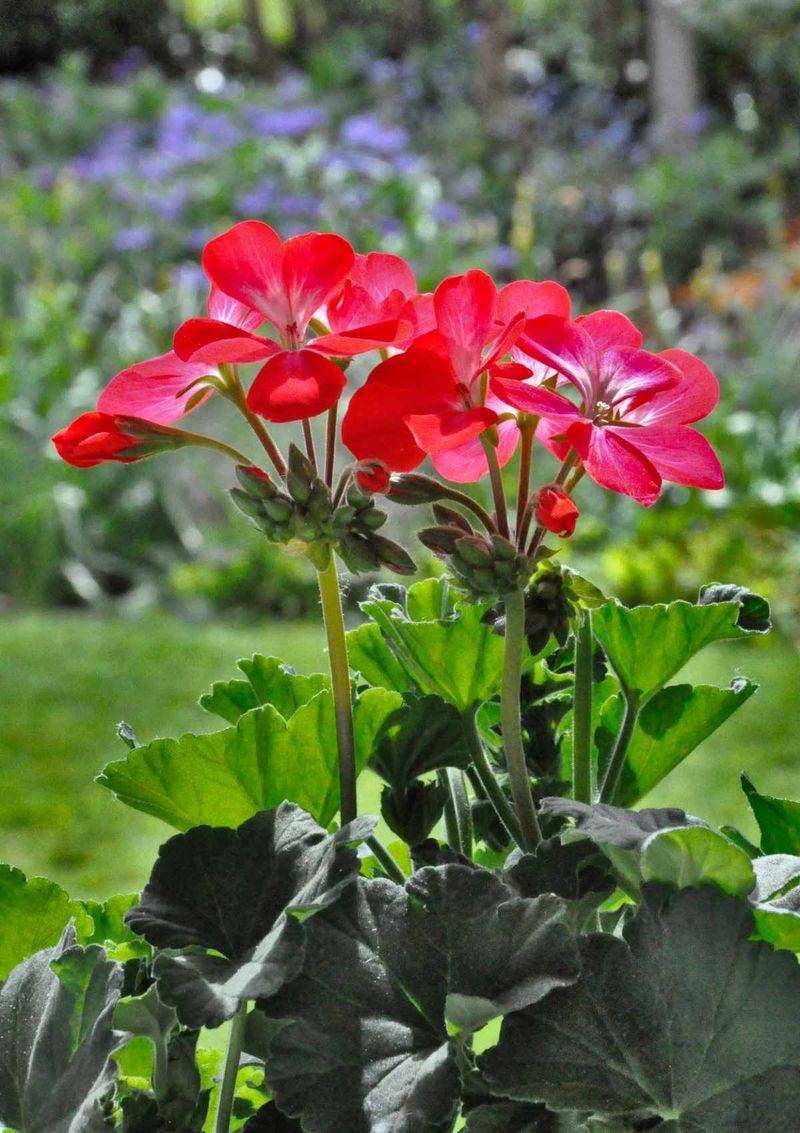
Moderate, consistent feeding can support healthy growth in a geranium that still has weeks of suitable conditions ahead of it. What fertilizer cannot do is protect the plant from freezing temperatures.
Common Pelargoniums are frost-sensitive, and even a light frost can damage open flowers and tender foliage. A hard freeze can kill an outdoor plant outright, regardless of how well it was fed going into the cold.
Southern timing varies considerably. UF/IFAS Extension notes that geraniums are commonly used as winter annuals in central and southern Florida, where frost risk is low and cooler fall weather actually improves performance.
UGA’s geranium guide describes improved fall blooming across southern Georgia and the possibility of flowering into January in coastal areas with frost protection. In areas where hard freezes do arrive, the window for outdoor blooming is real but finite, so use your local frost date rather than a generic bloom-to-frost promise to set your expectations.
If you want to carry your plants through winter, plan ahead rather than hoping fertilizer will buy extra time. Iowa State Extension’s overwintering guidance and Iowa State’s frost protection advice both recommend moving plants indoors or taking cuttings before the first damaging frost rather than waiting to see what happens.
Keep caring for your geraniums while the weather cooperates, then make a decision: bring them in, propagate from cuttings, or let them finish the season outdoors. The practical rule is straightforward: feed an actively growing, healthy, underfed plant on a regular schedule; address other stresses directly rather than masking them with more fertilizer.
A well-fed plant going into fall is in the best position to make the most of whatever warm days remain.