
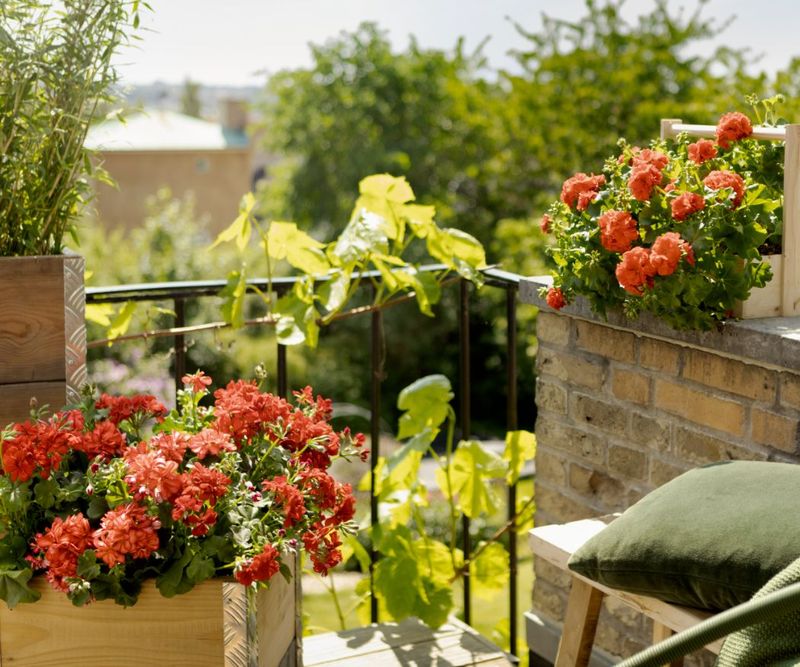
If your geraniums have been limping through summer and you’re hoping a big dose of fertilizer will bring back the blooms, you might be making the problem worse. The common bedding geranium, which is actually a Pelargonium, is a finicky plant that can react badly to too much of a good thing.
Getting more flowers in fall has less to do with feeding harder and more to do with feeding smarter, and knowing when not to feed at all.
Start with the right kind of geranium
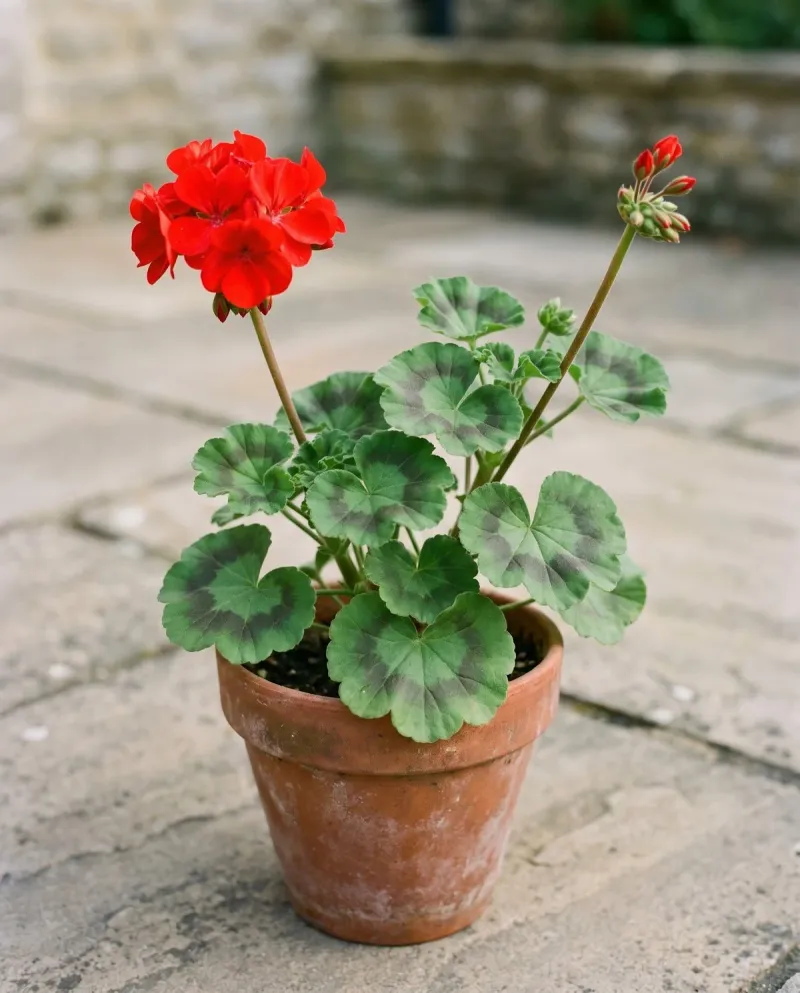
Before adjusting any fertilizer routine, knowing exactly which plant you are working with matters more than most gardeners realize. The red, pink, salmon, and white “geraniums” sold in garden centers across the South are almost always Pelargonium x hortorum, a frost-tender plant native to South Africa.
As UC IPM’s geranium guide explains, these popular bedding plants belong to a completely different genus than true Geranium, also called cranesbill, which is a cold-hardy perennial that goes dormant in winter.
The distinction matters because fall care advice is not interchangeable between the two. Hardy true Geraniums may need little to no fall feeding, especially if they are winding down for the season.
Pelargoniums, on the other hand, are actively growing plants in many Southern gardens well into autumn, and they respond to care as living, frost-sensitive annuals rather than dormant perennials.
UF/IFAS guidance on Pelargonium x hortorum confirms that this plant is treated as a winter annual in central and southern Florida, where it can grow and flower through the cooler months. Everywhere else in the South, it functions as a warm-season annual that may persist into fall with the right care.
Fertilizing a dormant hardy Geranium the same way you would feed an actively growing Pelargonium is a mismatch that can do more harm than good, so identifying your plant first is the non-negotiable first step.
Fall conditions can help without extra fertilizer
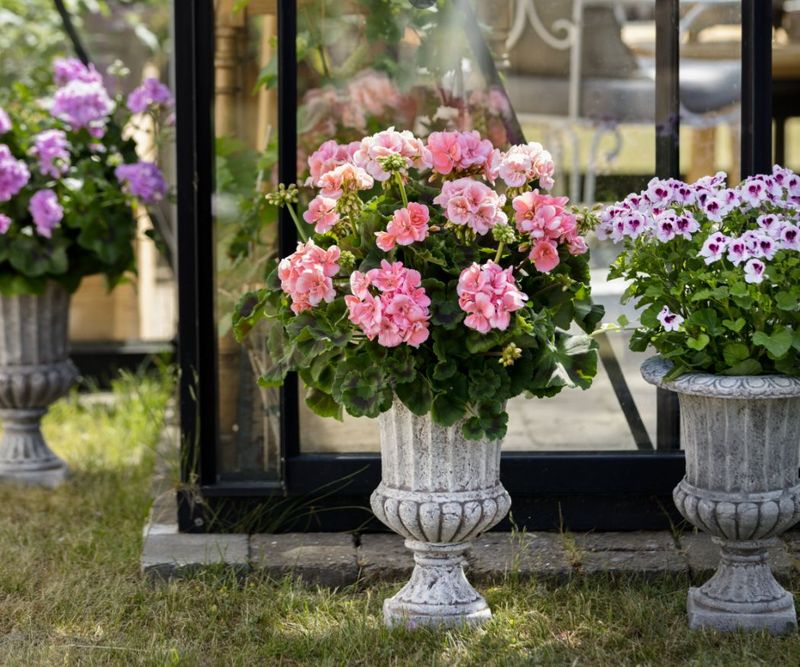
Many Southern gardeners are surprised to discover that their geraniums perk up in September and October not because of anything they did in the garden shed, but because the weather finally cooperated. Pelargoniums are notoriously sensitive to heat and humidity, and summer in Florida or Texas can push them into a kind of survival mode where flowering slows or stops almost completely.
UF/IFAS Gardening Solutions notes that geraniums struggle in Florida’s hot, humid summers and are used primarily as winter annuals in central and southern Florida, where the cooler fall and winter months are their natural flowering window. As temperatures moderate, the plant can redirect energy back toward blooming on its own, without any change to the fertilizer program.
A UF/IFAS Charlotte County post on fall geranium care describes cooler conditions as providing a fresh burst of color for geraniums in that region. Research into how ornamental greenhouse plants respond to environmental conditions also shows that temperature and light levels are significant factors in plant growth and flowering responses.
The practical takeaway is that a heat-stressed plant may not respond to additional fertilizer the way a gardener hopes, and adding more nutrients to a struggling plant in peak summer heat is unlikely to solve a problem that cooler weather might resolve on its own.
Choose a normal label-rate feeding
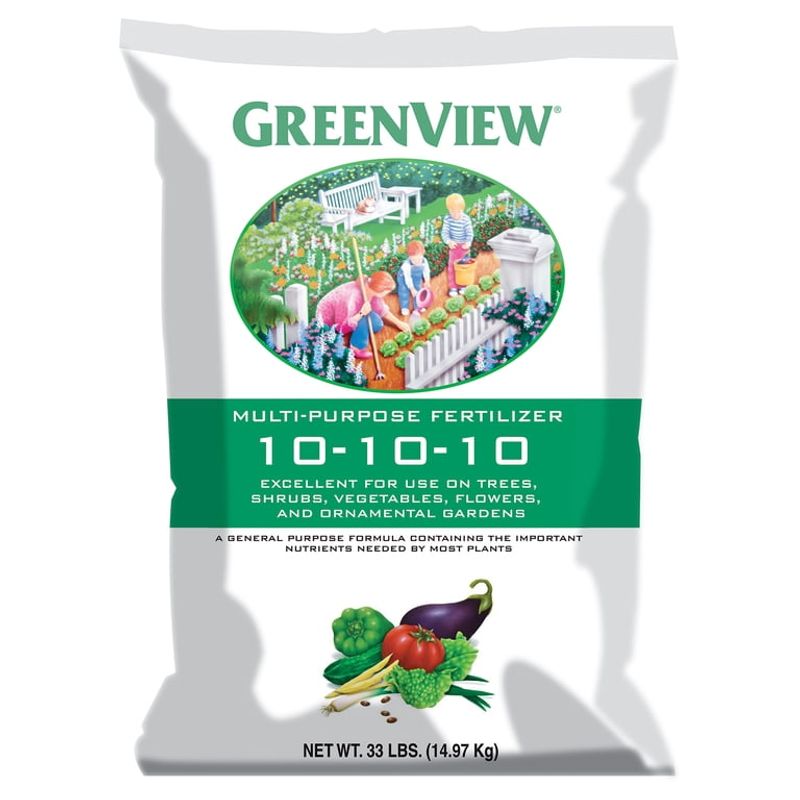
When a Pelargonium is actively growing and showing signs that nutrition may be running low, the right response is straightforward: use a complete fertilizer at the rate printed on the product label. That means a balanced product containing nitrogen, phosphorus, and potassium, applied as directed, not doubled up to force faster results.
UMass Extension’s guidance on fertilizing flower garden plants supports using complete fertilizers at label rates rather than increasing concentration to push plants harder. There is no special fall geranium formula that extension sources validate as universally superior.
Extension recommendations for garden geraniums include balanced products such as 10-10-10, and the emphasis is consistently on adequacy, not excess.
Before reaching for anything, consider what the plant has already received. If a slow-release fertilizer was applied earlier in the season, it may still be releasing nutrients into the root zone, and adding more on top of it can push nutrition past what the plant can use well.
University of Missouri Extension’s soil fertilization guidance recommends soil testing as the most reliable way to determine whether additional nutrients are genuinely needed in a bed. For containers, the situation is different because nutrients leach out with regular watering, but the answer is still a label-directed application, not a concentrated dose intended to compensate for lost time.
Match the routine to beds or containers
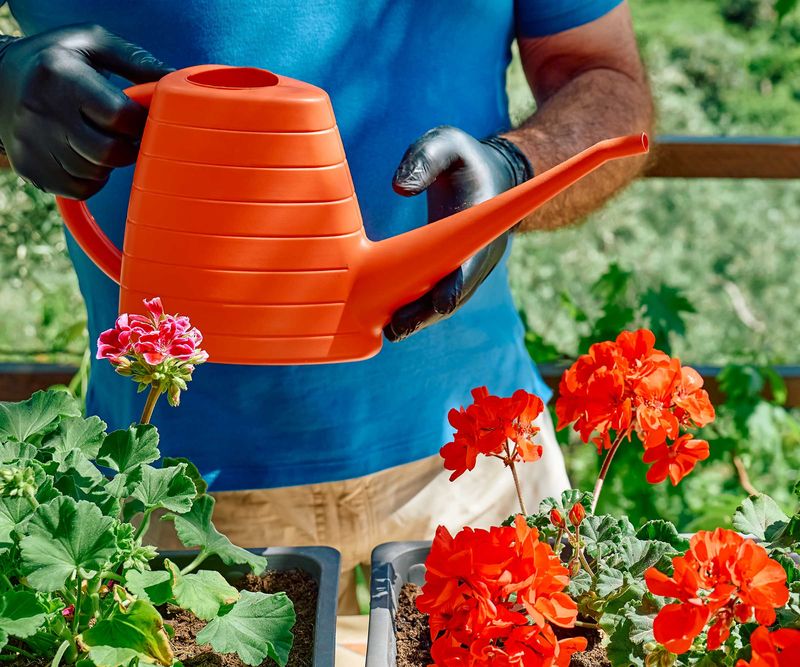
How and how often you feed a Pelargonium depends heavily on where it is growing, because in-ground beds and containers behave very differently when it comes to nutrient retention and drainage.
For geraniums growing in garden beds, University of Georgia Extension’s geranium guide recommends applying fertilizer evenly to the soil around the plants, keeping it off leaves and stems, and watering it thoroughly into the root zone. Both Georgia and Clemson Cooperative Extension’s annual geranium factsheet suggest a general interval of approximately every four to six weeks during the growing season, but only when the plant is actively growing and conditions support it.
Fertilizing on a rigid schedule regardless of plant condition or seasonal changes is not what these sources recommend.
Container geraniums lose nutrients more quickly because each watering carries some of those nutrients out through the drainage holes. Iowa State University Extension recommends diluted fertilizer approximately every two weeks for container-grown geraniums.
A slow-release product worked into the potting mix at planting is another option, applied according to its label. Clemson’s indoor geranium guide also advises reducing fertilizer when light levels drop, which is a useful reminder for Southern gardeners who bring pots inside as fall deepens.
Lower light means slower growth, and a slower-growing plant simply does not need as much nutrition.
Avoid the fertilizer shortcuts that reduce flowering
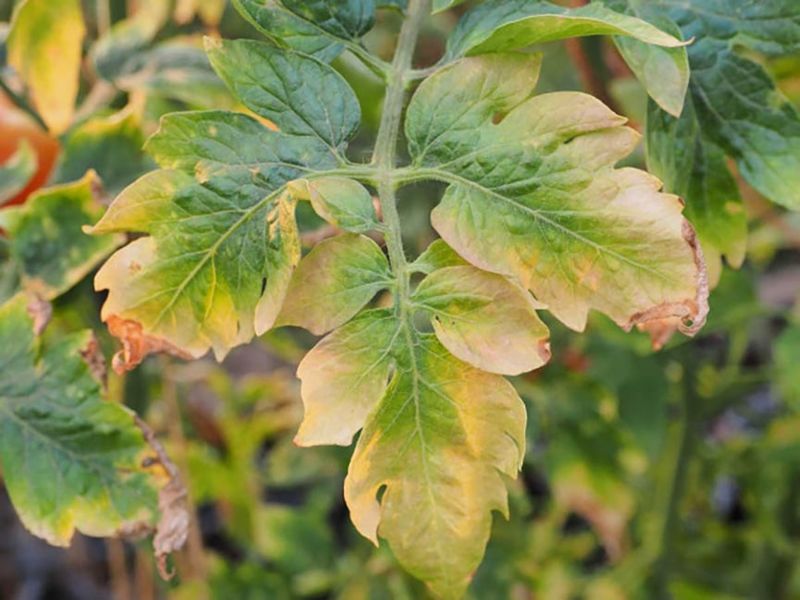
Reaching for more fertilizer when blooms slow down feels logical, but it can actually make the problem worse. The most common mistake is applying too much nitrogen, which pushes the plant to produce abundant leafy growth at the expense of flowers.
NC State’s fertility management research for geraniums specifically identifies excess nitrogen as a factor that can reduce plant growth quality and delay flowering. Broader extension guidance echoes this finding: nitrogen feeds leaves, and when there is too much of it available, flowering often takes a back seat.
A plant loaded with lush, dark green foliage but very few blooms is a classic sign that nitrogen has been pushed too hard.
The other shortcut that does not hold up is reaching for a high-phosphorus “bloom booster” fertilizer. The middle number on a fertilizer bag is often marketed as a flower switch, but NDSU Extension directly challenges this common practice, noting that high phosphorus does not reliably increase flower numbers when phosphorus is already adequate in the soil or growing medium.
NC State’s geranium fertility research also points out that excess phosphorus can interfere with the plant’s ability to absorb iron, zinc, copper, and manganese, creating secondary nutrient problems that are harder to diagnose and fix. Choosing a complete, balanced fertilizer at the label rate sidesteps both of these pitfalls without requiring any guesswork about which number on the bag to chase.
Fix light, water, drainage, and spent flowers first
Before adding any fertilizer, a quick inspection of the plant’s growing conditions will often reveal the real reason blooms have slowed. Pelargoniums are sun-loving plants, and shade is one of the most common hidden causes of poor flowering.
Iowa State University Extension recommends at least six hours of direct sun for optimum geranium flowering, while Colorado State University Extension gives a range of six to eight hours. A plant sitting in too much shade will not bloom well no matter how carefully it is fed.
If the spot has gotten shadier as trees have leafed out or as the sun angle has shifted into fall, moving the container to a brighter location may do more than any fertilizer application.
Deadheading is another consistently supported practice for keeping flowers coming. University of Illinois Extension recommends removing spent flower heads regularly to encourage the plant to keep producing new blooms rather than directing energy toward seed development.
Drainage is equally important: geraniums do poorly in chronically wet soil, and a waterlogged container or poorly draining bed can cause root problems that fertilizer cannot fix.
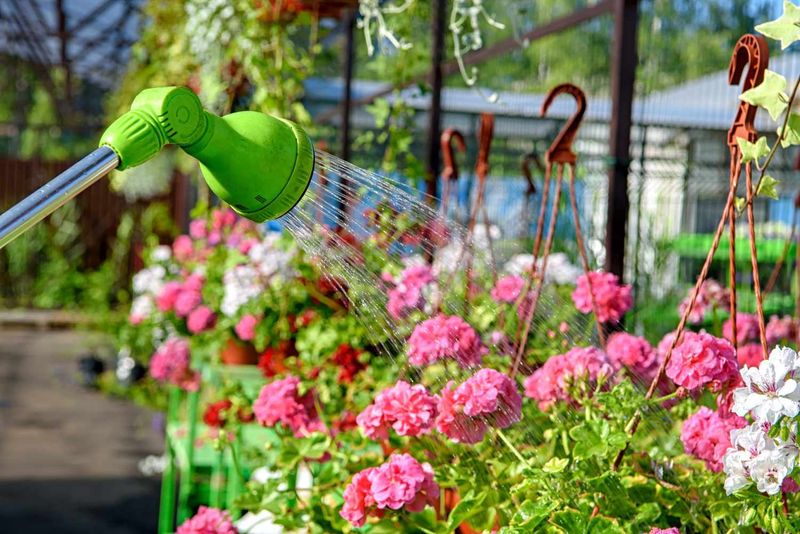
When it comes to watering after fertilizing, the goal is to move the fertilizer into the root zone of a well-drained growing medium. That is ordinary post-application watering, and it is not the same as deliberate leaching.
University of Arizona Cooperative Extension’s container gardening guidance identifies salt accumulation as a real concern in containers and recommends periodic leaching with abundant clear water when salts have built up, which is a separate, more deliberate step than routine watering. Poor drainage in the container will limit how well either approach works.
Adjust fall timing by Southern region
The South is not a single climate zone, and fall geranium care that makes sense in Charlotte County, Florida looks quite different from what a gardener in Dallas or the Texas Panhandle should do. Treating the entire region as one place leads to advice that fits nobody well.
In central and southern Florida, fall is genuinely the beginning of prime geranium season. UF/IFAS Gardening Solutions confirms that Pelargoniums are used as winter annuals in those parts of the state, with the cooler months from roughly October through March being the best window for active growth and flowering.
Gardeners in that region can plant fresh transplants in early fall and expect good performance through winter. The UF/IFAS Pelargonium factsheet also notes that in north Florida, cutting plants back in early fall and applying moderate fertilizer can stimulate fresh growth and improve appearance.
That is a reasonable refresh approach, not a heavy fertilization program.
Texas is a different story. The state spans multiple climate zones, and late-season freeze risk varies widely from the Panhandle to the Rio Grande Valley.
Texas A&M AgriLife Extension’s guidance on late-season fertilization addresses woody ornamentals generally, not geraniums specifically, but the caution it raises is worth noting: fertilizing late in the season can encourage tender new growth that is more vulnerable to an early freeze. Texas gardeners should check local freeze forecasts and consult regional extension resources before applying fall fertilizer, rather than following a blanket schedule designed for warmer climates.
Use a simple decision rule before feeding
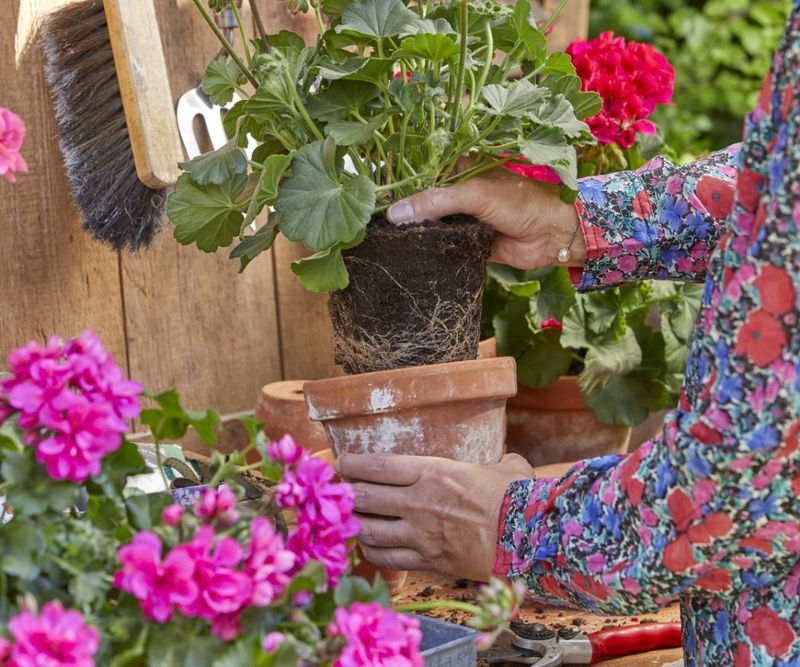
Running through a short mental checklist before reaching for the fertilizer bag will save time, money, and plant health. The first question is whether the plant is actually a Pelargonium and whether it is actively growing.
A heat-stressed, disease-affected, or root-bound plant is unlikely to respond the way a healthy, actively growing one will.
Next, consider light and drainage. If the plant is not getting close to six hours of direct sun, or if the container or bed stays wet for extended periods, address those conditions before adding nutrients.
Check whether a slow-release fertilizer is already present in the potting mix, because adding more on top of an active slow-release product may push nutrition beyond what the plant needs. UF/IFAS guidance on Pelargonium notes that yellowing leaves can sometimes signal that fertilizer is needed, but yellowing can also point to overwatering, poor drainage, or low light, so the cause should be confirmed before treating it as a nutrient problem.
If the plant passes those checks and nutrition seems genuinely needed, apply a complete fertilizer at the label rate, water it into a well-drained root zone, and deadhead any spent blooms. Iowa State Extension and UMass Extension both support this steady, adequate approach over heavy or frequent applications.
Heat, low light, an approaching freeze, or chronic wetness can limit flowering no matter what is in the fertilizer bag, and accepting that reality is what makes the difference between a frustrated gardener and a practical one.