
When summer heat settles in and refuses to leave, your geraniums may respond by producing fewer and fewer flower clusters, even though the plants themselves look healthy enough. That slowdown is not always a sign of neglect or disease – it often reflects how these popular bedding plants respond to prolonged warmth, especially when nights stay hot.
Understanding what is actually happening gives you a practical starting point for helping your plants hold on to their blooms a little longer.
Why lingering heat can reduce geranium flowers
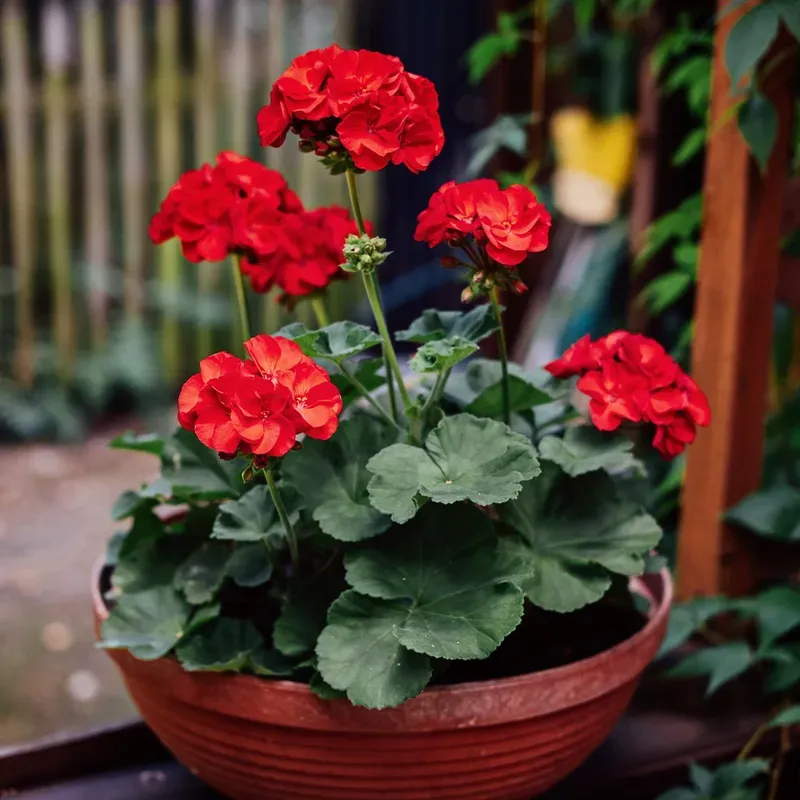
Midsummer flower decline in geraniums often catches gardeners off guard, especially when the plants still look green and reasonably full. The common bedding geraniums sold at garden centers across the South are almost always Pelargonium x hortorum, the zonal or bedding geranium, and these plants tend to flower more reliably when temperatures are moderate rather than relentlessly hot.
As UGA Cooperative Extension explains, growth and flowering slow considerably during hot weather, particularly when nighttime temperatures remain high.
Warm nights are a key piece of the puzzle. Daytime heat alone is stressful, but when temperatures fail to drop overnight, plants cannot recover the way they normally would.
That persistent warmth can push common geraniums into a kind of holding pattern where energy goes toward survival rather than flower production.
Before assuming the cause is poor watering, pests, or nutrient deficiency, consider whether prolonged heat is the more likely explanation. The advice in this article focuses specifically on heat-related flowering decline in zonal and bedding geraniums.
Other types sold under the geranium name, including regal or Martha Washington geraniums and true Geranium cranesbills, respond differently and are not the primary focus here.
Try afternoon shade before abandoning the plant
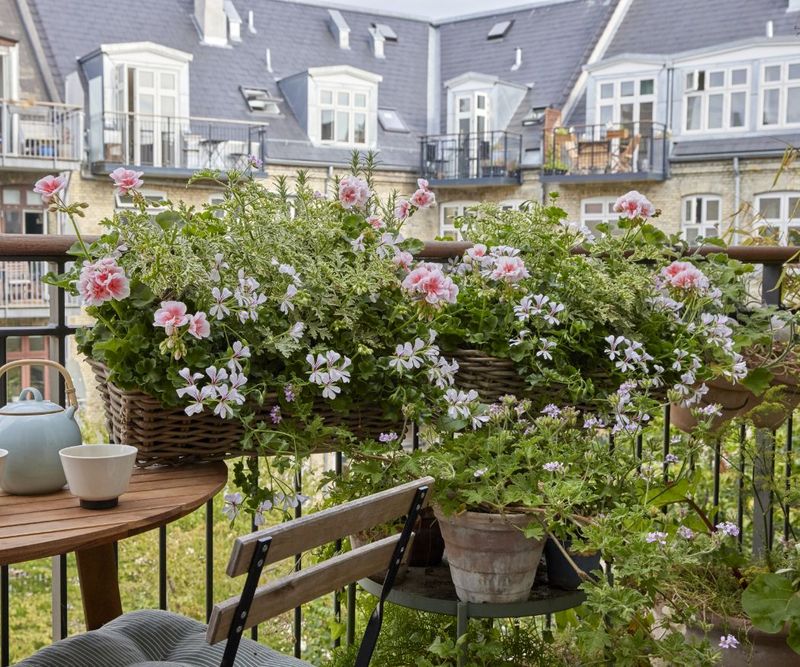
Before you pull the plant or overhaul its entire care routine, there is one adjustment worth trying first: shift the geranium out of full, unbroken afternoon sun during the hottest stretch of the season. Giving a heat-exposed common geranium morning sun followed by afternoon shade is a reasonable first response supported by extension guidance from multiple states.
UGA Extension notes that zonal and ivy geraniums generally benefit from light shade during midsummer, even though they can grow in full sun when moisture is adequate.
The goal is not to hide the plant in darkness but to reduce the most intense heat exposure while keeping enough direct light for flowering. Geraniums need substantial direct sun to produce flowers reliably, and moving them into deep shade trades one problem for another.
Morning sun tends to be gentler and less drying than afternoon sun, making it a better fit for plants already under heat stress.
Think of this as a targeted heat-management adjustment rather than a permanent relocation. Iowa State Extension indicates that geraniums need at least six hours of direct sun for optimum flowering, so the afternoon protection should preserve morning and midday light rather than eliminate sun exposure altogether.
This may help reduce stress and support continued flowering, but it cannot guarantee uninterrupted blooms if heat and warm nights persist through the season.
Put the protection in the right place
For container geraniums, the adjustment is straightforward: move the pot to a spot that receives morning sun and is shaded by early to mid-afternoon. A location on the east side of the house, or beside a fence or structure that blocks the western sun, often works well.
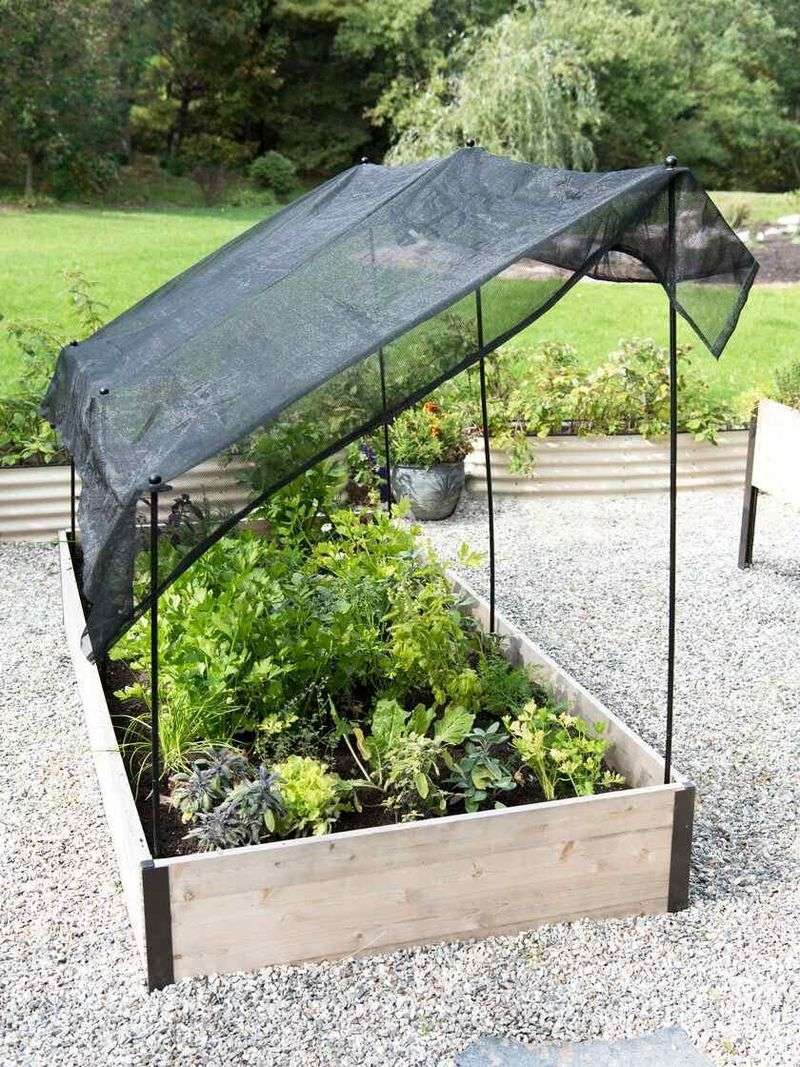
During a heat wave or an extended hot spell, UC Agriculture and Natural Resources guidance on caring for container plants in heat recommends moving containers into shade or using 30 to 50 percent shade cloth when conditions become extreme. That shade cloth range is general heat-wave guidance rather than a prescription written specifically for geraniums, so treat it as a useful reference rather than a precise rule.
If you use shade cloth, support it above the plant on stakes or a simple frame so it does not rest directly on the foliage. Fabric touching leaves can trap heat and moisture, which creates its own problems, especially in humid Southern weather.
In-ground geraniums cannot be picked up and moved, but temporary protection is still possible. Position a patio umbrella or a sheet of lightweight fabric to block the harshest afternoon sun during the hottest days.
A nearby building, a tall shrub, or a trellis covered with a vine can also serve as a natural afternoon screen. These interventions are meant to be simple and reversible, so you can remove or adjust them as conditions change rather than committing to a permanent shade structure.
Know when shade cannot solve the problem
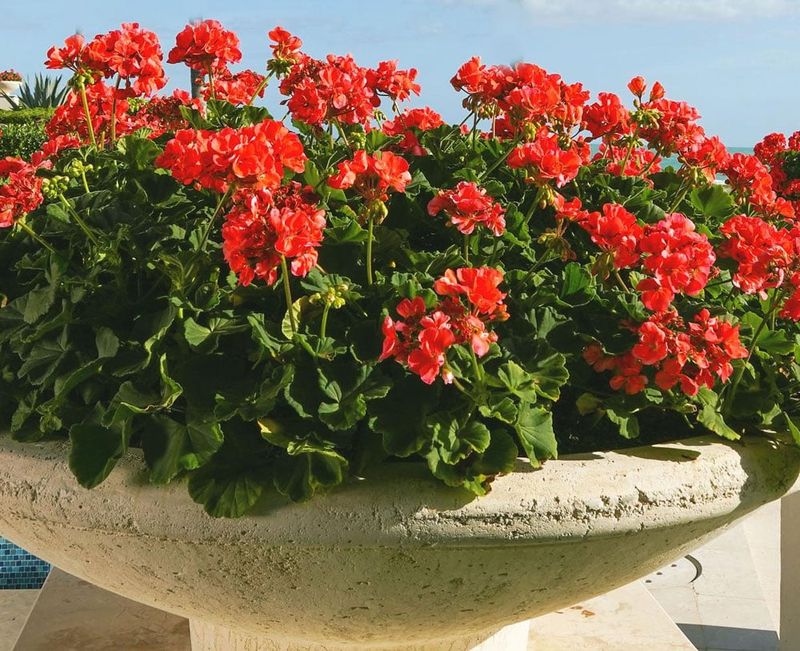
Afternoon shade can lower the temperature a plant experiences during the harshest part of the day, but it cannot fix every reason a geranium stops flowering. One important limit involves how much light the plant retains after the adjustment.
Iowa State Extension notes that geraniums need at least six hours of direct sun for optimum flowering, while Texas A&M lists at least four hours as the threshold for good flowering. Moving a plant into deep or all-day shade may reduce heat stress, but it also tends to reduce flower production and can cause stems to stretch toward available light.
Plant type matters just as much as placement. Regal or Martha Washington geraniums, Pelargonium x domesticum, require cool nights, roughly 50 to 60 degrees Fahrenheit, for flower bud formation.
Iowa State’s guidance on Martha Washington geraniums explains that these plants often fail to bloom through hot summers because the temperature requirement for bud set simply cannot be met. Afternoon shade may ease stress, but it cannot recreate the cool nights that regal geraniums need.
Regional conditions add another layer of complexity. UF/IFAS Gardening Solutions describes common geraniums as performing poorly in Florida’s summer heat and humidity, where they are often grown as winter annuals in central and southern Florida.
In those areas, seasonal decline is frequently a temperature limitation rather than a correctable placement mistake. Across Texas, recommendations vary: Texas A&M’s Earth-Kind seasonal color guidance recommends summer shade for geraniums generally, while some San Antonio-area resources treat common geraniums as cool-season plants unless especially heat-tolerant cultivars are selected.
UMass greenhouse research shows that high temperatures can sharply reduce growth and development in production settings, though those figures should not be applied as a precise outdoor bloom-failure threshold for every cultivar and home garden situation.
Water by soil condition, not by the flower count
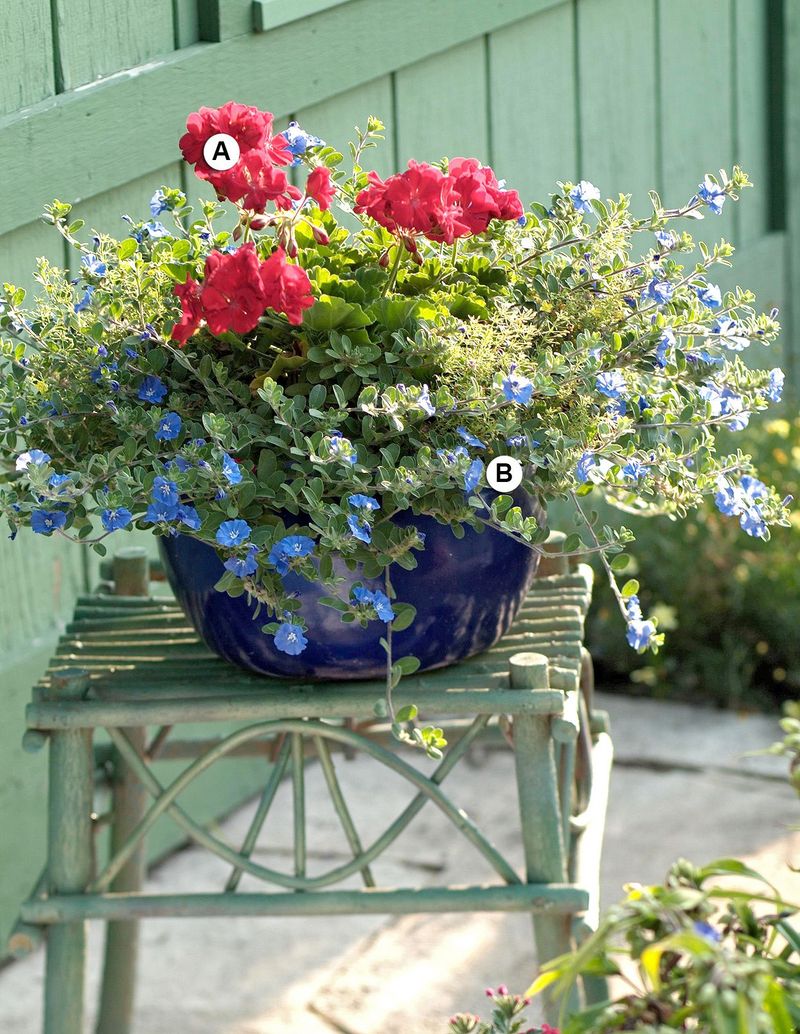
Fewer blooms can feel alarming, and the instinct to water more is understandable. The problem is that overwatering can cause just as much trouble as drought, particularly for geraniums growing in containers.
Rather than increasing irrigation automatically when flowering slows, check the growing medium first. UC IPM’s geranium guidance emphasizes that these plants need moderate, regular moisture combined with fast-draining soil, and that waterlogged conditions can damage roots and contribute to root rot.
The practical approach is to water thoroughly when the growing medium has begun to dry out, then allow excess water to drain completely. Iowa State Extension advises watering containers when the soil surface feels dry to the touch.
Containers in hot, windy weather will dry out faster than in-ground plants, so they may need checking more frequently, but the trigger should always be soil condition rather than a fixed schedule or a declining bloom count.
A few habits to avoid: leaving pots sitting in saucers filled with standing water, keeping the soil constantly wet between waterings, and wetting foliage repeatedly during humid weather. Wet leaves in high-humidity conditions can encourage fungal problems, including botrytis, which can affect both foliage and spent flower material.
UGA Extension recommends allowing soil to dry appropriately between waterings rather than maintaining constant moisture, which reinforces that soil drainage and checking frequency matter more than watering volume alone.
Support recovery with ordinary maintenance
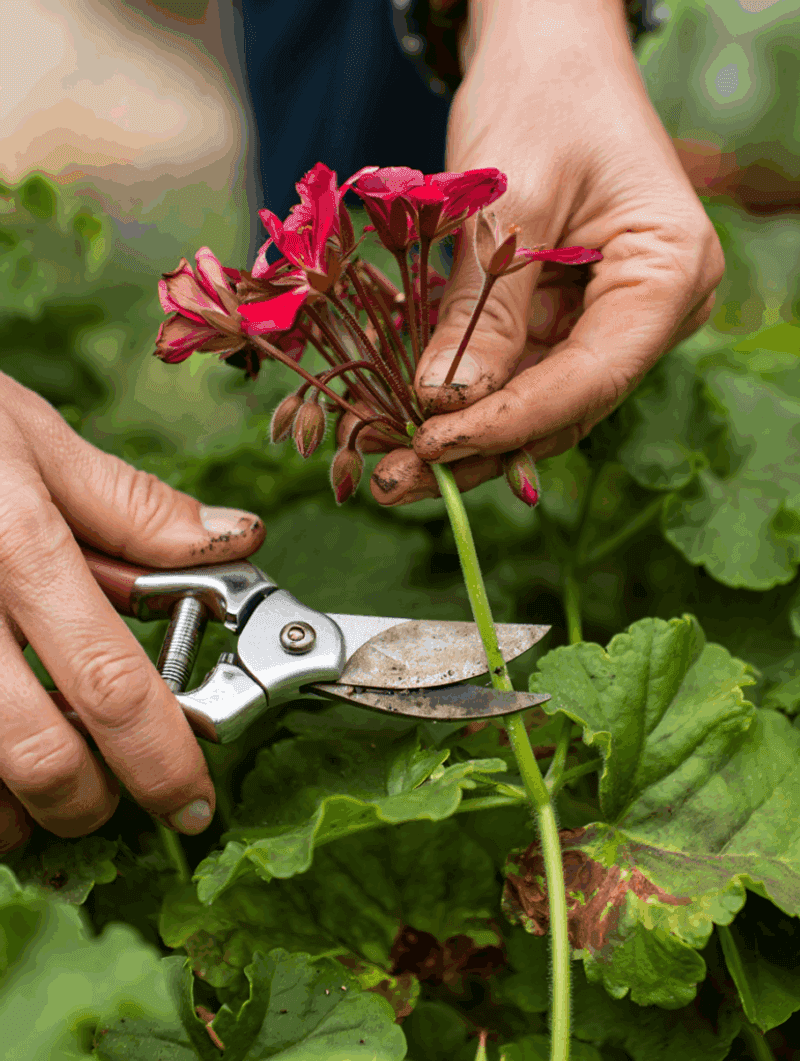
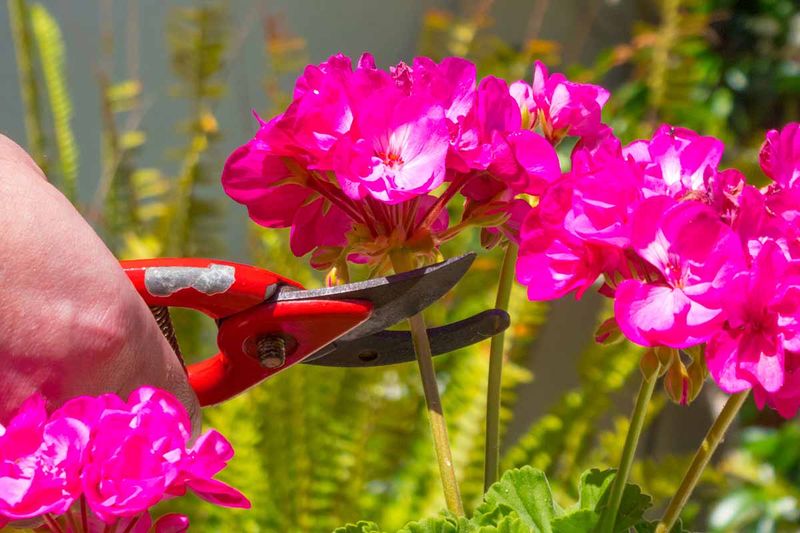
Removing spent flower clusters is one of the most useful things you can do for a geranium that is still trying to bloom through summer heat. When faded flower heads are left on the plant, energy goes toward seed development rather than new flower production.
Iowa State’s guide to growing annual geraniums describes removing spent flower clusters and stems as a practice that supports additional flowering and also removes decaying material that can contribute to disease problems like botrytis.
The method is straightforward: pinch or cut off the faded flower cluster along with its stem. Keeping up with this task regularly is more important than precision about the exact cut point.
What deadheading cannot do is remove the temperature limitation behind heat-related slowdown. If the plant is holding back because nights are too warm, removing spent flowers helps but does not solve the underlying cause.
Fertilization should continue on a moderate, regular schedule, especially for container plants where nutrients deplete faster. UGA Extension recommends fertilizing geraniums every four to six weeks in beds, with more frequent dilute applications possible for containers.
Follow the product label rather than increasing the dose, and avoid the temptation to switch to a high-phosphorus bloom booster. North Dakota State University Extension identifies high-phosphorus fertilizers for more blooms as a common gardening myth, noting that fertilization should be based on actual plant needs rather than phosphorus loading.
Substantial pruning, cutting back leggy or overgrown stems, is a useful late-summer recovery measure for neglected plants but temporarily removes existing growth and flowers, so it works best as a reset rather than a first response to a healthy plant whose blooms are tapering in heat.
Use the tweak, then reset expectations
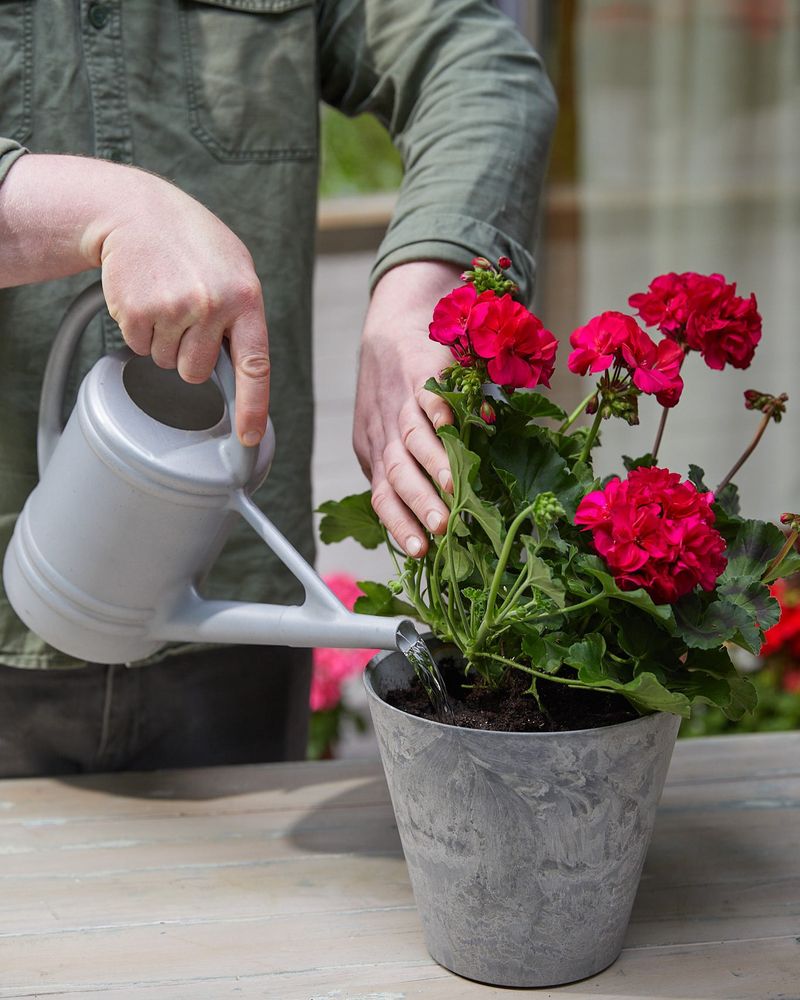
Putting this adjustment into practice starts with confirming what you are actually growing. If the plant is a common zonal or bedding geranium, Pelargonium x hortorum, the afternoon shade approach is worth trying.
UF/IFAS documentation on Pelargonium x hortorum reinforces that this is the common bedding type, distinct from regal geraniums and true cranesbills, and that its performance is genuinely tied to temperature conditions.
Once you have confirmed the plant type, give it morning sun and afternoon protection, check soil moisture before watering, and remove spent flower clusters consistently. Those steps together represent a sensible response to heat-related flowering decline.
What they cannot do is guarantee continuous blooms when nights stay warm, humidity remains high, or the plant has simply reached the seasonal limits of what its type can produce in your climate.
If afternoon shade does not improve flowering after a few weeks, the more honest explanation may be that local conditions, not placement alone, are setting the ceiling. UF/IFAS Gardening Solutions and UGA Extension both point to seasonal decline as a normal part of how common geraniums behave in Southern summers.
Accepting that reality, or choosing a more heat-tolerant cultivar for next season, is often the most practical path forward. Some plants flower best when the season suits them, and knowing that is its own kind of useful gardening knowledge.