
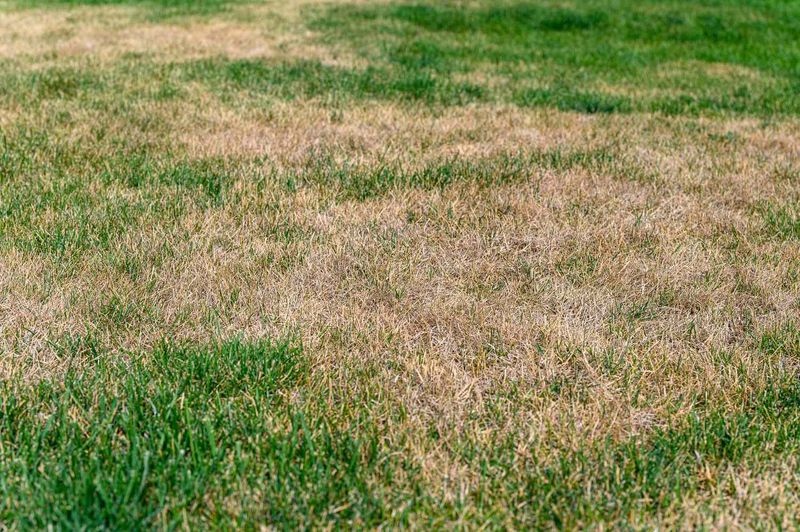
Buying another bag of grass seed feels like a reasonable fix when patches stay bare or thin areas refuse to fill in, but the seed itself is rarely the whole story. Site conditions, species fit, timing, and surface preparation each play a role in whether seedlings ever appear.
Understanding what went wrong before you sow again can save real money and frustration, especially in Southern states where heat, humidity, and soil variation make establishment trickier than the seed bag suggests.
Why repeated seed failure deserves a broader diagnosis
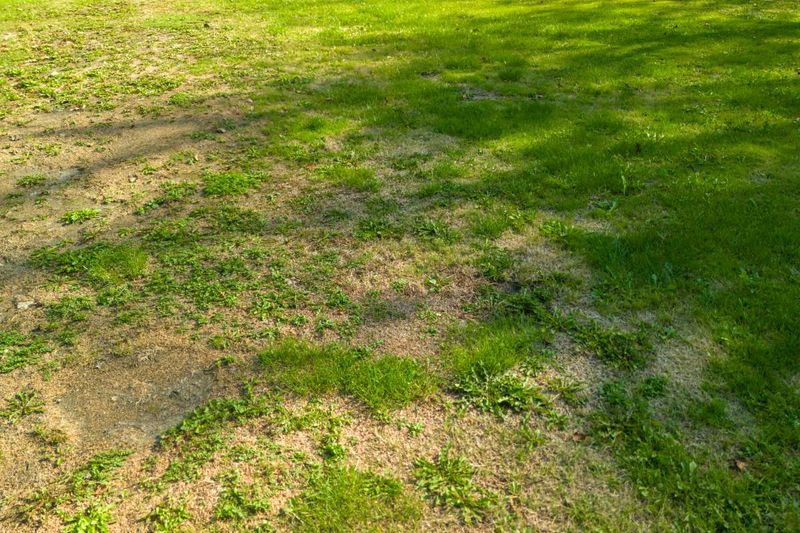
Repeated grass-seed failure almost never has just one cause. Site conditions, seed quality, species choice, and management decisions all interact, and blaming any single factor usually leads to the same disappointing result next season.
Before buying another bag, it helps to understand what kind of seeding operation you are actually attempting, because the preparation, timing, and expectations are genuinely different for each.
A new lawn on bare soil needs a properly graded, firm seedbed free of competing vegetation. Patch repair in an otherwise healthy lawn requires different surface preparation than a full renovation.
Overseeding a thin but desirable stand of grass calls for light surface work and good seed-to-soil contact without disturbing what is already growing. Winter overseeding of a warm-season lawn, something common in Texas, carries its own timing constraints and risks to the permanent turf beneath.
UF/IFAS guidance on Florida lawn seeding consistently treats site assessment and preparation as prerequisites, not afterthoughts. Texas A&M turfgrass establishment guidance reinforces the same point for warm-season grasses across Texas.
Mixing advice meant for one operation into another is a common reason seed fails repeatedly, and Penn State Extension’s lawn establishment overview notes that matching the method to the goal is the first decision, not the last.
Start with a site audit, not another bag of seed
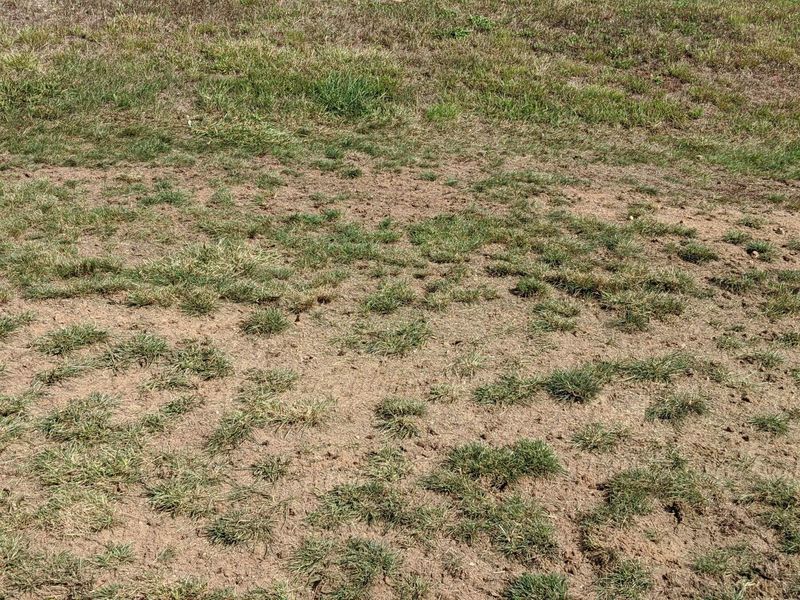
Walking the lawn before shopping for seed reveals information no seed label can provide. Check how many hours of direct sunlight each area receives, where water pools after rain, whether slopes channel runoff across bare spots, and how much foot traffic certain zones absorb.
Look at the existing grass and weeds together, because the ratio of desirable turf to unwanted plants tells you whether overseeding is even appropriate or whether a more thorough renovation is needed.
Compaction and thatch are worth checking separately. Press a screwdriver or rod into moist soil; resistance at shallow depth suggests compaction that will limit root growth and water infiltration.
Pull a small plug of turf and measure the spongy layer between the green blades and the soil surface to assess thatch. These physical conditions affect whether seed can reach and stay in contact with soil, regardless of seed quality.
A soil test can identify pH imbalances and nutrient shortfalls that make establishment harder. University of Georgia Extension’s lawn care guide treats a soil test as a starting point for understanding nutrient and pH status.
The UF/IFAS Soil Testing Lab offers Florida-specific analysis. However, a soil test cannot correct shade, compaction, standing water, thatch, or poor grading on its own.
Record every constraint you find before choosing a grass or deciding how much surface preparation the site actually needs.
Good seed-to-soil contact supports reliable establishment
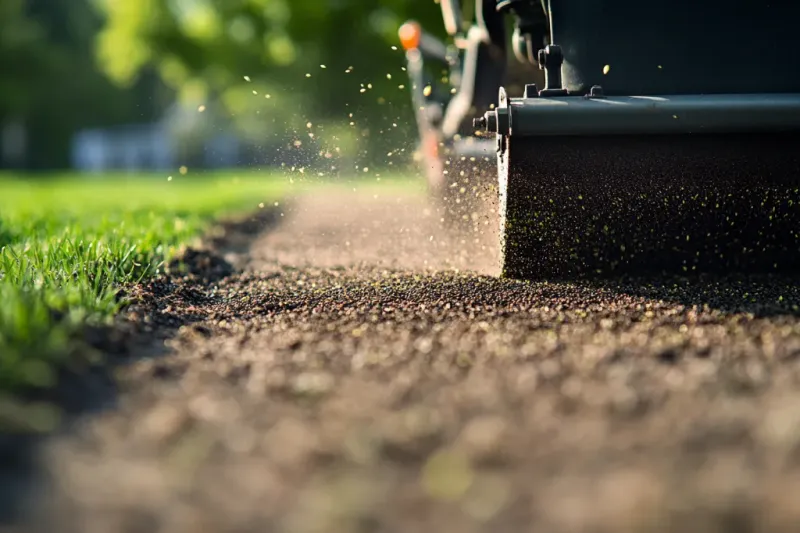
Seed scattered over a dense grass mat, thick thatch layer, crusted surface, or compacted ground often fails not because the seed is bad, but because it never reaches the moist, oxygenated conditions needed for reliable establishment. The seed may sit on top, dry out, or wash away before a single root can anchor it.
Poor seed-to-soil contact is one of the most consistent and most overlooked contributors to thin or absent germination in Southern lawns.
Improving contact does not require aggressive disturbance. Lightly raking the surface to scratch up some exposed soil, or making shallow passes with a vertical slicer or slit-seeder, creates channels where seed can settle against mineral soil.
Distribute seed in two perpendicular directions to avoid gaps, then lightly rake or roll the surface to press seed into place. The goal is firm contact with exposed soil, not a deeply tilled or heavily covered seedbed.
UF/IFAS seeding guidance specifically identifies good seed-to-soil contact as essential for establishment, and Utah State Extension’s turfgrass IPM advisory describes slit-seeding as a reliable method for improving contact without full renovation. Seed buried too deeply, covered with heavy mulch, or left sitting on an impenetrable surface will underperform even when germination percentage on the label is strong.
Thatch and compaction need different diagnoses
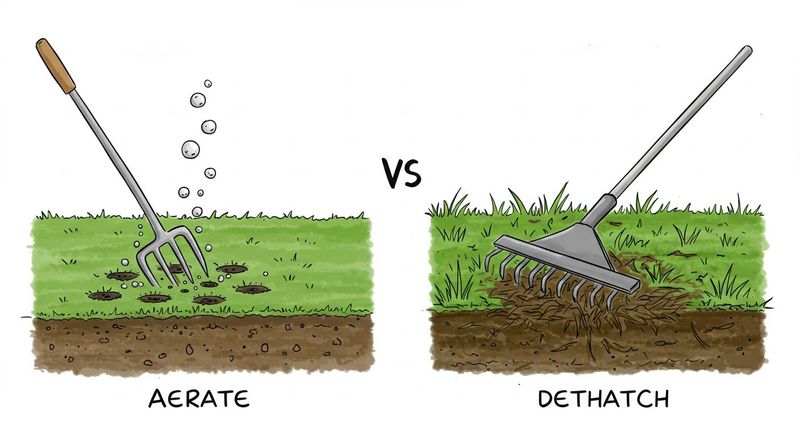
Thatch and compaction are often mentioned together, but they are separate problems with separate remedies, and treating one when you actually have the other can make things worse. Thatch is the layer of partially decomposed stems, roots, and debris that builds up between the grass blades and the soil surface.
A thin layer is normal and can cushion the turf, but when it thickens beyond roughly half an inch to an inch, it begins to intercept water and fertilizer before they reach the root zone and can prevent seed from contacting soil at all.
Pennsylvania State Extension’s thatch management guide identifies more than about 1 inch as a serious problem, though the appropriate threshold can vary by turf type and local conditions. Dethatching a lawn that does not have excessive thatch, or dethatching one that is already stressed, can injure turf that did not need that level of disturbance.
Measure before you act.
Compaction is different. It reduces the pore space in soil, which limits air and water movement and makes root penetration difficult.
UF/IFAS site preparation guidance notes that construction-related compaction can extend more than 12 inches below the surface, well beyond what a single aeration pass reaches. A practical field check is to push a rod or screwdriver into moist soil; if it meets strong resistance before 6 inches, compaction is likely present.
Core aeration can help where compaction is confirmed, but Utah State Extension’s cultivation guide cautions that aeration will not correct standing water, buried construction debris, poor grade, or every variety of dense or dry soil.
The right grass still fails in the wrong light or season
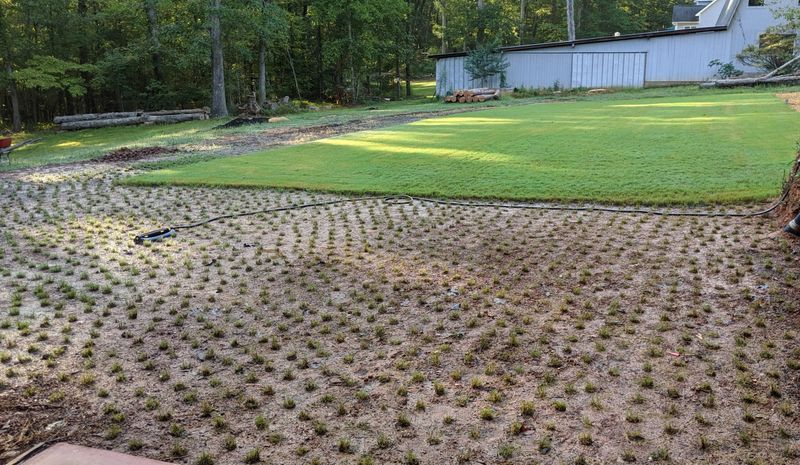
Species fit matters as much as seed quality. Bermudagrass handles Southern heat and drought well, but it performs poorly in shade, and many Southern yards include significant tree canopy.
Texas A&M’s bermudagrass management calendar identifies low shade tolerance as a key limitation, and homeowners who keep seeding bermudagrass under trees are likely to keep failing regardless of seed quality or surface preparation.
Shade tolerance is relative, not absolute. Zoysiagrass and certain St. Augustinegrass varieties handle moderate shade better than bermudagrass, but no turfgrass thrives in dense shade.
Root competition from trees, dry soil beneath canopies, and reduced air movement compound the light problem. UF/IFAS guidance on Florida lawn alternatives recommends considering groundcovers or other non-turf options when shade is too heavy for any grass to succeed.
UF/IFAS shade management for Florida lawns reinforces that even more tolerant cultivars have limits.
St. Augustinegrass deserves a specific mention for Florida and Texas homeowners. UF/IFAS’s Florida lawn grass selection guide explains that St. Augustinegrass is generally established through sod, plugs, or sprigs rather than seed.
Purchasing St. Augustine seed is unlikely to produce a lawn. On timing, warm-season grasses need warm soil and active growth to establish well.
Texas A&M winter weed control guidance and the Texas turfgrass establishment guide both caution that routine winter ryegrass overseeding can stress permanent warm-season turf and delay spring green-up, making it a practice better suited to specific performance goals than to general residential use.
Prepare the seedbed and remove competition before sowing
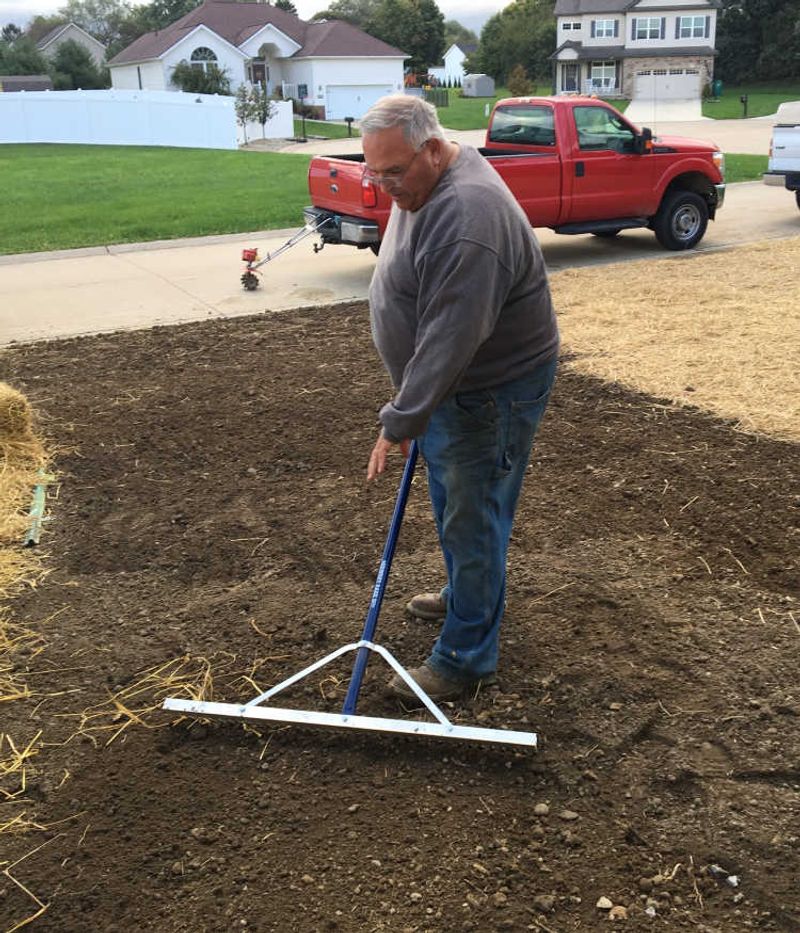
When a lawn needs more than light overseeding, preparation becomes the most consequential step. Grade and drainage problems should be corrected before any seed goes down, because low spots that collect water will drown seedlings, and slopes that shed water too quickly will dry out germinating seed.
Creating a smooth, firm surface gives seed somewhere stable to land and root.
Perennial weeds and unwanted turf are serious competition for new seedlings. They establish faster, root deeper, and can overwhelm even well-prepared seed in a matter of weeks.
A complete renovation may require nonselective herbicide treatment before seeding, but the product label controls the timing. UF/IFAS lawn seeding guidance and Penn State Extension’s establishment guide both identify weed suppression before seeding as a preparation step for full renovations, not an optional extra.
Follow the label’s replanting interval carefully, and recognize that herbicide treatment removes growing vegetation but does not eliminate weed seeds already in the soil.
Amendments and fertilizer should match what the soil actually needs. UF/IFAS site preparation guidance recommends incorporating mature organic amendments into the upper 6 inches for Florida sites when conditions call for it, while warning against excessive volumes and against using immature high-carbon material.
Texas turfgrass establishment guidance echoes that approach for Texas soils. Thick topsoil layers dumped on existing turf can alter grade, introduce new weed seed, and create a weak interface between layers.
Colorado State Extension’s fertilizer guidance warns that excess nitrogen increases weed pressure and disease risk rather than accelerating recovery.
Water the germinating surface, then change the schedule
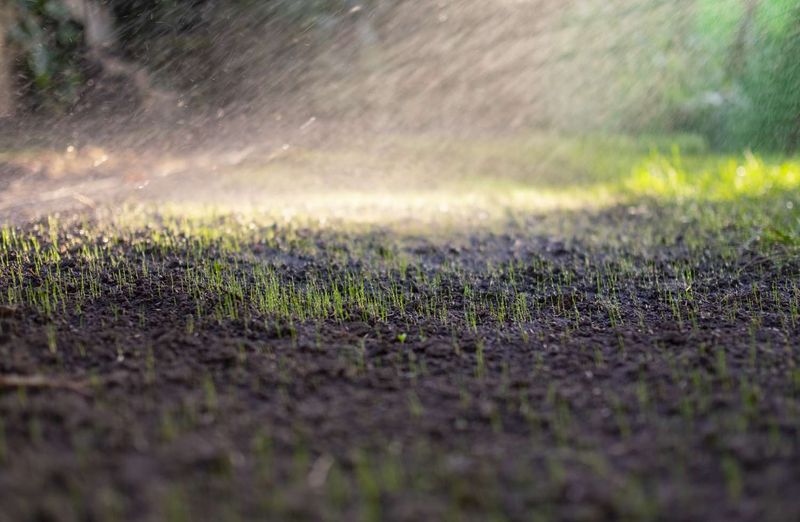
Watering newly seeded turf requires a different approach than maintaining established grass. During early germination, the surface needs to stay consistently moist, but not saturated.
UF/IFAS seeding guidance warns that once seeds absorb water and begin to swell, letting the surface dry out can kill seedlings before they emerge. That means multiple light irrigations per day in hot or windy conditions, timed to keep the top inch of soil damp without creating puddles.
The delivery method matters too. Strong streams from sprinkler heads can wash seed into low spots or off the surface entirely, concentrating germination in the wrong places.
Texas A&M AgriLife’s efficient irrigation guidance recommends gentle, uniform application that wets the surface without runoff or displacement. Saturated soil reduces oxygen availability, promotes disease, and can move lightweight seed, so the goal is moist but well-drained conditions throughout.
As seedlings develop roots, the irrigation schedule should shift. Reduce frequency and increase the depth of each watering cycle so roots follow moisture downward rather than staying shallow.
Texas A&M turfgrass establishment guidance describes this transition as essential for building drought tolerance. One more caution: pre-emergent herbicides are designed to stop germinating seeds, including desirable grass seed.
UF/IFAS guidance on Florida lawn herbicides advises against applying pre-emergents before or immediately after seeding common lawn grasses, and University of Minnesota Extension’s crabgrass guidance gives the same general caution for newly seeded turf.
Choose overseeding only when the lawn can use it
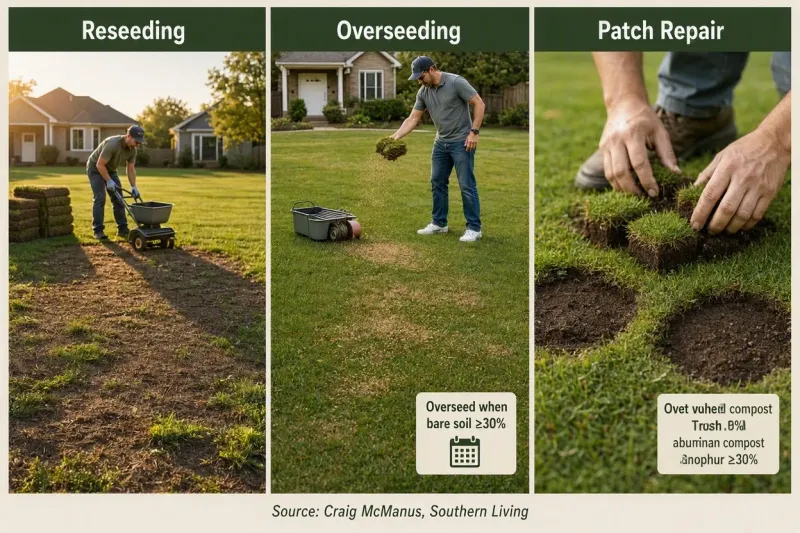
Overseeding works when a lawn has enough desirable grass to justify it. Utah State Extension’s lawn renovation guide describes overseeding as appropriate where a substantial amount of desirable turf remains, while UF/IFAS seeding guidance uses more than 50 percent weeds, or a decision to change turf species, as reasons to consider complete replanting rather than overseeding.
Scattering seed over a lawn that is mostly weeds, severely compacted, chronically shaded, or dominated by an unsuitable grass type tends to repeat the original failure rather than fix it.
The checklist below connects common observed problems to proportionate responses. Thin desirable turf with reasonable soil and light: overseed with correct species and improve seed-to-soil contact.
More than half the lawn is weeds: renovate completely, address the underlying cause, then replant. Chronic shade under trees: evaluate whether turf is realistic, consider groundcovers or mulch.
Compaction confirmed by rod test: address compaction before seeding. Standing water after rain: correct grade or drainage before any planting.
St. Augustinegrass needed in Florida or Texas: use sod, plugs, or sprigs rather than seed, as UF/IFAS confirms vegetative establishment is standard for this species. Wrong warm-season species for the site: consult Texas A&M turfgrass establishment guidance for regionally appropriate alternatives.
Matching the remedy to the actual diagnosis is what separates a successful planting from another season of bare soil. The bag of seed is rarely the problem, but it is also rarely the whole solution.