
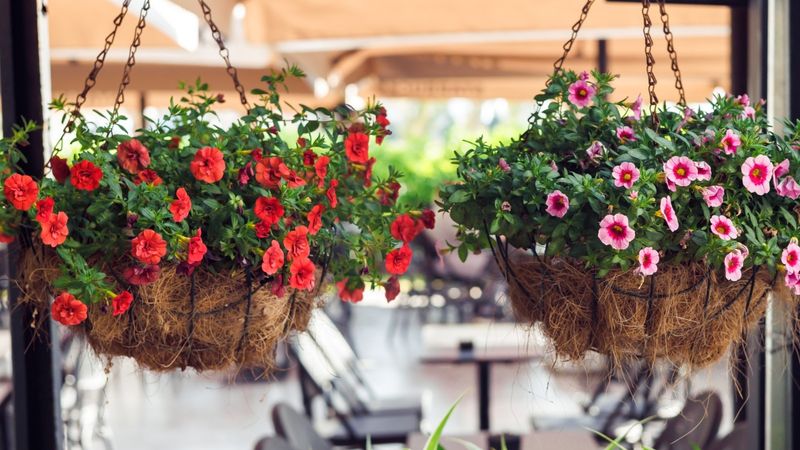
Hanging baskets on a sunny Florida or Texas porch can go from lush and full in the morning to drooping and sad by early afternoon, and the frustration of watering them only to watch them wilt again is real. Many gardeners assume they are doing something wrong, but the problem is often more specific than just not watering enough.
One overlooked watering slip can leave the root ball surprisingly dry even after water has run out of the drainage holes. Understanding what is actually happening inside that basket is the first step toward keeping your plants healthy through the hottest part of the day.
Why a Hanging Basket Can Collapse by Afternoon
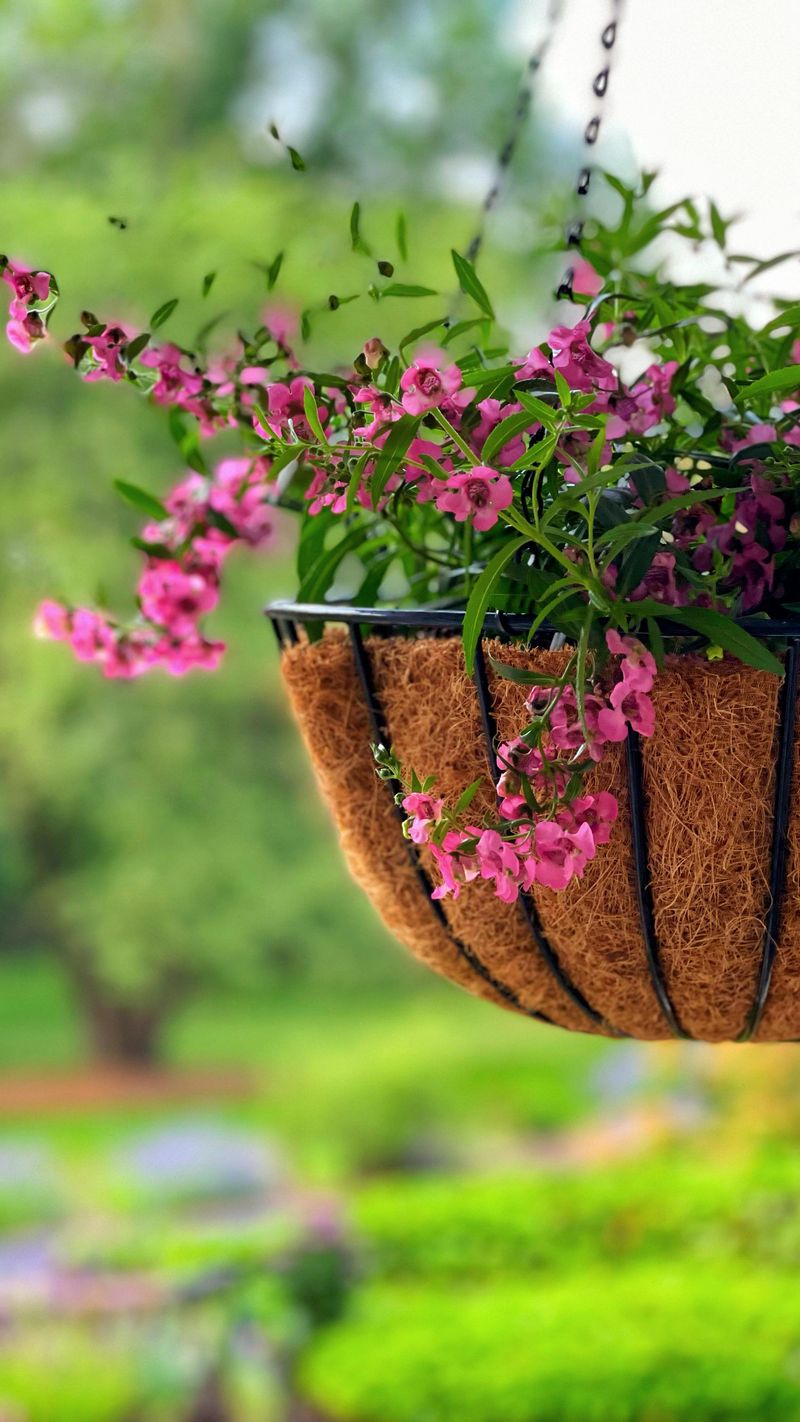
Hanging baskets sit in a tough spot compared to plants growing in the ground. The soil volume inside even a generous 12-inch basket is small, and that limited mix has to supply water to a full, often dense root system through the hottest hours of the day.
Baskets lined with moss or coir face an extra challenge. Illinois Extension notes that moss- and coir-lined baskets lose moisture not only through bottom drainage but also through their porous sides, which speeds up drying considerably compared to a solid plastic pot.
A basket hanging in full afternoon sun, exposed to wind, and packed with mature plants in midsummer can exhaust its available moisture well before evening.
Mature plants make the demand even higher. As roots fill the container, they claim more of the water with each watering cycle, leaving less reserve for the long afternoon stretch.
Heat and wind accelerate evaporation from both the foliage and the mix surface. All of these conditions push a basket toward afternoon stress, but recognizing them as contributing factors is not the same as knowing exactly why your particular basket wilted today.
The cause still needs a closer look before you reach for the hose.
The Drainage You See May Be a False Reassurance
One of the most common assumptions in container gardening is that water coming out of the drainage holes means the job is done. That assumption can quietly leave your plants thirsty even after you have spent time at the hose.
Here is what can happen when a basket dries out severely. The potting mix shrinks as it loses moisture, and it can pull away from the inner walls of the container.
When you pour water in quickly, it finds the path of least resistance: the gap between the mix and the wall. The water runs down that channel and exits the drainage holes fast, looking exactly like a successful watering.
Iowa State University Extension specifically describes this failure mode, pointing out that visible runoff does not prove the root ball absorbed enough water.
The root zone in the center of the basket may remain almost as dry as it was before you started. Plants then continue wilting through the afternoon not because you skipped watering, but because the water bypassed the roots entirely.
This mechanism is a real and well-documented problem, though it is one possibility among several. The key point is that drainage alone is not a reliable signal that your basket is properly watered.
Something more direct is needed to know what is actually happening inside the mix.
Check the Root Zone Before You Water Again
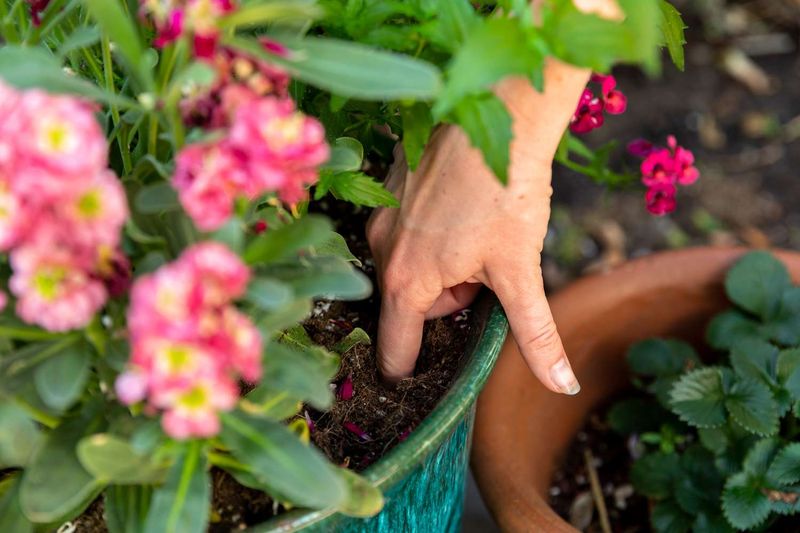
Leaf appearance gives you a starting point, but wilted leaves alone cannot tell you whether the mix is dry, wet, or somewhere in between. A more reliable check starts with your hands.
Push a finger or a thin wooden dowel an inch or two into the potting mix, away from the edge of the basket. If the mix feels dry at that depth, the root ball likely needs water.
While you are checking, look at the space where the mix meets the container wall. A visible gap there is a clear warning sign that the mix has shrunk away and that a quick pour may bypass the root zone.
Iowa State Extension recommends using this combination of clues, including a dry surface, a lightweight basket, and mix that has pulled from the wall, rather than relying on any single indicator.
Basket weight is another practical tool. Lift the basket gently right after a thorough watering and note how heavy it feels.
A properly watered basket is noticeably heavier than a dry one. Over time, that comparison becomes a quick daily check.
A surface that looks damp from a recent rain or a light splash can still sit above a dry interior, so surface appearance should serve only as the first clue, not the final answer. Checking below the surface takes ten seconds and gives you information that leaves and looks cannot.
Water Slowly Enough to Rehydrate the Whole Basket
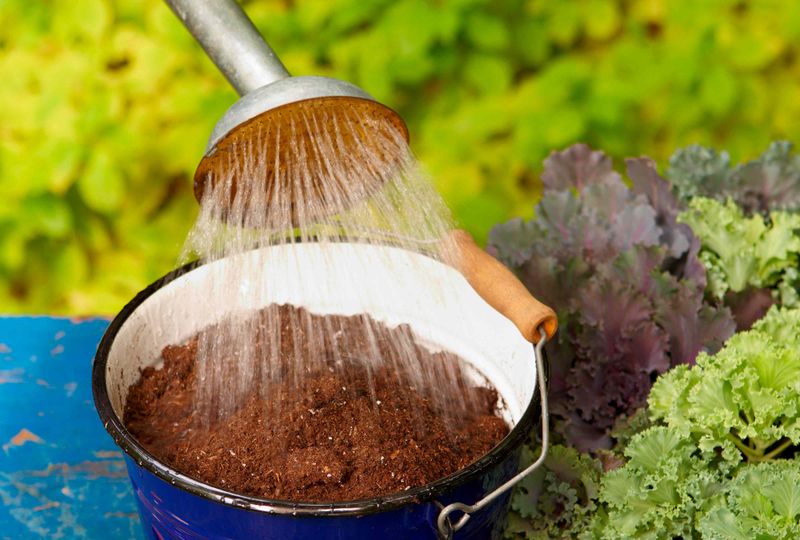
Speed matters when you are watering a hanging basket. A fast pour from a high-pressure hose may look thorough, but it can run through gaps in the mix before the root ball has a chance to absorb much of anything.
The better approach is to apply water slowly and steadily at the soil surface, working your way around the top of the basket so the mix has time to absorb as you go. Continue until water flows from the drainage holes, which signals that moisture has moved through the full depth of the container.
Iowa State Extension explains that the goal of this technique is to moisten the entire soil ball, not simply wet the top layer or produce runoff. Illinois Extension adds a practical follow-up step: if water runs immediately down the sides or exits the bottom before the mix seems wet, give a second, slower application after the first has had a few minutes to soak in.
That pause between applications matters. Dry mix does not absorb water instantly.
Giving it a short rest lets the first round begin softening the surface, which makes the second round more effective. Oregon State Extension frames the goal clearly: successful watering means rehydrating the full containerized root ball while letting excess water drain away, not simply achieving runoff or keeping the mix saturated.
Runoff is one signal that water reached the bottom, but it is not proof that the root zone absorbed what it needs.
An Extremely Dry Basket May Need a Bottom Soak
Sometimes a basket dries out so completely that slow surface watering cannot get moisture into the mix fast enough. Water keeps channeling around the shrunken root ball no matter how patiently you apply it.
That is when a different approach is worth trying.
Placing the basket in a tub of water and letting the mix absorb moisture from the bottom up can rehydrate a severely dry root ball more reliably than repeated surface watering. Iowa State University Extension recommends soaking a severely dry basket for one to two hours so the mix can draw water upward through capillary action.
After that window, remove the basket and allow it to drain completely before hanging it back up.
The time limit matters. Leaving a basket submerged longer than necessary creates a waterlogged environment that can stress roots and contribute to rot.
This technique is a rescue measure for an extreme situation, not a routine practice. After a successful soak, the basket should feel noticeably heavier and the mix should feel moist several inches down.
Going forward, catching dryness earlier with regular weight and finger checks will reduce how often you need to resort to soaking.
Let Moisture Checks Set the Southern Watering Schedule
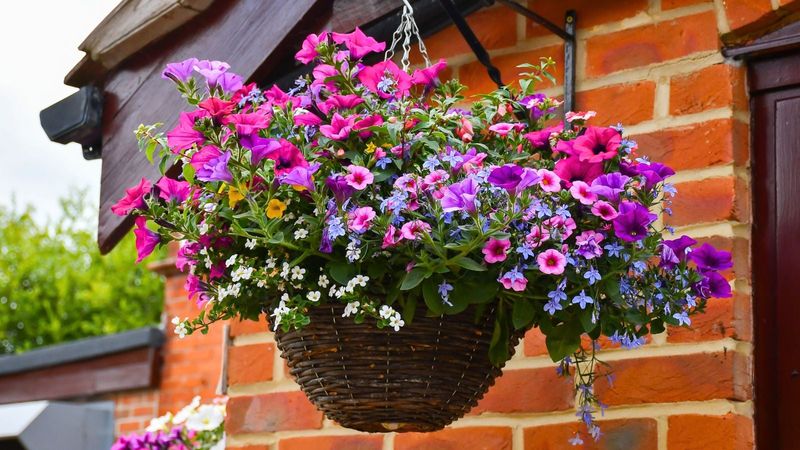
No fixed watering schedule works for every hanging basket in every Southern yard. A small moss-lined basket packed with petunias hanging in full Texas sun will dry out far faster than a larger plastic-pot basket in a shaded Florida entryway, even on the same day.
The most reliable guide is what you find when you actually check the mix. Lift the basket, press a finger into the soil, and look for wall separation.
Iowa State Extension emphasizes that moisture checks rather than a fixed calendar should drive your watering decisions, with factors like basket depth, plant maturity, liner type, container material, wind exposure, and current temperatures all affecting how fast a specific basket dries. Illinois Extension recommends morning as the most efficient time to water because plants can take up moisture before the heat peaks, but also states clearly that a wilted basket should be watered when you find it rather than left to wait until the next morning.
Texas A&M AgriLife Extension notes that mature container plants may need daily or even twice-daily watering during the hottest Southern stretches, depending on pot depth, plant load, container material, and weather. Those intervals are real possibilities for some baskets, but they are situational, not a universal rule.
Build your schedule around what the mix and the weight of the basket are telling you each day, and adjust as the season and your plants change.
When Afternoon Wilting Is Not a Thirst Signal
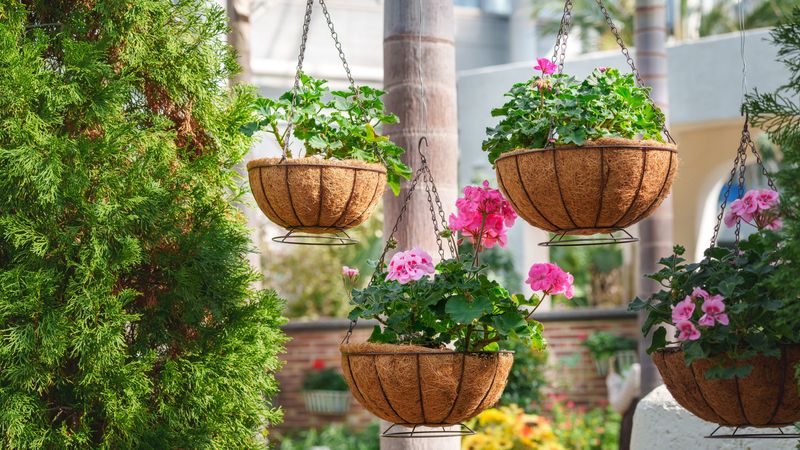
Wilting in the afternoon does not automatically mean the mix is dry. Plants under intense heat and sun can lose water through their leaves faster than the roots can replace it, even when the soil has plenty of moisture.
This is heat stress, and it looks almost identical to drought stress from across the yard.
The pattern that distinguishes heat stress is timing and recovery. A basket that droops during the hottest hours of the afternoon but bounces back by evening or early the next morning is likely responding to heat and transpiration load, not an empty root zone.
Oregon State Extension explains that this temporary midday wilting is a common heat-stress response and that the right first step is checking the soil rather than automatically adding more water. Adding water to an already moist root zone does not cool a heat-stressed plant and can push a well-drained basket toward saturation problems over time.
The opposite pattern, wet soil combined with wilting that does not recover overnight, points toward a different set of problems. Poor drainage, waterlogged roots, root damage from physical handling, or a root disease can all produce drooping foliage despite adequate or even excess moisture.
Illinois Extension notes that containers must have drainage holes and that plants should never sit in standing water. For a heat-stressed basket, consider whether moving it to morning sun or afternoon shade might reduce the stress, keeping in mind that light requirements vary by plant.
Reduce the Basket’s Daily Water Loss
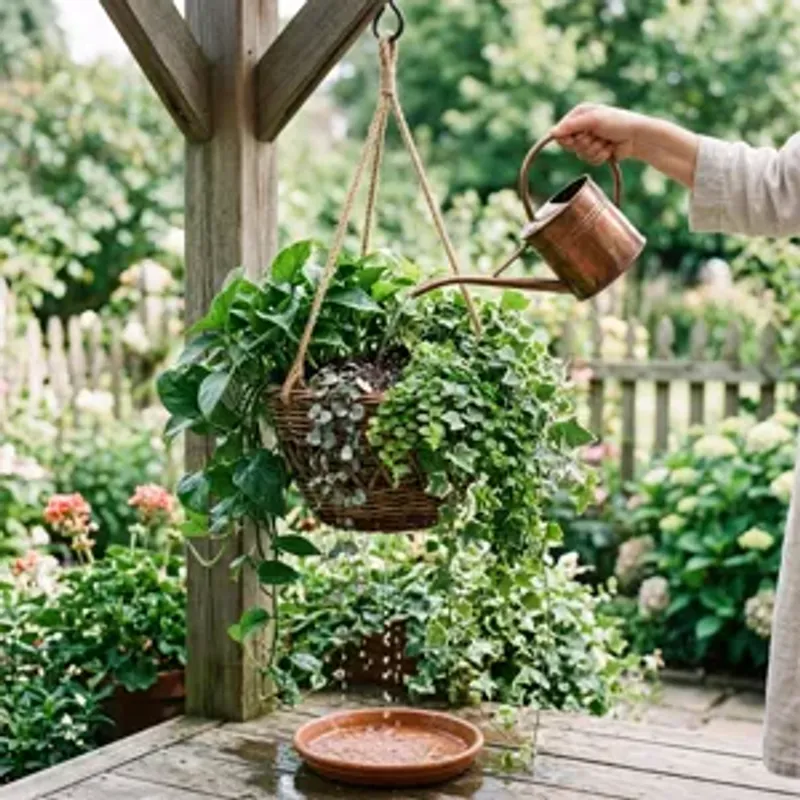
Addressing how you water is the most direct fix, but the setup of the basket itself affects how quickly it loses moisture in the first place. A few adjustments can reduce the daily demand without replacing the need for moisture checks.
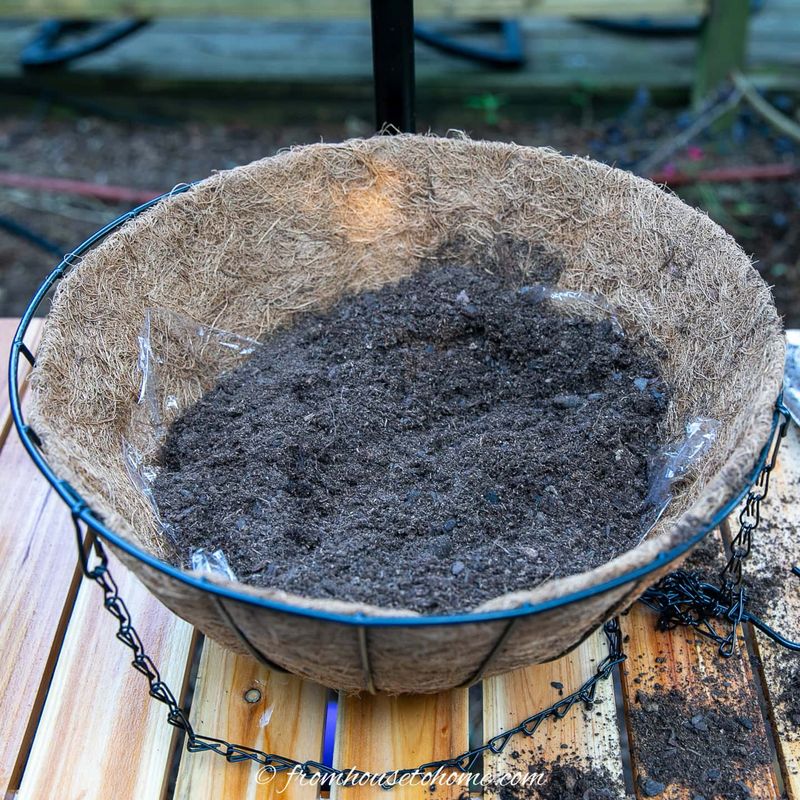
Moss and coir liners are beautiful, but they release moisture through their sides as well as the bottom. Illinois Extension suggests lining the inside of a moss or coir basket with plastic sheeting to slow evaporation from the sides, but only if that liner has drainage holes at the bottom so excess water can still escape.
Trapping water with a sealed liner creates the waterlogged conditions you are trying to avoid. A lightweight potting mix formulated for containers, rather than ordinary garden soil, helps the mix retain moisture while still draining freely.
Illinois Extension also notes that a light surface mulch can reduce evaporation from the top of the container, though the basket will still need regular monitoring.
For gardeners with multiple baskets or limited time, drip or microirrigation is worth considering. UF/IFAS Extension recommends drip irrigation as an efficient and consistent option for containerized plants, delivering water directly to the root zone on a schedule you set.
Exposure changes, such as shifting a basket from full afternoon sun to a spot with morning light and afternoon shade, can also reduce heat load and water demand, though the right move depends entirely on what your plants need to thrive.
Treat Runoff as a Clue, Not a Diagnosis
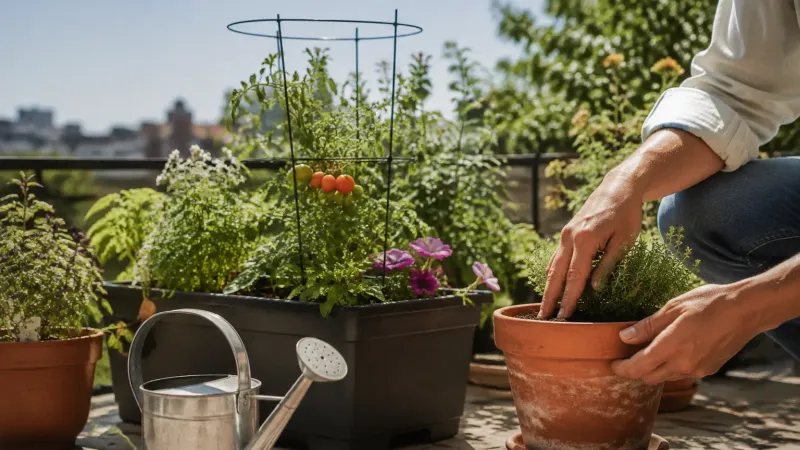
Seeing water drip from the bottom of a basket is useful information, but it is only the beginning of the story. Water exiting the drainage holes tells you that moisture reached the bottom of the container.
It does not confirm that the root ball absorbed what it needed, especially if the mix had pulled away from the walls and let water run around the roots rather than through them.
The practical rule is to check the actual mix and the basket weight, water slowly until you have reason to believe the full root ball is rehydrated, and repeat the application if severely dry mix is repelling water or channeling it sideways. Reserve a one- to two-hour bottom soak for cases where surface watering clearly cannot penetrate the mix, and always allow complete drainage afterward.
Iowa State Extension frames this as the standard for a properly watered basket: the entire soil ball is moist, and excess water has drained away.
When a basket stays wilted despite moist soil, the answer is not more water. Reassess heat exposure, drainage, root health, and whether the plant is simply overwhelmed by afternoon conditions it was not selected for.
Oregon State Extension reminds gardeners that a plant recovering on its own by morning is usually telling you something different than one that never recovers at all. Runoff starts the conversation; the weight of the basket and the feel of the mix finish it.