
By late summer, many hostas that looked full and lush in spring have turned into something you’d rather not look at – scorched edges, ragged holes, and leaves that seem to be disappearing. Southern gardeners face this every year, and it’s frustrating because the plant looked so promising just a few months ago.
The good news is that understanding what’s actually driving the decline puts you back in control, and the fix starts with something as straightforward as how and where you water.
Late-summer raggedness has several possible causes
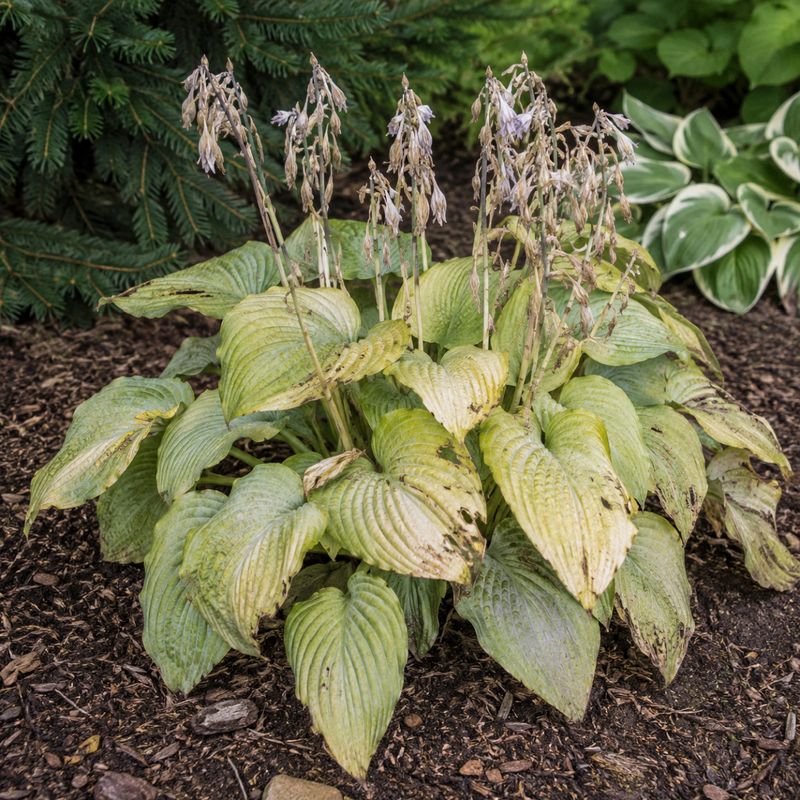
Not every thin or ragged hosta is suffering from the same problem, and treating them all the same way is one of the most common mistakes Southern gardeners make. Iowa State University Extension notes that hostas perform best in evenly moist, well-drained soil, and that drought, hot afternoon sun, and root competition from nearby trees can produce brown edges, bleaching, drooping, and an overall worn-out appearance as the season drags on.
“Thin” does not always mean the plant is struggling. Some cultivars simply grow leaves with a thinner texture, which makes them more vulnerable to scorching and sun damage.
A sparse-looking clump, on the other hand, can reflect drought stress, immature root development, pest pressure, disease, or a site that was never quite right for that variety.
“Ragged” is also not a single diagnosis. Purdue’s late-summer hosta diagnosis highlights that heat, drought, marginal scorch, leaf spots, insects, and slug damage often occur together, layering symptoms on top of each other.
University of Georgia Cooperative Extension confirms that hostas in the South face compounding pressure from afternoon sun and summer heat that plants in cooler climates rarely encounter. Moisture management addresses an important and preventable piece of that puzzle, but it cannot explain or repair every damaged leaf.
Keep the root zone evenly moist
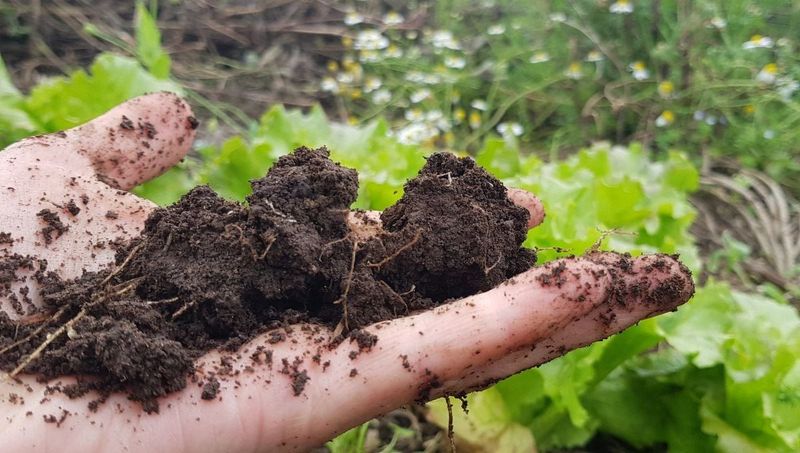
The most useful single routine for protecting hostas during hot, dry stretches is keeping the soil in the surrounding root zone consistently moist but never waterlogged. Check the soil a few inches out from the crown rather than directly against it.
If the top inch or two feels dry, the plant needs water.
University of Missouri Extension offers approximately 1.5 inches of water per week as a general summer guideline, but that number is a starting point, not a rule. Your actual need will shift depending on rainfall, soil type, drainage, heat, and whether established tree roots are competing for moisture in the same bed.
A hosta planted under a large oak or maple may need noticeably more frequent attention than one in open shade.
Steady moisture helps a hosta maintain the foliage it already has and supports healthy growth from a viable crown and root system. What it cannot do is regenerate tissue that has already been scorched, chewed, spotted, or killed.
Iowa State Extension and UGA Cooperative Extension both specify moist but well-drained conditions, meaning that watering more is not automatically better. Constantly saturated soil can damage roots and crowns just as drought can.
Water at soil level and mulch carefully
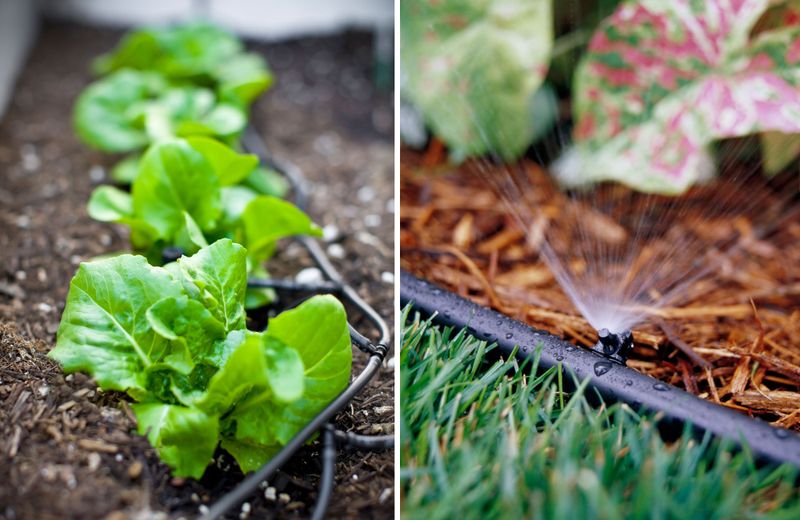
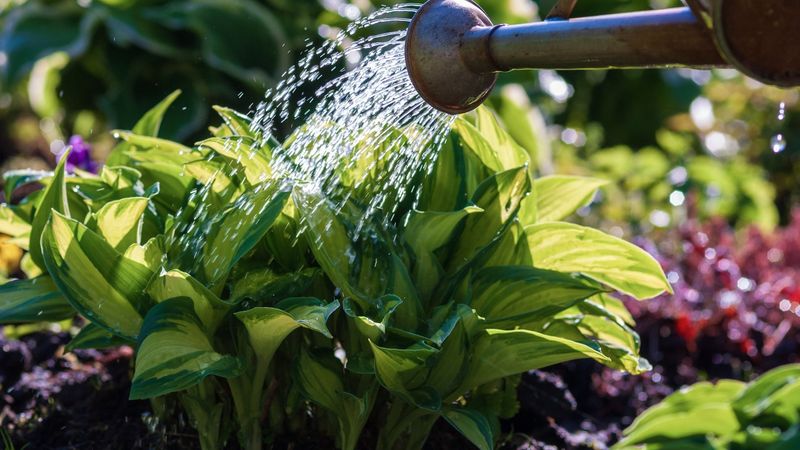
Once you know the root zone needs water, how you deliver it matters almost as much as how much you apply. University of Illinois Extension recommends watering the soil beneath the foliage rather than routinely wetting the leaves.
A soaker hose, drip system, or slow hand-watering directed at the ground keeps foliage dry and reduces the conditions that encourage foliar disease. Where possible, water early in the day so any incidental splash on leaves can dry before evening.
A two- to three-inch layer of organic mulch spread around the plant helps hold that moisture in place between waterings. The key word is “around.” Iowa State Extension and UGA Extension Forsyth County both emphasize keeping mulch pulled back from the crown itself.
Piling mulch directly against the crown traps moisture there and creates exactly the kind of cool, damp environment that promotes rot.
Poor drainage is a related problem worth watching. University of Minnesota Extension notes that persistently wet conditions also favor slug activity, so a bed that stays soggy after rain can work against you on multiple fronts.
The goal is consistent moisture, not standing water.
Read the damage pattern before treating
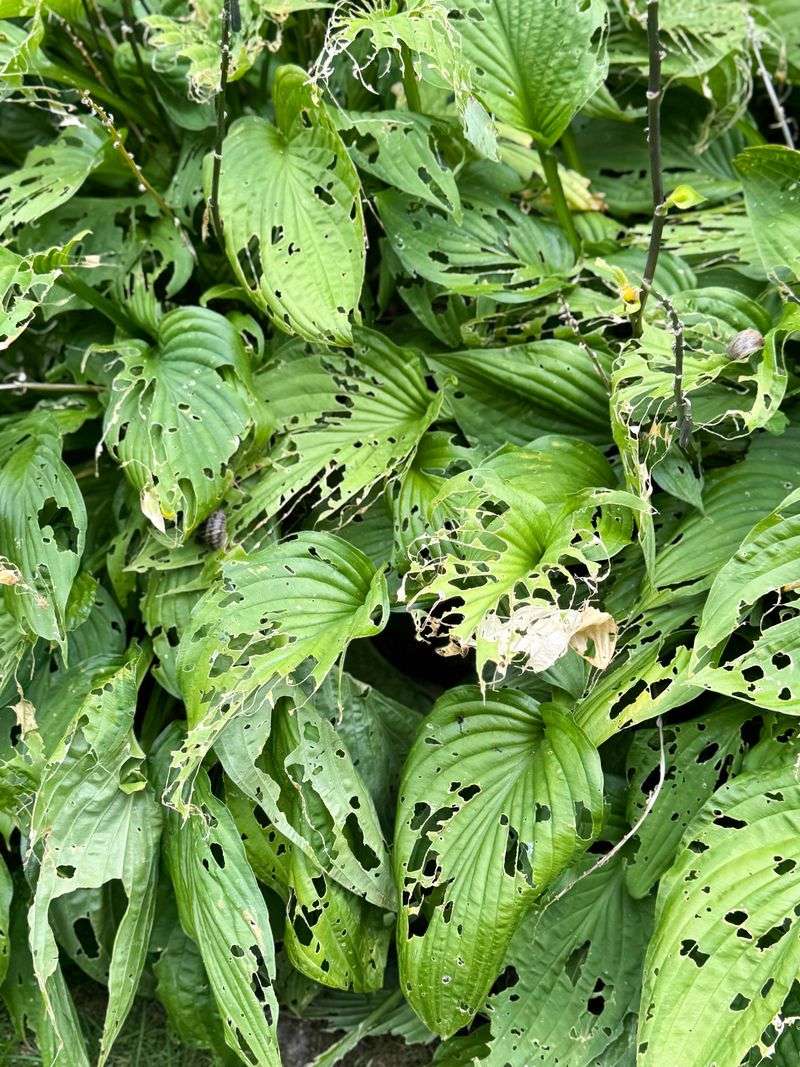
Before reaching for any product or changing your watering schedule, spend a few minutes looking closely at what the damage actually looks like. The pattern usually points directly to the cause, and that matters because the right response for slugs is completely different from the right response for sunscald or deer.
Irregular holes scattered across leaf surfaces, especially when paired with silvery slime trails, are a strong indicator of slug or snail activity, according to the University of Minnesota Extension hosta diagnostic guide. Entire leaves or large sections that have disappeared overnight, leaving only petiole stubs behind, point more toward deer, rabbits, or other animals feeding on the plant.
Bleached patches, papery texture, and brown or tan margins that look almost dried out are consistent with sunscald or drought-related scorch, as described by South Dakota State University Extension. That kind of damage tends to appear on the parts of the leaf most exposed to afternoon sun or reflected heat.
The Minnesota leaf-spots diagnostic distinguishes these environmental symptoms from tan or brown spots with darker borders, which may indicate anthracnose or another leaf-spot disease.
Yellow or brown streaking running between the veins on older leaves is a separate concern entirely. Penn State Extension flags this pattern as a possible sign of foliar nematodes, a soil-dwelling pest that moves through water film on the plant.
Extra water will not solve any of these problems and may make some of them worse.
Preserve green leaves and prune selectively
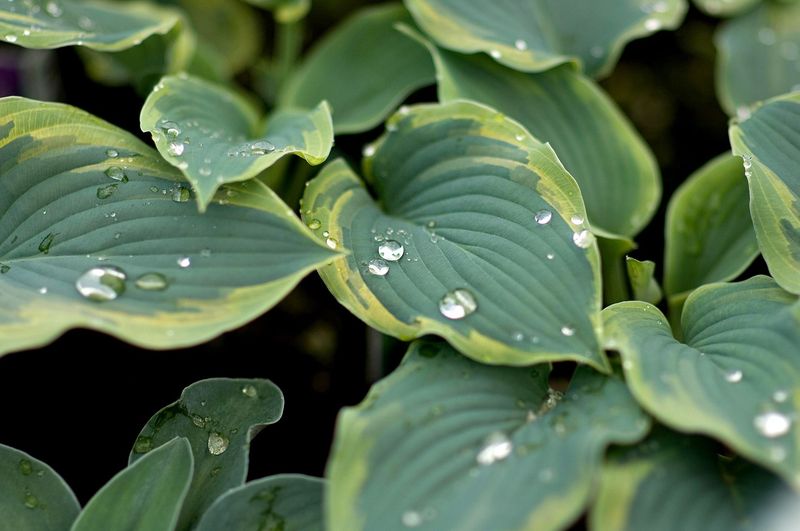
An unattractive leaf is not automatically a useless one. Green tissue, even on a leaf with scorched margins or minor holes, continues to photosynthesize and helps the plant build energy reserves before it goes dormant in fall.
Stripping off leaves simply because they look rough removes that contribution and puts more stress on an already-struggling plant.
South Dakota State University Extension makes clear that damaged areas on a leaf will not turn green again once they have dried out or died. The practical takeaway is to leave leaves that are still substantially green, even if the edges are brown or papery.
Remove only those that are fully dead, badly diseased, or so damaged that they offer no green surface at all. Cut them cleanly at the base of the petiole rather than tearing.
University of Illinois Extension notes that a hosta can be cut to the ground after extensive weather or physical damage as a rejuvenation measure, but cautions that regrowth that season may be smaller than normal. Reserve that step for plants with widespread destruction across most of their foliage.
Penn State Extension reminds gardeners that dead foliage on herbaceous perennials is generally removed after it dies back naturally, not while it is still carrying any green tissue.
Reduce heat, sun, and root competition

Adequate watering can only do so much when the site itself is working against the plant. Hot afternoon sun is one of the most common reasons Southern hostas look scorched and worn by midsummer.
UGA Cooperative Extension specifically recommends afternoon-sun avoidance and supplemental irrigation for hostas grown in Georgia, where summer heat is reliably intense. Cultivars with thinner-textured leaves are especially prone to scorch, and no amount of water will compensate for direct afternoon sun on a variety that was not bred for it.
Tree roots are a quieter but equally serious competitor. A mature oak or maple can pull enormous amounts of water from the surrounding soil, leaving hostas planted in the same root zone chronically short on moisture even when you water regularly.
Iowa State Extension acknowledges this competition as a factor in hosta performance under trees. Watering more frequently can help, but improving drainage or adding raised-bed soil may be necessary on sites where the ground stays compacted and dry.
Regional fit matters too. UGA Extension care guidance supports hostas across Georgia with the right cultivar choices and siting.
In Florida, hostas appear on shade-plant lists, but South Florida conditions differ significantly from temperate hosta culture, and results vary by cultivar and microclimate. Improving site conditions does not mean keeping soil constantly wet; well-drained, evenly moist soil remains the target regardless of location.
Use targeted controls for pests and disease
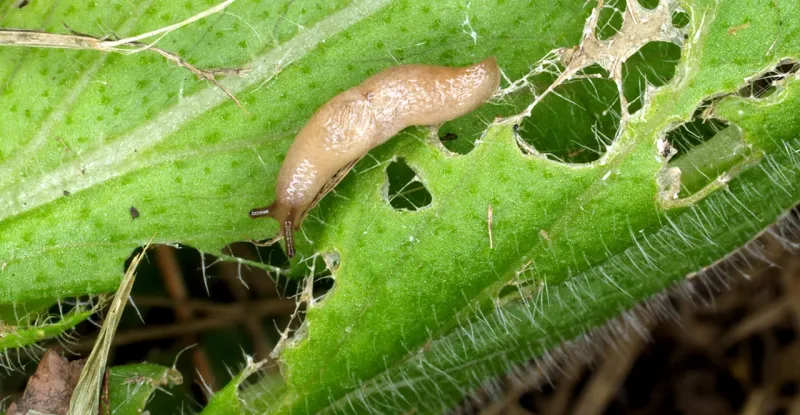
Once you have identified the damage pattern, match your response to the actual cause rather than applying a general treatment and hoping for the best. For slugs, start with monitoring and habitat management before reaching for any product.
University of Minnesota Extension recommends going out at night with a flashlight to confirm slug activity, then reducing excess debris, improving airflow around plants, and avoiding persistently wet conditions where practical. Slugs thrive in cool, damp hiding spots, so a bed that stays moist under heavy mulch all day gives them ideal cover.
If bait becomes necessary, iron-phosphate products are generally less toxic than metaldehyde alternatives. However, the National Pesticide Information Center cautions that iron-phosphate baits are not harmless if consumed in quantity, and metaldehyde is highly toxic to dogs and other animals.
Read the product label fully before applying, and take appropriate precautions around pets, children, wildlife, and beneficial organisms. Do not use salt around hostas for slug control.
Illinois Extension explicitly warns that repeated salt use can poison the soil and the plant itself.
For deer, fencing remains the most reliable protection. Repellents can provide temporary deterrence but need regular reapplication, especially after rain, and should be rotated to reduce habituation.
For disease, Penn State Extension emphasizes confirming the specific pathogen before applying any fungicide, following label directions, and considering the impact on surrounding plants and soil life. The Minnesota hosta diagnostic tool can help you confirm what you are dealing with before committing to a treatment.
Protect recovery instead of chasing a quick makeover
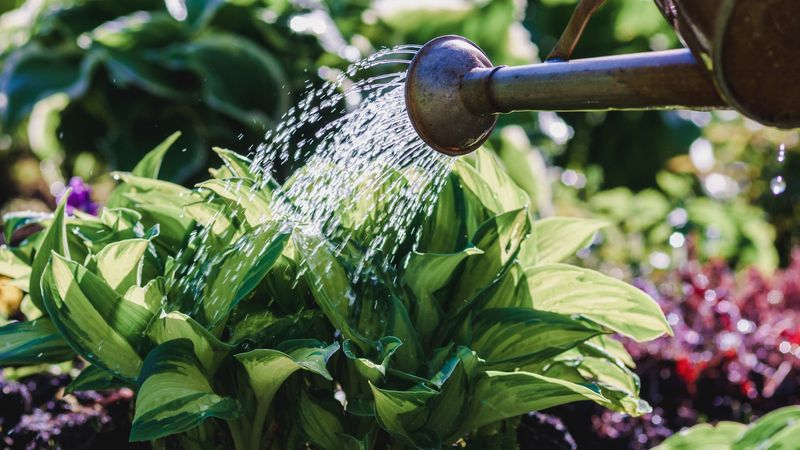
A practical action sequence for a struggling hosta is shorter than most gardeners expect. Check the soil in the surrounding root zone, not directly against the crown.
Water deeply at soil level when that soil feels dry, and keep the crown itself from staying wet. Preserve whatever green foliage remains, because it is still working for the plant even if it looks rough around the edges.
Then identify the damage pattern before pruning anything or applying any product.
This routine protects recovery potential and supports stronger growth going forward. It does not guarantee an instant refill of foliage, and Iowa State Extension confirms that water cannot restore tissue that is already dead.
Illinois Extension also cautions against late fertilizer applications after approximately mid-July, since soft new growth produced late in the season may not harden properly before winter arrives. Cutting flower stalks can tidy the plant’s appearance, but there is no established evidence that deadheading reliably restores sparse foliage.
Normal autumn dieback, as Penn State Extension notes, is a natural part of how herbaceous perennials behave, not a sign that something went wrong. A hosta that finishes summer looking tired but still mostly green has done its job.
The plants that come back strongest next spring are usually the ones whose roots were kept steady, not the ones that were cut back in a panic.