
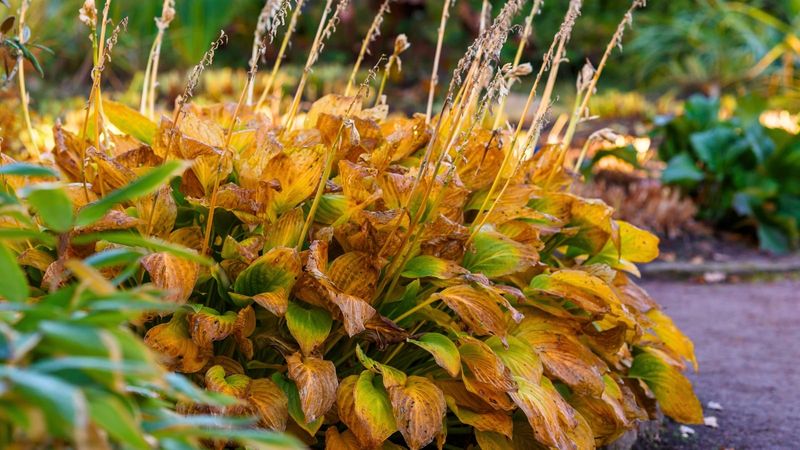
Hostas are among the most forgiving shade plants in Southern gardens, but what happens to them in fall matters more than most gardeners realize. Cutting back spent foliage at the right moment can leave your beds looking tidier and may reduce the debris that shelters pests or carries disease into next season.
That said, the timing of the cut matters far more than the act itself, and getting it wrong by cutting too early can actually work against the plant. Here is what the evidence actually supports, and how to match your approach to your local climate.
Cut back spent foliage, not healthy green leaves
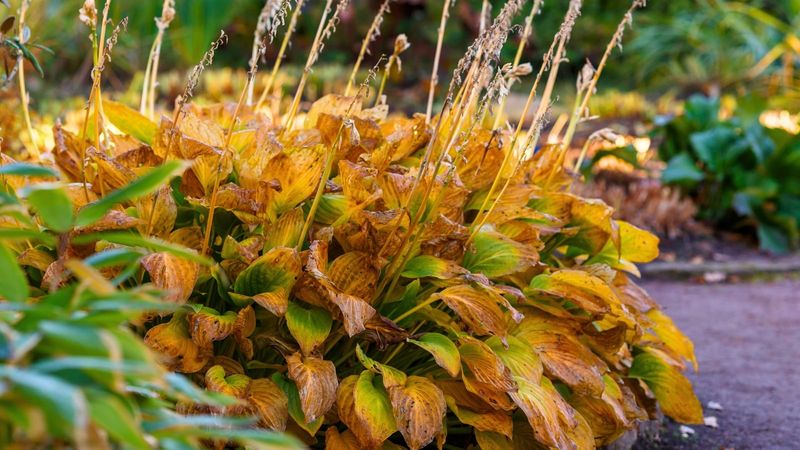
Fall cutback on hostas is genuinely useful, but not quite for the reason the popular advice suggests. Removing spent foliage can tidy the bed and reduce plant debris that may shelter slugs or carry some diseases and foliar nematodes into next season.
What it does not reliably do is make your hostas stronger or guarantee better spring growth. The real payoff is cleaner beds and potentially lower pest and disease carryover, and that is a worthwhile goal on its own.
The most important decision rule is this: wait until most or all of the foliage has naturally yellowed, browned, collapsed, or been clearly killed by a hard freeze before you reach for the shears. University of Illinois Extension guidance on hosta fall care specifically recommends cutting back foliage once fall color subsides, and Ask Extension’s hosta care guidance identifies post-frost or post-senescence as the appropriate window.
Foliage condition is a far more reliable trigger than any calendar date. A light frost may leave hosta leaves looking slightly tired but still functional, and cutting them at that point is premature.
North Carolina Extension’s hosta profile notes the importance of matching care to what the plant is actually doing, not to a fixed date on the wall. Let the leaves tell you when they are done.
Let green leaves finish storing energy
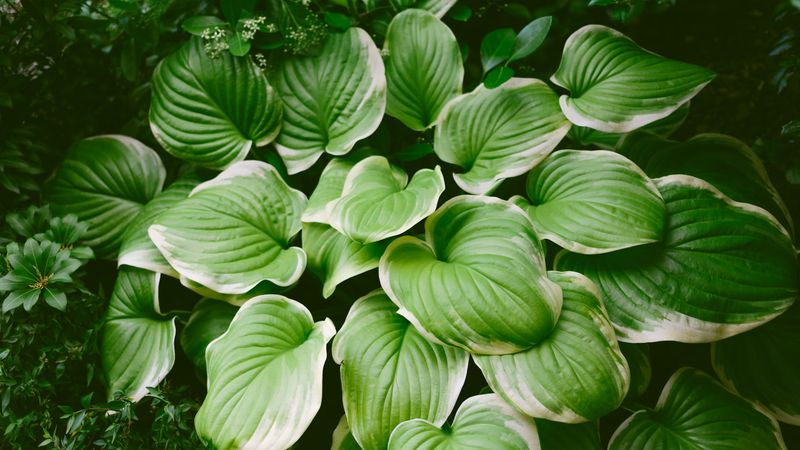
Hosta leaves do more than look decorative. Green foliage is photosynthetically active, meaning it is still capturing light and converting it into carbohydrates that the plant stores in its roots for the coming season.
Cutting those leaves while they are still working removes part of the plant’s ability to build those reserves before it goes dormant.
University of Nebraska-Lincoln’s plant physiology lesson on perennial dormancy explains that carbohydrate storage during the pre-dormancy period is critical for a perennial’s ability to re-emerge and grow the following year. Removing healthy foliage before it has naturally declined interrupts that process.
The plant can survive early cutting, but it may enter dormancy with less stored energy than it would have had otherwise.
This distinction matters because it separates two very different situations. Removing dead, collapsed, or disease-spotted leaves after the plant has finished its seasonal work is a reasonable cleanup practice.
Shearing off healthy green leaves in early fall because the season feels like it should be winding down is a different action with a different consequence. University of Nebraska-Lincoln’s hosta production guide supports waiting for natural senescence rather than imposing an arbitrary cut date.
Let the foliage complete its job, then clean it up.
Remove collapsed leaves without injuring the crown
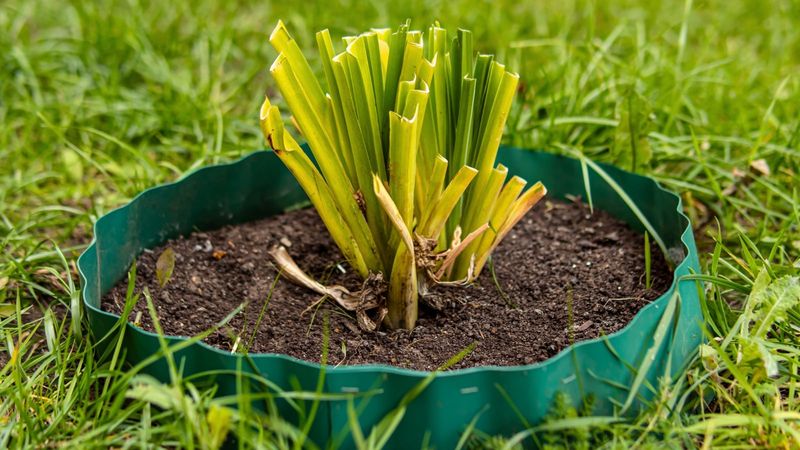
Once the foliage has fully collapsed or died back, the actual cleanup is straightforward but worth doing carefully. Use clean, sharp pruners or scissors to cut the spent leaves and their petioles as close to the crown as practical.
Work at a deliberate pace and watch where you are cutting, because the crown sits at or just below the soil surface and is easy to nick or gouge if you rush.
University of Illinois Extension’s hosta winter prep article recommends removing the foliage and collecting the fallen leaves from around the plant. Soggy, wet debris packed against the crown restricts air circulation and creates the kind of moist, sheltered environment where pests and disease problems are more likely to develop.
Clearing it away addresses both concerns at once.
There is no universal required cutting height that applies to every hosta cultivar, and the sources do not establish one. The practical goal is to remove the spent top growth without leaving long stubs that can trap moisture or without cutting so low that you damage the growing points.
Nebraska Extension’s hosta guide supports careful removal of spent tops as a sound practice. After cutting, also rake or hand-collect any leaves that have already fallen and settled around the base of the plant.
University of Minnesota Extension guidance on mulching perennials reinforces the value of a clean, debris-free bed surface going into the colder months.
Treat suspicious foliage as a sanitation problem
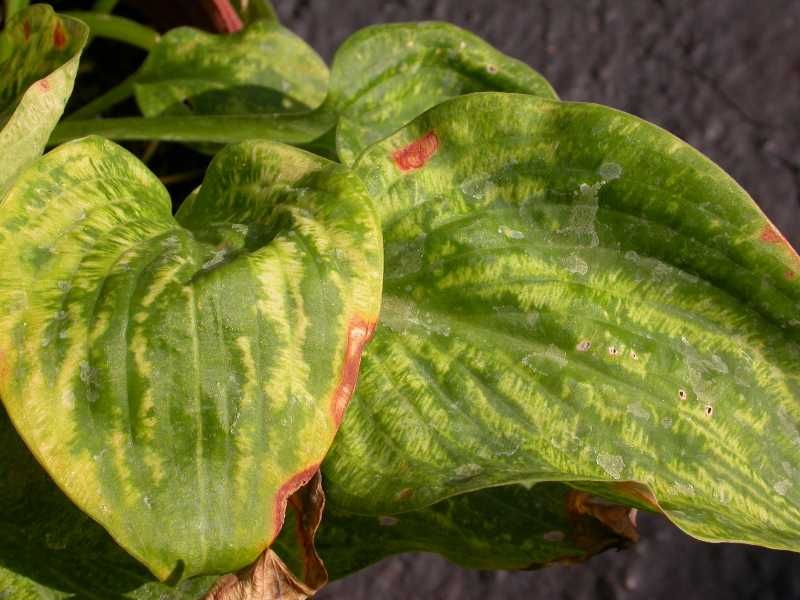
Not all hosta foliage that comes off in fall is the same. Leaves that have simply yellowed and collapsed as part of normal seasonal decline are very different from leaves showing dark streaks, mottled patterns, unusual spotting, or mushy rot at the base of the petiole.
Treating those two categories the same way is where cleanup can go wrong.
Penn State Extension’s hosta disease guide identifies several transmissible problems, including Hosta Virus X, petiole rot, and foliar nematodes, that can persist in plant debris or spread through contaminated tools. If your hostas showed any of those symptoms during the growing season, the cut material should not be left in the bed and should not go into a standard home compost pile.
Home compost piles rarely sustain the temperatures needed to kill plant pathogens reliably. Bag the suspicious material and dispose of it with household waste instead.
Pruning does not cure Hosta Virus X. Missouri Botanical Garden’s Hosta Virus X resource is direct on this point: infected plants have no cure and may need to be removed entirely and destroyed to prevent spread.
Crown rot and other serious diseases can similarly require full plant removal rather than a simple trim.
Iowa State Extension’s fall cleanup and disease prevention article stresses that removing infected debris is one of the most effective steps a home gardener can take to reduce disease carryover. When working around plants with suspected transmissible disease, clean visible soil and plant sap from your pruners before disinfecting them between plants.
MSU Extension’s tool sanitation guidance supports cleaning tools first, then applying a disinfectant, because organic matter can block disinfectants from working effectively. Also, Iowa State’s fallen-leaf management guidance notes that diseased material left on the ground can reinfect plants the following season, so thorough collection matters as much as the cut itself.
Reduce slug shelter without promising slug control
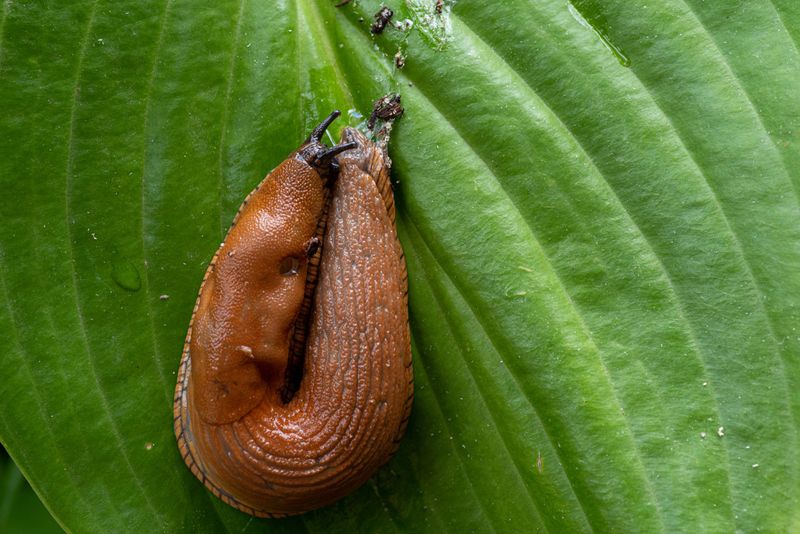
Slugs and snails rank among the most consistent problems for hosta growers across the South, and they thrive in exactly the conditions that a neglected fall bed provides: cool temperatures, moisture, shade, and plenty of places to hide. Collapsed hosta foliage piled against the crown gives slugs a ready shelter where they can overwinter or wait out dry spells, so removing that debris in fall does reduce the habitat available to them.
University of Minnesota Extension’s slug management guide explains that slugs can shelter and lay eggs in plant debris, mulch, and soil, which means a fall cleanup that removes collapsed foliage takes away one layer of that habitat. That is a real, if modest, benefit.
What cleanup cannot do is eliminate slugs from your garden. They persist in the soil itself, in surrounding mulch, in nearby ground cover, and in debris from other plants.
University of Illinois Extension’s hosta fall care guidance notes that removing debris reduces shelter for pests without suggesting that cleanup alone solves a slug problem. Realistic slug management typically includes habitat reduction, targeted baits or barriers, and monitoring through the growing season.
Treating fall cleanup as one useful piece of that larger effort is the right framing. Expecting it to prevent or cure a slug infestation is not.
Adapt winter care to the hosta and the local climate
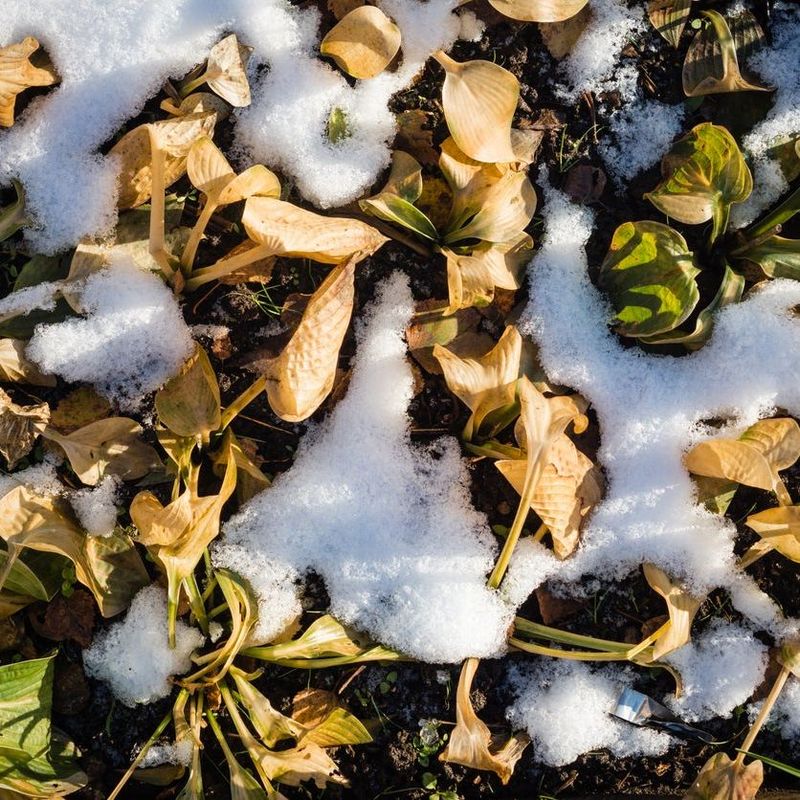
Most established hostas are genuinely tough plants that do not need any winter protection at all. Iowa State Extension’s hosta winter protection FAQ is clear that established plants handle cold well on their own, while newly planted hostas face a different situation.
A plant that has not yet developed a deep, anchored root system is more vulnerable to repeated cycles of freezing and thawing, which can heave the crown out of the soil.
For newly planted hostas where some protection makes sense, Nebraska Extension’s hosta guide recommends applying clean straw or pine needles after the ground begins to freeze, not before. Mulching too early can actually trap warmth and delay the plant’s natural hardening process.
Keep the mulch layer light and away from direct contact with the crown itself, because heavy or wet mulch sitting on the crown can promote crown rot. University of Minnesota Extension’s mulching guidance reinforces pulling winter mulch back in spring so the crown can breathe as temperatures rise.
Timing across the South varies considerably by local weather and climate, not by a fixed date. North Carolina Extension’s hosta profile notes that hostas perform best in full or dappled shade in the South, but the cue to act should come from the plant and the weather, not the calendar.
In Florida and other warm Southern zones, the situation is different again. UF/IFAS extension notes on hostas acknowledge that many hosta varieties require winter chill to perform well, and some may not receive enough in Florida’s warmer zones to enter a pronounced dormancy at all.
In those areas, frost-based pruning advice may simply not apply. UF/IFAS cold-weather landscape preparation guidance also cautions against pruning cold-damaged plants too quickly after a freeze, because damaged foliage can provide some insulation during any additional freezes that follow.
That post-freeze caution is separate from routine cleanup of fully dead foliage after the cold period has clearly passed. Watch the forecast, read the plant, and let your local conditions set the schedule.
A clean, well-timed bed is a better goal than a perfectly uniform one.