
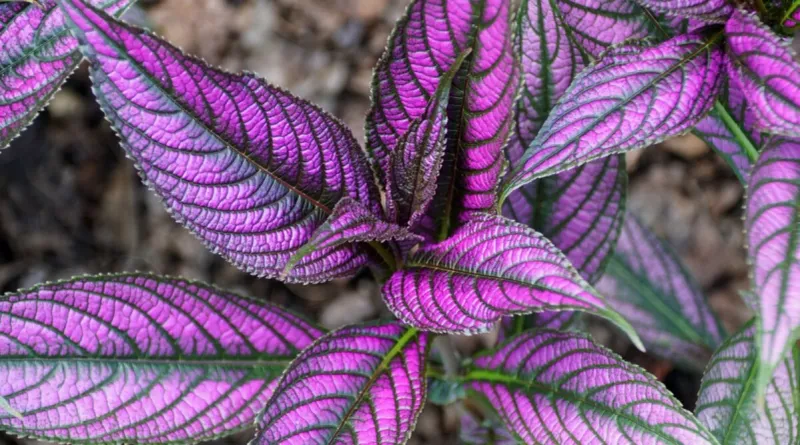
Noticing purple leaves on your houseplants this fall can feel alarming, especially when the color seems to appear out of nowhere. Before you reach for fertilizer or assume the worst, it helps to know that purple foliage has several possible explanations, and most of them are manageable.
Working through what changed in your plant’s environment is a far better starting point than guessing at a single fix.
Purple leaves are a symptom, not a diagnosis
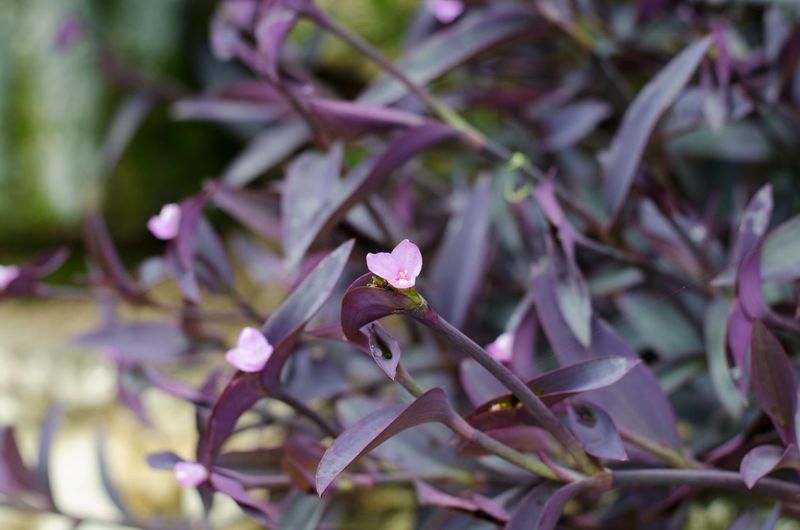
Seeing your houseplant’s leaves shift toward purple or red can send you searching for a quick answer, but the color alone is not enough to name the problem. Michigan State Extension’s guide on purple leaves makes clear that root health, substrate phosphorus, light intensity, and temperature all need to be checked before settling on any one explanation.
The symptom looks different depending on the cause: uniform color across the whole leaf is a different clue than purple veins, marginal discoloration, blotchy patches, or tissue that is curling, spotting, or dying.
Which leaves are affected matters just as much as what the color looks like. New growth turning purple tells a different story than older leaves going dark while younger ones stay green.
The plant’s species, its recent environment, and any changes you made to light, watering, temperature, or fertilization all shape what the discoloration actually means.
One reassuring fact worth holding onto: Washington State University Extension explains that plants can produce red and purple pigments as a natural protective response to stress, which means purple foliage does not automatically signal that your plant is dying. Spots, soft tissue, wilting stems, and pest activity are the signs that should raise more serious concern, not color alone.
Fall changes can trigger protective purple pigments
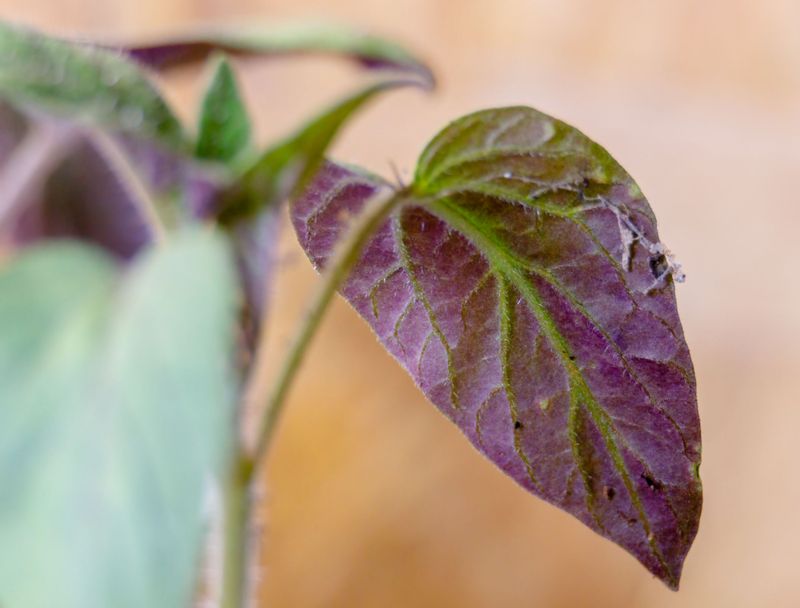
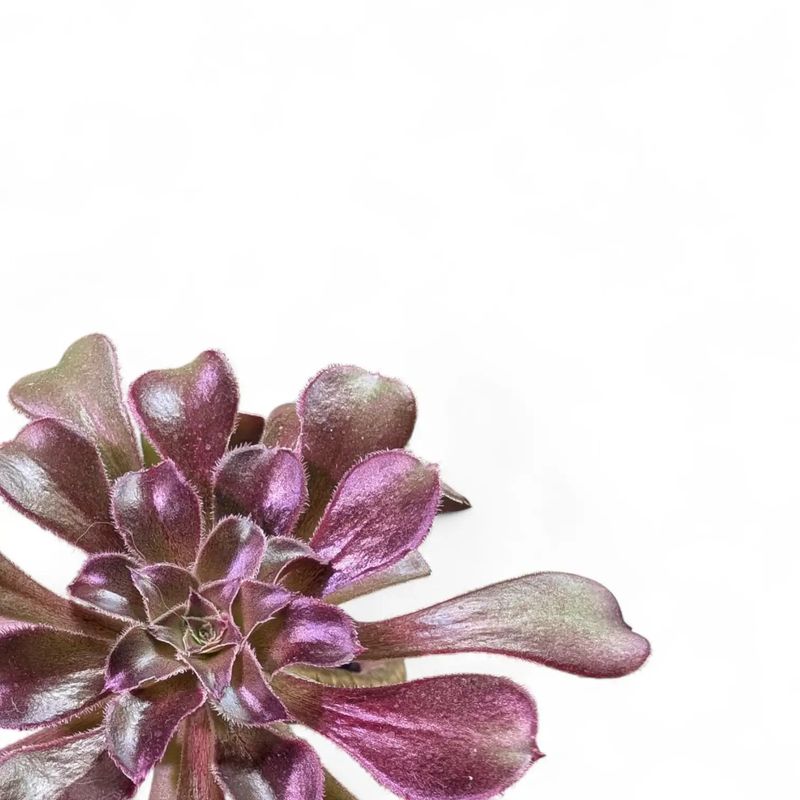
Anthocyanins are water-soluble pigments that give leaves their red, purple, and bronze tones. According to Washington State University Extension, these pigments can accumulate in response to bright light, cold exposure, drought, and other stresses, though some plants also produce them as a normal part of their genetics or growth stage.
That last point matters: if your plant was always slightly purple or bronze, that color is probably not a stress response at all.
When the timing lines up with seasonal changes, a shift in growing conditions is often worth investigating first. Outdoor plants in Florida and Texas may experience cool overnight temperatures and stronger direct sun before being moved inside.
Plants already indoors may instead be reacting to a cold windowpane they are pressed against, reduced daylight hours, drier air from heating systems, or a change in how often they are watered. The calendar season itself is less important than what the plant is actually experiencing.
MSU Extension’s floriculture research notes that low temperature and high light together can induce purpling in green-leafed plants, particularly when conditions fall outside the plant’s preferred range. And while University of Minnesota turfgrass research on purple coloration offers useful context about pigment triggers, this work comes from broader plant science and does not map perfectly onto every common houseplant species.
Treat environmental shifts as a plausible starting point, not a confirmed universal explanation.
Use the leaf pattern and plant history to narrow the possibilities
Before moving the plant or adding anything to the soil, take a few minutes to look closely at what you actually have. Start by confirming whether the variety naturally produces purple or bronze foliage, because some plants are simply bred that way.
Then check whether the color appeared on new growth first or on older, more mature leaves, and whether the discoloration is even across the leaf surface or concentrated in patches, veins, or margins.
Next, think through recent changes in the plant’s environment. Has it been sitting against cold glass, near an open window, or close to an exterior door?
Has it been exposed to a heat register or a space heater? Utah State University Extension’s indoor plant guide emphasizes checking these localized stress sources before drawing conclusions about nutrition or disease.
Watering schedule changes are also worth reviewing, since both overwatering and underwatering can push a plant toward visible stress.
Iowa State University Extension’s nutrient deficiency guide notes that older-leaf purpling paired with stunted growth, small new leaves, or generally poor development deserves closer attention than uniform color on otherwise healthy foliage. Spots, curling, soft tissue, or areas of dead leaf tissue point toward something beyond a simple pigment response, and MSU Extension recommends inspecting leaf undersides and stems for pest activity as part of any initial inspection.
Gathering this information first keeps you from making changes that do not match the actual problem.
Protect the plant from sudden temperature stress
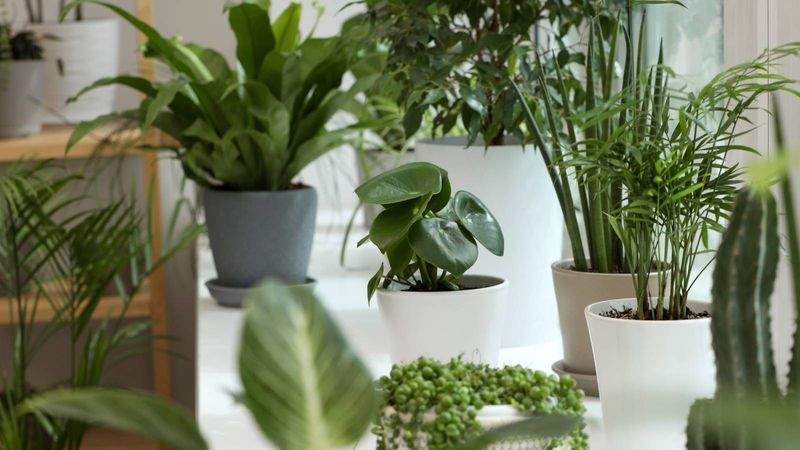
Temperature stabilization is a sensible first step when purple leaves appear, but it works best when you treat it as a cautious intervention rather than a guaranteed cure. University of Minnesota Extension advises bringing most houseplants indoors as temperatures approach or fall below 50 degrees F, while recognizing that individual species have different cold tolerances.
For many tropical varieties, anything close to that threshold is already uncomfortable.
Move plants away from cold windowpanes, unheated sills, open windows, and exterior doors where drafts can create a cold zone even when the rest of the room feels warm. Heat registers, fireplaces, and space heaters on the opposite end of the spectrum can also stress a plant through sudden dry heat.
Penn State Extension’s winter plant care guidance and Utah State University Extension’s indoor growing resource both recommend keeping tropical houseplants in a stable zone, generally around 65 to 72 degrees F for many common varieties, though species-specific requirements always take priority over general numbers.
For gardeners in Florida and Texas, fall does not automatically mean cold injury. Outdoor temperatures can stay warm well into the season, but a single cool night, a cold glass surface, or an air-conditioning vent blowing directly on a plant can create a localized stress event that registers as environmental shock.
The plant’s actual exposure matters far more than what month it is, so focus on what your specific plant has been touching, sitting near, or breathing in rather than on seasonal assumptions.
Adjust light and watering without adding new stress
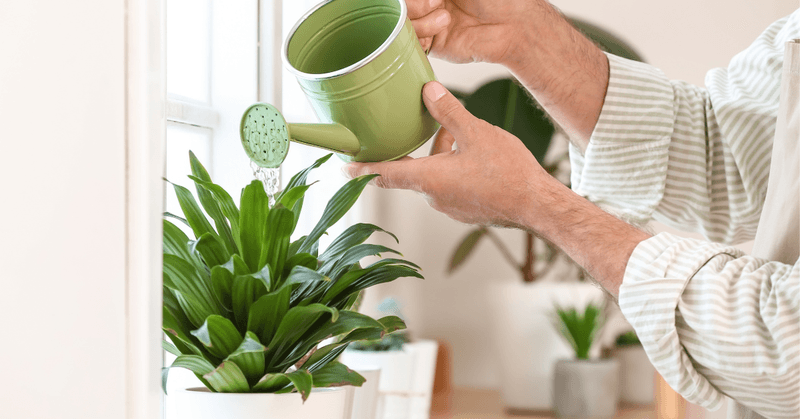
Correcting a plant’s light and watering after stress requires a careful hand, because overcorrecting can create a new problem on top of the original one. Penn State Extension’s low-light houseplant resource is a useful reminder that shade-adapted plants can suffer if suddenly moved into harsh direct sun, even if the goal is to give them more energy.
Gradual transitions, moving the plant a little closer to a brighter spot over several days rather than all at once, reduce the risk of scorch on already-stressed foliage.
Watering habits often need adjustment in fall and winter because plants under lower light and cooler temperatures typically use less water than they did in summer. Illinois Extension’s houseplant care guidance recommends checking soil moisture before watering rather than following a fixed schedule, since overwatering under dim conditions can lead to root problems that make any existing stress worse.
Stick a finger an inch or two into the potting mix and water only when it feels dry at that depth, adjusting for your specific plant’s preferences.
Misting is sometimes suggested as a humidity fix, but Penn State Extension’s humidity and houseplant guide cautions that excessive misting can increase disease risk on some plants and does not reliably address the underlying cause of stress. While you are making these low-risk adjustments, take the opportunity to inspect leaf undersides and stems carefully.
University of Minnesota Extension’s houseplant care advice includes pest inspection as a routine step, and catching spider mites, scale, or mealybugs early prevents a secondary problem from complicating your diagnosis.
Test before treating for phosphorus deficiency
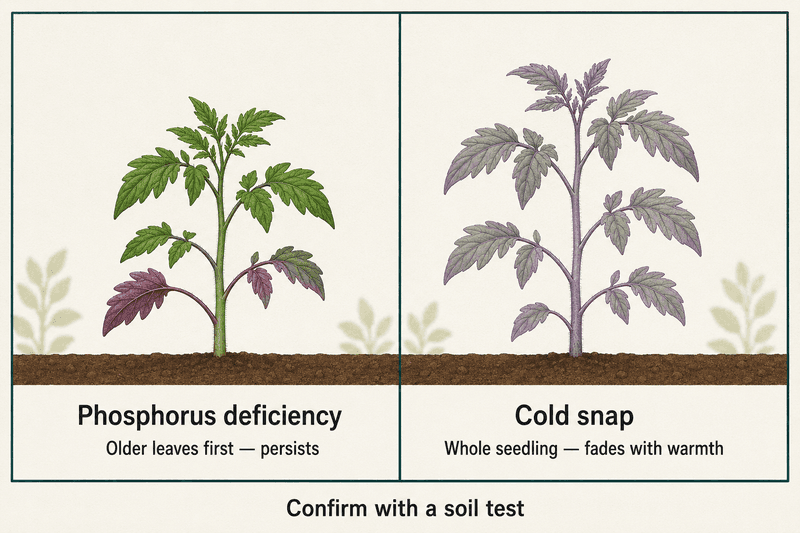
Phosphorus deficiency is one of the first explanations people reach for when they see purple leaves, partly because the connection is real but also because it gets repeated without enough context. Iowa State University Extension describes the deficiency as causing dark green, reddish, or purple coloration on older leaves, often alongside stunted growth, unusually small new leaves, and generally sluggish development.
Those additional signs matter: color alone is not enough to make the call.
The visual overlap with other problems is significant. Cold stress, restricted or damaged roots, poor drainage, compacted potting mix, unsuitable soil pH, and excessive salt buildup from prior fertilizing can all produce symptoms that look similar to a nutrient shortage.
UC IPM’s phosphorus deficiency overview and University of Florida IFAS plant tissue analysis guidance both support evaluating the full picture before diagnosing a nutritional problem. A soil or potting-media test gives you actual numbers to work with instead of a guess.
Adding bone meal, bloom fertilizer, or a phosphorus-heavy product without that evidence carries real risk, especially in fall and winter when plant growth naturally slows under lower light. Illinois Extension warns that fertilizing a slow-growing plant can burn roots and raise soluble salt levels in the potting mix.
University of Minnesota Extension’s soil testing resource recommends following product label directions only after a test supports the diagnosis, not as a precautionary measure applied to a plant you cannot yet fully read.
Judge recovery by new growth and halted damage
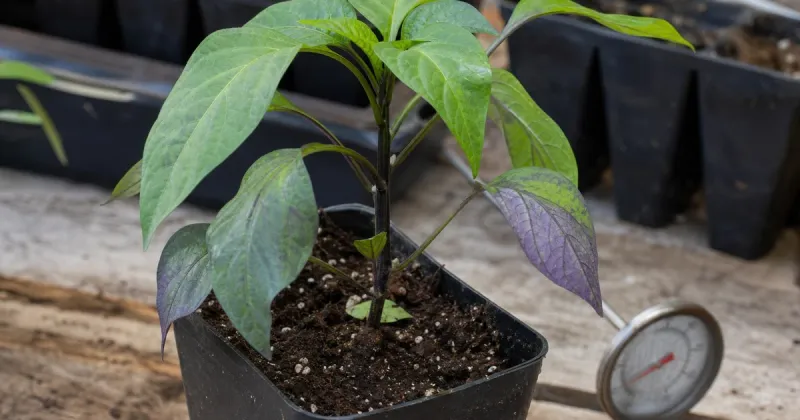
After correcting temperature, light, and watering conditions, the most common mistake is expecting the purple leaves to turn green again quickly. Existing leaf tissue that has already accumulated anthocyanins or sustained cold or stress damage may stay discolored permanently, and some leaves will yellow and drop rather than recover their original color.
Washington State University Extension’s leaf pigment research supports treating pigment accumulation as a response that does not necessarily reverse once conditions improve.
A more reliable recovery signal is what happens next. Watch whether the discoloration stops spreading to additional leaves, whether the plant holds firm healthy tissue without new softening or spotting, and whether new growth emerges with a normal color and size for the species.
University of Minnesota Extension frames stable new growth as the practical sign that a plant is adjusting to its corrected environment.
Persistent progression is a different matter. If purple or reddish discoloration keeps spreading despite environmental corrections, or if you notice severe spots, tissue death, soft or rotting stems, poor root health, active pest infestations, or clear stunting, those symptoms call for a more specific diagnosis rather than another round of environmental adjustments.
Illinois Extension’s plant problem resources and Penn State Extension’s root rot guidance are useful references when the problem appears to go beyond a seasonal stress response.
Start with stability, then diagnose what persists
A practical sequence helps when you are not sure where to start. Identify the color pattern and which leaves are affected first.
Review what the plant has actually been exposed to, including cold glass, drafts, heat vents, watering changes, and recent light shifts. Remove the most obvious sources of abrupt stress before drawing conclusions, then restore appropriate light and moisture for the species.
Illinois Extension and University of Minnesota Extension both frame these environmental corrections as a reasonable starting point for a stressed houseplant.
Inspect for pests and check root condition before reaching for any fertilizer. If the broader signs point toward a nutrient problem, use a soil or media test and follow label directions rather than applying phosphorus on instinct.
WSU Extension’s leaf pigment research and Penn State Extension’s low-light plant guidance both reinforce that environmental stabilization is a sensible first move, not a universal cure for every genetic, nutritional, root, pest, disease, or tissue-damage situation.
Healthy new leaves and discoloration that stops spreading are the signals worth watching for. A plant that holds its ground and pushes out fresh growth has responded well; one that keeps declining despite your adjustments is asking for a closer look.
Purple leaves are a starting point for investigation, not a verdict.