
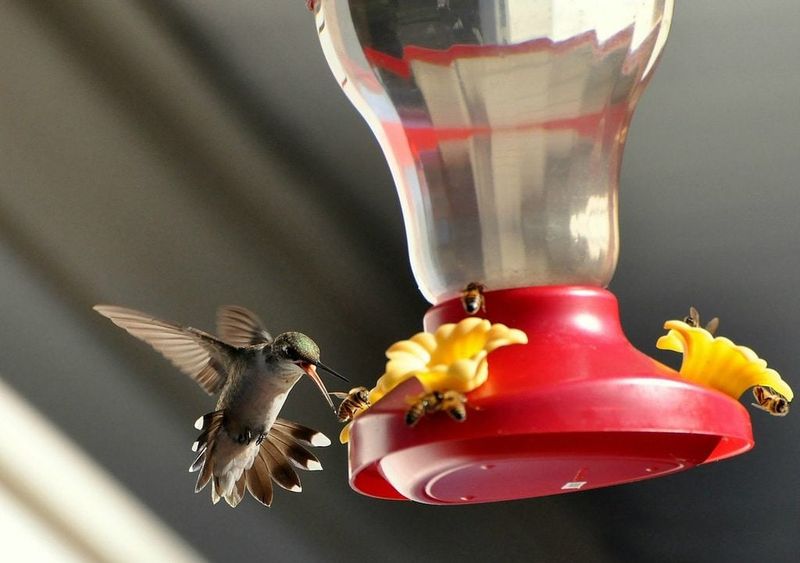
Hanging a hummingbird feeder should be a reward, not a headache, but bees and wasps can show up and crowd the ports before you even spot the first ruby-throat of the season. Sugar water is just as attractive to insects as it is to birds, and once a few foragers find the feeder, more tend to follow.
The good news is that the right feeder setup and a few simple habits can cut down insect activity without harming the birds you are trying to attract.
Bees and wasps may find the feeder before you notice the birds
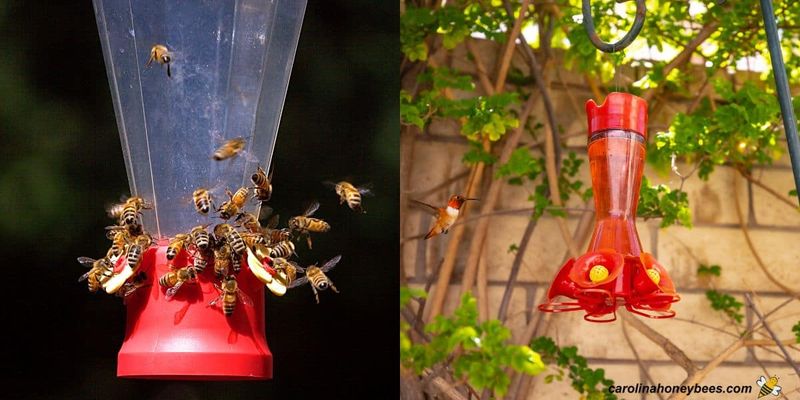
Sugar water draws a crowd that goes well beyond hummingbirds. Honey bees, native bees, yellowjackets, paper wasps, hornets, and even ants can all find a feeder and begin consuming the solution, and when enough insects gather at the ports, they can make it harder for hummingbirds to land and feed comfortably.
Iowa State University Extension notes that these insects may obstruct or discourage hummingbirds from using the feeder entirely.
Fall can make the problem more visible in some Southern yards, especially in Texas, where ruby-throated hummingbirds move through the Gulf Coast in large numbers during migration. Yellowjacket colonies also reach peak population in late summer and fall, and as some natural nectar sources decline, insects search more aggressively for food.
That said, the timing varies by species, weather, local food availability, and how long the feeder has been up, so insects do not universally show up before the birds every season.
Quick identification at the feeder is tricky because honey bees, yellowjackets, and paper wasps can look similar at a glance. Identification matters, though, because Penn State Extension guidance on nesting bees and wasps points out that yellowjackets carry a greater sting risk than most foraging bees.
Feeder visitors are almost certainly foraging from a colony somewhere else in the neighborhood, so their presence at the feeder does not prove there is a nest in your porch, eaves, or nearby tree. The most practical approach is to restrict insects’ access to the sugar rather than reaching for a spray or a poison.
Choose a feeder that keeps nectar below the feeding ports
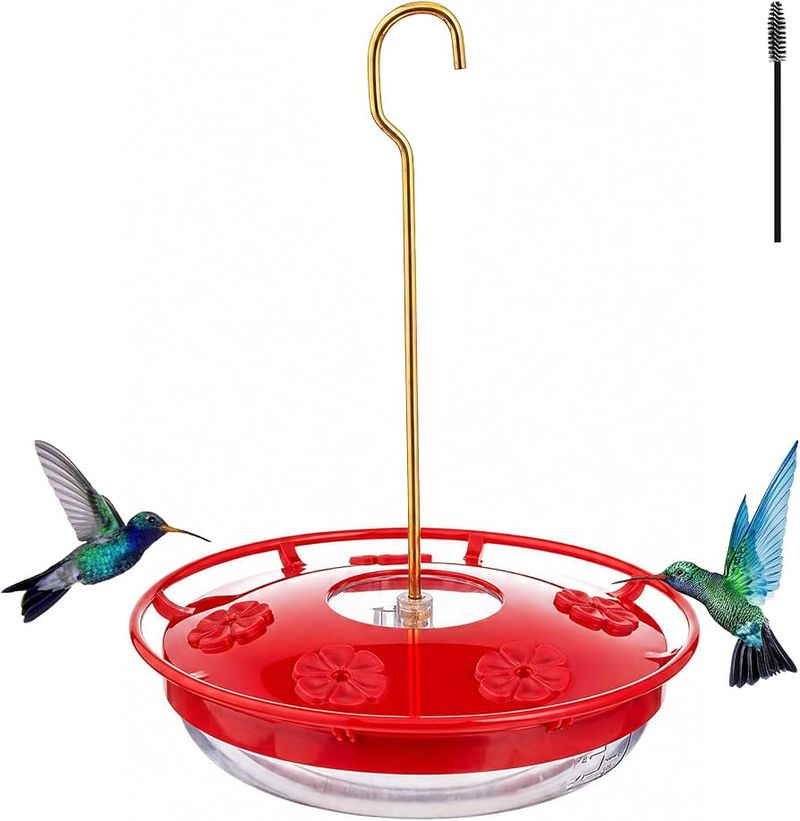
Feeder design is one of the strongest practical fixes when bees and wasps are the main problem. A top-port saucer-style feeder holds the nectar in a shallow dish below the feeding ports, so a hummingbird can reach down with its long bill and tongue while many insects with shorter mouthparts have a much harder time getting to the sugar.
Cornell Lab of Ornithology recommends saucer feeders as a better option when insects are the concern, because the recessed nectar reservoir is generally less accessible than the exposed reservoir of a standard bottle-style feeder.
If replacing the feeder is not an option right away, look for a model fitted with bee guards, which are small screens or grates that allow a hummingbird’s bill through while limiting access by insects with shorter mouthparts. Penn State pollinator guidance notes that bee guards can reduce bee activity, though they work more consistently against bees than against wasps.
Long feeding tubes on some feeder models add another layer of difficulty for insects trying to reach the nectar.
No feeder design is completely insect-proof. Iowa State Extension specifically cautions that wasps may persist even when guards are in place, especially if nectar splashes onto the guards or collects on the feeder exterior.
Think of a well-designed feeder as a strong starting point that reduces insect access rather than a guaranteed barrier, and pair it with the leak and spill checks described in the next section.
Stop leaks, spills, and heat from exposing more sugar
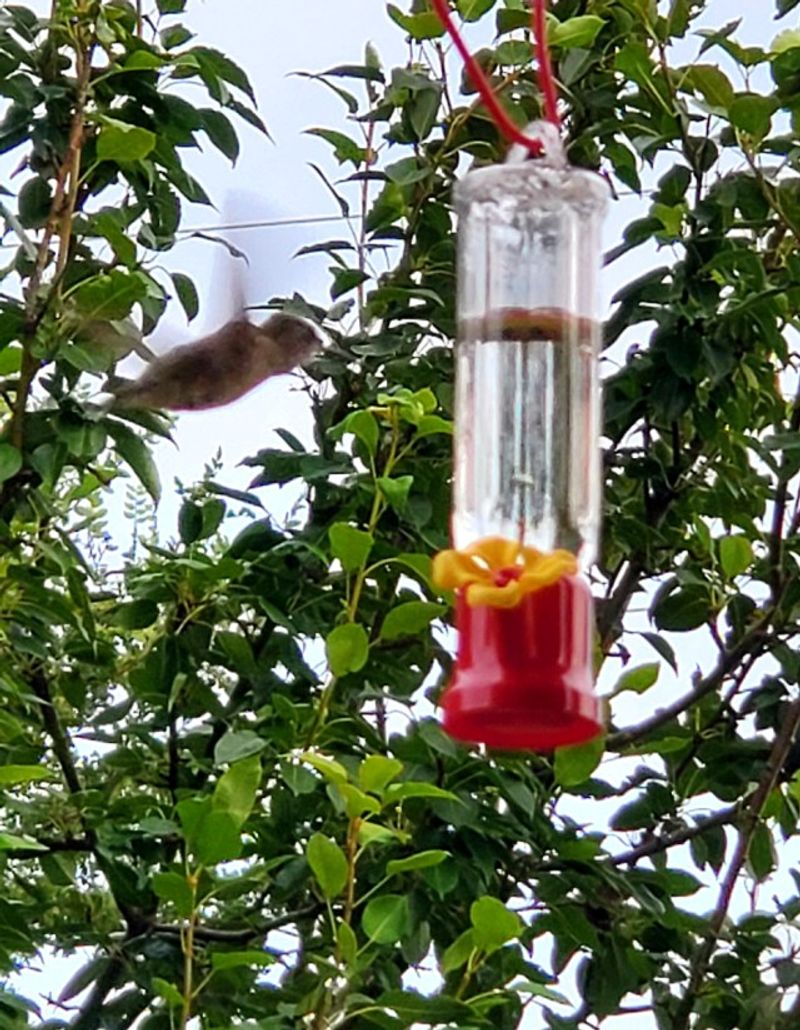
Before blaming feeder color or sheer insect abundance, run through a quick inspection of the setup itself. Check the feeder body for hairline cracks, loose or warped port inserts, and an overfilled reservoir, because any of those can send a steady drip of nectar down the outside of the feeder where insects find it easily.
Wet bee guards and sticky residue on the hanger or the surface below the feeder are also signs that exposed sugar is part of the problem. Audubon’s feeder pest guidance recommends cleaning away spilled nectar and repairing or replacing damaged components as a key step in reducing insect visits.
Direct sun is another contributor. Heat builds pressure inside some bottle-style feeders and can force nectar out through the ports even when the feeder has no visible cracks.
Oregon State University Extension feeder placement guidance advises hanging the feeder in shade or partial shade when possible, which also slows spoilage and reduces how often you need to change the nectar in hot weather.
A note on yellow feeder parts: several extension and bird-feeding sources suggest avoiding yellow components because they may attract bees or wasps, and replacing a yellow-accented feeder or port cover is a reasonable step. Color alone will not solve the problem, though, if the nectar reservoir is still accessible or the feeder is actively dripping.
Stopping the leak and moving the feeder out of full sun supports the design fix rather than replacing it.
Move the feeder to disrupt the insects’ search pattern
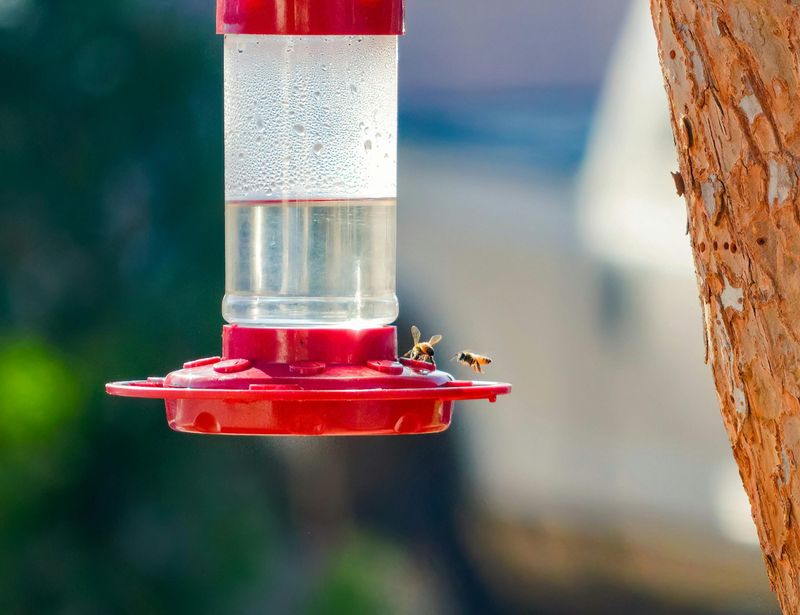
Once the feeder design and leak issues are addressed, relocation is a low-risk next step if insects continue to arrive in numbers. Bees and wasps learn the location of a reliable food source and return to that spot repeatedly, so moving the feeder can interrupt that learned search pattern.
Cornell Lab of Ornithology notes that insects may fail to find the feeder after it is moved, while hummingbirds tend to relocate it more successfully.
There is no single distance that works in every yard. Moving the feeder across the porch, around a corner, or to a different part of the garden is worth trying, but the right distance depends on your yard layout and how persistent the insects are.
Treat it as an experiment rather than a formula. University of Arkansas Extension supports moving the feeder as a practical tactic, while acknowledging that individual bird response can vary.
Temporary removal is an optional escalation if moving the feeder does not help quickly enough. Kansas State University Extension suggests that taking the feeder down for three or four days may discourage bees, since insects can give up on a location sooner than hummingbirds do.
Wasps may respond less reliably to removal, and not every hummingbird will return to the exact same spot immediately after the feeder goes back up. Frame both relocation and temporary removal as tactics that often help rather than certain cures, and bring the feeder back out once insect pressure appears to have eased.
Use fresh nectar without trying to outsmart insects with sugar
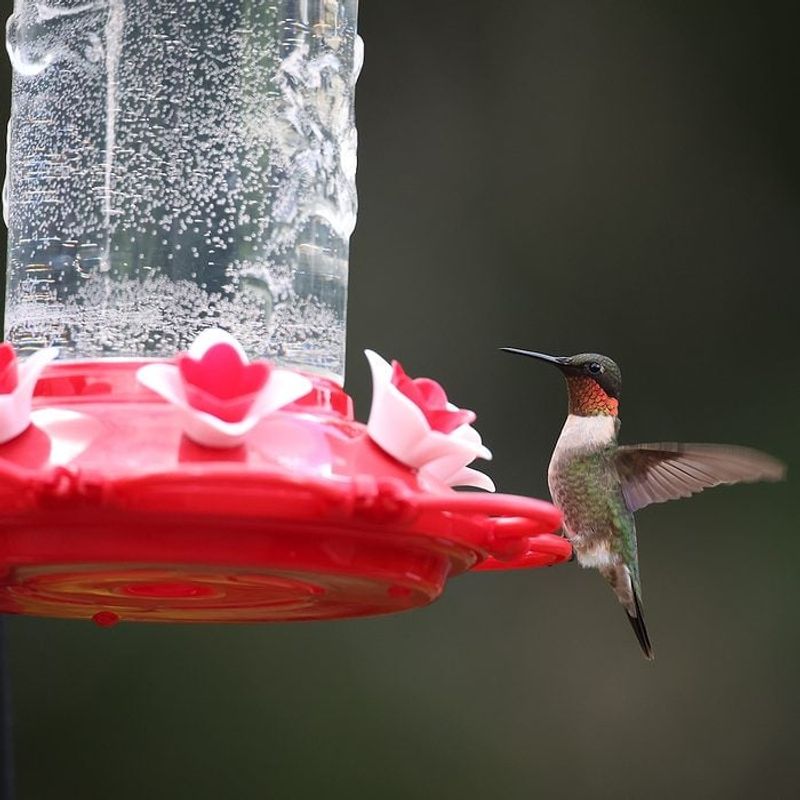
Getting the nectar recipe right and keeping it fresh are non-negotiable parts of the routine. The standard mix is one part refined white sugar to four parts water, stirred or briefly boiled until the sugar dissolves.
Audubon’s hummingbird feeding FAQ is clear that red dye, honey, artificial sweeteners, molasses, and other additives should not be used. Honey in particular can support harmful microbial growth once diluted, making it unsafe regardless of how natural it seems.
Some readers wonder whether making the nectar weaker might deter insects while still satisfying hummingbirds. That idea should not be used as a general wasp-control method.
The 1:4 ratio is the established safe standard, and altering it, especially toward a stronger concentration, can stress hummingbirds and accelerate fermentation. Stick with the standard recipe and focus on access and freshness instead.
Hot Southern summers call for frequent nectar changes. University of Florida IFAS guidance on hummingbird feeders recommends changing nectar every one to five days depending on temperature, with daily or every-other-day changes during the hottest stretches.
Cloudy nectar or visible mold means the batch should be discarded immediately and the feeder washed before refilling. Clean the feeder with hot water and a bottle brush, and increase cleaning frequency during heat waves, heavy insect activity, or any time debris accumulates in the ports.
A clean feeder with fresh nectar also gives you a cleaner look at whether your other fixes are actually reducing insect visits.
Avoid sprays, grease, and risky nest removal
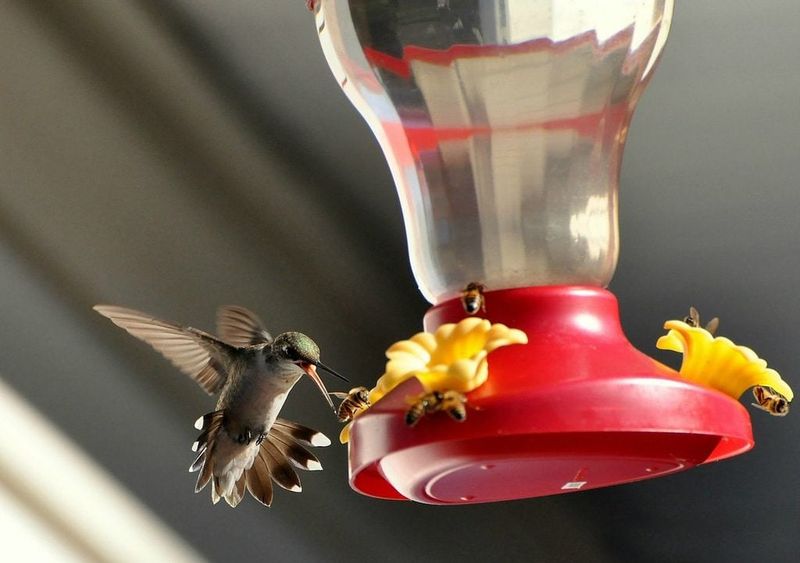
Reaching for a can of wasp spray feels like the obvious fix, but applying pesticides on or near the feeder creates a real hazard for the birds you are trying to help. Contaminated nectar and coated feeder surfaces give hummingbirds a direct exposure route.
University of Maine Cooperative Extension advises against using insecticide on or near the feeder for exactly this reason. Beyond the feeder itself, broad pesticide use in the surrounding garden can reduce the small insects that hummingbirds actively hunt as part of their diet.
Petroleum jelly, cooking oil, and other sticky substances around feeder openings or suspension wires are sometimes suggested as a way to stop insects from climbing up. That guidance is disputed and potentially unsafe.
Grease can soil a hummingbird’s feathers or contaminate the nectar if it migrates toward the ports. Penn State Extension and Penn State pollinator resources point to a water-filled ant moat hung above the feeder as the safer default when ants are the problem, since the moat creates a physical barrier without chemical risk.
Foraging insects at a feeder are not the same as insects defending a nest, and the two situations call for very different responses. Foragers away from their nest are generally less aggressive, though yellowjackets can still sting, especially in late summer.
If you find a large, concealed, or actively defensive nest on or near your property, do not approach it or attempt to spray it yourself. Penn State Extension guidance on stinging insects recommends contacting a qualified pest professional for nests that pose a genuine safety concern.
Keep feeding birds without making a blanket migration decision
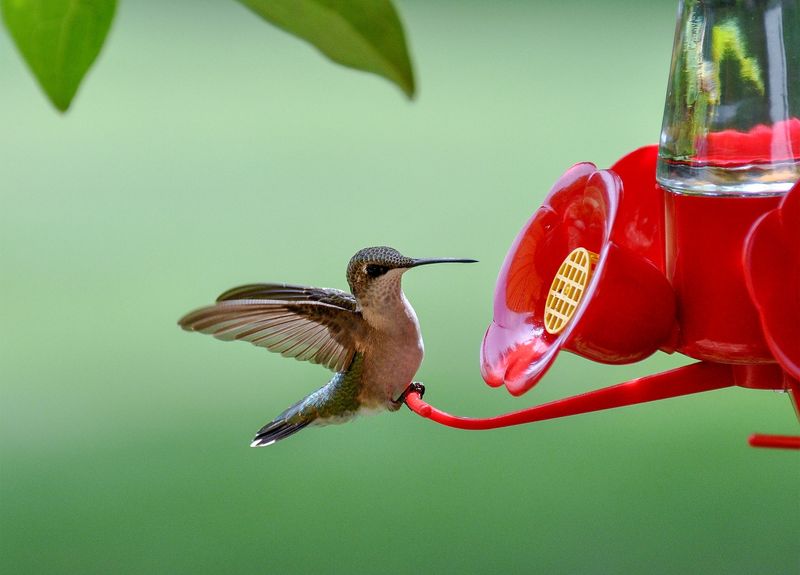
After making the setup changes, the goal is straightforward: fewer insects reaching exposed sugar, less crowding at the ports, and hummingbirds that can feed without competition. Progress may be gradual rather than immediate, and some insect activity may continue even after you have done everything right.
That is normal, and it does not mean the changes are not working.
Texas readers sometimes worry that leaving feeders up past the main fall migration wave will stall the birds. Texas Parks and Wildlife is clear that feeders may remain available year-round and that keeping them up will not prevent hummingbirds from migrating, since birds respond to seasonal cues rather than feeder presence.
Florida and other warm Gulf Coast areas often have resident or wintering hummingbirds, so a blanket rule about taking feeders down after fall migration does not apply there either.
Native nectar plants are the strongest long-term foundation for a hummingbird-friendly yard. Audubon’s hummingbird yard guide emphasizes that hummingbirds rely on natural nectar and small insects as well as supplemental feeders, so plants like salvia, coral honeysuckle, and native trumpet vine support the birds in ways a feeder alone cannot.
The practical sequence that gives you the best chance of reducing insect crowding while keeping hummingbirds happy: choose a feeder that limits nectar access, fix leaks and move out of direct sun, maintain the correct recipe and clean on schedule, relocate or briefly remove the feeder if insects persist, and keep sprays and sticky substances away from the setup entirely.
A feeder that works well for the birds is one that works against the insects, not one that tries to poison them away.