
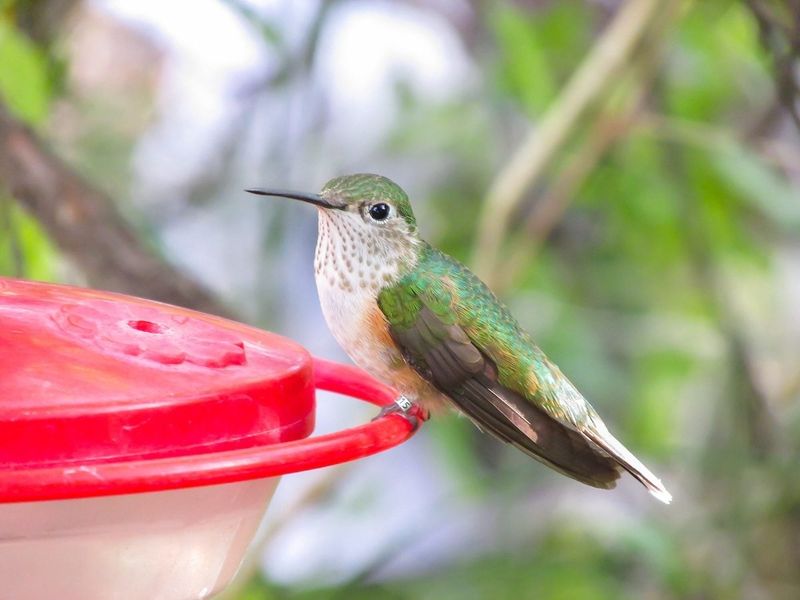
Hummingbird feeders are a rewarding addition to any Southern backyard, but cloudy nectar can show up faster than most people expect, especially in the heat of a Florida or Texas summer. When the sugar solution turns hazy or develops a film, that is a clear signal the nectar is no longer fresh and needs to go.
Understanding why it spoils so quickly, and what to do about it, makes the difference between a feeder that helps visiting birds and one that quietly becomes a problem.
Cloudy Nectar Signals a Spoilage Problem
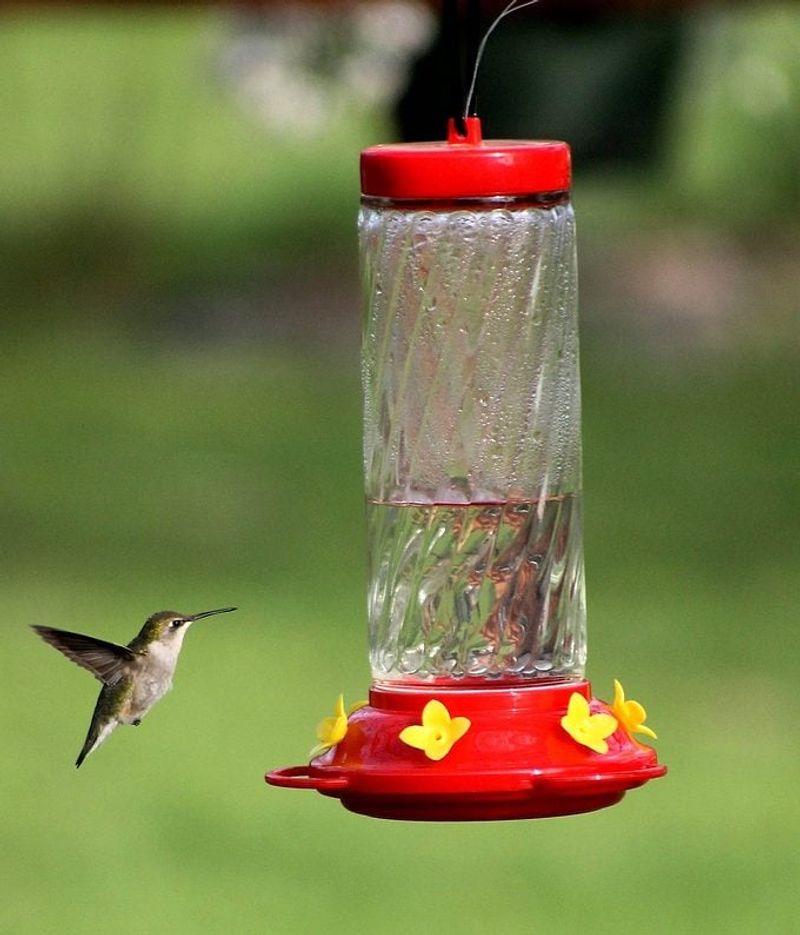
A hummingbird feeder that looked fine yesterday can turn hazy, filmy, or visibly murky within just a day or two, particularly in warm weather. That change in appearance is a practical spoilage warning.
When the nectar looks cloudy, contains floating debris, shows black mold spots, has an unusual film on the surface, or has insects trapped inside, the right move is to discard the entire batch immediately.
Appearance alone cannot tell you which organism is responsible or whether alcohol is the specific cause of the change. A study of hummingbird feeder microbial communities found a diverse mix of bacteria, fungi, and yeast in feeder nectar but did not identify a single spoilage organism or establish that fermentation is always the culprit when nectar turns cloudy.
The visible change is enough reason to act, without needing a more precise diagnosis.
One habit that makes spoilage worse is topping off an old batch with fresh nectar. Adding clean sugar water to a contaminated feeder does not dilute the problem away; it just gives microorganisms more material to work with.
Discard the old nectar completely every time.
The feeder itself also needs attention whenever the nectar is replaced. Cornell Lab’s Project FeederWatch and UF/IFAS Extension guidance for Florida both emphasize that a dirty feeder can recontaminate fresh nectar almost immediately.
Cleaning the feeder before every refill is the only way to break that cycle.
Heat and Contamination Can Accelerate Spoilage
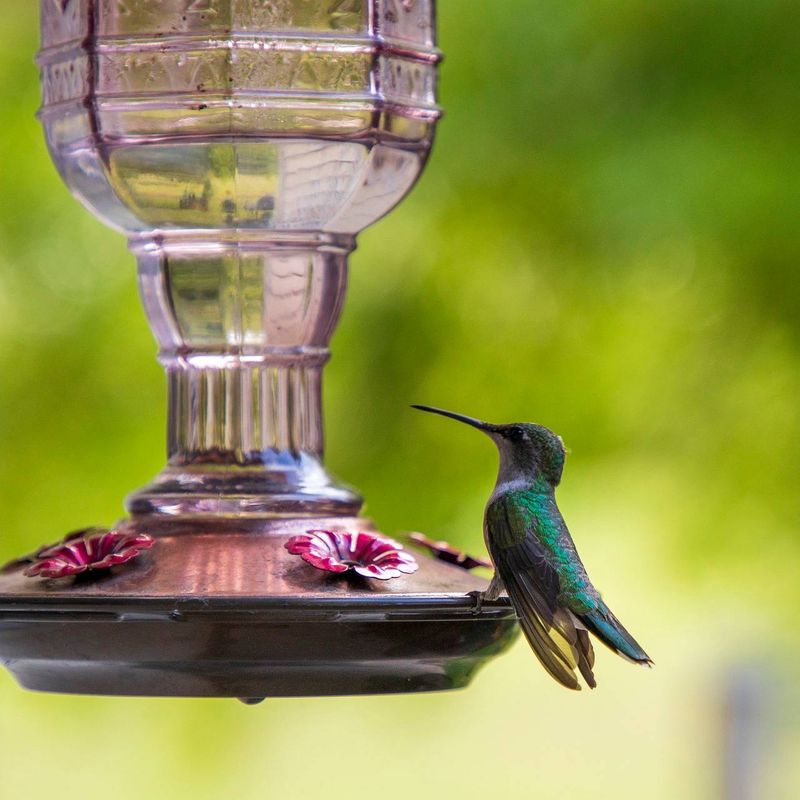
Sugar water sitting in a warm feeder is an inviting environment for bacteria, fungi, and yeast. Warm temperatures, direct sunlight, high humidity, airborne particles, insects landing on or inside the feeder, residue left on feeder surfaces, and repeated contact from birds feeding all create conditions that encourage microbial growth.
Fermentation is one possible result of that growth, but it is not the only explanation for cloudy nectar, and not every cloudy batch has fermented in the same way or to the same degree.
UF/IFAS Extension specifically warns that Florida’s heat can cause rapid bacterial growth in feeder nectar, sometimes within just a few days. A companion UF/IFAS publication reinforces that hot and humid conditions make the problem worse and that feeders in direct sun are especially vulnerable.
Texas summers present similar challenges, and while the two states are not identical in every detail, both can push nectar toward spoilage faster than cooler regions.
There is no single universal timeline that applies to every feeder in every backyard. How quickly nectar spoils depends on the temperature, how much direct sun the feeder receives, the local humidity level, the size of the feeder, how much nectar it holds, how many birds use it, and how clean the feeder was when it was last filled.
Treating any published multi-day schedule as a fixed rule rather than a rough guide can leave spoiled nectar in place longer than it should be.
Reset the Feeder Before You Refill It
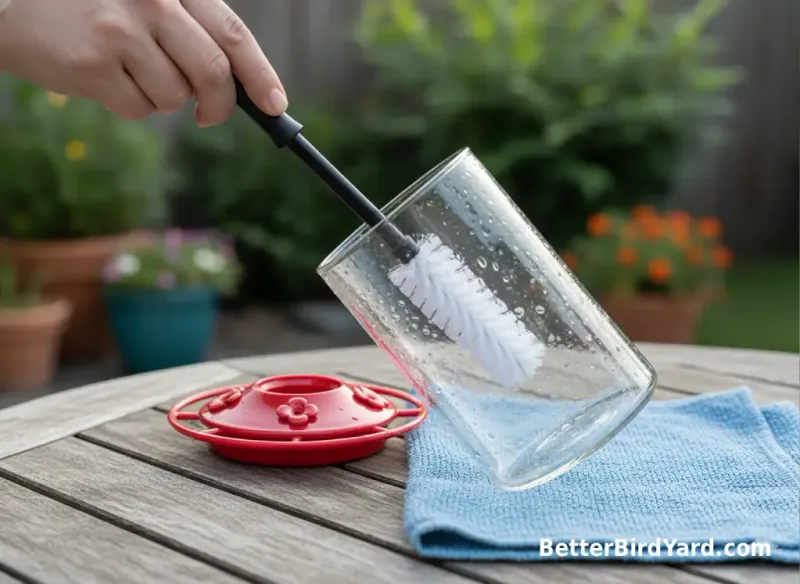
Every time cloudy or visibly contaminated nectar gets discarded, the feeder needs a thorough cleaning before fresh nectar goes in. Skipping that step means the new batch inherits whatever microbial load was left behind on the reservoir walls, the feeding ports, and the lid.
The cleanup sequence is straightforward: remove and discard all the old nectar, take the feeder completely apart, scrub every surface and port with a brush, rinse every component thoroughly with clean water, and let all the parts dry fully before reassembling and refilling.
Project FeederWatch recommends cleaning feeders at every refill when practical, and at minimum every couple of days during hot weather or periods of heavy use. Cornell’s All About Birds guidance similarly emphasizes regular cleaning as a core part of feeder maintenance.
In hot Southern conditions, cleaning at every refill is the safest approach rather than an optional extra.
Guidance on which cleaning agents to use is not consistent across sources, which is why following the feeder manufacturer’s instructions is the safest path. UF/IFAS and some Audubon guidance caution against soap or detergent because residue can contaminate nectar; Audubon’s hummingbird feeding FAQ recommends hot water and a brush.
Project FeederWatch describes diluted bleach as an option for occasional disinfection, but that step requires cleaning the feeder first, rinsing every surface repeatedly until no bleach smell remains, and allowing the feeder to dry completely. Bleach should never be mixed with vinegar or other cleaners, and routine bleach use is not required at every refill.
Whatever method is used, zero cleaner residue is the goal before nectar touches any surface.
Use the Plain One-to-Four Nectar Recipe
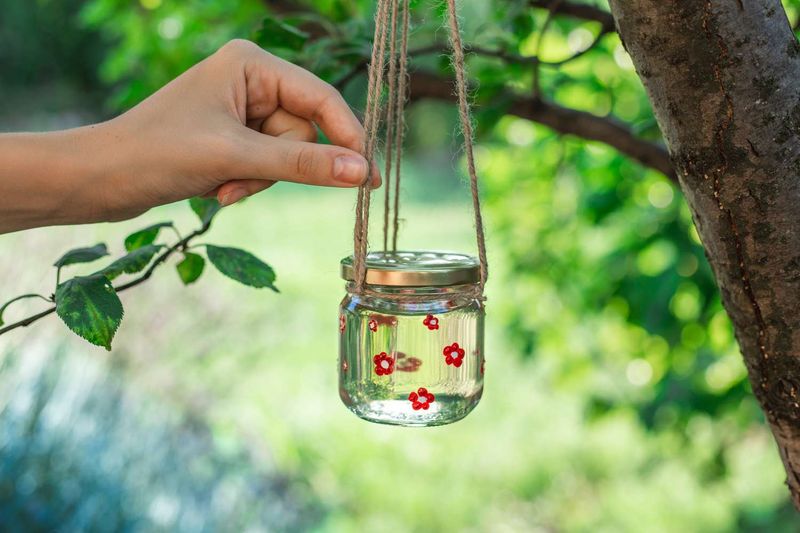
The correct recipe for hummingbird nectar is one part plain white table sugar dissolved in four parts water. That ratio closely matches the sugar concentration found in many of the flowers hummingbirds naturally visit, and it is the standard recommended by wildlife agencies and ornithological organizations across the country.
U.S. Fish and Wildlife Service guidance and Project FeederWatch’s sugar-water resource both specify the one-to-four ratio.
Making the solution sweeter than that does not give birds a helpful energy boost; a stronger concentration can be harder for hummingbirds to process and may also increase the rate at which the solution spoils.
Several common substitutions should be avoided entirely. Honey ferments faster than plain sugar water and can support bacterial and fungal growth, making it a worse choice even though it seems more natural.
Artificial sweeteners provide no usable energy for hummingbirds. Molasses and brown sugar contain minerals and other compounds that are not appropriate for this use.
Texas Parks and Wildlife and Project FeederWatch’s attracting hummingbirds guide both advise against these substitutes.
Red food dye is also unnecessary. Audubon’s hummingbird feeding FAQ notes that the red parts of the feeder itself, or nearby flowering plants, provide the visual cue that draws hummingbirds in.
The nectar in natural flowers is clear, so a clear solution in a brightly colored feeder works just as well. Vitamins, electrolytes, commercial flavorings, and preservatives are equally unnecessary and should not be added.
Match Nectar Changes to the Weather and Usage
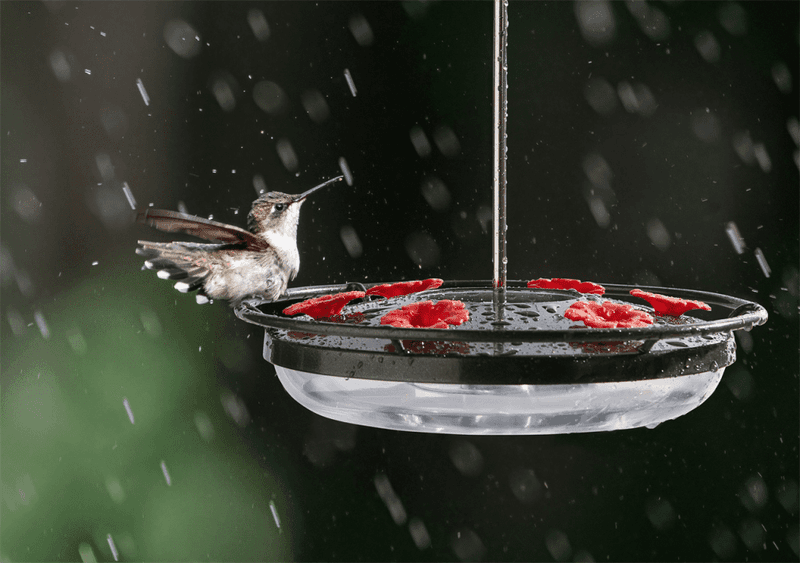
Published nectar-change schedules vary quite a bit depending on the source, and that variation exists for a good reason: spoilage speed depends on multiple factors working together rather than on one universal rule. Temperature, direct sun exposure, humidity, feeder size, how much nectar the feeder holds, how many birds visit, and how recently the feeder was cleaned all influence how quickly the sugar solution deteriorates.
All About Birds recommends changing nectar every two to three days as a general guideline, while Audubon’s FAQ suggests every three to five days in cooler conditions. UF/IFAS specifically flags Florida’s heat as a factor that accelerates bacterial growth, and Texas Parks and Wildlife advises changing unused sugar water every few days to prevent fermentation.
For Southern yards in the peak of summer, daily or every-other-day changes are the conservative and safer choice when the feeder sits in warmth or receives significant sun.
Making smaller batches of nectar is one of the most practical adjustments available. A feeder filled with only as much nectar as the birds will consume in a day or two does not sit long enough to spoil as deeply.
Project FeederWatch’s hummingbird guide supports smaller, more frequent fills as a core hot-weather strategy. Regardless of schedule, change the nectar immediately whenever it turns cloudy or shows any sign of visible contamination, without waiting for the next scheduled change.
Use Shade, Small Batches, and Cleanable Feeders
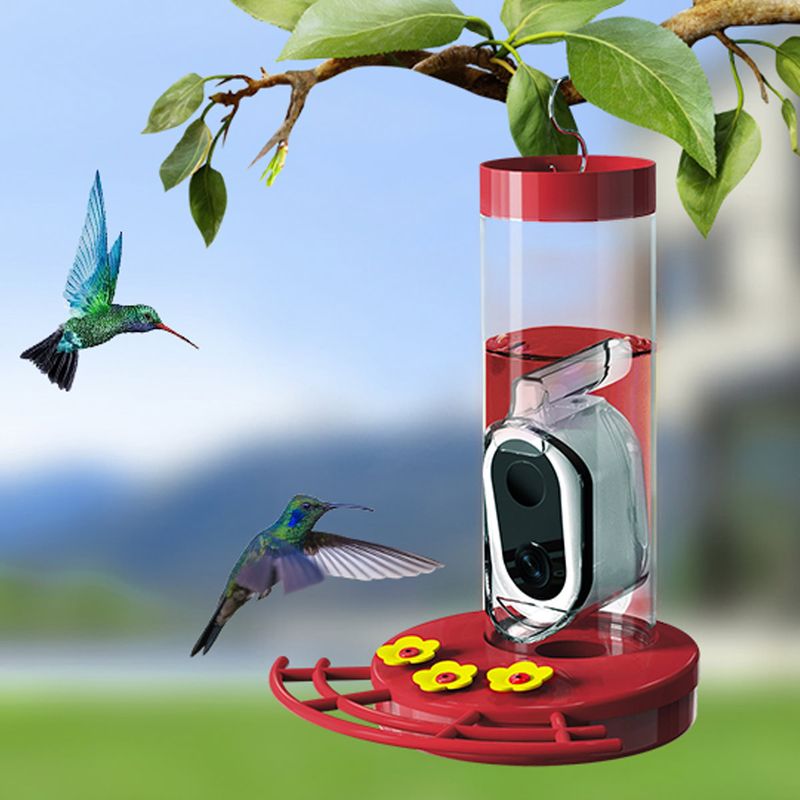
Where a feeder hangs makes a real difference in how quickly the nectar heats up. Positioning the feeder in shade or partial shade, away from direct afternoon sun, slows the rate at which the liquid warms and can slow microbial activity as well.
UF/IFAS Extension and Audubon’s hummingbird yard guide both recommend shaded placement as a practical step in warm climates. That said, shade slows warming but does not prevent contamination or eliminate the need for frequent nectar changes and regular cleaning.
Feeder design matters too. Cornell ornithologist David Bonter recommends choosing a feeder that comes apart completely and has openings large enough to fit a bottle brush.
A feeder that cannot be fully disassembled or properly scrubbed will harbor residue that recontaminates fresh nectar no matter how carefully the solution is prepared. All About Birds also notes that smaller feeders can reduce waste because nectar gets consumed before it has time to sit and deteriorate.
Unused nectar should be stored in a clean, covered container in the refrigerator and brought to a suitable temperature before it goes into the feeder. Audubon’s hummingbird FAQ supports refrigerating prepared nectar as a way to extend its usable life between fills.
Making only as much as the birds will use within a day or two keeps both the stored supply and the feeder contents fresher. These setup choices support the maintenance routine rather than replacing it.
Make Feeder Care Part of a Healthy Yard
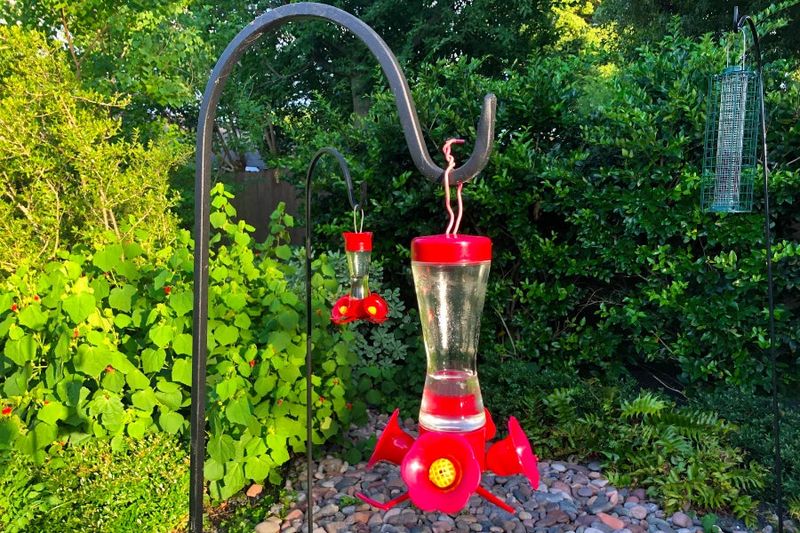
Responsible feeder care extends beyond the sugar solution itself. Washing hands after handling any bird feeder is a basic hygiene step that applies every time, not just when the feeder looks dirty.
Project FeederWatch and U.S. Fish and Wildlife Service bird-feeding guidance both include hand-washing as a standard precaution.
If visibly sick birds begin using the feeder, increase cleaning frequency right away and consider temporarily removing the feeder until the situation resolves. Leaving a contaminated feeder in place when regular maintenance is not possible does more harm than good.
Cornell’s guidance is clear that limiting feeding during periods when safe feeder care cannot be maintained is the responsible choice, with native plants serving as an alternative food source in the meantime.
National Park Service hummingbird information and Audubon’s yard habitat guide both note that hummingbirds rely on insects and natural flower nectar as essential parts of their diet, not just supplemental feeders. Planting native nectar-producing plants supports hummingbirds in ways a feeder alone cannot.
One last thing to avoid: do not apply oil, petroleum jelly, or any sticky substance around feeding ports to deter ants or bees. These materials can contaminate the nectar and may harm the birds themselves.
Project FeederWatch’s handbook advises against this practice, as does guidance from All About Birds on feeder cleaning and safety. Use a water moat or ant guard designed for feeders instead.
Follow the Fresh-Nectar Rule
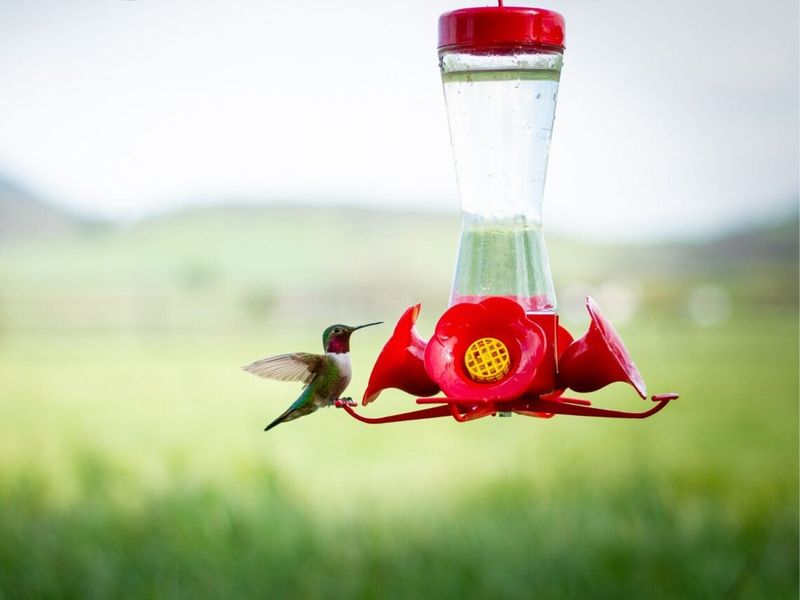
The routine that keeps a hummingbird feeder safe and useful comes down to a few consistent habits. When nectar turns cloudy or shows any visible contamination, discard it right away, clean and fully rinse the feeder, and refill with a fresh one-to-four plain-sugar solution.
UF/IFAS Extension and Project FeederWatch both support this as the core response to spoiled nectar.
In hot Southern weather, smaller batches and daily or every-other-day changes are the practical standard rather than an extreme measure. All About Birds reinforces that frequent changes and thorough cleaning are the foundation of good feeder practice.
Shade helps slow warming, but it does not make nectar shelf-stable or reduce how often the feeder needs attention. A clean feeder with fresh nectar, changed often enough to stay clear, is the simplest and most reliable way to support the hummingbirds visiting your yard.