
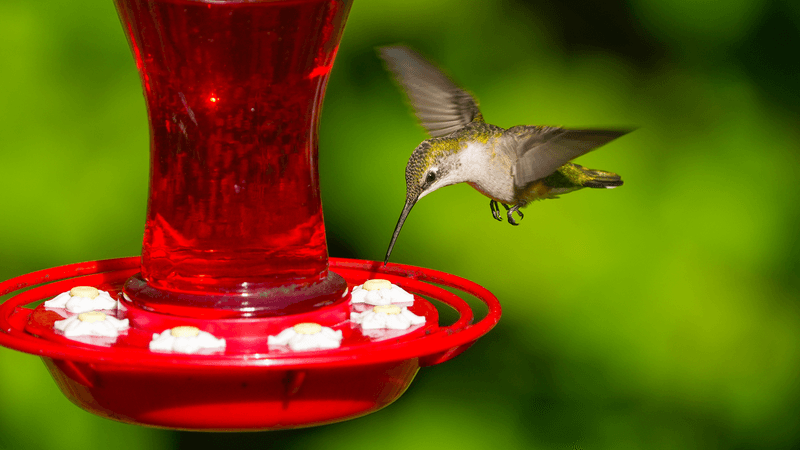
September in Florida and Texas can feel like the yard is shutting down for hummingbirds. Flowers that fed them all summer start to thin out, and suddenly the feeder sees fewer visitors.
The good news is that the right feeder food, kept fresh and clean, gives any bird still passing through a reliable pit stop. There is no magic formula, just a simple recipe and a few habits that make your feeder worth visiting while hummingbirds are still around.
Offer the standard nectar, not a migration-stopping formula
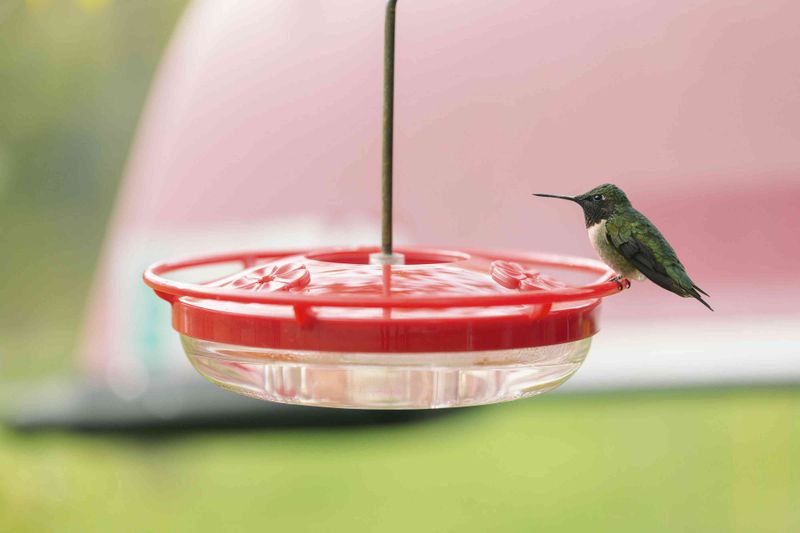
Plain clear nectar made from 1 part refined white granulated sugar and 4 parts water is the food to put in your hummingbird feeder when September flowers start to fade. A practical batch is as simple as stirring 1/4 cup of sugar into 1 cup of water until it fully dissolves.
Audubon’s hummingbird feeding guidance confirms this 1:4 ratio as the standard recommendation, noting that it supplies quick carbohydrate energy without the risks that come from stronger or more complex mixtures.
That energy is supplemental, not a full meal. Hummingbirds still depend on natural flower nectar and small insects and spiders for the protein and other nutrients that plain sugar water simply cannot provide.
A feeder can help a bird refuel between flowers or during a migration pause, but it does not replace a living, food-rich yard.
No feeder recipe will stop hummingbirds from migrating or guarantee that birds return to your yard. Cornell Lab of Ornithology research on feeder visits makes clear that departure is driven by day length and other biological cues, not by the presence or absence of a feeder.
The honest goal is to keep a reliable, clean energy source available for birds that are still visiting, including migrants passing through on their way south.
Leave a usable feeder available while birds visit
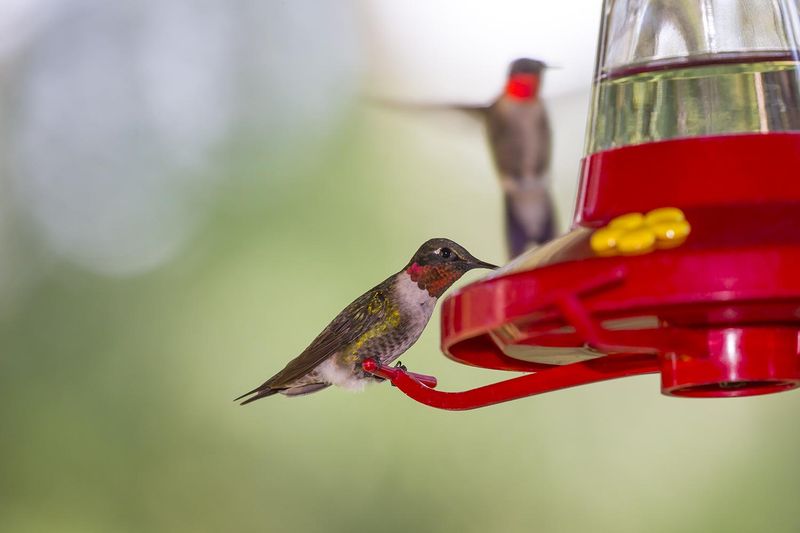
Leaving your feeder up through September and into October is one of the most useful things a Southern gardener can do for migrating hummingbirds. Flowers thin out, natural nectar becomes harder to find, and a clean feeder stocked with fresh 1:4 sugar water offers a real refueling opportunity for birds moving through your yard.
A common worry is that keeping a feeder available will cause birds to linger past the right time to leave. Cornell Lab’s guidance on changing feeder activity addresses this directly, explaining that migration responds to shortening days and internal biological signals rather than feeder availability.
A well-stocked feeder does not override those cues or hold birds in place against their instincts.
What a feeder can do is provide an energy source at a time when birds genuinely need one. Cornell Bird Academy’s migration support resources describe feeders as a practical way to help birds during the demanding work of fall travel.
That framing matters: the feeder is a refueling stop, not a trap, and keeping it clean and fresh is the most direct way to make it useful to any bird that happens to visit.
Use only sugar and water
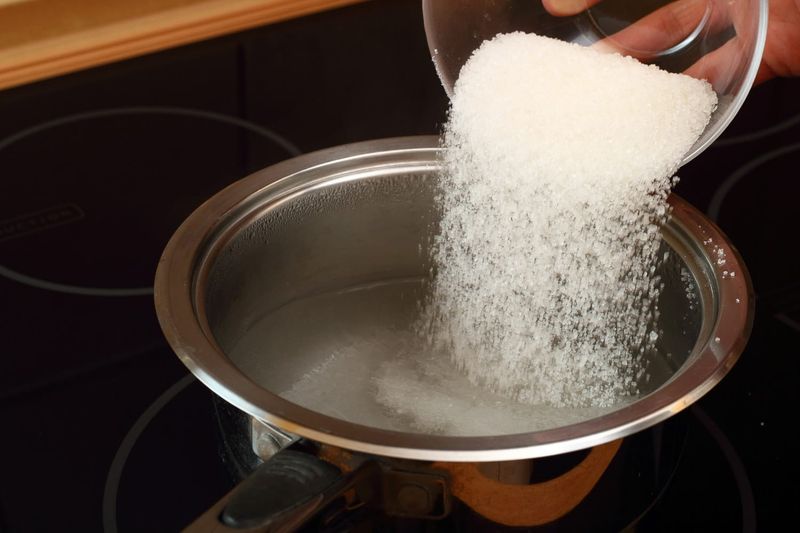
Two ingredients belong in a hummingbird feeder: plain refined white granulated sugar and water. That list is short on purpose.
Audubon’s hummingbird FAQ specifically excludes honey, molasses, brown sugar, artificial sweeteners, vitamins, flavorings, and any other additives. Honey is a particular concern because it can promote bacterial and fungal growth that harms birds far faster than sugar water does under the same conditions.
Brown sugar, raw sugar, and turbinado all contain molasses or mineral residues that can be problematic for hummingbirds. Artificial sweeteners provide no usable calories, which defeats the entire purpose of offering a feeder.
Vitamins and supplements sound helpful but are unnecessary because the birds obtain micronutrients from natural food sources, not from a feeder.
Red food coloring deserves its own note. Audubon’s reporting on red dye and hummingbird feeders explains that natural flower nectar is clear, and dye added to the nectar is unnecessary and may carry risks.
If you want to make your feeder easier for birds to spot, red feeder parts such as the base, cap, or feeding ports do that job without putting anything extra into the liquid. Cornell Lab’s feeder guidance echoes the same point: clear nectar in a red-accented feeder is the right combination.
Refresh and clean nectar before heat spoils it
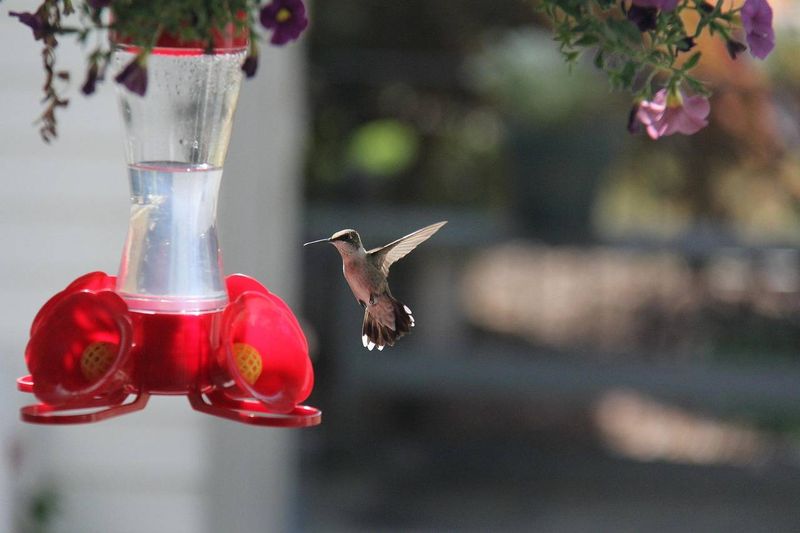
Southern heat turns fresh nectar into a problem faster than most gardeners expect. In Florida and Texas, sugar water can ferment or grow mold within a day or two, well before it looks obviously spoiled.
U.S. Fish and Wildlife Service fall hummingbird guidance recommends replacing nectar every two to three days during hot weather, and sooner if the liquid turns cloudy, changes color, or shows any visible mold.
Do not wait for the feeder to look dirty before you act.
Cleaning the feeder is just as important as replacing the nectar. Empty the reservoir completely before refilling, then take the feeder apart and scrub every surface that touches the liquid.
Pay close attention to the feeding ports, seams, and the inside of the reservoir, since mold and fermentation residue tend to collect in those spots. Cornell Lab’s hummingbird feeding guide recommends hot water and a bottle brush as the core cleaning tools, and advises rinsing thoroughly so no residue remains.
Whether to use soap, vinegar, or another cleaning agent depends on your specific feeder material and the manufacturer’s instructions. Cornell Lab’s guidance on feeder hygiene cautions against assuming that any one chemical is safe or appropriate for every feeder type.
Whatever you use, rinse the feeder completely until no cleaning product remains before refilling with fresh nectar.
Choose placement that slows spoilage and limits pests
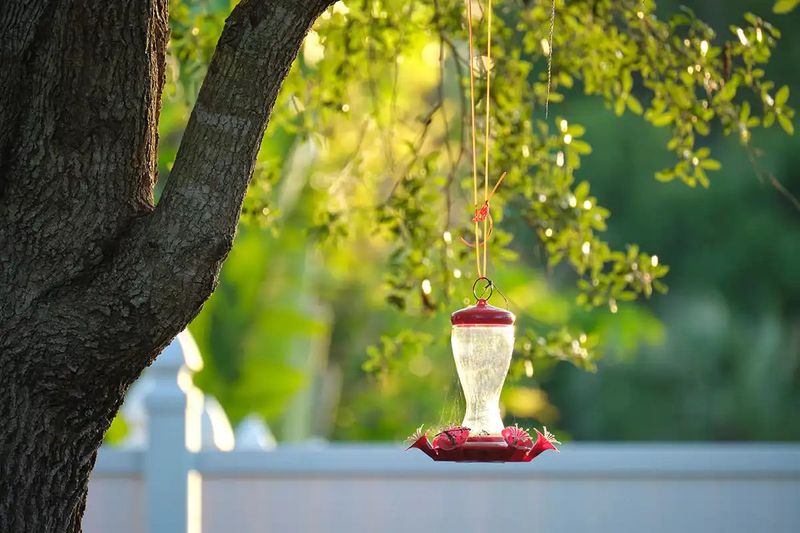
Where you hang your feeder matters almost as much as what you put in it. Direct sunlight speeds up fermentation, so a spot with shade or partial shade during the hottest afternoon hours keeps nectar usable longer.
A covered porch overhang, a tree with filtered light, or the shaded side of the house can all work well in a Florida or Texas yard.
Rain is another factor worth thinking about. Cornell Lab’s hummingbird feeding advice notes that a location sheltered from rain helps prevent dilution of the nectar, which changes the sugar concentration and can accelerate spoilage.
A stable hanging point also matters because a swinging or tilting feeder is more likely to drip and create puddles of sugar water below.
Spilled or leaking nectar is one of the fastest ways to attract ants and bees, which can make the feeder less accessible for hummingbirds and harder to keep clean. Audubon’s guidance on keeping feeders pest-free recommends cleaning up drips and spills promptly and checking the feeder seal regularly.
A feeder placed thoughtfully from the start requires less reactive cleanup and stays fresher for visiting birds.
Build the flower and insect resources sugar water lacks
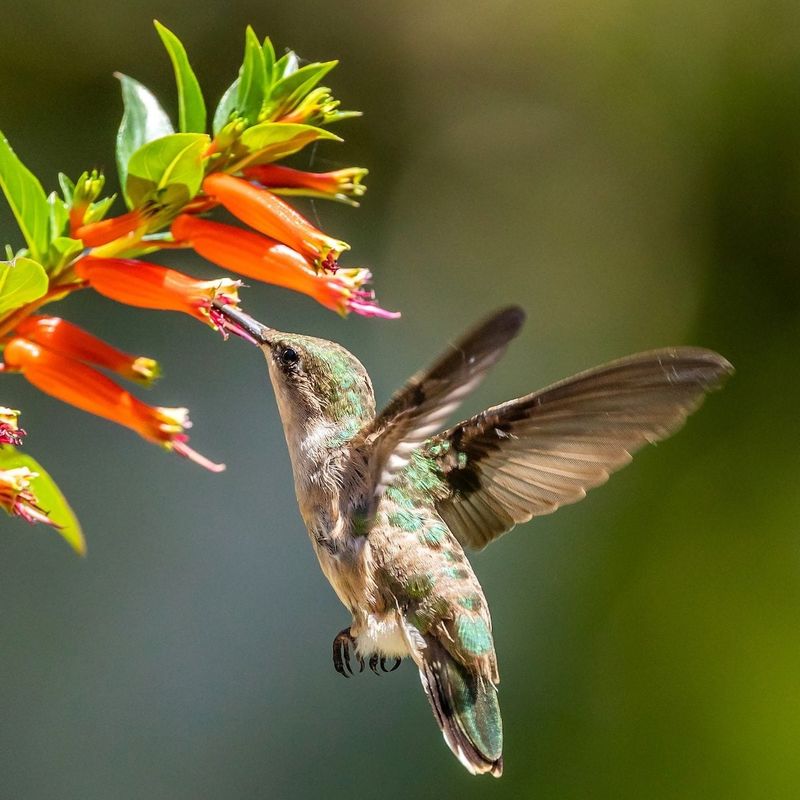
Sugar water covers one thing: fast carbohydrate energy. A hummingbird’s actual diet is broader than that.
Texas Parks and Wildlife’s profile of the Ruby-throated Hummingbird describes insects and spiders as a key protein source for hummingbirds, especially during migration when birds are building energy reserves for long flights. That protein does not come from a feeder, and no nectar recipe can substitute for it.
Pesticide use around hummingbird habitat is worth reconsidering for this reason. Spraying for insects near areas where hummingbirds feed can reduce the small prey they depend on, and it may expose birds directly to chemicals.
Leaving some natural insect activity in your yard, particularly near flowering plants, supports the full diet hummingbirds need.
Planting late-season flowers extends the natural nectar supply when summer bloomers fade. UF/IFAS nectar plant resources for Florida gardeners list firebush, red star hibiscus, scarlet morning glory, salvia, and flat-topped goldenrod as regionally appropriate options, with bloom timing that varies by location across the state.
UF/IFAS gardening solutions for hummingbird habitat frame feeders as a supplement to, not a replacement for, flowering plants. A yard that offers both a clean feeder and living flowers gives visiting hummingbirds more reasons to stay a while and more of what they actually need.
Interpret fall visits by species and location
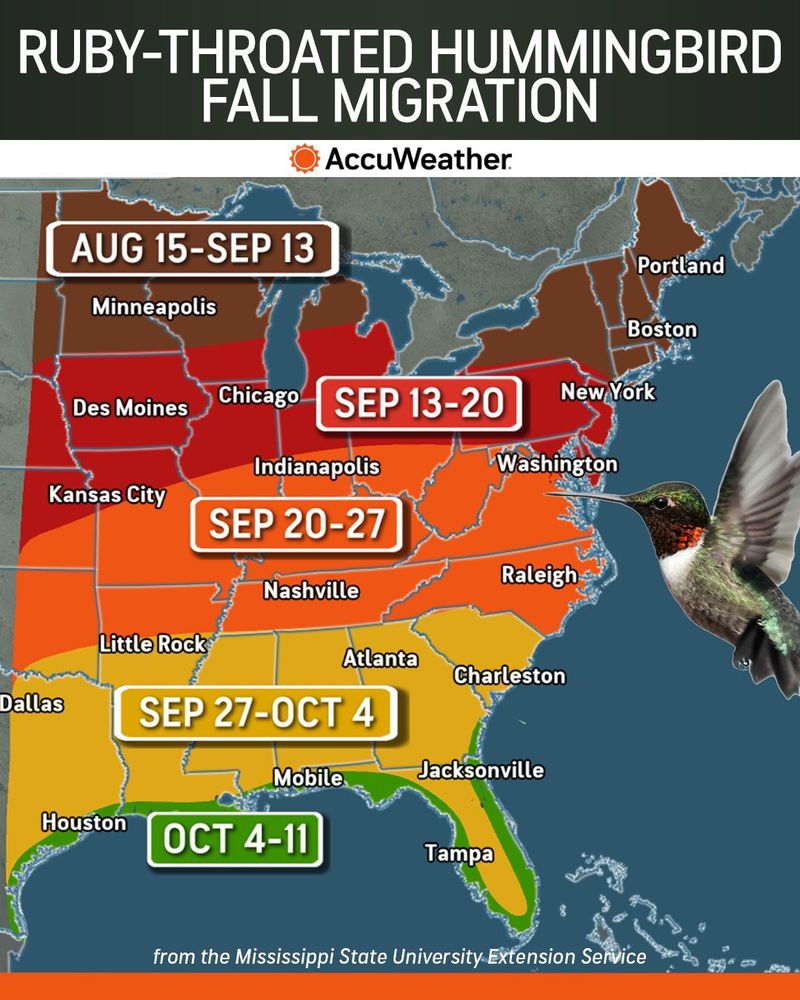
Fall hummingbird activity across the South does not follow one timetable, and what happens in your yard depends heavily on where you live and which species pass through. Texas Parks and Wildlife’s Ruby-throated Hummingbird page describes how that particular species moves through Texas in large numbers during fall migration, with some birds pausing along the Gulf Coast before crossing toward Mexico.
That pattern applies specifically to Ruby-throated Hummingbirds and should not be read as a description of every hummingbird species or every Texas yard.
Florida presents a different picture. UF/IFAS Extension’s overview of hummingbirds in Florida notes that the state sees both migrants moving through and, particularly in southern areas, birds that remain through winter.
A drop in feeder visits in September might mean birds have moved on, or it might simply reflect a shift between migrating waves.
Cornell Lab’s explanation of changing feeder traffic lists weather, daylight shifts, and movement to alternative food sources as additional reasons visits slow down, none of which signal a problem with your feeder or your nectar. Keep fresh 1:4 sugar water available while birds are still visiting, and if you live in an area where bears are active, follow your state wildlife agency’s guidance on securing or bringing in feeders.
The National Park Service’s hummingbird resource flags this as a real safety consideration in bear country. The feeder’s job is simply to be ready when a bird shows up.