
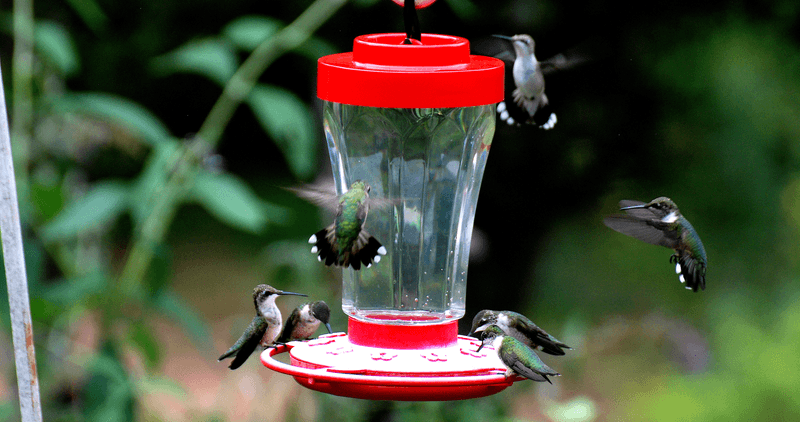
You filled the feeder, hung it in the same spot, and waited. But the hummingbirds that were buzzing around last week have vanished.
A full feeder feels like you did everything right, yet something clearly shifted in your yard. The good news is that a sudden drop in visits is almost always diagnosable, and most of the time the feeder itself is not the whole story.
A full feeder does not tell the whole hummingbird story
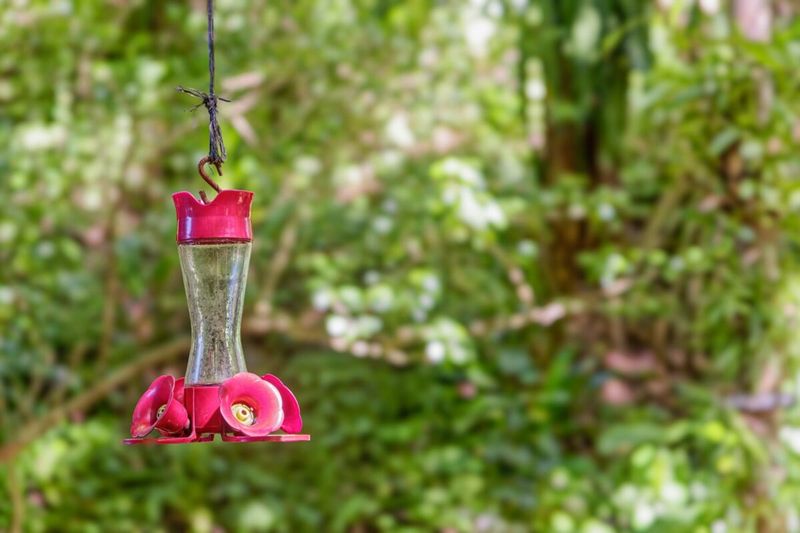
Watching a full feeder sit untouched can feel like a personal rejection, but what you see at one feeder on one afternoon is a narrow window into a much larger picture. Cornell Lab of Ornithology notes that feeder observations can be shaped by natural food availability, territorial males, neighboring feeders, and migration patterns, meaning a quiet feeder is not a reliable count of how many hummingbirds are actually in the area.
Hummingbird behavior shifts constantly as birds arrive, breed, raise young, disperse across the landscape, and eventually migrate. A feeder that was busy in May can go quiet in July not because the birds disappeared, but because their priorities changed.
Feeding guidance from All About Birds makes clear that spoiled nectar, poor placement, insect competition, leaks, and clogged ports can also reduce visits and create real health risks, so the feeder is never completely off the hook.
The smartest path forward is a short diagnostic sequence: check the calendar first, then look at what changed in the surrounding yard, watch for territorial behavior at the feeder, and finally inspect the feeder and nectar itself. Working through those steps in order keeps you from fixing the wrong thing.
Could the calendar explain the sudden drop?
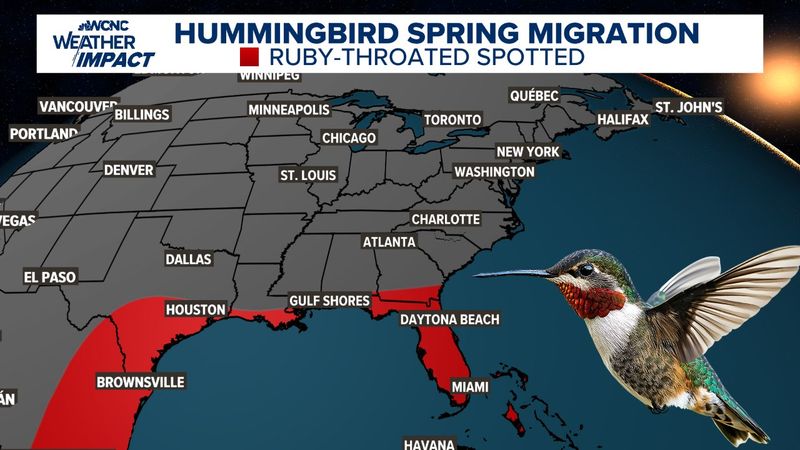
Before touching the feeder, pull up a calendar and compare the timing of the decline with the normal movement window for your region. In Texas, ruby-throated hummingbirds migrate north mainly from late March through mid-May, and Texas Parks and Wildlife’s migration timing data shows fall movement beginning in late summer and continuing along the coast into early November.
A quiet feeder in late May or early October may simply mean the birds are passing through on schedule.
Florida follows a different rhythm. UF/IFAS Extension notes that ruby-throated hummingbirds are commonly present in Florida from roughly March through September, though timing varies by location and year, and some species may appear during winter.
A drop in visits during midsummer could reflect birds dispersing to breeding territories rather than departing entirely.
Arrival, breeding, post-breeding dispersal, and migration each create their own natural fluctuations at the feeder. Weather, local food supplies, and individual bird behavior add further variation, so no single calendar date applies to every yard.
Texas Parks and Wildlife confirms that feeders do not delay migration and recommends leaving them available through the expected season rather than pulling them down abruptly, which reassures readers who worry that a full feeder might confuse the birds.
Natural food can pull birds away from the feeder
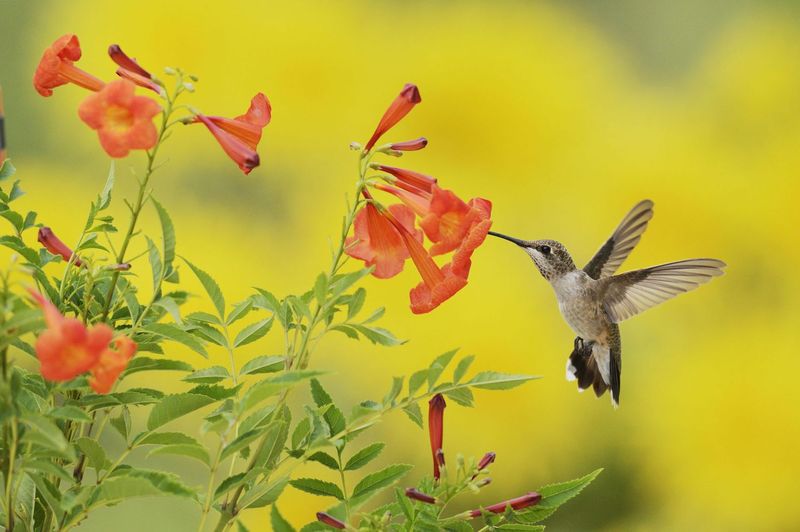
A sudden bloom in the yard or neighborhood can redirect hummingbirds away from a sugar-water feeder without any warning. Research has found an inverse relationship between floral abundance and feeder use, and published work on floral abundance and hummingbird feeder censuses supports the general idea that birds forage where natural nectar is richest.
That research draws heavily from western U.S. sites and broad-tailed hummingbirds, so the precise size of the effect for ruby-throated hummingbirds in a Southern backyard is not pinned down, but the underlying pattern is credible.
Nectar from flowers is only part of the picture. TPWD’s ruby-throated hummingbird profile explains that hummingbirds also eat small insects and spiders, which supply protein and nutrients that sugar water cannot provide.
A yard with a strong insect population, especially during breeding season when adults are feeding nestlings, gives birds good reasons to forage away from the feeder.
Seasonal shifts in both flowers and insects can happen quickly in the South, particularly after summer rains trigger late blooms or when a garden matures mid-season. If the feeder was busy before a patch of salvia opened up or before nearby trees leafed out with caterpillars, that timing is worth noting.
The feeder is supplemental food, not the birds’ only option, and a temporary preference for natural sources is not a problem that needs fixing.
One territorial bird may be hiding the rest
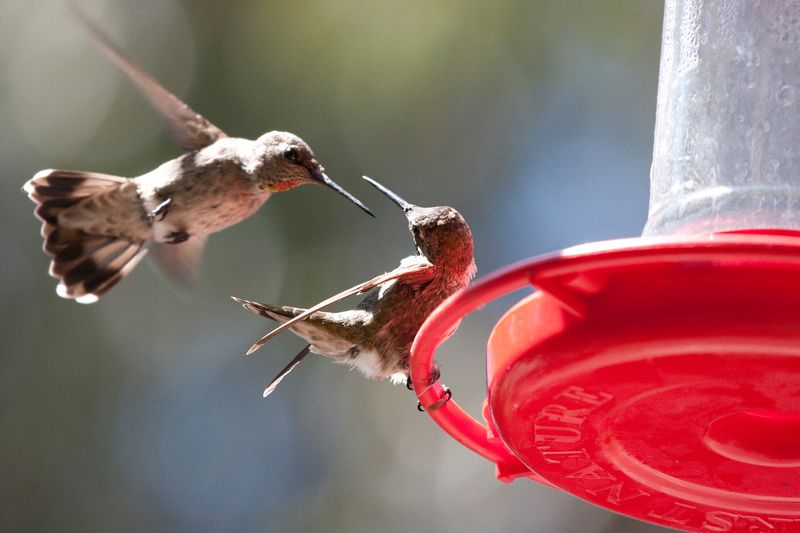
Sometimes the feeder looks quiet not because hummingbirds left the yard, but because one bird claimed it. Male ruby-throated hummingbirds are famously territorial, and a single dominant individual can make a feeder appear abandoned by chasing every other bird away before they get close enough to drink.
The telltale signs include a bird that perches nearby for long stretches, launches short aggressive chases, or repeatedly circles back to the same vantage point between short feeding bouts.
All About Birds’ hummingbird feeding guide explains that placing several smaller feeders in separate parts of the yard, ideally where they are out of one another’s sightlines, can serve more birds than one large feeder defended by a single guard. UF/IFAS guidance on Florida hummingbirds recommends spacing multiple feeders at least ten feet apart to reduce the chance that one bird can watch and defend them all from a single perch.
Adding feeders can improve access, but it is not a guaranteed fix. A particularly aggressive individual may still patrol two or three nearby feeders if the sightlines allow it.
Tucking a second feeder around a corner of the house, behind a shrub, or on the opposite side of a fence gives subordinate birds a realistic chance to feed without triggering a chase every time.
Inspect the feeder before blaming the birds
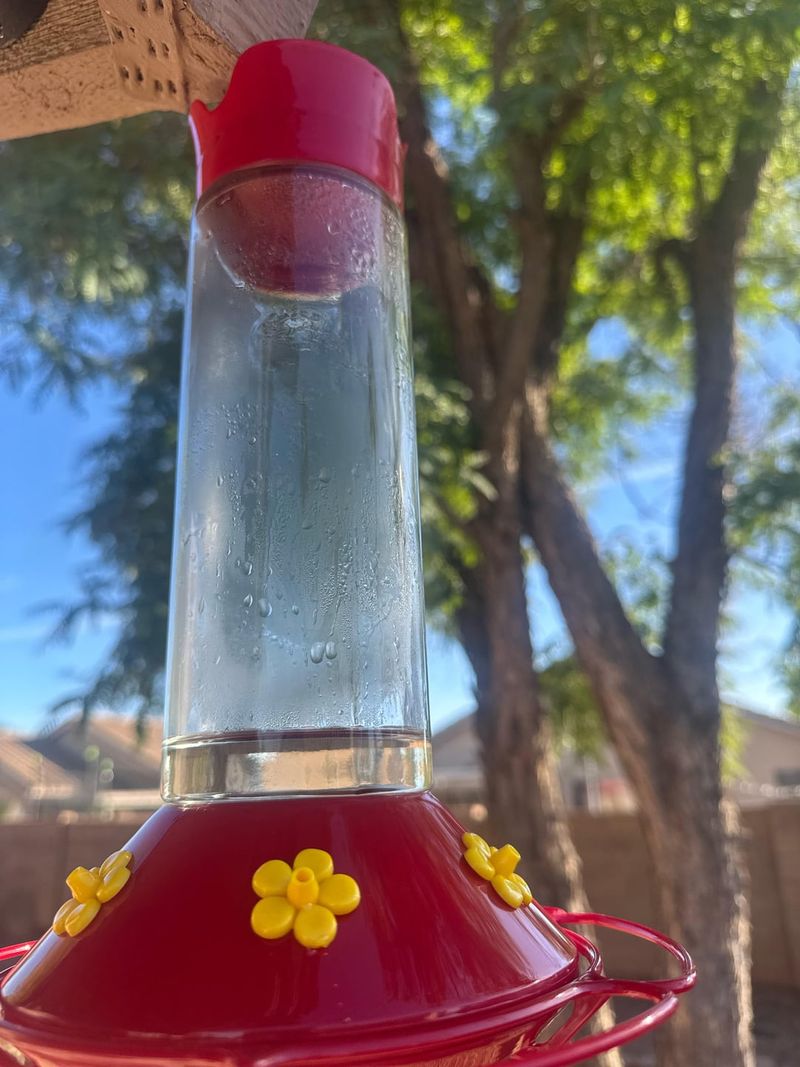
Once the calendar, natural food sources, and territorial behavior have been considered, shift attention to the feeder itself. Cloudy nectar is one of the clearest signs that something is wrong.
Sugar water that has gone milky, developed a sour smell, or shows visible mold or sediment can make birds sick and will cause them to stop visiting, even when the feeder appears full from a distance.
Cornell’s hummingbird feeding resource lists leaks, clogged or inaccessible ports, rain dilution, and direct sun exposure as practical feeder problems that can reduce visits independently of nectar quality. Southern heat accelerates spoilage significantly, so a feeder that looked fine in the morning may have fermented nectar by late afternoon if it sits in full sun.
Moving the feeder to a spot with morning light and afternoon shade is a simple way to slow that process.
Insect domination is another common barrier. When bees, wasps, or ants crowd the feeding ports, hummingbirds often give up and move on rather than fight for access.
Switching to a feeder model with bee guards or an ant moat can resolve the problem without any chemical intervention. Cornell’s feeder cleaning guidance specifically warns against coating ports with oil, petroleum jelly, or other sticky substances to deter insects, as these can contaminate nectar and damage feathers.
Check that all ports open fully and that no debris or dried sugar is blocking access before refilling.
Rain can also silently dilute nectar to the point where it offers little energy reward. If the feeder sits in an exposed location and your area received heavy rain, the nectar may be too weak to attract repeat visits even if it looks clean.
Fresh, clear nectar is the simplest reset
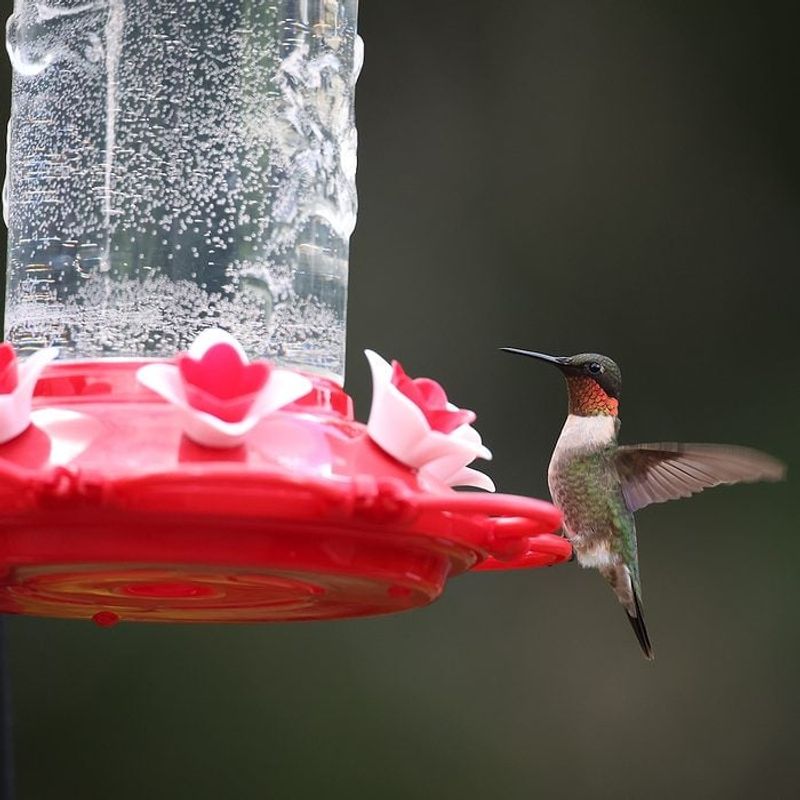
Getting the nectar right is the most reliable thing a feeder keeper can control. The correct mixture is one part refined white sugar dissolved in four parts water, nothing more.
Audubon’s hummingbird yard guidance confirms that honey, brown sugar, artificial sweeteners, molasses, and other substitutes should be avoided because they can promote harmful microbial growth or deliver an inappropriate sugar profile. Red food coloring is equally unnecessary; the feeder’s own red parts and nearby red flowers already provide the visual cue hummingbirds look for.
In Florida and Texas, heat is the biggest enemy of fresh nectar. A practical Southern schedule is to inspect the feeder daily and change the nectar every two to three days during hot weather, replacing it immediately if it turns cloudy, smells fermented, or shows any visible contamination.
Conditions vary, so a shaded feeder in mild weather may last a bit longer, while a sun-exposed feeder during a heat wave may need attention every day.
Cleaning matters as much as the mixture itself. Scrub all ports, seams, and the reservoir thoroughly before each refill.
Cornell’s feeder cleaning advice recommends hot water and a bottle brush as the baseline approach, noting that dilute bleach can be used if the feeder is rinsed completely afterward. UF/IFAS favors hot water and white vinegar and advises against soap or chlorine bleach.
Because recommendations differ slightly by source and feeder material, following your feeder manufacturer’s instructions alongside an authoritative wildlife-feeding protocol is the safest path. Thorough rinsing after any cleaning agent is non-negotiable.
Penn State Extension’s hummingbird attracting guide reinforces that unsafe substitutes in the nectar itself, beyond cleaning, can accelerate bacterial growth and harm birds.
Build the habitat around the feeder, not just the feeder itself
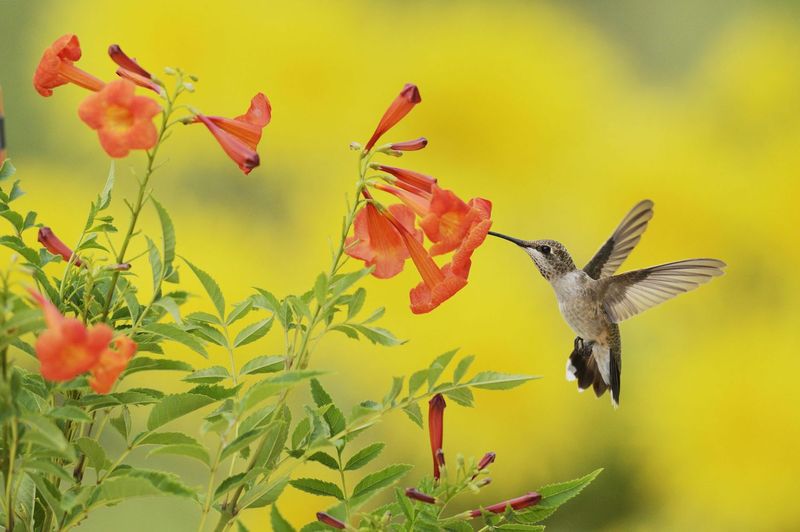
A feeder provides energy, but it cannot substitute for a yard that gives hummingbirds reasons to stay. Adding regionally appropriate flowering plants with staggered bloom times means birds have natural nectar available across a longer season, which keeps them returning to the general area even when the feeder itself is temporarily less appealing.
UF/IFAS’s Florida hummingbird publication lists firebush, firecracker plant, firespike, salvia, red buckeye, coral honeysuckle, and cardinal flower as plants that work well in Florida conditions. Texas gardeners should match choices to their own region, soil type, and local bloom timing rather than copying a Florida list directly.
No single plant is guaranteed to restore visits. What matters is providing a range of tubular, nectar-rich flowers that bloom at different points in the season, chosen for the conditions in your specific yard.
UF/IFAS Martin County’s hummingbird garden guide emphasizes matching plant choices to local growing conditions rather than planting for appearance alone.
Insects are equally important and easy to overlook. Reducing pesticide use preserves the small insects and spiders hummingbirds rely on for protein, especially during nesting.
Shelter in the form of trees and shrubs gives birds safe perching spots between feeding bouts. Keeping cats indoors removes one of the most significant threats to low-flying birds.
Audubon’s bird-friendly backyard feature also highlights reflective windows near feeding areas as a hazard worth addressing, since feeders can concentrate birds near glass. Simple window treatments or repositioning the feeder away from large panes can reduce that risk.
A quiet feeder is not automatically a warning sign
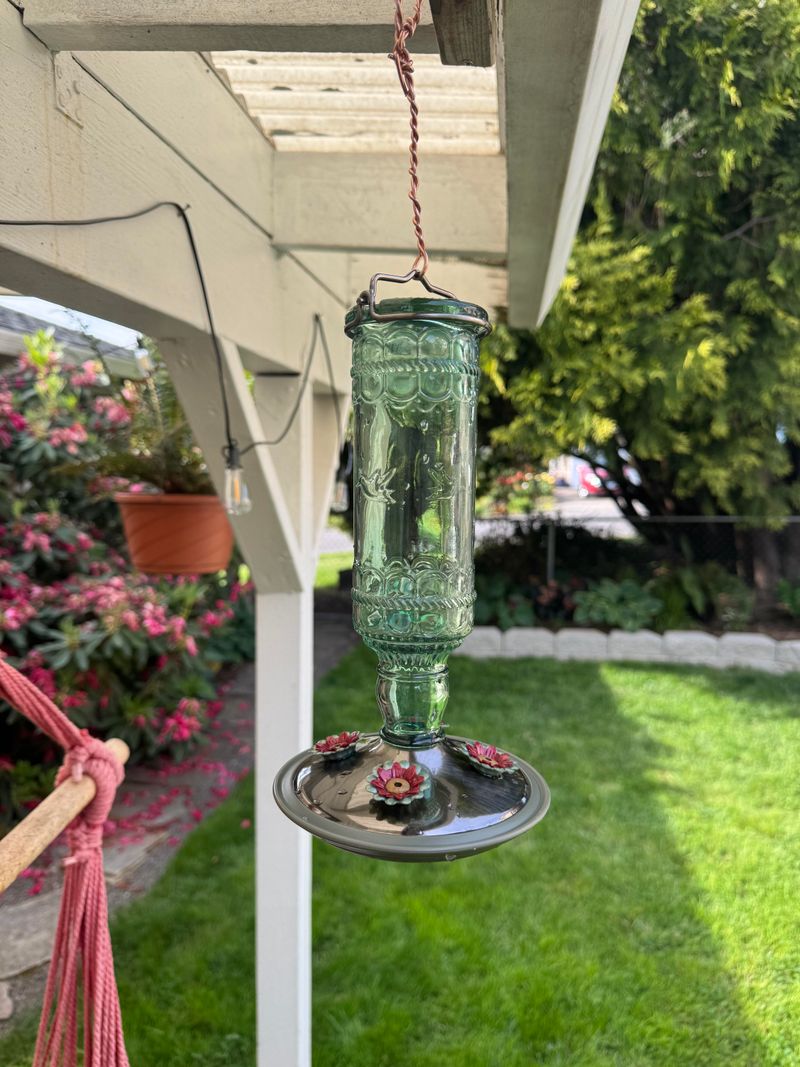
A short-term drop at a single feeder rarely signals a broader population problem. Cornell Lab’s guidance on declining feeder visits makes a clear distinction: a temporary quiet spell at one feeder can reflect migration timing, a strong local bloom, a territorial male, a neighboring feeder drawing birds away, or a feeder issue you have already corrected.
None of those situations require alarm.
Genuine concern is more appropriate when declines are wide, persistent, and documented across many observers over multiple seasons rather than concentrated at one yard during one month. If you have worked through the diagnostic steps in this article and the feeder remains quiet well past the expected arrival window, connecting with local birding groups or checking regional eBird data can help you understand whether others in your area are seeing the same pattern.
Most of the time, the answer is simpler: something changed in the yard, the season, or the feeder, and the birds responded accordingly. Fresh nectar, a cleaner feeder, a better location, and a yard with more flowers and fewer hazards put the odds back in your favor.
Hummingbirds are remarkably good at finding reliable food sources, and a well-maintained feeder in a welcoming yard tends to get noticed again.