
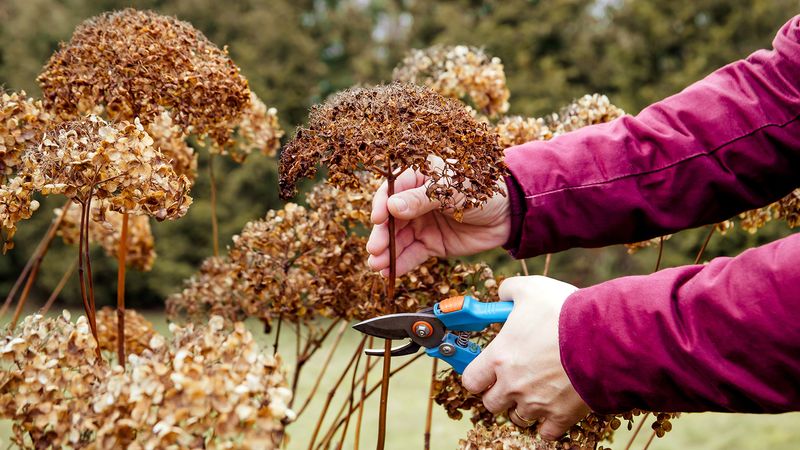
Few sights in the summer garden are more puzzling than a hydrangea covered in brown flower heads while every leaf looks perfectly green and healthy. Many gardeners assume the worst and reach for a spray bottle or pruning shears, but that reaction can do more harm than good.
Brown blooms on an otherwise vigorous shrub can mean several different things, from a completely normal aging process to heat stress to a fungal problem, and telling them apart is the key to a smart response.
Brown flower heads often mean the bloom has reached its end
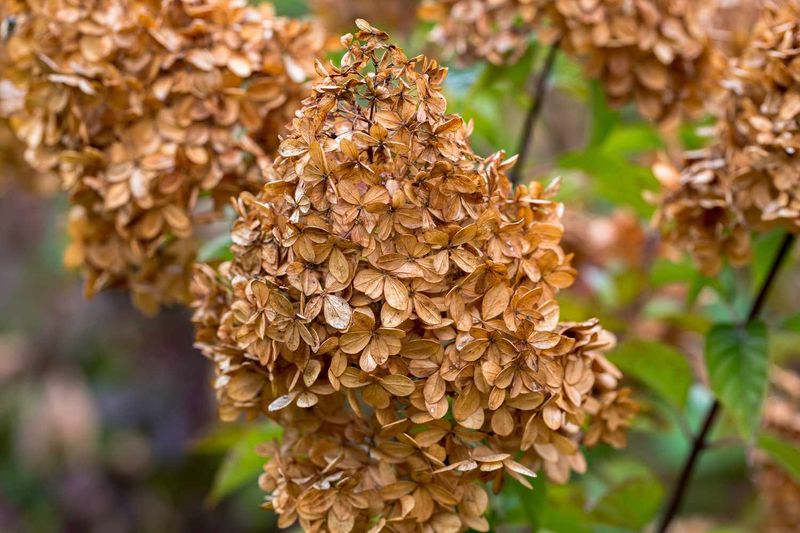
Hydrangea flowers do not simply pop open and then drop off cleanly when they are finished. They move through a sequence of color changes first, fading from their peak color toward pale green, blush, tan, and finally a papery brown as they dry in place on the branch.
University of Maryland Extension guidance on pruning hydrangeas notes that this fading and color shift is a normal part of bloom development, and that deadheading spent flower heads is optional rather than required for the health of the plant.
When the browning is gradual and affects the flower heads fairly evenly, without dark spots, water-soaked patches, or anything unusual happening to the leaves, stems, or buds nearby, the most straightforward explanation is that the blooms have simply run their course. That does not mean you can rule out every other possibility, but it does mean the shrub is not necessarily in trouble.
Dry, papery brown heads can actually stay on the plant through fall and into winter, where they add texture and quiet ornamental interest to the garden. Leaving them in place costs nothing, and removing them is a matter of personal preference rather than urgency.
The important thing to recognize is that a shrub full of brown blooms and green leaves is not automatically a shrub in crisis.
Why can the leaves stay green when flowers brown?
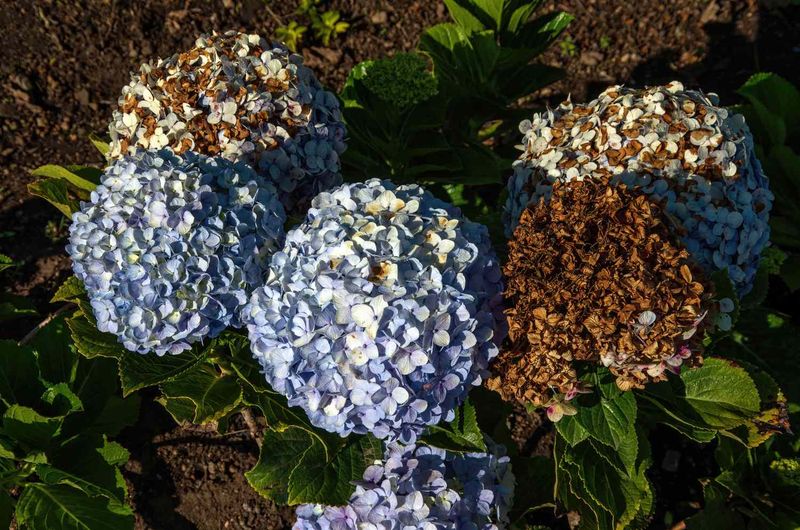
Flowers and leaves are not equally sensitive to the same stresses, and that difference is exactly what creates the puzzling picture of brown blooms on a green, leafy shrub. Petals are thin and have very little protective structure compared with leaves, so heat, intense sun, or a stretch of uneven watering can shorten bloom life or scorch petals before the foliage shows any obvious damage at all.
Illinois Extension’s overview of heat stress in plants explains that high temperatures can impair plant processes even when the plant looks otherwise intact from the outside.
Full-sun placement raises the stakes considerably. A hydrangea sitting in direct afternoon sun in a Florida or Texas yard is absorbing far more heat than the same plant would in a partially shaded spot, and that added heat increases the shrub’s water demand while also battering the flower petals directly.
You might notice the plant wilting during the hottest part of the day even when the soil is not actually dry, because heat alone can cause temporary wilting that has nothing to do with drought.
University of Maryland Extension’s hydrangea problem guide points out that different species and cultivars handle sun and heat very differently. Bigleaf hydrangeas, for example, generally want morning sun and afternoon shade, while panicle hydrangeas tend to tolerate more sun.
Matching the plant to the right exposure matters more than any quick fix.
The browning pattern tells you what to check next
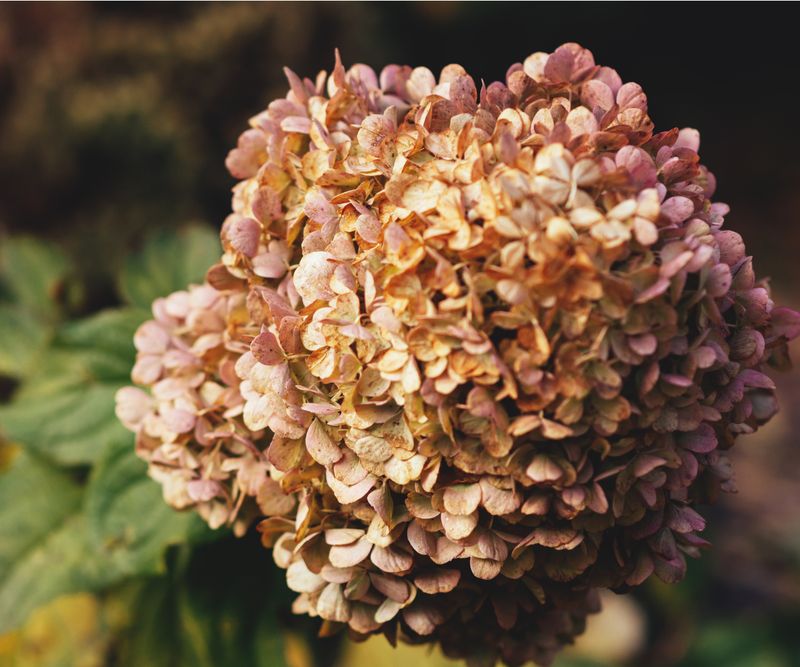
Not all brown is the same, and the pattern of browning on your hydrangea flower heads is one of the most useful diagnostic clues you have. Uniform, dry, papery browning that spreads gradually across the whole flower head is most consistent with natural aging, especially when the leaves, stems, and buds look normal.
Crispy browning that appears first or most severely on the side of the flower head facing the afternoon sun points more toward heat or sun injury than toward disease.
A different picture emerges when you see brown spots with water-soaked, almost translucent edges, fuzzy gray growth on the petals or nearby tissue, buds that fail to open at all, or petals that fall off rather than drying in place. Penn State Extension’s hydrangea disease resource describes these as signs that raise concern for Botrytis blight or another disease problem.
These are warning signs, not a complete checklist, and their absence does not absolutely rule out disease if something still seems off.
Pay attention to what is happening beyond the flower heads as well. University of Minnesota Extension’s hydrangea diagnostic tool flags mottled, spotted, yellowing, or distorted leaves as signs that warrant a broader look at the whole plant.
Also keep in mind that color shifts toward green, pink, or red can be completely normal for many cultivars, particularly panicle hydrangeas, which often start lime-green or white and age through pink tones.
Better shade and steadier moisture can extend bloom life
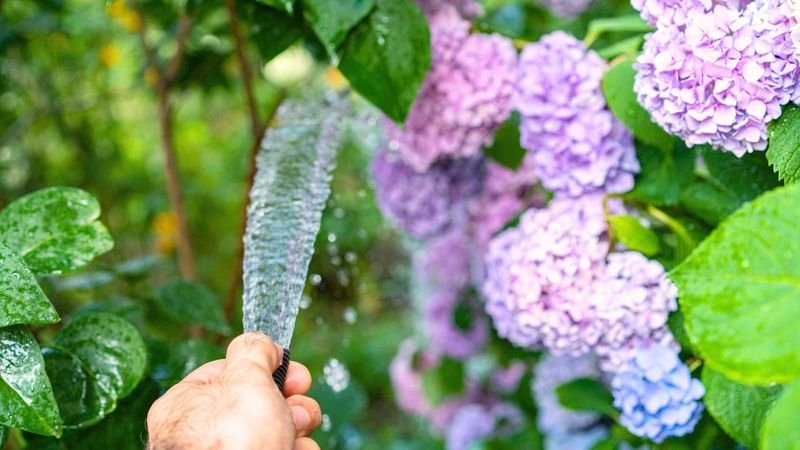
Before adjusting anything, figure out which hydrangea you are growing. Bigleaf hydrangeas (Hydrangea macrophylla) are the moisture-demanding, old-wood bloomers most commonly grown in Southern yards, and they are also the ones most likely to suffer in harsh afternoon sun.
Morning sun with afternoon shade is a well-established recommendation for this type, though it does not apply equally to every hydrangea species. Panicle hydrangeas handle more sun and heat, while oakleaf hydrangeas occupy a middle ground and are generally better suited to the Southern climate than bigleaf types.
Once you know your plant, assess whether afternoon exposure is cutting bloom life short. If the shrub is cooking in direct western sun from noon onward, shade cloth, a nearby taller plant, or eventually relocating the shrub can make a real difference for future bloom seasons.
These steps protect next year’s flowers; they will not reverse the browning on heads that have already dried.
University of Georgia Cooperative Extension’s guide to growing bigleaf hydrangea recommends checking soil and plant condition and watering deeply enough to moisten the root zone during dry weather, rather than relying on shallow, frequent sprinkling or a fixed daily schedule. Soggy, waterlogged soil is just as harmful as drought.
A 3- to 5-inch layer of organic mulch spread over the root zone helps hold moisture and moderates soil temperature during summer heat spikes. Keep the mulch a few inches away from the base of the stems to avoid rot.
Deadhead the flower, not the future branches
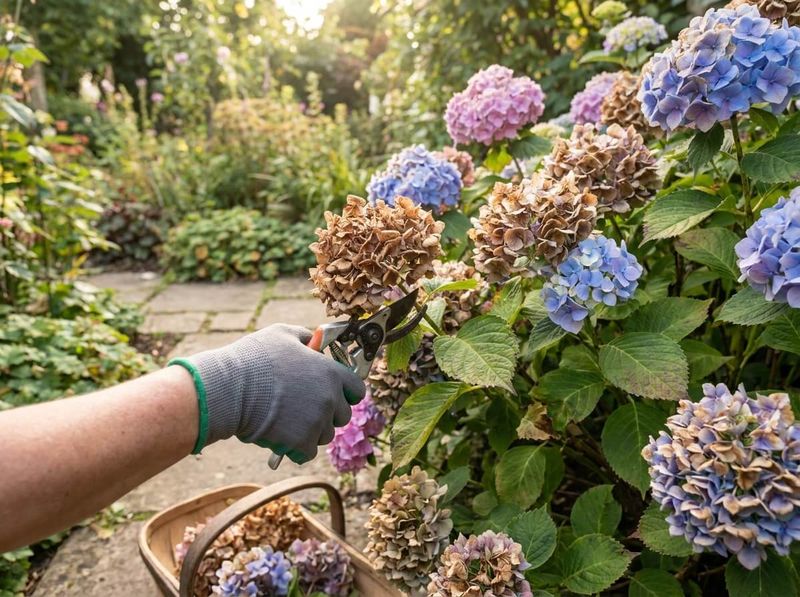
Removing a spent flower head is a quick, low-risk step that tidies up the plant without putting next year’s blooms in jeopardy, as long as you cut in the right place. The goal is to snip off just the old flower head at the very tip of the branch, leaving the stem, the leaf nodes, and any developing buds below it completely intact.
That kind of light deadheading can be done on any hydrangea type once the flowers have faded.
Where gardeners sometimes run into trouble is when they move from deadheading into cutting stems back significantly. Penn State Extension’s guide on pruning hydrangea species makes clear that bigleaf and oakleaf hydrangeas commonly set their flower buds on old wood, meaning the stems that grew during the previous season.
Cutting those stems back at the wrong time removes the buds that would have produced next summer’s blooms, which explains why some gardeners end up with a leafy green shrub and no flowers at all the following year.
Panicle and smooth hydrangeas follow a different pattern, flowering on new wood that grows in the current season. Those types can tolerate more aggressive pruning in late winter or early spring without losing their bloom potential.
UGA Cooperative Extension’s bigleaf hydrangea resource reinforces the point that knowing your hydrangea type before making any cuts larger than a single spent flower head is the single most important step in avoiding an accidental bloom-free season.
When brown petals point to Botrytis or another problem
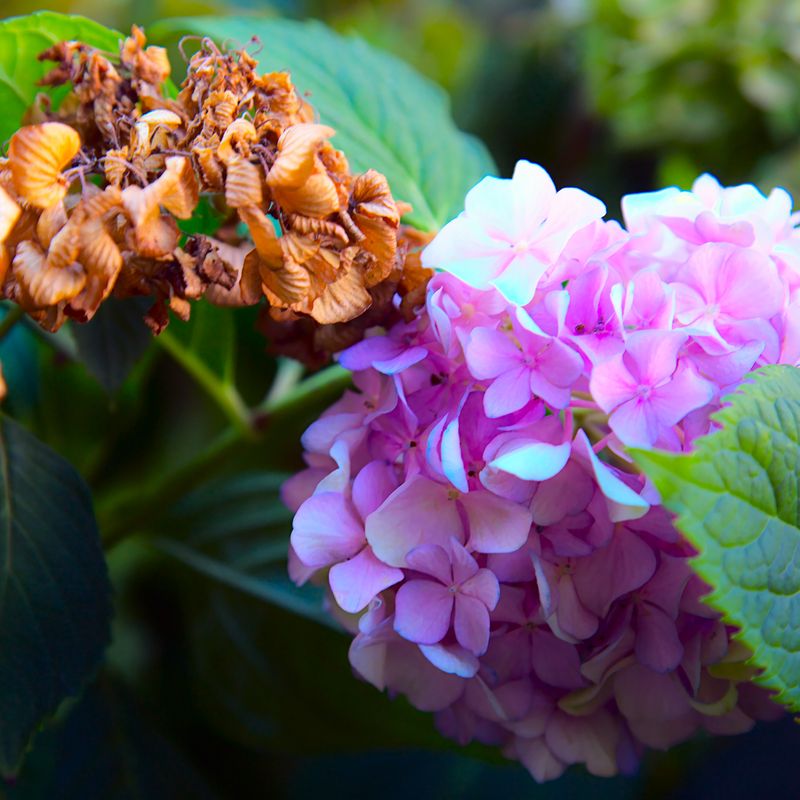
Botrytis cinerea, commonly called gray mold, is a fungal pathogen that can attack hydrangea flowers, particularly during cool, humid, or rainy stretches. It becomes more plausible as a diagnosis when browning comes with additional warning signs: water-soaked spots that look almost translucent before they turn brown, fuzzy gray or tan fungal growth on the petals or nearby stems, buds that collapse or fail to open, or petals that drop off rather than drying in place.
Penn State Extension’s hydrangea disease page identifies these as characteristic signs associated with Botrytis.
These symptoms are warning signs, not a rigid checklist. If browning is persistent, spreading to other parts of the plant, or accompanied by anything unusual in the leaves, buds, or stems, that warrants a closer look even if the classic Botrytis signs are not all present.
UC IPM’s Botrytis blight resource notes that the pathogen spreads readily through infected plant debris and thrives when air circulation is poor and foliage stays wet.
The first response to suspected Botrytis should be cultural, not chemical. University of Minnesota Extension’s gray mold guidance recommends improving air circulation around the plant, removing infected flowers and fallen debris promptly, avoiding overhead irrigation that wets the flowers and foliage, and watering at the soil surface instead.
A single aging brown bloom does not justify automatic fungicide use. If a fungicide becomes warranted after a clearer diagnosis, any product must be used strictly according to its label.
Skip the unnecessary rescue treatments
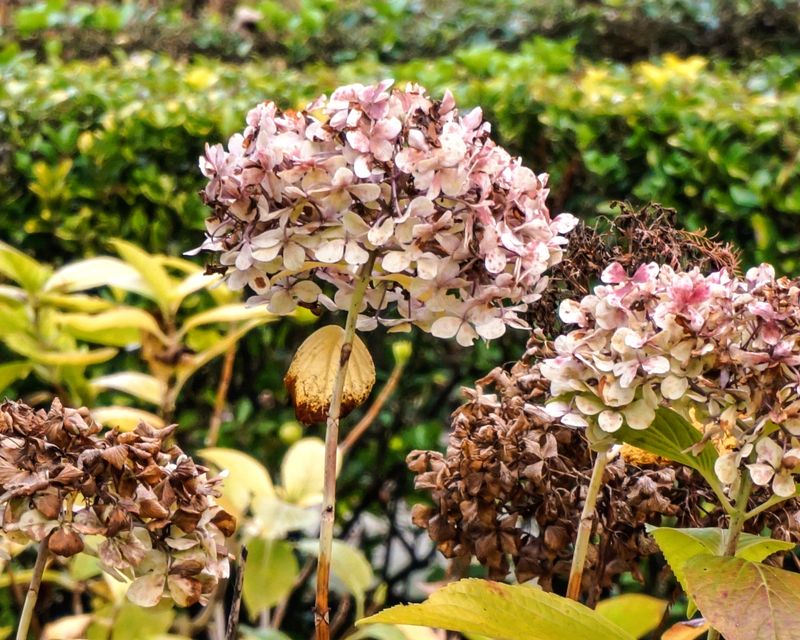
Soil pH adjustment is one of the most common recommendations gardeners encounter when their hydrangeas look off, but it is rarely the right response to brown, drying petals. For certain bigleaf hydrangea cultivars, soil acidity affects whether flowers develop blue or pink coloration.
University of Maryland Extension’s problem identification guide is clear that pH is a color-development factor, not a general treatment for browning or petal damage. Unnecessary amendments can actually create nutrient imbalances that cause new problems.
Fertilizer is similarly not a dependable rescue for blooms that have already browned. Excess nitrogen can push a hydrangea toward lush foliage at the expense of flowering, but that shows up as reduced bloom production rather than brown flower heads on an otherwise healthy plant.
Watering every day on a fixed schedule is also a risk: UGA Cooperative Extension recommends checking soil and plant condition and watering deeply when the plant needs it, rather than following a rigid routine that can lead to waterlogged roots.
Broad insecticide applications during bloom carry a specific hazard that is easy to overlook. University of Connecticut Extension’s hydrangea pest and disease factsheet advises against applying insecticides while hydrangeas are in bloom because of the risk to pollinators and beneficial insects.
The most useful framework is straightforward: leave naturally aging heads alone or remove them with a light deadhead, correct any exposure or moisture problems, and investigate disease only when additional or worsening symptoms appear.
A brown bloom is a clue, not a verdict
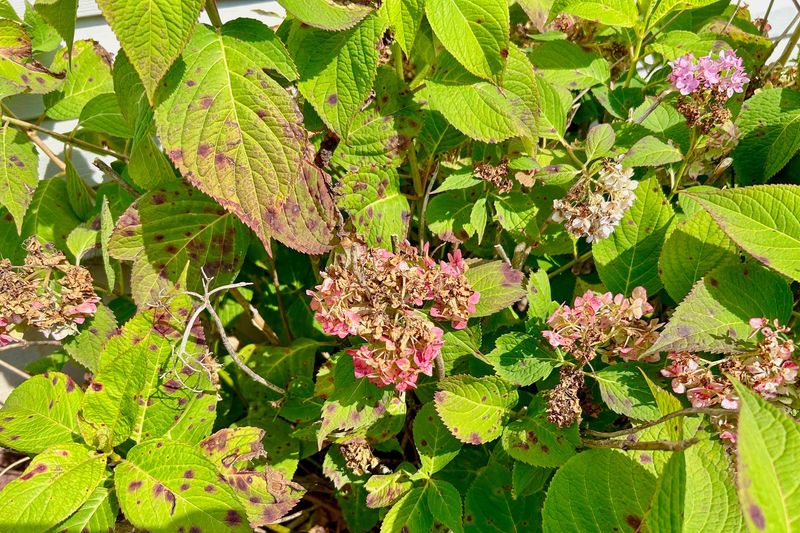
Start with the simplest check: look at how the browning developed. Gradual, even fading across the flower head, with no unusual spots, fuzzy growth, or petal drop, points toward natural aging.
Healthy green foliage alongside that pattern is reassuring, though it does not eliminate the possibility of heat stress or early disease, since University of Maryland Extension notes that flowers can show damage before leaves do.
If aging does not fit the picture, assess sun exposure and soil moisture next, then look carefully at the flowers, leaves, buds, and stems for warning signs of disease. Know your hydrangea type before relocating, pruning beyond a simple deadhead, or applying any treatment.
Penn State Extension’s pruning guide is a practical starting point for identifying old-wood versus new-wood bloomers.
Brown flower heads are one piece of information, not a final diagnosis. A targeted, unhurried response almost always serves the plant better than a panicked one.