
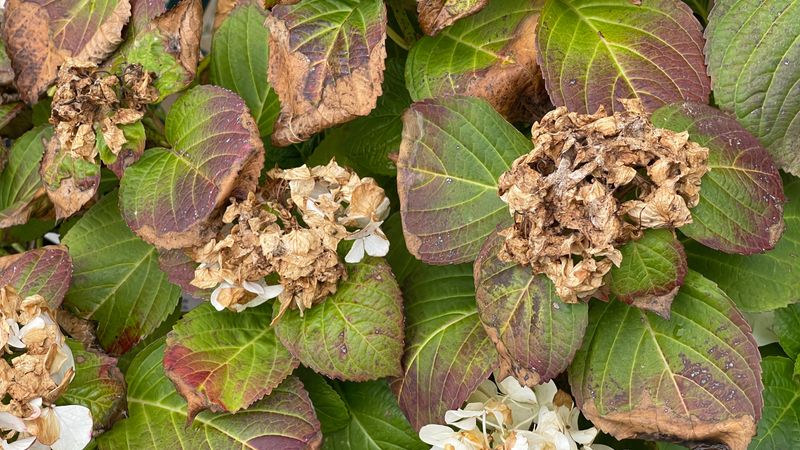
Watching your hydrangea blooms go from beautiful to brown in what feels like a day or two is genuinely alarming, especially when you can’t figure out why. The frustrating truth is that several different things can cause this, and guessing wrong can make the problem worse.
Whether your plant is aging naturally, struggling with heat and dry soil, or dealing with a possible disease, knowing what to look for first puts you in a much better position to help it through the rest of the season.
Brown blooms can reflect aging, stress, or disease
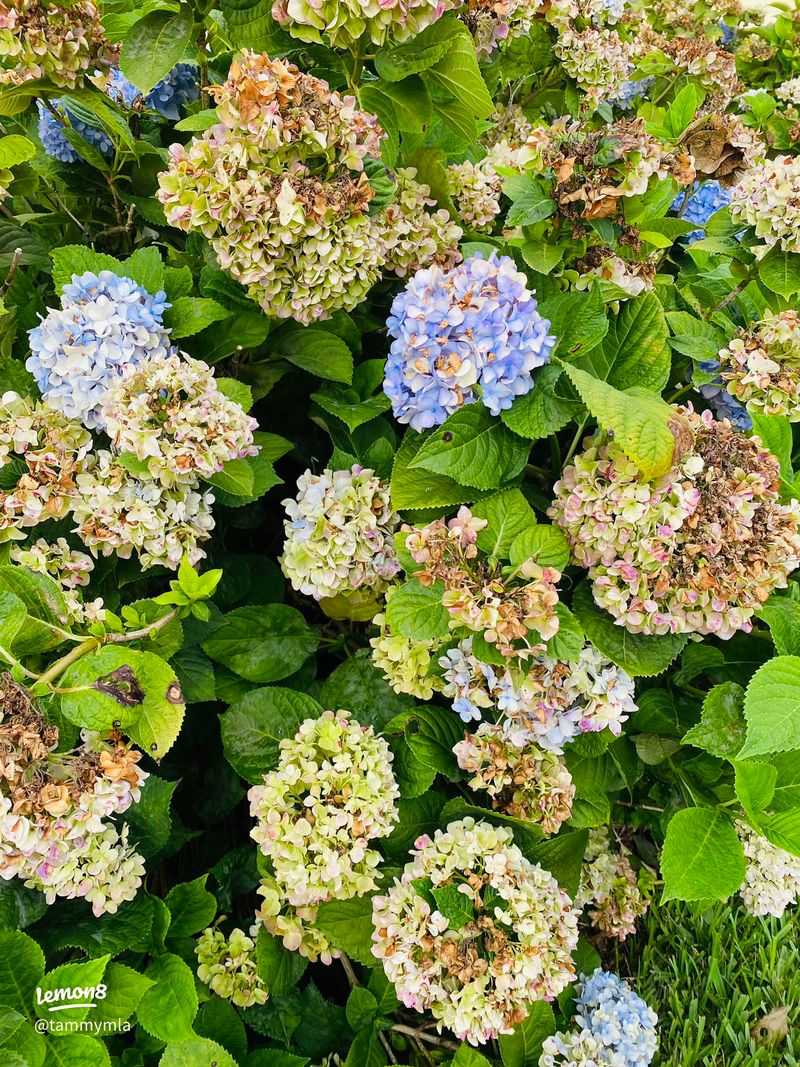
Rapid browning on hydrangea flowers is unsettling, but it rarely points to just one explanation. Panicle hydrangeas, for instance, commonly shift from white to pinkish tones and then to light brown as their flowers mature – this is a normal part of their seasonal cycle, not a sign something has gone wrong.
Oakleaf hydrangeas follow a similar path, changing color as they age and sometimes holding onto their flower heads for weeks.
The challenge is that aging blooms and stressed or diseased ones can look similar at first glance. A flower head that has turned a relatively uniform, dry, papery tan or brown across most of its surface is more consistent with natural senescence or heat-related drying.
Contrast that with blooms showing patchy, irregular browning where tissue feels soft or collapses, buds that died before they opened, or spots spreading onto nearby leaves – those patterns suggest something else may be involved, including a possible disease.
According to Penn State Extension’s hydrangea disease guide, brown spots, soft tissue, and gray fuzzy growth are warning signs that deserve a closer look rather than a quick assumption. The University of Minnesota’s hydrangea diagnostic tool also emphasizes checking texture, pattern, and leaf symptoms together.
These clues guide your inspection, but no single sign confirms a diagnosis on its own.
Hot, exposed conditions can accelerate flower decline
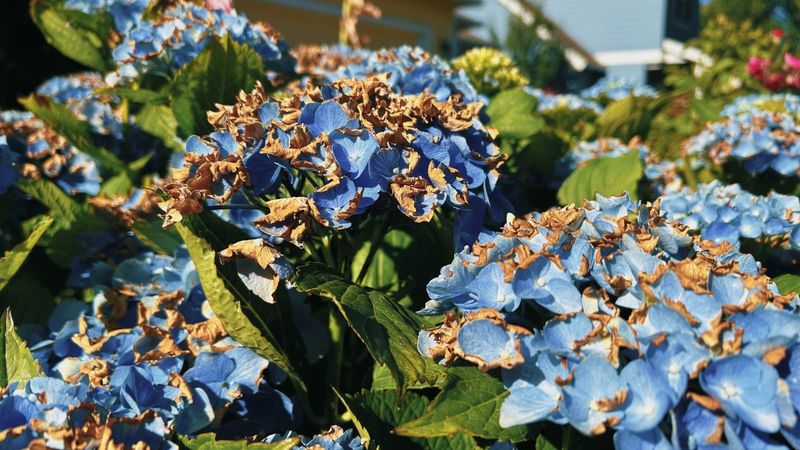
Southern gardens can be punishing places for hydrangeas when temperatures climb and afternoon sun is relentless. Mississippi State Extension notes that bigleaf and smooth hydrangeas can struggle in hot, exposed afternoon sun, and that consistent moisture is critical for their health.
Flower quality can drop quickly when these conditions stack up, even if the plant looked fine just days earlier.
Not all hydrangeas respond the same way. Bigleaf types are generally more sensitive to hot afternoon exposure than panicle hydrangeas, which tend to handle more sun without as much trouble.
Clemson Extension’s care guide and University of Georgia’s hydrangea publication both recommend morning sun with afternoon shade or protection for heat-sensitive species. Cultivar selection, plant age, and recent irrigation history also shape how a specific shrub holds up.
Site conditions matter too, especially in Florida and Texas where local factors can intensify stress fast. Reflected heat bouncing off walls, driveways, or pavement can raise temperatures around a plant significantly beyond what a thermometer reads in the open.
Container-grown hydrangeas dry out faster than in-ground plants, and sandy or rapidly draining soils hold less moisture between waterings. Tree-root competition can quietly pull water away from a hydrangea’s root zone even when the surrounding lawn looks fine.
Environmental stress under hot, dry, exposed conditions can become visible very quickly, but labeling heat as the only cause overlooks these compounding factors.
Check the soil before you decide the plant needs water
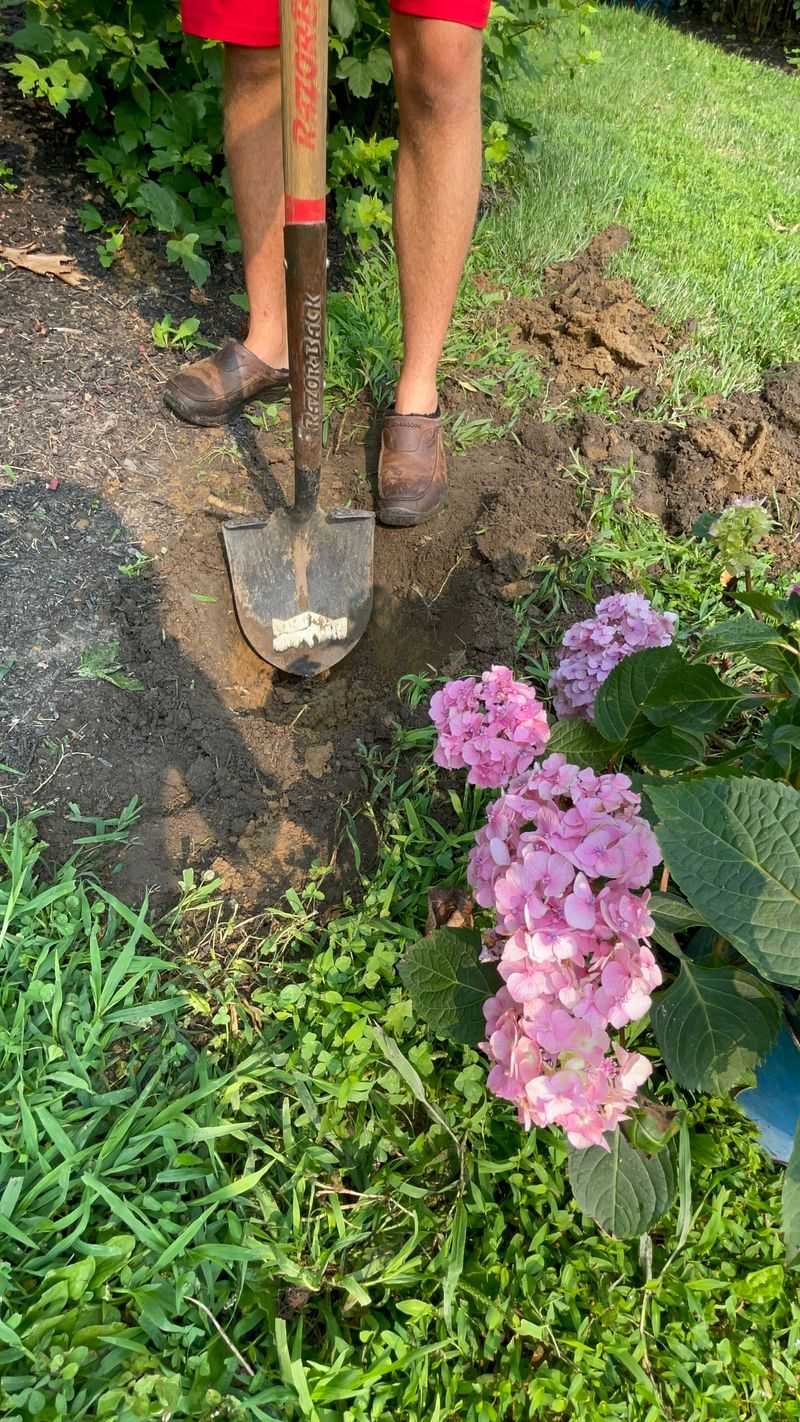
Midday wilting or a bone-dry soil surface can look like a clear call to grab the hose, but appearances can mislead. Soil moisture several inches below the surface tells a more reliable story than what you see on top.
Push a finger or a screwdriver four to six inches into the ground near the root zone – if the soil feels moist down there, the plant may be wilting from heat load rather than true drought, and adding more water could actually cause harm.
UGA Extension advises against automatic watering during heat waves without first confirming the soil is actually dry. If the root zone feels wet while the plant continues to wilt or decline, that combination points toward a drainage problem, root damage, or possibly root rot – not a water shortage.
In that case, adding more water makes things worse, and the right response is to investigate what is happening underground.
Watering needs also vary widely depending on conditions. UGA’s watering frequency guidance and University of Arizona’s drought and heat maintenance resource both caution that sandy soils, containers, newly planted shrubs, heavy root competition, and recent rainfall all change how often a plant actually needs water.
Treating one inch per week as a rigid rule ignores these real differences. The plant’s condition and what the soil feels like several inches down are more useful guides than any calendar schedule.
Water the root zone deeply only when it is dry
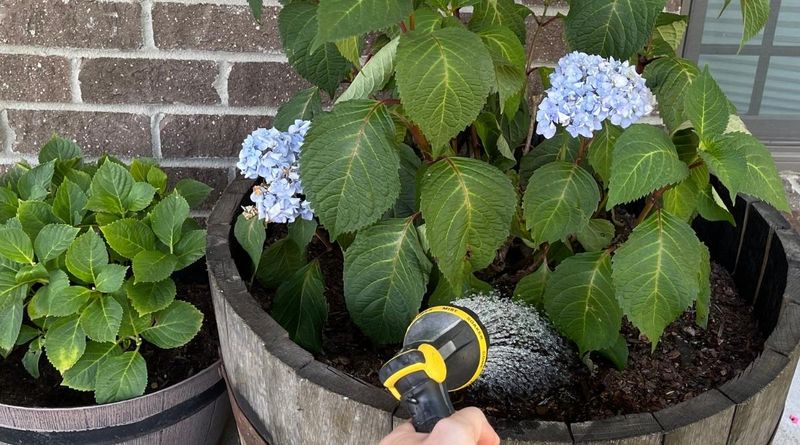
Once the soil check confirms the root zone is genuinely dry and the plant is showing real stress, deep and slow watering at the base is the right response. Clemson Extension recommends keeping hydrangeas consistently moist but not waterlogged, with water delivered at the root zone rather than over the top of the plant.
Letting water soak in slowly encourages roots to access deeper, more stable moisture rather than staying near the surface where soil dries out fastest.
Shallow, frequent sprinkling creates a different kind of problem. When only the top inch or two of soil gets wet, roots tend to stay near the surface where they are more vulnerable to heat and dry spells.
UGA Extension’s watering guidance emphasizes deep, infrequent watering over light daily sprinkling for established shrubs. Saturated or poorly drained soil carries its own risk – roots need oxygen as well as water, and soil that stays waterlogged can deprive them of both, setting the stage for root rot.
Drip irrigation or soaker hoses are worth considering when practical. Penn State Extension’s disease guidance and NC State’s Botrytis resource both note that keeping foliage and flowers dry reduces disease risk compared with overhead watering, especially late in the day when moisture lingers overnight.
One important reality check: even correct, timely watering can protect new growth and reduce further stress, but it cannot revive or restore flowers that have already turned brown.
Reduce afternoon exposure and protect the root zone
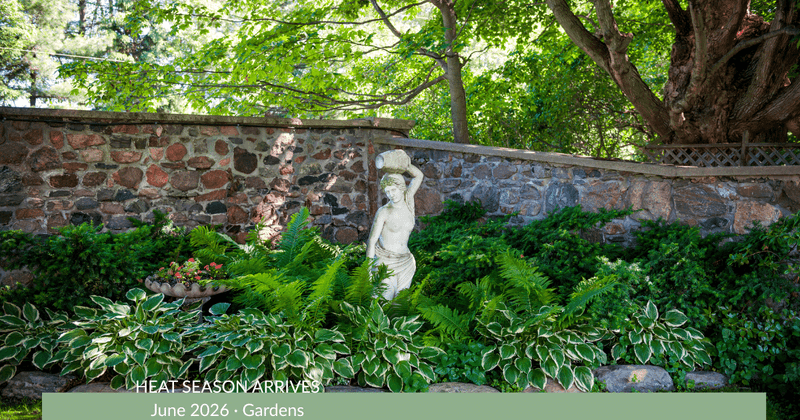
For heat-sensitive hydrangeas planted in Southern gardens, site conditions often determine how well the plant holds up through late summer. Bigleaf hydrangeas generally perform better with morning sun and afternoon shade or protection, while panicle hydrangeas tolerate more direct sun without as much flower damage.
Mississippi State Extension’s hydrangea publication emphasizes choosing locations that shield sensitive types from the harshest afternoon exposure, and UGA’s hydrangea guide reinforces the value of afternoon protection for maintaining flower quality.
Mulch is one of the most practical tools available for protecting the root zone. A 2- to 3-inch layer of organic mulch applied around the base of the plant helps conserve soil moisture and moderate root-zone temperature during hot spells.
Keep mulch pulled back a few inches from the crown and stems to avoid trapping moisture against the plant’s base, which can invite rot or disease.
Reflected heat from walls, pavement, or driveways can push temperatures well above what an open-air reading suggests, so hydrangeas placed near those surfaces may need extra attention. Container plants dry out faster than in-ground shrubs and may need more frequent moisture checks.
University of Arizona’s heat and drought landscape guide notes that rapidly draining soils – common in parts of Florida and Texas – hold less water between waterings and may need different management. Shade and mulch will not repair existing brown flowers, but they reduce the stress load on new growth going forward.
Use soft spots and gray fuzz as disease warning signs
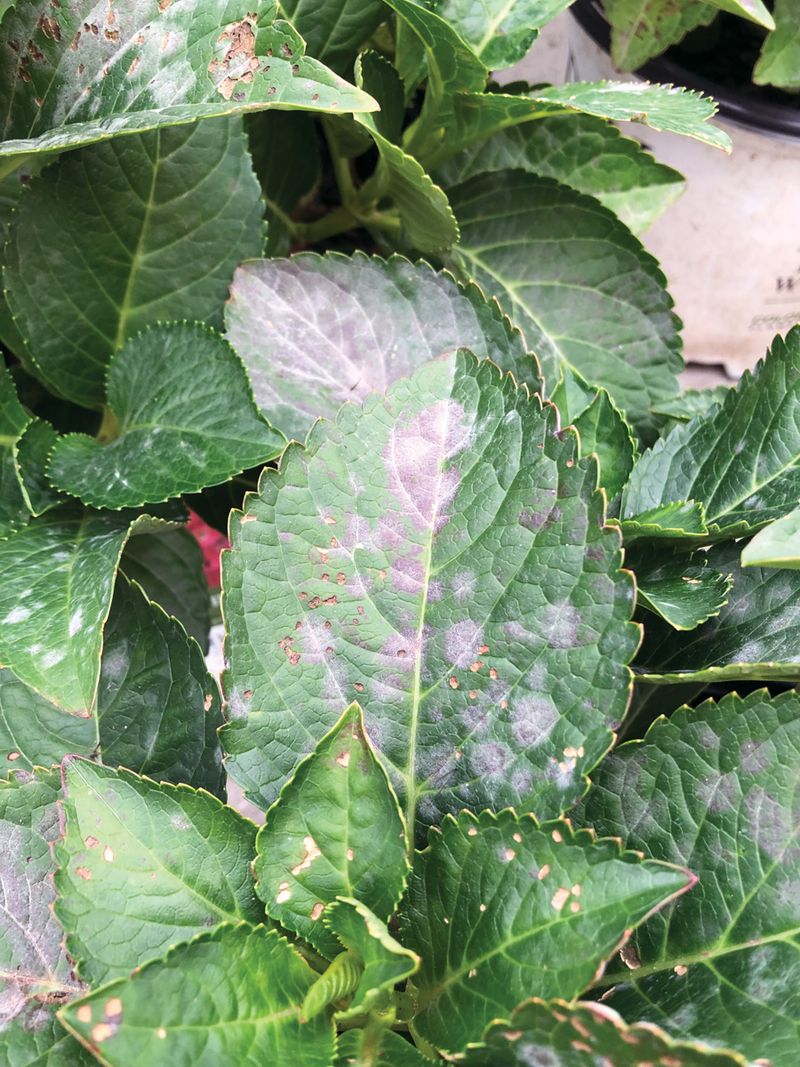
Not every brown flower is simply old or heat-tired. Certain patterns point toward a possible disease problem, and recognizing them early matters.
Irregular brown spots that spread unevenly across petals, tissue that feels soft or collapses when touched, flower buds that die before they ever open, spots appearing on nearby leaves, or a gray fuzzy coating on affected tissue are all signs worth taking seriously. The University of Minnesota’s hydrangea diagnostic tool lists these as indicators that distinguish disease from simple aging or heat-related decline.
Botrytis blight, caused by the gray mold fungus, is one possibility when those soft, fuzzy symptoms appear. A common misconception is that gray mold only shows up during cool, wet spring weather.
NC State Extension’s Botrytis resource explains that the fungus is favored by prolonged moisture, high humidity, poor air circulation, and the presence of dead or senescing tissue – conditions that can occur during warm weather after rainy periods. Heat-damaged or aging flowers can become dead tissue that is more vulnerable to secondary fungal infection, meaning a plant can be dealing with both problems at once.
Sanitation is the first response, not a fungicide. Remove flowers and debris showing possible disease and dispose of them away from the garden rather than leaving infected material in the bed.
Improving airflow around the plant and keeping foliage dry – especially by avoiding overhead watering late in the day – are important next steps. Penn State Extension notes that if a fungicide is considered after a plausible disease identification, the product label must specifically cover the plant, the disease, and the application site.
Fungicides may help protect healthy tissue going forward, but they cannot reverse petals that are already dead.
Deadhead carefully and postpone hard pruning until you identify the type
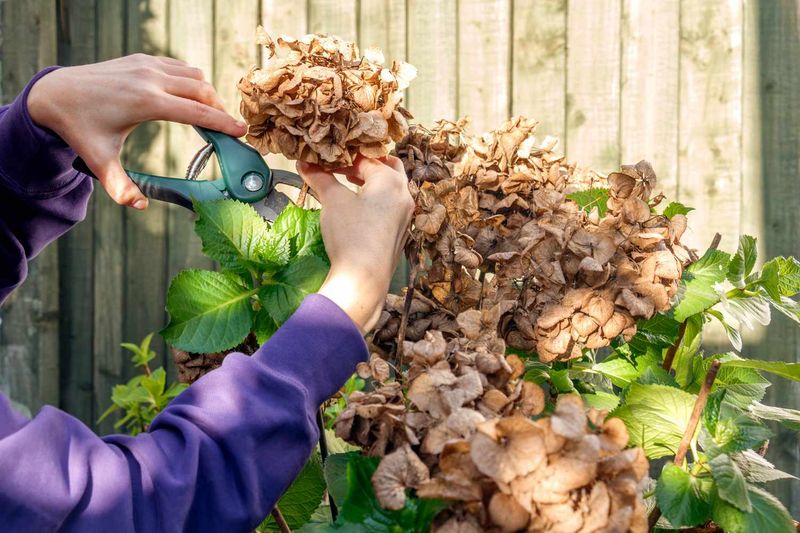
Removing spent flower heads is a reasonable late-summer task, but the approach should depend on what you are seeing and what type of hydrangea you have. Uniformly brown, dried-out flower heads that show no sign of soft tissue or disease can be clipped off for appearance and basic sanitation.
Flower heads showing soft spots, irregular browning, or gray fuzz should be removed and disposed of away from the garden bed rather than dropped on the ground or added to a compost pile, since infected debris can become a source of future problems.
Where things get complicated is with harder pruning. University of Illinois Extension and UGA’s hydrangea guide both explain that traditional bigleaf and oakleaf hydrangeas generally bloom on old wood, meaning their flower buds for next year are already forming on this season’s stems.
Cutting those stems back hard in late summer removes those buds and eliminates next year’s flowers before they ever get a chance. Panicle and smooth hydrangeas bloom on new wood and are generally pruned during dormancy or before spring growth begins.
Clemson Extension specifically cautions against pruning bigleaf hydrangeas after August 1. If you are not certain which type you have, Mississippi State Extension’s hydrangea care clarification offers helpful identification guidance.
The safest approach right now is to remove spent heads and any clearly dead wood while leaving the rest of the plant alone until you can identify the species with confidence.
Protect the next flush instead of chasing perfect old flowers
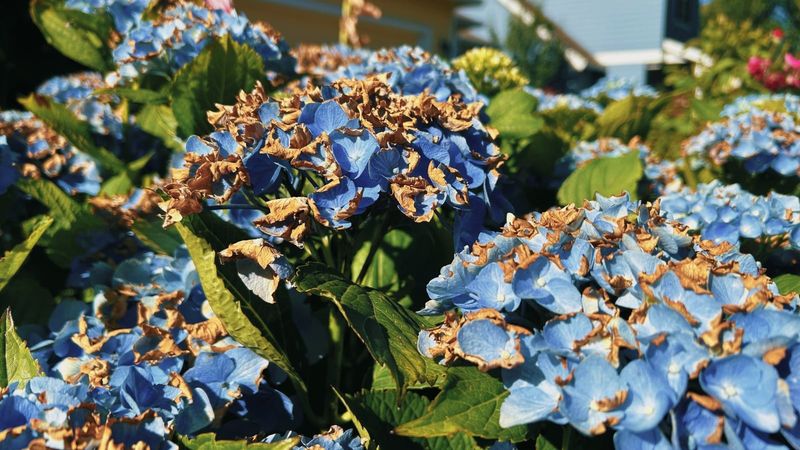
The most useful shift in thinking is moving from trying to fix the brown flowers to protecting what comes next. Brown petals will not recover regardless of what you do, and that is fine – the goal now is reducing stress on the plant so new growth has the best possible conditions.
Work through a simple sequence: look closely at the bloom texture and pattern, check the root zone a few inches down before deciding whether to water, apply deep slow watering only when the soil is genuinely dry, pull back from harsh afternoon exposure where possible, and add correctly placed mulch to conserve moisture and buffer root-zone heat.
If the browning looks uniform, dry, and papery across an otherwise healthy plant, normal aging may be all that is happening and no emergency treatment is needed. Remove spent or diseased tissue carefully, keep foliage dry, and monitor new growth over the coming weeks.
Penn State Extension and Clemson Extension both recommend seeking a more specific diagnosis if soft spots, spreading lesions, gray mold, wet-soil wilting, or persistent decline continue rather than assuming one cause and treating blindly. A plant that gets the right care now, even modest and careful care, carries far more into next season than one that gets the wrong fix applied in a hurry.