
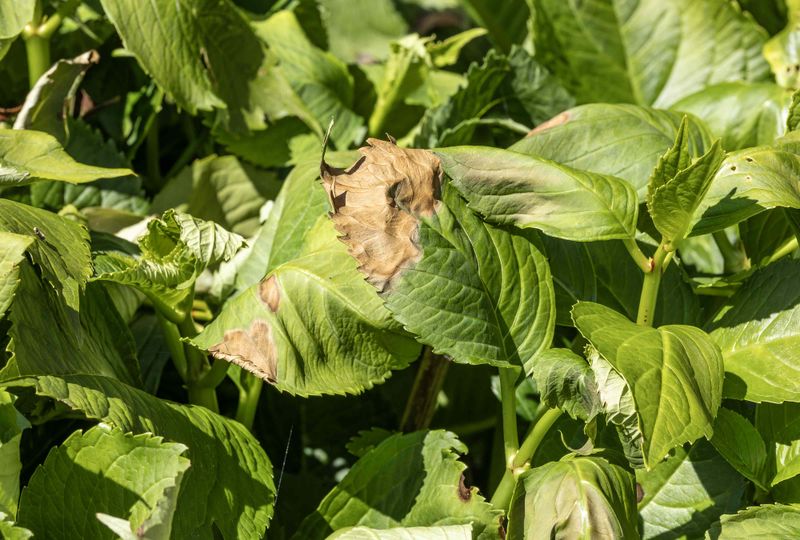
Crispy brown edges creeping along your hydrangea leaves can stop you cold, especially when the rest of the plant still looks lush and green. That gap between visible damage and apparent plant health is exactly what makes this symptom so confusing for Southern gardeners.
The browning is real, and so is the stress behind it, but figuring out the right fix starts with reading the warning correctly.
Crispy edges are the plant’s early warning
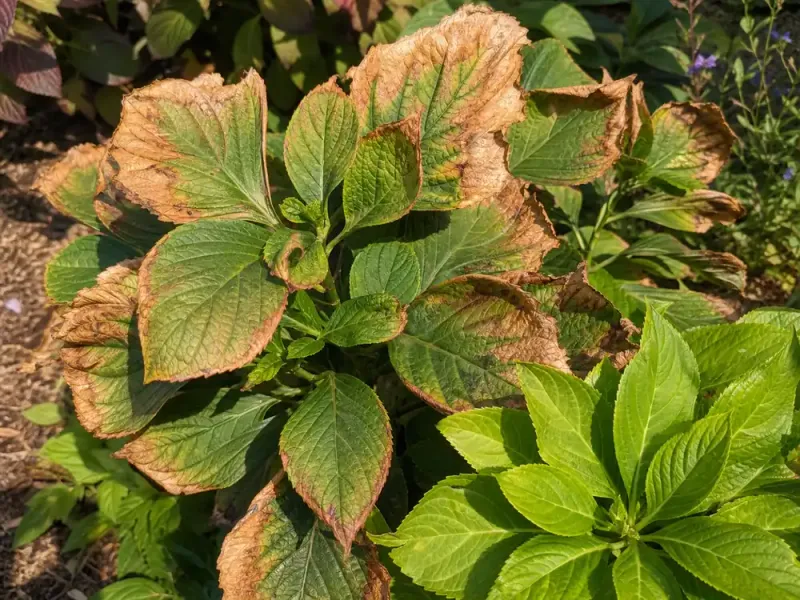
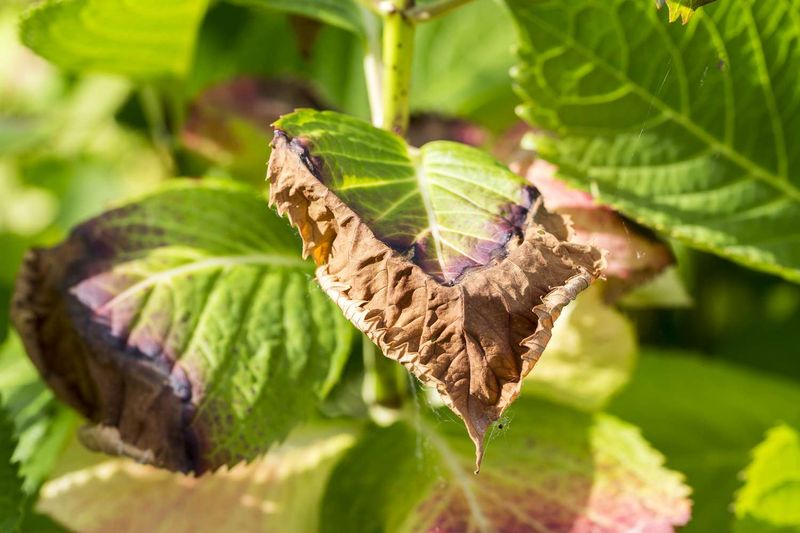
Leaf scorch is the most likely explanation when hydrangea leaf margins turn dry, papery, and brown without any mushy texture or obvious spots. WSU Extension’s hydrangea leaf scorch fact sheet describes the problem as a physiological response: the leaves are losing water through transpiration faster than the roots can pull moisture up from the soil.
Heat, strong afternoon sun, wind, reflected heat from pavement or walls, dry soil, compacted or damaged roots, and excess fertilizer salts can all push water demand past what the root system can deliver.
The shrub can still appear generally healthy at this stage because scorch typically starts at the margins and tips of leaves, or on the foliage that faces the most sun and wind. Interior leaves and lower, shadier growth may stay green while the exposed edges are already crisping.
Oregon State Extension’s heat-wave guide for hydrangeas notes that this kind of damage often shows up most dramatically on upper, outermost leaves during hot spells.
Scorch is a stress signal, not an automatic sign of disease or impending death. The plant is telling you its water supply and demand are out of balance.
University of Maryland Extension’s hydrangea problem guide confirms that multiple causes, ranging from environmental stress to root trouble, can produce this same symptom, so the pattern and context matter before you act.
The damage pattern narrows the diagnosis
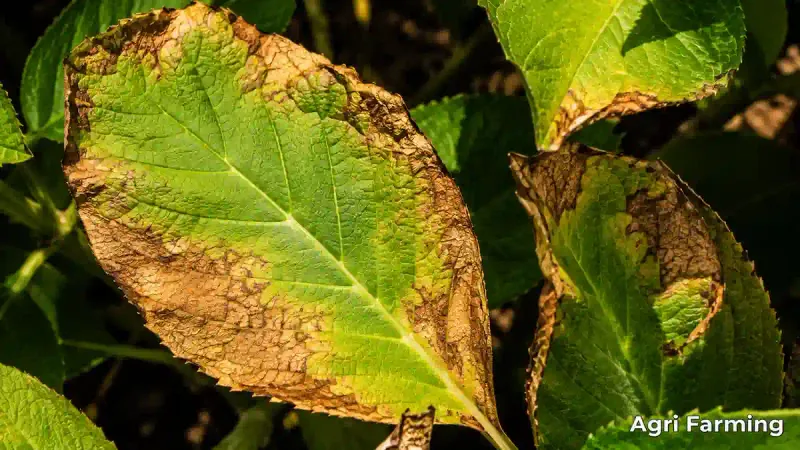
Before changing anything about how you water or care for your hydrangea, spend a few minutes looking closely at where and how the browning appears. WSU’s leaf scorch resource explains that physiological scorch tends to produce uniform, dry, papery browning concentrated along the leaf margins and tips, most visible on the sunniest or most exposed side of the plant.
The damaged tissue feels crisp and dry, not soft or water-soaked.
Disease looks different. UConn’s hydrangea diseases and pests factsheet describes leaf-spot diseases as producing discrete tan, brown, purple, or reddish lesions, often with dark borders or yellowish halos, scattered across the leaf surface rather than following the margin.
Bacterial spot frequently starts on lower leaves and moves upward as splashing water carries it from plant to plant. Those patterns are quite different from the even, margin-hugging crispiness of heat scorch.
Timing adds another clue. University of Maryland Extension notes that sudden blackening or a burned appearance on tender new growth after a late frost points toward cold injury rather than gradual summer scorch.
If your hydrangea looked fine in the morning and the new leaves appeared scorched after an overnight temperature drop, a late freeze is a more likely explanation than heat. This visual check narrows your options considerably, even if it cannot deliver a definitive diagnosis on its own.
Check the roots before you add more water
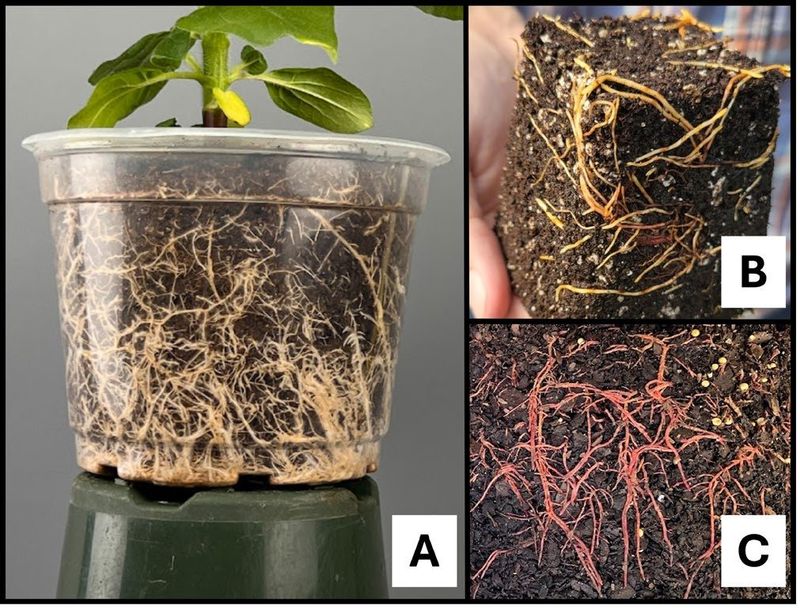
Reaching for the hose is the most common first reaction to brown hydrangea leaves, but it can make things worse if the problem is not dry soil. The smarter first move is to push a finger or a trowel a few inches into the root zone and feel what is actually there.
Virginia Cooperative Extension’s plant stress guide points out that drought and overwatering can produce similar symptoms above ground, making visual inspection of the foliage alone an unreliable guide.
Dry soil is a straightforward signal to water, but persistently wet soil is a warning to investigate further before adding more moisture. UConn’s hydrangea disease resource explains that poor drainage, compacted soil, standing water, and overwatering can all damage roots to the point where the plant cannot pull adequate water from saturated ground.
The foliage ends up drought-stressed even though the surrounding soil is wet.
Tennessee State University’s overview of hydrangea root diseases notes that root rot can produce mushy, brown or black roots that have lost their ability to function. If you gently expose a few roots and find that texture, watering more will not help and may accelerate the damage.
Persistent wilting in soil that is already wet, combined with soft or discolored roots, calls for improving drainage or consulting your local extension office rather than increasing irrigation.
A deep soak and a cooler root zone can reduce repeat scorch
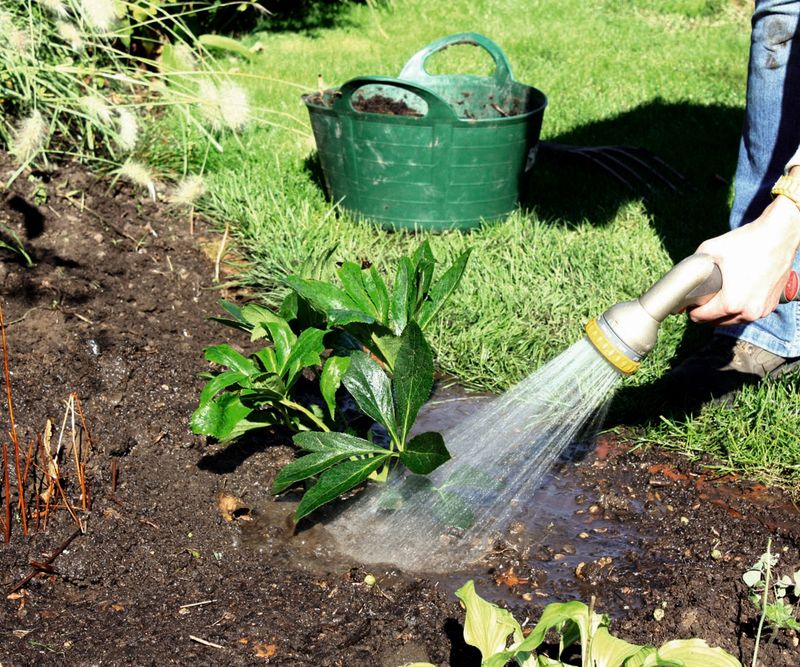
When the root zone is genuinely dry, the right response is a thorough, deep soak rather than a quick sprinkle over the surface. Shallow watering wets only the top inch or two of soil and encourages roots to stay near the surface, where they dry out fastest during Southern heat.
Oregon State Extension’s heat-wave guide recommends watering deeply enough to moisten the full root zone, then allowing the soil to partially dry before watering again.
Drip irrigation or a soaker hose is worth considering because both deliver water directly to the soil with minimal wetting of the foliage. UConn’s hydrangea care factsheet notes that approximately 1 inch of water per week suits many hydrangeas under normal conditions, with up to 2 inches during hot, dry stretches, but those figures are starting points rather than rigid rules.
Soil type, plant age, species, rainfall, and local heat all affect actual needs, so checking soil moisture before each watering session is more reliable than following a fixed calendar.
UMass Extension’s hydrangea growing guide and Iowa State Extension’s extreme-heat advice both recommend applying roughly 2 to 3 inches of organic mulch over the root zone to slow evaporation and buffer soil temperature. Shredded bark, wood chips, or pine straw work well.
Keep the mulch a few inches away from the crown and main stems to avoid trapping moisture against the base, which can invite rot.
Sun exposure matters, but hydrangea type changes the answer
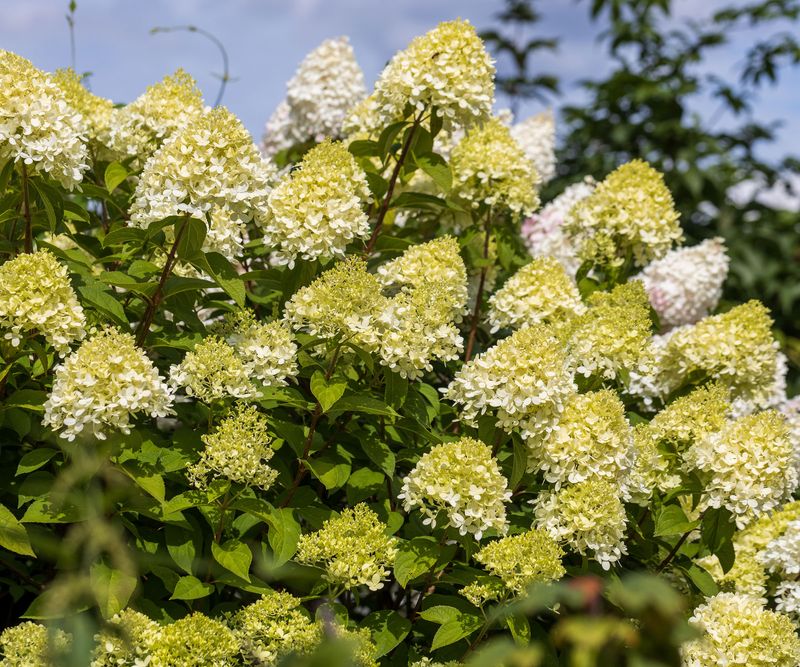
Reducing the water demand on the leaves is just as useful as improving the water supply at the roots. Afternoon sun in Florida and Texas is genuinely intense, and for many hydrangeas, the hours between roughly 2 p.m. and sunset are when scorch accelerates.
UConn Extension’s hydrangea factsheet recommends morning sun with afternoon shade as a safer arrangement for many types, particularly bigleaf hydrangeas, which are generally the most vulnerable to hot afternoon exposure.
Species and cultivar make a real difference, though. Alabama Cooperative Extension’s hydrangea guide and Mississippi State Extension’s Southern gardening column both note that oakleaf hydrangeas handle heat and more sun than bigleaf types, and panicle hydrangeas are comparatively well-suited to sunnier spots as long as the root zone stays adequately moist.
Placing an oakleaf or panicle variety in deep shade may actually reduce flowering without preventing scorch.
University of Florida IFAS guidance on hydrangeas reinforces that Southern heat does not automatically mean every hydrangea needs to be relocated into dense shade. Reflected heat from light-colored walls, driveways, or concrete patios can intensify scorch independent of direct sun, so evaluating those site factors matters too.
Adding a shade cloth during the worst heat weeks, or repositioning a container plant, may be enough to reduce leaf demand without committing to a full transplant.
Three tempting fixes can make the stress worse
Once you spot crispy brown edges, the urge to do something can lead to fixes that backfire. Fertilizing a heat-stressed or scorched hydrangea is one of the most common mistakes.
Colorado State Extension’s leaf scorch resource explains that excess fertilizer salts can intensify marginal burn, especially when the root zone is dry or drainage is poor. Hold off on any fertilizer application until the plant has recovered and conditions have cooled; if you fertilize at all, follow the product label and consider a soil test first.
Spraying the leaves with water to cool them down seems intuitive but can cause a separate problem. University of Arkansas Extension’s hydrangea publication and University of Maryland Extension both note that repeated wet foliage, especially in warm, humid Southern weather, creates favorable conditions for bacterial and fungal leaf-spot diseases.
Keep irrigation aimed at the soil rather than the canopy.
Hard pruning during heat or drought is another well-meaning move that adds stress. North Carolina Cooperative Extension’s plant health alert on hydrangea leaf scorch cautions that even damaged leaves are still contributing to photosynthesis and supporting the plant.
Lightly removing a few leaves that are almost entirely brown may improve appearance, but cutting back hard removes functioning foliage the plant needs to recover. On the fungicide question, WSU’s scorch fact sheet is clear: physiological scorch is not a fungal disease, so a fungicide will not repair the tissue and should only be considered when symptoms match a diagnosed disease and the product label specifically permits use on hydrangeas.
Watch for healthy new growth instead of waiting for brown tissue to heal
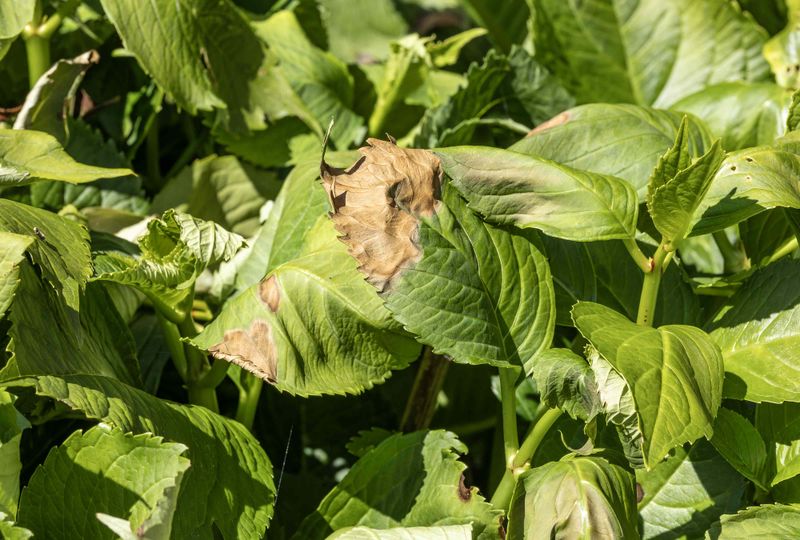
Scorched leaf tissue will not turn green again, and there is no spray or treatment that reverses it. What you are watching for instead is healthy new growth from the tips of stems after you have corrected the underlying stress.
Oregon State Extension and North Carolina Cooperative Extension both frame recovery in those terms: the plant may push out normal foliage once the heat, moisture, or root problem is addressed, but the damaged margins stay brown.
Use a simple decision path before acting. Dry, crispy margins on exposed upper foliage during hot weather point toward possible scorch, so check soil moisture and root condition before watering.
If the soil is dry, water deeply and add mulch. If the soil is wet and the plant is still wilting, stop adding water and look at drainage and root health.
University of Maryland Extension recommends further diagnosis when symptoms include persistent wilt in wet soil, spreading discrete lesions, or visible root damage.
A hydrangea sending crispy-edge warnings in July is not necessarily a lost cause, but it does need a response based on what is actually happening at the root zone and in the site. The brown edges are the plant’s way of asking you to look closer before reaching for a quick fix.
WSU Extension puts it plainly: matching the right cause to the right correction is what gives the plant its best chance at a healthy recovery.