
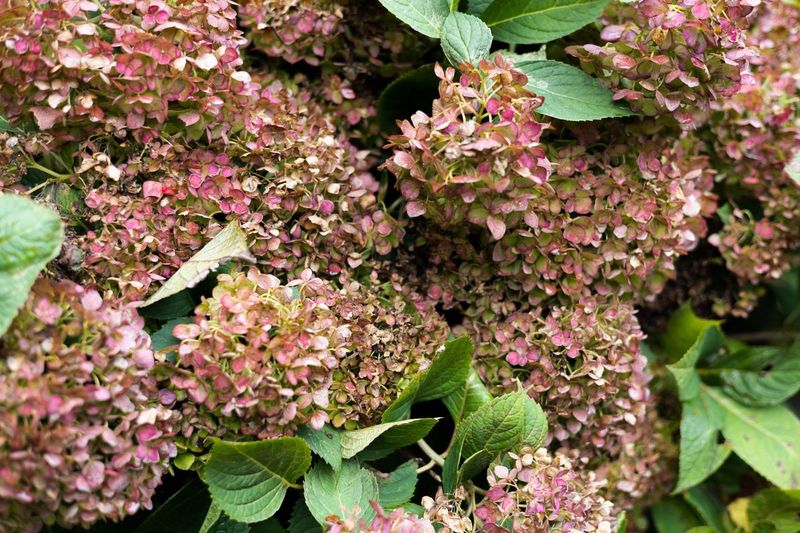
A drooping hydrangea can stop a gardener cold, especially when the plant looked fine just a few weeks ago. Before you grab the hose or reach for the pruning shears, there is one move that matters more than anything else: check the soil.
The condition of the root zone, not the look of the leaves, should drive every decision you make from here.
Start with the soil, not the droop
Drooping leaves feel alarming, but the droop itself cannot tell you what is wrong. Wilting is a nonspecific signal that can point to too little water, too much water, heat stress, root damage, disease, or simply the normal slowdown of a deciduous shrub heading into fall.
Acting on the symptom without knowing the cause is how gardeners accidentally make things worse.
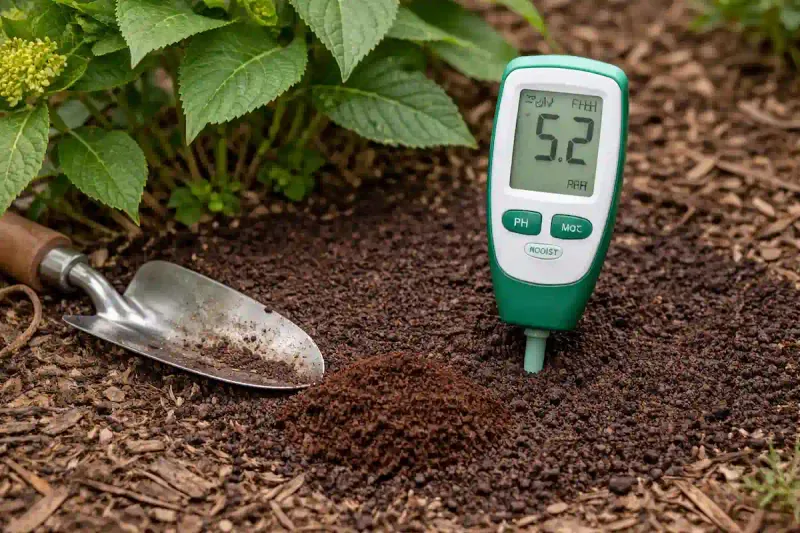
The first move is to get your hands into the soil. For an established hydrangea, push a hand trowel or soil probe into the ground beneath the canopy and check whether the upper 6 to 9 inches of the root zone feel dry.
University of Minnesota Extension guidance on watering established trees and shrubs recommends this depth check rather than judging by surface appearance or a fixed watering schedule. A dry reading at that depth is a clear, actionable signal.
A newly planted hydrangea needs a different approach. Its roots have not yet spread broadly into the surrounding landscape, so check the root ball itself and the soil immediately around it.
UF/IFAS guidance on establishing shrubs in Florida landscapes emphasizes targeting irrigation to the root ball and adjacent soil during this early phase. University of Arizona Cooperative Extension similarly notes that soil moisture should be confirmed before irrigation is applied to any woody ornamental.
That moisture check is your first decision point, full stop.
If the root area is dry, soak it slowly
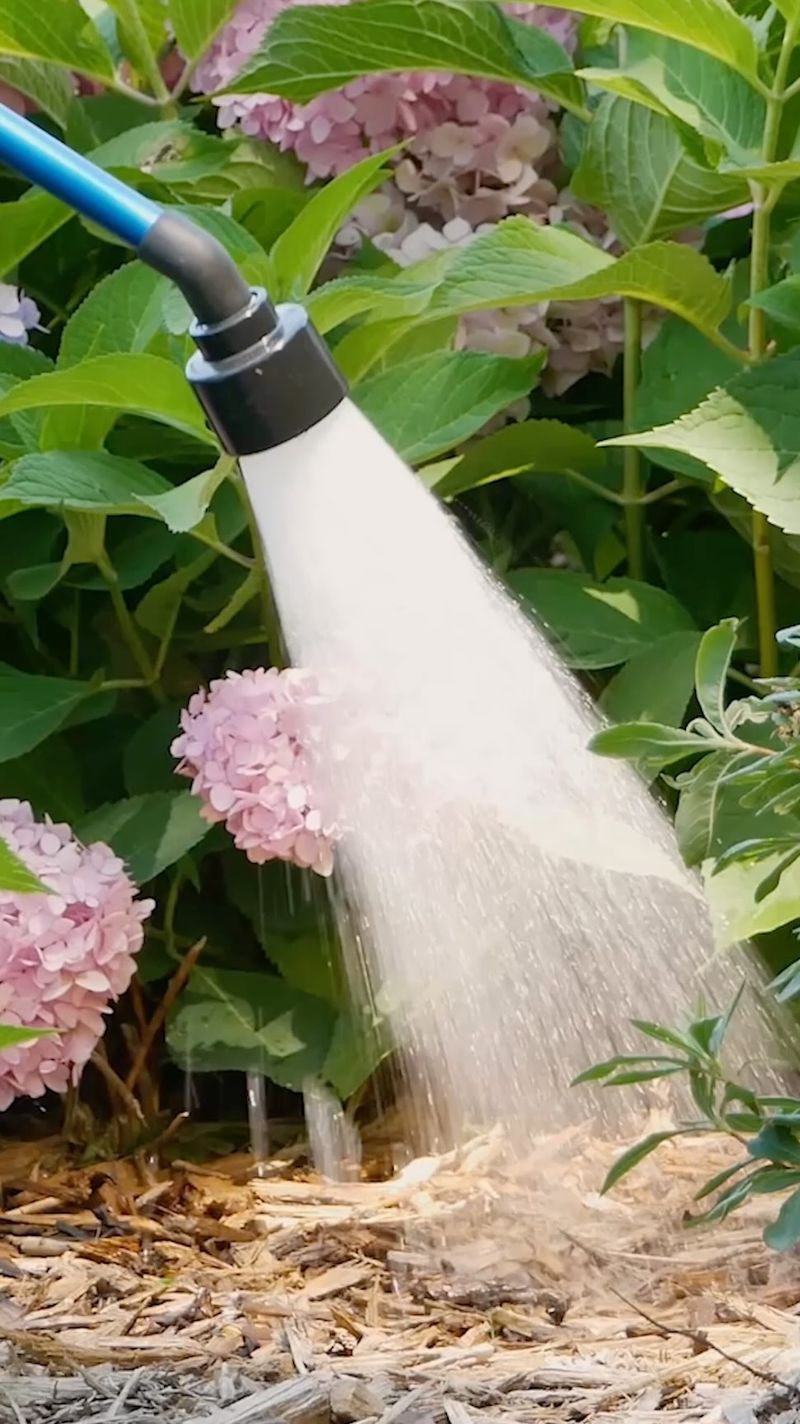
Finding dry soil in the root zone is actually useful news: it identifies a concrete problem with a concrete response. Water the plant slowly and deliberately, directing moisture to the soil surface across the full spread of the active root area rather than soaking only the base of the stem.
A quick pass with a handheld hose that wets just the top inch of soil will not accomplish much.
Oregon State University Extension’s general hydrangea care guidance supports applying water slowly enough to penetrate the root zone rather than briefly wetting the surface. Soaker hoses and drip irrigation are worth considering because they deliver water at a pace the soil can absorb, keep foliage dry, and reduce the risk of fungal problems that overhead watering can encourage.
Morning is generally the better time to water. Getting moisture to the roots before the hottest part of the day gives the plant a chance to hydrate when it needs it most.
Oregon State University Extension’s heat-wave hydrangea guidance notes that a plant with adequate soil moisture handles heat stress better than one that enters the afternoon already short on water. For newly planted shrubs, the same slow-soak principle applies, but focus the water on the root ball and the soil immediately surrounding it, consistent with UF/IFAS establishment guidance for Florida landscapes.
Avoid prescribing a specific number of gallons or minutes: plant size, soil texture, mulch depth, and recent rainfall all shift what is enough.
Use mulch to conserve moisture, not to promise a cure
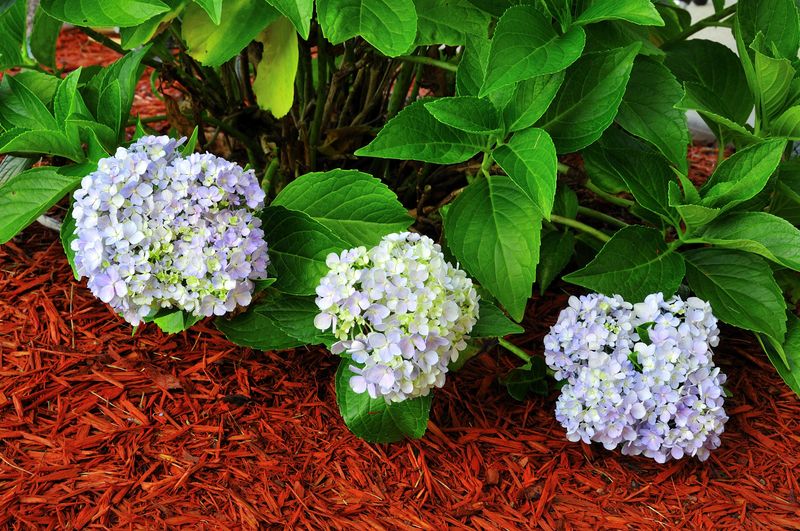
After a thorough soak, organic mulch is a practical follow-through step. Spread approximately 2 to 4 inches of shredded bark, wood chips, or pine straw over the root zone, keeping the material several inches away from the plant’s stems and crown.
University of Illinois Extension drought guidance supports mulching as a way to slow evaporation and buffer soil temperature, both of which help stressed woody plants between rain events.
University of Georgia Extension’s August woody ornamental recommendations echo the same approach for Southern landscapes, where summer and fall heat can pull moisture out of the root zone quickly. Oregon State University Extension’s hydrangea overview also points to mulch as a moisture-retention aid for these shrubs specifically.
Be clear about what mulch can and cannot do. A correctly applied layer supports more even soil moisture and moderates root temperature, but it cannot repair dead roots, cure a vascular disease, or reverse advanced decline.
Southern gardeners should also resist the assumption that cooler calendar dates mean the plant no longer needs water. Colorado State University Extension’s fall and winter watering guidance notes that extended dry periods in fall can still damage woody plants, and Florida’s warm fall conditions make continued soil-moisture checks necessary well past what most national gardening calendars suggest.
When the root zone stays saturated, pause automatic watering
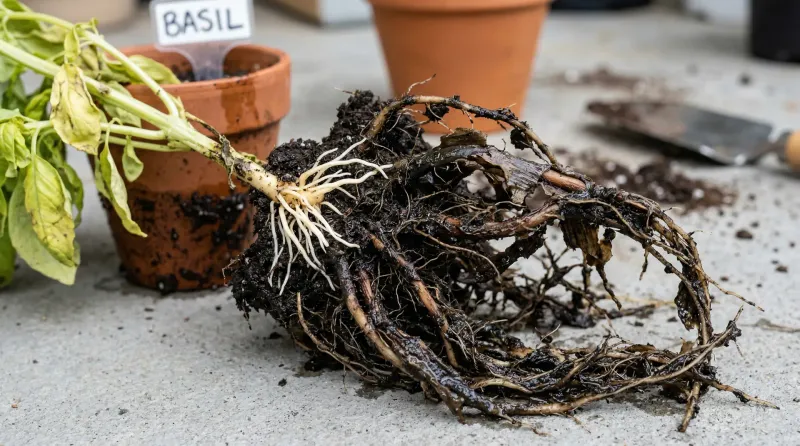
Moist surface soil after a recent rain is not a problem by itself. The concern arises when the root zone stays saturated day after day, when water pools near the plant and does not drain, or when the plant continues to wilt despite soil that never really dries out.
Those conditions can deprive roots of the oxygen they need and create conditions that favor root rot pathogens.
Penn State Extension’s root rot guidance for woody ornamentals identifies persistently saturated soil, poor drainage, and excessively deep planting as factors that increase the risk of root decline. Watch for a combination of symptoms: persistent wilting that does not improve overnight, yellowing leaves, premature leaf drop, slow or stunted growth, and, if you examine the roots, brown or decayed tissue rather than firm white roots.
Penn State Extension’s root-death diagnostic guidance notes that these symptom clusters are more informative than wilting alone.
When the root zone reads wet and the plant is still struggling, stop automatic irrigation and look at the underlying cause before adding more water. University of Georgia Extension’s drainage improvement guidance outlines practical ways to assess and address poor drainage in residential gardens.
University of Missouri Extension confirms that bigleaf hydrangeas need consistent moisture but should not sit in waterlogged conditions. A wet reading is not automatically a root-rot diagnosis, but it is a clear reason to pause, observe, and investigate before watering again.
Read the symptoms that water cannot explain
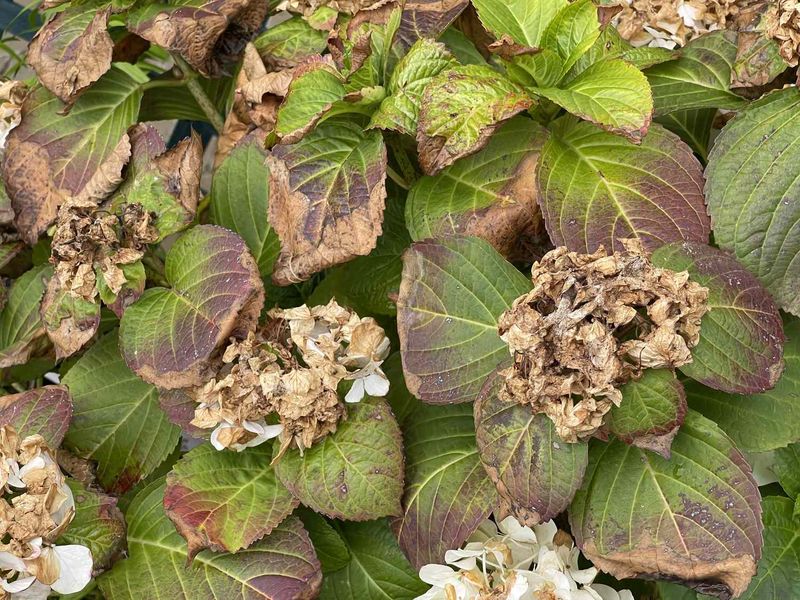
Wilting that fades overnight and returns during the hottest part of the day often reflects temporary heat or water stress rather than a deeper problem. A plant that droops at two in the afternoon and looks reasonably recovered by morning is telling you something different than one that stays limp around the clock despite moist soil.
Oregon State University Extension’s heat-wave hydrangea resource explains that heat can cause leaves to wilt even when moisture is present, because the plant’s water demand temporarily exceeds what the roots can supply.
Persistent wilting in adequately moist soil is a separate signal and warrants a closer look at disease and root damage. Leaf spots, powdery mildew, mottling, distorted foliage, or lesions on stems are not signs of drought stress.
University of Georgia Extension’s common landscape disease bulletin covers the range of fungal and other pathogens that affect ornamental shrubs in the South. Penn State Extension’s hydrangea disease guide and University of Illinois Extension’s hydrangea disease management resource both note that overhead irrigation and prolonged leaf wetness can contribute to some of these problems, which is another reason drip delivery is preferable.
Fall color and leaf drop may not indicate anything is wrong at all. Oakleaf hydrangea, for example, naturally develops red and burgundy foliage in autumn.
University of Georgia Extension’s hydrangea identification overview frames this seasonal color as a normal ornamental feature, not evidence that the shrub is declining. Knowing your hydrangea type helps you tell seasonal change from genuine distress.
Do not panic-prune in fall
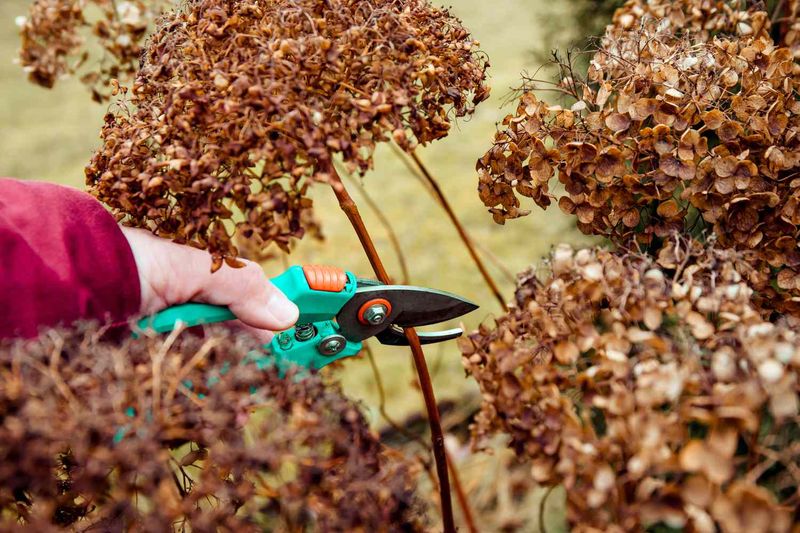
A wilting, tired-looking hydrangea can trigger the urge to cut it back hard, but fall is the wrong moment for that response. Removing only dead, broken, or clearly diseased material is appropriate at any time of year.
A wholesale pruning based on droopy leaves is a different matter entirely, and it can cost you next season’s flowers.
The timing issue comes down to how your hydrangea blooms. Bigleaf hydrangeas, including mophead and lacecap types, and oakleaf hydrangeas set their flower buds on old wood from the previous season.
University of Georgia Cooperative Extension’s hydrangea pruning identification guide explains that cutting these types late in the season removes the buds that would have opened next spring and summer. University of Georgia Extension’s pruning timing breakdown confirms that the correct window for old-wood bloomers is shortly after flowering ends, not during fall stress response.
Smooth hydrangeas and panicle hydrangeas bloom on new wood produced in the current season, so they are generally pruned in late winter or early spring before growth resumes. Even for those types, fall wilting is not a pruning cue.
Address the soil condition first, keep the shears away from healthy stems, and let the plant move through fall on its own terms. Pruning is a seasonal management tool, not a rescue technique.
Let the soil condition choose the next move
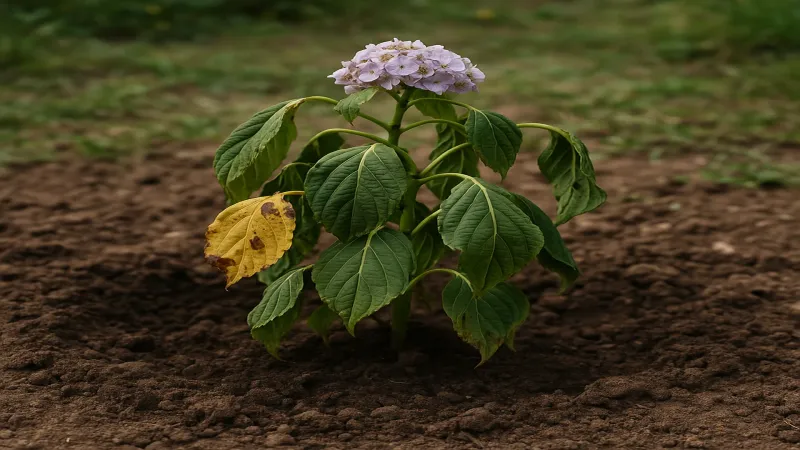
Three different soil readings call for three different responses. Dry soil in the root zone or root ball means a slow, thorough soak directed to the active root area, followed by correctly placed mulch.
That combination addresses the most common cause of fall drooping and gives the plant its best chance to stabilize.
Persistently saturated soil or standing water calls for restraint. Stop automatic irrigation, check drainage and planting depth, and look for symptom clusters, such as yellowing, premature leaf drop, or soft roots, before adding more water.
Penn State Extension’s root rot resource and Oregon State University Extension’s heat-wave guidance both support investigation over automatic irrigation when wet conditions and wilting occur together.
Adequately moist soil with persistent or unusual symptoms points toward heat stress, disease, root damage, or seasonal change rather than a simple watering fix. University of Minnesota Extension reinforces that the moisture check, not the appearance of the leaves, should anchor every irrigation decision.
A tired-looking hydrangea is not automatically finished, but the soil tells you what to do next, not the droop.