
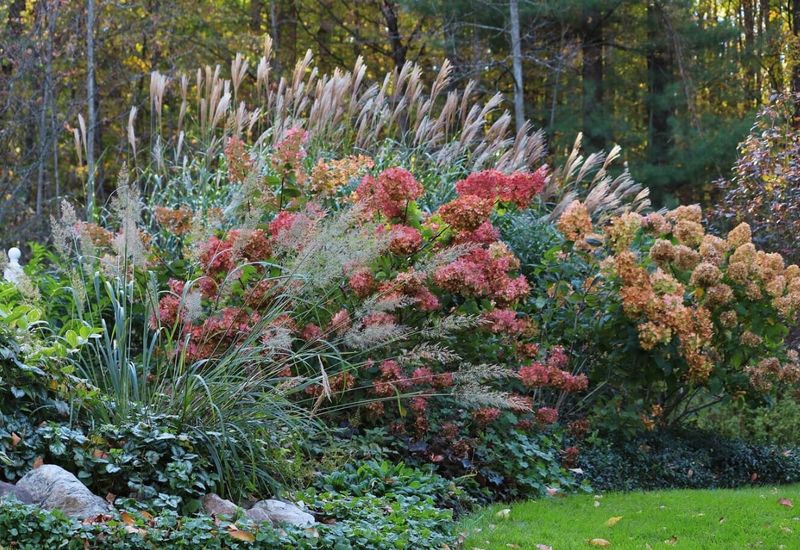
Fall is the season when many gardeners make a quiet mistake that costs them next summer’s hydrangea blooms without realizing it. For certain hydrangea types, the buds that will open next year are already sitting on the stems right now, waiting out the cold.
Protecting those stems, not cutting them back, is the most important thing you can do before winter arrives. The catch is that this advice does not apply equally to every hydrangea, so knowing what you have growing in your yard matters more than any single fall task.
Protect the stems that may already hold next year’s buds
No single fall action guarantees better blooms for every hydrangea in your yard. That is the first thing worth saying plainly, because the promise of one universal fix can lead gardeners straight into the most common hydrangea mistake: cutting back stems that are already loaded with next year’s flower buds.
Bigleaf hydrangeas (Hydrangea macrophylla) and oakleaf hydrangeas form their flower buds on existing, above-ground stems during late summer and fall. Those buds sit quietly on the wood through winter, ready to open the following season.
UGA Extension’s hydrangea care guide explains that cutting bigleaf hydrangeas back in fall or winter can remove those buds entirely, which is why gardeners often see full, healthy plants that produce no flowers at all.
The fall job for these plants splits into two separate concerns. Root-zone care, mainly mulch, protects the underground system from temperature swings and moisture loss.
Above-ground bud protection, such as a temporary cover during a hard freeze, protects the buds themselves. Mulch does not reach up the stem to shield a bud from frost, so treating both problems requires different tools.
Penn State Extension’s pruning guide reinforces that the first step before any fall pruning decision is identifying which hydrangea you have, because the right action depends entirely on how that plant forms its flowers.
Identify the hydrangea before you reach for pruners
Grabbing the pruners before you know what species you are dealing with is a gamble that frequently pays off in disappointment. A quick identification check takes only a few minutes and can save an entire season of blooms.
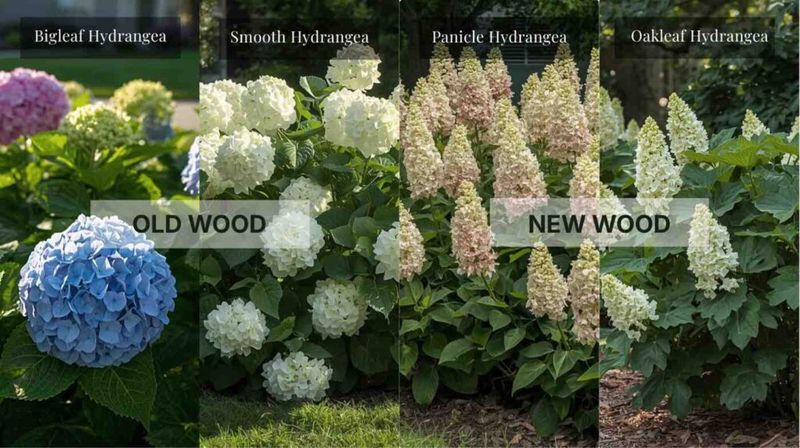
Old-wood bloomers are the group that needs the most fall caution. Bigleaf (mophead and lacecap), oakleaf, mountain, and climbing hydrangeas all flower on stems that grew the previous year.
University of Illinois Extension’s pruning overview lists these as the hydrangeas where fall pruning most often eliminates next year’s buds before winter even arrives.
New-wood bloomers work on a completely different schedule. Panicle hydrangeas, including popular cultivars like ‘Limelight,’ and smooth hydrangeas like ‘Annabelle’ form their flower buds on fresh growth each spring.
University of Minnesota Extension notes that these types are far more forgiving of fall and winter pruning because the buds that matter have not formed yet.
Reblooming bigleaf cultivars, sold under names like Endless Summer, Let’s Dance, and Tuff Stuff, occupy a middle ground. Penn State Extension explains that these plants can flower on both old and new wood, which sounds reassuring, but winter damage can still kill their early buds and eliminate the first flush of blooms.
New growth may produce later flowers, but that second chance is not guaranteed and should not be counted on as a reason to skip fall protection.
Time pruning around the plant’s flowering habit
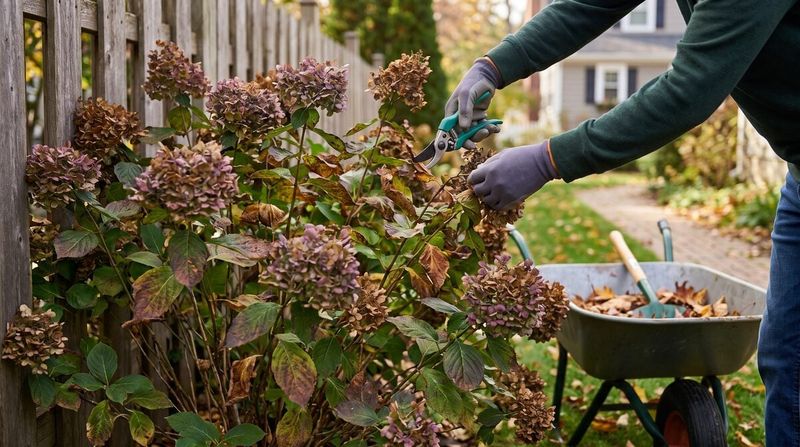
Timing is everything with hydrangea pruning, and fall is the season when the most damage gets done by well-meaning gardeners who want to tidy things up before winter.
For bigleaf and oakleaf hydrangeas, Penn State Extension’s bloom troubleshooting resource points directly to pruning at the wrong time as one of the leading reasons these plants fail to flower. The buds for next season can already be present on the stems by late summer, meaning a fall haircut is really removing next year’s flowers before they ever had a chance.
Routine shaping of old-wood types should be finished soon after the current year’s blooms fade, not months later when cold weather approaches.
University of Illinois Extension’s timing guide confirms that panicle and smooth hydrangeas follow the opposite schedule: major pruning for those types fits best in late winter or early spring, just before new growth begins. Cutting them back in fall is not ideal either, but a missed cut on a panicle type rarely costs flowers the way it does on a bigleaf.
When the cultivar is completely unknown, the safest fall choice is to remove only wood that is clearly dead, diseased, or damaged, and leave everything else alone. UF/IFAS Jackson County guidance on winter pruning supports this conservative approach: wait until you can observe the plant’s growth and bloom habit before making any hard cuts that could cost you a season.
Use mulch to support the roots when local conditions call for it
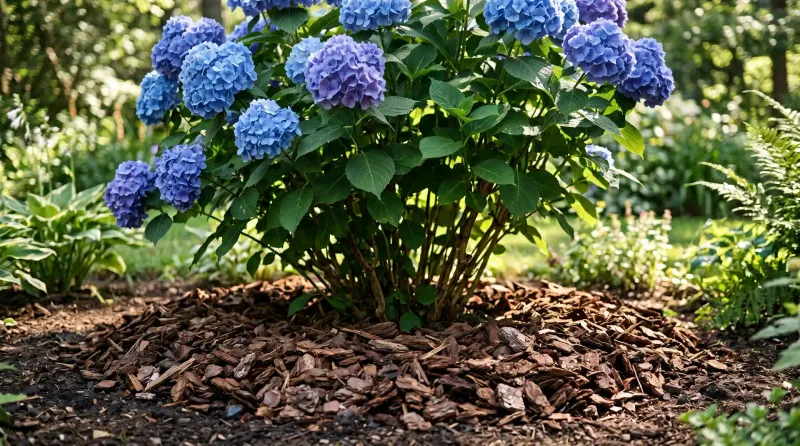
Mulch is one of the most useful tools in fall hydrangea care, but its job is narrower than many gardeners expect. A layer of organic material over the root zone can conserve moisture, moderate soil temperature, and reduce weed competition during the colder months.
What it cannot do is climb the stem and protect the flower buds sitting three feet above the ground.
UGA Extension and Oklahoma State Extension’s winter protection fact sheet both recommend approximately 3 to 5 inches of organic mulch such as pine straw, pine bark, or fall leaves over the soil surface. That depth can buffer the root zone from freeze-thaw swings that stress or damage feeder roots over winter.
Keeping mulch away from the stems and crown is not a minor detail. Piling material against the base of the plant traps moisture against the wood and can encourage rot or create habitat for pests.
Pull the mulch back a few inches from where the stems meet the soil.
Whether mulch makes sense for your garden depends on local conditions. A bigleaf hydrangea in a sheltered North Florida yard with mild winters and adequate rainfall may need very little additional root-zone protection.
A plant on an exposed slope in northern Georgia or a windy Texas site faces a different situation. Penn State Extension notes clearly that even a well-mulched plant with healthy roots can still fail to bloom if winter kills the above-ground buds, so mulch is root support, not a bloom guarantee.
Cover vulnerable bigleaf stems during a freeze threat
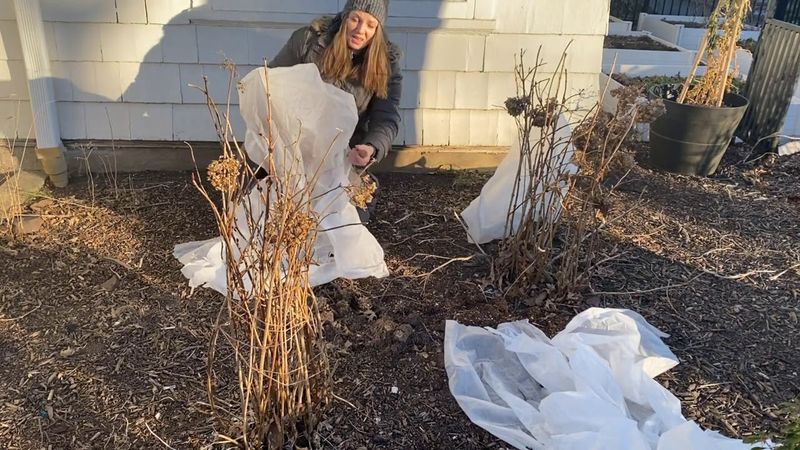
Root-zone mulch handles one half of winter protection. The other half, shielding the above-ground stems and their dormant flower buds from a hard freeze, requires something completely different.
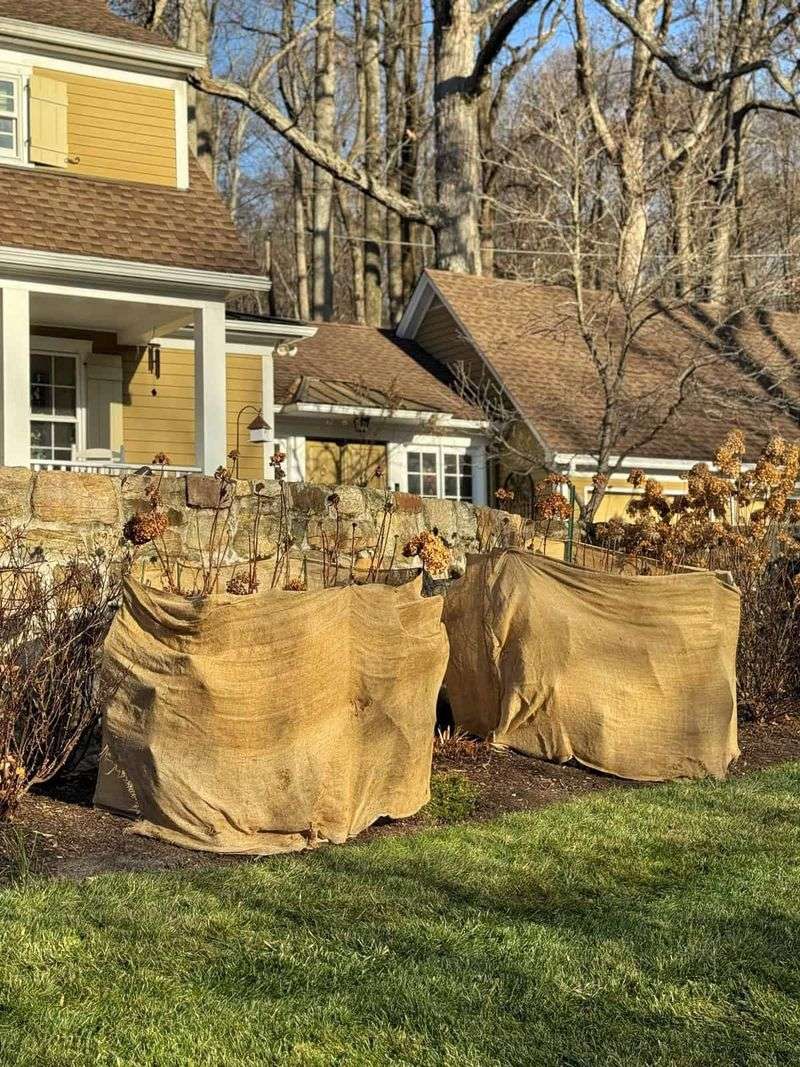
UGA Extension’s bigleaf hydrangea guidance recommends covering vulnerable plants with an old sheet, blanket, or cardboard container when a freeze threatens. A chicken-wire cylinder loosely filled with dry leaves is another option that provides insulation around the stems without compressing them.
The goal is to trap some warmth around the buds and reduce the severity of the temperature drop, not to seal the plant airtight.
These covers are temporary measures tied to specific weather events, not a permanent winter uniform for every hydrangea. UGA Paulding County care guidance reinforces that protection strategies should respond to actual freeze threats rather than being applied as a continuous winter wrap.
Remove covers during the day when temperatures rise above freezing to prevent overheating and allow air circulation. A sheet left on a sunny day can trap heat and stress the plant more than a mild freeze would.
UGA Lincoln County’s winter planting guidance points out that local exposure matters here too: a plant tucked against a south-facing brick wall may need no cover at all, while one sitting in a low spot where cold air collects could need protection on nights that barely dip to freezing.
Adjust fall care to moisture, exposure, and regional climate
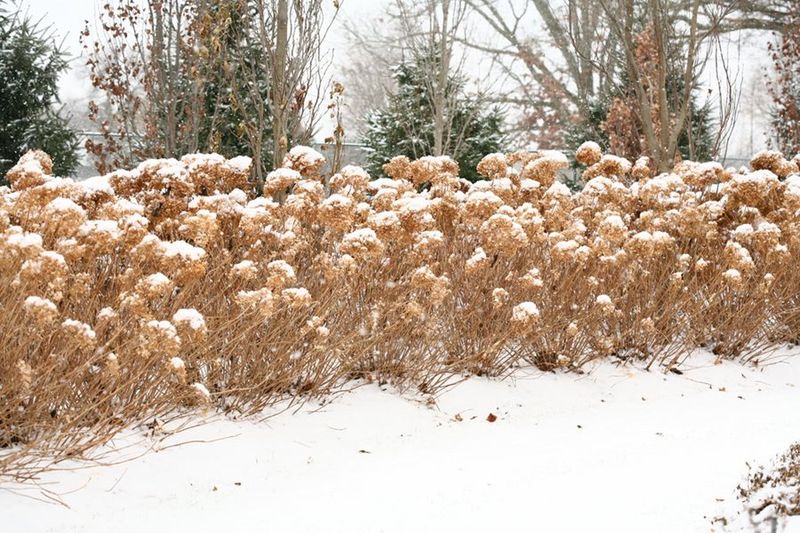
Fall hydrangea care is not a single recipe that works the same way from the Texas Hill Country to the Florida Panhandle. Wind, low spots, sudden temperature swings, late frosts, nearby structures, shade, and the specific cultivar in the ground all shape how much winter actually threatens your plant.
UGA Lincoln County’s winter protection resource makes clear that a recommendation suited to a colder inland site can be completely unnecessary just a few miles away in a more sheltered or warmer location. A gardener on an exposed ridge needs to think differently than one whose plant grows in a protected courtyard.
Moisture is part of the equation as well. Bigleaf hydrangeas are relatively water-demanding, and going into winter drought-stressed can reduce plant vigor heading into the cold months.
University of Missouri Extension notes the water needs of mopheads and lacecaps specifically. Maintaining adequate soil moisture during dry fall weather is worthwhile, but saturated soil is a different problem, especially for plants heading into cooler temperatures.
For Florida gardeners, UF/IFAS guidance on hydrangeas applies most directly to North and Central Florida, where winters can bring occasional cold damage. South Florida conditions are different enough that the same fall checklist may not apply.
Texas gardeners face an equally wide range of climates, from the humid Gulf Coast to drier inland zones, so general principles need to be adjusted for local hardiness, cultivar, and exposure.
Fertilizing is one fall task to set aside entirely. UGA’s ornamental plant care guide favors feeding during active growth and cautions against late-season or dormant fertilizing, especially high-nitrogen products that can push tender new growth right before cold arrives.
Diagnose a flowerless hydrangea without blaming winter alone
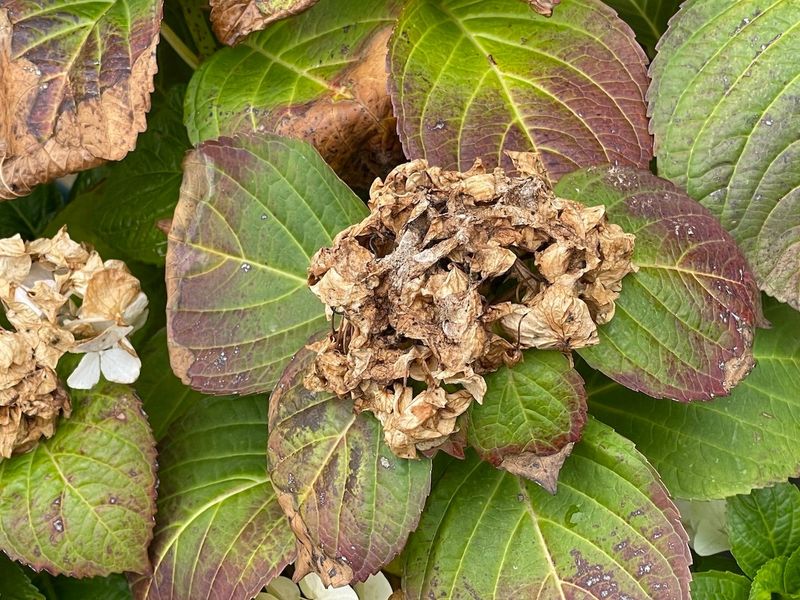
A hydrangea that produces no flowers in summer is frustrating, and winter damage is the first thing most gardeners blame. Winter can absolutely be the culprit, especially for bigleaf types in exposed locations, but it is rarely the only possible explanation.
UGA Extension lists several documented causes of bloom failure beyond cold injury: too much shade, drought stress during the growing season, excessive nitrogen fertilizer that pushes leafy growth at the expense of flowers, and pruning at the wrong time of year. A plant that gets fewer than four hours of morning sun, or one that was sheared back hard in early spring before buds broke, can arrive at summer with a full set of leaves and nothing else.
Penn State Extension’s bloom troubleshooting resource walks through these causes systematically and reinforces that no single symptom points to a single cause. Scratch-testing a stem to check for green tissue beneath the bark can help confirm whether winter killed the wood, but that test needs to be done in late spring after growth should have started, not in February.
Flower color is another tempting but unreliable diagnostic tool. Soil pH affects the color of many bigleaf cultivars, shifting blooms between blue and pink depending on aluminum availability, but Penn State Extension’s garden myths resource notes that used coffee grounds do not reliably acidify garden soil.
White-flowered cultivars and smooth hydrangeas respond differently to soil chemistry, and NC State Extension’s bigleaf hydrangea profile confirms that color change depends on cultivar, existing soil pH, and aluminum availability working together, not on any single amendment.
Use a cautious fall checklist for the best odds of bloom
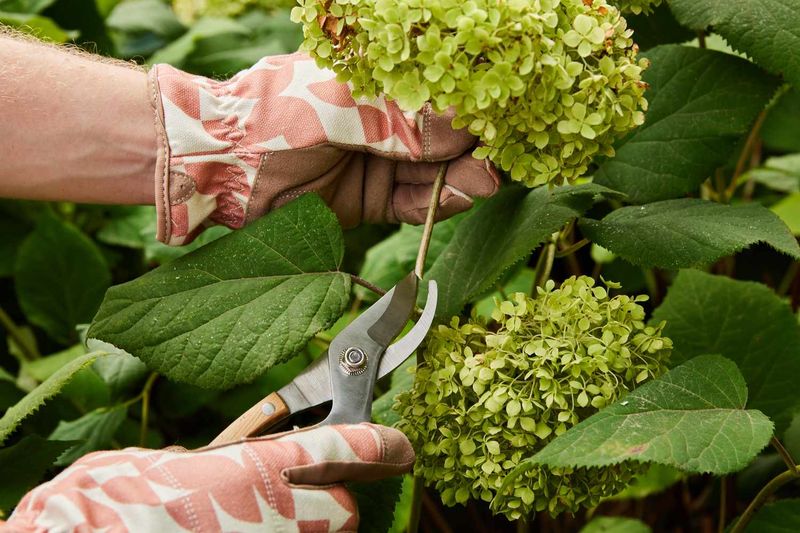
Pulling the right fall actions together is simpler than it might seem once you know what hydrangea you have and what each step actually does.
Start by identifying the plant. Old-wood types like bigleaf and oakleaf hydrangeas need their existing stems left intact.
If the cultivar is unknown, remove only wood that is clearly dead, diseased, or damaged, and hold off on any shaping until the plant’s flowering habit becomes clear. Penn State Extension and UGA Extension both support this conservative approach as the lowest-risk starting point.
Next, consider root-zone mulch. Where local conditions make it useful, approximately 3 to 5 inches of pine straw, bark, or dry leaves over the soil surface can support plant condition through winter.
Keep it away from stems and the crown. Then, watch the forecast.
When a hard freeze threatens bigleaf hydrangeas in your area, a temporary cover over the stems and buds can reduce injury. Remove it when temperatures rise.
Penn State Extension and UGA Lincoln County both remind gardeners that even careful fall preparation cannot eliminate every risk. Severe cold, late frosts, freeze-thaw cycles, and wind can still damage buds despite your best efforts.
These steps preserve the possibility of a good bloom season, and that is the honest, worthwhile goal. A garden that goes into winter with its buds intact and its roots supported has done everything it reasonably can.