
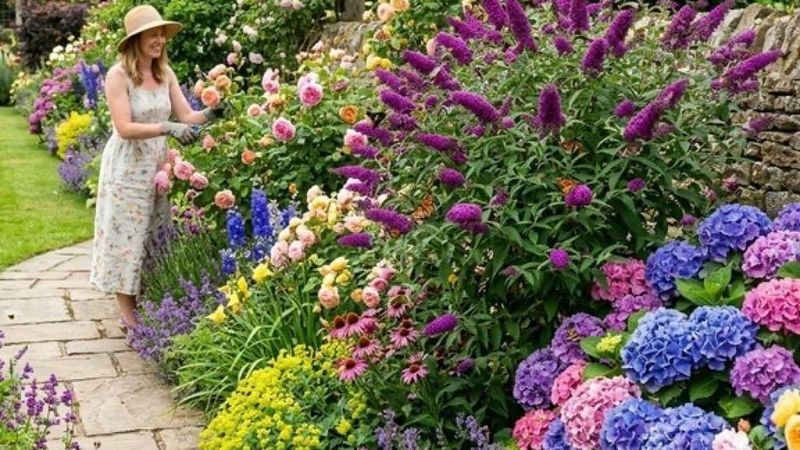
If your hydrangeas droop and go crispy the moment Southern heat rolls in, you are not alone. Those big blooms love cool, moist spots, and that is not what most Florida and Texas summers hand out.
The good news is that plenty of tougher shrubs shrug off heat, drought, and blazing sun while blooming for months. Here are the hard-working bushes that keep your yard colorful long after the hydrangeas have quit.
1. Oleander
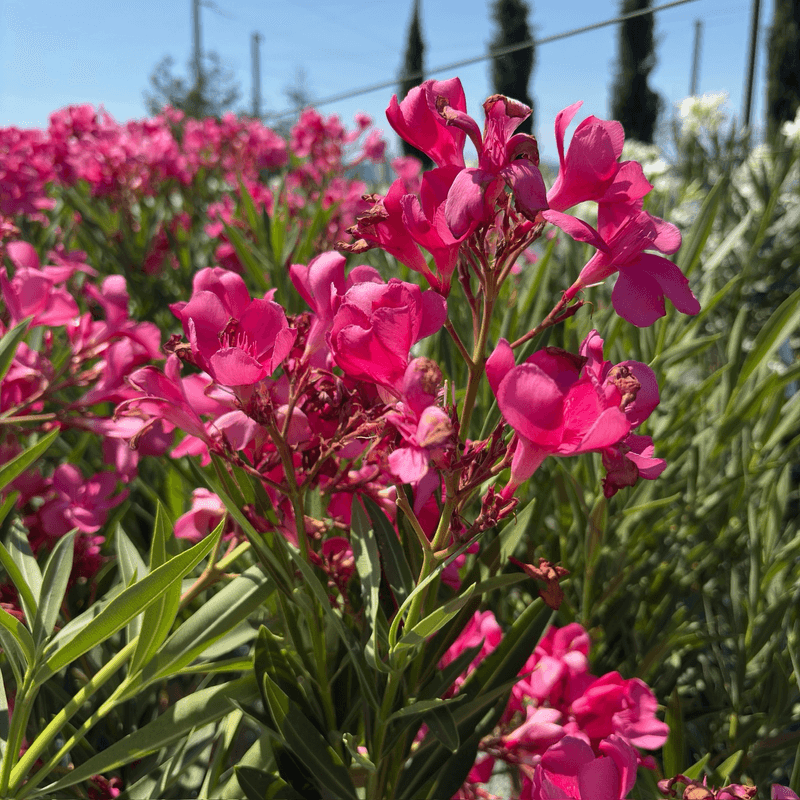
Drive down almost any Southern highway in July and you will spot oleander glowing pink, red, and white while everything else looks tired. That toughness is exactly why road crews plant it in medians where nothing gets pampered.
Heat, salt spray, drought, and sandy soil barely faze this shrub. It blooms from spring straight through fall, giving you months of color instead of a short hydrangea flush that fizzles by June.
Oleander can grow into a big screening hedge or stay trimmed as a rounded accent, so it fits both privacy needs and tidy borders. Once established, it often thrives on rainfall alone.
One honest heads-up: every part of oleander is toxic if eaten, so it may not suit yards with curious little kids or pets who nibble. Wear gloves when you prune, and skip burning the clippings.
Fun fact for coastal Florida and Texas gardeners: oleander handles beachfront salt better than most flowering shrubs, making it a reliable pick where hydrangeas would scorch and sulk within a single afternoon.
2. Crape Myrtle
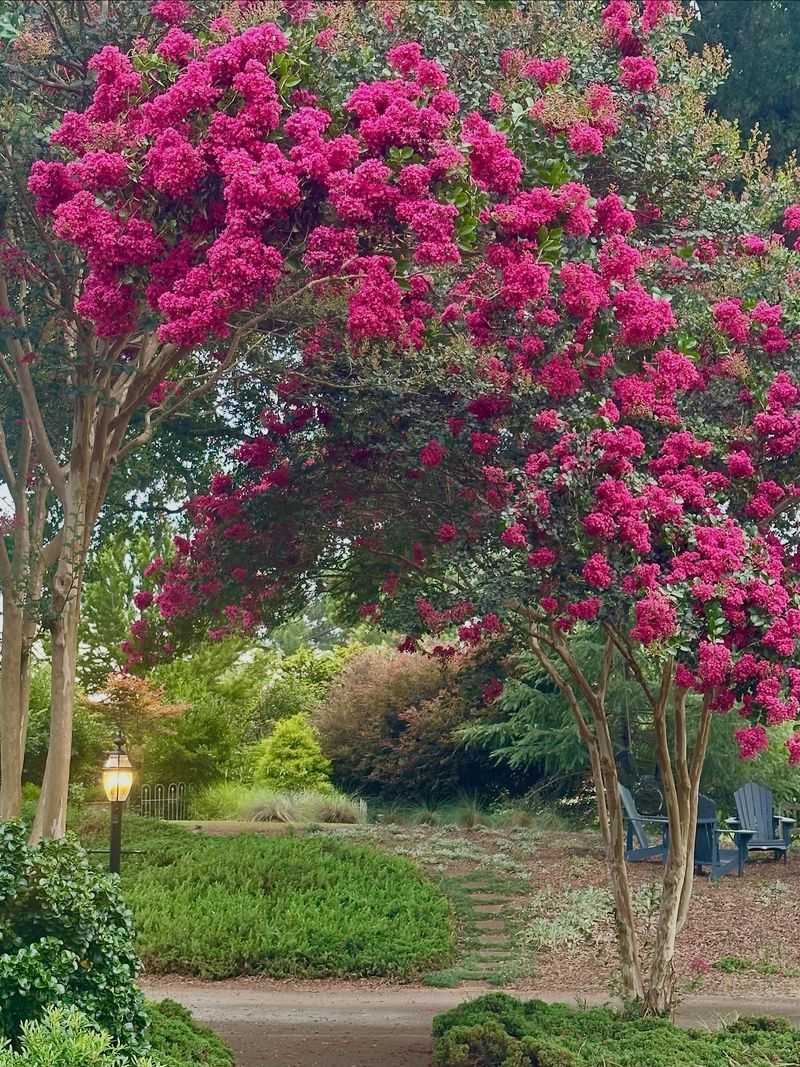
Southerners lovingly call it the lilac of the South, and once you see a crape myrtle explode with ruffled blooms in July, the nickname makes total sense. While hydrangeas fade in the heat, this one is just getting warmed up.
Blooms last a jaw-dropping 90 to 120 days, showing off in watermelon red, lavender, white, and hot pink. That is a whole summer of color from a plant that asks for almost nothing.
Grown as a shrub form, it fits foundation beds and borders without hogging the whole yard. The peeling cinnamon bark keeps things interesting even in winter after the leaves drop.
Sun is the secret. Give crape myrtle six-plus hours of direct light and it rewards you; tuck it in shade and blooms get stingy.
A quick tip: skip the harsh chopping known as crape murder. Light shaping keeps the natural shape and can improve flowering.
Once its roots settle in, this shrub laughs off drought and Texas heat waves that leave fussier plants gasping.
3. Texas Sage
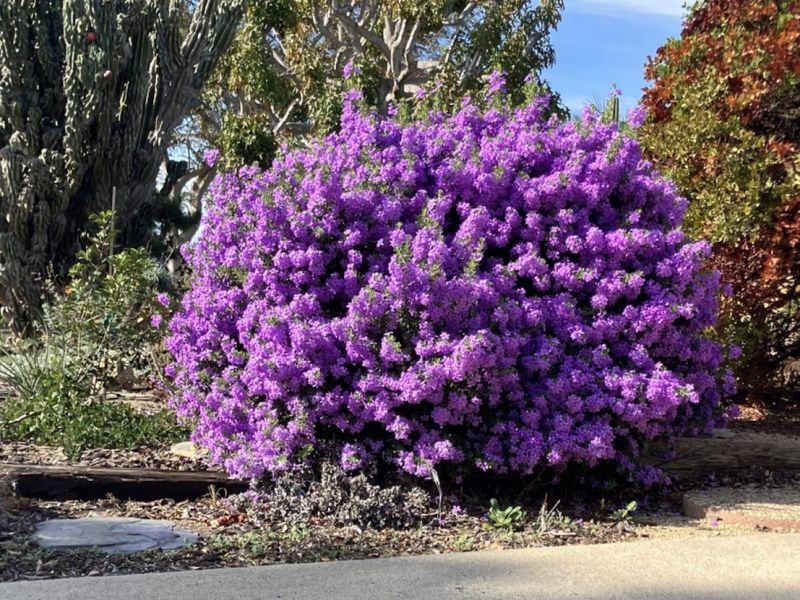
Locals swear Texas sage can predict the weather, bursting into purple bloom right before or after a rain shower. That habit earned it the fun name barometer bush.
Silvery gray-green leaves and clouds of lavender-purple flowers make it look soft, but this shrub is genuinely rugged. It thrives in blazing sun, poor rocky soil, and long dry stretches that would flatten a hydrangea overnight.
Native to the Southwest, it practically begs to be ignored. Overwatering is the fastest way to hurt it, so it suits busy gardeners and water-conscious yards beautifully.
Use it as a low informal hedge, a xeriscape anchor, or a pop of cool color against warm brick. Bees and other pollinators drift in whenever those blooms open.
For Texas and drier parts of Florida, this shrub is a curb-appeal workhorse. It stays evergreen, holds a tidy mounded shape with minimal pruning, and keeps flowering in flushes through the hottest months, long after your hydrangeas have thrown in the towel and gone brown.
4. Firebush
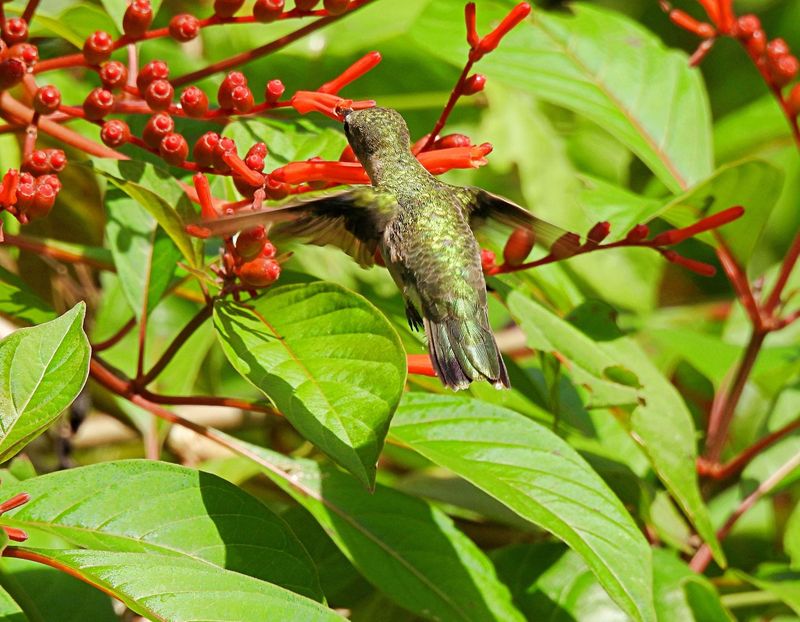
Watch a firebush on a summer morning and you will likely catch a hummingbird zipping between its fiery orange-red tubes. Butterflies love it just as much, making this shrub a backyard wildlife magnet.
Native firebush thrives in Florida heat and humidity, blooming nonstop from late spring until the first cool snap. The leaves even take on rich red and bronze tones as temperatures shift.
Sun and warmth are all it really wants. Established plants handle drought well and shrug off the sticky afternoons that make hydrangeas wilt into sad little heaps.
It can grow tall and lush as a loose screen or be kept trimmed for a mixed border. Either way, the pollinator traffic is nonstop entertainment.
A word to the wise: look for the true native Hamelia patens rather than the compact dwarf lookalike if attracting hummingbirds is your goal, since the native form tends to feed them better. For gardeners who want color plus a lively, buzzing, fluttering yard, firebush delivers both without demanding constant fussing or watering.
5. Plumbago
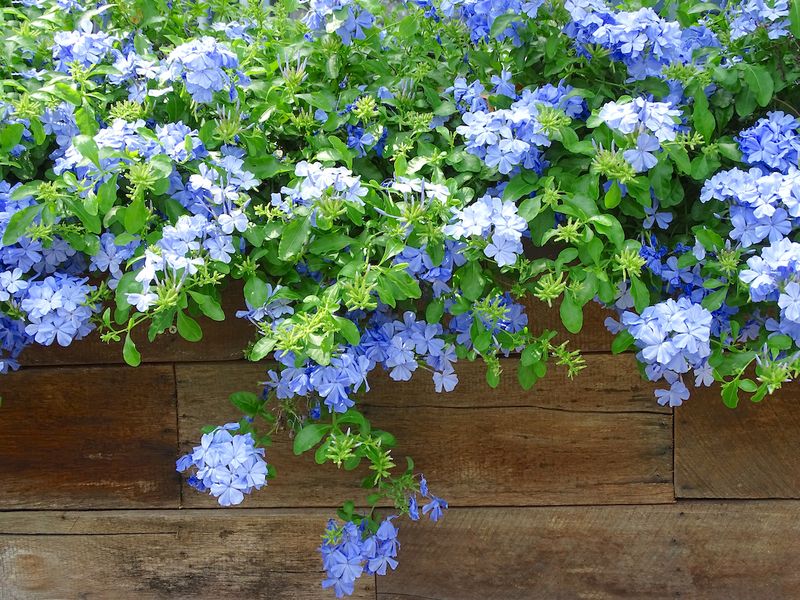
Few shrubs offer true sky-blue flowers, and plumbago hands them out like it is no big deal all summer long. Those cool powder-blue clusters look especially refreshing when the thermometer is climbing.
Butterflies, particularly cassius blue butterflies, flock to it, so a plumbago hedge doubles as a fluttering pollinator buffet. The blooms keep coming from spring through fall in warm zones.
Heat and drought barely register once it is settled in. It sprawls happily along fences, spills over walls, and fills beds where thirstier plants would sulk.
Give it sun for the heaviest flowering, though it tolerates a bit of light shade. Prune it whenever it gets leggy and it bounces right back fuller.
There is a white-flowered version too, but the blue is the showstopper that makes neighbors stop and ask what it is. For Florida and South Texas yards craving a soft, calming color instead of the same old warm tones, plumbago is an easygoing, forgiving choice that keeps performing while hydrangeas struggle in the heat.
6. Rose of Sharon
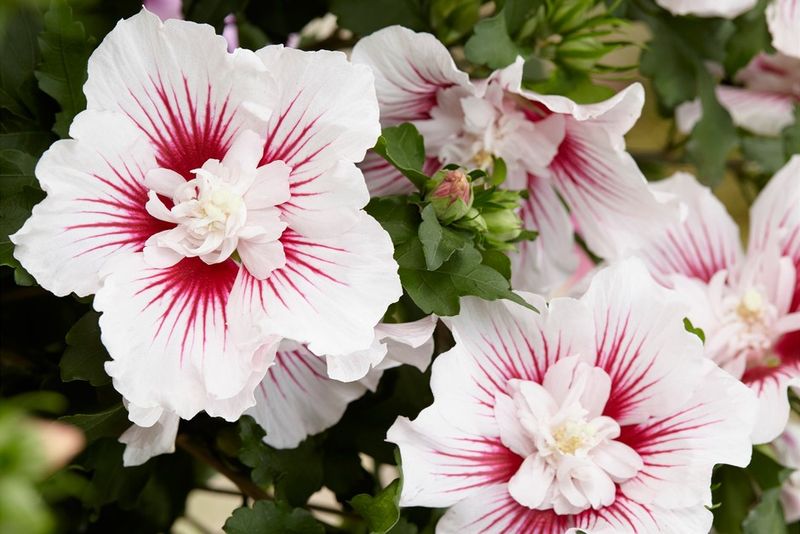
Big, papery blooms that look like tropical hibiscus, but on a shrub tough enough to handle real neglect, that is the charm of rose of Sharon. It flowers when midsummer heat has most other plants coasting.
Colors range from soft lavender and white to deep pink and blue-purple, often with a contrasting throat. Each morning brings a fresh round of flowers from summer into early fall.
Upright and vase-shaped, it makes a quick blooming screen or a dramatic single specimen near a porch or fence. It adapts to a wide range of soils without complaint.
Sun brings the most blooms, and once its roots are established it takes drought and heat in stride. Butterflies and hummingbirds visit those wide-open flowers regularly.
Heads-up for tidy gardeners: it can reseed enthusiastically, so pull volunteers or choose newer seedless varieties if you want less cleanup. For Southern yards that want a lush, almost tropical look with far less fuss than hydrangeas demand, rose of Sharon delivers big flower power on a dependable, forgiving shrub.
7. Bougainvillea
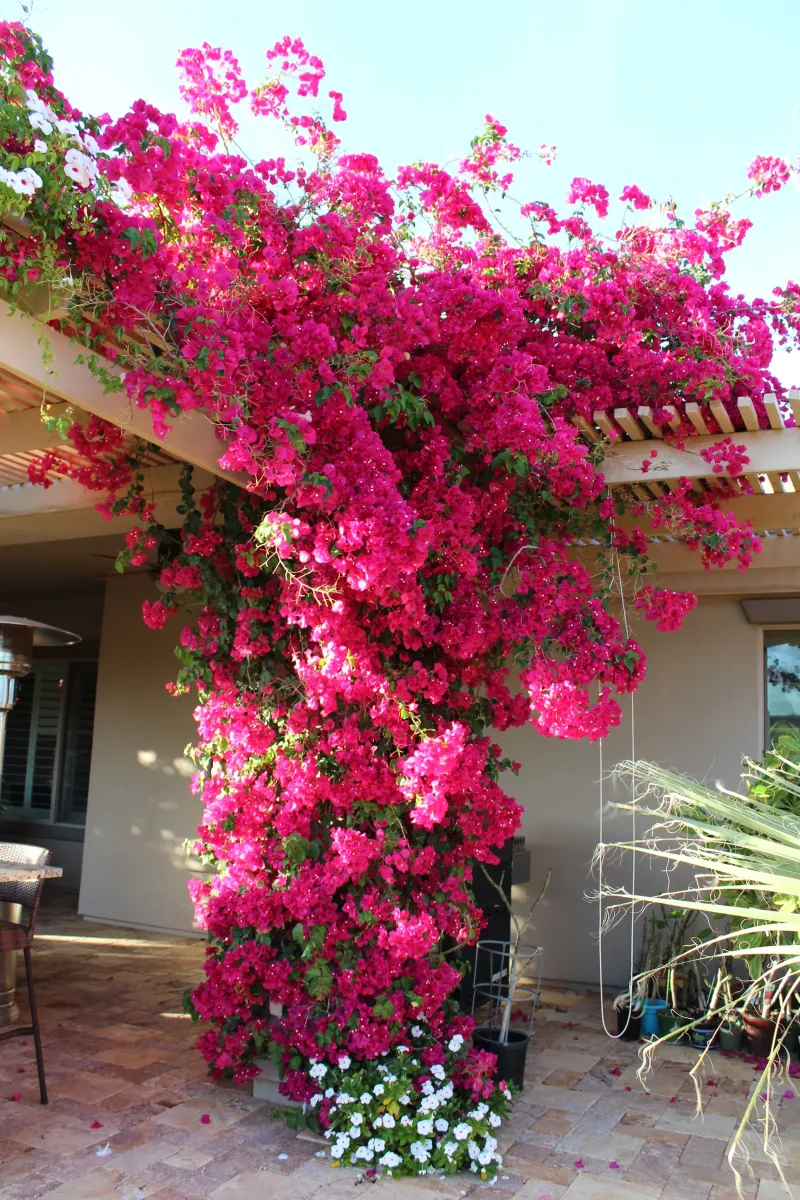
Nothing says warm-climate drama quite like bougainvillea draped in waves of magenta, coral, or purple. Those bright papery bracts hold their color for weeks, giving you enormous impact for very little effort.
Blazing sun and dry soil are its happy place. In fact, keeping it a little thirsty often triggers more blooms, which makes it perfect for gardeners who forget to water.
Trained onto a trellis, kept as a mounded shrub, or spilled over a wall, it delivers nonstop tropical color through the hottest stretch of the year. Coastal salt does not bother it either.
The trade-off is thorns, so plant it away from walkways and wear gloves when trimming. That small caution buys you one of the most spectacular flowering plants a Southern yard can grow.
Fun fact: those vivid colors are not petals at all, but modified leaves called bracts surrounding tiny white true flowers. For Florida and South Texas gardeners wanting jaw-dropping curb appeal that thrives on heat and neglect, bougainvillea makes hydrangeas look downright high-maintenance by comparison.
8. Knock Out Rose
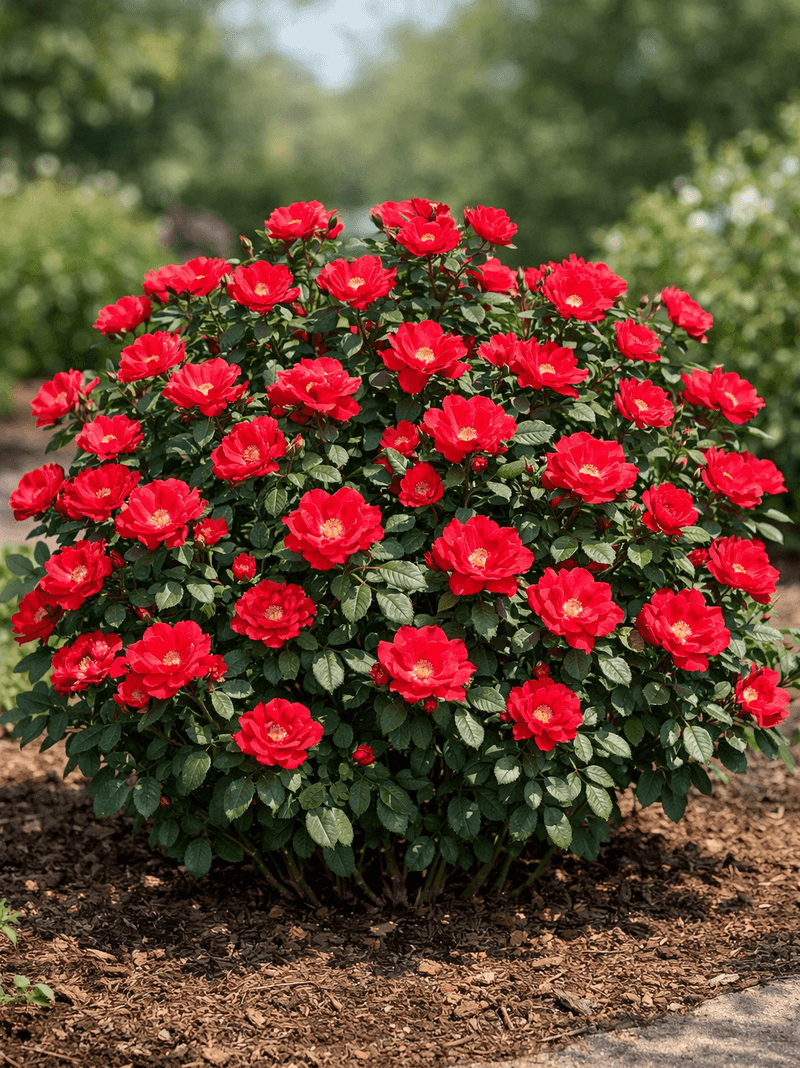
Roses have a reputation for being divas, but the Knock Out rose flipped that script completely. Bred for toughness, it blooms in flush after flush without the spraying and babying old-fashioned roses demand.
From spring until frost, it pumps out cherry red, pink, or coral blooms on a neat rounded shrub. That is months of classic rose beauty with a fraction of the work.
Disease resistance is its claim to fame. It naturally shrugs off black spot and mildew, the very problems that discourage most gardeners from growing roses at all.
Full sun keeps it flowering hardest, and it self-cleans, meaning it drops spent blooms and rebloomers without deadheading. A simple trim in late winter keeps it shapely.
Once established, it handles Southern heat and short dry spells like a champ, making it a reliable anchor for porch beds and foundation plantings. For anyone who wants dependable, long-season color and the romance of roses without the fuss, the Knock Out is a foolproof upgrade over hydrangeas that quit when summer turns brutal.