
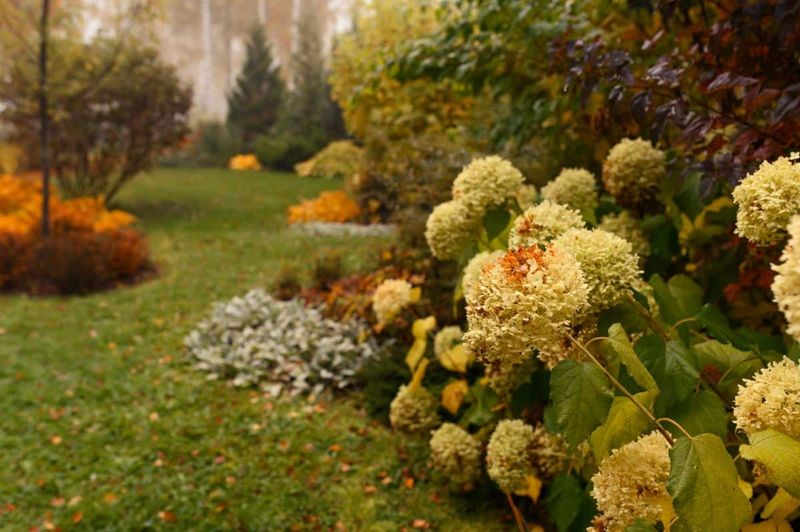
If your hydrangeas put out only a handful of flowers each spring, fall is the right time to figure out why and make a change. The fix is not a single magic task that works for every plant in every yard.
For many Southern gardeners, the most important thing to do in fall is actually to stop doing something, specifically to stop cutting back the wrong hydrangeas at the wrong time.
Protect next year’s flowers before you try to create more
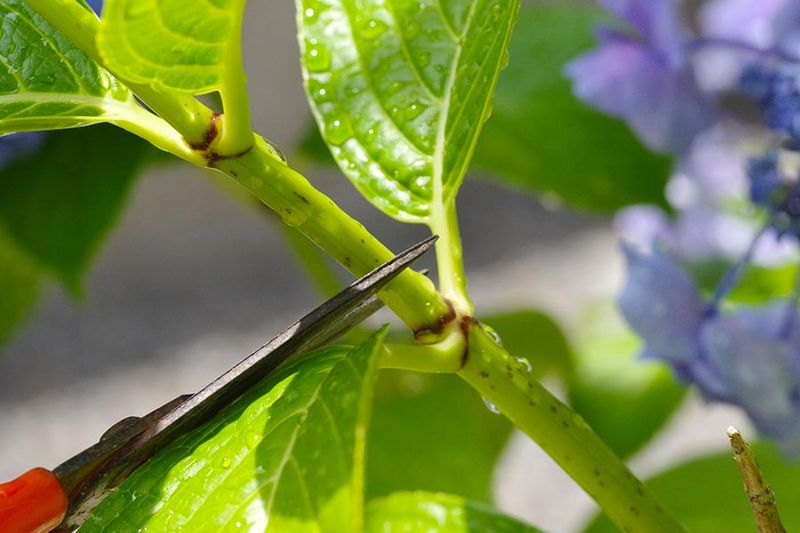
Many gardeners head outside in fall expecting to find one decisive treatment that will guarantee a bigger hydrangea display next spring. The reality is more useful than that promise: for traditional old-wood types, fall care is mostly about protecting flower buds the plant has already formed, not manufacturing new ones through an aggressive seasonal treatment.
Bigleaf, oakleaf, and mountain hydrangeas carry next season’s flower buds on stems that grew during the current year. Those buds are already there by the time temperatures start to drop.
UGA Extension’s hydrangea guide notes that cutting these plants at the wrong time of year is one of the most common reasons gardeners see few or no flowers the following season.
Avoiding damaging cuts matters more than performing any single seasonal ritual. Before reaching for pruning shears or a bag of fertilizer, the first step is to confirm which hydrangea you are growing and whether it blooms on old wood or new wood.
University of Maryland Extension emphasizes that pruning advice cannot be applied universally across hydrangea species, and getting that identification right changes everything that follows.
Identify the hydrangea before choosing a fall routine
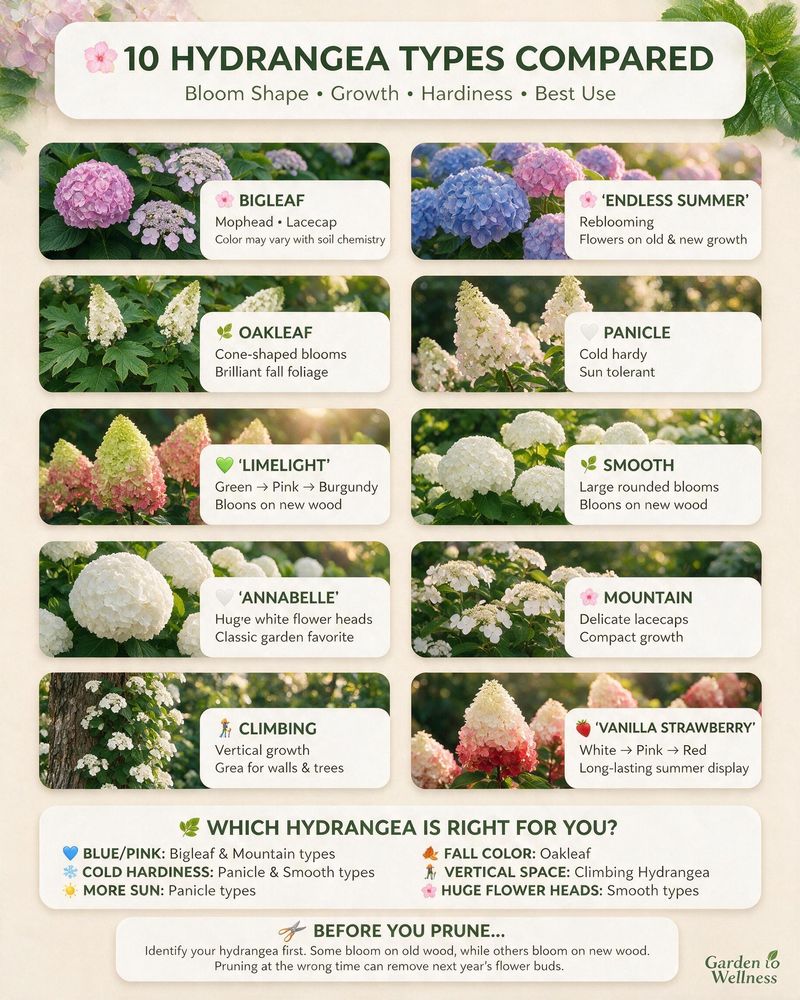
Walk up to your hydrangea and look at the flower heads and leaf shape before deciding on any fall action. Traditional mophead and lacecap hydrangeas, which are bigleaf types (Hydrangea macrophylla), produce large round or flat-topped flower clusters and have broad, glossy leaves.
Oakleaf hydrangeas (H. quercifolia) are easy to spot by their deeply lobed, oak-shaped leaves and cone-shaped white flower clusters that age to tan or parchment. Mountain hydrangeas (H. serrata) look similar to lacecaps but are smaller and more cold-tolerant.
All three of these types generally bloom on old wood.
On the other end of the spectrum, smooth hydrangeas like the popular ‘Annabelle’ (H. arborescens) carry big white globes and bloom on new wood, meaning buds form on stems that grow in the current season. Panicle hydrangeas like ‘Limelight’ (H. paniculata) produce elongated, cone-shaped clusters and also bloom on new wood.
University of Maryland Extension and Penn State Extension both confirm that these new-wood bloomers are generally pruned in late winter or early spring, not fall.
Reblooming bigleaf cultivars, sometimes marketed as “endless summer” types, can flower on both old and new wood. University of Minnesota Extension explains that these plants are more forgiving of lost old-wood buds, though pruning still influences how much and when they rebloom.
If you are unsure which type you have, your county extension office can help with identification.
Old-wood buds remain on the stems through winter
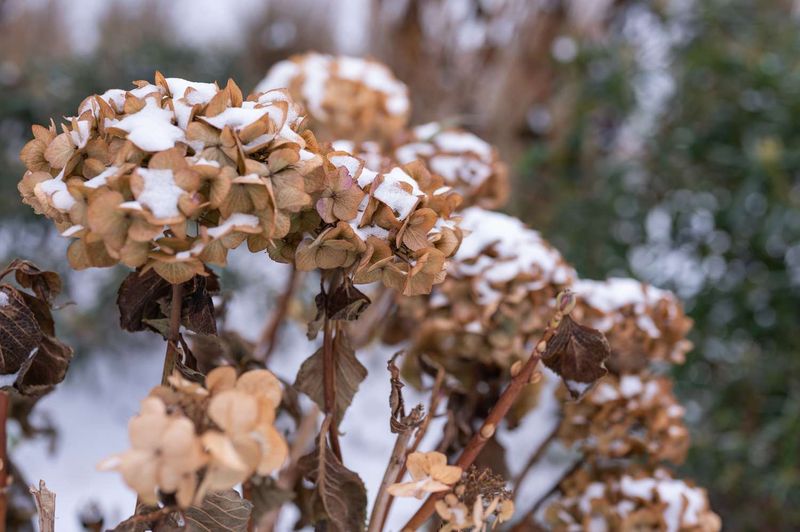
Bigleaf, oakleaf, and mountain hydrangeas form the buds that will become next year’s flowers during the summer and early fall of the current season. Those buds then sit on the existing stems through the winter, waiting for warm weather to trigger growth.
Cut those stems in fall, winter, or early spring, and you remove the buds along with them, leaving the plant with nothing to open when bloom season arrives.
This is the single most common cause of a flowerless hydrangea in the South. Mississippi State Extension’s hydrangea guide lists improper pruning timing as a primary reason old-wood types fail to bloom, and UGA Extension echoes that point directly.
Gardeners who tidy up beds in fall by cutting everything back are often removing the very buds they were hoping to enjoy next June.
Necessary pruning for these types belongs shortly after flowering ends, generally in early to mid-summer, and before the plant begins setting buds for the following year. Penn State Extension’s bloom troubleshooter confirms this timing and adds that even well-intentioned cleanup cuts made in late summer can cost gardeners a full season of flowers.
When in doubt, leave the stems alone through fall and winter.
Use mulch to steady the root zone when conditions call for it
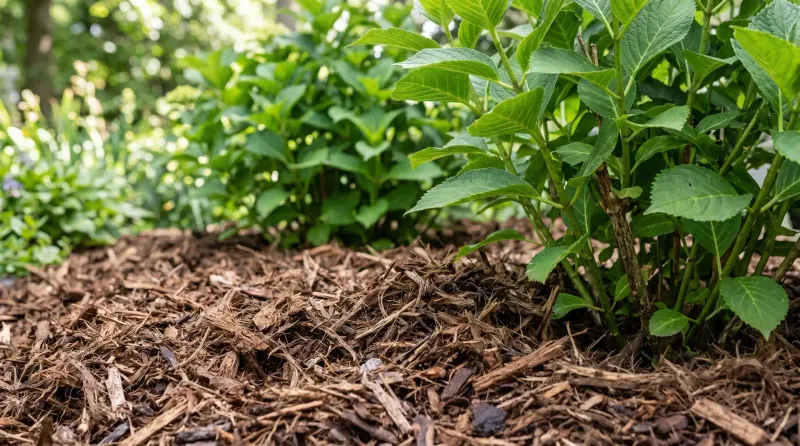
Once you have committed to leaving your old-wood stems intact, mulch becomes a practical second step when fall conditions are dry, temperatures are swinging, or the soil in your beds tends to dry out quickly between rains. Apply roughly 2 to 5 inches of organic material such as pine straw, pine bark, shredded bark, or chopped leaves around the root zone of the plant.
UGA Extension recommends this range specifically for hydrangeas, and Penn State Extension supports organic mulch as a standard tool for moderating soil temperature and conserving moisture around ornamentals.
Keep the mulch pulled back an inch or two from the base of the stems. Piling material directly against the wood can trap moisture against the bark and create conditions that encourage rot or invite pests to overwinter at the crown.
A doughnut shape around the plant, rather than a volcano mound, is the right approach.
Mulch does not create flower buds. What it can do is reduce the moisture stress and soil-temperature swings that sometimes damage roots and make it harder for a plant to support the buds it has already formed.
Mississippi State Extension identifies drought as one contributing factor in poor hydrangea flowering, and a consistent layer of organic mulch is one practical way to reduce that risk heading into winter.
Pair mulch with careful moisture checks
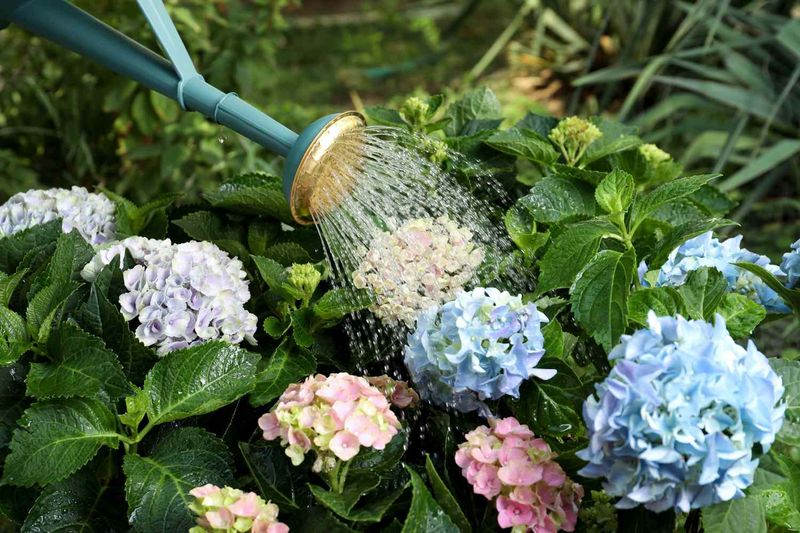
Mulch works best as part of a routine, not as a set-and-forget solution. Through fall and into winter, check the soil under your mulch layer periodically by pressing a finger two inches into the ground.
If it feels dry at that depth during a stretch without rain, water deeply enough to reach the root zone and then let the soil partially dry before checking again.
Mississippi State Extension identifies drought during fall and winter as a possible contributor to poor blooming the following season, and UGA Extension supports maintaining consistent moisture without saturating the soil. Waterlogged roots are just as damaging as dry ones, so the goal is even moisture rather than constant wetness.
Southern gardeners, especially those growing bigleaf hydrangeas in hotter spots, will notice that leaves can droop dramatically on warm afternoons even when the soil has adequate moisture. University of Maryland Extension cautions against using temporary heat-related wilting as a watering signal, since adding water to already-moist soil can lead to root problems.
Check the soil first, then decide. Mulch reduces how often you need to intervene, but it cannot fix chronic poor drainage or compensate for a site that stays soggy after every rain.
Add winter protection only for vulnerable plants and sites
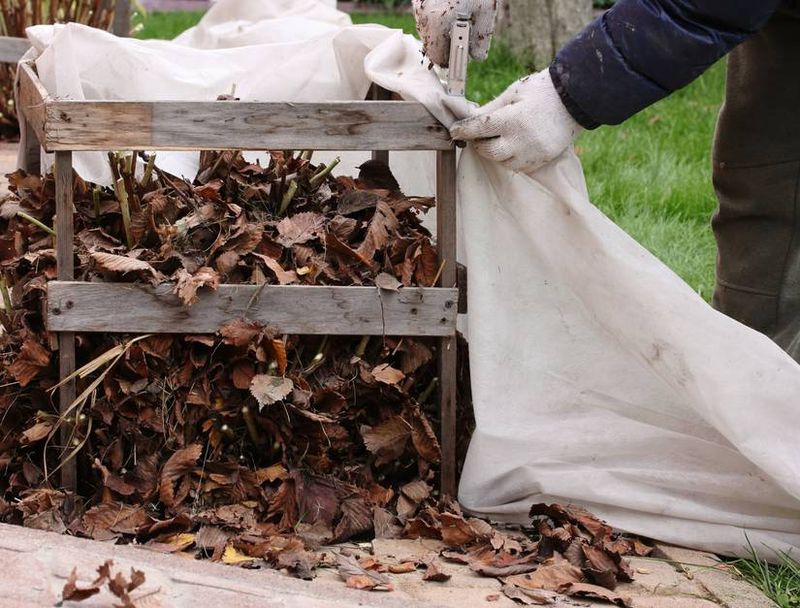
Physical protection for hydrangeas is a conditional measure, not a universal fall requirement. For traditional old-wood bigleaf hydrangeas growing in colder parts of the South or in exposed sites with little overhead shelter, a hard freeze can damage or kill the stems and buds that carry next year’s flowers.
In those situations, covering the plant during a freeze event or surrounding it with a wire cylinder packed with dry leaves can help buffer the stems from the most damaging temperature drops.
UGA Extension’s winter freeze guidance and the main UGA hydrangea publication both describe these methods as options for vulnerable plants. Late frosts in spring are also worth watching; a hard frost after buds have begun to swell can wipe out a season’s worth of flowers even if the plant made it through winter in good shape.
Deer browsing on stems is another threat that can remove buds before they ever open, particularly where deer pressure rises in fall and winter as other forage thins out.
Florida gardeners face a different set of priorities. Heat, humidity, drainage, and selecting cultivars that actually perform well in Florida conditions can matter as much as winter preparation in many parts of the state.
UF/IFAS notes that oakleaf hydrangea is native to parts of Florida and is well-suited within its stated hardiness range, though not every hydrangea cultivar performs equally across the state. University of Maryland Extension also lists site problems including poor drainage and insufficient light as common causes of bloom failure that no amount of winter wrapping will fix.
New-wood and reblooming types follow different pruning rules
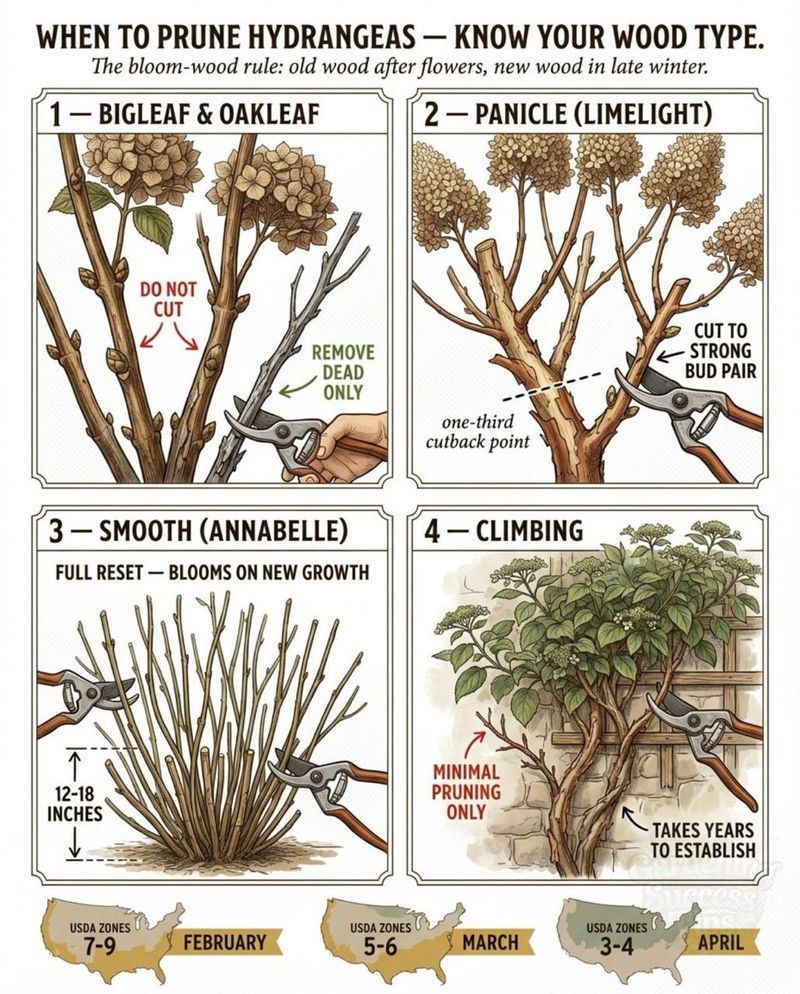
Applying old-wood rules to every hydrangea in the yard is a fast way to create confusion and uneven results. Smooth hydrangeas like ‘Annabelle’ and panicle hydrangeas like ‘Limelight’ and ‘Quickfire’ form their flower buds on stems that grow during the current season.
Cutting them back in late winter or early spring, before new growth begins, is the standard recommendation and does not cost them any flowers. University of Maryland Extension and Penn State Extension both confirm this timing for new-wood bloomers.
Reblooming bigleaf cultivars occupy a middle ground. University of Minnesota Extension explains that these plants can produce flowers on both old and new wood, so losing old-wood buds to a hard winter or an ill-timed cut does not necessarily eliminate every bloom.
Even so, pruning affects how much rebloom occurs and when it happens, so the gentler approach of removing only dead or crossing wood still applies.
Texas gardeners are working across a wide range of climates, from the humid Piney Woods in the east to the semi-arid Hill Country and the far west. Texas A&M AgriLife Extension supports matching pruning decisions to whether the specific plant blooms on old or new growth, rather than following a single calendar date for every hydrangea in the state.
Heat, drought, alkaline soils, and regional winter exposure can all influence outcomes, so knowing your plant’s bloom habit is the most reliable starting point regardless of your Texas zip code.
Skip fall remedies that promise flowers too easily
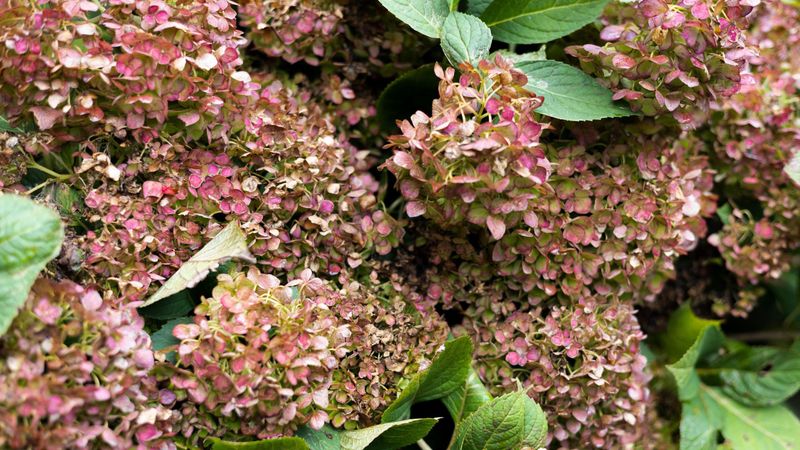
A handful of popular fall treatments circulate every year as bloom-boosting secrets, and most of them will not do what gardeners hope. Heavy fall nitrogen applications are among the most counterproductive.
Rather than setting more flower buds, excess nitrogen tends to push leafy vegetative growth at the expense of flowers. Mississippi State Extension and UGA Extension’s ornamental plant care guide both recommend light fertilization during the growing season rather than a heavy fall feeding.
Coffee grounds are frequently suggested as a way to acidify soil and shift hydrangea flowers from pink to blue. Oregon State Extension reports that used coffee grounds are close to neutral in pH and will not lower soil acidity enough to affect flower color.
Epsom salts also come up often, but applying them without a confirmed magnesium deficiency and a soil test to back it up is not supported by published extension guidance as a general bloom treatment. Deadheading spent flowers is a reasonable aesthetic choice, but University of Maryland Extension notes it is not the key to more blooms.
When hydrangeas continue to underperform despite correct fall care, the cause is often something structural: too much shade, repeated late-frost damage, deer browsing on stems, chronic drought, poor drainage, excess nitrogen from a nearby lawn fertilizer, or a cultivar that simply is not well-matched to the site. Penn State Extension’s bloom troubleshooter walks through these possibilities in detail.
The most reliable path forward stays the same: confirm which hydrangea you have, preserve old-wood stems through fall and winter, manage moisture consistently, and protect exposed plants from conditions that can strip buds before spring arrives. Good results come from protecting what is already there, not from chasing a shortcut.