
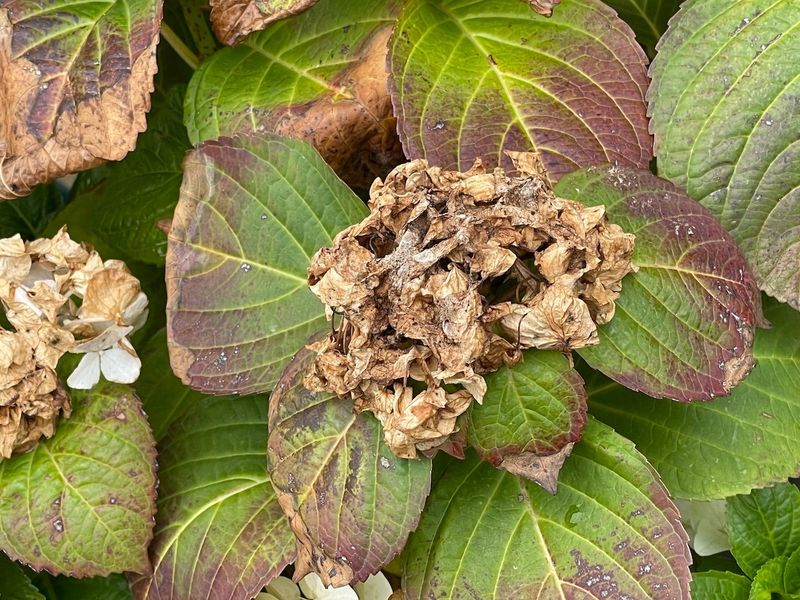
You watered, you weeded, and your hydrangea rewarded you with a full head of lush green leaves and absolutely nothing else. Before you blame the plant, consider that a single care decision made months earlier may have quietly canceled this season’s flowers. For old-wood hydrangeas like bigleaf, mountain, and oakleaf types, pruning at the wrong time of year can remove the buds that were already waiting to open. The good news is that once you identify what happened, recovery is straightforward.
Start with the pruning date—but do not assume it explains everything
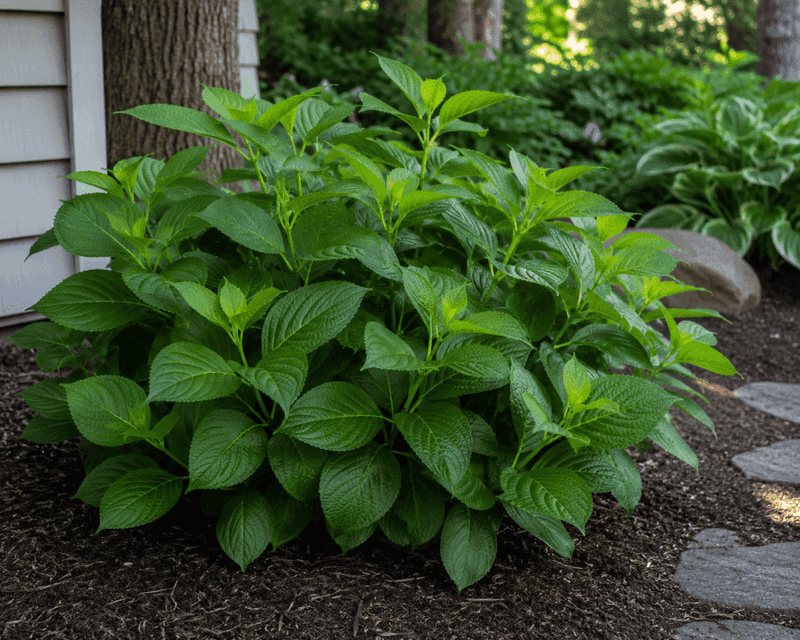
Healthy green leaves paired with zero flowers is one of the more frustrating sights in a summer garden. When that happens on a bigleaf, mountain, or oakleaf hydrangea, the first question worth asking is whether the plant was cut back in fall, winter, or early spring, because those three types store next season’s flower buds on the previous season’s stems.
That stored wood is called “old wood,” and when it gets removed before the buds can open, the plant leafs out normally but has nothing left to bloom with. University of Maryland Extension identifies mistimed pruning as the top reason these hydrangeas fail to flower, and Penn State and University of New Hampshire Extension reach the same conclusion.
Still, pruning is a leading possibility, not a guaranteed explanation. Winter cold, late frost, deer, deep shade, excess nitrogen, drought, and poor cultivar-climate fit can all produce the same leafy-but-bloomless result. The pruning question is the right place to start, especially for old-wood types, but the answer depends on which hydrangea you have and what the plant actually shows when you look closely.
Identify whether your hydrangea blooms on old wood or new wood
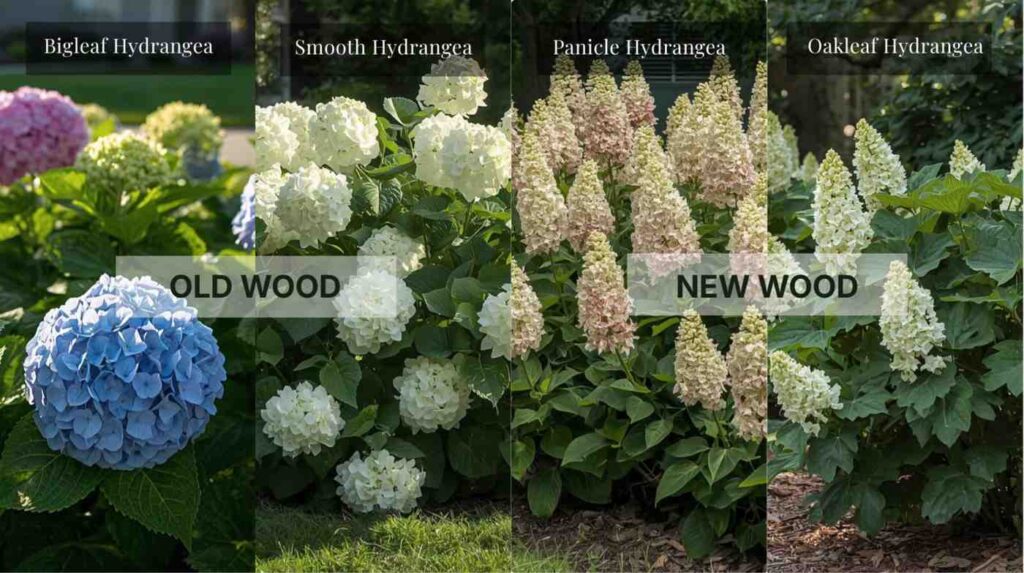
Every pruning and recovery decision hinges on one thing: knowing whether your hydrangea blooms on old wood or new wood. Get that wrong and even well-intentioned care can set the plant back another season.
Bigleaf hydrangea (Hydrangea macrophylla), mountain hydrangea (H. serrata), and oakleaf hydrangea (H. quercifolia) generally bloom on old wood, meaning the flower buds form on stems that grew the previous season. University of Maryland Extension’s pruning guide recommends limiting pruning on these types to just after flowering and removing only as much as needed, so that the new growth following that cut has time to mature and set buds before winter.
Smooth hydrangea (H. arborescens) and panicle hydrangea (H. paniculata) work differently. Both bloom on new wood, meaning the current season’s growth produces the flowers, so late-winter or early-spring pruning is generally appropriate and will not cost them their blooms. University of Minnesota Extension confirms that smooth hydrangeas tolerate harder pruning than old-wood types.
A third category adds another layer: some bigleaf and mountain cultivars are remontant, meaning they can bloom on both old and new wood. Marketed as “reblooming” types, they offer more flexibility, though that flexibility is not unlimited, especially after severe winters.
If you no longer have the plant tag and are unsure which type you have, Penn State Extension’s species-specific pruning guide and your local Extension office can help you identify the plant by flower form and leaf shape before you make any cuts.
See how a dormant-season cutback removes flower buds
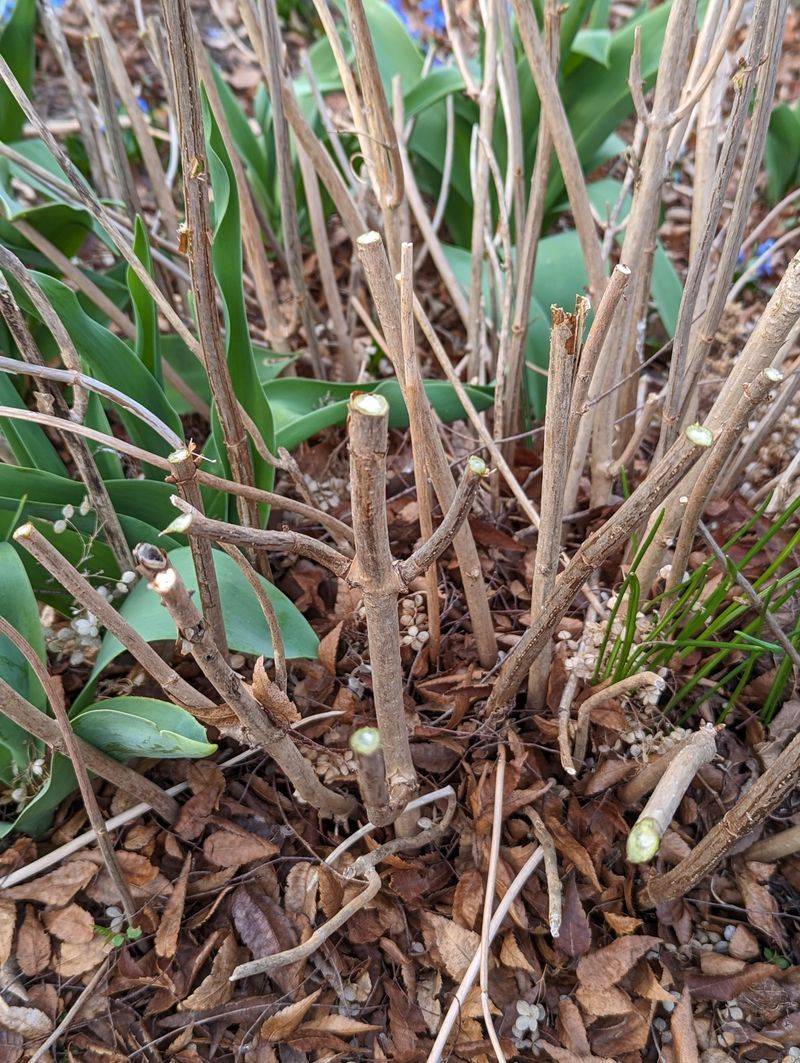
Old-wood hydrangeas set their flower buds on mature stems during late summer and fall, well before winter arrives. Those buds sit quietly through the cold months, ready to open the following season. When someone cuts those stems back in fall, winter, or early spring, the buds go with them, and the plant has no way to replace them on the same wood.
What makes this confusing is how healthy the plant looks afterward. University of New Hampshire Extension’s pruning fact sheet explains that the root system remains intact and pushes out vigorous new growth, so the plant appears thriving. The missing flowers are the only visible evidence that the buds were removed months earlier.
One important distinction: deadheading spent flower heads is not the same as cutting back woody stems. Removing old flower clusters mainly affects appearance and, in some reblooming cultivars, can encourage faster repeat flowering. It does not remove the stems that carry next year’s buds, so it carries far less risk than a hard cutback. The University of Maryland Extension pruning guide draws this line clearly.
For old-wood types, the safest routine window is right after flowering ends. That timing lets the plant set new buds on the fresh growth before temperatures drop, preserving next season’s flowers without sacrificing the current ones.
Inspect stems, buds, and browsing damage before cutting again
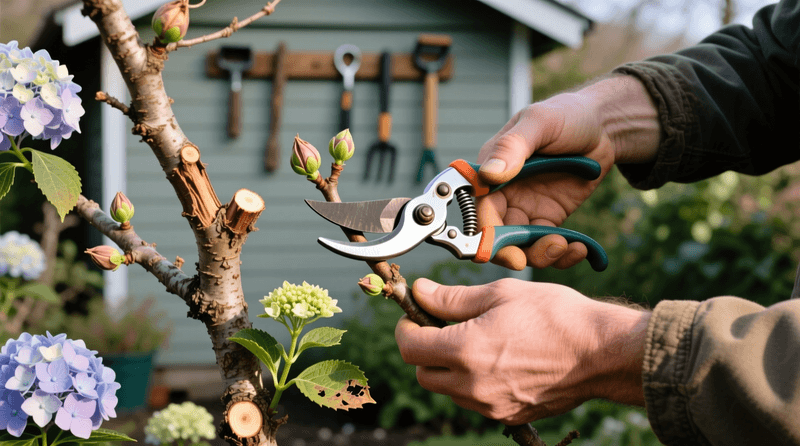
Before reaching for pruning shears, spend a few minutes actually looking at the plant. Three different patterns can produce a bloomless hydrangea, and each one points toward a different cause.
First, if no buds formed at all, consider whether the plant received enough light, whether it was stressed by drought during the period when buds normally set, or whether excess nitrogen pushed it toward leaves instead of flowers. Second, if buds were visible but then disappeared, a late spring frost, winter cold snap, or animal browsing is more likely. Third, if the upper stems look dead while the lower portions of the plant are alive and leafing out, winter injury is a strong candidate. University of Maryland Extension lists all three patterns as distinct diagnostic starting points, not interchangeable symptoms.
Deer and rabbits are worth checking for specifically. Both animals can strip buds or chew stems, particularly on old-wood types during late winter when other food is scarce. Look for clean-cut or ragged stem ends, tracks near the base of the plant, or missing lower growth. Penn State Extension notes that no hydrangea is universally deer-proof, so browsing should stay on the list of possibilities even if you have not seen the animals directly.
When winter damage is suspected, University of New Hampshire Extension advises waiting until spring growth begins before removing any stems. Live buds and stems become distinguishable from dead wood only once the plant starts pushing new growth, and cutting too early can remove viable material that would have flowered.
Choose the recovery step that matches the surviving wood
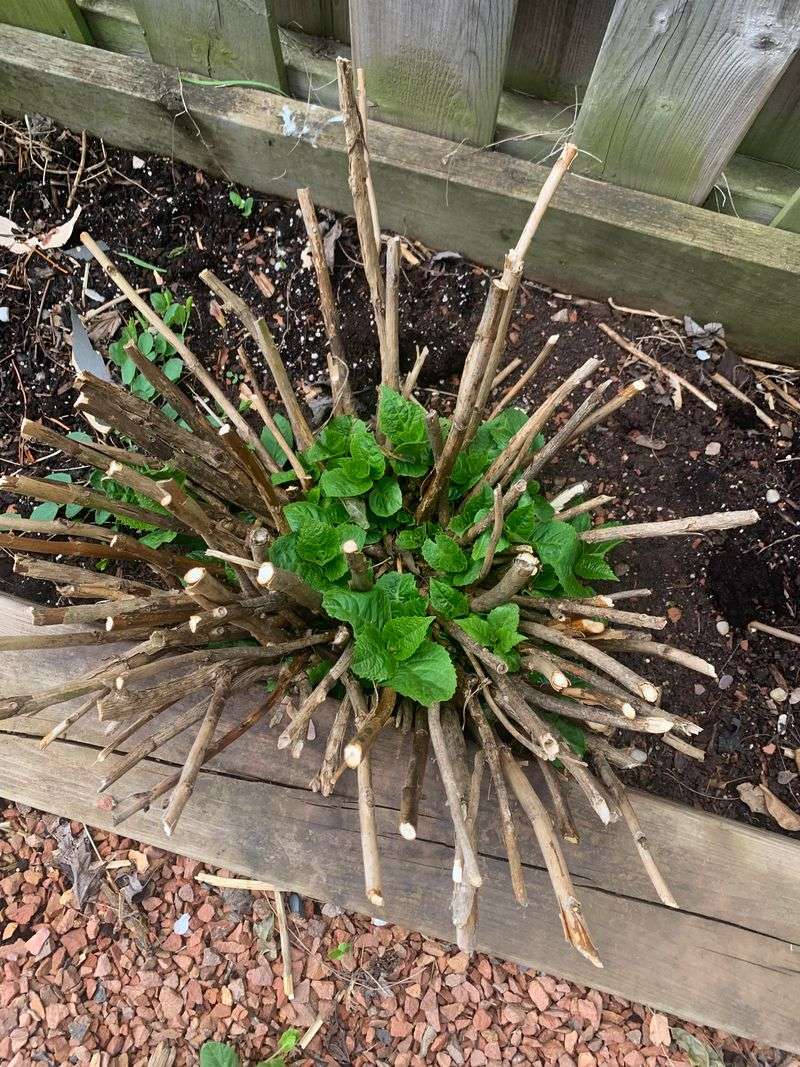
Recovery from a missed bloom season starts with restraint. Making another hard cut while the plant is still dormant, especially on an old-wood hydrangea, risks repeating the same mistake that likely caused the problem.
The practical approach is to wait. Once spring growth begins, examine each stem individually. Any stem showing green at the tip or along the bark, or one that reveals green tissue when you lightly scratch the surface, is alive and worth keeping. University of New Hampshire Extension recommends removing only stems that are clearly dead all the way to the base, cutting those back cleanly rather than leaving stubs.
If old-wood buds were lost to pruning or winter, the plant may not flower until it has had a full season to set new buds on the replacement growth. That can feel discouraging, but the plant is not declining. Keeping live stems intact gives it the best chance of flowering in the following season.
For smooth and panicle hydrangeas, the timeline is shorter. Because they bloom on new wood, current-season growth can carry flowers even after a hard cutback, so a bloomless year is less likely with these types. Some remontant bigleaf and mountain cultivars may also flower on new growth after old buds are lost, though results vary by cultivar and how severe the winter was. University of Minnesota Extension confirms that new-wood types are generally more forgiving of timing errors.
Check light, water, fertilizer, and climate for other causes
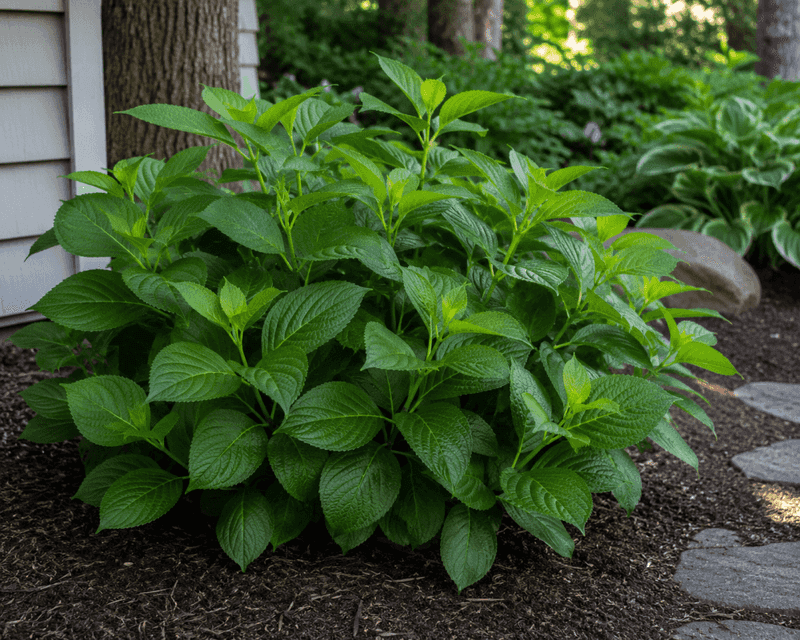
Pruning is not always the explanation. Several other conditions can leave a hydrangea with full foliage and no flowers, and some of them are easy to overlook if you jump straight to the pruning calendar.
Shade is one of the more common culprits, particularly for bigleaf hydrangeas. University of Georgia Cooperative Extension’s bigleaf hydrangea guide recommends avoiding deep shade and notes that roughly three to four hours of morning sunlight supports better flowering, though exact light needs vary by species and climate. If your plant sits under a dense tree canopy that has filled in over the years, reduced light may be suppressing bloom rather than anything you pruned.
Fertilizer is another area where good intentions can backfire. Excess nitrogen, including runoff from nearby lawn fertilizer, encourages the plant to produce more leaves at the expense of flowers. University of Maryland Extension cautions against automatically applying fertilizer when a hydrangea fails to bloom, since adding a high-nitrogen product can make the problem worse rather than better.
Water matters too, but in both directions. Bigleaf hydrangeas have relatively high moisture needs and can suffer during dry spells, particularly during the period when buds are forming. At the same time, consistently waterlogged soil or poor drainage can damage roots and reduce flowering. Adding more water is not a universal fix.
Climate mismatch deserves consideration if you started with a florist or gift bigleaf hydrangea. Penn State Extension explains that these plants are often poorly adapted to local winters. The roots can survive while cold temperatures kill the above-ground stems and any flower buds with them, leaving a plant that looks fine in spring but never blooms. Each of these possibilities has an observable clue attached to it, which is why inspecting the site before making changes is worth the time.
Protect next year’s buds without chasing false fixes
Prevention for next season starts with recording what you have. Write down the species or cultivar name, or photograph the plant tag, so you know exactly which pruning calendar applies. That one step removes most of the guesswork going forward.
For old-wood hydrangeas, bigleaf, mountain, and oakleaf, University of Maryland Extension recommends pruning just after flowering ends and removing only as much as necessary. Avoid cutting these types back in fall, winter, or early spring. For smooth and panicle hydrangeas, late-winter or early-spring pruning before new growth begins is generally appropriate and will not cost the plant its blooms.
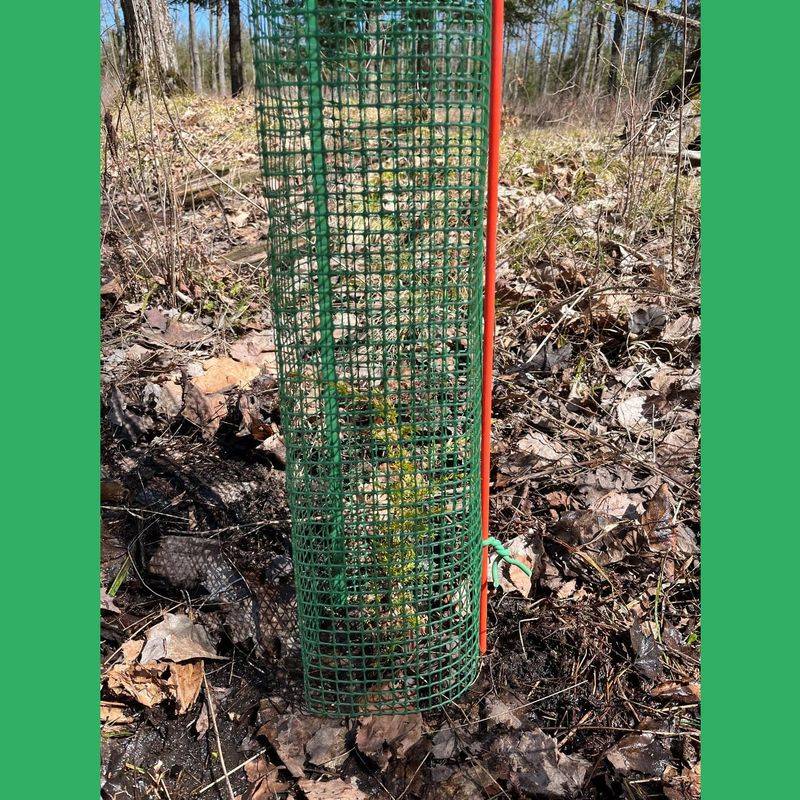
In colder climates, vulnerable bigleaf hydrangeas may benefit from a wire or mesh cylinder packed with dry leaves to insulate the stems and buds over winter. University of New Hampshire Extension’s winter protection guide describes this approach and advises removing the enclosure after buds begin expanding in spring or after frost danger passes, following local guidance on timing. Protection may reduce bud loss in hard winters, but it is not a guarantee, especially in regions where temperatures drop sharply or fluctuate repeatedly.
On the fertilizer and soil side, resist the pull toward bloom boosters, phosphorus supplements, or aluminum sulfate as quick fixes for missing flowers. Penn State Extension points out that soil pH primarily affects flower color in certain hydrangeas, not whether buds form at all. Aluminum sulfate can damage hydrangea roots if misapplied, and University of Minnesota Extension notes that aluminum becomes toxic to many plants at excessive levels. A soil test is the appropriate first step before making any significant soil amendments.
Identify the wood before you reach for the shears
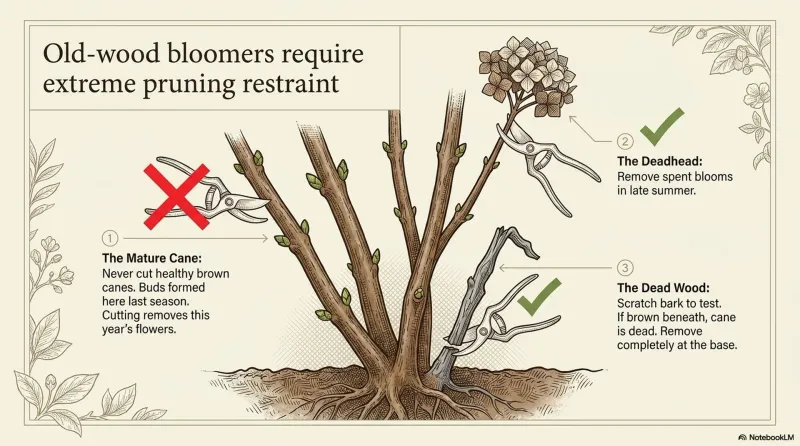
The most useful thing you can do before pruning any hydrangea is confirm what type you have. Identify the species or cultivar, determine whether it blooms on old wood, new wood, or both, and then inspect the plant for signs of winter damage or browsing before you remove anything.
University of New Hampshire Extension and University of Maryland Extension both frame the identification step as the foundation of any sound pruning decision. Prune old-wood types just after flowering. Prune new-wood types in late winter or early spring. When damage is involved, wait for growth to reveal what is alive before cutting.
That sequence does not promise flowers every season – climate, wildlife, and site conditions all play a role. What it does is put the decision on solid ground rather than habit or assumption. Knowing the plant is the starting point; everything else follows from there.