
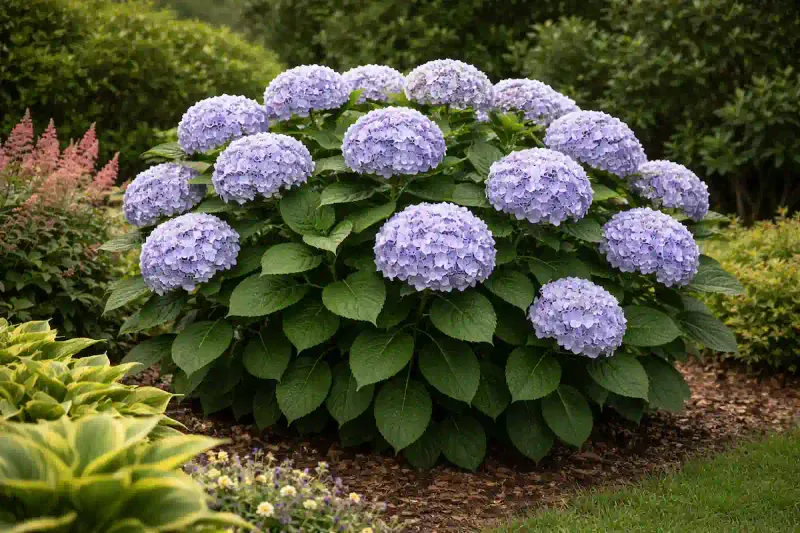
Watching a hydrangea push out lush green leaves all summer without a single flower is genuinely frustrating, especially when you have no idea what went wrong. The good news is that one bloomless season does not prove the plant is finished.
Most of the time, the cause comes down to something fixable: a pruning cut made at the wrong time, a site that bakes in afternoon sun, or winter cold that quietly killed the buds before spring even arrived. Understanding what actually happened is the first step toward protecting the next bloom cycle.
Identify the hydrangea before you cut
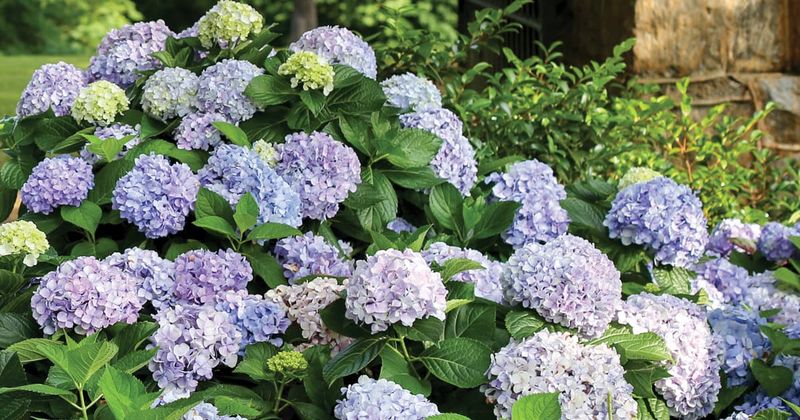
Before reaching for the pruners, the single most useful thing you can do is figure out exactly which hydrangea you have. Not every hydrangea follows the same blooming schedule, and a pruning cut that helps one type can wipe out the next year’s flowers on another.
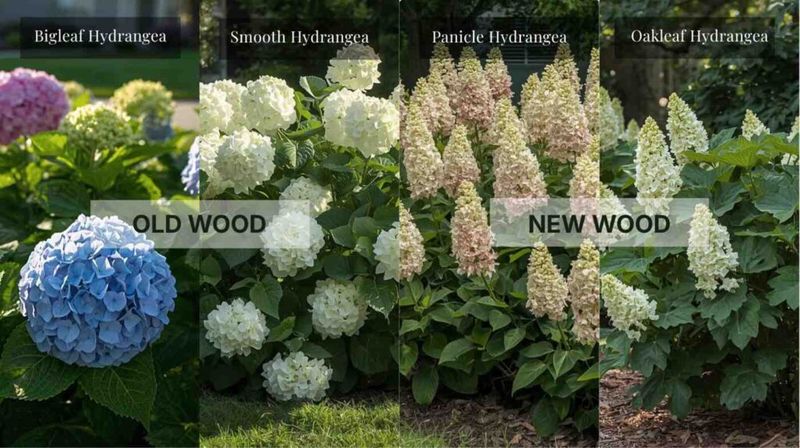
The two groups that matter most for Southern gardeners are old-wood bloomers and new-wood bloomers, and treating them the same way is a common reason plants go a full season without flowers.
Bigleaf hydrangea (Hydrangea macrophyllaH. quercifolia), the classic mophead or lacecap, and oakleaf hydrangea () generally form their flower buds on older stems from the previous season. UGA Cooperative Extension guidance on bigleaf hydrangea confirms that pruning these plants in late summer, fall, or winter removes the buds they were already forming for next year.
Panicle hydrangea (H. paniculataH. arborescens) and smooth hydrangea (, which includes the popular ‘Annabelle’) are new-wood bloomers that flower on growth produced in the current season, making them more forgiving of late-winter or early-spring pruning.
Some reblooming bigleaf cultivars, often sold under names like ‘Endless Summer,’ can flower on both old and new wood, which makes timing less critical but still important. Check the original plant tag, look up the cultivar name, or contact your local cooperative extension office before making any cuts.
A reset that suits ‘Annabelle’ can strip every bud from a traditional mophead, so identification is not optional.
A leafy shrub can still have lost its flowers
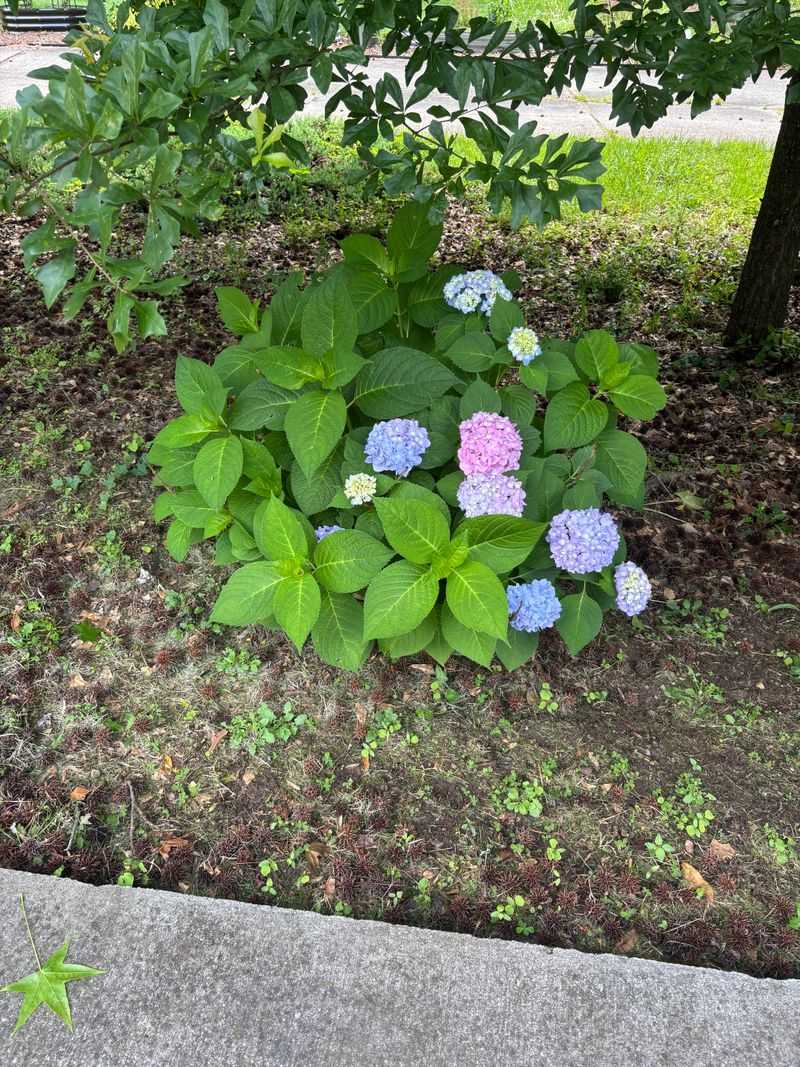
A hydrangea that is green, full, and actively growing has not necessarily failed. The plant being alive and the plant still having viable flower buds are two different things, and that gap explains why so many shrubs look perfectly healthy while producing zero flowers for an entire season.
Several distinct problems can leave a hydrangea leafy but bloomless. Late pruning that removed old-wood buds is one of the most common culprits.
Winter cold or a late freeze can kill the buds on older stems while the plant still pushes out new foliage from surviving tissue. Insufficient light, drought stress during the growing season, and excessive nitrogen in the soil can all reduce or eliminate flower production as well.
Penn State Extension’s overview of hydrangea bloom failure lists these causes clearly and notes that a plant with healthy foliage but no flowers often points to bud loss or unfavorable site conditions rather than an automatic need for more fertilizer.
University of Illinois Extension’s hydrangea care guidance reinforces that a bloomless plant should not be assumed to have root disease or a nutrient deficiency just because flowers are absent. One bloomless season does not prove the plant is permanently declining, but it does call for honest diagnosis before any corrective action.
The symptom alone cannot pinpoint the exact cause, which is why working through each possibility in order matters more than jumping to a single solution.
Pruning timing controls the next flower crop
Pruning is where most bloomless hydrangeas run into trouble, and the fix depends entirely on knowing which type you have. For old-wood bloomers like bigleaf and oakleaf hydrangeas, the safe window for any significant pruning is immediately after flowering, generally before late summer.
Once late summer arrives, those plants are already forming buds for the following year, and any cut made from that point through winter is likely to remove exactly what you were hoping to see bloom next spring.
UGA Extension’s guide to pruning ornamental plants in the landscape and University of Minnesota Extension’s pruning hydrangeas resource both support timing cuts to match how each type produces flowers. For new-wood bloomers like panicle and smooth hydrangeas, pruning belongs in late winter or early spring before new growth starts, and only when the plant actually needs shaping or size control.
If your plant is currently dormant or you genuinely cannot identify the type, the safest move is to remove only stems that are clearly dead, broken, or diseased. Scratch a stem lightly with your thumbnail – green tissue underneath means it is alive.
Shearing an unidentified shrub to the ground as a generic rescue step is not a safe default; it can eliminate the flowering wood of bigleaf and oakleaf types entirely. Correct pruning timing can protect future buds, but no cut made today can restore buds that were already removed or killed in a previous season.
Match light and Southern exposure to the plant
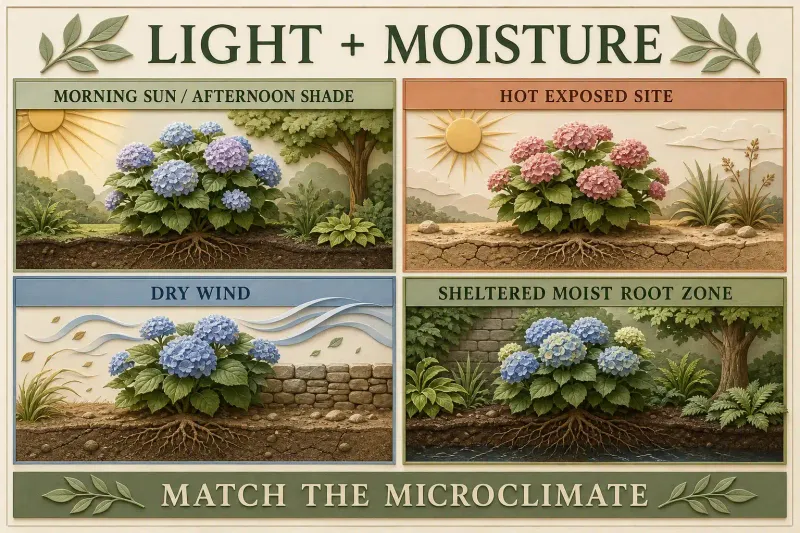
Site conditions are often the hidden reason a hydrangea keeps skipping bloom cycles even when pruning is handled correctly. Flower-bud production responds directly to how much usable light the plant receives, and both too little sun and the wrong kind of sun can be a problem in Southern yards.
Mississippi State University Extension’s hydrangeas guide recommends roughly five hours of direct sunlight as a general reference for better flower production, while noting that most hydrangeas prefer morning sun with afternoon shade. That arrangement is especially practical across the South, where harsh afternoon sun combined with high humidity and heat can cause bigleaf and smooth hydrangeas to wilt, stress, and reduce flowering even when water is adequate.
A plant sitting in deep shade all day is just as likely to underperform as one that bakes on a west-facing wall.
Panicle hydrangeas are generally more tolerant of full sun to part sun than bigleaf, oakleaf, and smooth types, making them a stronger option for hot, open exposures. Florida gardeners should note that oakleaf hydrangea is native to the region and documented by UF/IFAS for Florida landscapes within its hardiness range, giving it an advantage over less-adapted types.
Texas gardeners face their own variation in heat, soil alkalinity, and rainfall depending on whether the site is coastal, central, or north of the state, and the Texas A&M Earth-Kind plant selector evaluates plants by regional conditions rather than statewide rules. Evaluate the specific exposure at your planting site before assuming a product or amendment will compensate for a mismatched location.
Keep the root zone moist but not soggy
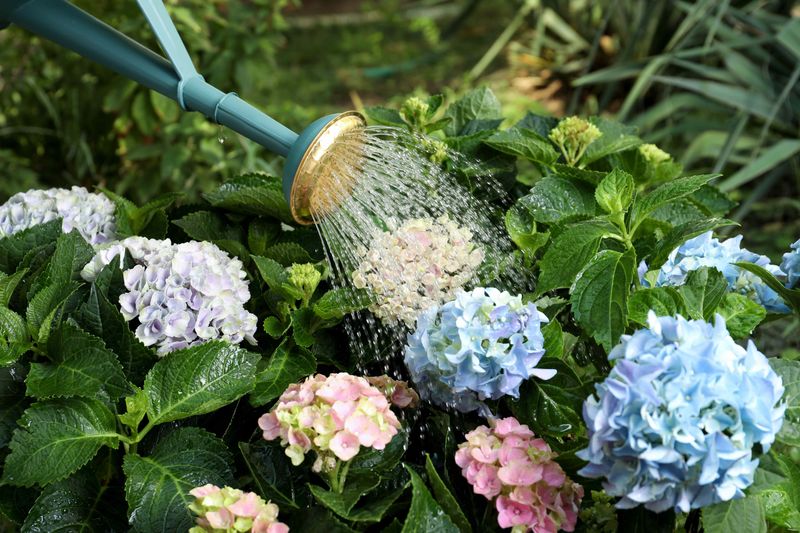
Consistent moisture matters more to hydrangeas than many gardeners realize, and both extremes, too dry and too wet, can affect flowering and overall plant health in different ways. Drought stress during the growing season can reduce bud formation and even cause existing buds to abort before they open.
Overwatering or planting in poorly drained soil creates a separate set of problems that no amount of extra fertilizer or pruning can fix.
Mississippi State University Extension offers about 1 inch of water per week from rainfall or irrigation as a general productivity guideline, with extra attention needed for newly planted shrubs still establishing their root systems. That figure is a starting point, not a fixed prescription for every Southern yard.
Sandy Florida soils drain much faster than clay-heavy Texas soils, containers dry out more quickly than in-ground beds, and a stretch of 95-degree days changes water demand significantly compared to a mild week with afternoon rain. The practical goal is evenly moist, well-drained soil, not a consistently wet bed.
A 2- to 3-inch layer of organic mulch, such as shredded bark or pine straw, can help conserve soil moisture, moderate root-zone temperatures during summer heat, and reduce the frequency of irrigation needed. Keep mulch pulled a few inches back from the main stem to avoid trapping excess moisture against the crown.
Saturated soil is a genuine danger, particularly for oakleaf hydrangea, which is susceptible to root rot when drainage is poor, so improving drainage at the planting site is a more useful fix than simply increasing watering frequency.
Do not use fertilizer to replace a missing bud

Reaching for a bloom booster when a hydrangea fails to flower is one of the most common and counterproductive responses a gardener can make. Excess nitrogen, the nutrient most fertilizers supply in abundance, encourages the plant to put its energy into producing leaves rather than flowers.
Both UGA Cooperative Extension and Mississippi State University Extension specifically list excessive nitrogen as a possible cause of poor bloom, which means a bloomless plant that already has lush foliage may actually need less fertilizer, not more.
Soil testing is the responsible step before applying any amendment. A test tells you what the soil actually lacks rather than what a product label suggests might help.
High-phosphorus bloom boosters are sometimes marketed as a flowering fix, but University of Minnesota Extension’s fertilizer guidance makes clear that applying fertilizer without a soil test can create nutrient imbalances or cause unintended damage to the plant.
Homemade remedies including coffee grounds, banana peels, Epsom salt, and rusty nails are sometimes suggested as bloom triggers, but no authoritative extension source reviewed supports these as reliable treatments for a flowerless hydrangea. Soil pH is a separate issue worth understanding: adjusting pH can shift flower color between blue and pink in certain bigleaf and mountain hydrangeas, as Penn State Extension explains, but it does not solve every flowering problem and has no meaningful effect on panicle, smooth, or oakleaf types.
Diagnosis comes first; fertilizer follows only if a soil test confirms a genuine deficiency.
Protect the next bloom cycle with a measured plan
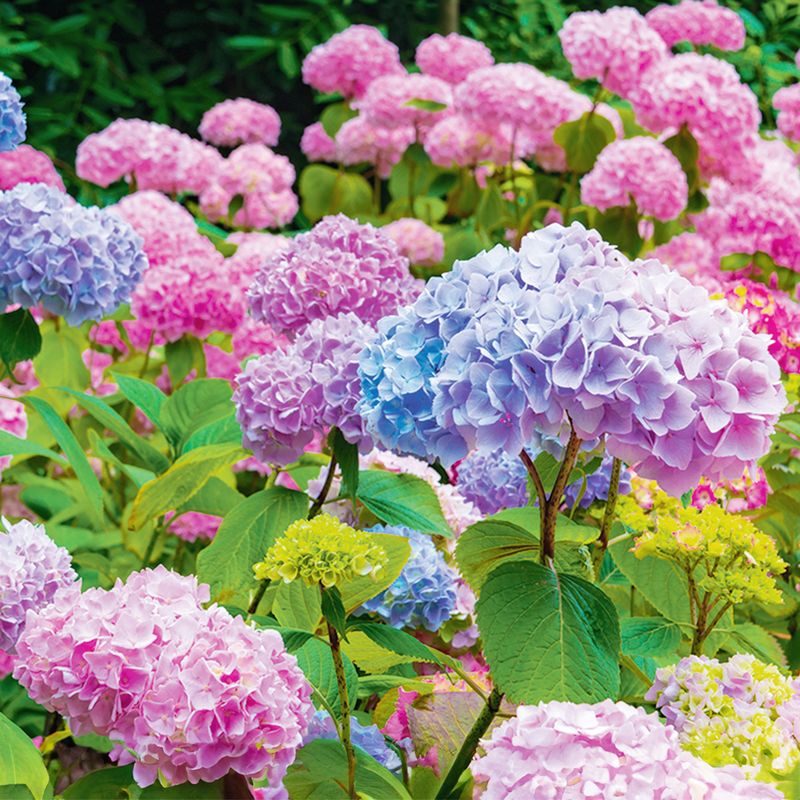
Pulling a hydrangea back toward reliable flowering is less about a single dramatic intervention and more about working through a short checklist and then giving the plant time. Start by confirming the type, because every other decision follows from that.
Once you know whether it blooms on old or new wood, inspect the stems for clearly dead, broken, or diseased growth and remove only that material, leaving healthy wood untouched until the correct pruning window arrives.
Correct the site if light or drainage is genuinely wrong. Adjust watering to keep the root zone evenly moist without saturating it, and hold off on fertilizer unless a soil test points to a real deficiency.
Winter or late-freeze injury deserves specific attention: a bigleaf hydrangea can come through cold weather looking alive and leafy while every flower bud on its older stems has been killed. Penn State Extension and UGA Cooperative Extension both note that reblooming cultivars may still produce flowers later on new growth in that situation, but this is not guaranteed.
If an old-wood type lost its buds to cold, pruning, or drought, no in-season treatment can recreate those buds.
The realistic promise here is improved odds of flowering in a future season, not guaranteed recovery before the summer ends. Careful timing, honest site evaluation, and patience are the actual tools.
A hydrangea that skipped one season still has a reasonable future – it just needs the right conditions rather than a quick fix that does not exist.