
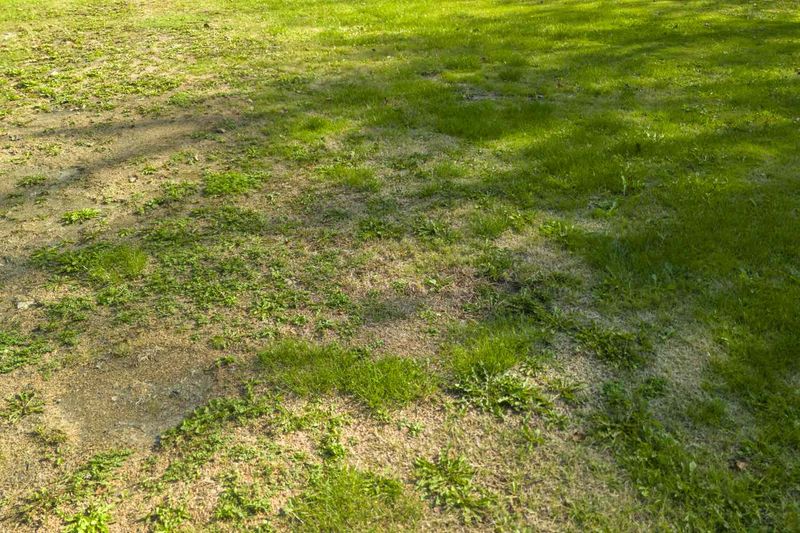
Bare spots that keep coming back after every repair are one of the most frustrating problems a Southern homeowner can face. Spreading more seed or laying fresh sod over them often fails within a season, and that cycle can go on for years.
The real issue is that persistent patchiness usually points to an unresolved site or management problem, and no amount of new grass will fix it until that underlying condition is addressed.
Start with the pattern, not another bag of seed
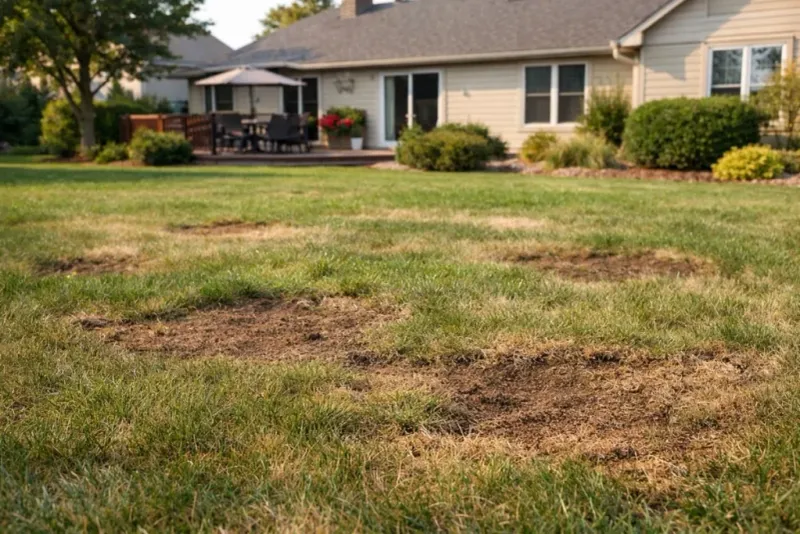
Recurring bare spots rarely have a single hidden cause, and spreading another bag of seed over them without investigating why the grass keeps failing is one of the most common mistakes Southern homeowners make. Before buying anything, walk the yard and map where the thinning actually occurs.
The location and shape of damaged areas are your first useful clues.
Thin turf beneath trees or along the shaded side of a building points toward insufficient light. Footpath-shaped damage through the middle of the lawn usually signals compaction from regular foot traffic, pets, or vehicles.
Low or soggy sections that stay wet after rain suggest drainage or irrigation problems, while circular or expanding patches may indicate disease or insect activity. Turf that lifts away from the soil easily, especially if roots look chewed or absent, can point to root-feeding insects.
These patterns narrow the possibilities but do not prove a diagnosis on their own. University of Georgia Extension guidance on abiotic turfgrass disorders notes that reliable diagnosis often requires weighing site history, management practices, environmental conditions, and plant biology together rather than relying on symptoms alone.
A useful inspection checklist covers growing-season sunlight at the problem spot, soil firmness, how water drains after rain or irrigation, whether sprinkler heads cover the area evenly, the grass species present, current mowing height, and any recent fertilizer or pesticide applications. Comparing a damaged area with a healthy one nearby often reveals the difference faster than any product label can.
Shade can make a formerly healthy lawn impossible to maintain
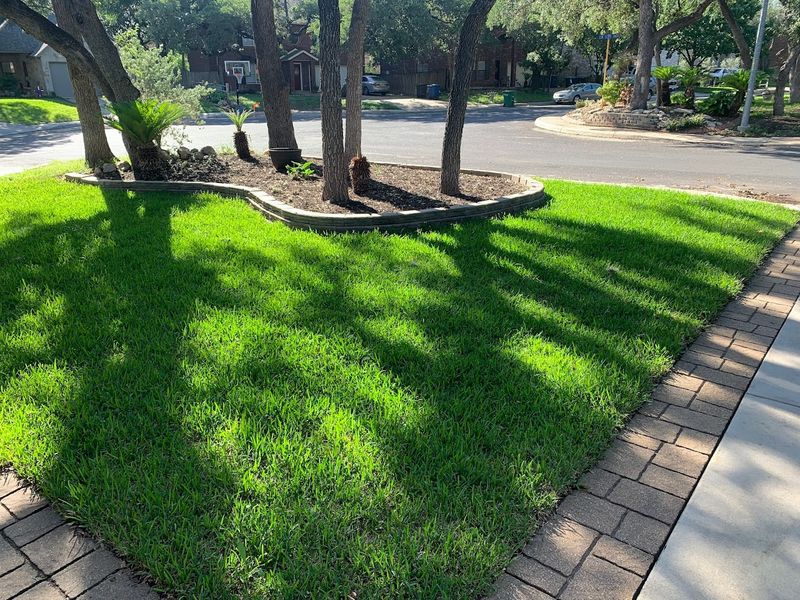
A yard that supported healthy turf five or ten years ago can gradually become a poor turf site as trees mature and their canopies expand. The grass does not fail because the homeowner changed anything.
The site changed, and the grass that was once thriving is now fighting for light it can no longer get.
No turfgrass grows well in complete shade. Mississippi State University Extension identifies St. Augustinegrass as one of the more shade-tolerant warm-season options, requiring roughly four hours of direct sunlight or a full day of high-quality filtered light.
Bermudagrass and bahiagrass have very poor shade tolerance and should not be expected to hold in moderately shaded areas. UF/IFAS research on growing turfgrass in shade adds that cultivar choice matters even within St. Augustinegrass: the widely planted Floratam variety is significantly less shade-tolerant than several other St. Augustine cultivars, and zoysia can be a reasonable option for moderately shaded spots.
Evaluating light honestly during the growing season, not in winter when trees are bare, is essential. Dense shade is a fundamentally different condition from moderate shade, and the two call for different responses.
Where shade is moderate and the right cultivar is in place, the lawn may recover with adjusted management. Where shade is dense and continuous, reseeding or laying sod repeatedly is unlikely to produce lasting results.
UGA Extension guidance on poor lawn sites supports converting heavily shaded areas to mulch, ground cover, or a shade garden rather than forcing turf into conditions it cannot survive.
Compaction makes traffic damage return after every repair
Foot traffic, pets, vehicles, and even mowing on wet soil can compress the root zone enough to choke out grass over time. Compacted soil has fewer air pockets, which restricts how water moves through it, how oxygen reaches roots, and how nutrients become available to the plant.
Roots simply cannot spread into dense, airless soil, so the grass above stays thin and stressed regardless of how much fertilizer or water is applied.
Practical clues include thinning turf along predictable paths, standing water that lingers well after rain, and soil that resists a screwdriver or probe pushed in by hand. UGA Cooperative Extension research on turfgrass fertility and soil conditions confirms that compaction limits the movement of air, water, and nutrients through the root zone in ways that routine maintenance cannot overcome without physical intervention.
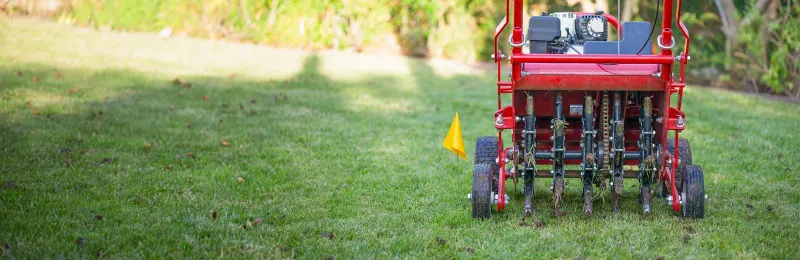
Core aeration, which removes small plugs of soil, can improve conditions when compaction is genuinely present. For warm-season grasses, aeration works best during active root growth, when soil temperatures at four inches reach at least 65 degrees Fahrenheit and the soil is moist but not saturated.
Texas A&M AgriLife Extension specifically cautions against running equipment on wet ground because saturated soil compacts even more easily. Aeration is a useful tool, but it is not a universal fix.
When compaction is deep, structural, or caused by ongoing heavy use, the more lasting solutions may include traffic redirection, drainage improvements, soil modification, or a broader renovation of the area.
Both too little and too much water can thin turf
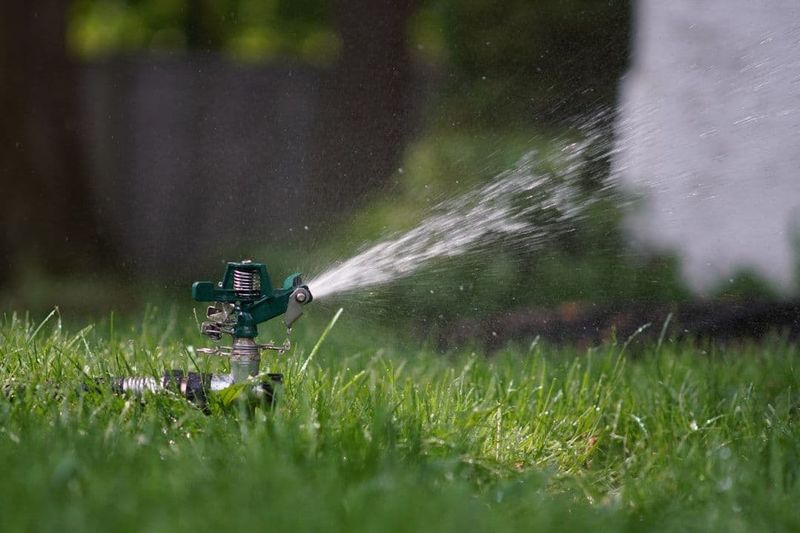
Irrigation problems thin lawns from two opposite directions, and both are easy to overlook. Frequent, shallow watering keeps the top inch of soil moist but never pushes moisture deep enough for roots to follow.
Grass with shallow roots wilts fast during dry spells and recovers slowly, leaving it looking thin and stressed even during a normal summer.
Overwatering, chronically wet zones, or uneven sprinkler coverage create a different set of problems. Roots sitting in saturated soil can decline from lack of oxygen, and persistently wet conditions increase disease pressure.
UF/IFAS guidance on watering Florida lawns recommends irrigating deeply and less frequently, adjusting the schedule for soil type, weather, sunlight, and rainfall rather than following a fixed calendar. Additional UF/IFAS research on proper irrigation techniques supports checking sprinkler coverage with straight-sided catch cans placed across a zone rather than assuming each head delivers the same amount of water.
Uneven coverage is a common source of persistent thin patches that gets blamed on soil or grass selection instead.
Established bermudagrass shows water stress through persistent visible footprints, folded leaf blades, wilting, or a blue-gray cast, as described in UF/IFAS bermudagrass management guidance. Those indicators are useful for bermudagrass specifically, but irrigation timing and amounts vary by species, soil, slope, and local restrictions and should not be applied identically across every Southern lawn.
Shaded turf generally needs less water than turf in full sun, and watering a mixed sun-and-shade zone on a single uniform schedule can leave shaded soil chronically wet, which raises disease risk and can damage roots over time.
Mowing and fertilizer cannot overcome a bad growing site
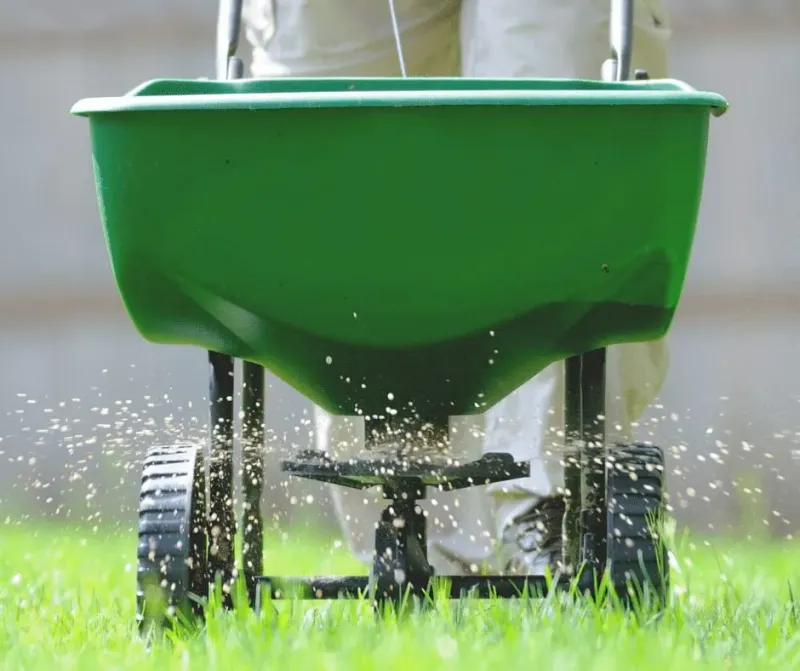
Mowing height and fertilizer choices genuinely affect turf density, but they work only when the site can support healthy grass to begin with. Cutting too short is one of the most common self-inflicted problems in Southern lawns.
Removing more than one-third of the leaf blade at a time stresses the plant, reduces its ability to photosynthesize, and opens the door to weeds and pests. Mowing at the correct height for the species consistently supports denser, more resilient turf.
Correct height varies significantly by grass type and cultivar. UF/IFAS Florida-Friendly Landscaping guidelines and species-specific extension resources list bermudagrass at roughly 0.5 to 2 inches, St. Augustinegrass at approximately 2 to 4 inches depending on cultivar, and zoysia at roughly 0.25 to 2.5 inches depending on cultivar.
A single mowing height for all Southern lawns does not exist. UF/IFAS turfgrass selection guidance reinforces that species and cultivar identity should come before any management recommendation.
Fertilizer decisions should follow a soil test rather than a seasonal calendar. Texas A&M AgriLife Extension advises basing fertilizer applications on soil-test results, not on assumptions about what the lawn needs.
A test can identify pH or nutrient problems, but it cannot diagnose shade, compaction, drainage failure, or an unsuitable grass species. Excess nitrogen, in particular, can worsen certain diseases and promote weak, fast-growing tissue that is more vulnerable to stress.
On the thatch question, properly managed grass clippings are not the culprit: UGA Extension research on grasscycling and Penn State Extension guidance on recycling clippings both confirm that thatch forms primarily from slowly decomposing stems, shoots, crowns, and roots, not from clippings left after a properly timed mow.
Brown circles and loose turf need confirmation before treatment
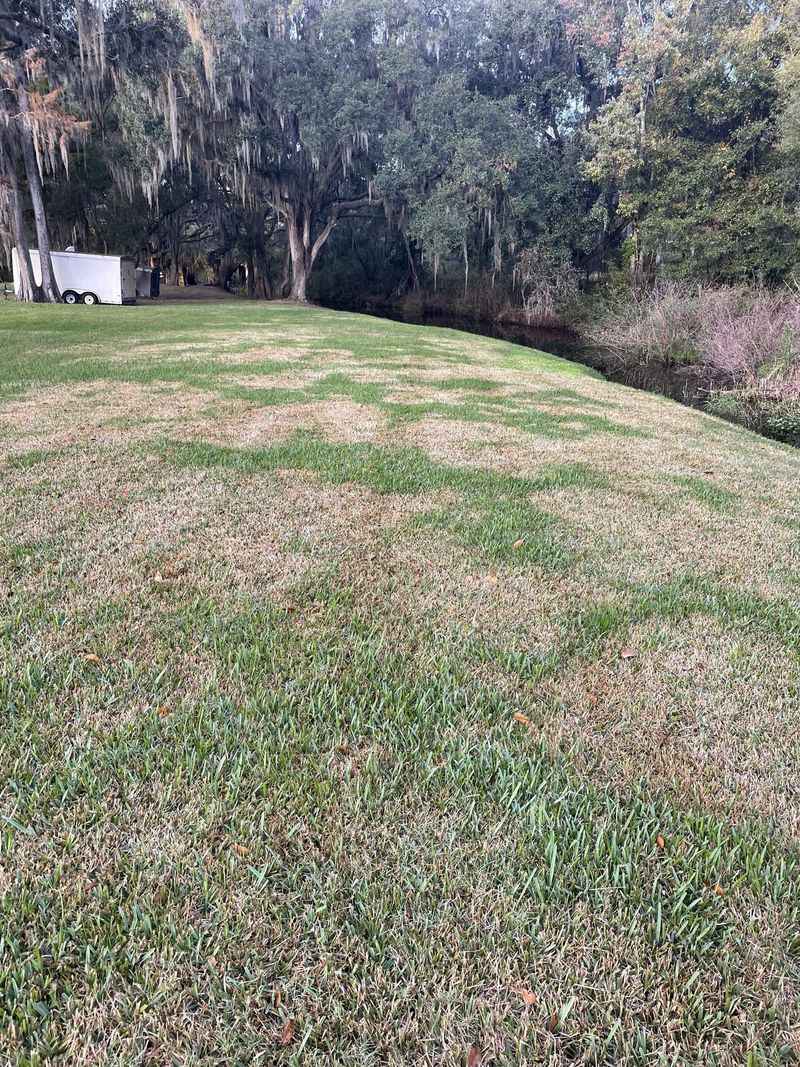
Circular or expanding brown patches are a diagnostic clue, not a confirmed diagnosis. Several problems, including fungal disease, insect damage, drought stress, cold injury, and uneven irrigation, can produce overlapping visual symptoms that look nearly identical from a distance.
Treating for fungal disease when grubs are the actual problem, or applying insecticide when drought is causing the damage, wastes money and can make the underlying condition worse.
Rhizoctonia large patch is a common warm-season turf disease in the South. UGA Extension guidance on dead circles in the lawn and UGA Extension coverage of Rhizoctonia large patch describe circular or irregular patches with yellow or orange margins, thin or sunken centers, and a tendency to appear in spring or fall when the thatch layer stays between roughly 50 and 70 degrees Fahrenheit with prolonged moisture.
Shade, poor drainage, excessive irrigation, thatch buildup, and untimely nitrogen applications can all increase the risk. Dollar spot produces smaller straw-colored spots and is associated with wet foliage, certain temperature ranges, and low fertility.
Treating every brown circle as large patch is an unsafe shortcut. UF/IFAS large patch guidance notes that some turf diseases have no curative treatment after symptoms appear, which makes accurate early diagnosis especially important.
Chinch bugs are strongly associated with St. Augustinegrass, producing expanding yellow or brown patches in sunny areas, often with small insects visible in the thatch or crown zone. When root-feeding insects such as white grubs or billbug larvae are suspected, Mississippi State Extension recommends cutting a square section of turf and inspecting the soil and roots rather than treating blindly.
Mississippi State Extension guidance on turf insect control supports confirming pest identity before selecting any control method. When a pesticide is warranted after diagnosis, EPA guidance on reading pesticide labels makes clear that the label is a legal document governing site, rate, reentry, and protective equipment requirements.
EPA labeling requirements reinforce that using more product than the label specifies is not more effective and is not legal. UF/IFAS guidance on fungicides for lawn disease management also cautions against preventive or routine applications without a confirmed diagnosis.
Fix the limiting condition before replacing the grass
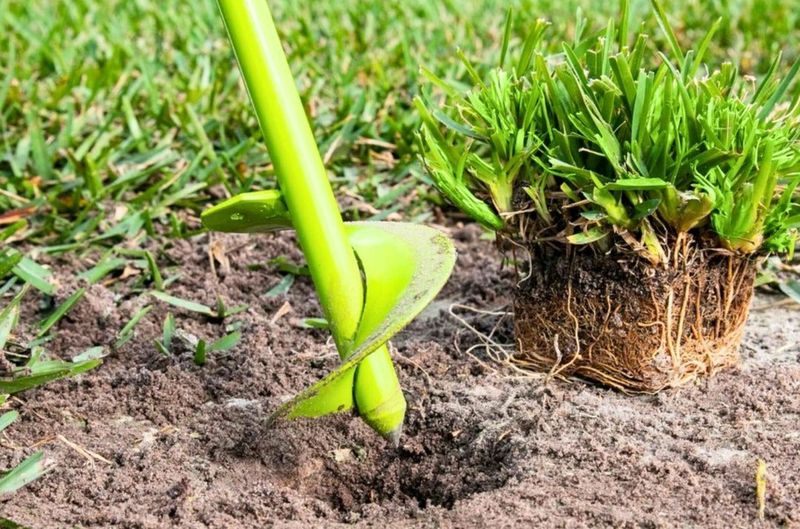
Repair begins with correcting the problem, not with the grass itself. Laying sod, installing plugs, or spreading seed over an unresolved site problem almost always leads to the same result: the new grass declines for the same reason the original turf failed.
Once the limiting condition, whether shade, compaction, drainage, irrigation, or pests, has been addressed and the soil prepared properly, the right repair method depends on the grass species.
Warm-season lawns in the South are most often repaired vegetatively rather than by seed. UF/IFAS guidance on establishing Florida lawns explains that St. Augustinegrass is not available as seed and must be established through sod, plugs, or sprigs.
Many improved zoysia cultivars and hybrid bermudagrass varieties are also established vegetatively because seed either does not exist for those cultivars or would not produce the same plant. UF/IFAS turfgrass selection guidance reinforces matching the repair material to the existing turf type so the repaired area blends in rather than becoming a visible patch of a different grass.
Plugs consist of two- to four-inch pieces of sod planted roughly six to twelve inches apart, after which stolons and rhizomes spread into the spaces between them. Spacing can vary based on budget, urgency, and site conditions.
UF/IFAS St. Augustinegrass establishment guidance describes frequent, light irrigation during the establishment period to keep the soil surface consistently moist until roots develop, followed by a gradual transition to deeper, less frequent watering as the grass establishes. Seed is appropriate for some species and situations but cannot compensate for shade, compaction, drainage problems, poor seed-to-soil contact, or planting outside the recommended season.
Timing, species match, and site readiness matter more than the repair method alone.
Convert sites that cannot reliably support turf
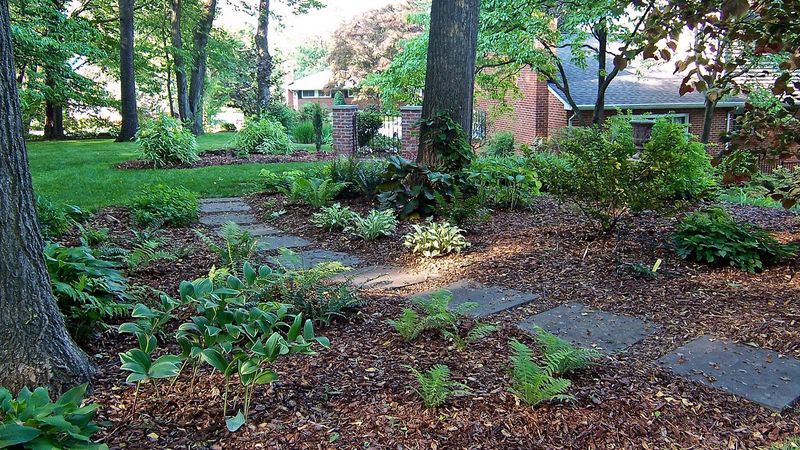
Some spots in a yard are genuinely poor turf sites, and recognizing them saves time, money, and repeated frustration. Dense shade, persistently wet depressions, high-traffic corridors, steep slopes, and areas with exposed surface roots all share a common trait: they place the lawn under a physical limitation that management alone cannot overcome.
Mississippi State University Extension and UF/IFAS shade turfgrass research both support the conclusion that even the most shade-tolerant warm-season grasses still require meaningful light, and no cultivar selection changes that fundamental requirement.
Converting a problem area to mulch, ground cover, shade-tolerant plants, or a shade garden is a legitimate and often more sustainable outcome than another repair cycle. UGA Extension guidance on sites where lawn won’t grow frames these alternatives as practical solutions rather than failures.
UGA Extension coverage of thinning and balding lawns also distinguishes between sites that need better management and sites that are simply not suited to turf.
The decision rule is straightforward: diagnose the pattern, correct what can be corrected, select grass that genuinely fits the site, and convert the area when the site itself is the limiting factor. A yard that looks thin in January or during a drought may just need time to recover, not a renovation.
The goal is grass where grass belongs and something better where it does not.