
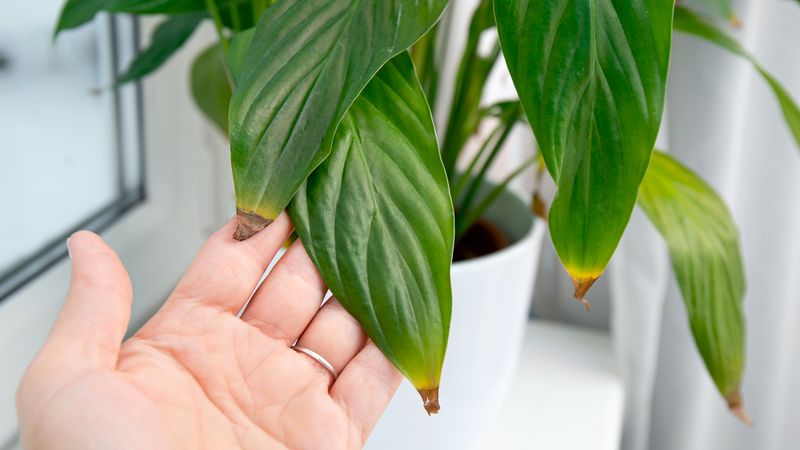
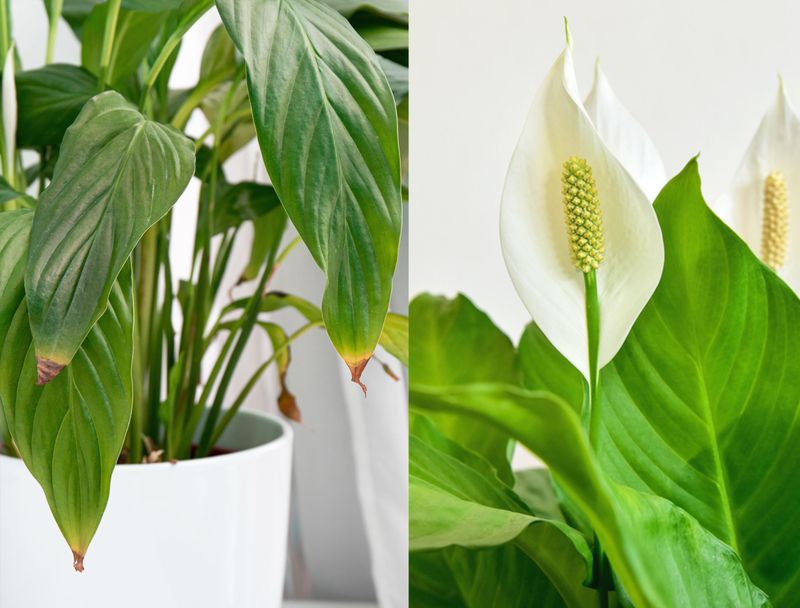
Crispy brown tips on a peace lily can make a once-lush plant look worn out fast. Tap water gets blamed a lot, but it is only one of several possible causes.
Before you change your routine, it helps to know what the symptom can and cannot tell you. A few simple checks can point you toward a fix that fits your plant.
Brown tips point to stress, not one certain cause
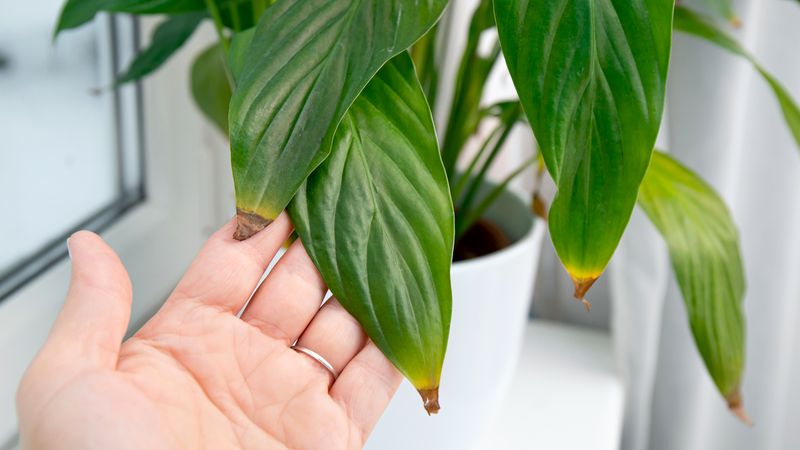
Those dry, crunchy tips are your plant’s way of saying something is off. They are consistent with water-related stress, but they do not prove your tap water is the culprit.
University of Missouri Extension names fluoride injury as a typical cause of brown tips in peace lilies. The same kind of damage can also show up for other reasons, so the tips alone cannot settle the question.
Common lookalikes include underwatering, overwatering, low humidity, and too much fertilizer or salt buildup in the soil. An Ask Extension answer about a lily with brown leaves lists several of these, and NC State’s plant guide notes that overfertilizing and salt buildup can burn leaf tips.
So the goal here is not to confirm a villain. It is to find a plausible cause by looking at the plant, the pot, and the room before you blame the faucet.
Tap water can pose different kinds of risk
Three separate water concerns get lumped together, and they are not the same thing. Fluoride sensitivity is documented in peace lilies, as described by University of Missouri Extension.
Hard water is a different issue, because it can leave mineral deposits in the soil, as explained in University of Maryland guidance on salt deposits.
Water from a sodium-based softener adds salts, and UF/IFAS Nassau County links that kind of water to salt buildup and leaf burn. None of this means every tap is harmful.
Water quality and treatment vary from town to town.
Chlorine is another mix-up. A University of Kentucky guide says chlorine will not harm plants, while fluoride can hurt sensitive ones.
Letting water sit out overnight is not a dependable fix for fluoride, and the EPA describes chloramines as longer-lasting disinfectants, so they do not simply fade away either.
Check the plant’s care before changing its water
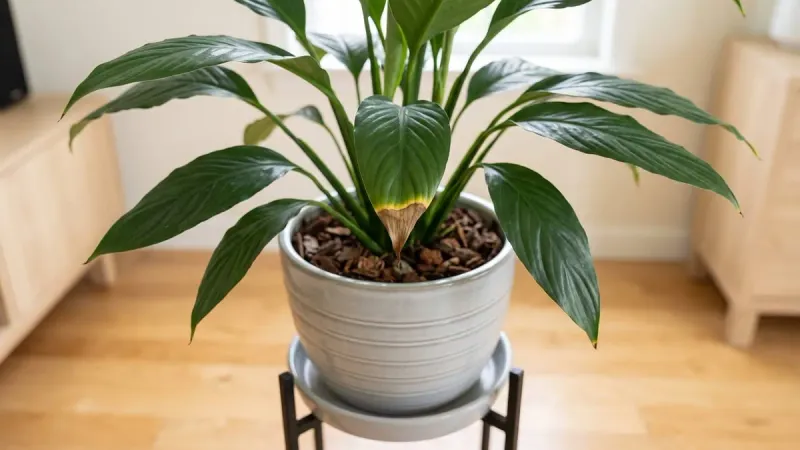
Start with a finger test. Push a finger an inch or two into the potting mix: peace lilies like soil that feels moist, not soggy, and both too little and too much water can cause trouble, according to Ask Extension.
Next, look at drainage. Does the pot have holes, and is water sitting in the saucer?
Then think about fertilizer, since heavy feeding can burn tips. NC State notes that peace lilies prefer indirect light, so also check for direct sun hitting the leaves.
Finally, notice the air. A spot beside a heating or cooling vent, or a very dry room, can crisp leaf edges all on its own.
Look at the soil surface and pot rim too. A white crust can suggest mineral or salt deposits, as University of Maryland Extension describes.
No crust, though, does not rule out other causes.
Test a different water source without changing everything else
If your checks turn up nothing obvious, a simple experiment can help. Water with rainwater or another low-mineral, non-softened source for the next several waterings, and keep light, feeding, and routine the same.
The point is to see whether water quality may be playing a part. It is a test, not a guaranteed cure, and the existing brown tips will not turn green again.
Watch the new leaves instead, since healthy growth with clean tips is the better clue.
Distilled or purified water is an option, but not a requirement. An Ask Extension response cautions that distilled water can leach nutrients from potting mix faster, so plants watered this way may need closer attention to feeding.
If you use a water softener, check whether the tap you fill from is softened. Using an unsoftened faucet, if your home has one, may be the easiest way to run this test.
Flush suspected salt buildup only if the pot drains
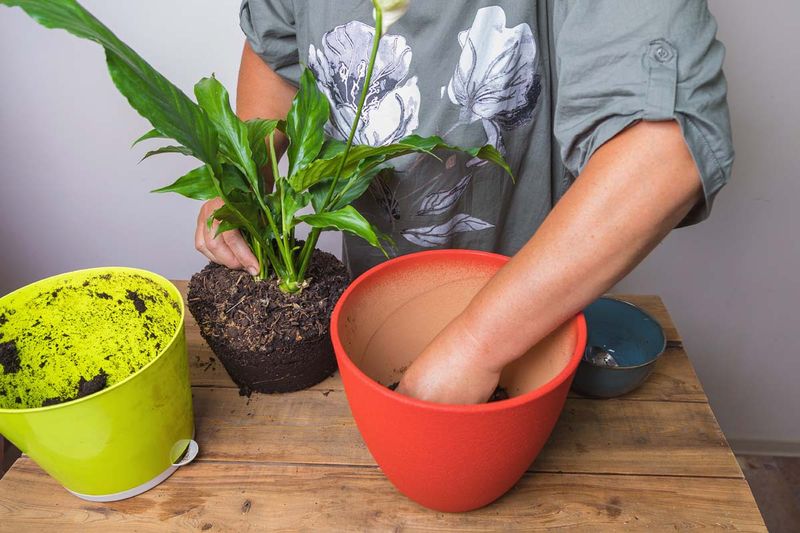
When you suspect mineral or fertilizer salts, flushing is a conditional remedy, separate from swapping water sources. It only makes sense if the pot has drainage holes.
Per University of Maryland Extension, pour low-mineral water slowly over the top of the soil, using several times the pot’s volume. Then let it drain completely.
Once the dripping stops, empty the saucer or cache pot. Never leave the plant standing in the drained water, since that invites root problems.
Flushing may reduce salts, though it will not repair tips that are already brown. If the buildup is severe, with thick crust or repeated trouble, fresh potting mix may be needed.
Skip flushing entirely for a pot with no drainage holes, because the salty water has nowhere to go.
Keep the soil moist, not waterlogged
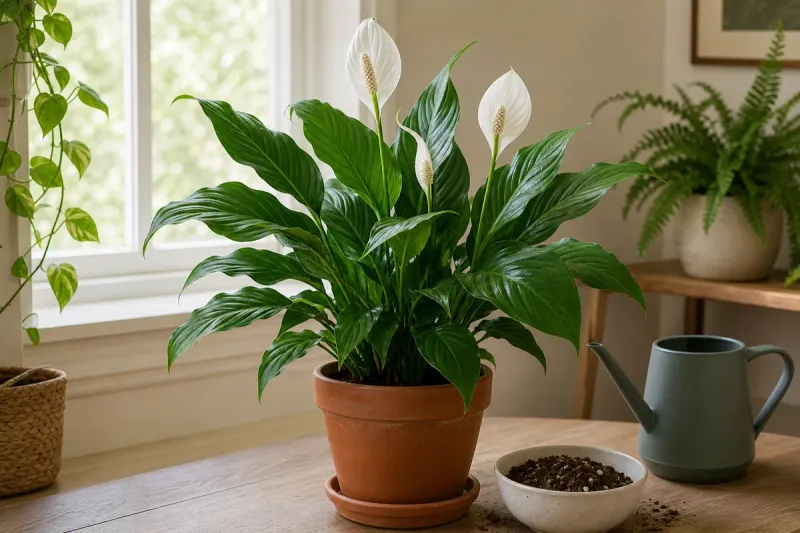
Skip the fixed watering calendar. Your plant’s needs shift with light, pot size, and potting mix, so let the soil guide you.
UF/IFAS advises keeping peace lilies moist without letting them sit in water.
Let extra water run out after each watering, and empty the saucer. Go easy on fertilizer too, since NC State notes that overfeeding can burn tips.
Brown tips are not a signal to water more, because underwatering and overwatering can look alike.
Trim the crispy tips with clean scissors if they bother you, and fix whatever you actually found: a draining pot, gentler light, less fertilizer, a better water source. There is no need for a permanent break from tap water unless your tests point that way.
A peace lily forgives a lot, but it keeps score in its leaf tips.