
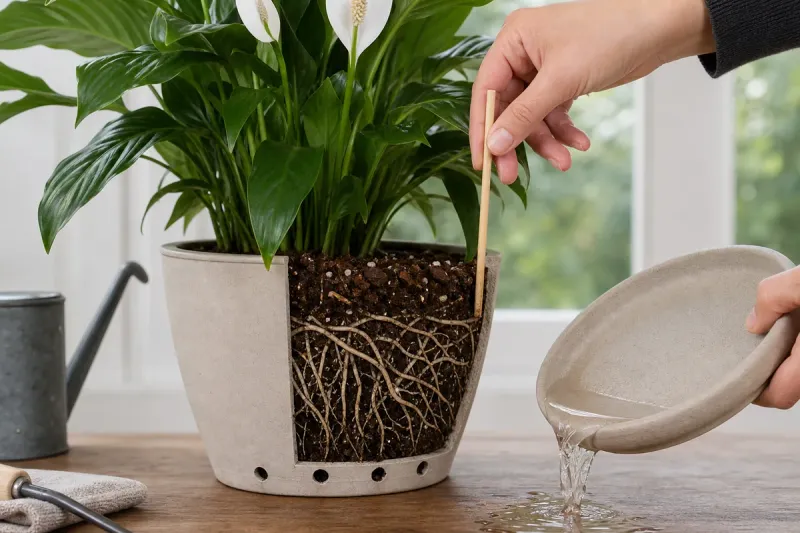
When a peace lily’s leaves turn black rather than the more familiar brown, it’s easy to assume the worst and start second-guessing every watering decision you’ve made. Black foliage can signal real trouble, but it doesn’t automatically mean the plant is beyond saving or that overwatering is to blame.
The smartest first move is to look below the soil surface, because what the roots look and feel like will tell you far more than leaf color alone. Knowing how to read those clues gives you a practical path forward instead of a guessing game.
Black foliage is a symptom, not a verdict
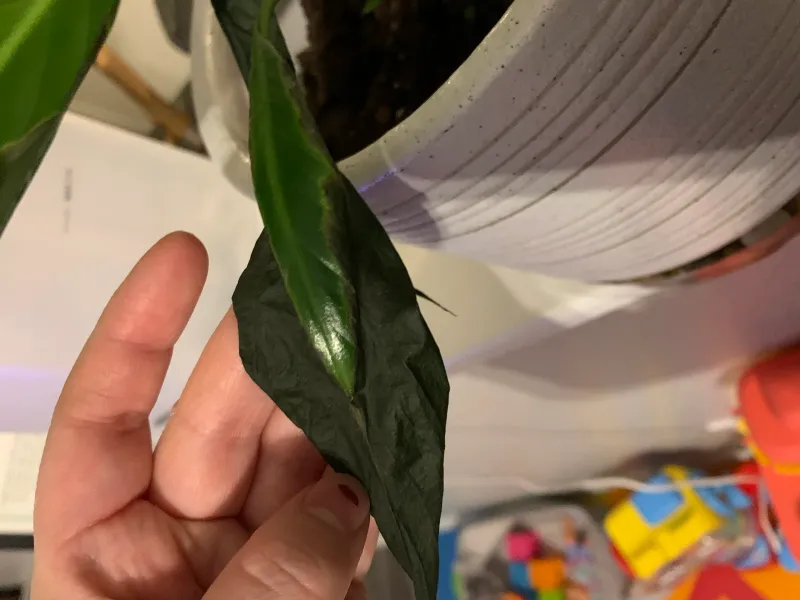
Seeing a peace lily go from glossy green to black can feel alarming, and that reaction makes sense. Black leaves deserve prompt attention, especially when they show up alongside wilting, soft stems, or soil that has stayed wet for days.
But the color itself cannot tell you what went wrong.
According to University of Florida Emerging Pathogens Institute guidance on diagnosing houseplants, black or brown foliage can result from overwatering, underwatering, disease, or environmental stress, and distinguishing between them requires checking more than the leaves. The diagnostic move that matters most is checking soil moisture and, if the soil is wet, lifting the plant to inspect the roots directly.
Wilting adds urgency but not clarity on its own. Iowa State University Extension explains that a wilting plant can be signaling too little water or roots so damaged they can no longer deliver water to the leaves, two situations that call for opposite responses.
Watering again without checking the soil first can make root problems significantly worse.
Whole-leaf decline spreading across multiple leaves at once points toward a systemic problem like root damage or a prolonged stress event. Discrete lesions, small spots that are round or irregular and expanding outward, suggest something more localized, such as a leaf-spot disease or a splash of cold water on warm foliage.
Recognizing that difference early keeps you from applying the wrong fix.
What the roots reveal
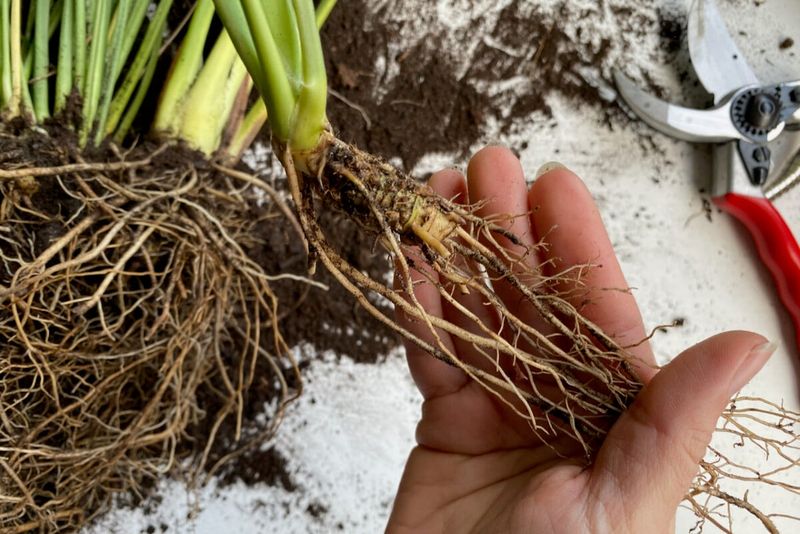
Before changing anything about how you water, take the plant out of its pot and look at the roots. Start by pressing a finger about an inch into the soil.
If it feels wet or soggy, waterlogged conditions may be stressing the roots. If it crumbles and feels bone dry, underwatering is more likely the immediate culprit, and the rescue plan shifts accordingly.
When the soil is wet, gently loosen the root ball and examine what you find. UF Emerging Pathogens Institute guidance describes healthy roots as generally light-colored and firm to the touch.
Roots that have been sitting in oxygen-starved, waterlogged soil tend to turn brown or black, feel soft or mushy when pressed, and sometimes carry a sour or unpleasant odor. That combination of color, texture, and smell makes root damage far more likely than color alone.
Not every dark root is a dead root. Some discoloration comes from the soil or from natural aging near the root tips.
The key signals are softness and smell. A root that squishes under gentle pressure and smells off has lost its function.
University of Connecticut Extension notes that damaged roots cannot absorb water or nutrients effectively, which explains why a plant can wilt even when the soil around it is soaking wet.
Avoid drawing conclusions about which specific pathogen caused the damage from root appearance alone. What the inspection tells you is whether root tissue is functioning or not, and that is enough to decide the next step.
A damaged root system needs a clean reset
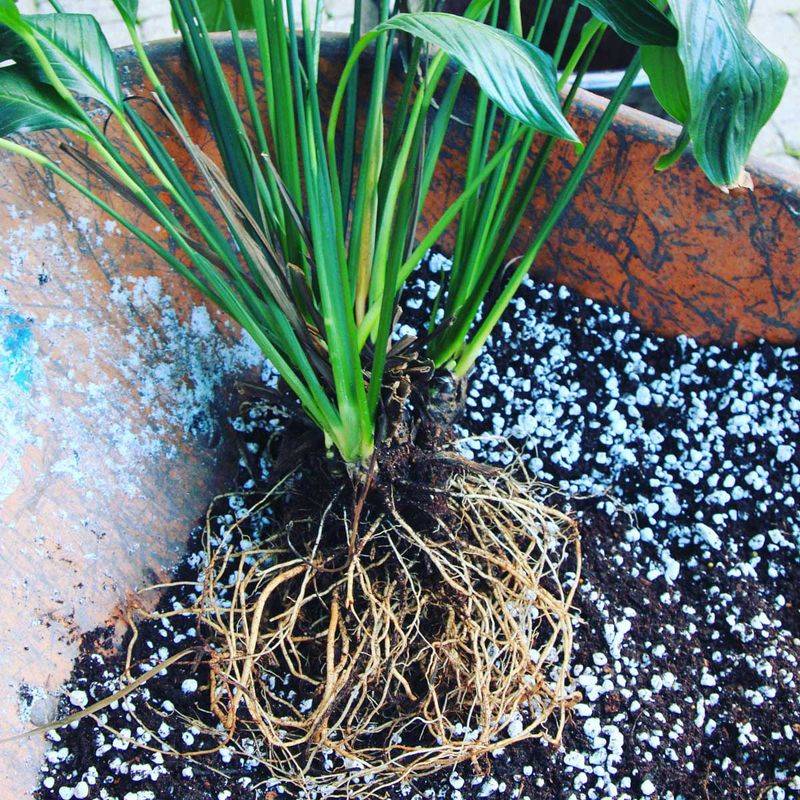
Once you’ve confirmed that some roots are soft, dark, and damaged, the plant needs more than a leaf trim. Cutting off black foliage improves appearance and can reduce the spread of any disease present, but it does nothing to address oxygen-starved or decaying roots still sitting in wet soil.
The fix has to start underground.
Use clean scissors or pruning shears, ideally wiped with rubbing alcohol between cuts, to remove any roots that are clearly soft, brown, or black. Cut back to tissue that still feels firm and looks lighter in color.
University of Connecticut Extension recommends removing damaged roots before repotting into fresh medium to give the remaining healthy tissue the best chance at recovery.
Choose a pot that fits the trimmed root system without a lot of extra space. An oversized container holds far more soil than the roots can use, and that excess stays wet for much longer than a right-sized pot would.
Iowa State University Extension guidance on houseplant culture identifies overpotting as a common contributor to persistent wetness and root stress. The container must have at least one drainage hole; a sealed bottom is not a workaround.
Fill the pot with a fresh, well-drained potting mix rather than reusing the old medium. UF/IFAS guidance on Spathiphyllum care recommends a well-drained mix for peace lilies, which naturally prefer aerated soil that does not compact into a wet mass.
Starting with clean medium removes any pathogens that may have built up in the old soil and gives the recovering roots a fresh environment to grow into.
The pot and watering setup can keep roots starved
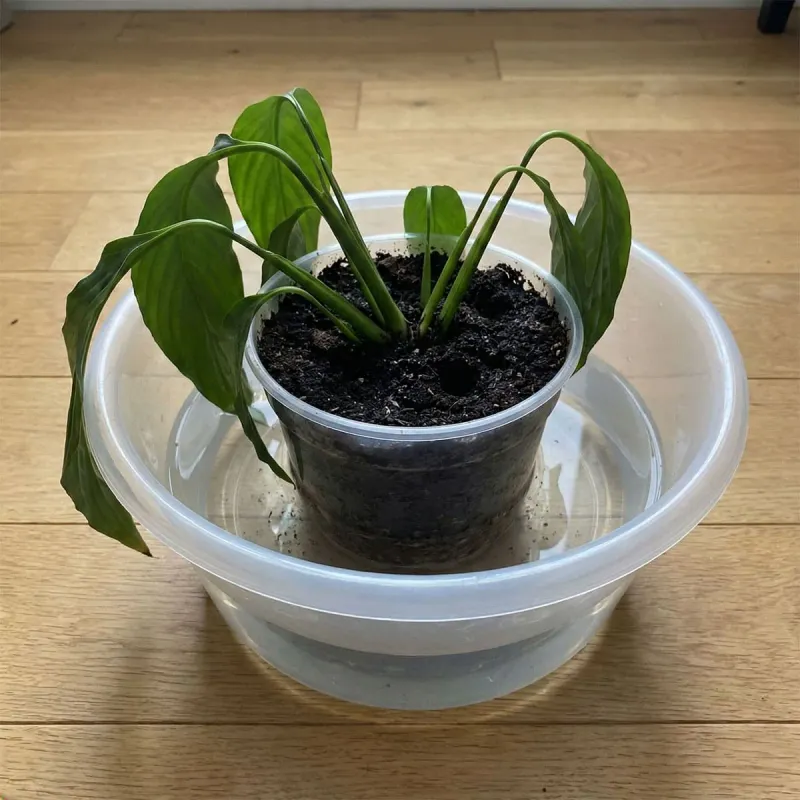
Root problems in peace lilies often have less to do with how often the caretaker waters and more to do with where the water goes afterward. A decorative cachepot, a sealed outer container, or a saucer that never gets emptied can trap water right at the root zone even when the watering schedule seems reasonable.
Roots sitting in that collected water run out of oxygen faster than most people expect.
Clemson Cooperative Extension’s peace lily fact sheet specifically warns against letting the plant stand in water, and UF Emerging Pathogens Institute notes that water trapped in a decorative outer pot can keep roots oxygen-starved even when the caretaker is not watering heavily. After every thorough watering, empty the saucer or remove the inner nursery pot from the cachepot and let it drain completely before setting it back.
Peace lilies prefer soil that stays consistently somewhat moist but never saturated. The practical approach is to let the top inch of soil dry slightly before watering again, then water slowly and thoroughly enough that excess runs out of the drainage hole.
UF/IFAS Spathiphyllum guidance and North Carolina Extension’s Spathiphyllum profile both point toward moisture consistency rather than a rigid schedule.
In Southern homes, air conditioning running for long stretches can cool soil temperatures and slow evaporation, meaning the soil stays wet longer than it might during a humid outdoor summer. Check the soil by feel before reaching for the watering can, not by counting days on a calendar.
When the roots are not the culprit
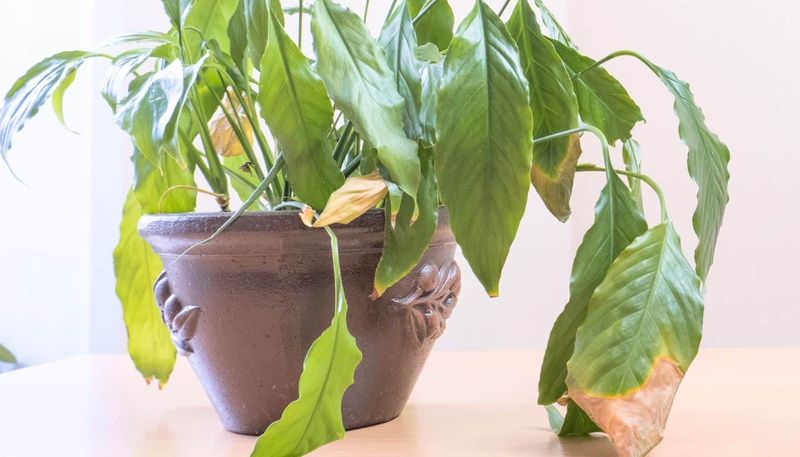
Not every case of black peace lily foliage leads back to the roots. Three other causes produce strikingly similar leaf discoloration, and treating the wrong one wastes time while the real problem continues.
Cold injury is one of the most common non-root causes in Southern homes and during plant transport. University of Florida IFAS research on chilling injury in Spathiphyllum found that damage can begin at leaf tips and edges, progress inward, and eventually turn black after exposure to chilling conditions, with sensitivity varying by cultivar.
Air-conditioning vents blowing directly onto a plant, cold drafts near exterior doors in winter, or a plant left in a cool vehicle during transport can all trigger this pattern. If the blackening started at the tips or edges after a cold event and the roots look healthy and firm, temperature stress is the more likely explanation.
Leaf-spot disease looks different from whole-plant decline. University of Maryland Extension guidance on fungal leaf spots describes discrete, expanding lesions that are round or irregular rather than a general fading or blackening of entire leaves.
If you see those defined spots, remove the badly affected leaves with clean tools, keep the remaining foliage dry, improve air circulation around the plant, and stop splashing water onto the leaves when you water. Persistent leaf wetness and crowded conditions favor further spread.
White or pale crust on the soil surface, pot rim, or lower leaves points toward mineral or fertilizer salt buildup. University of Maryland Extension’s salt deposit guidance explains that excess salts can burn leaf margins and damage roots in a pattern that mimics other causes.
If the pot drains freely and the buildup is mild, flushing with several volumes of water from the top can help. If buildup is severe or the pot lacks drainage, repotting into fresh medium is the safer correction.
Reducing fertilizer frequency going forward prevents the problem from returning.
Recovery depends on restraint after repotting
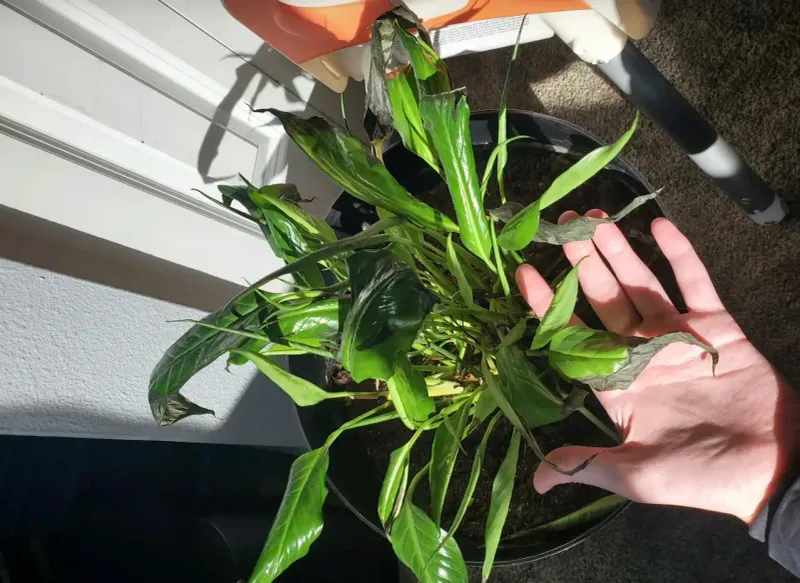
The days right after repotting set the tone for whether the plant recovers or declines again. The instinct to water generously, hoping to help the plant bounce back, can actually create the same waterlogged conditions that caused the damage in the first place.
Keep the soil lightly but evenly moist after repotting. The remaining roots, even the healthy ones, have been through a stressful process and may not absorb water at full capacity right away.
University of Connecticut Extension cautions that damaged roots cannot transport water normally, so repeated heavy watering following root loss can push the plant back into stress before it has had a chance to establish new growth.
Place the plant in bright, indirect light. Clemson Cooperative Extension notes that direct sun can scorch peace lily foliage, while too little light slows recovery and weakens new growth.
A spot near a window with filtered light, away from air-conditioning vents and cold exterior drafts, gives the plant a stable environment to work with. UF/IFAS chilling injury research documents that even brief cold exposure can extend or worsen existing damage in sensitive cultivars.
Removing badly damaged or fully black leaves can improve the plant’s appearance and reduce the chance that disease spreads from dying tissue to healthy foliage, as University of Maryland Extension leaf-spot guidance supports for diseased material. That said, trimming leaves alone does not guarantee recovery.
Whether the plant comes back depends on how much healthy root tissue remains, whether the crown and growing point are intact, and how well the new routine holds from this point forward.
Use the root check to choose the next fix
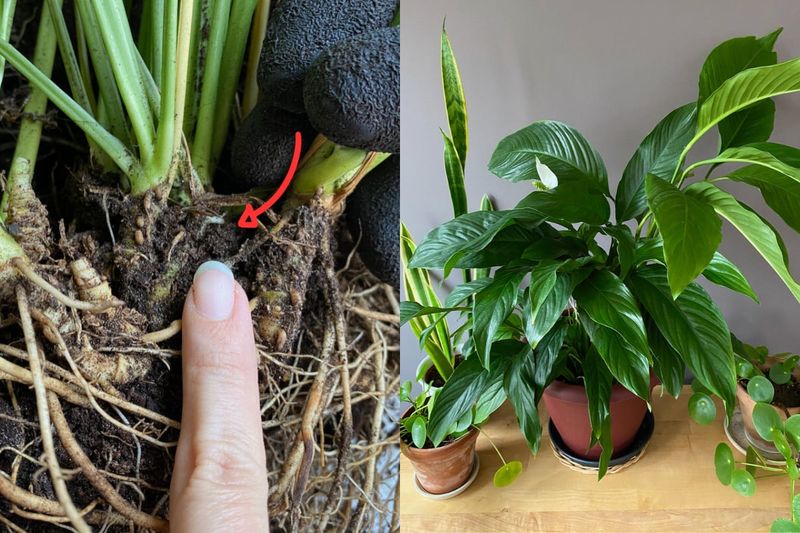
Every time a peace lily shows black leaves, the root check is the decision point. Wet soil combined with soft, dark, foul-smelling roots calls for trimming damaged tissue, repotting into fresh well-drained mix, and correcting the drainage setup.
Dry, crumbly soil with firm roots points toward measured rehydration, watering slowly until excess drains, rather than saturating the pot all at once. UF Emerging Pathogens Institute and Iowa State University Extension both frame soil and root inspection as the step that separates these two situations reliably.
Isolated spots, a history of cold drafts, or white salt crust on the pot each point toward a different corrective action, none of which involve the same root rescue sequence. Black leaves should trigger inspection, not panic or an automatic watering.
The habit worth building is simple: check moisture and drainage before every future watering, and let what you find in the soil guide what you do next rather than what the leaves look like from across the room.