
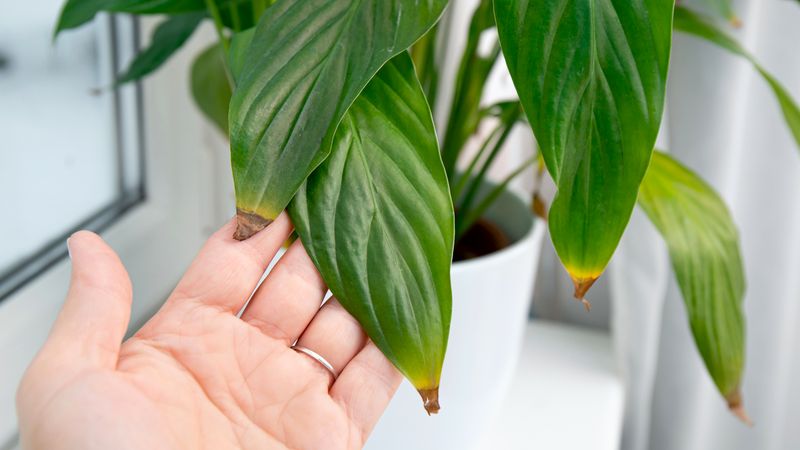
Brown tips on a peace lily can creep from one leaf to the next until the whole plant looks ragged, and it is easy to panic when trimming does not seem to help. The damage may reflect stress that built up before it became visible, but spreading browning can also mean a problem is still active right now.
Before changing anything about your care routine, take a closer look at what the plant is actually telling you.
Earlier stress is possible, but it is not the whole diagnosis
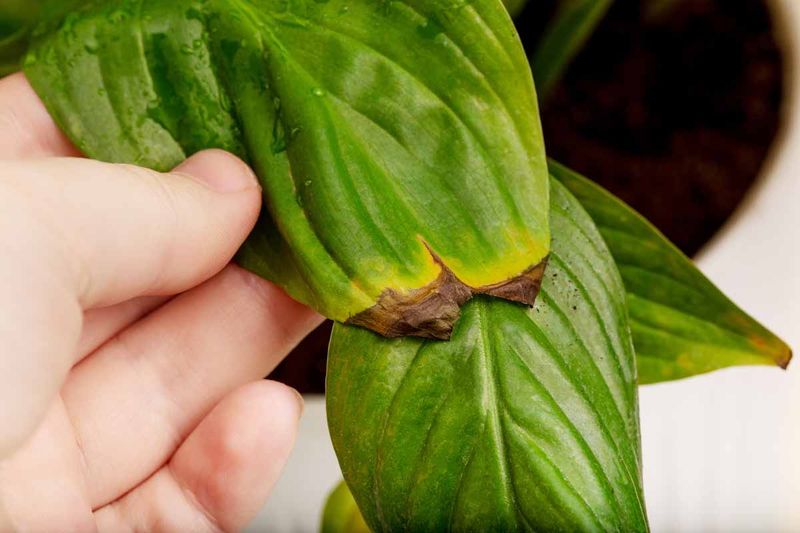
A peace lily does not always show damage the moment something goes wrong. University of Missouri Extension research on leaf tipburn notes that new leaves can emerge looking fine and then develop brown tips only as they mature, which means the original stress may have occurred before the browning appeared.
That delay makes it tempting to assume the worst happened weeks ago and the plant is simply catching up on showing it.
The catch is that spreading brown tips do not confirm that timeline. Additional browning can also mean a current problem is still damaging tissue right now, whether that is inconsistent watering, salt buildup, low humidity, or something else entirely.
University of Georgia Extension lists a range of possible causes for houseplant tip burn, including constantly wet soil, excess fertilizer, fluoride, drafts, and chemical injury, all of which can look similar at first glance.
Brown tips are a signal to investigate, not a verdict on what went wrong or when. The most useful question to ask is whether you are looking at old damage becoming more obvious as the leaf ages, or whether fresh leaves are also developing injury.
That distinction shapes every decision that follows, and it keeps you from fixing the wrong thing.
Use the browning pattern to narrow the possibilities
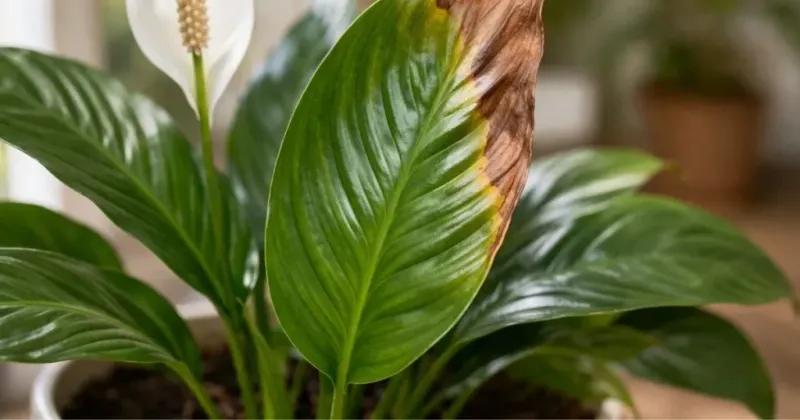
Where the damage appears and what surrounds it tells you more than the brown color alone. Browning that stays concentrated at the very tips and along leaf margins fits a pattern consistent with tip burn, water stress, low humidity, soluble salt accumulation, or fluoride sensitivity.
Those causes tend to produce dry, papery edges rather than wet or discolored patches spreading across the leaf blade.
A different set of clues points toward a different diagnosis. Distinct expanding spots with yellow halos, wet or mushy tissue, webbing on the undersides of leaves, visible insects, or a sticky residue on leaf surfaces all suggest that pests or disease may be involved.
Missouri Extension’s tipburn guidance draws a clear line between classic tip burn patterns and symptoms that call for a separate investigation, and that distinction matters before you reach for any treatment.
Pay attention to what the rest of the plant is doing. A peace lily with a few brown tips but firm stems, healthy roots, and new leaves pushing up from the center is in a very different situation than one showing yellowing, wilting, or a general decline across older and newer leaves alike.
RHS guidance on houseplant leaf damage reinforces that triage logic: treat the pattern of symptoms as a set of clues rather than jumping to a single cause. Healthy new growth alongside isolated cosmetic damage is a genuinely reassuring sign.
Check root moisture before adding more water
Before watering again, press a finger into the top inch or several centimeters of potting mix. University of Minnesota Extension recommends checking soil moisture this way rather than following a fixed calendar schedule, because indoor conditions, pot size, and seasonal changes all affect how quickly a mix dries out.
Peace lilies prefer consistent moisture, but their roots also need oxygen, so both drought and waterlogged soil can cause brown tips and other damage.
When the surface feels dry and the plant needs water, apply it thoroughly until it flows freely from the drainage holes, then let the pot drain completely. Wisconsin Horticulture Extension advises emptying any saucer or cachepot that catches excess water, because roots left sitting in standing water lose access to oxygen and become vulnerable to rot.
Keeping the pot permanently wet is not the goal; steady moisture with reliable drainage is.
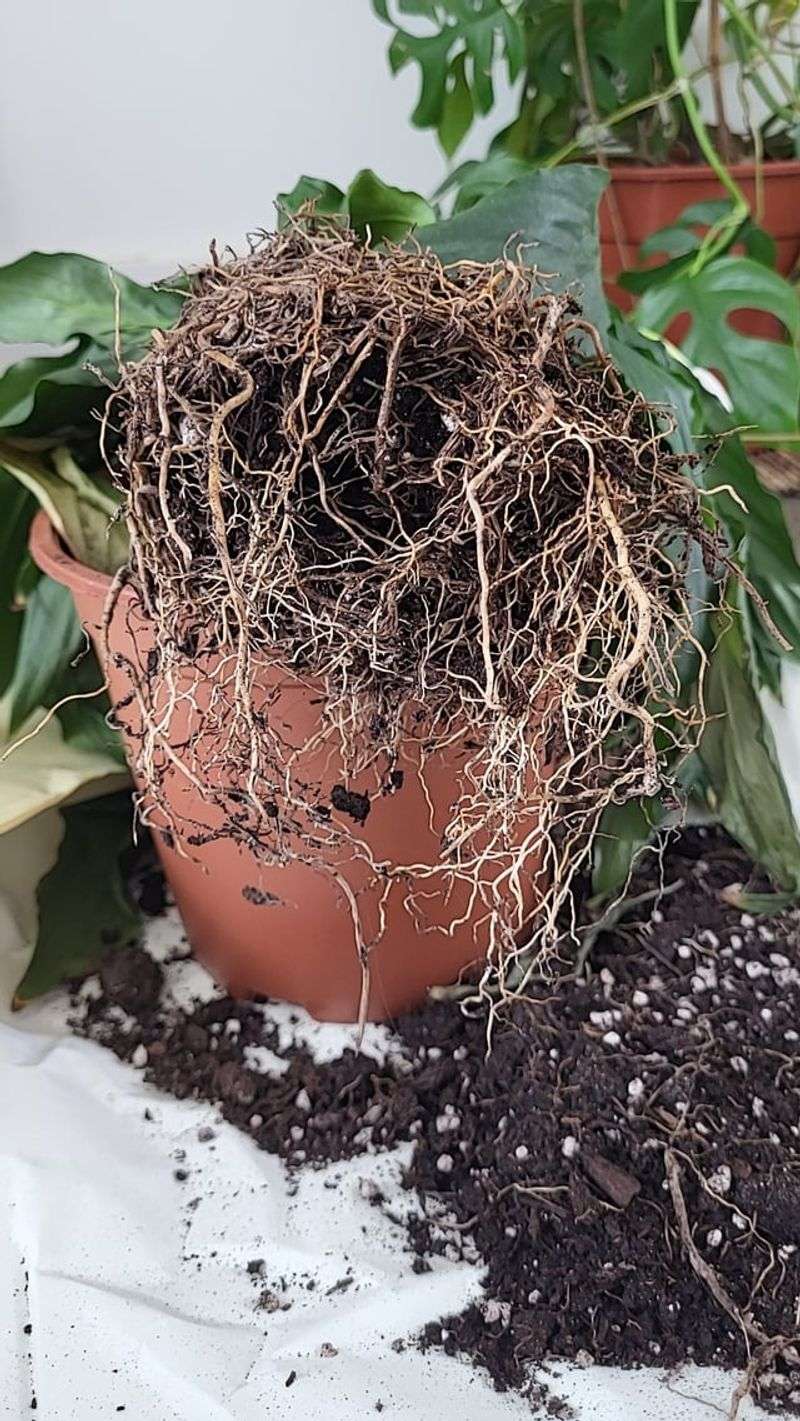
If browning is happening alongside yellowing, wilting, a foul smell from the soil, or constantly soggy mix, inspect the roots before doing anything else. RHS guidance on houseplant leaf damage explains that brown, soft, or mushy roots indicate excessive moisture or root disease, and adding more water in that situation can make things considerably worse.
Gently tip the plant out to look at the root ball if you have real doubts about what is happening below the soil line.
Evaluate light, drafts, and indoor humidity
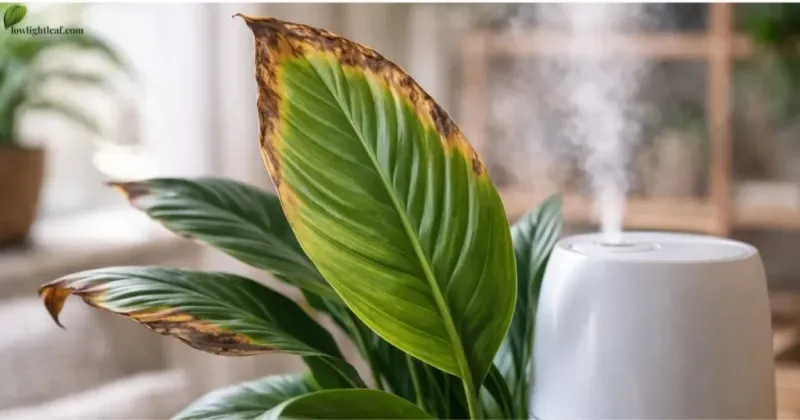
Light and air movement affect peace lily leaves more than many indoor gardeners realize. RHS growing guidance for peace lilies recommends bright, indirect light and cautions against abrupt moves into strong direct sun, which can scorch foliage and produce crispy edges or pale patches that look a lot like tip burn.
If a plant recently moved closer to a sunny window or onto a porch, that location change is worth noting as a possible cause before anything else changes.
Air conditioning vents, heating units, and exterior doors can all create drafts that dry out leaf tissue faster than the roots can compensate. In Florida and Texas homes, outdoor air is often humid, but air conditioning pulls moisture out of indoor air and can leave a peace lily sitting in conditions much drier than the weather outside suggests.
Moving the plant away from direct vent airflow is a simple adjustment that costs nothing.
For genuinely dry indoor air, grouping plants together or running a small humidifier near the plant are more dependable options than misting. Penn State Extension reports that misting raises humidity only briefly and that pebble trays generally have little effect on overall room humidity.
If you live somewhere with high outdoor humidity but air-conditioned indoor spaces, a humidifier addresses the actual indoor condition rather than the outdoor one.
Review fertilizer and water quality before treating
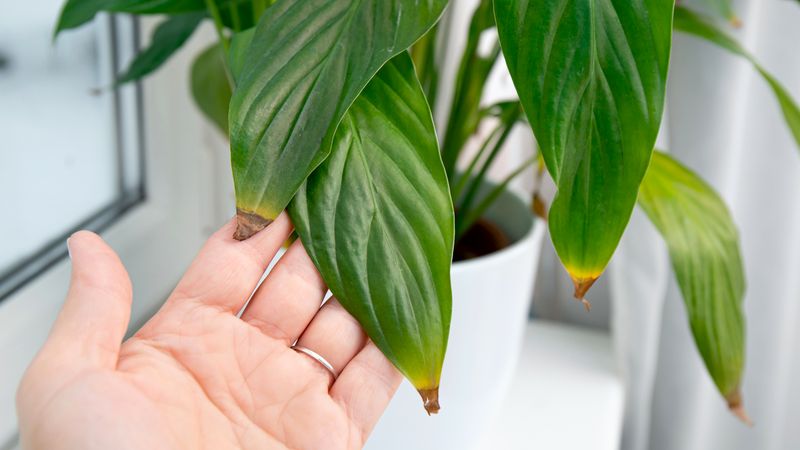
Excess fertilizer is a recognized but often overlooked cause of tip burn in peace lilies. Illinois Extension identifies soluble salt buildup from over-fertilizing as a direct cause of leaf-tip damage, and responding to brown tips by adding more fertilizer can intensify the problem rather than solve it.
Check the product label, stick to the recommended rate and frequency, and resist the urge to feed more during periods of slow growth or visible stress.
When salt buildup is suspected and the pot drains freely without signs of root rot, thorough watering that flushes the growing medium can help reduce accumulated salts. That approach only makes sense when the drainage is working properly; attempting it on a pot with blocked holes or compromised roots risks making moisture problems worse.
Water quality is worth considering when care has been consistent and browning continues without another obvious explanation. Illinois Extension notes that peace lilies can be sensitive to fluoride found in treated municipal water, and distilled, deionized, or reverse-osmosis water may help when mineral accumulation is suspected.
However, tap water is not automatically harmful to every plant in every situation. One important clarification: EPA documentation confirms that boiling does not remove fluoride and that ordinary charcoal filters typically do not either, so letting tap water sit or boiling it should not be presented as a reliable solution.
Correct the likely cause without creating a new problem
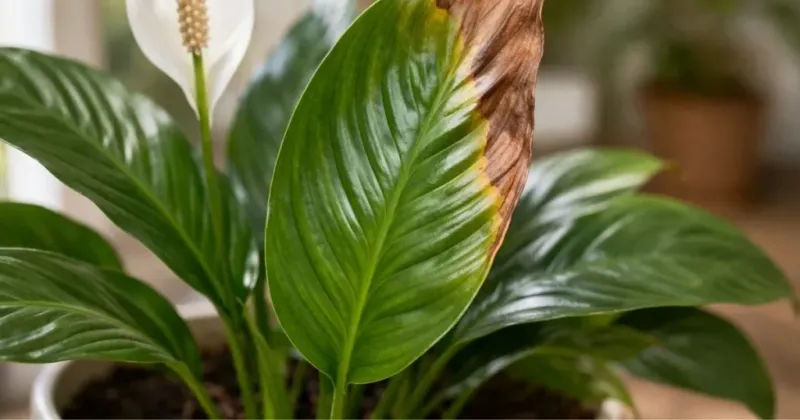
Once a likely cause becomes clear, the correction should be proportional to the evidence. Restore thorough watering followed by complete drainage if the mix has been too dry.
Move the plant away from a damaging window or vent if light or drafts appear responsible. Pause fertilizer if feeding has been frequent or heavy, and address suspected water-quality issues by switching to distilled or filtered water only when the pattern fits that diagnosis.
Automatic repotting into a much larger container is not a safe default response. Wisconsin Horticulture Extension cautions that oversized pots hold excess moisture around the roots and can create or worsen the very conditions that cause rot and tip damage.
If repotting is genuinely needed, choose a container only one size larger than the current one and use a well-draining mix.
Avoid adding anything to the plant that does not match a confirmed diagnosis. Illinois Extension advises against unneeded fertilizer applications when tip burn is present, and the same logic applies to pesticides, fungicides, hydrogen peroxide, cinnamon, and other home remedies that circulate online.
Iowa State Extension documents that chemical sprays can cause irreversible leaf injury, especially on foliage that is already stressed. Leaving well-intentioned but unnecessary products off the plant is often the safest correction available.
Trim damaged tissue and monitor new growth
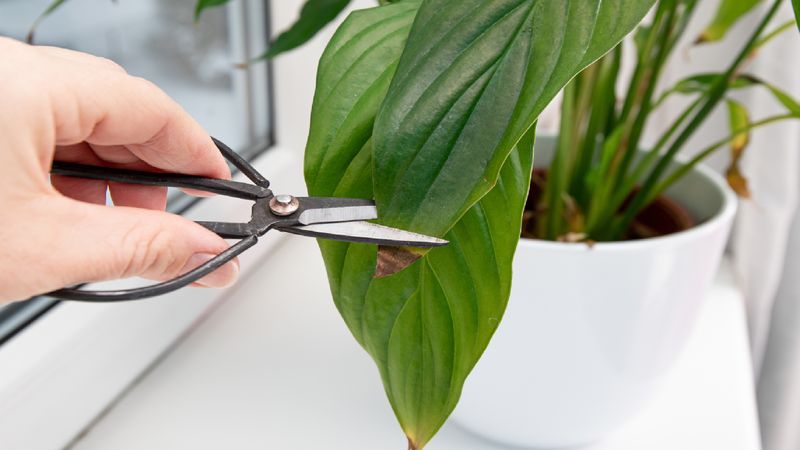
Brown tissue on a peace lily leaf will not turn green again, so trimming it is entirely about appearance. Use clean, sharp scissors and follow the natural curve of the leaf, removing only the brown portion and leaving a very narrow brown margin rather than cutting into healthy green tissue.
University of Georgia Extension supports trimming damaged tips for cosmetic reasons while making clear that it does not address the root cause, whether that cause is moisture, salts, fluoride, light, or anything else.
Recovery shows up in new growth, not in existing leaves. Missouri Extension describes leaf tipburn as unattractive but not necessarily fatal, and a plant that continues pushing out healthy, undamaged leaves while older ones show some browning is likely stabilizing.
If new leaves are also developing brown tips, or if the plant continues to decline despite a corrected care routine, go back to the root inspection step and consider whether the diagnosis needs another look.
One safety note worth including: peace lilies are toxic to dogs and cats. ASPCA documentation confirms that Spathiphyllum contains insoluble calcium oxalates that cause oral irritation and discomfort if chewed, and the plant should be kept away from animals and children who might mouth the leaves.
That irritation risk is different from the severe kidney injury that Lilium and Hemerocallis species pose to cats, but it is still a real reason to place your peace lily out of reach. A plant that is recovering well and positioned safely is the straightforward goal: new green growth is the clearest sign you are on the right track.