
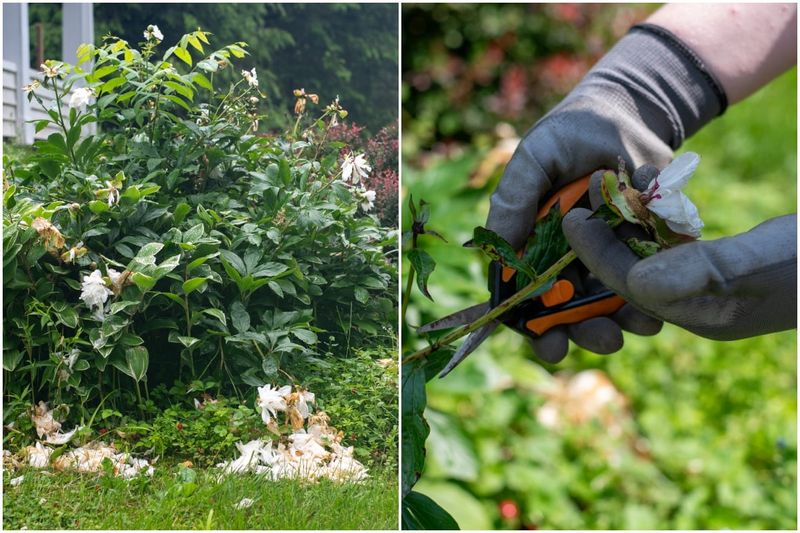
Peony season ends fast, and what you do right after the last flower fades matters more than most gardeners realize. The key step is deadheading – removing spent blooms and seed pods – but the bigger mistake is cutting the whole plant down at the same time.
Healthy green leaves need to stay in place through summer, quietly doing work the plant needs for next season. Get these two tasks straight, and your peony care routine becomes a lot more reliable.
Deadhead peonies after flowering instead of cutting them down
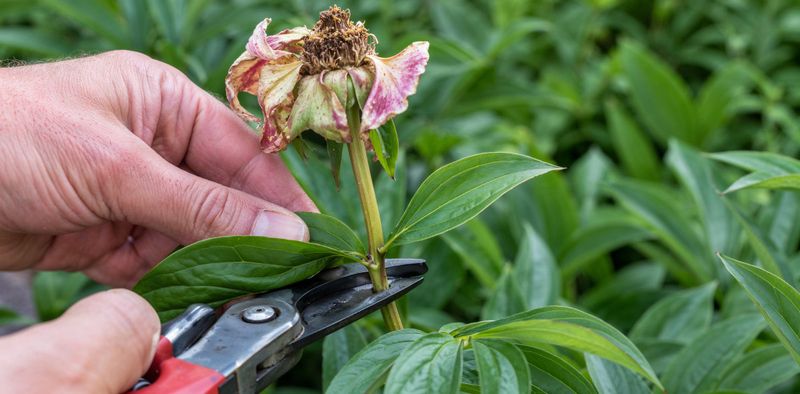
Removing spent peony flowers is the first task to tackle once blooms begin to fade. Each faded flower carries a developing seed pod, and leaving both in place costs the plant energy while making the bed look ragged.
Iowa State University Extension guidance on peonies recommends deadheading promptly after bloom as standard maintenance, noting it improves appearance and limits seed development.
The most common mistake gardeners make at this stage is treating the whole plant as spent. Once the flowers are gone, it can feel natural to grab the stems at the base and cut everything down – but that strips away foliage the plant still needs.
Deadheading and full cutback are two separate jobs, and only one of them belongs in late spring or early summer.
What you are removing is the spent bloom and its attached seed pod, not the leafy canopy below it. The stems holding healthy leaves stay put.
This distinction keeps the plant structurally intact and preserves the photosynthetic surface area it will depend on through the rest of the growing season. Getting comfortable with this separation is the foundation of sound post-bloom peony care.
Make the cut just above healthy leaves
Timing matters here: wait until the flower has clearly faded and the petals have dropped or gone limp before making any cut. Trying to deadhead too early, while a bloom still has color, removes a flower that might have lasted another day or two.
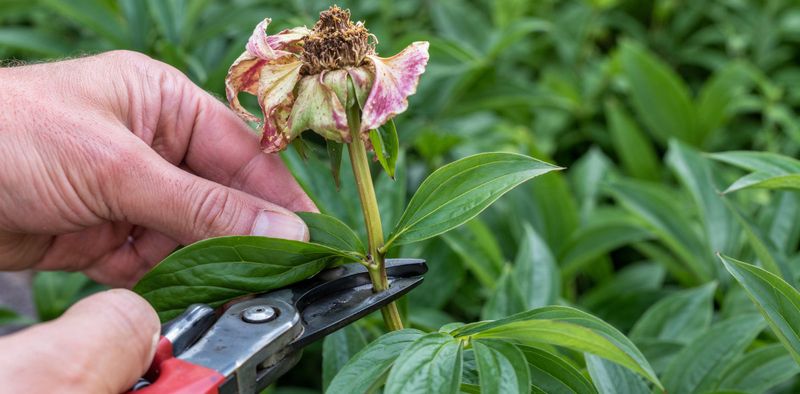
Once the flower is spent, trace the stem downward through the foliage until you reach a healthy set of leaves, then cut just above that leaf node.
What you are removing is the portion of the stem that held the bloom and seed pod, not the entire stem down to the crown. Iowa State Extension’s peony encyclopedia entry describes following the stem down into the leafy canopy and cutting above a healthy set of leaves, which keeps the plant looking tidy while preserving the foliage it still needs.
Sharp, clean pruners make a cleaner cut and reduce the chance of crushing the stem tissue.
Gardeners who want to collect peony seed have a legitimate reason to skip this step and let the pods mature. University of Maryland Extension’s seed pod guidance notes that seed-grown peonies can take several years to flower, and named cultivars generally do not come true from seed.
Deadheading is therefore a maintenance choice, not an emergency measure – leaving pods for seed saving is a perfectly reasonable exception to the routine.
Keep healthy foliage through the summer

Once the flowers are off, the leaves take over a job that is easy to underestimate. Green peony foliage continues photosynthesizing through the summer months, converting sunlight into the carbohydrates the plant stores in its roots.
Those stored reserves are what the plant draws on to produce next season’s buds, so removing the leaves too early genuinely shortchanges the plant.
University of Connecticut Extension’s peony factsheet advises leaving healthy foliage in place until it has yellowed, died back naturally, or been damaged by a hard freeze. Cutting the plant to the ground in June or July because the blooms are finished is one of the more common and more damaging mistakes in peony care.
The foliage may look unremarkable by midsummer, but it is still useful.
There is a separate question worth addressing honestly: does deadheading itself produce larger or more numerous flowers the following year? The honest answer is that the evidence for a guaranteed bloom increase is thin.
Preserving healthy foliage through the summer is the more reliably supported practice. Deadheading improves appearance and limits seed development, both of which are worthwhile on their own merits, without needing to carry the weight of a bloom-improvement promise that the research does not firmly back up.
Use seasonal cleanup for sanitation
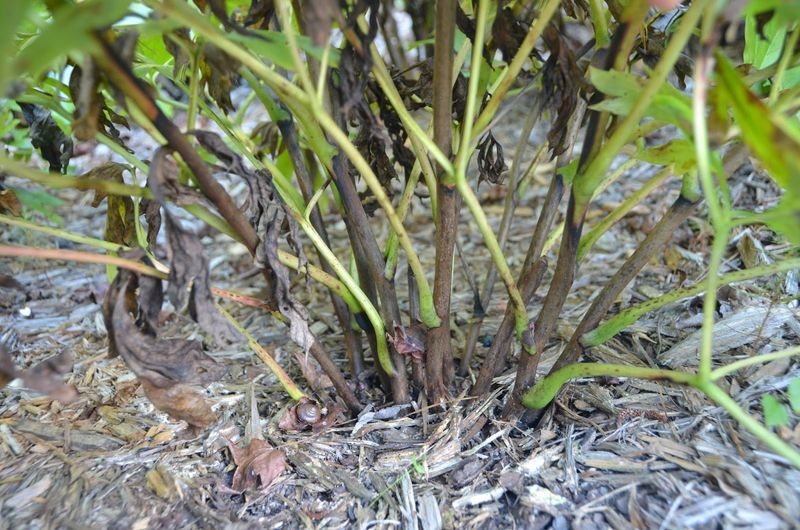
Fall cleanup for herbaceous peonies is a different task from summer foliage care, and it comes later than many gardeners expect. The right trigger is natural dieback or a hard freeze, not the calendar.
Once the foliage has yellowed and collapsed on its own, or a frost has taken it down, cut the remaining stems close to ground level and remove the cut material from the bed.
Sanitation is the practical reason this step matters. Iowa State University Extension’s guide to managing peony problems identifies Botrytis, peony leaf blotch, and powdery mildew as diseases that can overwinter in infected plant debris.
Removing and discarding that material – rather than leaving it around the crown or adding it to a compost pile – reduces the amount of disease inoculum available to cause problems the following season.
Disease sanitation is a real benefit, but it is worth being clear that fall cleanup does not universally guarantee better flowering the next year. UConn Extension also cautions against working among peonies when the foliage is wet, since handling wet stems and leaves can spread fungal and bacterial pathogens from plant to plant.
Where possible, avoid overhead watering, and choose planting spots with good air movement and well-drained soil to reduce the conditions that favor disease in the first place.
Check the peony type before pruning
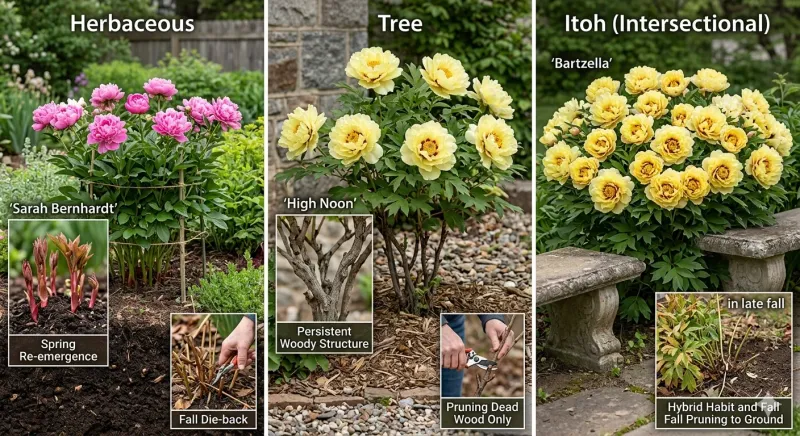
Before picking up the pruners in fall, it pays to know which kind of peony you are working with, because the cutback rules are not the same for every type. Iowa State Extension’s peony overview distinguishes between herbaceous peonies, Itoh (intersectional) hybrids, and tree peonies, and the pruning approach differs meaningfully across those groups.
Herbaceous peonies die back to the ground each winter on their own. After frost or natural dieback, cutting the remaining foliage close to soil level and removing it from the bed is appropriate.
Itoh hybrids are a cross between herbaceous and tree peonies; their above-ground stems also die back in cold climates, so they are generally handled similarly to herbaceous types after dieback occurs.
Tree peonies are a completely different situation. Their woody stems persist above ground year-round and should not be cut to the ground after flowering or in fall.
Removing those woody canes eliminates the plant’s framework and can cause serious long-term damage. If you are not sure which type you have, look at the stems: soft, flexible stems that collapse in fall belong to herbaceous types, while stiff, woody stems that stay upright through winter indicate a tree peony that needs only minimal, selective pruning.
Deadheading supports maintenance, not guaranteed better blooms
Gardening advice about peonies often carries an implicit promise: deadhead now and enjoy bigger, better blooms next year. That framing is worth examining carefully.
Deadheading does limit seed development and may allow the plant to retain resources it would otherwise put into producing seeds, but available evidence does not establish that this translates into a reliable, measurable increase in next year’s flower size or count.
A peer-reviewed study of Paeonia officinalis reproduction found no evidence that prior seed production reduced later reproductive output under its experimental conditions. That result does not mean deadheading is useless for every garden peony, but it does caution against treating the practice as a proven shortcut to more flowers.
Deadheading earns its place as a maintenance step for tidiness and seed limitation, not as a bloom-improvement guarantee.
UConn Extension lists several factors that more reliably explain weak flowering: planting too deeply, insufficient sunlight, drought, overcrowding, disease, young or recently divided plants, late freezes, cultivar differences, and inadequate winter cold. If a peony is not performing, those site and cultural factors deserve a look before attributing the problem to skipped deadheading.
Fertilizer is another topic that sometimes gets attached to post-bloom peony care as a bloom fix. UConn specifically advises against fertilizing in late summer or fall, and warns that excess nitrogen can actually reduce flowering.
If soil conditions seem like a factor, a soil test is the right starting point, not a blanket application of high-nitrogen fertilizer. University of Georgia Extension guidance on flowering perennials reinforces that regional climate and cultivar selection are among the most consequential variables affecting peony performance, well ahead of any single post-bloom task.
Warm-region gardeners should verify local suitability
Readers gardening in the South sometimes encounter peony advice written entirely for cold-winter climates, then wonder why their plants underperform. Post-bloom care matters everywhere peonies grow, but care alone cannot overcome a climate that does not suit the plant.
University of Georgia Extension’s guide to flowering perennials for Georgia gardens describes peonies as marginal in central Georgia and generally not recommended for South Georgia, while tree peonies are noted as unsuitable except in northern Georgia.
That Georgia-specific evidence does not automatically extend to Florida or Texas, where local winter chill requirements, humidity levels, and cultivar performance have their own variables that require independent verification. Warm, humid conditions can increase disease pressure on peony foliage through summer, making sanitation practices more consequential in those regions.
Insufficient winter cold is a separate concern: peonies need a period of cold dormancy to set buds properly, and gardeners in the warmest parts of the South may find that flowering is limited no matter how carefully they manage post-bloom care.
The practical takeaway for warm-region gardeners is to research cultivars specifically recommended for lower-chill conditions or early blooming, consult local cooperative extension offices for region-specific guidance, and treat post-bloom care as sound maintenance rather than a solution to climate-driven flowering limits. Good deadheading and foliage management are worth doing wherever peonies grow, but they work best as part of a planting setup that suits the local environment.
Remember the three-part after-bloom routine
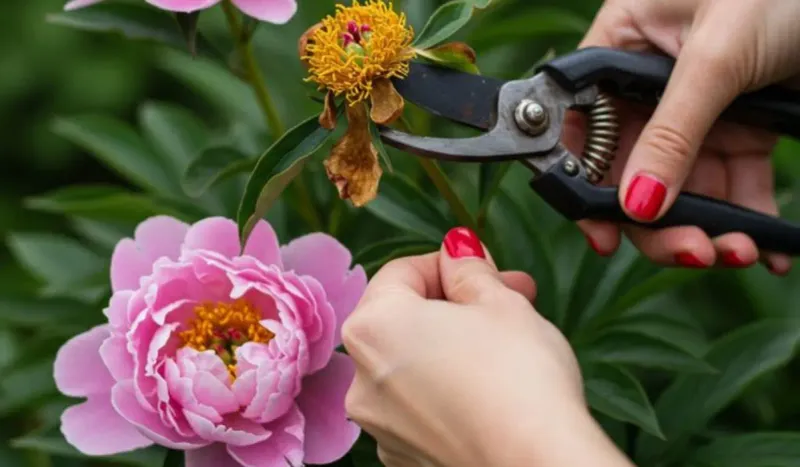
Peony after-bloom care comes down to three steps in sequence. Remove faded flowers and seed pods soon after bloom, cutting each stem back just above a healthy set of leaves – unless you are saving seed, in which case leaving the pods is a reasonable choice.
Leave the healthy green foliage completely alone through summer, since it continues supporting the plant after the flowers are gone. For herbaceous peonies, cut back the remaining foliage only after it has died back naturally or been taken down by a hard freeze, then remove the cut material from the bed rather than leaving it to harbor disease.
Iowa State Extension and UConn Extension both support this sequence as standard maintenance. The routine improves appearance, manages disease debris, and supports plant health, though it does not guarantee a specific bloom outcome the following year.
If flowering remains poor despite consistent care, investigate site conditions – sun, planting depth, drainage, cultivar choice, and local climate – before assuming a maintenance step is the missing fix. A peony that is well-sited and properly cared for tends to reward patience on its own schedule.