
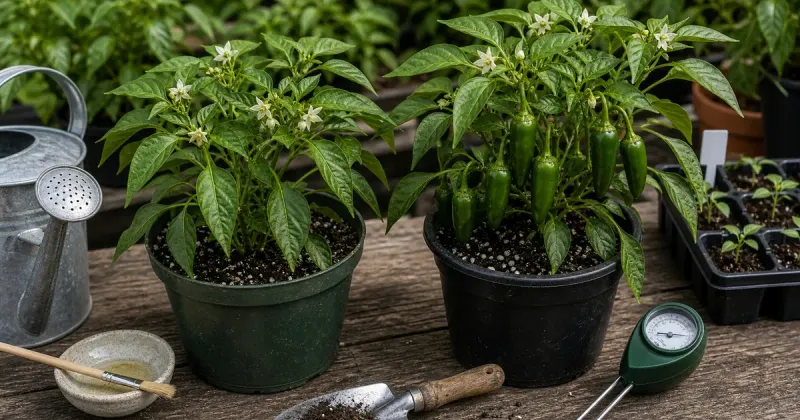
You water them, you feed them, and your pepper plants respond by growing big, dark green, and full of leaves – but the fruit just never comes. This is one of the most frustrating situations in a Southern garden, where the growing season is long and peppers should be thriving.
The problem is not always obvious, and the fix depends entirely on what the plant is actually doing with its flowers. Understanding the difference between a plant that never flowers and one that drops its blossoms is the first step to getting peppers on the table.
Start by checking whether the plant made flowers
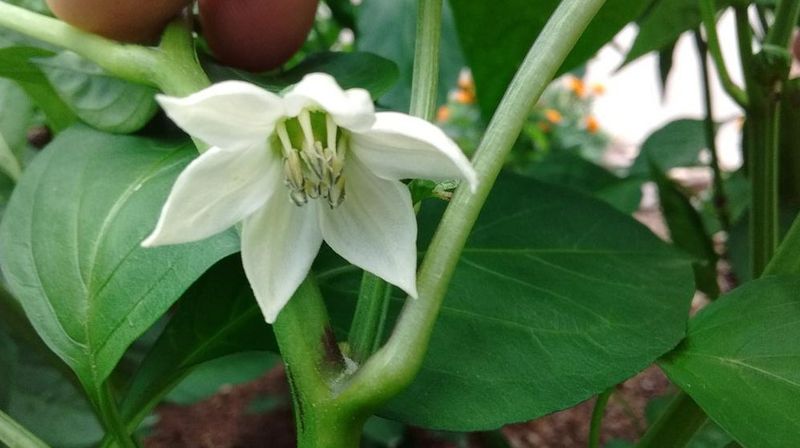
Before changing anything about how you water or fertilize, spend a few minutes looking closely at your pepper plant. The most useful question to ask is simple: has this plant been producing flowers at all?
That single observation splits the problem into two very different situations, each with its own set of likely causes.
A mature pepper plant that produces few or no flowers is sending a different signal than one that makes flowers and then loses them. University of Missouri Extension guidance on growing sweet peppers notes that high nitrogen can push a plant toward excessive vegetative growth, which may delay or reduce flowering.
But unusually leafy, dark-green growth is not proof of a nitrogen problem on its own – cultivar vigor, plant age, shade, crowding, and normal early-season development can all produce a plant that looks lush before fruit appears.
If the plant is mature and genuinely producing little or no flowering, then the investigation should include nitrogen levels, available light, crowding, and general stress. University of Maryland Extension’s overview of poor blossom and fruit set distinguishes clearly between absent flowers and flowers that form and then fall.
If flowers are forming and then shriveling or dropping, that pattern calls for a different checklist entirely – one focused on heat, moisture, pests, pollination conditions, and chemical injury. Getting this observation right before making any change keeps you from solving the wrong problem.
How excess nitrogen can favor leaves over fruit
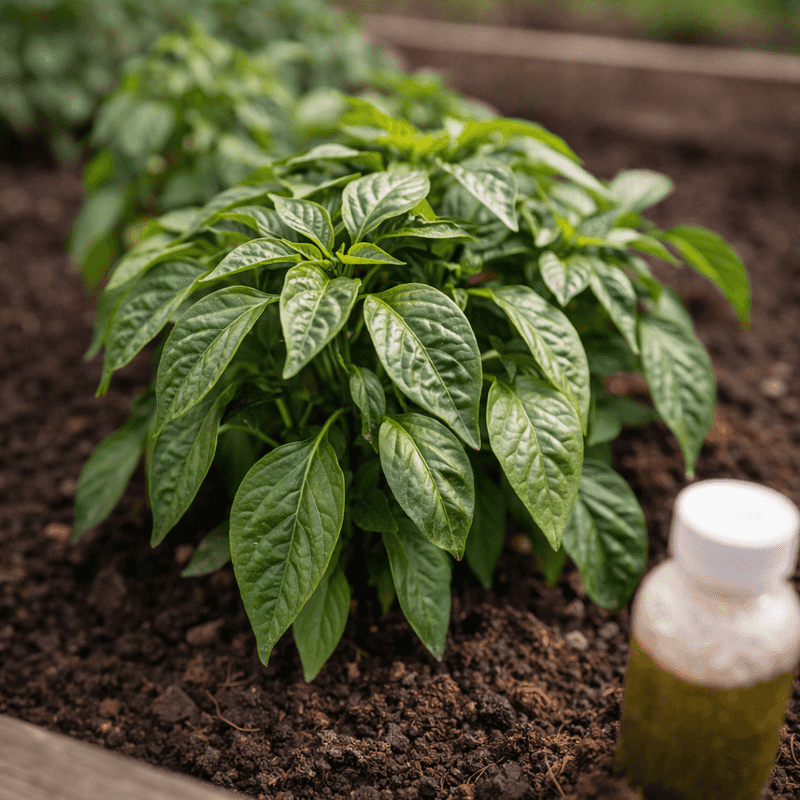
Nitrogen is the first number listed on any fertilizer label, and it is the nutrient most directly responsible for green, leafy plant growth. When a mature pepper plant receives repeated high-nitrogen applications – whether from a granular lawn fertilizer, fresh manure, concentrated liquid feed, or slow-release fertilizer spikes – it can respond by pushing out more foliage instead of directing energy toward flowering and fruit production.
Missouri Extension’s pepper-growing guidance warns that excessive nitrogen promotes vegetative growth at the expense of fruit set. Oklahoma State University’s pepper production fact sheet reflects a broader pattern in commercial recommendations: later nitrogen applications are generally timed after fruit has already begun to set, not before.
Feeding a plant that is already large and leafy with another round of high-nitrogen fertilizer can compound the problem rather than correct it.
That said, University of Illinois Extension’s 2025 analysis of pepper production problems cautions that the nitrogen explanation is sometimes over-applied in home-garden discussions, and research does not establish overfertilization as the sole or even the primary explanation for poor fruit set. The diagnosis is most credible when a mature plant combines unusually vigorous, dark-green foliage with little or no flowering – not simply because the plant looks healthy and green.
A plant that merely looks robust may be doing exactly what a productive pepper does in the weeks before fruit appears.
Pause suspected nitrogen without starving the plant
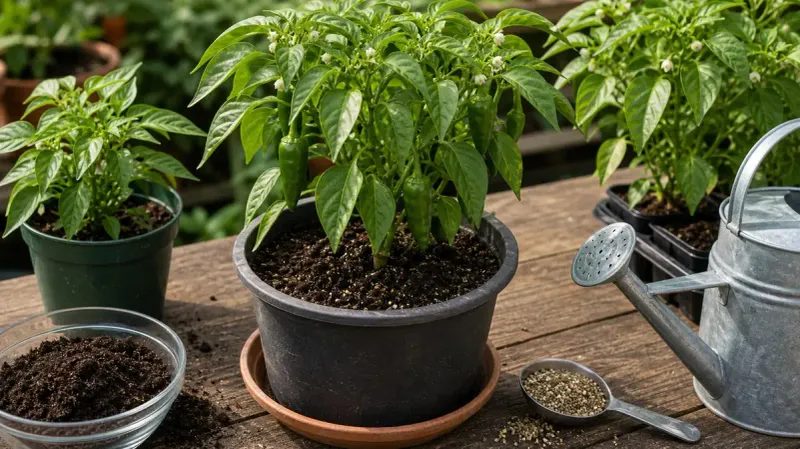
If excess nitrogen seems like a real possibility based on what you have applied recently and what the plant is showing, the practical first move is to stop adding more. Review what you have put on the soil over the past several weeks.
High-nitrogen products – including lawn fertilizer applied too close to the garden, fresh compost with a lot of manure, strong liquid feeds used frequently, or fertilizer spikes placed near the root zone – are worth noting.
Pausing additional nitrogen is not the same as abandoning fertilizer permanently. Oklahoma State University’s pepper production recommendations make clear that peppers still require nutrients throughout the season, and a long-term absence of feeding can create its own problems.
The goal is to stop adding to a possible excess while the plant stabilizes, then return to feeding based on what a soil test shows and what the product label recommends for your specific situation. University of Minnesota Extension’s soil sampling guide walks through how to collect and submit a sample, which gives you a factual basis for future fertilizer decisions instead of guessing.
Resist the urge to compensate with phosphorus, potassium, calcium, Epsom salt, or bloom-booster products. Those amendments do not automatically trigger flowering, and applying them without test results can create nutrient imbalances.
Follow the fertilizer label directions and, if you are unsure, contact your local Extension office before making additional changes. What works in a container on a patio may differ significantly from what a garden bed in sandy Florida soil or heavy Texas clay actually needs.
Flowers that fall need a different investigation
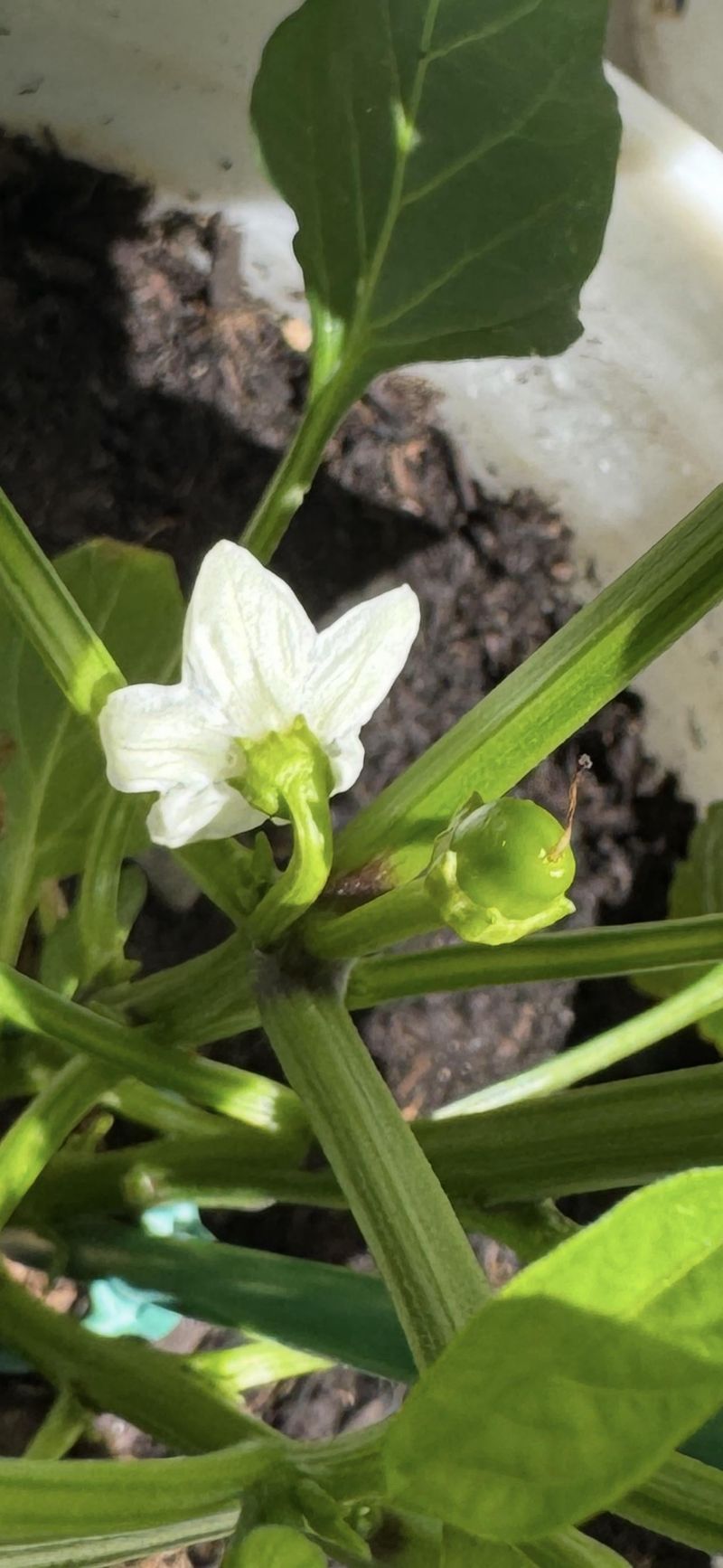
When flowers appear and then shrivel or fall before setting fruit, the cause is usually not excess nitrogen. Southern gardens face a specific set of stressors that can damage or abort flowers even on a plant that otherwise looks strong.
Heat tops the list of possibilities in many warm-season situations, but it is not the only factor worth checking.
University of Maryland Extension’s blossom and fruit set resource lists high temperatures, warm nights, drought, excess moisture, and hot dry wind among the conditions that can cause flower drop. UC IPM’s cultural tips for growing peppers note that temperatures above 100 degrees Fahrenheit reduce pollination, fruit set, and overall yield.
Daytime temperatures in the approximate range of 90 to 95 degrees or nighttime temperatures staying above roughly 75 degrees are commonly cited as conditions that stress pepper flowers, though these are approximate thresholds and variety matters considerably.
Oklahoma State University’s vegetable FAQ points out that hot pepper types such as jalapenos may handle summer heat better than bell peppers, while some chili varieties continue producing under conditions that shut down other cultivars. If heat is a likely factor, consistent root-zone watering, a layer of mulch to moderate soil temperature, and temporary afternoon shade cloth can reduce flower stress.
Correcting nitrogen alone will not restore fruit set while current temperatures are actively damaging flowers, so the timing of any intervention matters as much as the intervention itself.
Keep moisture steady and identify blossom-end rot correctly
Consistent soil moisture is one of the most practical things a pepper grower can manage, and it affects both flower retention and fruit development. Irregular watering – swinging between dry spells and heavy drenching – creates stress that can contribute to flower drop and interfere with how the plant moves calcium to developing fruit.
Utah State University Extension’s pepper-growing guide recommends deep irrigation totaling roughly one to two inches per week as a general starting point, adjusted for your soil type, container setup, local rainfall, and current weather conditions. Mulch around the base of the plant helps slow rapid moisture loss between waterings.
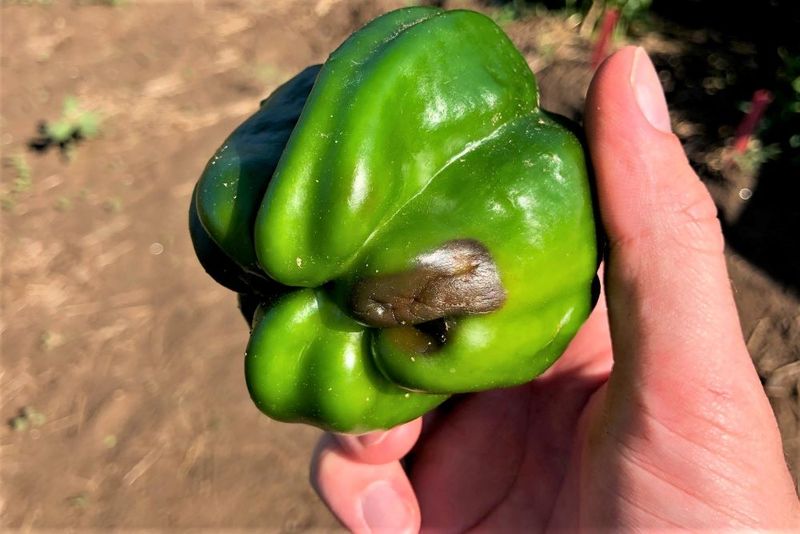
One issue that sometimes gets confused with failure to set fruit is blossom-end rot. University of Georgia Extension’s guide to blossom-end rot in peppers and tomatoes describes it as a sunken, dark, or leathery lesion that develops on the bottom end of a pepper that is already growing.
That is a very different situation from a plant that never produces fruit in the first place. Blossom-end rot is associated with how the plant moves calcium during periods of inconsistent water supply, not simply a shortage of calcium in the soil.
Adding calcium supplements without a soil test and local guidance is not a reliable fix, and Maryland Extension’s fruit set resource reinforces that moisture management is the more foundational concern. Adjust your irrigation approach to fit your actual conditions before reaching for amendments.
Do not make bees or hand pollination the default diagnosis
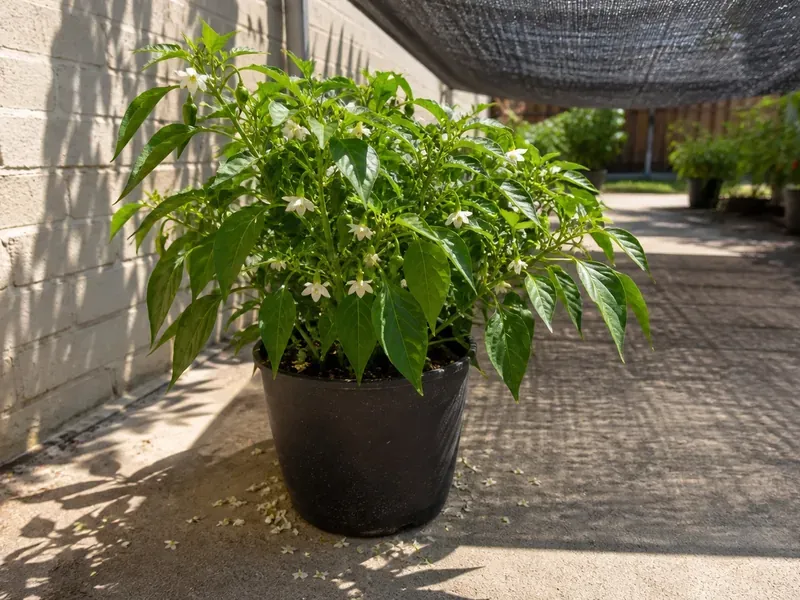
Pepper flowers are largely self-pollinating, which means the absence of honeybees in your garden is not automatically the reason for poor fruit set. Each pepper flower carries both male and female parts, and under favorable conditions it can pollinate itself without any insect involvement.
Oklahoma State University’s vegetable FAQ confirms this, noting that pepper fruit set does not depend on bee activity the way some other crops do.
Gentle movement of the plant – from wind, a soft shake, or a light tap on the stem – can sometimes help pollen transfer in still-air settings like a screened porch or a low-airflow greenhouse. UF/IFAS pollination guidance acknowledges that movement assists self-pollinating plants in some situations.
However, hand-pollinating every blossom is not a guaranteed solution and will not overcome flowers that are already damaged by heat stress, drought, pests, or chemical injury.
When fruit set is poor, the more productive path is to evaluate the conditions the flowers are experiencing – temperature, moisture levels, plant health, variety selection, and any signs of pest or herbicide damage – rather than focusing on bee presence as the central problem. Pollination tends to improve on its own when the underlying stressors are addressed, so treat it as one item on a broader checklist rather than the leading suspect.
Inspect buds, leaves, and nearby plants for injury
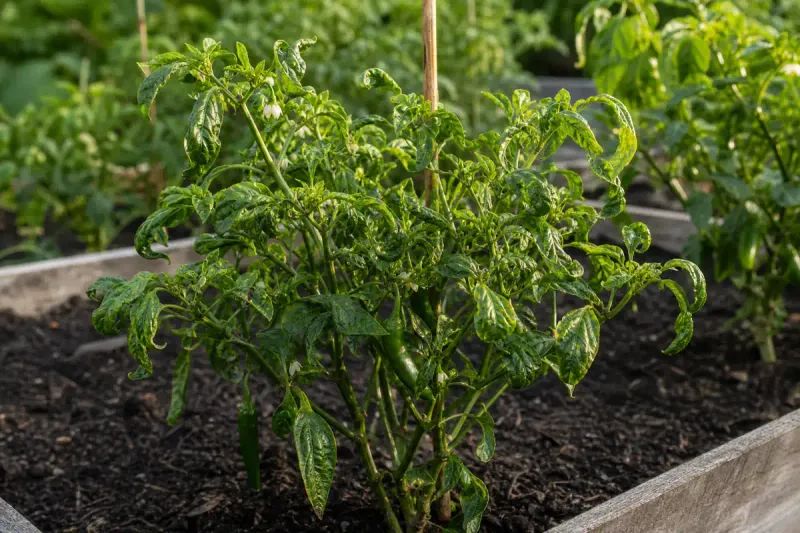
A careful look at the plant before reaching for a spray bottle or a bag of fertilizer can save a lot of wasted effort. Two specific problems are worth knowing how to recognize: pest injury from insects that feed inside buds or developing fruit, and herbicide drift that distorts new growth and slows the plant’s development.
Pepper weevils are a serious concern in Florida and other warm Southern areas where the pest is established. UF/IFAS documentation on the pepper weevil describes how adults puncture flower buds and young fruit to feed and lay eggs, while larvae develop inside the tissue.
Signs to look for include small puncture marks on buds, buds or small fruit that yellow and drop prematurely, and fruit with internal feeding damage when cut open. UF/IFAS pest management guidance for peppers in South Florida notes that larvae inside buds or fruit are difficult to reach with contact sprays, so identifying the pest accurately before treatment is essential.
Distorted new growth – leaves that cup, twist, pucker, or look wrinkled on the newest growth points – can indicate herbicide drift rather than a nutrient problem. Iowa State University Extension’s guide to herbicide injury in garden plants explains that when multiple broadleaf plants in the same area show similar distortion, drift from a nearby lawn treatment is a likely explanation.
Herbicide injury can delay flowering and fruiting independently of fertilizer levels. Avoid removing most of the plant’s leaves as a response to either problem – foliage supports photosynthesis and helps shade the fruit from sunscald.
Use local planting calendars to avoid extreme heat
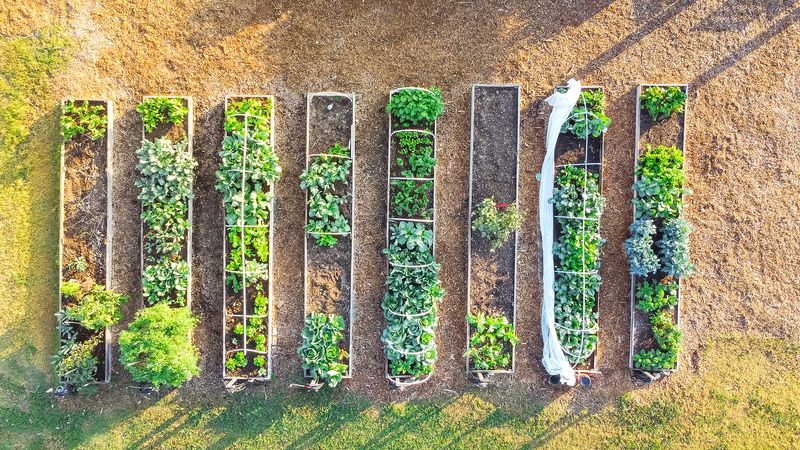
Timing the growing season so that flowering happens outside the most intense heat is often more effective than trying to rescue fruit set during a heat wave. For Florida gardeners, Florida Fresh IFAS planting detail for peppers outlines multiple planting windows – including late winter to spring and late summer to fall options depending on the part of the state.
Choosing the right window can mean the difference between a plant that flowers under manageable conditions and one that struggles through the most extreme temperatures of the year.
Texas gardeners and those elsewhere in the South should use their own state Extension planting calendars rather than borrowing Florida dates. Heat patterns, frost timing, and soil conditions vary enough across the region that a single schedule does not apply everywhere.
Oklahoma State’s vegetable gardening FAQ and UC IPM’s cultural tips for peppers both reflect how regional conditions shape pepper management decisions, reinforcing that local guidance is the most reliable starting point.
When you pull together everything observed, the decision sequence becomes straightforward. A mature plant that is unusually leafy and producing few or no flowers warrants a review of recent nitrogen applications, available light, and general growing conditions.
A plant whose flowers form and then fall calls for a broader check of temperature, moisture consistency, pest activity, pollination conditions, and possible chemical injury. Matching the response to the actual symptom is what separates a fix that works from one that just adds another variable to an already complicated situation.