
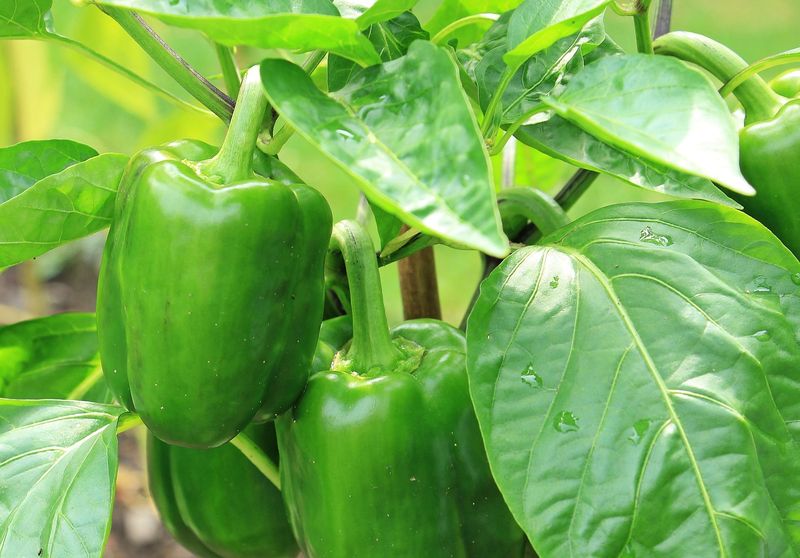
You walk out to the garden and find big, glossy peppers that just will not change color. It is easy to worry that something is wrong, or that your fertilizer routine is to blame.
Most of the time, green fruit is a cue to check a few simple things, not a sign of failure. Here is how to sort out what your peppers need and when to pick them.
Green may be a normal harvest stage
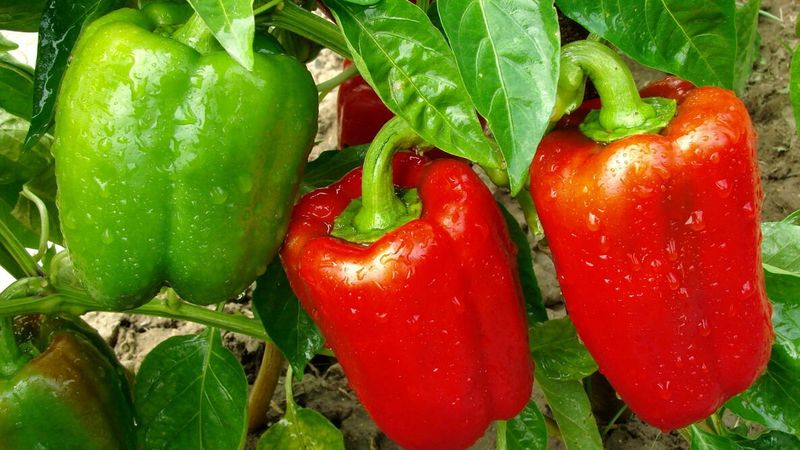
Picture a green bell pepper from the grocery store. It was picked at a full, firm size, and that is a normal way to enjoy it.
Illinois Extension notes that peppers can be harvested at the mature green stage, and waiting for red or another color is optional for many varieties.
Other peppers are grown for their final color. University of Minnesota Extension explains that green bells are commonly picked full-sized and firm, while colored fruit can stay on the plant to develop further.
So a big green pepper is not automatically stalled. It may be ready for the kitchen, or it may simply not have reached the stage where its variety starts changing.
Check your plant tag or seed packet, since University of Maryland Extension lists variety among the things that affect how long ripening takes. Not every green pepper is headed for red.
A late feed is not the usual explanation
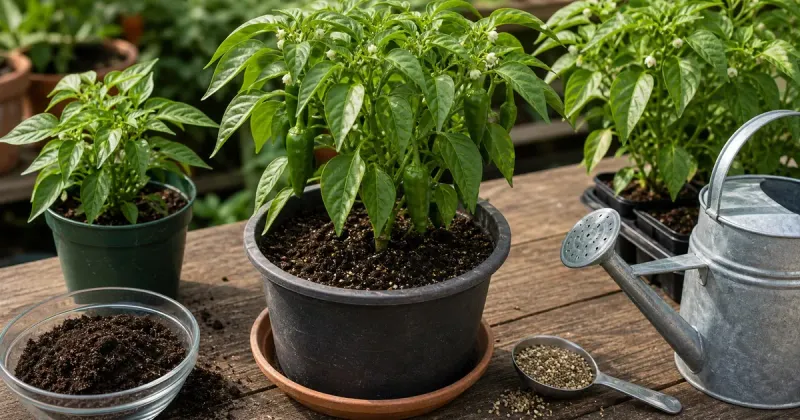
Extra fertilizer is an easy suspect, but it is not the usual reason full-sized peppers stay green. Too much nitrogen can push leafy growth, and sources discussing it often point to lush foliage, poor fruit set, or delayed flowering.
West Virginia University Extension describes that pattern.
Notice what those problems have in common. They involve the plant’s growth and flowering, not a proven effect of one late feeding on the color of fruit that has already formed.
A big, leafy plant is not proof you overfed it, either. Illinois Extension cautions that lush growth may follow poor fruit set, and it reports peppers can produce well across different fertilizer inputs.
If your plant has plenty of leaves but few peppers, that is a fruit set question. If it has full-sized peppers that are slow to color, that is a maturity question.
They call for different checks.
Check other conditions that can affect color
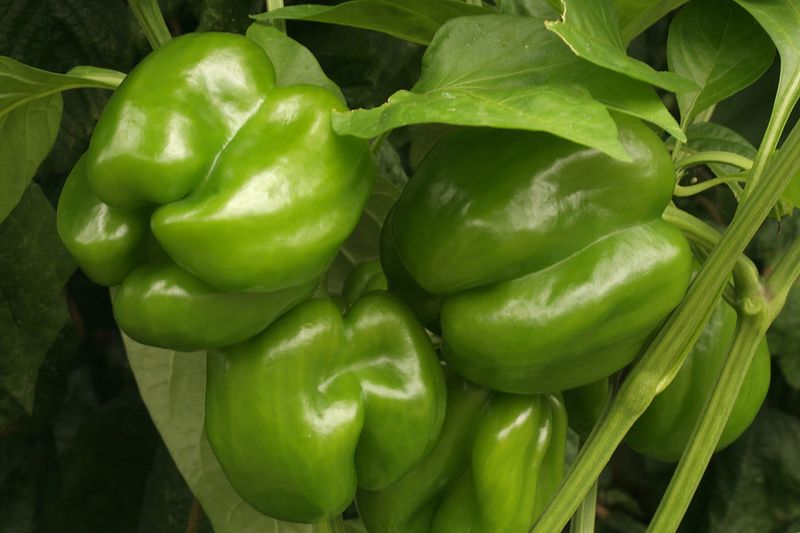
When peppers hold their green, look at the whole growing setup. University of Maryland Extension lists several possible reasons for slow ripening: the variety, too little light or crowded plants, heat or drought stress, and low fertility.
Walk your rows with those in mind. Are branches shading each other?
Did the plants wilt through a dry, scorching stretch? Does the variety take a long time to mature?
Any of these could be part of the story, though none is a sure diagnosis for a single plant.
Temperature matters too, in both directions. In a Japanese sweet pepper study, color development was slower below 10°C and above 30°C.
That result came from one cultivar under specific test conditions, so it is not a backyard rule. It does show that cool nights alone do not explain every green pepper, and that very hot weather can slow color as well.
Base fertilizer decisions on need
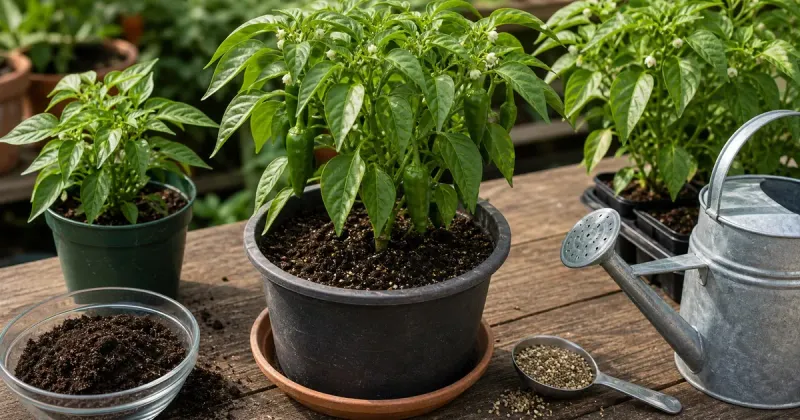
Skip the routine extra feeding meant only to make existing peppers change color. Nothing shows it works, and more fertilizer than the plant needs can create new problems.
Instead, read the product label and let a soil test guide you. UF/IFAS says soil testing helps guide pepper fertilizer rates, and Texas A&M AgriLife Extension advises testing before adding nutrients to fix a plant problem.
Commercial farm rates are not meant to be copied in a home garden.
This is not a call to stop feeding altogether. University of Maryland Extension includes planned feeding in its home-garden advice, and Texas A&M’s pepper growing guide suggests a fertilizer application once the first fruit begins to enlarge.
Switching to a different nutrient to force color is not supported either. Feed for a demonstrated need, not for a hoped-for color.
Choose whether to harvest or wait
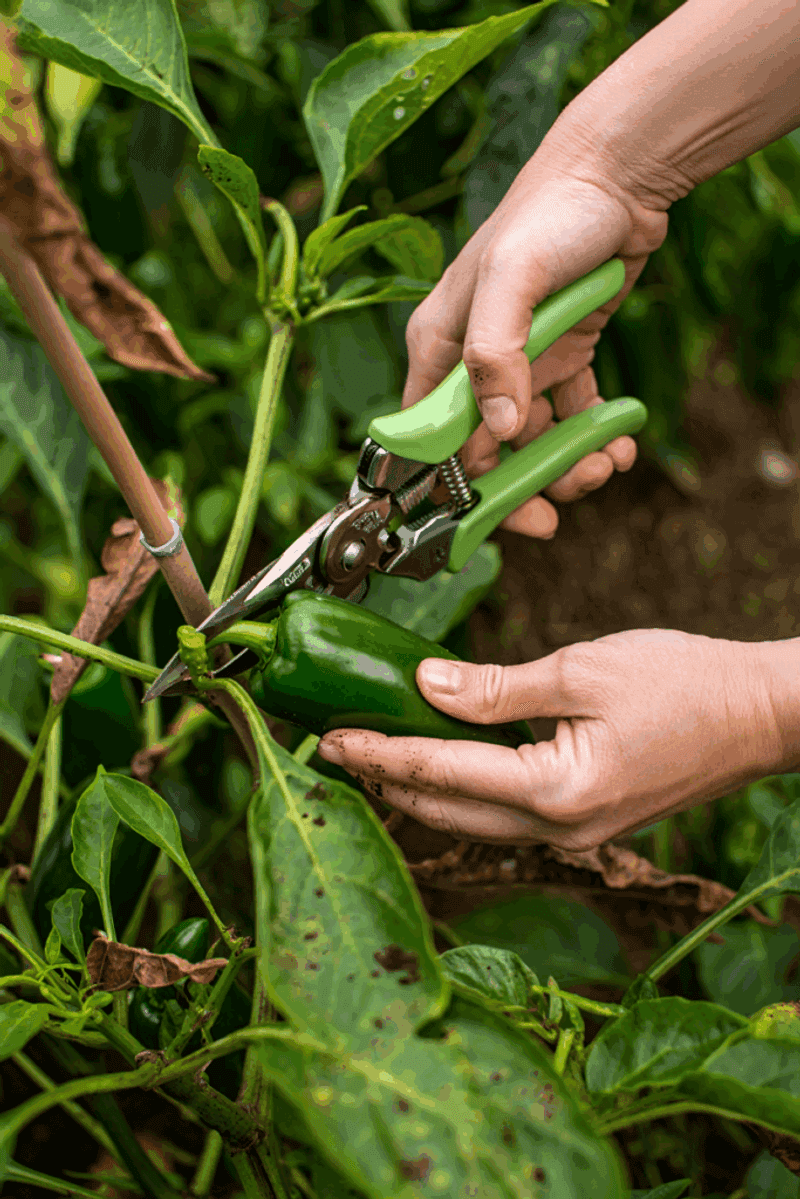
You have two good options. Pick firm, full-sized peppers now and enjoy them green, or leave some on the plant for more color if the weather allows.
Illinois Extension treats both as normal choices.
A handy compromise is to pick a few for cooking and leave the rest to see what develops. Peppers left on the plant can also slow new fruit, so picking some may help the plant keep producing.
Frost is the deadline. Bring in usable fruit before a freeze, and keep an eye on your local forecast.
Do not count on the indoor ripening trick. Iowa State Extension says peppers generally do not continue ripening after harvest, though some types may change color.
Treat any color change on the counter as a bonus, not a plan.
Use local timing to plan the rest of the season
The South does not share one calendar. Florida and Texas have different seasons, and even inside Texas the dates shift from region to region.
For Texas readers, the Texas A&M fall gardening guide gives different planting dates across five regions. Its pepper guide suggests planting fall peppers 12 to 16 weeks before expected frost.
In Florida, UF/IFAS separates production systems and seasons. That guidance is written for commercial growers, so use it as background and lean on local home-garden advice.
Count back from your own first expected frost date, and check with your county Extension office. No feeding tweak guarantees a color change, but good timing gives peppers their best chance.
A green pepper on a cool morning is just a pepper waiting on its own schedule.