
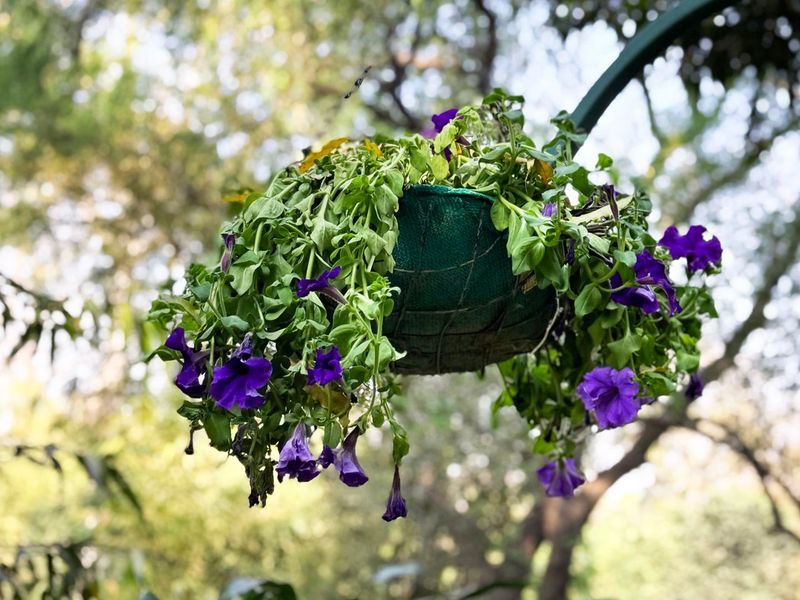
Something feels off when you walk past a hanging basket that looked full and bright two months ago but now trails long, bare stems with just a few flowers clinging to the tips. Most gardeners assume the plant is simply done for the season, but that is not always the case.
If your petunia is still green and growing, a skipped midseason trim may be part of the reason it looks so sparse, and that is a problem worth investigating before you give up on the basket entirely.
The bare-stem pattern can suggest a missed trim
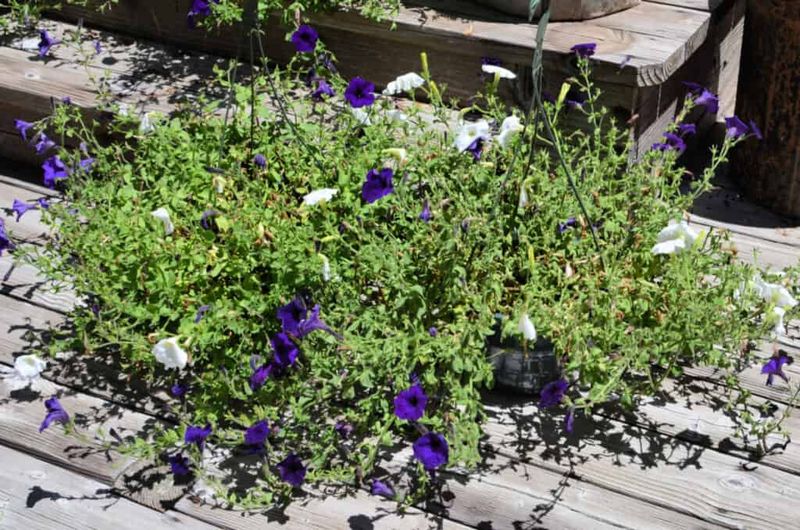
Walk up to a fading basket and take a close look before reaching for the shears or the trash bin. A living, green plant with long, bare or straggly stems and blooms gathered mainly at the tips is showing you something specific: it has kept growing outward without producing enough new branching closer to the base.
That pattern is common by late summer, and leaving those stretched stems in place tends to make the basket look increasingly sparse as the weeks go on.
Skipping a midseason rejuvenation trim is one plausible explanation when you see this kind of legginess. NC State Cooperative Extension guidance on petunias notes that plants commonly become leggy or straggly by late summer and that cutting them back can restore a fuller shape and stimulate new flowering.
That said, the bare-stem pattern is a clue, not a diagnosis.
Heat, humidity, depleted nutrients, inadequate or excessive water, disease, insufficient light, and budworm caterpillars can all produce similar decline in a Southern basket. Checking whether the plant is truly alive and overgrown, rather than sick or heat-exhausted, is the first step.
If the stems are green and pliable and the foliage looks basically healthy, a trim is a reasonable next move. If something else looks wrong, pruning alone is unlikely to fix it.
A midseason trim can rebuild the flowering framework
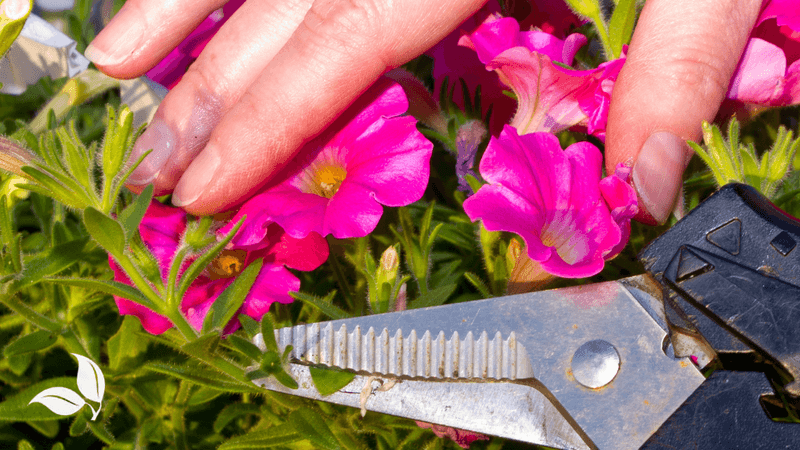
Shortening long stems does more than tidy up a basket. When you cut a petunia stem back to a healthy leaf or node, the plant redirects energy toward producing lateral shoots from points lower on the stem.
Those new branches become the next round of flowering tips, which is why a well-timed trim can shift a sparse, stretched plant back toward a fuller, more productive shape.
The evidence-backed range for a midseason cut is roughly one-third to one-half of the stem length. For a moderately leggy plant, trimming by about one-third is a reasonable starting point.
A badly overgrown but otherwise healthy plant can handle a cut closer to one-half. University of Illinois Extension guidance on caring for annuals supports cutting annuals back to encourage fresh, compact growth when they become stretched.
The key is to cut to a healthy leaf or node rather than into bare woody stem with no green growth below the cut.
Pruning and deadheading are not the same task, and substituting one for the other will not produce the same result. Deadheading removes individual spent flowers to prevent seed set.
Pruning or shearing shortens the entire stem structure and encourages branching throughout the plant. A basket that needs structural renewal requires pruning, not just the removal of old blooms.
One honest warning: a substantial trim will temporarily remove most of the flowers still on the plant. The basket will look less colorful for a stretch after the cut, and that is normal.
Give it time before judging whether the rescue worked.
Follow the trim with a measured rescue routine
Once you have made the cuts, the basket needs a short, specific sequence of care to support recovery. Start by removing any dead leaves, damaged flowers, or material that looks visibly diseased before you trim.
Clearing that debris first gives you a cleaner view of which stems are worth keeping and reduces the chance of spreading problems when you cut.
Next, shorten the long stems back to healthy leaves or nodes, working within the one-third to one-half range described above. After trimming, resist the urge to water immediately out of habit.
Check the top inch or two of the potting mix first, and water thoroughly only when that layer has begun to dry out. Watering a saturated basket right after pruning can contribute to the root problems you are trying to avoid.
Resume a complete water-soluble fertilizer at the rate listed on the product label. Do not double the dose hoping to speed recovery.
University of Arkansas Cooperative Extension petunia guidance recommends watering and resuming an appropriate fertilizer program after cutting leggy plants back, rather than overfeeding in hopes of forcing faster results.
Set realistic expectations for the timeline. NC State Extension indicates that new blooms may take roughly one to two weeks to develop after pruning, depending on how much growth was removed.
The basket will look sparse at first. That is part of the process, not a sign that the trim failed.
Manage basket moisture and nutrients without overcorrecting
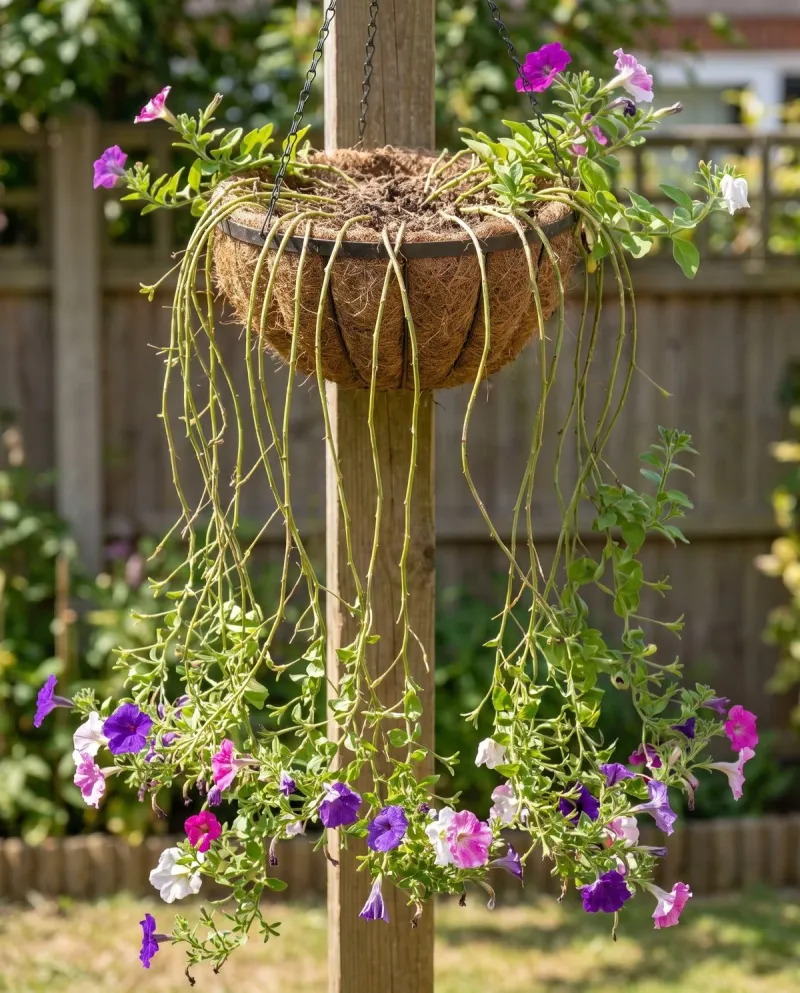
Baskets behave differently from in-ground beds, and that distinction matters when you are trying to support regrowth after a trim. A hanging container holds a limited volume of potting media and drains frequently, which means it dries out faster and loses nutrients more rapidly than a garden bed of the same footprint.
Treating it like an in-ground planting can lead to either underwatering or overfeeding, both of which create new problems.
Check moisture by pressing your finger into the top one to two inches of potting mix. When that layer has begun to dry, water thoroughly until some drains from the bottom of the basket.
Iowa State University Extension guidance on container plant care recommends this check-and-drain approach rather than watering on a fixed daily schedule. Small baskets in hot, dry, or windy Southern weather may need checking once or twice a day during peak heat, but the potting mix condition, not the calendar, should drive the decision.
Prolonged saturation is its own hazard. Roots sitting in wet media for extended periods become vulnerable to rot, and a rotting root system cannot support the new growth you are trying to encourage after pruning.
On the fertilizer side, frequent watering leaches nutrients from potting media faster than most gardeners expect. That makes a regular, label-directed complete water-soluble fertilizer program important for container petunias.
However, NC State research on petunia substrate moisture and growth shows that excess fertilizer, particularly combined with overly wet media, can suppress flowering, produce excessive leafy growth, and injure roots through salt accumulation. Apply at the label rate, check the mix before each watering, and let the plant’s condition guide your adjustments rather than a set schedule.
Deadheading handles spent flowers, not leggy stems
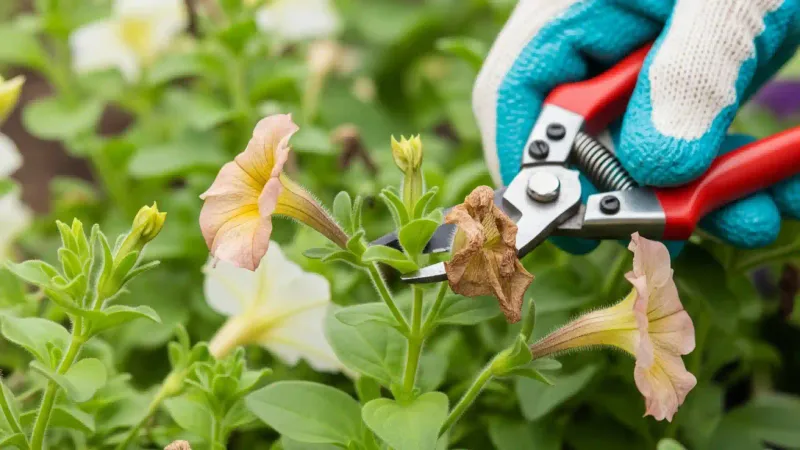
Deadheading and pruning are two separate tasks, and confusing them leads gardeners to do one when they actually need the other. Deadheading means removing individual spent flowers, usually to prevent the plant from putting energy into seed production.
Pruning or shearing means cutting stems back significantly to encourage new branching and a fuller shape. A basket that has become leggy and sparse needs pruning, and no amount of spent-flower removal will substitute for that structural work.
That said, deadheading does matter for certain petunia types. Large-flowered and double petunias generally benefit most from routine removal of faded blooms.
UF/IFAS petunia guidance notes that many modern spreading and small-flowered cultivars are self-cleaning, meaning they shed spent flowers on their own without requiring the gardener to intervene. If you are growing one of those types, skipping deadheading is not a mistake.
For petunias that do need deadheading, technique matters more than most people realize. Removing just the petals leaves the small, swollen seed capsule at the base of the flower still attached to the stem.
NC State Extension advises removing the faded flower along with that seed structure beneath it to actually interrupt seed development. Pinching off petals alone does not accomplish the same thing.
One more point worth keeping in mind: a self-cleaning cultivar that does not need routine deadheading can still become leggy and benefit from a midseason trim. The two needs are independent of each other.
Check for heat, water, disease, light, and budworms
Before pruning aggressively, spend a few minutes looking at the basket carefully. A trim makes sense for a green, overgrown plant, but several other conditions can produce similar-looking decline, and cutting back a plant that is already under stress from disease, root rot, or a climate mismatch may not help and could make things worse.
Start with light and heat. Petunias perform best in full sun, and reduced flowering in a shaded spot is a light problem, not a pruning problem.
In much of the Southern U.S., midsummer heat and humidity can reduce flower size, color quality, and overall performance even in a healthy, well-tended basket. UF/IFAS describes standard petunias as cool-season annuals in Florida, where summer heat and humidity can cause them to fail despite good care.
A trim may improve a stressed plant, but it cannot overcome a fundamental season mismatch. Florida gardeners in particular should factor this in before investing effort in a summer rescue.
The Florida seasonal caveat may not apply identically throughout Texas or other parts of the South, so check with your local extension service for region-specific guidance.
Watch for signs that something more serious is happening. Rapid wilting, collapse, dark brown or black tissue at the crown, or roots that smell foul and look decayed point toward root or crown rot rather than simple legginess.
NC State Extension guidance on Phytophthora and root rot in annuals identifies overwatering and standing water as key contributors to these diseases. Pruning will not reverse active crown or root rot.
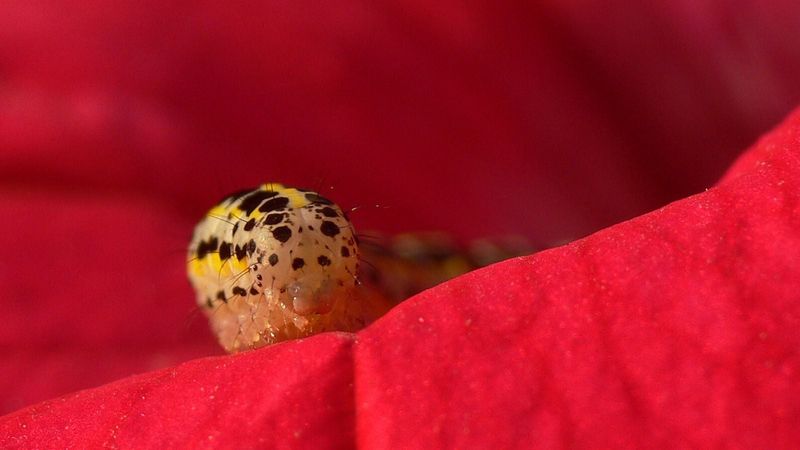
Tobacco budworm is another possibility when flowers seem to disappear without obvious explanation. University of Massachusetts Extension reporting on budworms in petunias notes that caterpillar damage often becomes more noticeable in late summer.
Look for ragged flowers, small holes in buds, black droppings on leaves or stems, or unopened buds that never develop. If you find evidence of a pest or disease, identify it accurately before considering any treatment, and follow the product label carefully for any option you choose.
Match the remedy to the symptom
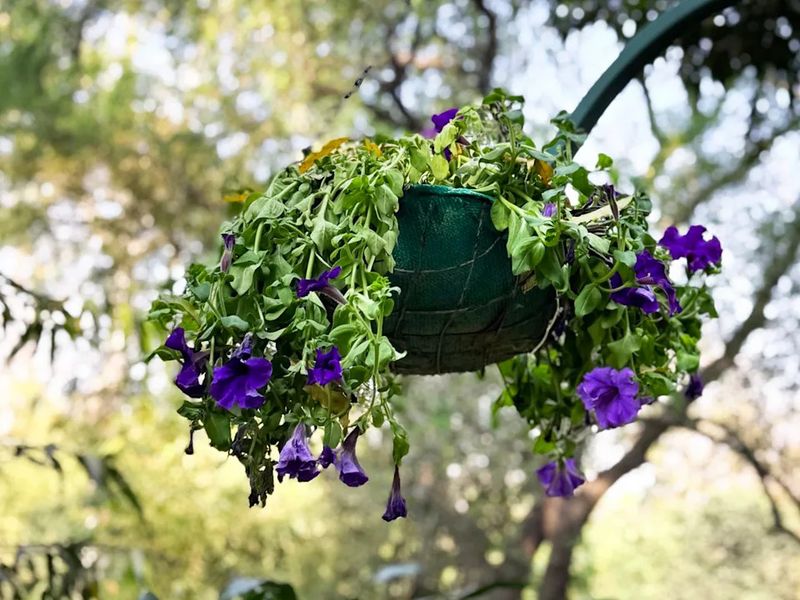
A simple visual test can guide your next move. If the basket is green, the stems are pliable and alive, and the flowers are concentrated at the ends of long bare stretches, a trim by about one-third to one-half is a reasonable starting point.
Follow it with measured moisture checks and a label-directed fertilizer program, then give the plant one to two weeks before judging the result. NC State Extension and UF/IFAS both support this approach for living, overgrown plants.
Pruning cannot reverse heat exhaustion, active root rot, severe water stress, poor light, or pest injury. If the plant shows signs of any of those problems, address the underlying cause first.
A basket that is still green and stretching has more options than one that is collapsing or diseased.
The most useful thing you can do right now is look, not cut. What the stems tell you will determine whether a trim is the right tool or whether something else needs attention first.