
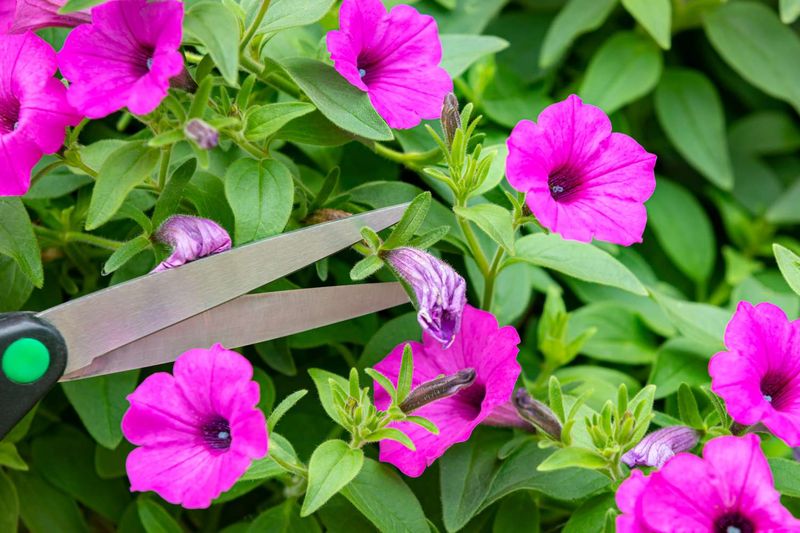
By late July, many gardeners notice their petunias have gone from full and colorful to long, scraggly, and barely blooming. The plants are not dead, but they look tired, and the usual approach of just watering and waiting does not seem to help. The real turning point comes when you recognize the specific growth pattern that signals your petunia needs a reset, not just more time. Knowing what to do next can mean the difference between a bare container and a fresh round of color before the season ends.
The telltale problem is bare stems with flowers at the ends
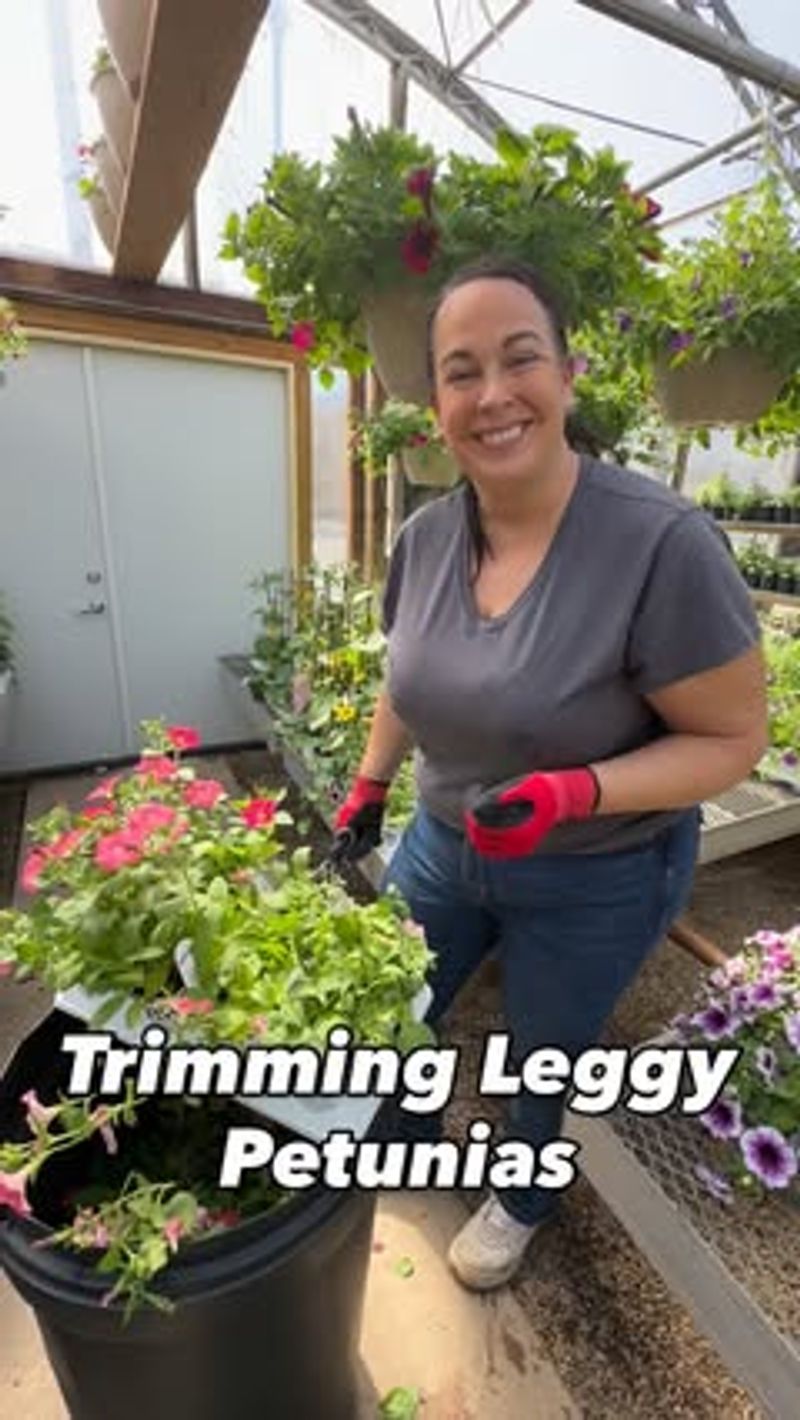
Sometime around mid-July, a petunia that looked great in June starts showing a pattern that is hard to miss: long, mostly bare stems with a small cluster of blooms hanging at the very end. The plant has not died, but it has clearly lost the full, mounding shape it had earlier in the season. Leaves are sparse along the lower stems, and the whole plant looks stretched out and worn.
That pattern, long bare stems with flowers pushed to the tips, points to leggy growth. It happens as petunias extend their shoots over weeks of hot weather, leaving behind the lower foliage and branching that made them look full. Clemson Cooperative Extension notes that petunias can become leggy and stop flowering well, and that cutting them back is one way to encourage fresh growth. The key word there is “encourage” because pruning is a possible reset, not a promise of instant new blooms.
Before assuming the plant simply needed more deadheading, check the stem length and branching pattern. Penn State Extension guidance on pruning herbaceous plants makes clear that a plant with bare, unproductive growth needs a different response than one that is compact but covered in spent flowers. Recognizing which situation you are looking at is the first step toward the right fix.
Deadheading and rejuvenation pruning solve different problems
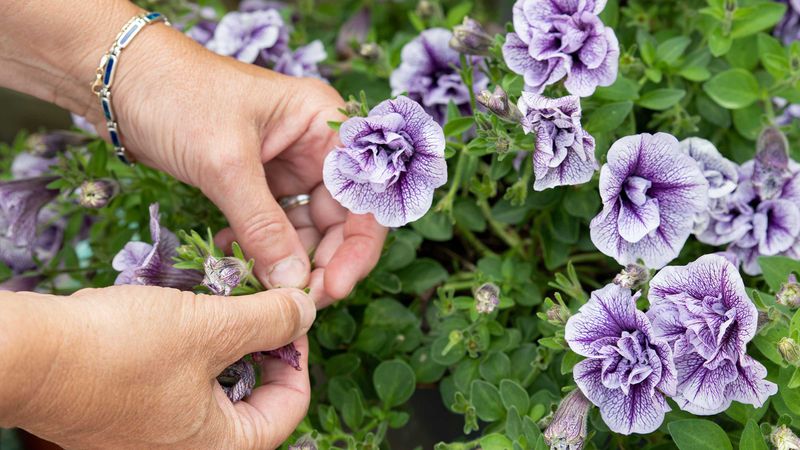
Deadheading and cutting back are two separate actions that address two very different situations. Deadheading means removing a faded flower and the small stem or seed-bearing structure beneath it, not just pulling off the colorful petals. Mississippi State University Extension recommends checking plants about weekly for spent blooms and removing that small supporting stem along with the flower to prevent seed development and improve appearance.
Rejuvenation pruning is something else entirely. Cutting back leggy stems removes long, unproductive growth and signals the plant to push out new side shoots lower on the stem. A plant that is compact and covered in seed capsules may genuinely benefit from deadheading. A plant with long bare stems and flowers only at the tips has a structural problem that deadheading alone cannot fix, because the bare sections of stem will not fill back in just because you removed a few spent blooms at the ends.
Cultivar type matters here, too. Large-flowered grandiflora and double petunias are more likely to slow down or set seed if spent blooms are left in place, making routine deadheading more useful for them. Many modern spreading, milliflora, and self-cleaning types, however, continue flowering without that attention. Iowa State University Extension confirms that self-cleaning varieties shed spent blooms on their own.
The NC State Extension plant profile for Petunia x hybrida reflects the same range of habits across cultivar types, and Oklahoma State’s profile of Supertunia Vista Bubblegum identifies it as self-deadheading while still noting it can respond to a light trim.
Check the plant before you reach for the pruners
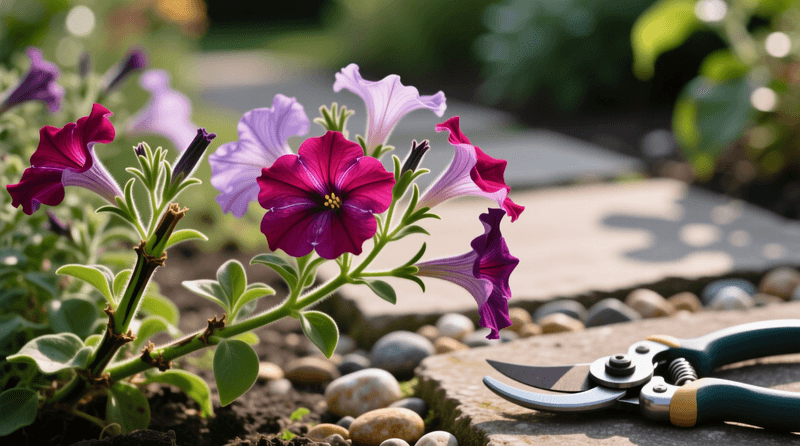
A midsummer cutback works best on a plant that is fundamentally healthy but has simply grown too long. Before trimming anything, take a close look at the whole plant. Run a finger along several stems and count the green leaf nodes, the small points where leaves attach and where new shoots can emerge. If you find several healthy nodes on each stem, the plant has enough viable growth to respond to pruning.
Then consider what else might be going on. University of Minnesota Extension explains that petunias perform best in full sun or at least five to six hours of strong direct light each day. A plant sitting in too much shade will produce weak, stretched growth and fewer flowers, and cutting it back will not solve the light problem. Move the container first, or accept that the location may simply not support strong blooming.
Look for signs that something other than leggy growth is causing the decline. UC IPM’s petunia guide and the Texas A&M petunia disease handbook both identify root rot, fungal diseases, insect feeding, and weather stress as causes of midsummer decline that a trim cannot fix. Soggy soil, wilting that does not improve after watering, distorted leaves, or visible pest damage all suggest a different diagnosis. Virginia Cooperative Extension notes that poor drainage can injure roots and produce symptoms that look like underwatering, so check the soil and drainage before assuming the plant just needs more water or a haircut.
A measured midsummer cutback resets the plant
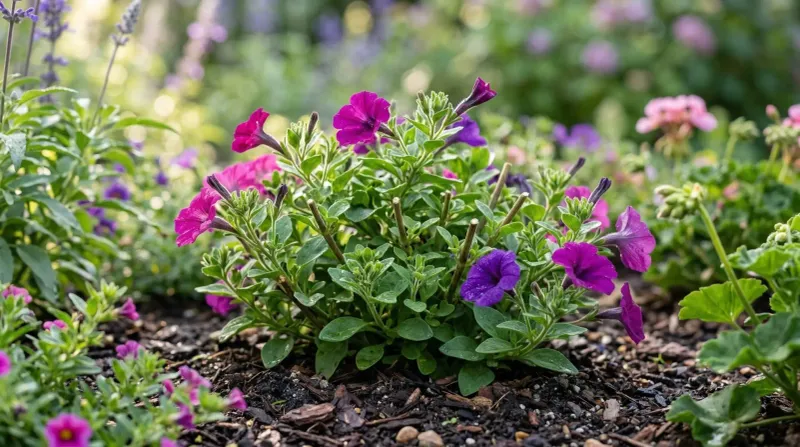
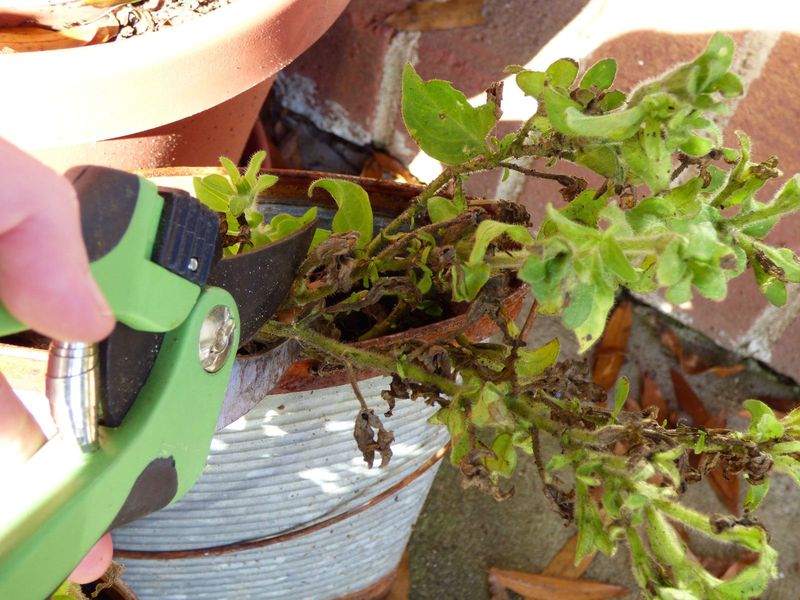
Once you have confirmed the plant is leggy but otherwise healthy, the corrective step is straightforward. Cut the long shoots back by approximately half. That single adjustment removes the unproductive, stretched ends while leaving enough stem and foliage for the plant to recover. Clemson Cooperative Extension specifically recommends this approach for petunias that have become leggy, noting that cutting back encourages fresh growth and a possible new flush of flowers.
For a plant that has stretched severely, with stems that are mostly bare from the base to the tip, a harder cut is sometimes appropriate. Penn State Extension supports leaving roughly 3 to 5 inches of stem in these cases, provided several healthy leaf nodes remain on each stem. Those nodes are what the plant uses to push out new side shoots, so do not cut below them. A stem with no nodes left has nowhere to branch from and will not recover.
The goal is precision, not aggression. Compact plants, self-cleaning types, and spreading cultivars that are still blooming reasonably well do not need this treatment at all. Reserve a hard cutback for the plants that genuinely need it. McCracken County Extension horticulture guidance reinforces that cutting back leggy petunias can stimulate new growth, though the plant needs time to produce new shoots and buds before flowers appear.
Plan on a waiting period of several weeks rather than expecting blooms the following day.
After pruning, support new growth without overcorrecting
Right after the cutback, water the plant thoroughly. Moist soil helps the roots stay active while the plant redirects energy toward producing new shoots. Clemson Cooperative Extension recommends watering and applying liquid fertilizer after cutting back to support that recovery, but the fertilizer timing matters: apply it according to the product label and your established feeding schedule, not as an extra dose meant to force faster blooms.
How often you water after that depends on where the plant is growing. University of Minnesota Extension points out that containers and hanging baskets can dry out much faster than garden beds, sometimes needing water as often as daily during hot weather, while established in-ground petunias generally do better with deeper, less frequent watering. Check the soil before adding more water rather than following a fixed daily schedule, because consistently wet soil can damage roots just as reliably as dry soil can stress them.
Feeding containers deserves special attention because frequent watering gradually washes nutrients out of the potting mix. University of Minnesota guidance suggests liquid fertilizer roughly every two weeks for many container plants, with spreading types sometimes needing more frequent applications. Illinois Extension’s container fertilizing guidance cautions against applying excess fertilizer, noting that salt buildup from over-feeding can injure roots. Virginia Cooperative Extension adds that fertilizer should never go onto severely dry soil, where concentrated salts can cause immediate root damage.
Keep the soil evenly moist, feed on schedule, and let the plant do the work of producing new growth.
What if the petunia still does not rebound?
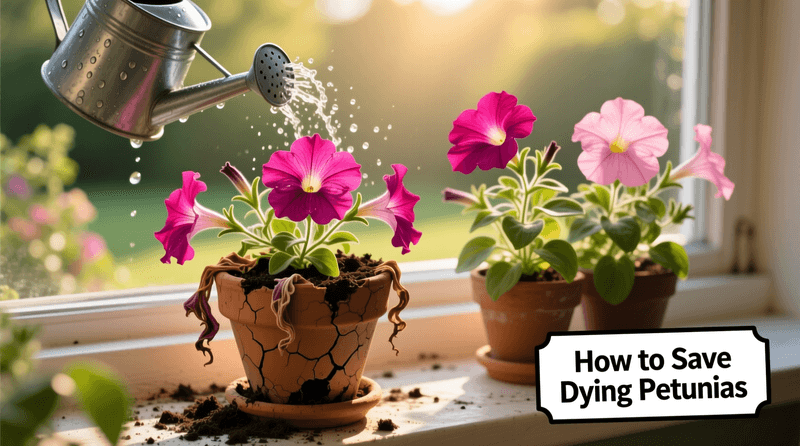
Some plants do not bounce back after a cutback, and when that happens, the next step is a closer look at the growing conditions rather than another round of pruning. Start with light: a plant sitting in fewer than five to six hours of direct sun per day may simply lack the energy to push out new growth and buds, regardless of how well it was trimmed. Relocating a container to a sunnier spot is sometimes the most effective change you can make.
Then check the soil and roots. UC IPM and the Texas A&M petunia disease handbook both identify root rot and fungal pathogens as causes of persistent decline that no amount of pruning or fertilizing will correct. If roots look brown and mushy rather than white and firm, the problem is likely disease or waterlogging rather than leggy growth.
Wilting and yellowing are particularly easy to misread. Iowa State University Extension explains that wilting alone does not confirm underwatering, and Virginia Cooperative Extension notes that overwatering and poor drainage can produce leaf yellowing and wilting that looks identical to drought stress. Also consider feeding history, pest pressure, and cultivar type: a self-cleaning spreading variety with no obvious structural problem may simply not need the intervention you gave it. Pruning is a targeted tool for leggy, otherwise viable plants, not a general treatment for every form of midsummer decline.
A leggy petunia needs a reset, not endless waiting
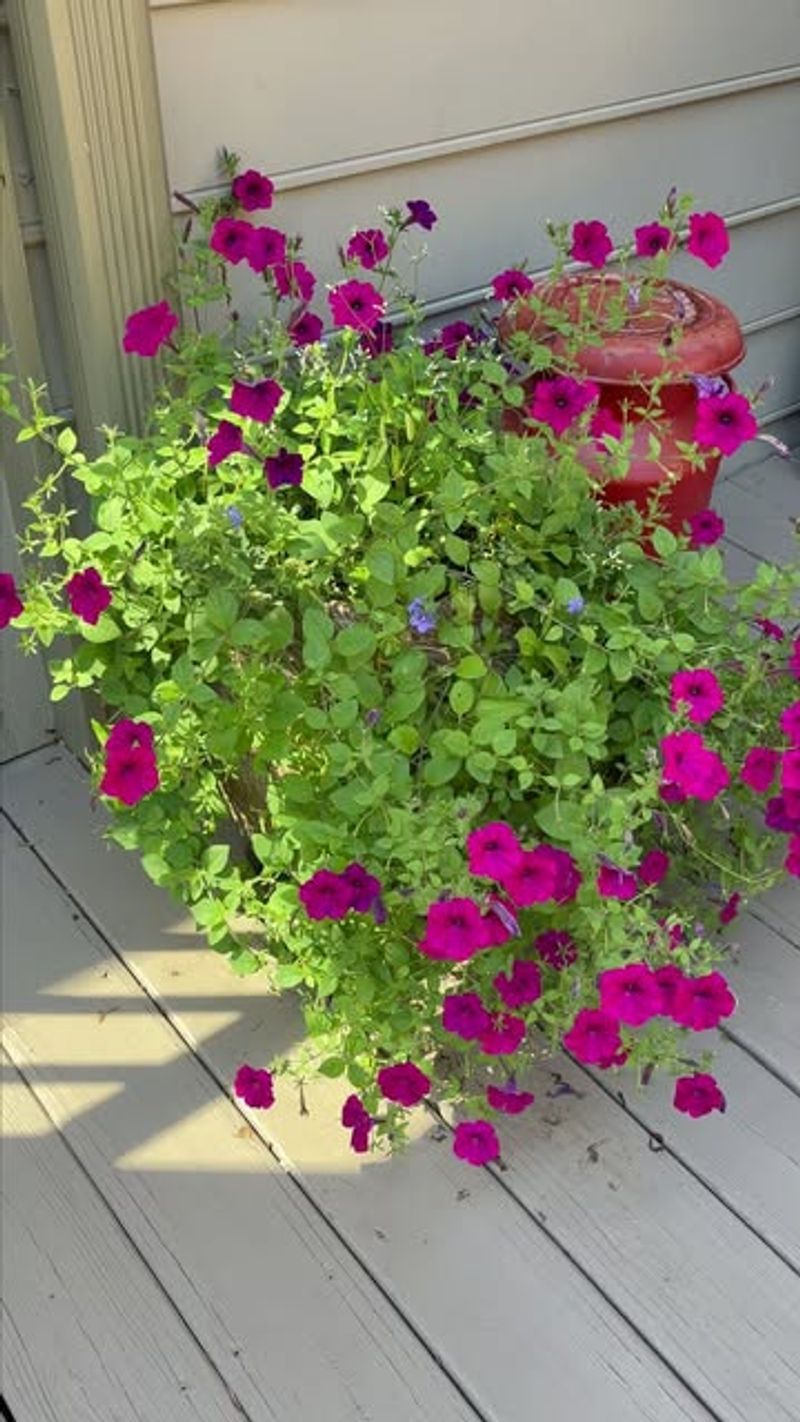
When a petunia has healthy stems but has stretched out and stopped producing flowers along most of its length, the most useful thing you can do is cut it back rather than keep watering and hoping. A measured trim, roughly half the stem length for a moderately leggy plant or 3 to 5 inches for a severely stretched one, removes the worn-out growth and gives the plant a reason to branch again. Clemson Cooperative Extension and Penn State Extension both support this approach for herbaceous plants that have outgrown their productive shape.
Deadheading still has a place for large-flowered and double cultivars that slow down when spent blooms are left to set seed, but it is a different tool solving a different problem. University of Minnesota Extension notes that many modern types continue blooming without routine removal of faded flowers, so knowing your cultivar helps you choose the right action. Follow the cutback with thorough watering, appropriate light, and feeding on your normal schedule, then give the plant several weeks to produce new shoots and buds. A fresh flush of color is a realistic possibility, not a certainty, and that honest expectation is far more useful than waiting for a recovery that passive care alone rarely delivers.