
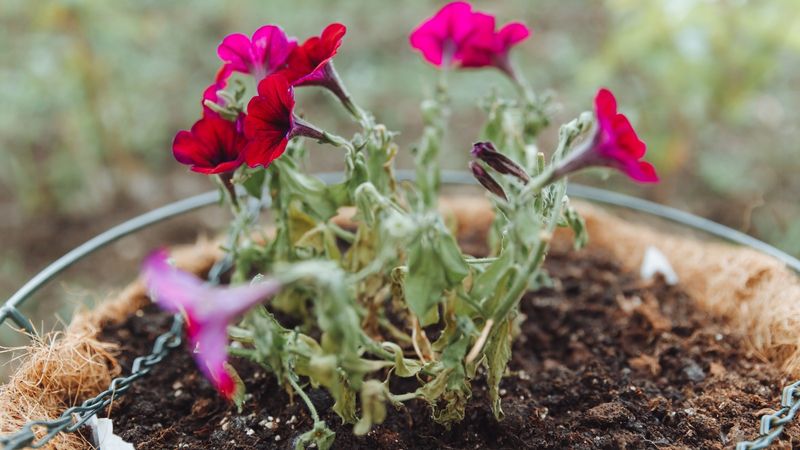
Petunias are cheerful, low-fuss flowers, but even well-meaning gardeners can hit a wall when their plants start looking limp and worn out despite regular attention. The culprit is often hiding underground, not on the surface where you’ve been watering.
A brief rinse at the soil line can fool you into thinking the job is done, while the roots below stay dry and stressed. Understanding what’s actually happening at root level can turn a struggling plant around faster than any fertilizer or extra spray.
A common quiet mistake can leave the deeper root zone dry
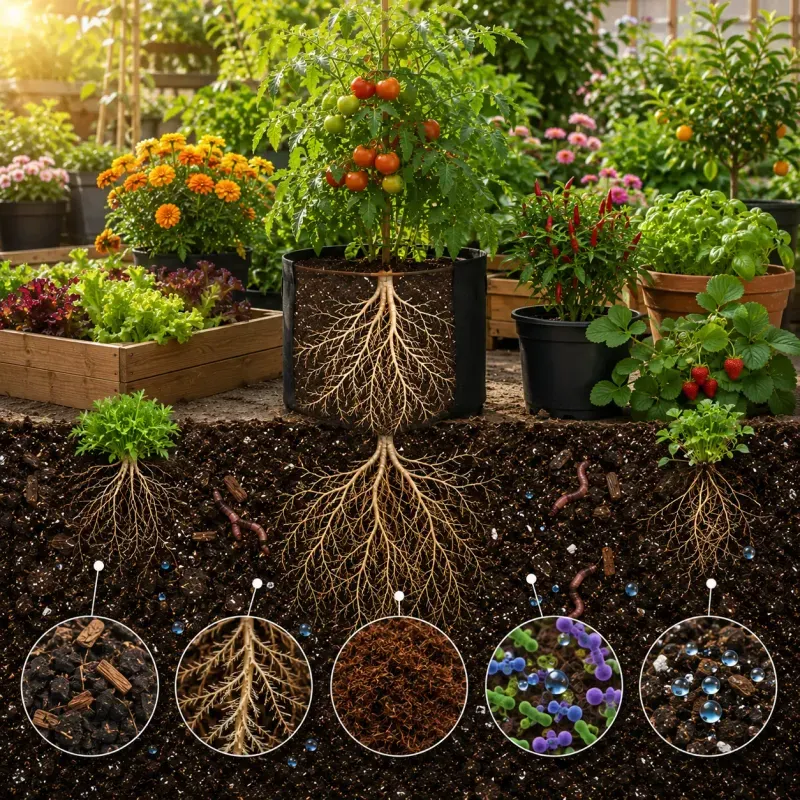
Light, frequent watering is one of the more common patterns worth investigating when petunias look persistently tired. When brief applications wet only the top layer of soil, they can encourage roots to stay shallow and fail to replenish moisture deeper down where roots actually do their work.
UF/IFAS guidance on petunias specifically warns that light, frequent irrigation encourages shallow rooting, which can leave plants less resilient during hot, dry stretches common across Florida and Texas.
That said, this pattern is not behind every failing petunia. Whether brief watering leaves the root zone dry depends on soil type, rainfall, container size, weather conditions, and how much the plant is actively growing.
Sandy soils dry out fast; clay or compacted soils can hold water much longer and may actually stay too wet between sessions. Neither soil type responds well to a one-size watering routine.
University of Georgia Extension advice on heat-wave watering reinforces the same governing principle: check moisture where the roots are, then respond to what you actually find. Wilting alone does not tell you whether the soil is too dry or already too wet.
The only reliable first step is getting below the surface before you decide what to do next.
Check below the surface before you reach for the hose
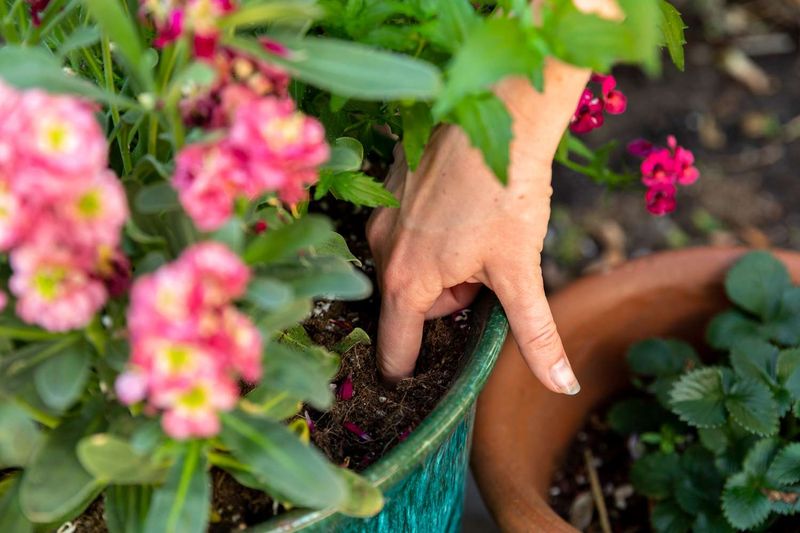
Scratching the soil surface and peeking underneath takes about five seconds and can save you from making a struggling plant worse. For a container, push your finger roughly an inch into the mix.
If it feels dry at that depth, the pot likely needs water. If it feels cool and damp, hold off and check again later.
For in-ground beds, a deeper read is more useful. Texas A&M AgriLife guidance on plant care recommends checking about an inch down as a quick reference point, while University of Georgia Extension advises probing several inches deeper when evaluating landscape moisture.
A wooden dowel or a pencil works fine if you prefer not to use your finger. The tool matters less than actually doing the check.
What you find controls your next move entirely. A dry root zone means water is genuinely needed, and you can proceed with a slow, thorough application.
A wet or damp root zone means the plant’s problem lies somewhere else, and adding more water could actively damage roots. UGA’s heat-wave watering guidance makes this point plainly: wilting in wet soil is a signal to investigate drainage and roots, not to keep watering.
Replacing a fixed schedule with a quick soil check is the single most useful habit change you can make.
When the root zone is dry, water thoroughly without flooding
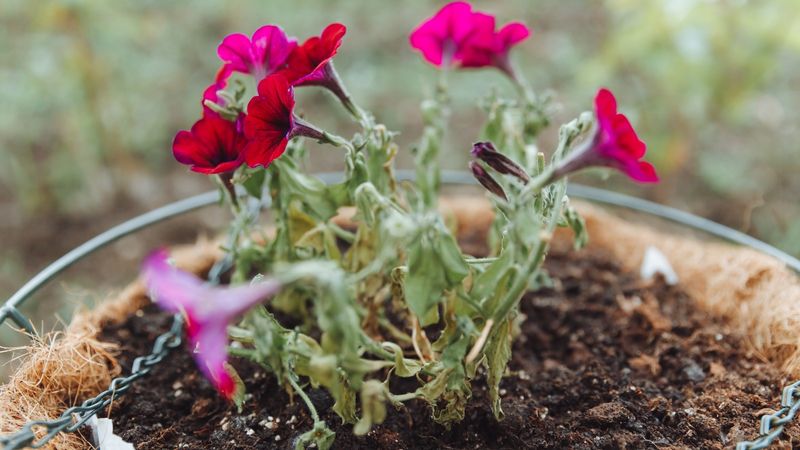
Once you have confirmed that the root zone is actually dry, the correction is straightforward: apply water slowly at the soil surface and let it move downward until it reaches the root area. The goal is to moisten the zone where roots are working, not to drench the surface and move on.
Repeated short sprays that wet only the top inch or two leave the deeper soil untouched and can reinforce the same shallow-root problem you are trying to correct.
UGA Extension’s heat-wave watering guidance describes shallow watering as a direct cause of weak, shallow rooting, a pattern that UF/IFAS echoes specifically for petunias. Slowing the application rate gives water time to soak in rather than running off the surface or pooling on top.
A slow trickle from a hose held near the soil base, or a soaker line, works better than a quick overhead blast for this purpose.
Success looks like root-zone moisture combined with free drainage, not saturated soil that stays soggy for days. Texas A&M AgriLife principles of irrigation management note that application rates and timing need to match soil type, plant demand, and weather, not a fixed number of minutes.
Thorough watering can correct shallow irrigation when the root zone is confirmed dry, but it will not fix decline caused by drainage problems, root rot, pests, or other stressors that require a separate diagnosis.
Containers change how quickly petunias lose usable moisture
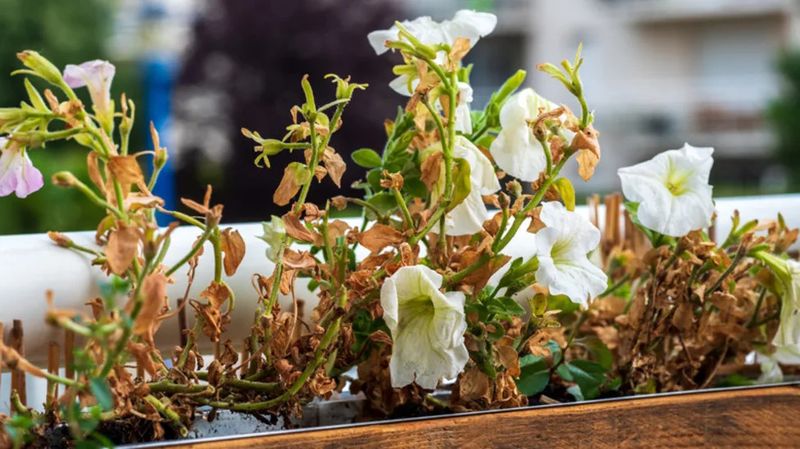
Pots, hanging baskets, and window boxes behave very differently from garden beds, and treating them the same way is a reliable path to trouble. A small container holds a limited volume of soil, loses moisture through its sides and bottom, and can go from adequately moist to critically dry within a single hot afternoon in Florida or Texas.
Hanging baskets face the added pressure of air circulation on all sides, which speeds evaporation considerably.
Colorado State University Extension guidance on container gardens notes that porous pots, wind exposure, intense sun, and mature root-bound plants can all accelerate moisture loss, sometimes requiring checks more than once a day during peak summer heat. That does not mean watering automatically every day; it means checking the root zone more frequently and responding to what you find.
A large, well-shaded container in a clay-heavy mix may stay moist for several days even in summer.
Every container must have clear, unobstructed drainage holes. Waterlogged potting mix pushes oxygen out of the root zone and creates conditions that invite root damage and rot, which can look almost identical to drought stress from above.
UF/IFAS petunia care guidance emphasizes moist, well-drained soil as a baseline requirement. Beds present a different picture: sandy soils dry fast, while clay or compacted soils retain water longer and may need less frequent intervention.
Soil texture and drainage always shape the correct interval more than any calendar rule.
A wilted petunia in wet soil needs a different diagnosis
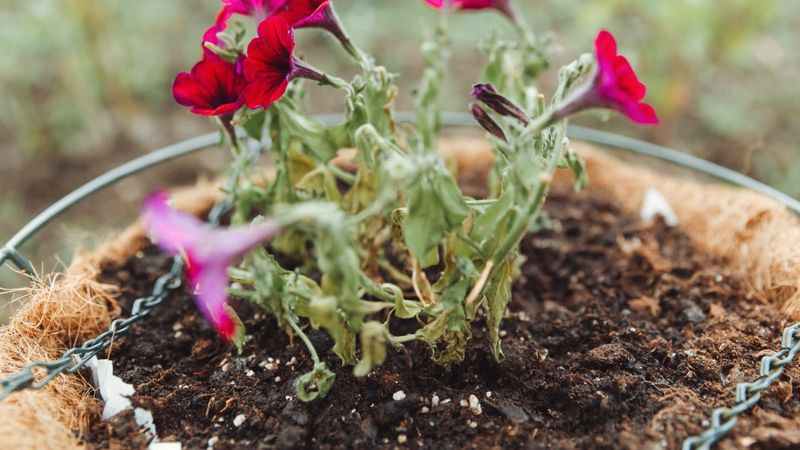
Reaching for the hose every time a petunia droops is one of the most common ways to turn a recoverable problem into a lost plant. Wilting does not automatically mean the plant is thirsty.
Roots that have been damaged by overwatering, poor drainage, or disease can lose the ability to move water upward even when the surrounding soil is saturated, which means the plant wilts for the opposite reason from what it appears.
An Ask Extension diagnosis of wilting petunias links frequent irrigation and slow-draining soil directly to Phytophthora-related wilt, a root disease that produces collapse in plants sitting in wet conditions. If you probe the soil and find it already wet, stop watering and shift your attention to drainage.
Check that the pot’s holes are clear and unblocked. Lift a container and look at the roots; healthy roots are white or tan and firm, while rotted roots are brown, mushy, and may smell off.
Other causes of tired, weak, or poorly blooming petunias include heat stress, inadequate sunlight, high temperatures that push plants into a semi-dormant state, nutrient depletion after weeks in the same soil, pest pressure from aphids or spider mites, and undersized containers that restrict root growth. University of Illinois Extension petunia guidance confirms that petunias need full sun and well-drained soil to perform well, and that cultural conditions matter as much as watering frequency.
A practical sequence: probe the soil first, water slowly only if the root zone is dry, confirm that excess water can escape freely, and consider moving a pot-bound plant into a somewhat larger container with fresh, well-draining mix if the roots are circling or densely packed.
Water the soil in a way that limits avoidable leaf wetness
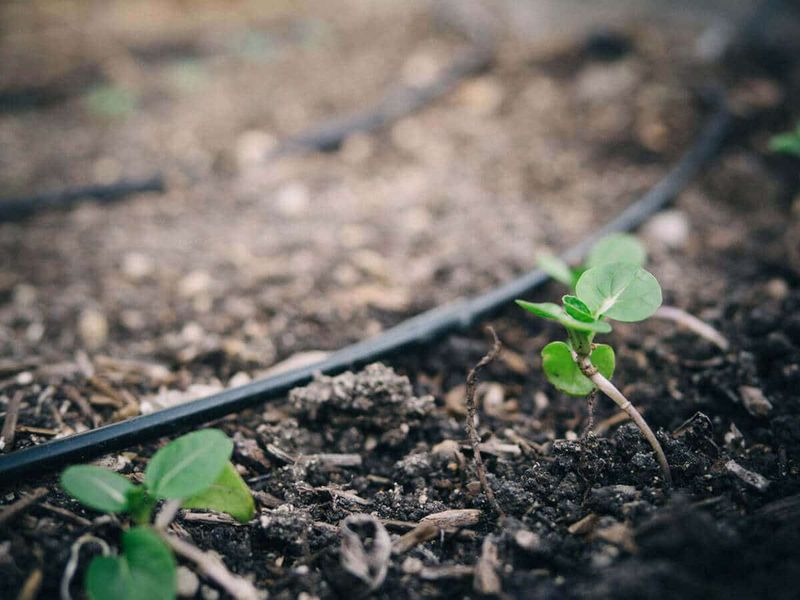
Where and when you direct water matters, though leaf wetness is not the primary explanation for most petunia decline. Aiming the hose or wand at the soil rather than overhead keeps foliage drier and reduces the time that moisture sits on leaves and stems.
That matters because leaves that stay wet for extended periods, especially overnight, create conditions that favor fungal problems.
University of Missouri Extension guidance on flowering annuals recommends morning as the preferred time for overhead irrigation, because foliage has more hours of warmth and air movement to dry before evening. Drip lines and soaker hoses go further by bypassing the leaves entirely, delivering water directly to the root zone with minimal splash.
These methods can reduce disease-favoring leaf wetness without requiring a major change to your routine.
Two persistent myths are worth correcting here. Morning watering reduces prolonged leaf wetness, but it does not guarantee disease prevention in all conditions.
And watering during the heat of the day does not automatically scorch or burn petunia leaves. Penn State Extension’s garden watering myths resource addresses this directly, noting that the scorch claim is not supported by evidence under normal garden conditions.
The stronger reasons to prefer morning watering are reduced evaporation loss and lower leaf wetness duration, not a risk of burning plants in the afternoon sun.
Build a moisture-check routine instead of following a fixed schedule
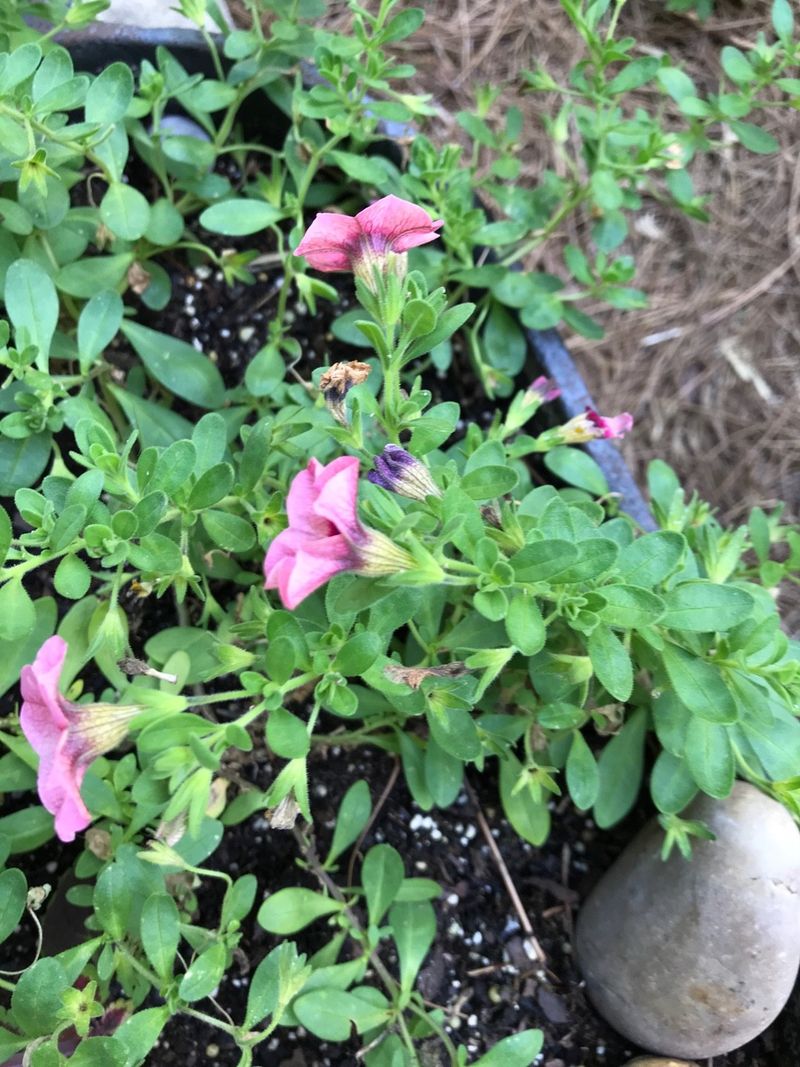
A repeatable habit replaces guesswork better than any calendar rule. Before each watering session, probe the soil at root depth, roughly an inch down in containers and several inches down in beds.
Water slowly and thoroughly only when that check reveals a dry root zone, then confirm that excess water is draining away freely rather than pooling at the bottom of the pot or collecting around the plant’s base.
Southern heat and small containers can shorten the interval between checks considerably, but that is not the same as justifying automatic daily watering. A large in-ground bed after a Florida afternoon thunderstorm may not need any supplemental water for several days.
UF/IFAS petunia guidance offers a broad starting point of 1 to 2 inches of water every 7 to 10 days for established Florida landscape petunias, but labels it explicitly as a general reference that requires adjustment for rainfall, soil type, container size, and current weather. Use it as orientation, not a prescription.
When the soil is wet and the plant remains wilted, the answer is never more water. That combination calls for a drainage check, a root inspection, and possibly a move to a larger container with fresh, well-draining potting mix.
CSU Extension container garden guidance reinforces that continuously waterlogged media damages roots and displaces oxygen, compounding rather than relieving plant stress. The real fix for tired petunias is better timing and deeper delivery, not simply adding more water to an already uncertain situation.