
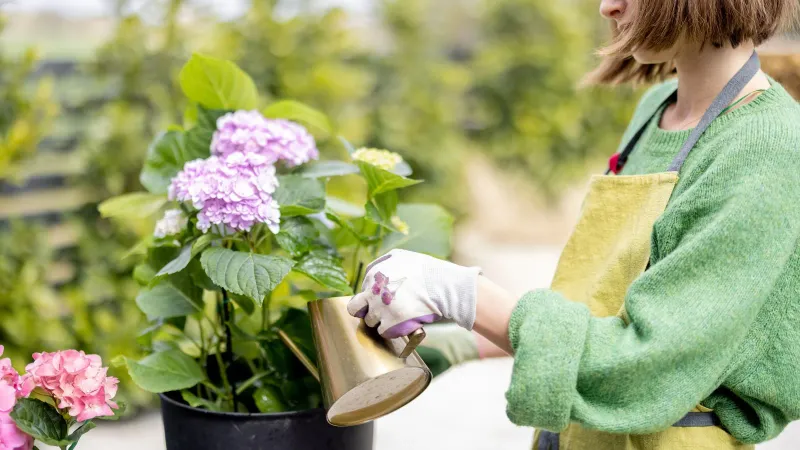
A drooping hydrangea in a pot can feel like a small emergency, especially when the leaves go limp seemingly out of nowhere. The good news is that many potted hydrangeas recover well once you figure out what is actually stressing them.
The tricky part is that wilting does not always mean the plant needs water, and reaching for the hose first can sometimes make things worse.
Wilting signals stress, not a single diagnosis
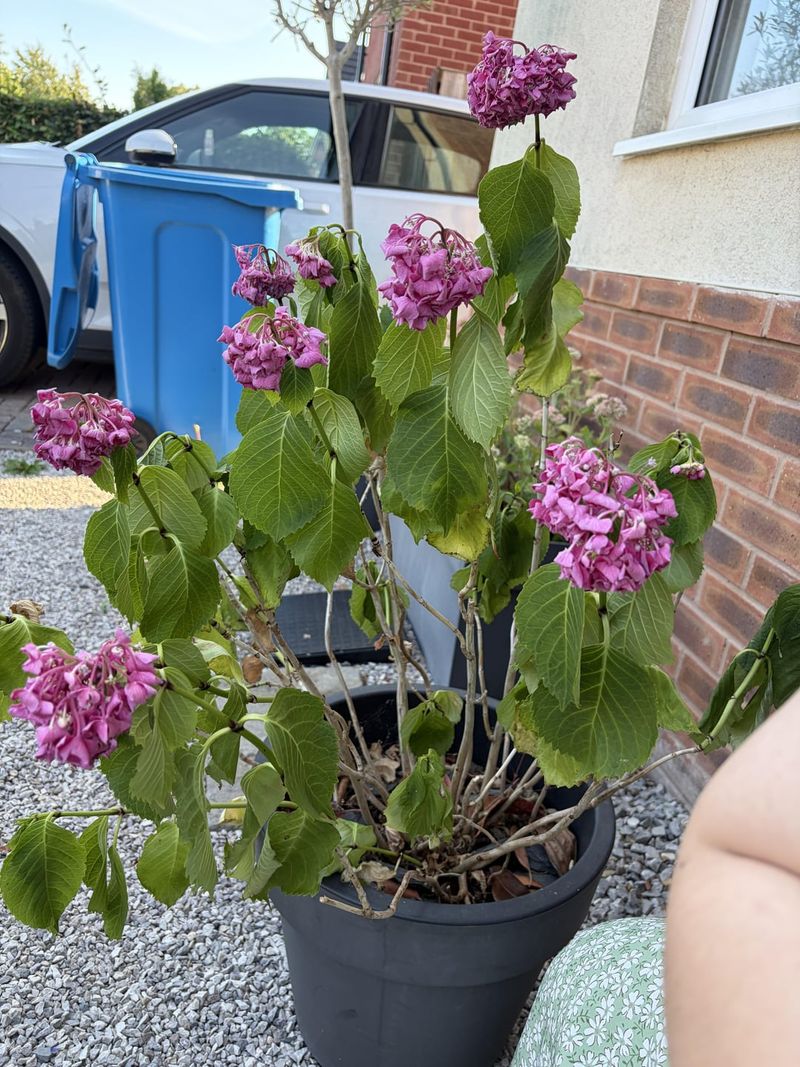
Limp leaves on a potted hydrangea are a signal worth reading carefully, not an automatic order to water. Several very different problems can produce nearly identical drooping: the soil may be bone dry, the roots may be sitting in waterlogged mix, afternoon heat may be overwhelming the plant, or damaged roots may be failing to move water upward no matter how much moisture surrounds them.
Treating wilt as a single diagnosis instead of a symptom leads to the most common mistake, which is adding water to a pot that does not need it.
Heat alone can cause a healthy, well-watered hydrangea to droop during the hottest part of the day. UGA Cherokee County Master Gardener guidance notes that afternoon wilt can be a temporary heat response rather than an emergency, and that the plant may recover on its own as temperatures fall in the evening.
Seeing the leaves perk back up without any watering is a strong sign that heat, not drought, was the trigger.
Before touching the watering can, press a finger or a wooden skewer several inches into the potting mix. The surface layer can feel dry while the root zone is still adequately moist, and that surface reading will mislead you.
Extension specialists emphasize that both underwatering and overwatering can produce drooping foliage because roots under oxygen stress or physical damage may be unable to supply water to the leaves. Check what is actually happening below the surface, then choose your next step accordingly.
Make the first move: reduce heat and check the root zone
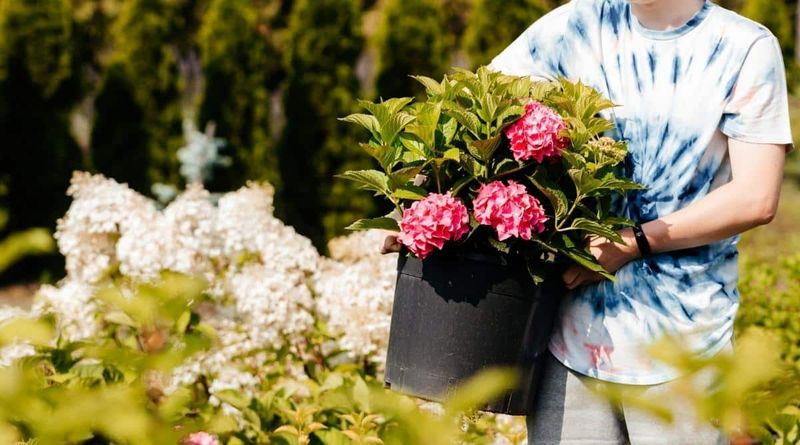
Moving the container is a reasonable first action even before you know the exact cause of the wilt. Afternoon sun beating down on a dark pot raises the root-zone temperature and accelerates moisture loss, and simply shifting the plant to a sheltered spot can reduce that stress within minutes.
RHS research on hydrangeas in hotter conditions specifically recommends moving container-grown hydrangeas into dappled shade during heatwaves, treating the relocation as an active management tool rather than a last resort.
Once the pot is out of direct glare, check the moisture several inches below the surface. A dry top layer is not enough information.
Push your finger, a moisture meter probe, or a wooden skewer four to five inches into the mix and feel what you find. Penn State Extension advises checking below the surface because the top layer can appear dry while the deeper root zone still holds adequate moisture, and watering into an already-wet zone compounds the problem.
The right shade target for a bigleaf hydrangea is generally morning sun with afternoon protection, as UGA Cooperative Extension guidance on bigleaf hydrangea recommends. Panicle types tolerate more sun, but container conditions, wind, and heat still push all hydrangeas toward faster drying than ground-planted specimens.
Keep the light match appropriate to your cultivar and climate, and treat the shaded position as temporary relief while you complete your moisture check.
Water a dry hydrangea slowly and thoroughly
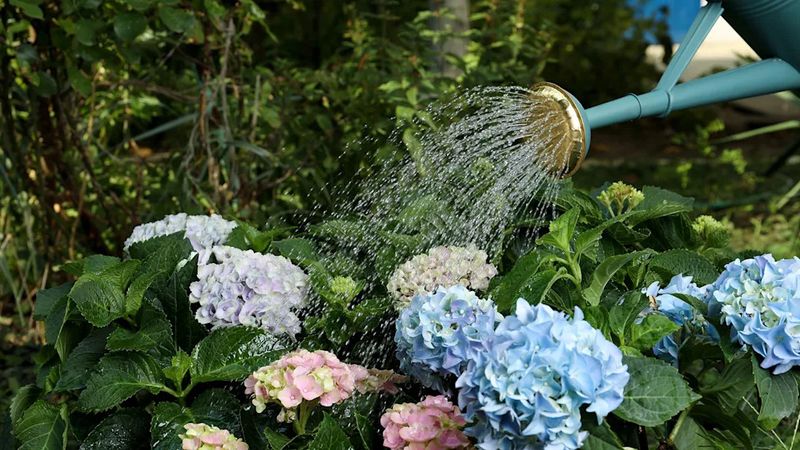
Once you confirm the root zone is genuinely dry, water matters, and how you apply it matters just as much as whether you apply it. Shallow, repeated sips wet only the top few inches of the mix and can give a false sense of having watered while the lower root zone stays dry.
The goal is to wet the entire root ball, which means applying water slowly enough for it to absorb rather than run across the surface and straight out the sides of the pot.
University of Missouri Extension guidance on potted flowering plants recommends watering thoroughly until water exits the drainage holes, confirming that moisture has reached the full depth of the root ball. Keep a slow, steady flow going and watch for that drainage.
When water begins to run out the bottom and the mix feels uniformly heavy, the root ball is adequately wetted and you can stop.
After watering, let the pot drain freely. University of Minnesota Extension notes that container plants in hot, windy weather may need water more frequently than a fixed schedule would suggest, but the correct trigger is always the root-zone moisture level, not the calendar.
Check below the surface rather than assuming a set number of days between waterings, and adjust your schedule to the actual drying rate of your specific pot, mix, and conditions.
Use a brief soak only when dry soil repels water
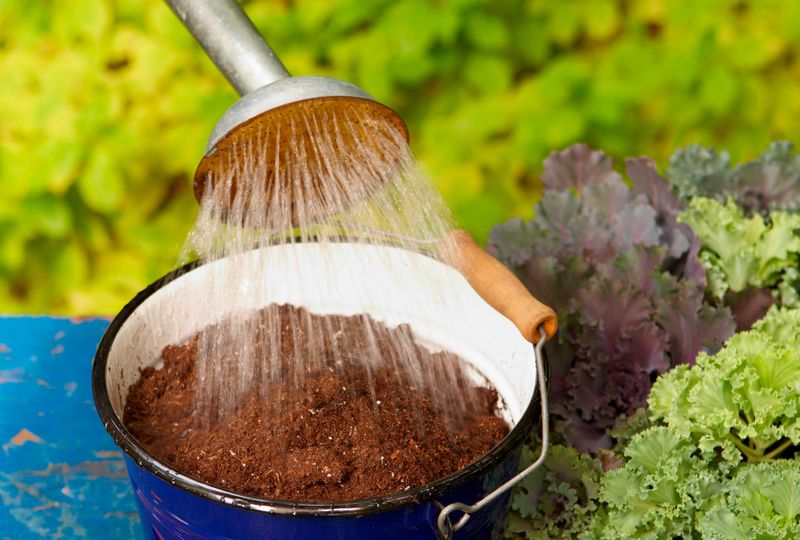
Potting mix that has dried out severely can become almost hydrophobic, meaning water poured from the top runs along the inside edge of the pot and drains out the bottom before it ever wets the center of the root ball. You will recognize this situation when the mix has visibly pulled away from the container walls, when water disappears almost instantly after pouring, or when the pot feels unusually light even right after you have watered it.
For this specific case, Missouri Extension’s care guide for potted flowering plants recommends submerging the pot or root ball in water until the mix is fully wetted, which you can tell by watching for air bubbles to slow and stop. Set the pot in a bucket or basin deep enough to cover the root ball, let it soak until bubbling stops, then lift it out and allow it to drain completely before returning it to its spot.
This is a one-time rescue technique, not a routine watering method. UGA Cooperative Extension’s container gardening guidance is clear that pots should never be left standing in water, whether in a saucer, a decorative cachepot, or a bucket.
Prolonged saturation cuts off oxygen to the roots and raises the risk of root disease. Soak briefly, drain fully, and empty any water that collects beneath the pot within an hour of watering.
Do not add water to already-wet soil
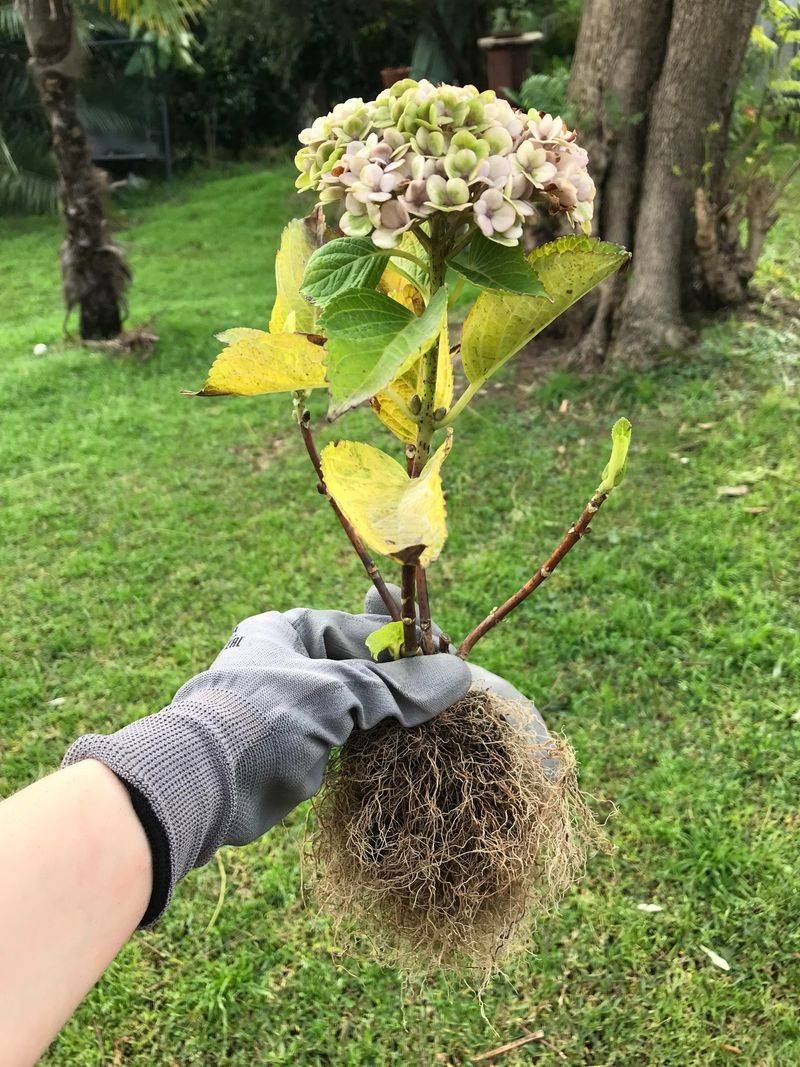
A wilted hydrangea growing in wet or constantly saturated potting mix is a different problem entirely, and adding more water will not help. Roots that sit in waterlogged soil lose access to oxygen, and without oxygen they cannot function normally.
The plant may droop just as severely as a drought-stressed plant, but the cause and the fix point in opposite directions.
Start by checking the drainage setup. UGA Cooperative Extension’s container gardening publication recommends that pots have unobstructed drainage holes, that decorative cachepots hold a separate nursery pot rather than the plant directly, and that any water collecting in a saucer or outer pot be emptied promptly.
A blocked drainage hole or a saucer that never gets emptied can keep the root zone saturated even when the gardener believes they are watering correctly.
Persistent wetness, a sour or foul smell from the potting mix, soft or discolored stems, and yellowing foliage that does not improve are all signs that something more serious may be at work. Extension specialists addressing hydrangea problems note that a plant showing these symptoms alongside wet soil may need the root ball inspected, damaged tissue removed, and the plant repotted into fresh, well-draining mix rather than simply left to dry out.
Penn State Extension’s hydrangea disease resource also cautions that wet foliage and saturated growing conditions can increase the risk of fungal disease, so correcting drainage is a priority on multiple fronts.
Reassess before trying another remedy
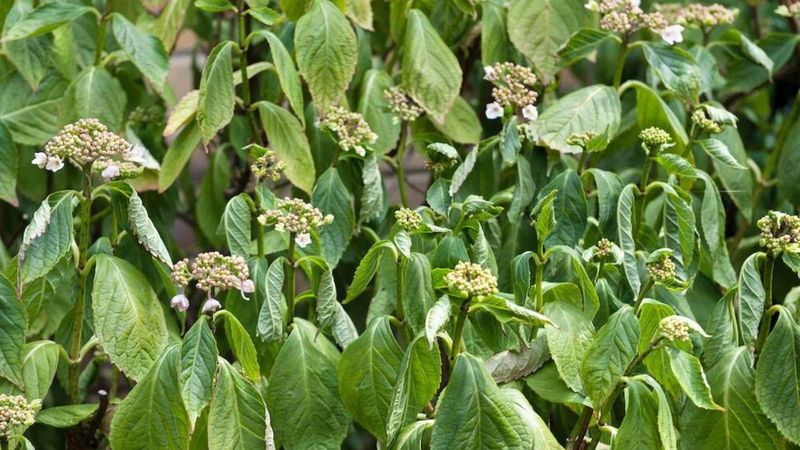
After moving the pot, checking the moisture, and either watering thoroughly or correcting a drainage problem, the most productive next step is patience. Repeatedly intervening, watering again, moving the pot to a new spot, or reaching for a fertilizer or foliar spray can mask what is actually happening and make it harder to know whether your first response worked.
Give the plant several hours and then check again later that same day, and again the following morning.
A hydrangea stressed by short-term heat or dehydration may show visible improvement within a few hours if its roots remain functional. Extension guidance on hydrangea wilting notes that a very dry plant can recover quickly when roots are still viable, but prolonged drought can damage roots and cause permanent wilting or dieback.
Recovery is not guaranteed, and the speed of improvement tells you something important about the underlying condition of the root system.
Wilt that persists despite correct moisture and reduced heat exposure, combined with scorch, progressive dieback, or worsening symptoms over several days, points toward a deeper problem. Extension specialists recommend focusing on the moisture and drainage pattern as the primary diagnostic lens, and seeking knowledgeable help from a local cooperative extension office or master gardener program when the cause remains unclear after basic steps.
Continuing to apply remedies without a clear diagnosis rarely improves the outcome and can sometimes worsen it.
Prevent another wilt with adaptable container care
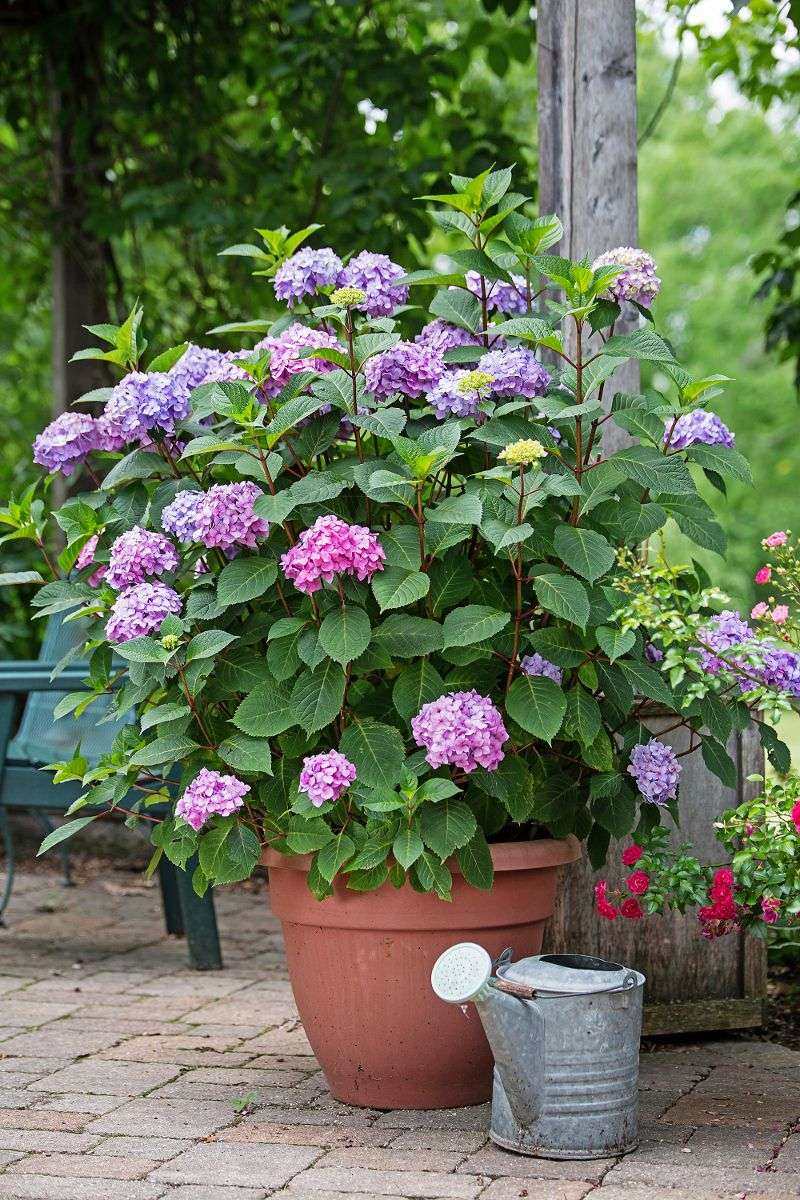
Once the plant stabilizes, returning it to its normal light position should happen gradually rather than all at once. UGA Extension’s vacation plant care guidance recommends moving container plants back to their regular exposure incrementally rather than shifting them directly from deep shade into intense sun, which can cause sunscald on foliage that has adjusted to lower light levels.
How fast a container dries out depends on a combination of factors that no single watering schedule can cover. Pot material, pot size, potting mix composition, ambient temperature, wind exposure, humidity, and whether the plant is actively flowering all affect the drying rate.
University of Minnesota Extension notes that during extreme heat, container plants may need water daily or even more than once a day, but the correct trigger is always the root-zone moisture level rather than a fixed interval. A finger check several inches into the mix takes ten seconds and gives you better information than any calendar.
For bigleaf hydrangeas, UGA Cooperative Extension recommends keeping the medium consistently moist but not saturated, with morning sun and afternoon shade as a general light target. The practical sequence that protects against another wilt episode is straightforward: shade during peak heat, check before watering, water thoroughly only when the root zone is dry, drain completely, and investigate drainage if wetness persists.
A hydrangea that gets those basics reliably is far less likely to send you the distress signal of limp leaves again.