
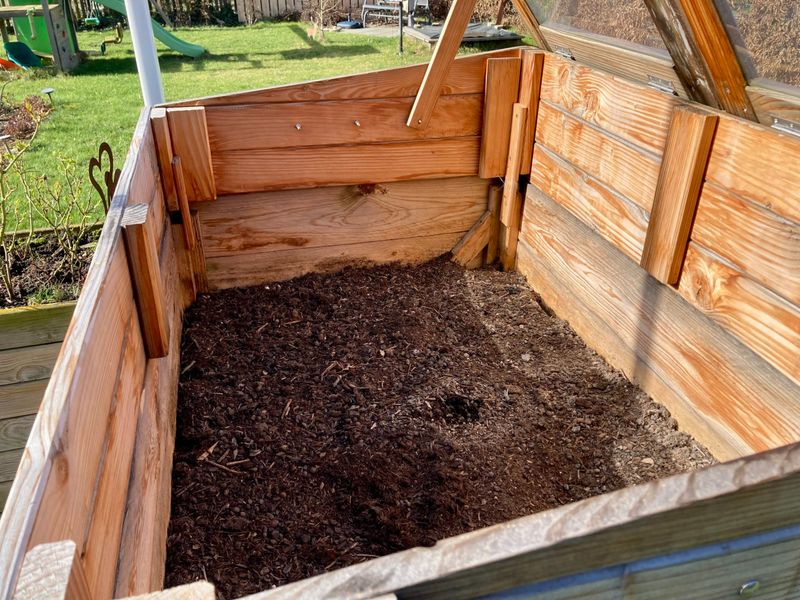
You walk out to your raised bed and the soil sits a few inches below the top board. It looks like something went wrong, but a lower soil line is a common maintenance issue.
Most of the time you can fix it without digging everything out. Here is how to figure out what happened and bring your bed back to full growing depth.
A lower soil line usually calls for a top-up, not a rebuild
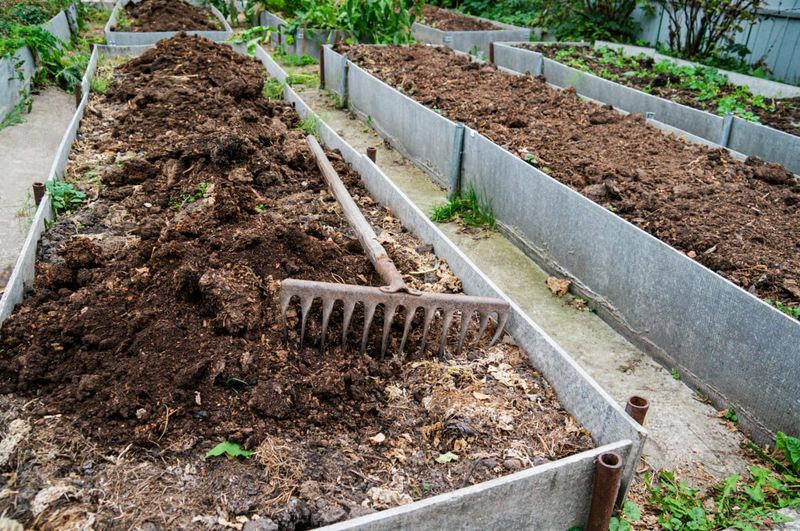
Loose fill settles, and the organic matter mixed into it slowly breaks down. Both can shrink the volume of a raised bed, which is why the soil line sometimes drops below the rim.
Oregon State Extension treats this kind of volume loss as an expected feature of raised beds.
Not every bed drops, and there is no set rate. A bed filled last spring may look very different from one built five years ago, so your own bed is the only guide that counts.
The fix is simple. Restore the growing depth the bed has lost by adding suitable material on top, rather than emptying the frame and starting over.
Your established soil, roots, and helpful soil life stay where they are. Extension guidance from UF/IFAS, found in its raised-bed publication, points to topping beds off after a planting season as routine care.
Check for escaping soil before blaming normal settling
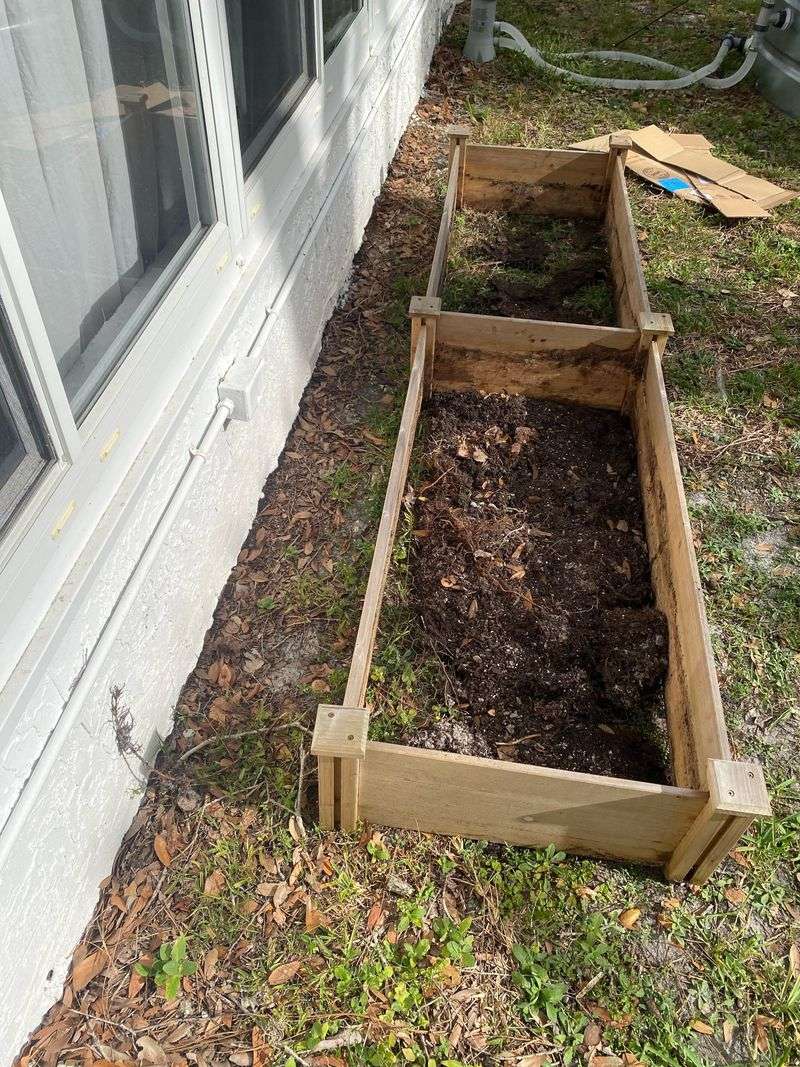
Ordinary settling tends to look gradual and fairly even across the bed. The surface sinks a bit all over, and the bed still looks intact at the edges.
A sudden drop, or a bed that is low in one corner and full in another, deserves a closer look. Crouch down and check the seams between boards, the corners, and the bottom edge.
Look for little fans of soil on the ground outside the frame or gaps where boards have warped or shifted.
Think of this as a practical troubleshooting step, not a diagnosis. Finding a gap does not prove that is the only reason the soil dropped, and finding none does not rule it out.
If the bed sits on a hard surface like a patio or gravel, University of Minnesota Extension notes that a liner can help keep soil in the bed. Fix any gaps first, then refill.
Choose a soil-based refill, not compost alone
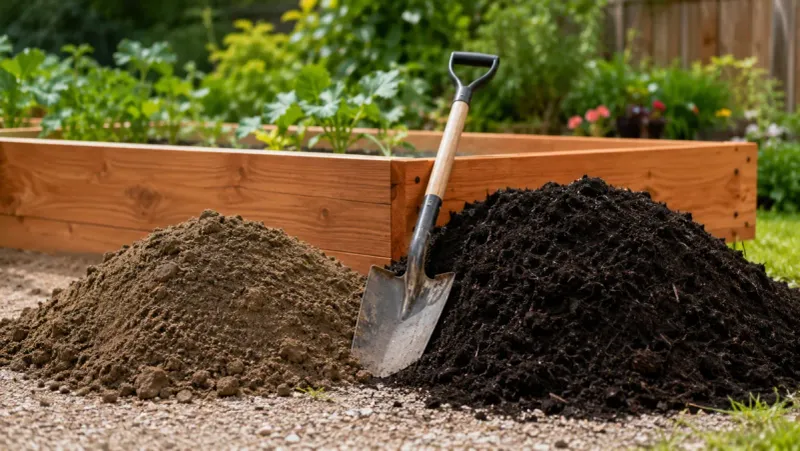
Quality topsoil or a raised-bed mix made for vegetables is the right material for restoring lost volume. Finished compost works best as an amendment blended into that soil-based material, not as the whole fill.
Oregon State Extension cautions against filling beds with compost alone because it lacks the mineral part of real soil.
Extension sources suggest different proportions, and the right blend depends on what is already in your bed and what kind of compost you have. So skip the one-size recipe and look at your existing soil.
If it is dark, crumbly, and drains well, a modest amount of compost in the top-up may be plenty.
Know where your material comes from. Soil from an unknown site could carry contaminants such as lead or pesticide residues, and UMN Extension advises avoiding imported soil from those kinds of sites.
If contamination is a worry, test it or buy a known clean growing medium.
Top up the measured shortfall and leave established soil intact
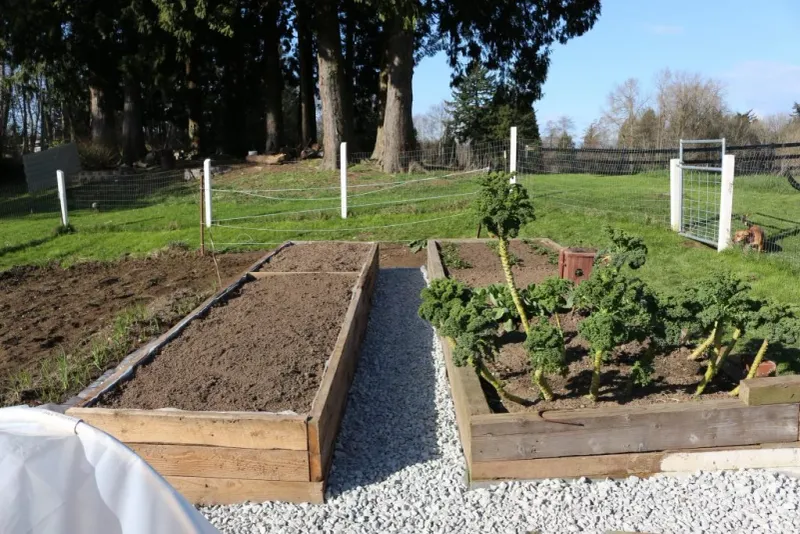
Start with a tape measure. Lay a straight board across the top of the frame and measure down to the soil in a few spots.
Compare that to the depth you want for your crops, and you have your real shortfall.
Add enough of your chosen material to close that gap, then rake it level. Water it in gently so it settles.
Blend only the top layer if needed, and skip deep digging. Illinois Extension says repeated tilling can damage developing soil structure and speed settling, and UMN Extension recommends minimal or no tillage once a bed is established.
You may have seen UF/IFAS mention a newly filled bed settling about 2 inches in its raised-bed guide. That is one example, not a yearly promise or a refill target.
Your tape measure gives the better answer.
Time the top-up around Southern planting schedules
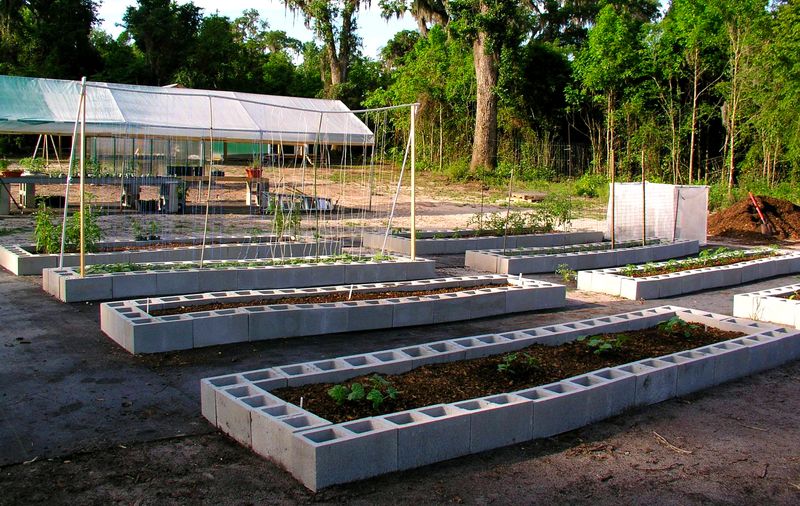
Forget the idea that fall is the deadline. In much of Florida and Texas, fall is an active planting season, and your bed may be full of crops when the calendar says it is time to refill.
A better rule is to top up when the bed is between plantings and actually needs it. That might be after pulling summer tomatoes, before setting out fall transplants, or after a spring crop finishes.
A quick measurement tells you whether the job is needed at all.
If you plan to add organic material before a fall garden, make sure it is ready to use. Texas gardeners can look at Texas A&M AgriLife guidance, which says material added before fall planting should be well-rotted.
Florida growers planning fall plantings can check the UF/IFAS vegetable gardening guide for timing.
Use amendments carefully and let soil tests guide additions
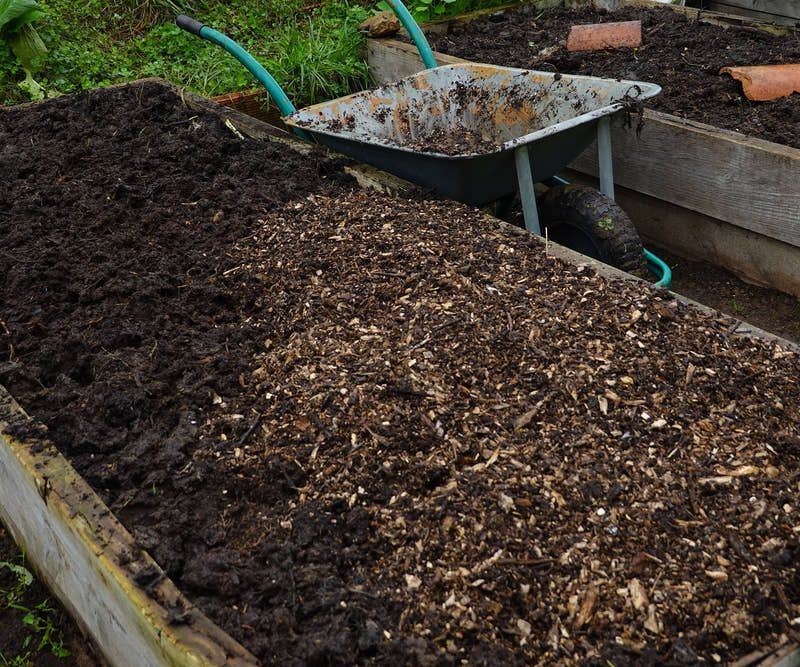
Adding a big layer of compost or manure every year may feel like good care, but more is not always better. Heavy, repeated additions can build up phosphorus and soluble salts in the soil, and UMN Extension describes problems that can come from using too much.
A soil test takes the guesswork out. UMN Extension suggests testing established beds every 2 to 3 years, and more often when you use compost or manure.
Your local county extension office can point you to a lab.
Skip fresh manure as a quick fix. UGA Extension warns that it can carry human pathogens and can harm seeds or young plants.
For a bed that feeds your family, stick with finished compost in modest amounts and let test results steer the rest.
Maintain the bed without starting over
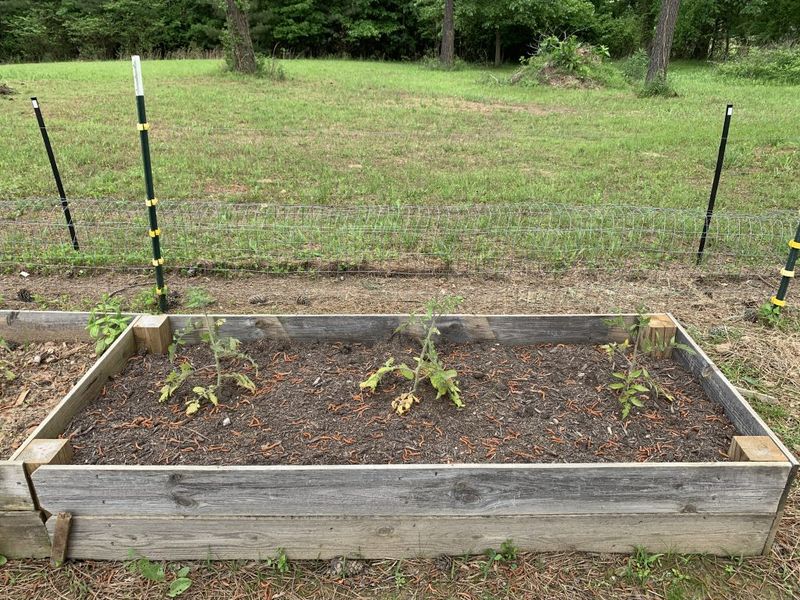
Keep the routine simple. Look for escaping soil if the drop seems fast or lopsided, measure the real shortfall, and add only what restores usable depth.
Use soil-based material with finished compost as needed, and time the work between crops. As UF/IFAS suggests, a top-off after a planting season is normal upkeep.
A lower soil line rarely means a full rebuild. A tape measure, a bag of good soil, and a little timing usually bring the bed right back.