
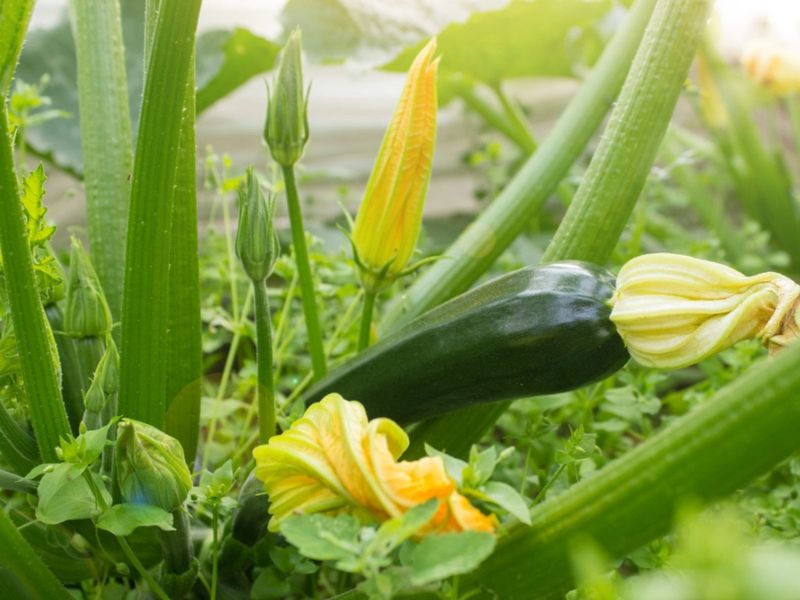
Watching your squash plant explode with bright yellow blossoms while producing almost no actual squash is one of the most frustrating surprises in a summer garden. The good news is that a simple morning routine – hand-pollinating open female flowers – is often the fastest first step toward getting fruit on the vine.
Understanding why all those flowers are not turning into squash is the key to knowing whether hand-pollination will help or whether something else needs your attention.
Many squash blossoms do not mean many potential squash
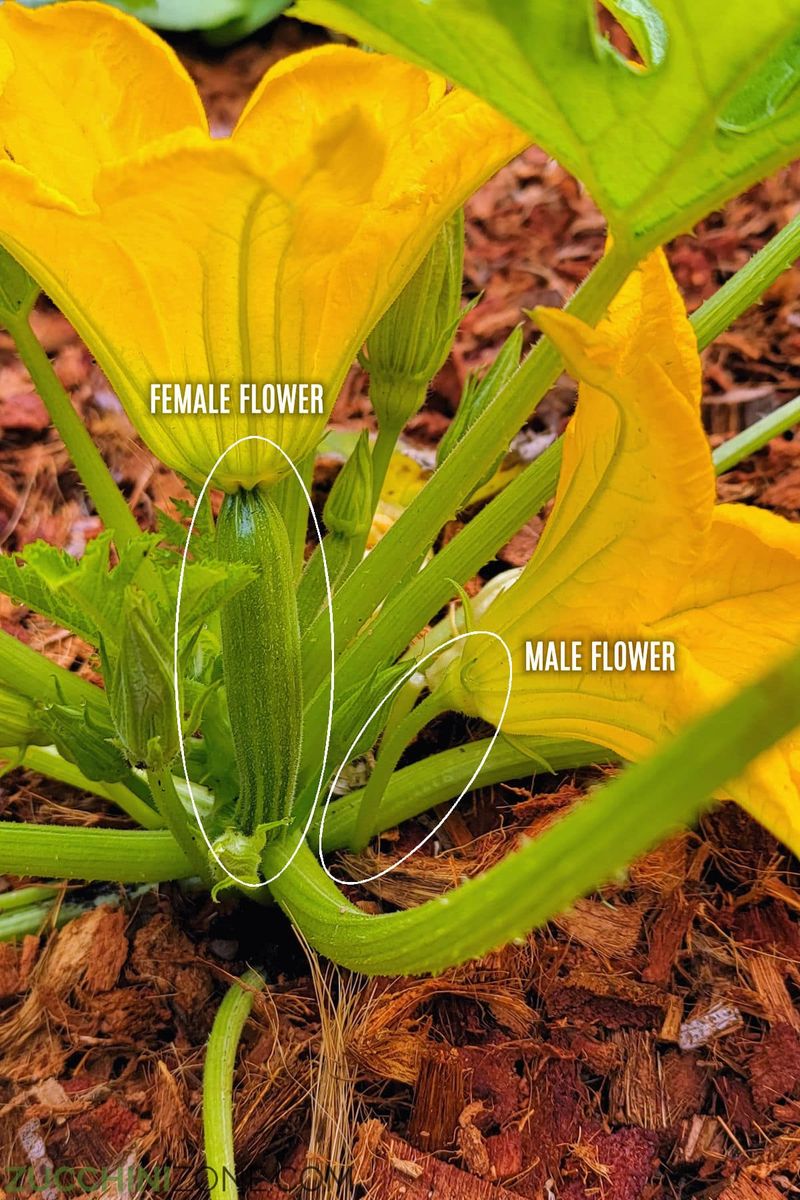
A squash plant loaded with blossoms can look like it should be producing fruit by the armful. The catch is that squash plants grow two completely different kinds of flowers, and only one type can ever become a squash.
Male flowers grow on longer, thinner stems and exist solely to produce pollen. Female flowers sit on shorter stems and carry a swollen base behind the petals that looks exactly like a tiny, undeveloped squash – that swollen base is the ovary, and it is the only part of the plant that can grow into harvestable fruit.
According to UGA Extension guidance on homegrown squash, pollen must travel from a male flower to the stigma inside a female flower before that ovary can develop. One plant can accomplish this on its own because it carries both flower types – no second squash plant is required, as long as insects or hand-pollination move pollen to the female flowers.
What the plant cannot do is skip that transfer step.
Another thing worth knowing: individual squash flowers are generally open for only a few hours in the morning before they close and drop. If you walk past your plant at different points during the day and spot open flowers each time, you are likely seeing a fresh succession of blooms, not a single flower holding open all day.
Before attempting any rescue, spend a few minutes in the early morning identifying which open flowers have that swollen miniature-squash base behind the petals – those are the female flowers worth targeting first.
Heat can disrupt fruit set, but it is not the only diagnosis
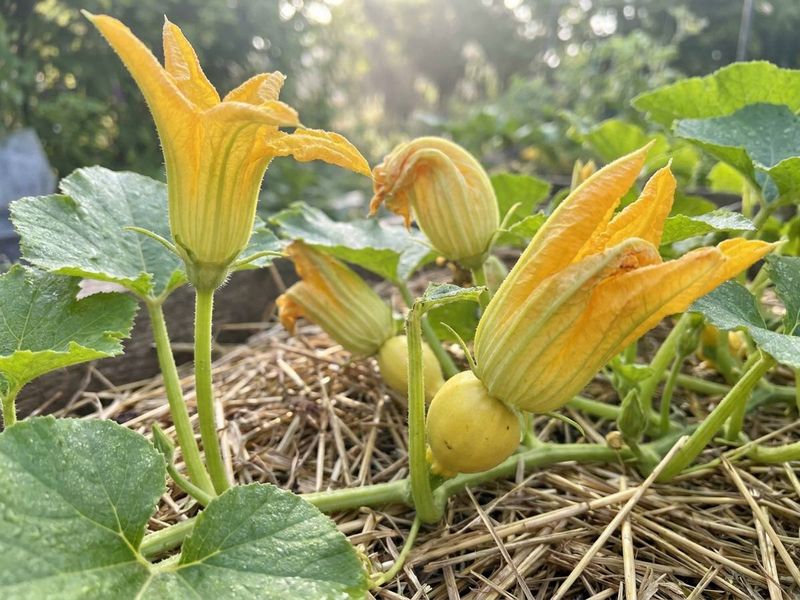
Pollen transfer is only half the story. Even when bees are active and pollen is moving, hot summer weather can interfere with the process at multiple points.
Daytime temperatures consistently in the 90s, combined with nighttime temperatures that stay in the 70s, are the kinds of conditions that UMN Extension identifies as warning ranges for flower and small-fruit abortion in cucurbits. These are useful benchmarks, not hard cutoffs – different squash varieties and local growing conditions can shift those numbers.
Heat can reduce how many bees and squash bees visit your garden during the narrow morning window when flowers are open. It can also reduce pollen viability, meaning the pollen itself may be less capable of fertilizing a female flower even if it does arrive.
In some conditions, heat shifts the ratio of male to female flowers, and young fruit that starts to develop may still abort before it reaches any usable size. Florida Extension research documents that limited pollinator activity, unfavorable weather, skewed flower-sex ratios, and reduced pollen viability under extreme heat or humidity are all contributors to poor squash fruit set – often acting together rather than in isolation.
Drought stress and excess soil moisture can add to the problem. A plant fighting both heat and inconsistent watering may drop flowers or abort young fruit regardless of how well pollen is being delivered.
Hand-pollination can address the specific problem of missed pollen transfer, but it cannot reverse heat damage to pollen, restore female flowers the plant is not producing, or stop fruit abortion driven by broader plant stress. Identifying which problem you are actually dealing with matters before you commit to one fix.
Hand-pollinate open female flowers in the morning
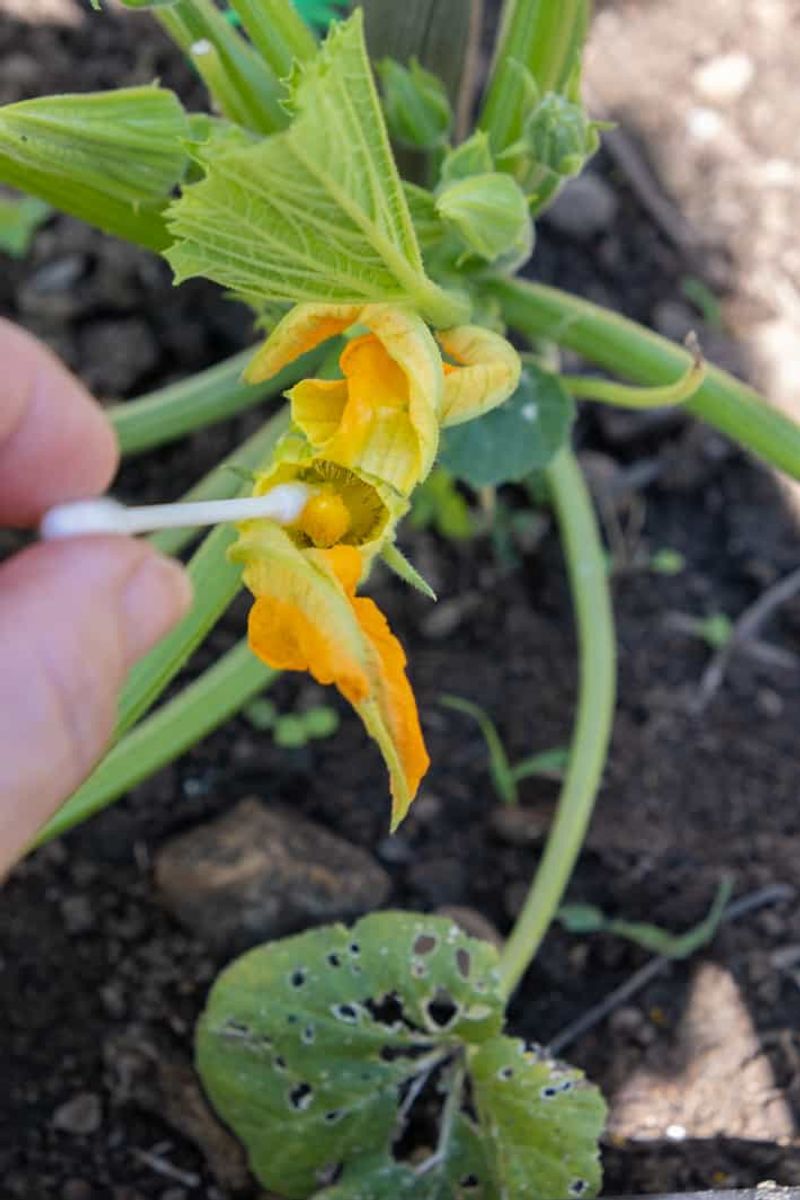
When open female flowers are present but bees are not moving enough pollen – whether because of heat, rain, or low pollinator activity – hand-pollination is the fastest at-home rescue to try. The procedure is straightforward and takes only a few minutes per flower.
Head out to the garden early, ideally right after sunrise, while the flowers are freshly open and receptive.
Locate a male flower – the one on the longer, thinner stem – and pick it or simply peel back its yellow petals to expose the pollen-bearing structure in the center, called the anther. UGA Extension recommends touching that anther gently but directly to the stigma, the sticky central structure inside each open female flower.
A clean cotton swab works just as well if you prefer not to handle the flower directly – dab the swab against the anther to collect pollen, then transfer it to the stigma of the female flower with light, even contact. Avoid scrubbing or pressing hard, since rough handling can damage the stigma.
Repeat the transfer for every open female flower you find that morning. One male flower typically carries enough pollen to serve several female flowers, but using a fresh male flower for each transfer is a reasonable precaution when pollen viability is uncertain.
If the plant has no open female flowers at all when you check, hand-pollination cannot help yet – return the next morning and look again. The window closes quickly, so consistency matters more than perfection on any single day.
Use the young fruit to judge what happened next
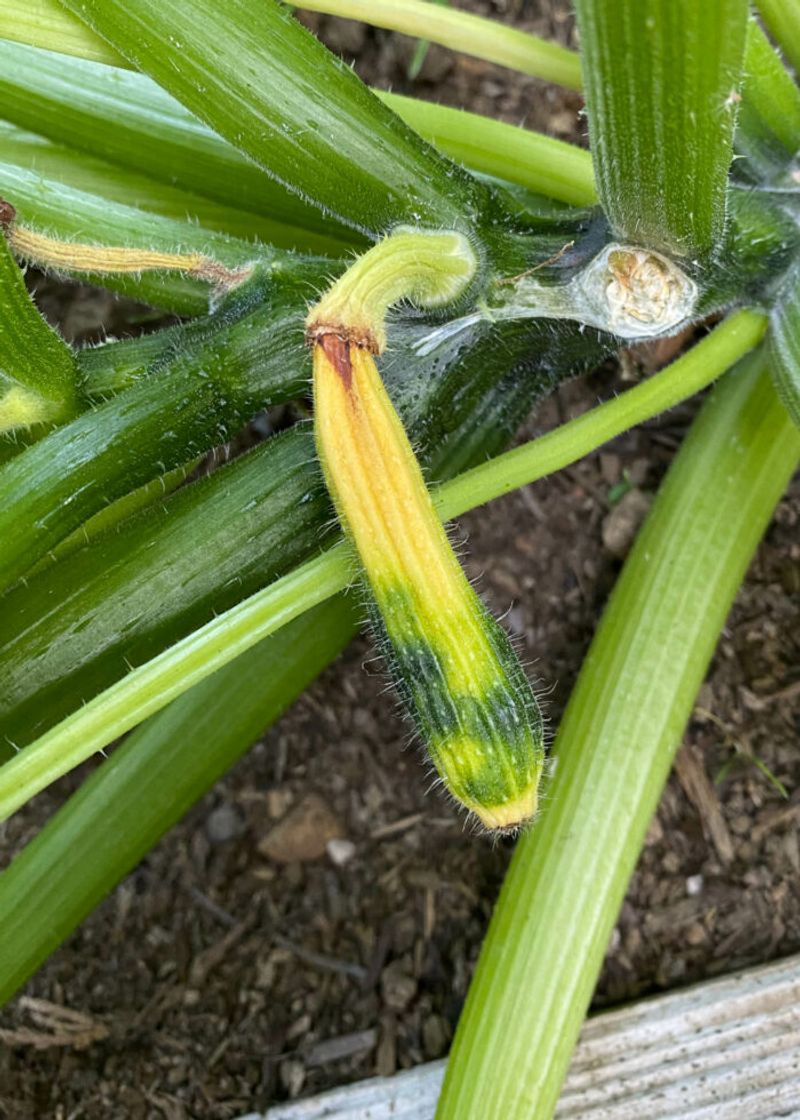
After you hand-pollinate, the young fruit becomes your best diagnostic tool. A female flower that closes and leaves a firm, slowly enlarging green or yellow squash behind it is a good sign – pollination likely succeeded and the fruit is developing.
Give it a few days before drawing conclusions, since early growth can be slow in hot weather.
A tiny fruit that turns yellow, shrivels, or drops off within a few days of the flower closing is a different story. Incomplete pollination is one possible explanation, and continuing your morning hand-pollination routine is still worth doing.
Florida IFAS Extension research on cucurbit pollination notes that poor pollination can also produce misshapen fruit – squash that grows unevenly or tapers off at one end – because not all parts of the ovary received adequate pollen. That kind of irregular shape is a useful clue that pollen transfer was incomplete rather than absent entirely.
When young fruit repeatedly aborts despite your daily hand-pollination efforts, it is time to widen the diagnosis. UMN Extension identifies heat, drought, excess moisture, disease, and pests as separate causes of fruit abortion that hand-pollination cannot address.
Check the plant carefully for signs of squash vine borer damage at the stem base, powdery mildew on the leaves, or soil that is bone-dry or waterlogged at the root zone. Any of those conditions can cause fruit to abort regardless of how well pollen is moving.
Remove obstacles to pollination while you wait
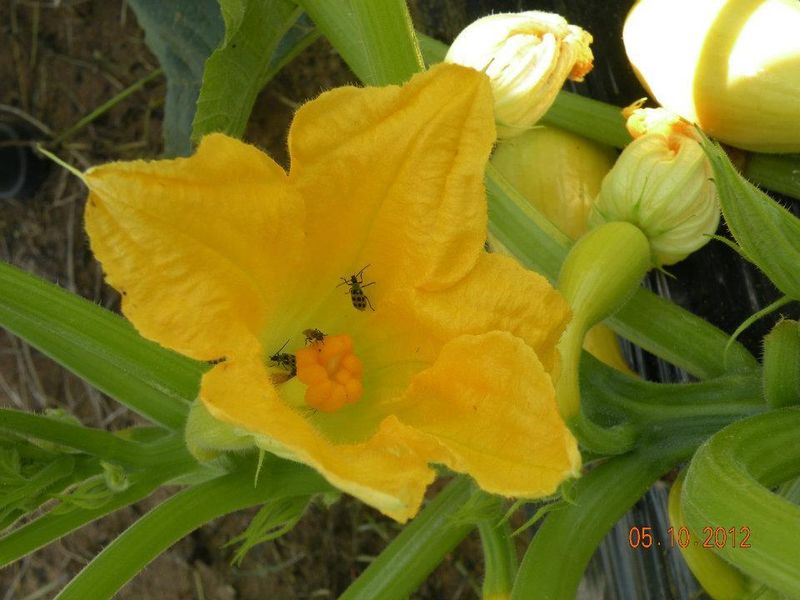
Hand-pollination works best when the rest of your routine is not working against it. Row covers are excellent for keeping cucumber beetles and other pests off young squash plants, but they also block every bee and squash bee that might otherwise visit your flowers.
UMN Extension advises removing row covers when flowering begins unless you are committed to hand-pollinating every female flower yourself. Leaving covers on during bloom essentially makes hand-pollination mandatory rather than optional.
Insecticide applications on blooming squash are another common obstacle. Squash depends on bee activity during a short morning window, and many insecticides – including some applied the night before – can affect foraging bees.
EPA pollinator protection guidance emphasizes following product-label restrictions during bloom and avoiding applications while bees are active. If you need to treat a pest problem, read the label carefully and observe any bloom-time or timing restrictions it specifies – do not assume nighttime spraying is automatically safe for all bee species.
Consistent root-zone moisture also supports the plant through the pollination window. Water at the base of the plant to keep the soil evenly moist without waterlogging the roots, and avoid wetting the flowers directly since overhead moisture can interfere with flower activity and increase foliar disease risk.
A layer of mulch around the base can help hold soil moisture and moderate soil temperature during heat spikes – a real benefit in Southern summers – but mulch supports the plant; it cannot move pollen for you.
Recognize when hand-pollination cannot solve the problem
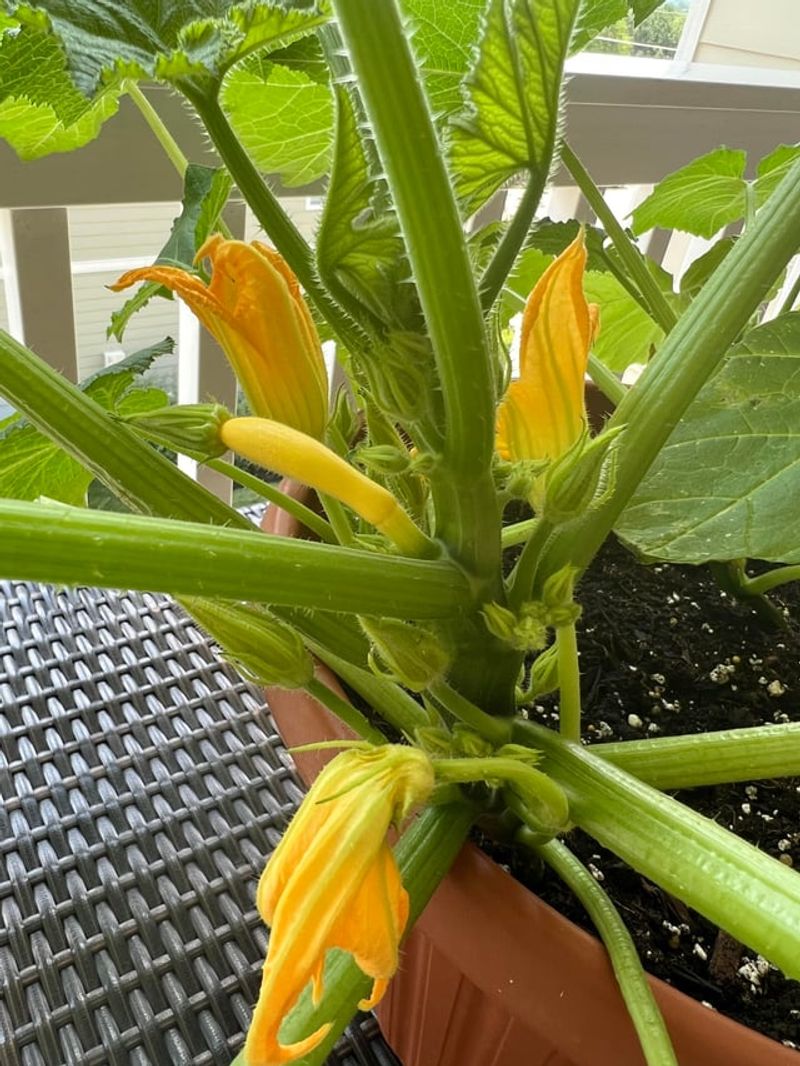
Hand-pollination is a targeted fix for one specific problem: open female flowers that are not receiving adequate pollen. When the problem is something else, the morning routine will not produce results no matter how carefully you follow it.
Knowing where the limits are saves time and helps you focus on what actually needs attention.
The most common situation where hand-pollination cannot help is a plant producing mostly or exclusively male flowers. Early in the season, male flowers routinely appear first and may outnumber female flowers for several weeks.
UMN Extension notes that heat and plant stress can prolong or intensify that male-flower dominance. If you check the plant each morning and find only flowers on long, thin stems with no swollen ovary behind them, hand-pollination has nothing to work with yet.
Similarly, if extreme heat has already reduced pollen viability at the source, transferring that pollen manually will not improve the outcome.
Fertilizer is not a reliable first response to this symptom either. Oklahoma State Extension points out that excess nitrogen tends to push leafy growth at the expense of fruit development, so adding fertilizer without a soil test can make the problem worse rather than better.
One practice that does support continued production once fruit is setting: harvest summer squash regularly before it grows oversized. CSU Extension guidance notes that oversized fruit left on the vine can reduce how much new fruit the plant continues to set – though that is a production habit, not the reason flowers failed to set in the first place.
Begin with the female flowers you can save today
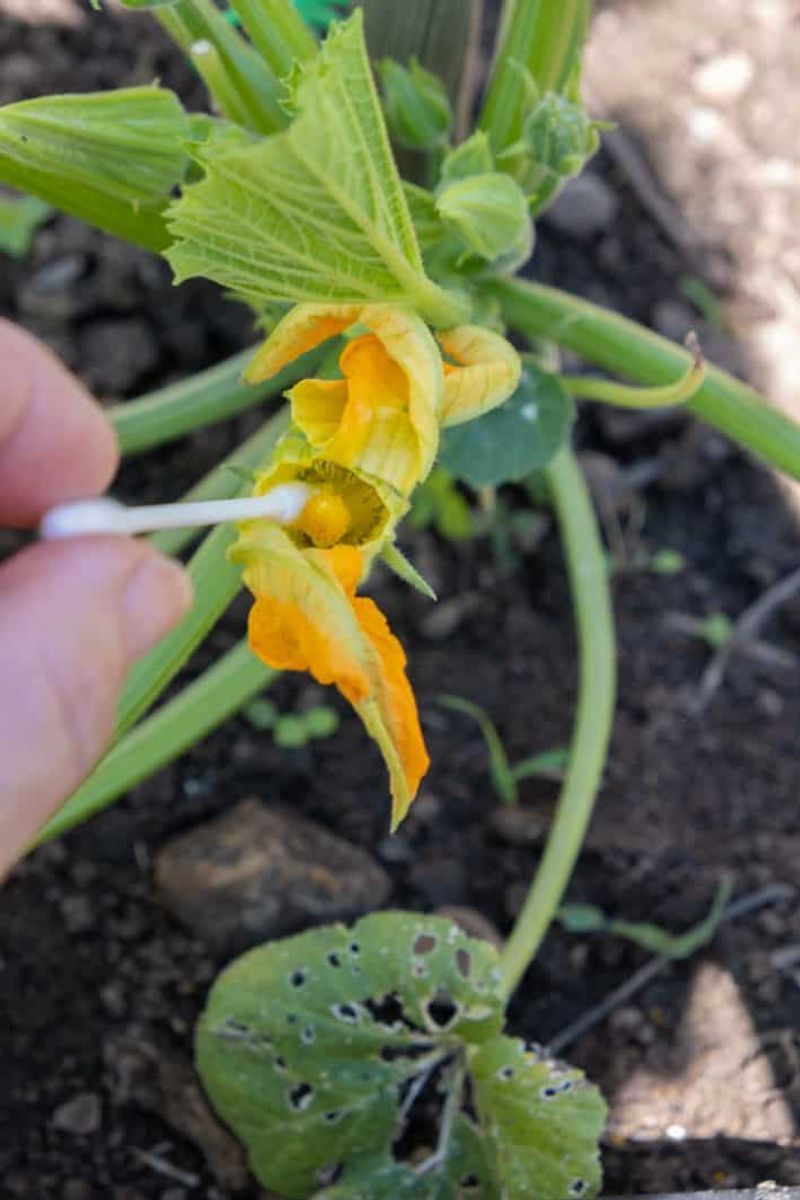
The most productive thing you can do right now is walk out to your squash plant at first light and look for open female flowers – the ones with a small swollen base behind the petals. If you find any, pick a fresh male flower, expose the pollen-bearing center, and touch it gently to the stigma inside each female flower.
Repeat for every open female flower on the plant, then check again the following morning.
While you work through that routine, keep the root zone evenly moist, avoid spraying insecticides on or near open flowers, and pull back any row covers during the bloom period so visiting bees have access when they do show up. Watch the young fruit over the next several days: steady growth means the fix is working.
Repeated abortion means the plant needs a broader diagnosis beyond pollen transfer.
UGA Extension guidance frames hand-pollination as the right first rescue when female flowers are present and natural pollen delivery appears inadequate – and that framing holds. It will not overcome severe heat damage, a shortage of female flowers, or broader plant stress, but when the gap is simply pollen not reaching its destination, a few minutes each morning can change everything.
The squash plant is more capable than the blossoms suggest; sometimes it just needs a little help connecting the right flowers at the right moment.