
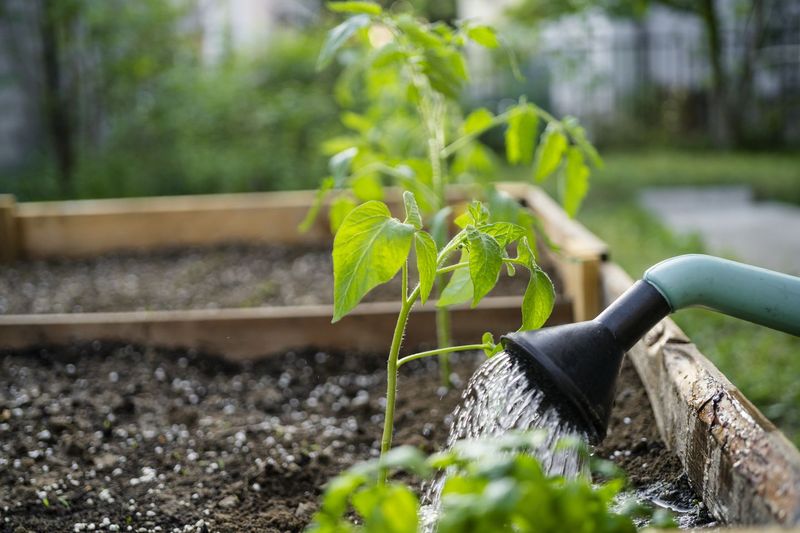
Watering your tomatoes every morning feels responsible, but the way you water matters just as much as how often you do it. When each session only wets the top inch or two of soil, the roots learn to stay right there near the surface, where summer heat dries things out fast.
That stress can quietly chip away at your fruit set, fruit quality, and overall harvest before you even realize what is happening. The fix is simpler than you might think, and it starts with understanding what is actually going on underground.
Shallow daily sips keep the wettest soil near the surface
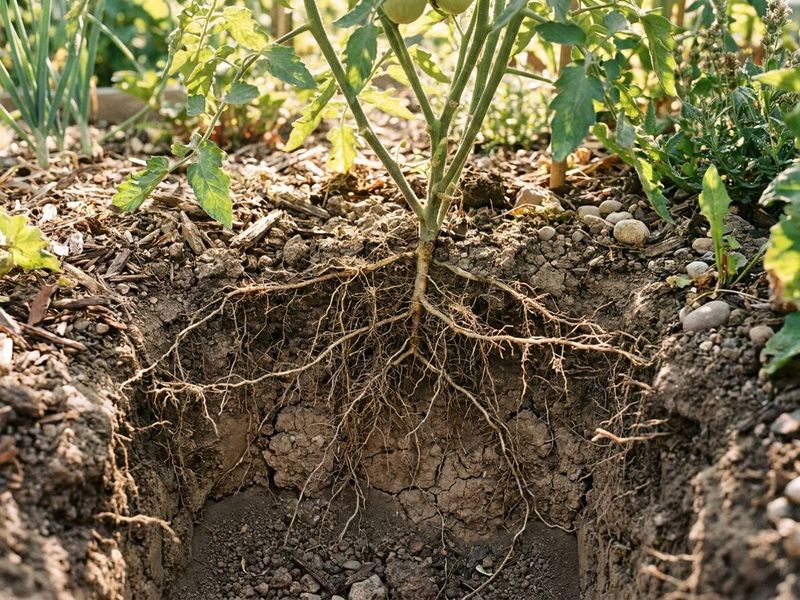
Picture the habit: every morning you swing a hose over your tomato bed for a minute or two, the top of the soil darkens, and you move on satisfied. The problem is not the frequency of that visit.
The problem is that the water rarely travels more than an inch or two below the surface before the hose gets put away.
Roots tend to proliferate where water and nutrients are consistently available. When moisture stays near the top, that is where the plant invests its energy building roots.
University of Minnesota Extension guidance notes that light watering can encourage shallow root development and leave plants more exposed to heat and drought stress. Texas A&M AgriLife similarly recommends watering tomatoes slowly and deeply to support a strong root system.
This is a different problem from daily irrigation itself. A controlled drip system that runs every day based on soil moisture or crop demand is not the same as a brief surface sprinkle.
A Florida tomato irrigation study found that soil-moisture-based scheduling with multiple daily irrigation windows produced higher yields and used less water than a fixed once-daily routine. The habit that backfires is the shallow sip, not the calendar frequency.
Tomato roots occupy a working zone, not one deep underground column
Tomatoes are sometimes described as deep-rooted plants, and they can be, given the right conditions. Loose, well-drained soil with consistent moisture can allow roots to extend several feet down.
But the effective working root zone, where the plant actually pulls most of its water and nutrients, is usually much shallower than that.
UGA Extension describes tomato roots as potentially reaching several feet deep, while noting that the effective rooting depth in Georgia commonly ranges from about 12 to 18 inches, with roughly half the roots concentrated in the top 6 inches. That upper layer is exactly where surface-only watering deposits its moisture, but it is also where Southern summer heat hits hardest.
The Florida tomato root study found that about 70 to 75 percent of root length density was in the top 6 inches during the reproductive phase, with most of the rest in the next 6 inches. Research also confirms that tomatoes naturally place a large share of their roots in upper soil layers regardless of irrigation style.
The takeaway is not that you need roots several feet down. The goal is to wet enough of that active upper zone that the plant has a buffer when the surface dries between waterings.
Unstable moisture can contribute to a weaker harvest
When roots concentrate near the surface and summer temperatures climb, that thin band of moist soil can dry out in hours rather than days. The plant swings between adequately watered and stressed, sometimes within a single afternoon.
That back-and-forth is where production problems tend to show up.
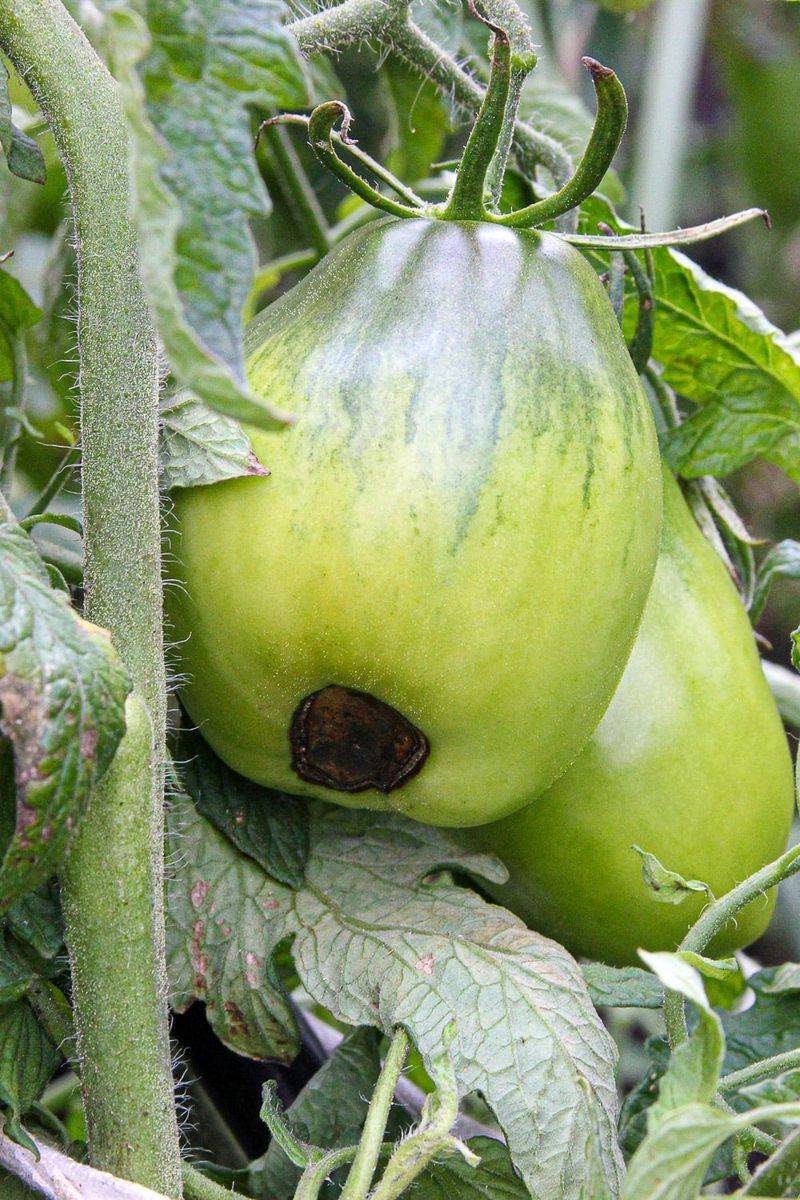
University of Minnesota Extension irrigation guidance notes that moisture fluctuations can contribute to blossom-end rot and fruit cracking, while prolonged drought can reduce fruit set, fruit quality, and marketable yield. Oregon State Extension similarly connects inconsistent soil moisture to cracking and quality problems during fruit development.
UF/IFAS guidance on Florida tomato production reinforces that moisture stress during flowering and fruit set can reduce both the number and quality of fruit that reach harvest.
Blossom-end rot deserves a specific note. Oregon State’s blossom-end rot guidance explains that the condition involves disrupted calcium delivery to developing fruit and is strongly tied to moisture stress, root damage, rapid growth rate, and nutrient balance.
Adding calcium without addressing watering and soil conditions often does not solve it.
Heat above roughly 92 degrees Fahrenheit can also cause bloom drop on its own, as Texas A&M tomato production guidance notes. Poor pollination, disease pressure, pests, nutrient imbalance, drainage problems, root damage, and variety selection can all reduce a harvest independently of watering.
Unstable moisture can contribute to a weaker crop, but it is rarely the only factor at work.
Check moisture through the active root zone before watering again
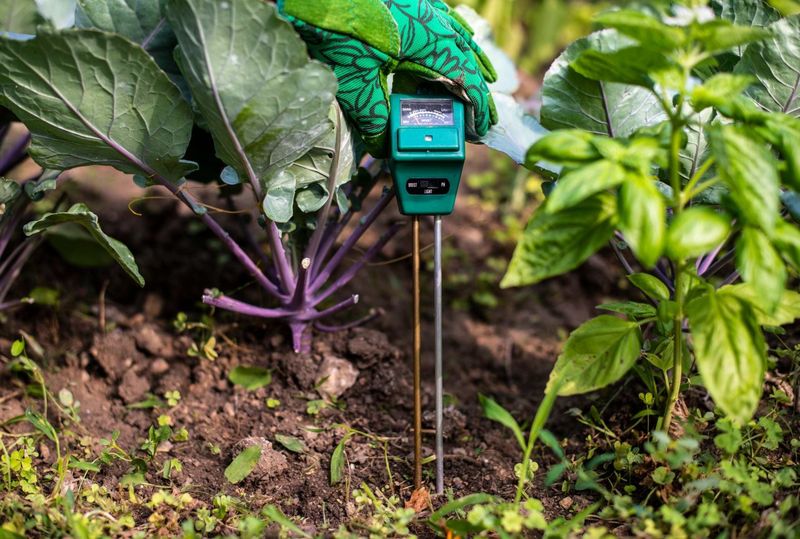
Surface appearance is a poor guide to whether your tomatoes actually need water. Soil can look and feel dry on top while still holding adequate moisture a few inches down, or it can look perfectly fine on the surface while the deeper root zone is bone dry from days of heat.
The only reliable check is to get below the surface.
Use a trowel, a finger, or a soil probe to assess moisture through an appropriate portion of the active root zone. The right depth to check varies with your soil type, how long the plant has been in the ground, and your growing setup.
For a young transplant in a raised bed with sandy soil, checking 4 to 6 inches may be enough. For a well-established in-ground plant in heavier soil, you may want to probe closer to 8 to 12 inches.
UGA Extension places the effective root zone for Georgia tomatoes commonly between 12 and 18 inches, so a single surface glance tells you very little about what is happening where most of the roots are working.
University of Minnesota Extension advises that if the soil is wet only an inch or two below the surface, the water has not penetrated deeply enough. When your probe tells you the root zone is starting to dry, water slowly at the base and then note how many days pass before it dries again.
That interval, not the calendar, becomes your real watering schedule.
The right interval changes with soil, weather, and growing setup
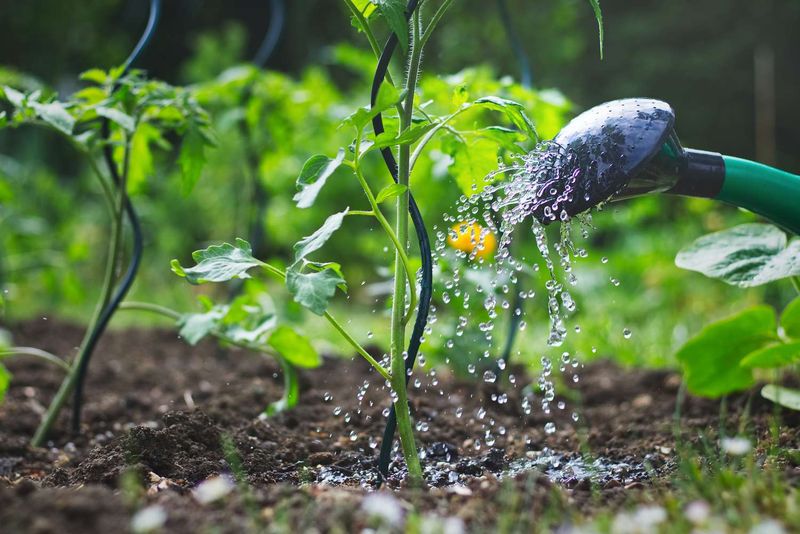
Replacing a daily watering habit does not mean switching to a once-a-week schedule. Fixed calendar rules break down quickly in Southern gardens because the variables that actually drive water use shift constantly.
Soil texture alone can change how fast moisture moves through the ground and how long it stays available to roots.
Sandy soils, common across much of Florida, drain and dry faster than heavier soils. UF/IFAS tomato production guidance recommends scheduling irrigation according to soil moisture, weather, and root-zone conditions rather than a fixed timetable, noting that Florida’s high evaporative demand can require more frequent irrigation than gardeners in other regions might expect.
Clay soils, on the other hand, hold water longer and can become oxygen-poor if watered too often.
Texas heat adds another layer of complexity. Texas A&M Earth-Kind guidance notes that when temperatures climb into the high 90s with low humidity, fruiting tomato plants may need irrigation every other day with at least an inch of water for maximum production.
That is a regional example, not a prescription for every Southern yard. The Texas Vegetable Growers Handbook also emphasizes matching irrigation frequency to soil type and actual crop water use.
Plant stage and growing setup matter too. Newly transplanted tomatoes need more frequent establishment watering because their root systems have not yet spread out.
Established in-ground plants generally benefit from deeper soakings with a longer interval between them. Containers are a special case entirely.
University of Illinois Extension container-garden guidance and its tomato-specific page note that containers may genuinely need daily or even twice-daily watering in hot, dry weather, as long as each application thoroughly wets the entire root ball and excess water drains freely. UMN Extension heat-season guidance echoes that point for container plants during summer heat waves.
Mulch and root-level irrigation make moisture easier to hold
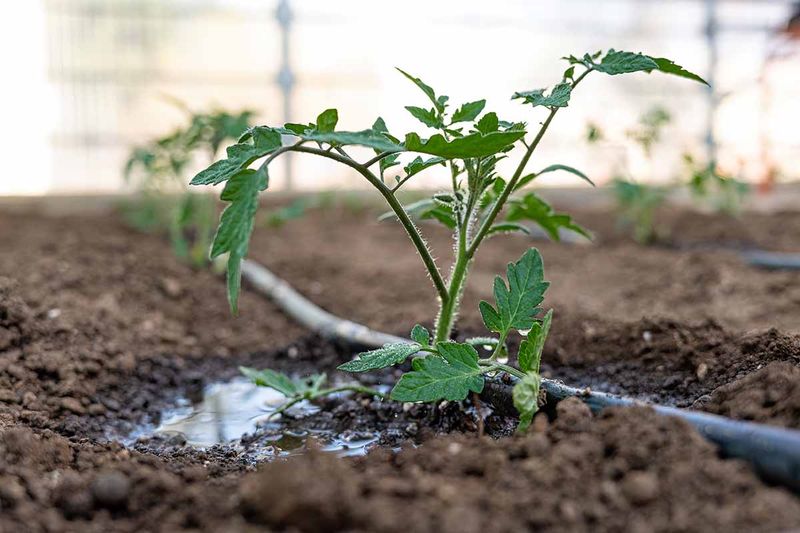
Adjusting how often you water is only part of the correction. Changing where and how the water reaches the soil can make each application more effective and reduce how quickly the root zone dries between sessions.
Mulch is one of the most practical tools available to Southern gardeners. A 2 to 3 inch layer of straw, wood chips, or similar organic material slows evaporation from the soil surface and can moderate soil temperature during peak summer heat.
Texas A&M Earth-Kind horticulture guidance specifically recommends mulch for conserving water and protecting tomato roots from heat and drought. Texas A&M AgriLife’s tomato guide reinforces that mulching around the base of the plant helps maintain more consistent soil moisture between waterings.
Where the water lands matters just as much. Drip irrigation and soaker hoses deliver water directly to the soil at root level, which keeps foliage dry and reduces the risk of leaf disease spread through water splash.
UMN Extension recommends directing water to the soil rather than sprinkling from above for exactly those reasons. A controlled drip system that runs based on soil moisture readings is categorically different from a brief daily hose sprinkle.
UF/IFAS controlled irrigation research found that soil-moisture-guided drip scheduling outperformed fixed daily applications on both yield and water efficiency.
Do not rescue shallow roots by creating a waterlogged bed
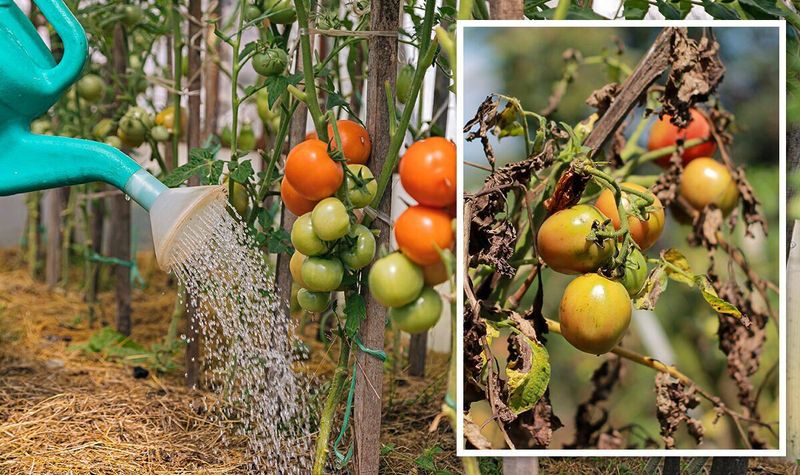
Knowing that shallow watering is a problem can push gardeners in the opposite direction: flooding the bed to compensate. That overcorrection carries its own set of risks, and it will not undo weeks of surface-only watering overnight.
Saturated soil pushes oxygen out of the pore spaces that roots depend on. UF/IFAS Florida tomato production guidance warns that excessive water can reduce root growth, promote disease, cause fruit splitting, and move nitrogen and phosphorus out of the root zone before the plant can use them.
UF/IFAS greenhouse tomato guidance notes that even a few hours of root flooding can damage roots and increase the risk of Pythium root rot. Deep watering means wetting the root zone thoroughly, not saturating it.
Wilting is also an unreliable trigger for an emergency soak. Tomatoes can droop in the afternoon heat even when the soil holds adequate moisture, simply because the plant is losing water through its leaves faster than the roots can replace it in peak heat.
UMN Extension heat-season guidance advises checking the soil before adding more water when a plant wilts on a hot afternoon.
A wilting plant is worth investigating, not automatically drenching. Check the soil first.
If the root zone is still moist, wait and see whether the plant recovers after sunset. If it does not recover or if the soil is genuinely dry, then water.
Texas A&M tomato guidance also reminds growers that heat above roughly 92 degrees can cause bloom drop and poor fruit set on its own, independent of soil moisture, so a disappointing harvest may have multiple contributors that watering alone cannot fix.
Build a tomato-watering habit around soil, not the calendar
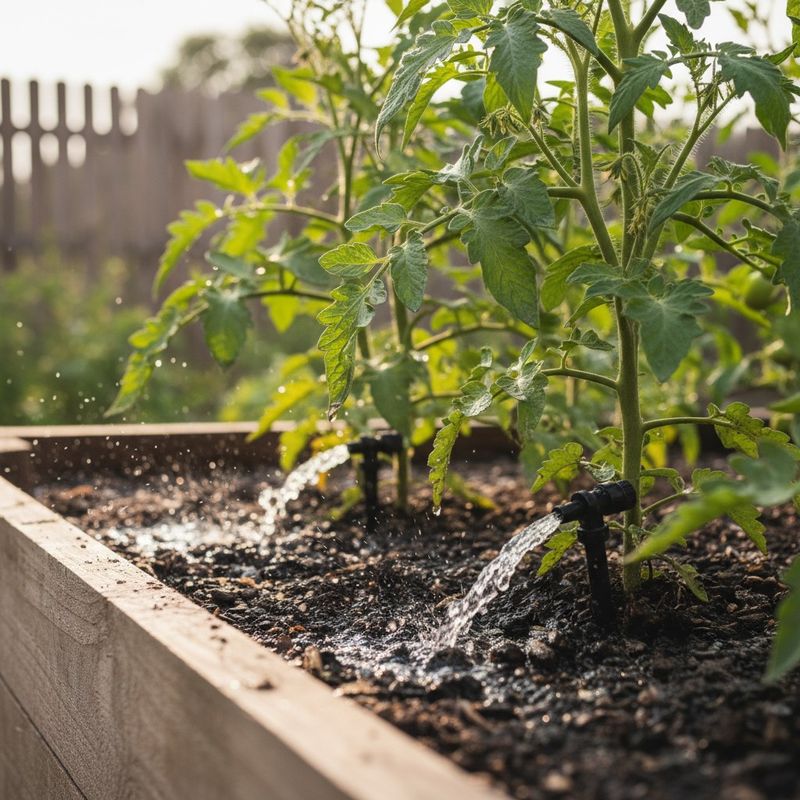
The practical routine comes down to a short sequence. Before watering, push a trowel or probe into the soil and check moisture through an appropriate portion of the active root zone, adjusting the depth for your soil type, plant age, and whether you are growing in a container, raised bed, or in-ground plot.
Water only when that zone is starting to dry, not on a fixed schedule.
When you do water, go slowly and direct the flow to the base of the plant. After the session, note how many days pass before the root zone dries again.
That interval becomes your real guide, and it will shift as temperatures rise, rainfall comes and goes, and the plant grows larger. UMN Extension and UF/IFAS Florida tomato guidance both emphasize adjusting irrigation to actual soil and weather conditions rather than sticking to a preset routine.
Daily watering is not the enemy. Containers in hot weather may genuinely need it, and a well-managed drip system may run daily by design.
The habit worth breaking is the shallow surface sip that leaves roots with nowhere to go when the heat arrives. Give the whole root zone a thorough drink, then let the soil tell you when it is time again.