
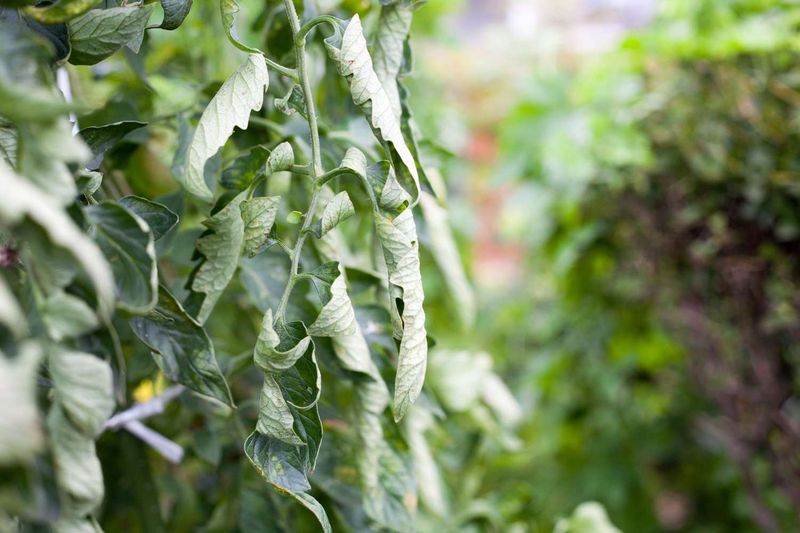
Walking out to the garden on a scorching July afternoon and finding your tomato leaves curled tightly upward can feel like a crisis. Before you reach for a spray bottle or start pulling plants, take a breath – what you are seeing is most often a recognizable stress response tied to heat and soil moisture, not a sign of disease spreading through your garden. Knowing how to read the whole plant, not just the curled leaves, is what separates a gardener who fixes the real problem from one who treats the wrong one.
Start with the likely explanation—but do not rule out other causes
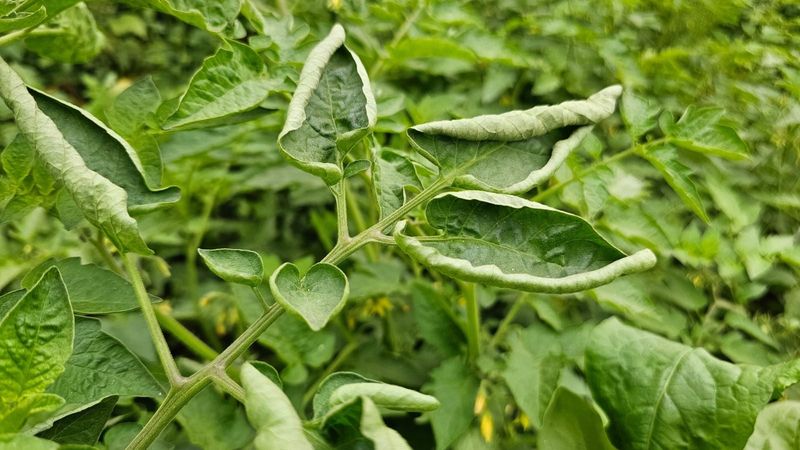
Uniform, upward-and-inward curling on otherwise green tomato leaves during hot, dry weather is often what plant pathologists call physiological leaf roll. University of Minnesota Extension guidance on tomato disorders describes the typical pattern as firm, leathery leaves whose margins roll upward and inward, usually appearing first on the older, lower leaves while new growth at the top of the plant stays relatively normal. That pattern, combined with green leaf color and no other alarming symptoms, points toward an abiotic response rather than a pathogen.
Several things can trigger or worsen this response: high temperatures, drought stress, heavy pruning, rapid vegetative growth, root damage, excessive nitrogen, and differences between cultivars. Washington State University Extension’s guide to physiological leaf roll notes that some varieties, especially certain indeterminate or high-yielding types, are simply more prone to the condition than others. One plant in a row staying relatively flat does not mean its neighbors are free from heat or moisture stress.
The curling itself reduces the leaf surface exposed to direct sun and slows moisture loss through the foliage. That response generally has little effect on tomato yield or fruit quality on its own. However, the underlying heat and drought that trigger leaf roll can still stress the plant, and Penn State Extension’s heat-stress overview makes clear that sustained high temperatures can affect growth and fruit set even when the leaves look otherwise green and intact.
Read the whole plant before deciding what to do
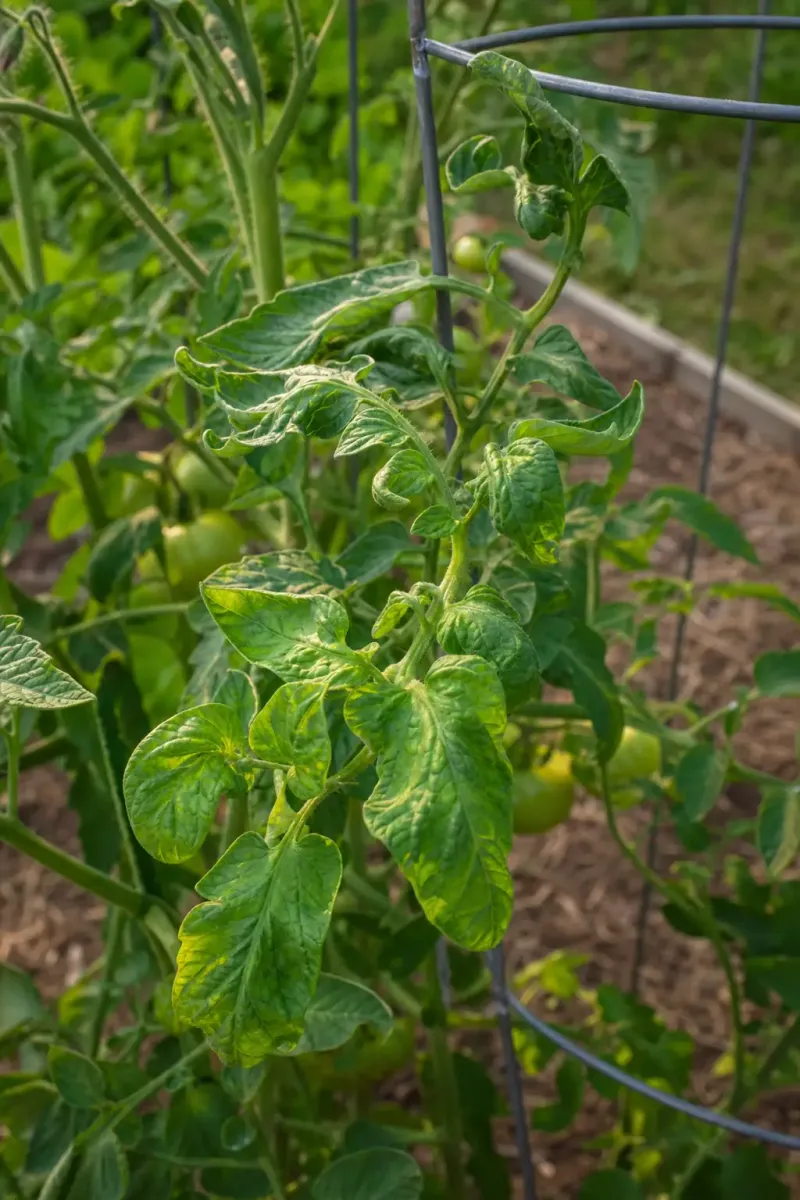
Leaf curl alone does not tell you enough. The real diagnostic work starts when you step back and look at the entire plant from the soil up. University of Minnesota’s tomato leaf curl diagnostic tool walks through the range of causes and the symptoms that separate them, making clear that symptom combinations and how they progress over time matter far more than the curl alone.
Physiological leaf roll associated with heat usually shows up as uniform green, leathery curling that begins on lower leaves while new growth at the top remains normal. Patterns that deserve closer attention include yellow or light-green mottling on the leaves, pronounced stunting of the whole plant, malformed or unusually small new leaves, distorted or discolored fruit, premature ripening, widespread wilting that does not recover in the cooler evening hours, and overall plant decline. Any of these in combination with upward curl shifts the diagnosis away from a simple heat response.
Cultivar differences can complicate the picture further. A neighboring plant that shows less curling does not eliminate heat, moisture stress, or root problems as possibilities for the plant that is curling heavily. According to University of Minnesota Extension’s tomato virus guide, viral diseases can produce curling symptoms alongside mottling and stunting, and appearance alone is not reliable enough to confirm or rule out a virus without laboratory testing. Scan the whole plant, note what you find, and let that full picture guide your next step.
Check soil moisture and drainage before watering
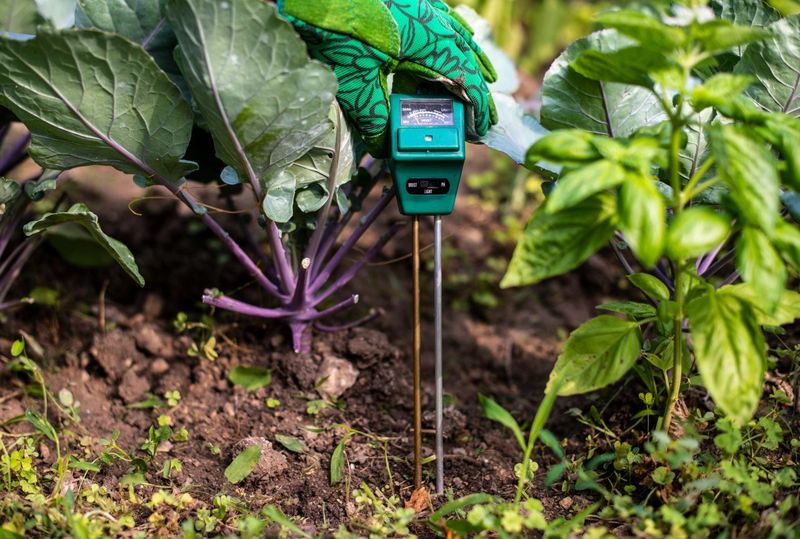
Reaching for the hose the moment you see curled leaves can actually make things worse. Leaves may curl even when soil moisture is adequate, and repeated overwatering creates root problems that compound heat stress rather than relieve it. The safer first step is to push a finger or a small trowel about 2 inches into the soil near the root zone and feel whether it is dry, moist, or soggy before adding any water.
University of Minnesota Extension’s tomato growing guide offers a general home-garden benchmark of roughly 1 inch of rain or irrigation per week, but that figure is a starting point, not a fixed prescription. Sandy soils drain faster and need more frequent attention. Containers dry out much quicker than in-ground beds. Larger, more established plants draw more water, and extreme heat, strong wind, and a lack of mulch all accelerate moisture loss.
Adjust based on what the soil actually tells you, not the calendar.
When the root zone is genuinely dry, water thoroughly and deeply rather than giving the plant frequent shallow sips. Deep watering encourages roots to grow downward, where soil stays cooler and more consistently moist. Oregon State University Extension’s heat-wave garden guide notes that morning watering is generally preferred because foliage dries before nightfall, but a plant showing clear signs of drought stress should receive water promptly rather than waiting for the next convenient morning slot. Drainage matters too: if water pools around the base or the soil stays saturated for days, poor drainage may be limiting root health regardless of how carefully you water.
Lower heat stress without removing useful foliage
Once you have confirmed the root zone is adequately moist, shifting focus to the heat load around the plant is the practical next move. Mulch is one of the most reliable tools available. A layer of organic mulch spread around the base of the plant conserves soil moisture and moderates soil temperature during hot spells, reducing the conditions that trigger and sustain leaf roll. University of Minnesota Extension’s tomato guide recommends a thicker organic mulch layer once soil has warmed, and a separate heat-gardening resource from the same university suggests refreshing mulch during heat waves to maintain its effectiveness.
Mulch will not reverse leaf curl that has already happened, but it helps protect the root zone from the stress that caused it.
Pruning is a step to approach carefully during a heat wave. Tomato foliage does more than produce energy – it shades developing fruit from direct sun. University of Illinois Extension’s leaf-roll explainer cautions that removing too much foliage during hot weather increases the risk of sunscald on fruit and can raise the plant’s overall heat burden. Light, targeted pruning for airflow is reasonable, but stripping foliage to reduce curling is counterproductive.
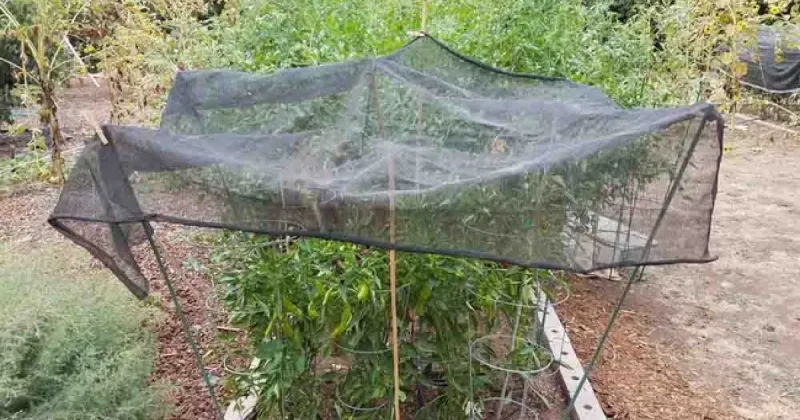
Temporary shade can help during periods of extreme heat. Shade cloth or a loosely draped row cover set up over the plant during the hottest part of the afternoon reduces radiant heat load without cutting off light entirely. Treat this as a short-term protective measure rather than a permanent fixture, since tomatoes need strong light for healthy fruit development. University of Minnesota Extension’s hot-weather gardening guidance addresses shade as one of several tools for managing extreme heat in the vegetable garden.
Protect flowers and fruit during the heat wave
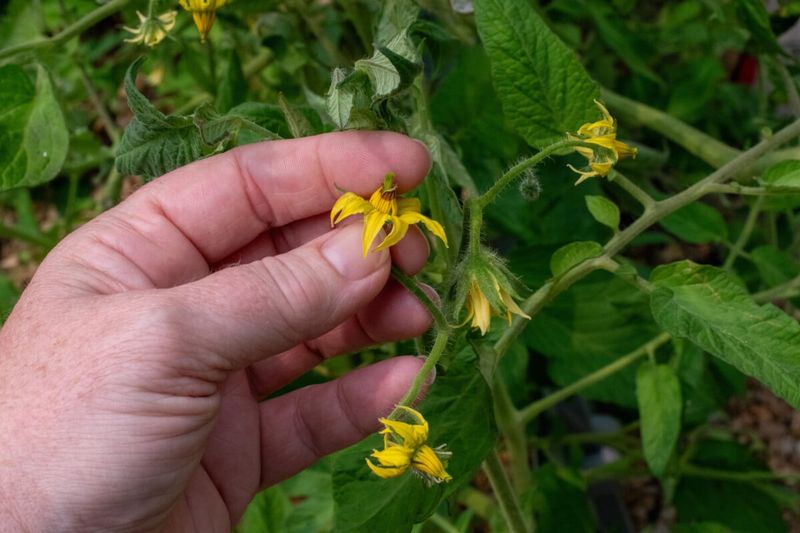
Physiological leaf roll and heat stress are not the same problem, even though they often arrive together. The curling itself generally does not reduce tomato yield or fruit quality in a straightforward way, but the heat driving that curl can cause real production losses through a different mechanism entirely.
Penn State Extension’s resource on heat stress and tomatoes explains that sustained temperatures above roughly 88 to 102 degrees Fahrenheit can interfere with pollen viability and fertilization, leading to flower abortion and blossom drop. When flowers fail to set fruit, the yield loss has nothing to do with whether the leaves are curled. University of Illinois Extension’s tomato growing page similarly notes that high temperatures during bloom periods reduce fruit set, and this effect can persist even after temperatures moderate.
Watching the flowers and developing fruit closely gives you better information about plant health than the curled leaves do. If blossoms are dropping at a high rate, or if fruit that has set seems to be developing poorly, that signals the plant is under more stress than leaf curl alone would suggest. Monitor overall vigor, soil moisture, and the rate of new growth as your primary indicators of how well the plant is coping with the heat wave. The leaves are one data point; the flowers and fruit tell the fuller story.
Recognize viruses, herbicide injury, and pests
Not every upward curl during a heat wave is physiological leaf roll, and the look-alikes carry different consequences. Learning to recognize them prevents a misdiagnosis that could leave a real problem untreated while the plant declines.
Viral diseases are the most serious look-alike. University of Minnesota Extension’s tomato virus guide explains that appearance alone cannot reliably identify a virus – laboratory confirmation from a plant pathology clinic may be necessary. The warning signs that shift suspicion toward a virus include yellow or light-green mottling, leaves that are malformed or unusually small, overall stunting, abnormal or discolored fruit, and general plant decline. Beet curly top virus, which is especially relevant in parts of the western United States, has a more specific profile: Utah State University Extension’s beet curly top virus page describes a combination of stunting, yellowing, purple veins on the undersides of leaves, thick or crisp foliage, premature fruit ripening, and plant decline.
Green, leathery, lower-leaf curling during a heat wave does not fit that profile by itself.
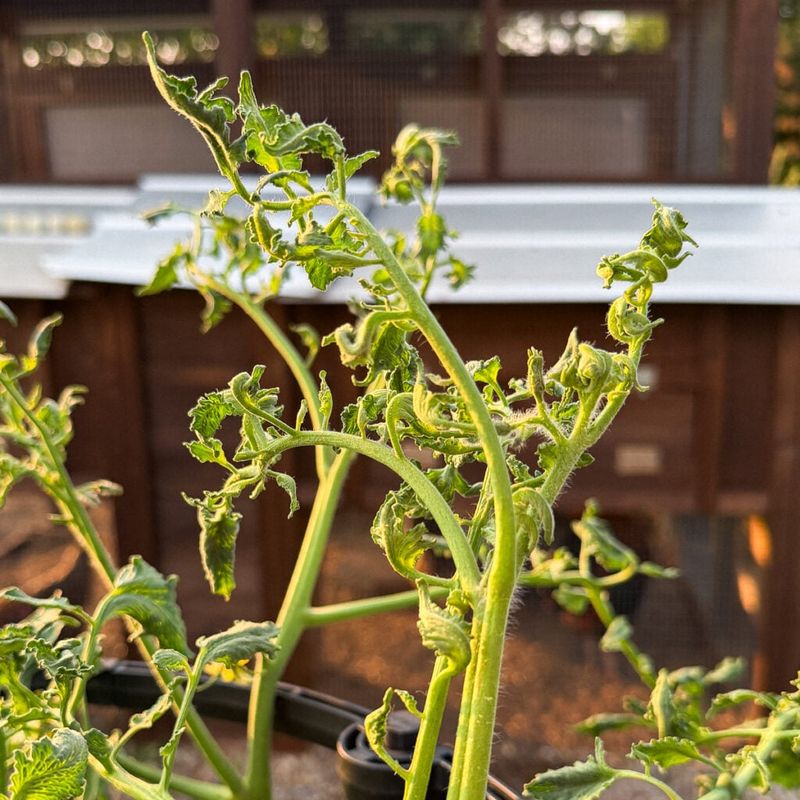
Herbicide injury looks different from both. University of Minnesota Extension’s herbicide injury guide describes the typical pattern as distorted, cupped, shriveled, or narrow new leaves that fail to expand normally, along with thickened or prominent veins, twisted stems, and injury that may be concentrated on the side of the plant facing a treated lawn or neighboring yard. Lawn herbicides containing 2,4-D or dicamba are common culprits near vegetable gardens. If the new growth at the top of the plant looks twisted or malformed rather than simply curled, herbicide drift is worth investigating.
Aphids and other insects can also cause curling, but the University of Minnesota diagnostic tool notes that visible insects, clustered feeding, or associated wilting would support that diagnosis more than a uniform, leathery roll during a heat spell. Flip a few leaves and look for insect colonies before ruling pests in or out.
Track new growth instead of waiting for old leaves to uncurl
Once temperatures begin to moderate, many gardeners expect the curled leaves to relax back to their normal shape. University of Minnesota Extension’s tomato disorders guide is direct on this point: leaves that have rolled may not unroll. Waiting for old foliage to flatten is not a useful measure of recovery.
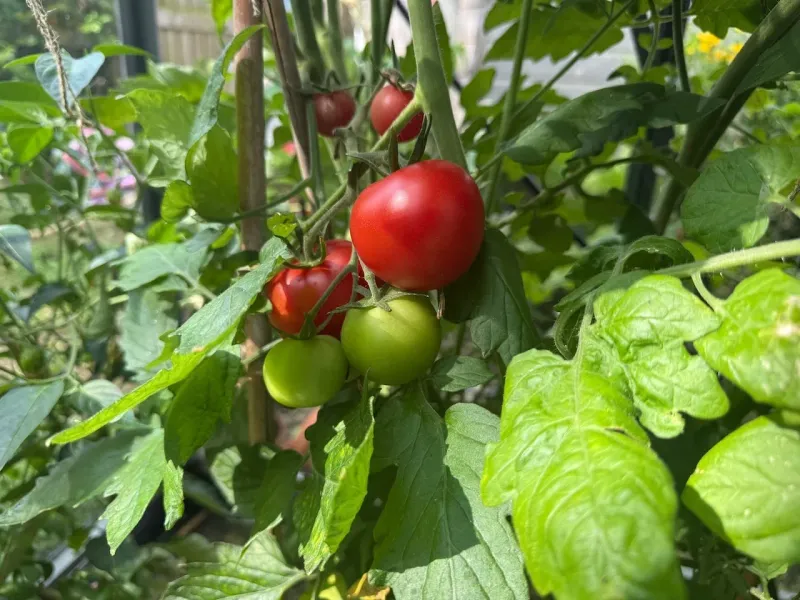
The better indicators are what the plant produces next. Healthy new leaves growing in at the top of the plant, normal stem elongation, and continued fruit development all suggest the plant has weathered the stress without lasting damage. Keep checking soil moisture at the 2-inch depth rather than watering on a fixed schedule, since University of Minnesota Extension’s vegetable garden watering guidance consistently points to consistent, deep root-zone moisture as the foundation of plant recovery after heat events. Avoid the temptation to overwater in an attempt to speed things along.
Stay alert for warning signs in the new growth. Mottling, malformation, stunting, or unusual fruit symptoms appearing after the heat breaks would shift the diagnosis away from physiological leaf roll and toward a virus, pest, or other problem that needs further investigation. University of Minnesota Extension’s tomato virus resource is a useful reference if those patterns emerge. A vigorous tomato with uniform green upward curl and normal new growth generally needs moisture management and some heat protection, not a panic spray.
The plant that should worry you is the one whose newest leaves look wrong, not the one whose oldest leaves are still rolled.