
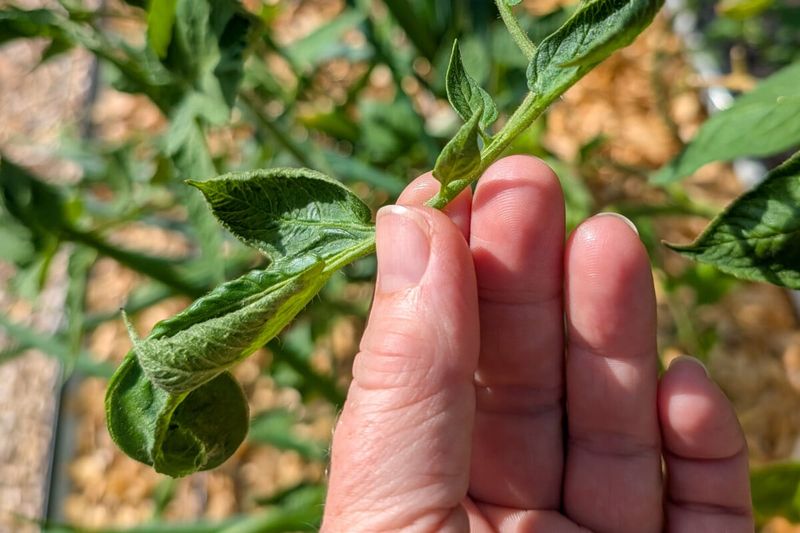
Walking out to your tomato plants on a sweltering July morning and finding the leaves curled tight and rolled inward is enough to make any gardener’s stomach drop. The good news is that green, inward-curling leaves often point to something called physiological leaf roll, a stress response that can show up during hot Southern summers and may not threaten your harvest as much as it looks.
Heat-related water stress is one common reason this happens, but it is not the only one, and knowing the difference matters before you grab the hose or start pulling leaves off.
Read the Curl Pattern Before Calling It Heat Stress
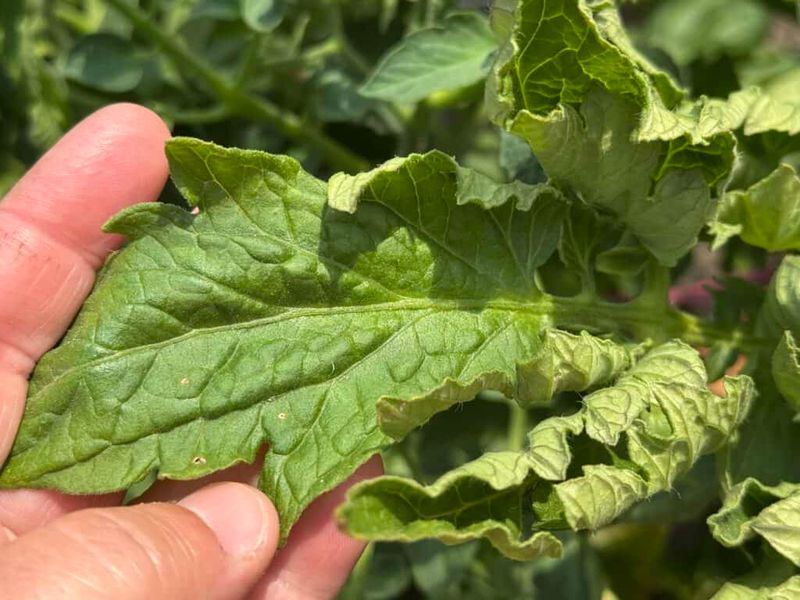
Older, lower leaves that cup upward and then roll inward toward the midrib are the pattern most consistent with physiological leaf roll. The affected leaves typically stay green, feel firm or slightly leathery, and remain roughly normal in size.
Extension guidance on physiological leaf roll notes that the rest of the plant often continues growing normally, with new leaves at the top looking healthy and unremarkable.
Seeing that pattern alongside vigorous growth is a reasonable first clue that the curl may be a stress response rather than a disease. Still, green color alone cannot confirm the cause or rule out nutrient problems, insects, herbicide injury, or disease.
University of Minnesota’s tomato leaf curl diagnostic tool lists several other possibilities that can look similar at first glance.
Think of the curl pattern as a first-pass filter, not a final answer. Oklahoma State Extension’s overview of non-infectious tomato disorders points out that the full picture, including which leaves are affected, the direction of curl, what new growth looks like, and whether any discoloration or pests are present, is what separates physiological leaf roll from problems that need a different response.
Heat Can Trigger a Leaf-Water Imbalance
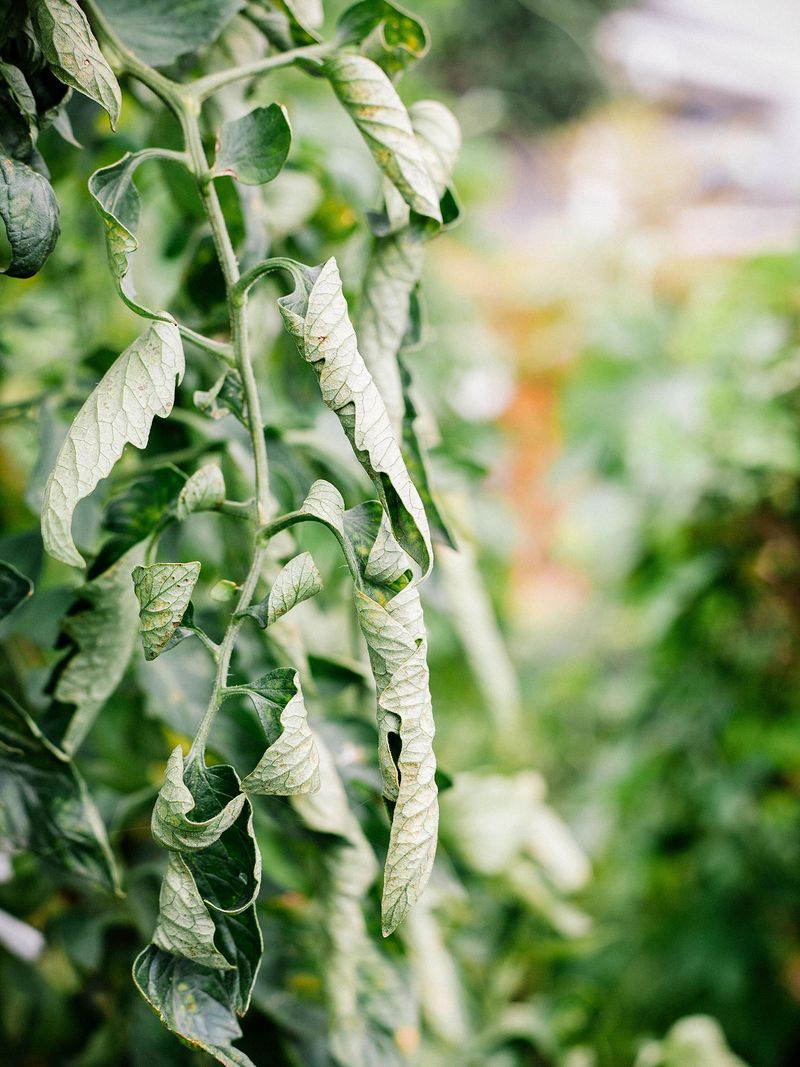
On a hot, sunny, or windy afternoon, tomato leaves can lose moisture faster than the roots pull water up from the soil. When that gap widens, the plant may respond by rolling its leaves inward, reducing the surface area exposed to drying air and direct sun.
Plant science research on tomato stress responses supports inward leaf rolling as a possible physiological adjustment during periods of high water demand.
This is a reasonable explanation when curling appears during the hottest stretch of a Southern summer and the plant otherwise looks strong and green. What it is not is a guaranteed single cause.
University of Minnesota Extension’s summer garden guidance reminds gardeners that heat stress affects plants in multiple ways, and the same symptom can arise from more than one source of pressure.
Green foliage does not mean the plant is comfortable. A tomato can be under real heat stress while still holding its color, and the leaf curl may be signaling that something in the root zone or environment needs attention.
Recognizing heat-related water imbalance as one plausible cause, rather than the only cause, helps you investigate more accurately before deciding how to respond.
Check Soil Moisture and Drainage Before Watering
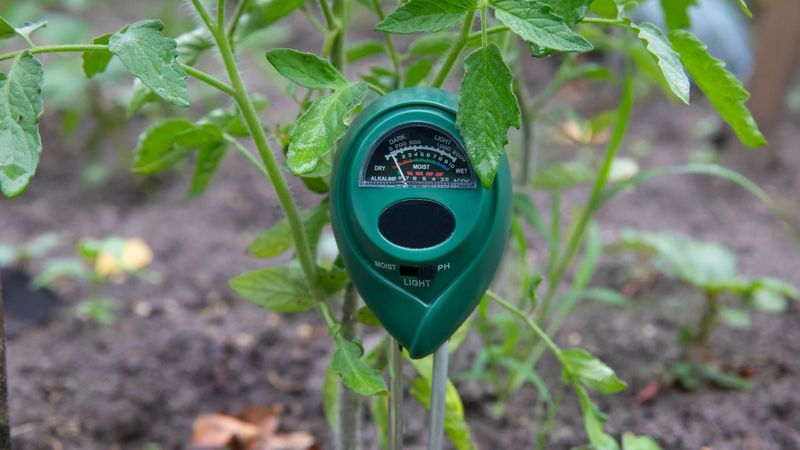
Before reaching for the hose, push a finger two to three inches into the soil near the root zone. Soil that feels moist at that depth during a heat wave may not need more water yet, even if the leaves are curling.
WSU Extension’s physiological leaf roll fact sheet explains that daytime curling can happen during heat stress even when the soil is not severely dry, so automatic watering is not always the right fix.
Saturated or poorly draining soil is its own problem. Clemson Extension’s tomato leaf rolling fact sheet identifies excessive soil moisture as one of the conditions that can contribute to physiological leaf roll, meaning that adding more water to already-wet ground can make the symptom worse rather than better.
Check whether water is pooling or draining slowly around the plant before you assume dryness is the issue.
Inconsistent moisture, alternating between dry spells and heavy soaks, can also stress the root system enough to trigger rolling. Oklahoma State Extension’s tomato disorder overview notes that root-zone disruption from uneven watering is a recognized contributor.
The goal is steady, even moisture at the root level, and the soil check is what tells you whether you are anywhere close to that target right now.
Build a Consistent Summer Watering Routine
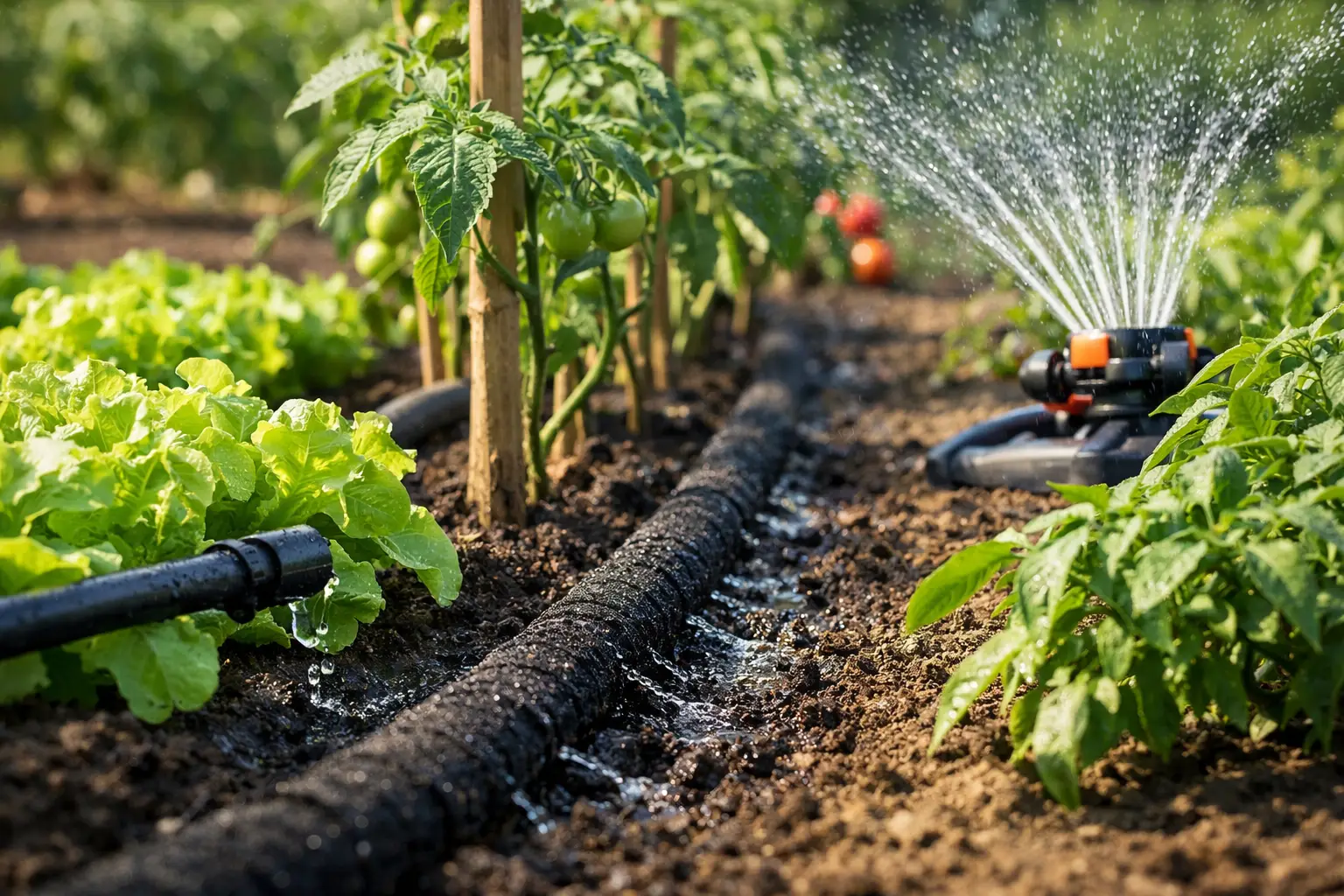
Once you know the soil is genuinely short on moisture, water deeply at the root zone rather than sprinkling the surface. Morning watering gives the plant a supply before peak afternoon heat and lets any foliage that gets wet dry off during the day, which can reduce the spread of foliar diseases.
UGA Extension’s summer tomato watering guidance recommends directing water to the base of the plant and keeping leaves as dry as practical.
Drip irrigation or a soaker hose delivers water directly to the root zone with less waste and less leaf wetting than overhead sprinklers. Laying two to three inches of organic mulch around the base of the plant slows evaporation, buffers soil temperature swings, and helps keep moisture levels steadier between waterings.
Penn State Extension’s tomato growing guide and WSU Extension’s home garden tomato publication both point to consistent root-zone moisture as a foundation of summer tomato care.
A general starting range of 1 to 1.5 inches of water per week is commonly cited, but UGA’s tomato production guide notes that sandy soils, large plants, extreme heat, and low rainfall can all push demand higher. Treat that range as a flexible baseline, not a rigid rule.
On the pruning side, resist the urge to strip off curled leaves during hot weather. Illinois Extension’s leaf-curl explainer warns that removing too much foliage increases heat exposure for remaining leaves and fruit, raising the risk of sunscald without solving the underlying stress.
Use Temporary Heat Relief Instead of Extreme Fixes
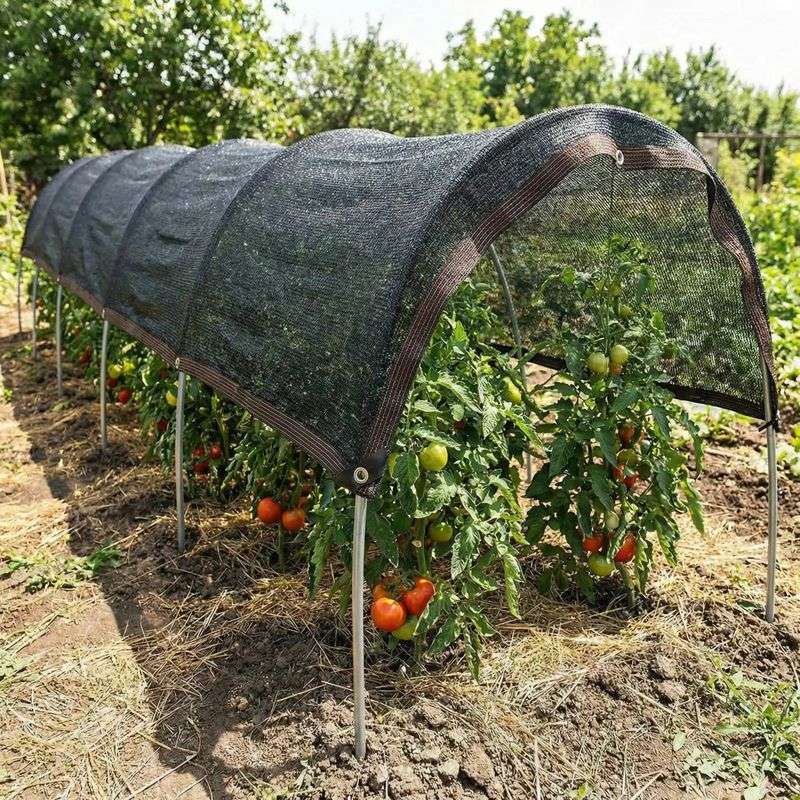
When temperatures stay dangerously high for several consecutive days, a temporary shade setup can take some pressure off the plant. University of Delaware Extension’s heat-stress guidance for vegetables identifies shade cloth as a practical tool for protecting garden plants during extreme heat events.
Around 30% shade cloth is often mentioned as a reasonable starting point, provided the setup stays ventilated and does not trap excessive humidity or block the light the plant needs for most of the day.
Temporary afternoon shade is a different thing from draping the plant in heavy cover for the rest of the summer. Tomatoes need substantial light to produce well, and prolonged or excessive shading can reduce growth and fruit production.
Extension’s Ask an Expert shade cloth guidance and UF/IFAS guidance on Florida vegetable production both treat shade as a targeted, temporary intervention rather than a season-long solution.
A few other common impulses are worth resisting. Pulling off every curled leaf does not address the underlying stress and can expose remaining foliage and fruit to more heat, as WSU Extension notes.
Adding calcium supplements, Epsom salts, or extra fertilizer to flatten curled leaves is also not supported as a general remedy. Clemson Extension points out that excess nitrogen can actually contribute to some cases of leaf roll, and fertilizer decisions should be based on soil testing and the full range of plant symptoms, not on leaf curl alone.
New-Growth Symptoms Point Beyond Ordinary Leaf Roll
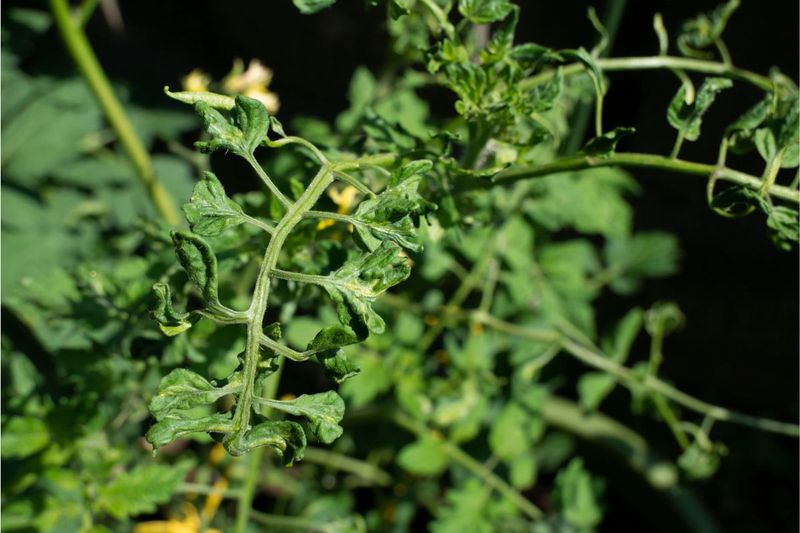
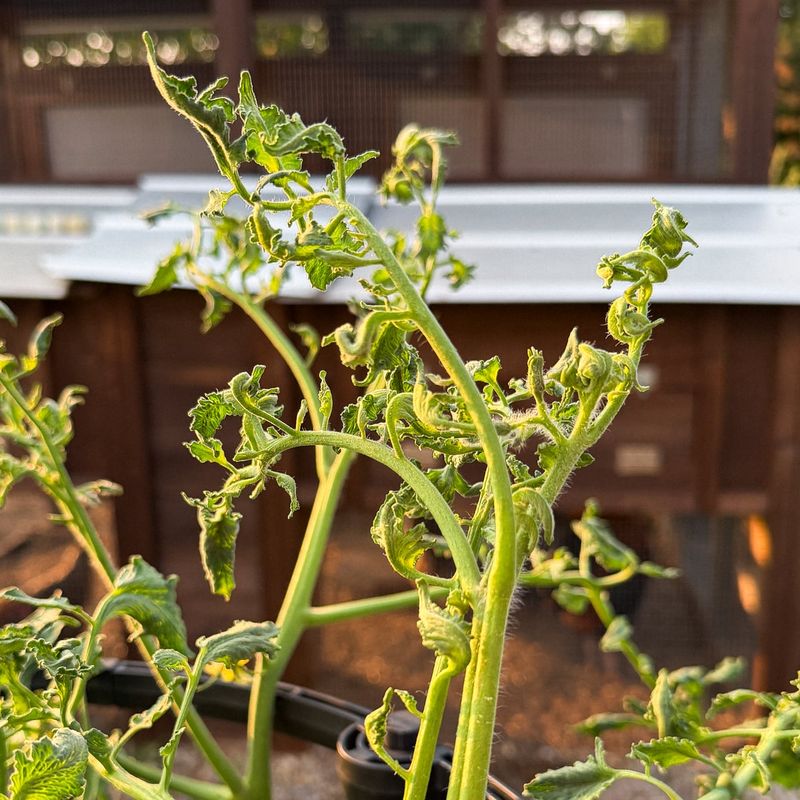
Physiological leaf roll typically stays confined to older, lower leaves while new growth at the top of the plant looks normal. When curling or distortion moves into new growth, that shift is a reason to look more carefully.
University of Minnesota’s tomato leaf curl diagnostic resource lists viruses, aphids, and herbicide injury among the causes that can produce curling alongside other warning signs.
Virus symptoms become more concerning when curling is paired with mottled light-and-dark green patches, yellowing, reduced leaf size, stunted growth, or unusual markings on fruit. UF/IFAS Extension’s tomato yellow leaf curl virus fact sheet describes a pattern that often starts in newer leaves and includes cupping, yellowing margins, reduced leaf size, and stunting.
University of Minnesota Extension’s tomato virus guide reinforces that mottling, yellowing, and growth abnormalities are the features that raise virus concern above ordinary leaf roll.
Aphids can curl and distort leaves when populations build up, and they are easy to miss without flipping leaves over. Check the undersides of leaves and the growing tips for clusters of small insects before assuming heat is responsible.
For herbicide injury, look for twisted new growth, thickened veins, cupping, or damage that concentrates on the side of the plant closest to a recently treated lawn or neighboring property. University of Minnesota Extension’s herbicide injury guide and NC State Extension’s tomato leaf curling resource both flag growth-regulator herbicides such as 2,4-D and dicamba as a significant cause of distorted tomato growth in suburban yards.
When the pattern remains unclear after checking all of these signs, a local plant diagnostic clinic can help identify the cause without guesswork.
Green Foliage Does Not Guarantee a Normal Harvest
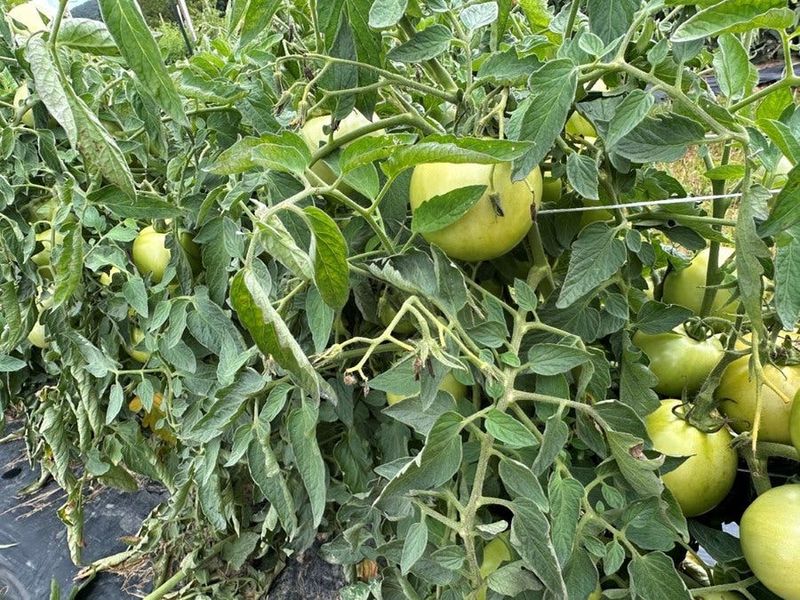
A tomato plant can look reasonably healthy from a distance while quietly losing its summer harvest. Heat affects flowers and fruit through different pathways than it affects leaves, and the foliage may stay green and growing even as the plant drops blossoms, fails to set fruit, or develops fruit quality problems.
Penn State Extension’s heat stress and tomatoes resource explains that high temperatures can interfere with pollen viability and pollination, leading to blossom drop and poor fruit set.
Sunscald is another warm-season risk, especially when pruning or leaf curl has already reduced the canopy cover over developing fruit. UF/IFAS guidance on Florida tomato production challenges identifies sunscald as a common quality problem during hot stretches, often appearing as pale or white patches on the side of the fruit facing the sun.
Ripening can also slow or become uneven under sustained heat, producing fruit that colors up unevenly or stays hard longer than expected.
Mild physiological leaf roll by itself may have little direct effect on yield. UGA’s tomato production guide notes that the surrounding heat episode, rather than the leaf roll itself, is often what reduces the harvest.
Watching for blossom drop, misshapen fruit, or poor fruit set during a heat wave gives you a clearer picture of how the plant is actually faring, even when the leaves look green and intact.
Use a Simple Monitor-and-Respond Decision Rule
When older leaves curl inward during hot weather and the plant stays green and vigorous, start with observation rather than intervention. Check the soil moisture at root depth, confirm that drainage is working, and stabilize your watering schedule before making any other changes.
WSU Extension’s physiological leaf roll fact sheet supports a measured approach: correct the conditions that may be contributing to stress, then watch how the plant responds as the weather shifts.
Keep an eye on new growth at the top of the plant over the following days. If new leaves stay normal and the curl does not spread, physiological leaf roll related to heat or water stress remains a reasonable working explanation.
University of Minnesota’s tomato leaf curl diagnostic tool can help you work through the pattern systematically if you want a second check.
If symptoms spread to new growth or show up alongside mottling, stunting, visible insects, unusual fruit markings, or herbicide-like distortion, that is the moment to seek a local plant clinic or county extension office rather than guessing. Penn State Extension’s heat stress resource frames this well: curled leaves are a stress signal worth taking seriously, but a plant that rolls its leaves on a hot afternoon is not necessarily headed toward failure.
The curl is a message, not a verdict, and what you do with the information matters more than the symptom itself.