
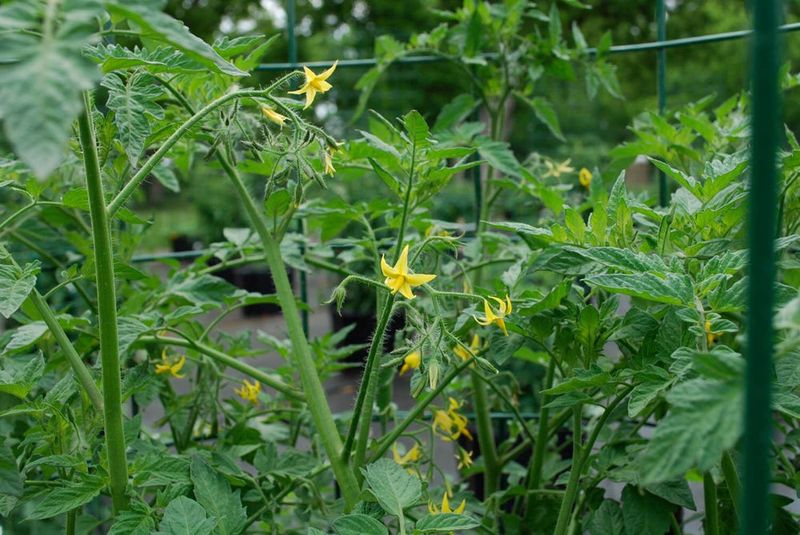
Watching a tomato plant grow tall and green while producing almost nothing to eat is one of the most frustrating puzzles in the vegetable garden. The plant looks healthy, maybe even better than ever, yet the fruit just never comes. This problem has several possible causes, and figuring out which one fits your situation is the real starting point for turning things around.
Start by identifying what the plant is actually doing
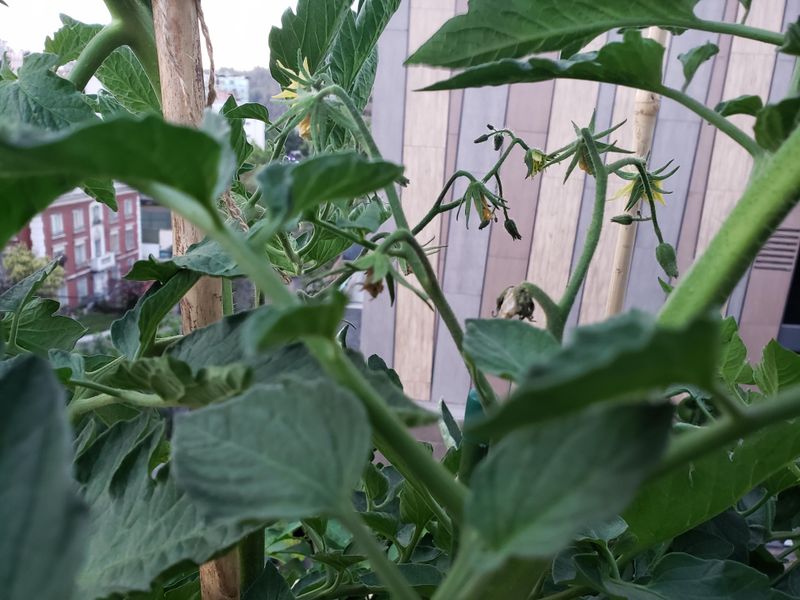
Before changing anything about how you care for your tomato plant, spend a few minutes actually looking at it. Walk up to the plant and check for three things: open flowers, dried flowers that have fallen to the ground or are hanging on the stem, and any tiny green tomatoes beginning to form. What you find, or don’t find, is the most useful piece of information you have.
No flowers at all is a different situation from flowers that open and then drop without producing fruit. When a plant has not yet flowered, the cause could be that it simply hasn’t reached flowering maturity yet, that it isn’t getting enough direct sunlight, that fertilizer history has pushed growth in a leafy direction, or that the variety you planted takes longer than average to produce. University of Minnesota Extension’s tomato-growing guidance notes that excessive nitrogen produces bushy, leafy plants that are slow to bear fruit, but also that light, variety, and plant maturity all affect when fruit appears.
Flowers that open and then dry up and fall are a different signal. That pattern points more directly toward temperature stress or pollination problems rather than a fertilizer issue. Knowing which situation you’re dealing with keeps you from making changes that don’t match the actual problem.
One more thing worth confirming early: find out whether your tomato is a determinate or indeterminate variety. Utah State University Extension’s varietal-selection resource explains that indeterminate plants naturally continue producing leaves, flowers, and fruit throughout the season. A tall, leafy indeterminate plant that keeps growing is not necessarily failing; it may simply be doing what it’s built to do.
Stop unnecessary nitrogen when foliage is exceptionally lush
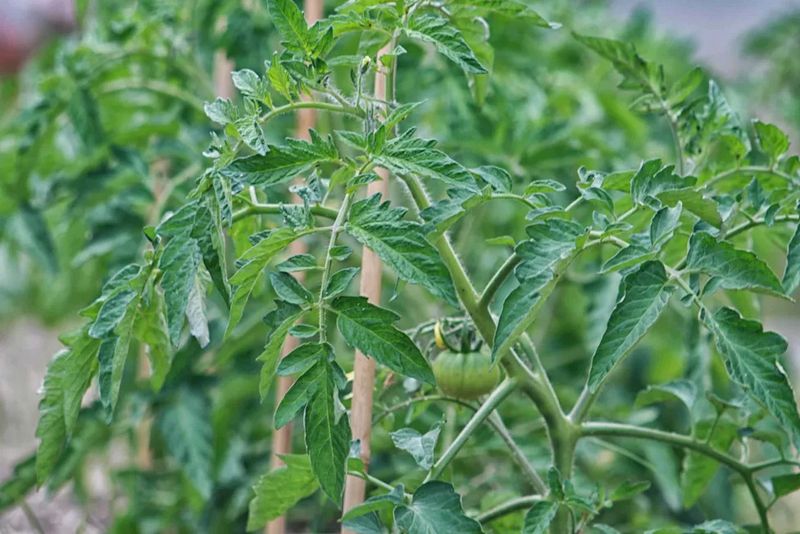
Exceptionally dark, dense, almost waxy-looking foliage on a tomato plant that isn’t fruiting is a pattern worth taking seriously. When a plant has received repeated applications of nitrogen-heavy fertilizer, manure, or rich compost amendments, it can put enormous energy into leafy growth at the expense of flowers and fruit. University of Minnesota Extension confirms that excessive nitrogen produces bushy, leafy tomato plants that are slow to bear fruit, and that low- or no-phosphorus fertilizer is appropriate for most home gardens unless a soil test specifically recommends otherwise.
The practical step here is to stop applying nitrogen-based fertilizers, bloom boosters, or liquid feeds until the plant shows signs of flowering and setting fruit. Reaching for a product labeled “tomato food” or “bloom fertilizer” is not an automatic solution. Adding more phosphorus without a soil test to back it up can worsen nutrient imbalance and contribute to runoff that affects the surrounding environment.
If you haven’t done a soil test, that’s the most reliable way to know what your garden actually needs. Many cooperative extension offices offer low-cost testing, and the results will tell you whether your soil is genuinely low in any nutrient or whether it’s already well-supplied. Base any future fertilizer decisions on those results or on the specific directions on the product label, rather than on the assumption that more nutrients will push a plant into fruiting.
Pausing unneeded nitrogen is one of the clearest corrective steps available when the foliage looks unusually lush, but it won’t fix every cause of delayed fruiting. Keep working through the other checks below before concluding that fertilizer is the whole story.
Dropped flowers make temperature the next major clue
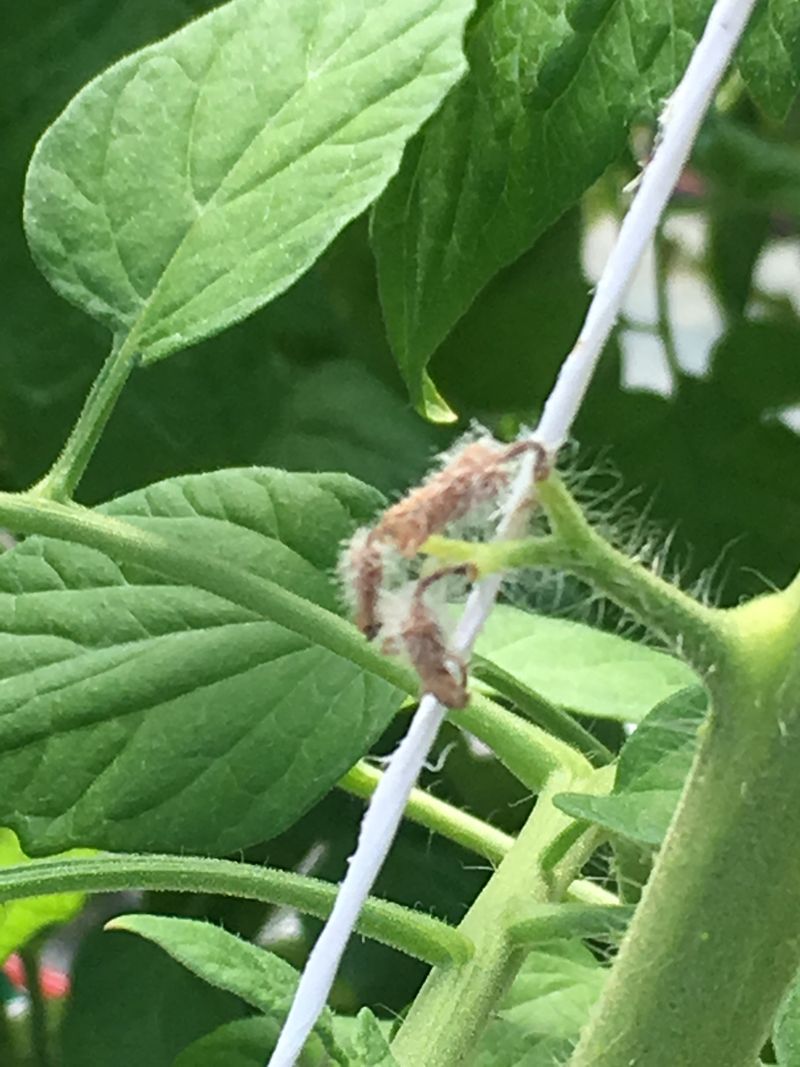
Flowers that open, then dry up and fall off without ever forming a small tomato are one of the clearest signs that temperature is interfering with fruit set. Heat and cold can both disrupt the process, even when the rest of the plant looks perfectly healthy and vigorous.
Tomatoes are sensitive during the period when pollen is being released and the flower is being fertilized. Penn State Extension’s heat-stress guidance explains that high temperatures can cause abnormal flower development, reduce pollen viability, trigger flower abortion, and cut into fruit set significantly. On the cooler end, Penn State’s seedling-to-fruit overview associates blossom drop with nighttime temperatures falling to around 55 degrees Fahrenheit or below. Sustained daytime temperatures in the upper 80s or into the 90s, especially when combined with warm nights, create a different but equally risky set of conditions.
Those numbers are starting points rather than hard rules. Cultivar, humidity, how long the stress lasts, and local microclimates all affect how a plant responds. University of Minnesota Extension’s vegetable heat-stress article reinforces that heat-related blossom drop is a real and common summer problem, particularly during stretches of unusually warm weather.
A plant that has dropped flowers during a heat wave is not necessarily done for the season. Later flowers may set once temperatures moderate, depending on the variety and growing conditions. That’s not a guarantee of recovery, but it is a reason to keep the plant healthy and wait rather than giving up or making drastic changes mid-season.
Correct light and moisture problems without overcorrecting
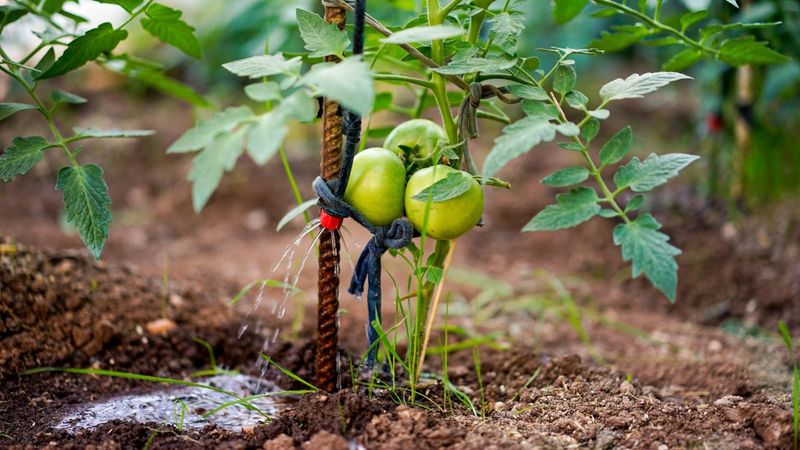
After checking flowers, temperature, and fertilizer history, confirm that the plant’s two most basic growing conditions are also in order: full sun and steady soil moisture. These aren’t always the primary cause of a fruiting problem, but they can make an existing stress worse and are worth verifying before moving on.
Tomatoes need roughly six to eight hours of direct sunlight each day. A plant growing in partial shade may look healthy and green but struggle to produce well. Colorado State University Extension’s tomato guide lists full sun and well-drained soil as baseline requirements, noting that unsuitable conditions can reduce fruit set even on a plant that appears vigorous.
On the moisture side, the goal is consistency rather than volume. Utah State University Extension recommends approximately 1 to 2 inches of water per week as a general starting point, adjusted for your soil type, weather, and site. Mulch helps slow evaporation and buffer the soil against temperature swings. Cycling between dry spells and heavy soakings adds plant stress and is closely tied to problems like blossom-end rot on developing fruit.
Container-grown tomatoes deserve a separate note. University of New Hampshire Extension points out that pots hold far less soil and water than in-ground beds, so they can dry out much faster, especially during hot or windy weather. Check containers more frequently and don’t assume the watering schedule that works for a garden bed will keep a potted tomato adequately hydrated. The aim throughout is reducing stress, not guaranteeing fruit, so treat these as conditions to verify rather than silver-bullet fixes.
Use gentle pollination help only in still conditions
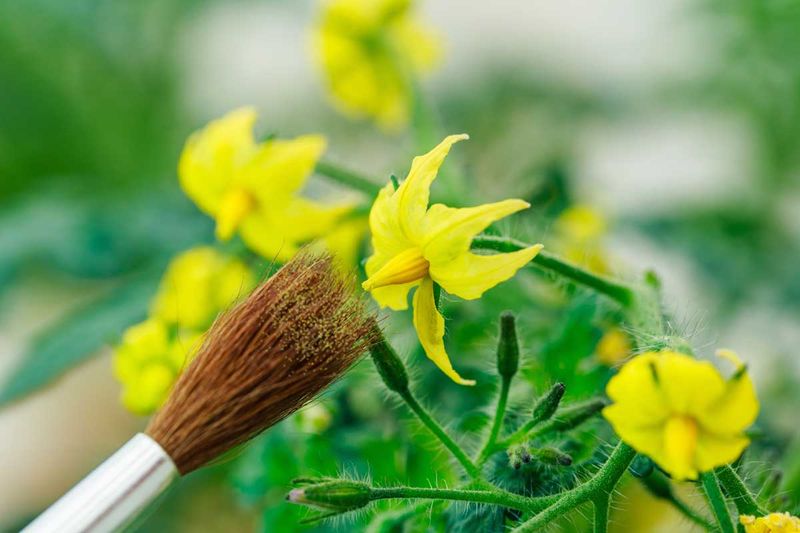
Tomato flowers are built to pollinate themselves. Each flower contains both the pollen-producing anthers and the pollen-receiving stigma, so the plant doesn’t need bees or other insects to produce fruit the way some crops do. What it does need is some form of movement to shake the pollen loose so it can land where it’s needed.
Outdoors, wind and visiting insects usually handle that job without any help from the gardener. The situation changes in an enclosed or unusually still environment. Oregon State University Extension specifically describes mechanically agitating tomato flowers in enclosed settings like greenhouses as a way to support pollen release when natural movement is limited. Gently tapping or vibrating an open flower cluster during dry conditions is a reasonable and low-risk step in those situations.
For most backyard gardens, this kind of manual help isn’t necessary. If your tomatoes are growing outside in a normal yard with some air movement and occasional insect activity, pollen release is likely happening on its own. The absence of a beehive nearby is not the reason your plant isn’t fruiting.
Hand-pollination also has real limits. Colorado State University Extension notes that blossom-set sprays are not effective under high temperatures, and the same logic applies to manual pollination: if pollen has been damaged by heat, if flowers are aborting under stress, or if the plant has a nutrient imbalance, tapping the flowers cannot fix the underlying problem. Use gentle agitation as a targeted tool for enclosed or still growing spaces, not as a general response to low fruit production.
Prune for management, not to force fruit
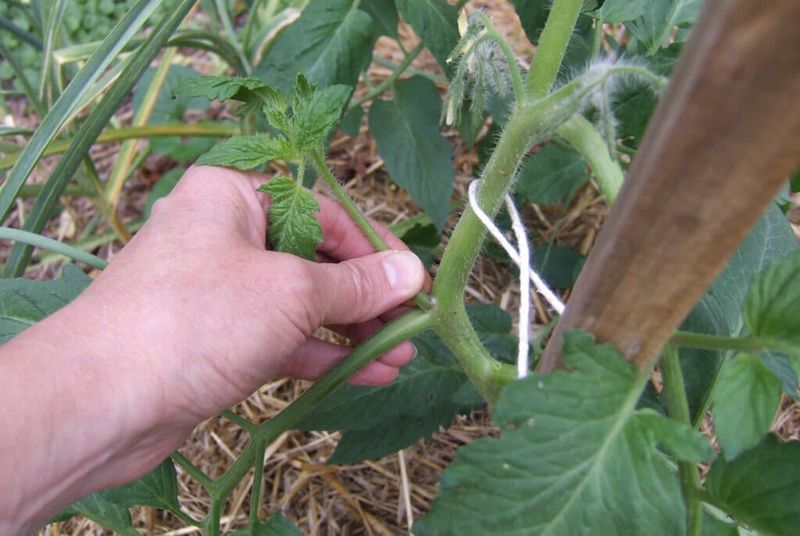
Stripping leaves off a tomato plant to “force” it to focus on fruit is one of those ideas that sounds logical but tends to backfire. Foliage does more than just look green; it shades the developing fruit from intense sun and supplies the plant with the energy it needs to grow and produce. Remove too much of it and you expose tomatoes to sunscald while simultaneously stressing a plant that may already be struggling.
Selective pruning is a different matter. Removing suckers, which are the shoots that sprout in the angle between the main stem and a branch, can improve airflow, make staking easier, and in some growing systems may direct more energy toward the fruit that’s already forming. University of Georgia Cooperative Extension’s home-garden pruning guide explains that selective sucker removal can be useful for manageability and airflow, but cautions that excessive pruning increases sunscald risk and overall plant stress.
The variety you’re growing should drive how much pruning, if any, makes sense. Utah State University Extension’s varietal-selection resource distinguishes between determinate plants, which have a more contained growth habit and tend to ripen fruit in a concentrated window, and indeterminate plants, which keep producing leaves, flowers, and fruit all season. Determinate varieties generally need less pruning than indeterminate ones, and applying aggressive pruning practices meant for commercial indeterminate production to a compact, determinate backyard plant can do more harm than good.
Before making cuts, identify what you’re growing, assess the support system in place, and aim for targeted removal of a few suckers rather than a broad leaf-stripping session.
Avoid remedies that target a different tomato problem
When a tomato plant isn’t producing fruit, it’s tempting to reach for something, anything, that promises to help. The problem is that many popular garden remedies address a completely different condition than the one causing your plant’s actual trouble. Using them anyway can waste money, add unnecessary chemicals to your soil, and in some cases make things worse.
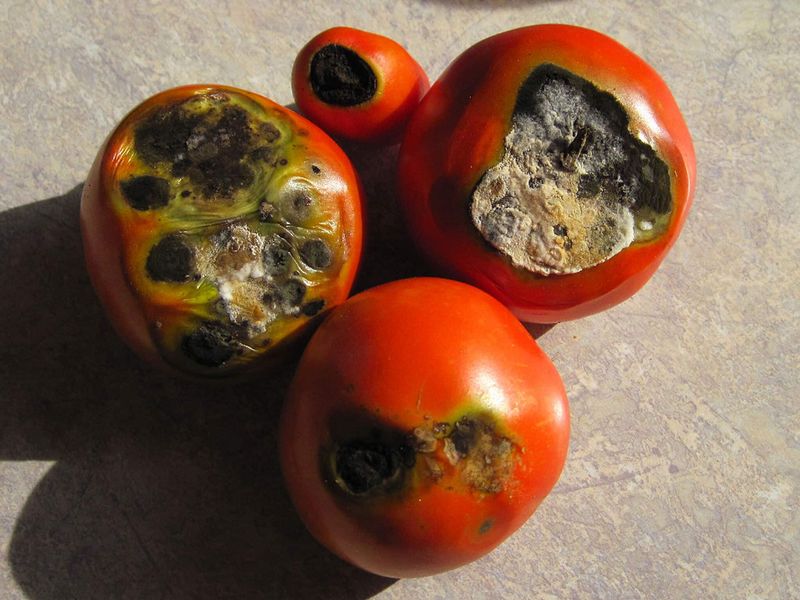
Blossom-end rot is a good example of a problem that often gets confused with failure to set fruit. Blossom-end rot shows up as a dark, sunken spot on the bottom of a developing tomato. It is primarily associated with uneven water uptake and root stress rather than a simple shortage of calcium in the soil. Utah State University Extension connects blossom-end rot closely to inconsistent moisture, not to a universal calcium deficiency that calcium sprays or eggshells will reliably correct.
Epsom salt is another remedy that circulates widely but lacks reliable support for tomato fruiting problems. University of Minnesota Extension states clearly that Epsom salts do not prevent blossom-end rot, may interfere with calcium uptake when magnesium is already adequate, and that foliar sprays can scorch leaves. Eggshells decompose too slowly to correct a problem during the current growing season.
Blossom-set sprays carry their own limitations. Colorado State University Extension notes they are not effective under high temperatures, which is exactly when many gardeners reach for them. Adding phosphorus without a soil test to support it is similarly unlikely to help and can contribute to nutrient runoff. The most productive step before adding any product is confirming which problem you actually have, using the symptom checks described earlier in this article.
Follow the diagnosis before changing another variable
Pulling together everything covered so far, here is a practical sequence to work through before making any new change to your tomato plant’s care. Start by looking at the plant itself: are there open flowers, dropped flowers, or tiny developing tomatoes? No flowers at all points toward maturity, light, variety, or fertilizer history. Flowers that drop point toward temperature or pollination stress.
Next, think back over recent daytime and nighttime temperatures. If your area has had a stretch of very hot or unusually cool nights, heat or cold stress may be the primary issue, and later flowers may set when conditions improve. After that, review your fertilizer history. If the foliage is exceptionally lush and you’ve been applying nitrogen regularly, stop and let the plant settle before adding anything else, following the guidance from University of Minnesota Extension.
Then confirm full sun and steady moisture, verify whether your variety is determinate or indeterminate, and use gentle flower agitation only if the plant is in a greenhouse or another enclosed space with limited air movement. Prune sparingly and only after identifying the growth habit. Consistent moisture and mulch remain useful throughout.
A vigorous, leafy tomato plant may simply be growing normally or waiting for better conditions. If fruit still doesn’t appear after working through these checks, revisit the diagnosis rather than escalating with more products or more aggressive pruning. A healthy plant that finally meets the right conditions is always more likely to produce than one that’s been pushed in too many directions at once.