
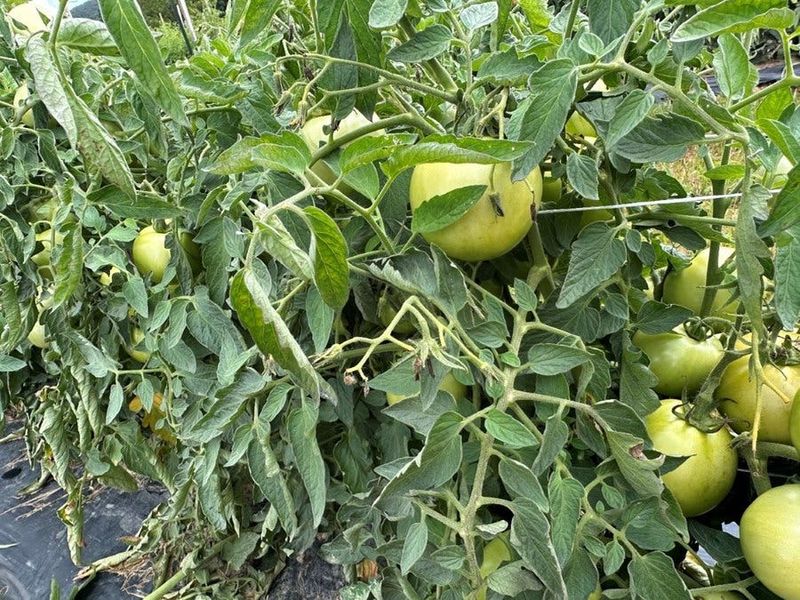
Green tomatoes hanging on the vine while the calendar flips to September is one of the most frustrating sights in a Southern garden. Before reaching for a bag of fertilizer, it helps to understand what is actually slowing your plants down, because the answer is not always a missing nutrient.
Heat, not hunger, is often the real culprit, and knowing the difference can save your crop and your money.
No feeding shortcut fixes every heat-stalled tomato
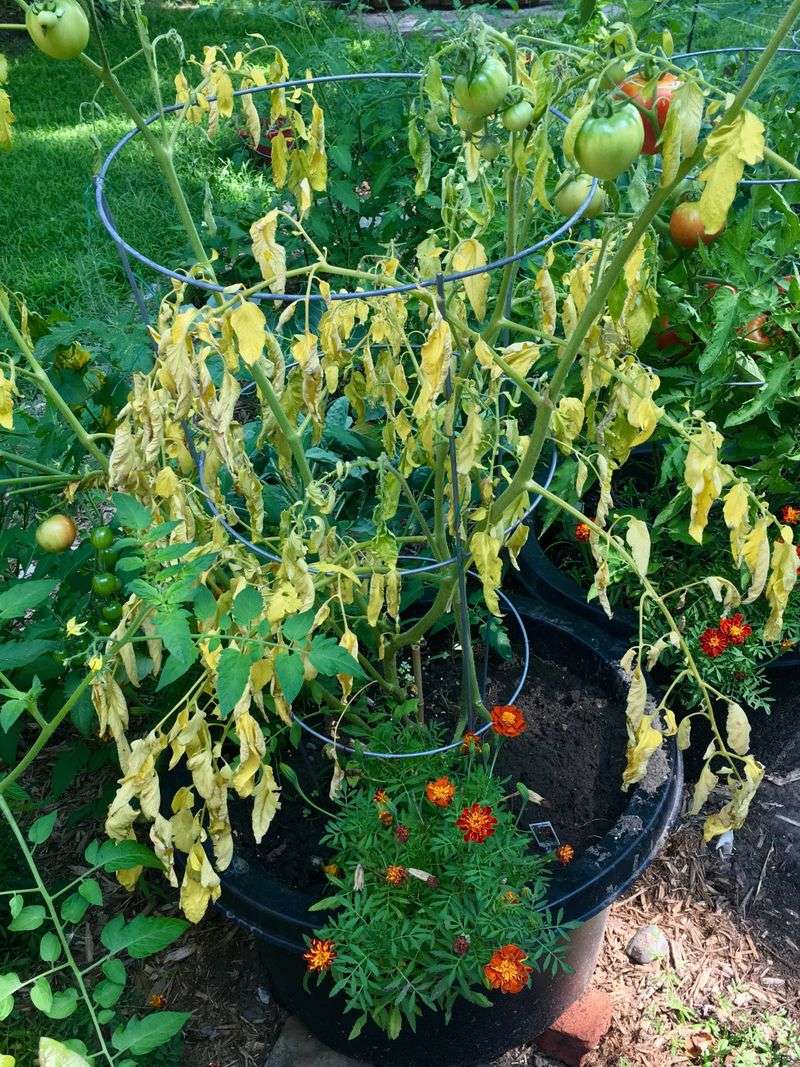
Grabbing a bag of high-potassium fertilizer and side-dressing your tomatoes might feel like taking action, but fertilizer cannot create fruit from flowers that heat already caused to abort. A green tomato crop stalling in September could mean several different things: flowers failed to set fruit weeks ago, existing fruit is slow to change color, the plant is drought-stressed, or a disease or pest is quietly doing damage.
These are not the same problem, and they do not share the same fix.
Before treating anything as a nutrition issue, compare your recent weather, the plant’s appearance, the soil moisture at root depth, and what your local fall-growing window actually looks like. Texas A&M AgriLife Extension notes that a plant showing yellowing, spotting, wilting, or stunting may have disease, root damage, salt injury, or irrigation failure rather than a simple nutrient gap, and fertilizing without a diagnosis can make those conditions worse.
University of Minnesota Extension research on heat and vegetable gardens confirms that sustained high temperatures can directly block both fruit set and color development, effects that no fertilizer application can reliably reverse. And UF/IFAS research on tomato nutrition in Florida found that tomato responses to added potassium were variable, and rates above recommendations generally did not improve yields even under normal growing conditions.
How hot days and nights interrupt fruit set and ripening
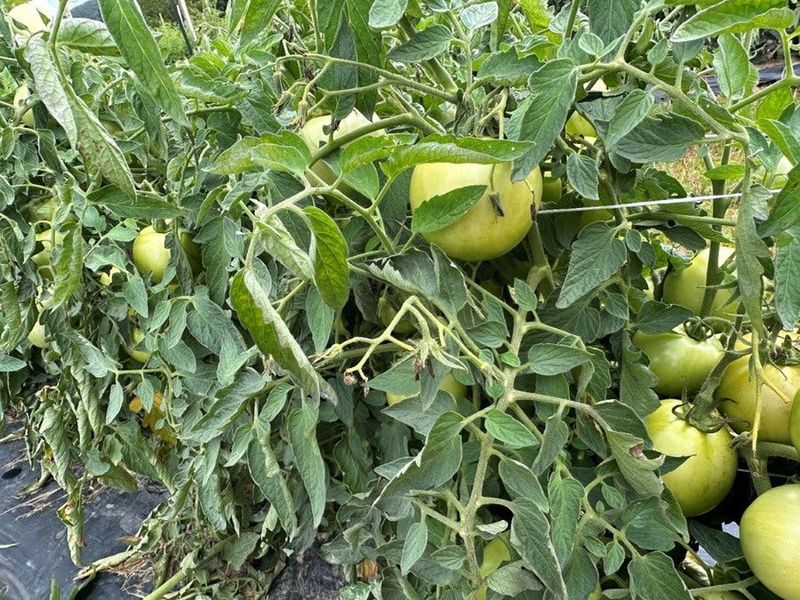
Two separate heat effects can stall a tomato crop, and understanding which one you are dealing with changes everything about how you respond. The first happens before fruit forms.
When daytime temperatures climb toward the 85-90 degree Fahrenheit range and nighttime temperatures stay above roughly 70 degrees, pollen can become non-viable and flowers may drop without ever setting fruit. These thresholds are approximate, not guarantees.
Cultivar, humidity, how long the heat lasts, canopy cover, and the plant’s water status all influence the outcome.
The second effect happens after fruit has already formed. UMN Extension guidance on heat in the vegetable garden states that the pigments responsible for red color are not produced above roughly 85 degrees Fahrenheit, and that the optimum range for color development falls closer to 68-77 degrees.
A peer-reviewed study published in the Journal of the Science of Food and Agriculture found that lycopene synthesis was inhibited when fruit temperatures exceeded approximately 86 degrees Fahrenheit, and research published in Plant Physiology documented reversible inhibition of tomato fruit ripening genes at high temperatures.
Fruit exposed to direct sun can run significantly hotter than the surrounding air, which means shaded tomatoes on the same plant may be ripening while sun-exposed ones stay green. The encouraging part is that UMN Extension describes these delays as temporary in many cases.
Once nighttime temperatures moderate and fruit temperatures drop into a better range, color development can resume on fruit that has already reached the right developmental stage.
Diagnose the plant before adding any nutrient
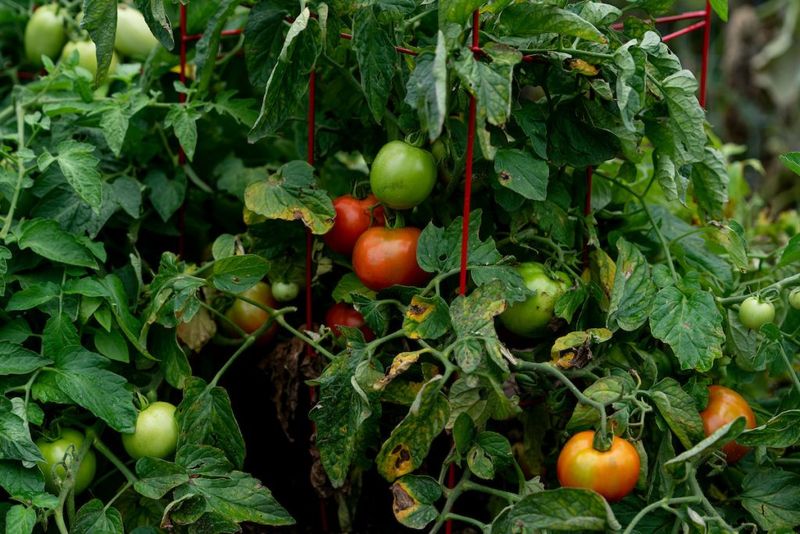
A practical triage sequence saves time and prevents mistreatment. Start at the flowers and fruit: are there blooms present that are dropping without setting, or is the plant simply holding green fruit that refuses to turn?
Check the canopy next. Healthy, full foliage during a heat spell points toward a ripening delay rather than a systemic problem.
Thin, yellowing, spotted, or distorted leaves suggest disease, insects, root damage, or salt injury and need a different response entirely.
Push a finger or a soil probe into the root zone and check actual moisture, not just the surface. Dry soil at four to six inches down during a heat wave is a more likely explanation for poor plant performance than a potassium shortage.
Review recent temperatures and irrigation history alongside what you see on the plant. UGA’s Georgia Homegrown Tomatoes guide and UF/IFAS cultivar selection research for North Florida both emphasize that regional fall-growing conditions vary widely, meaning a diagnosis that fits a coastal Georgia garden in September may not apply to a North Florida planting facing severe heat and disease pressure in the same month.
CSU Extension’s soil management guidance makes the case clearly: a soil test is the most defensible way to determine whether potassium, nitrogen, phosphorus, lime, or any other amendment is actually needed. Applying fertilizer without knowing your soil’s current fertility can cause salt injury, create nutrient imbalance, or push the plant toward excessive foliage growth at exactly the wrong time.
A healthy plant stalling in color during a confirmed heat spell does not prove a deficiency.
Feed only when testing identifies a real need
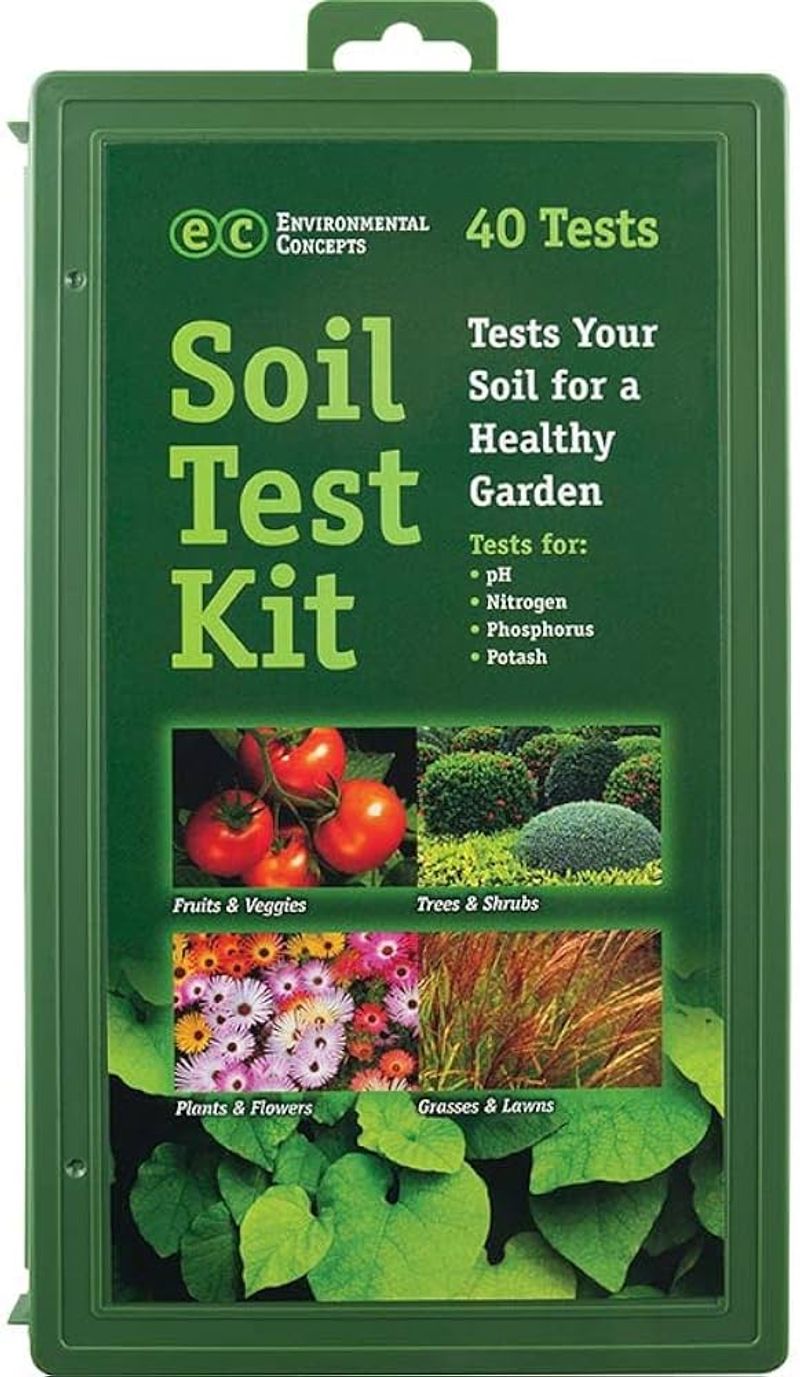
Fertilizer earns its place in late-season tomato care only when there is a specific reason to use it. A soil test or tissue test is the most reliable way to identify which nutrient, if any, is actually limiting your plant.
Crop history matters too: if your beds have been heavily amended for several seasons without testing, you may already have adequate or excess potassium, and adding more will not move the needle on fruit set or ripening.
UF/IFAS research summarizing nitrogen, phosphorus, and potassium trials with tomato in Florida found that tomato responses to potassium were variable and that rates above recommendations generally did not improve yields. Potassium can support production when it is genuinely limiting, but it does not function as a ripening switch in soil that is already adequately supplied.
Excess potassium can also interfere with calcium and magnesium uptake, creating new problems while failing to solve the original one.
When a test or strong diagnostic evidence does support fertilization, apply only the specific nutrient identified, at the rate listed on the product label. CSU Extension’s tomato-growing guidance recommends keeping granular fertilizer away from the stem, applying only the label amount, and watering it in immediately.
Texas A&M’s tomato production guide reinforces the warning against excess nitrogen specifically: too much nitrogen pushes the plant toward lush foliage at the expense of flowers and fruit, can delay maturity, and may reduce overall yield. CSU’s soil fertilization resource adds that overapplication of any fertilizer can burn roots and set a plant back further during already stressful conditions.
Stabilize moisture and keep fruit under foliage
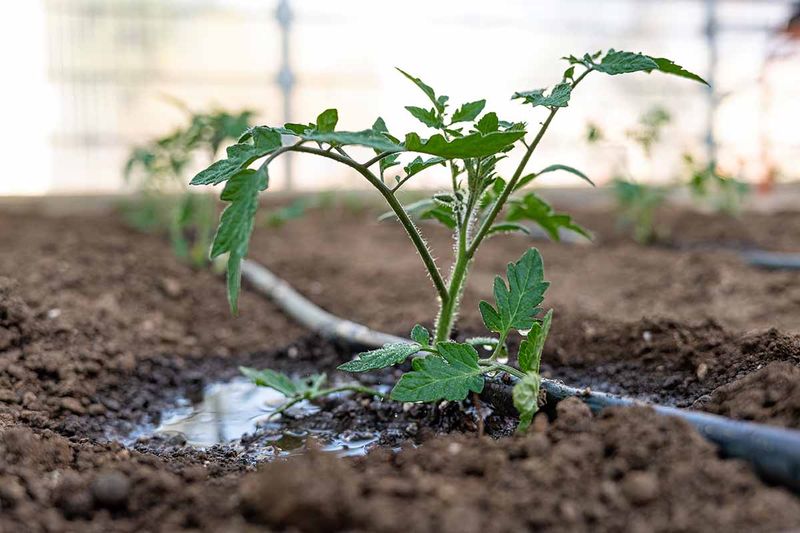
Water management does more reliable work than a fertilizer bag during a September heat stretch. Deep, root-zone watering encourages roots to stay active and helps the plant hold flowers and developing fruit through hot spells.
UGA’s homegrown tomato guide recommends roughly one to two inches of water per week, adjusted for your soil type and recent rainfall, while other extension sources emphasize deep irrigation and mulch over any fixed universal amount. Frequent, shallow sprinkling wets the surface without reaching the root zone and can encourage disease by keeping foliage wet.
The UGA Commercial Tomato Production Handbook connects moisture stress to a range of problems beyond wilting, including flower and young-fruit drop, blossom-end rot, cracking, and poor overall plant performance. A two-to-three-inch layer of mulch around the base of each plant slows evaporation, moderates soil temperature, and reduces the moisture swings that contribute to those disorders.
Drip or soaker irrigation delivers water directly to the root zone without wetting leaves, which is especially useful in humid Southern conditions where wet foliage can invite fungal disease.
Foliage management matters too, and the advice to strip leaves so the sun can reach tomatoes faster is one to skip. Oregon State Extension’s heat-wave garden guide and UGA both note that exposed fruit heats up faster, raising the risk of sunscald and pushing fruit temperature well above the threshold where color development stalls.
Keeping enough healthy foliage to shade developing clusters is a practical way to lower fruit temperature without any additional inputs.
Harvest fruit that has reached a ripening stage
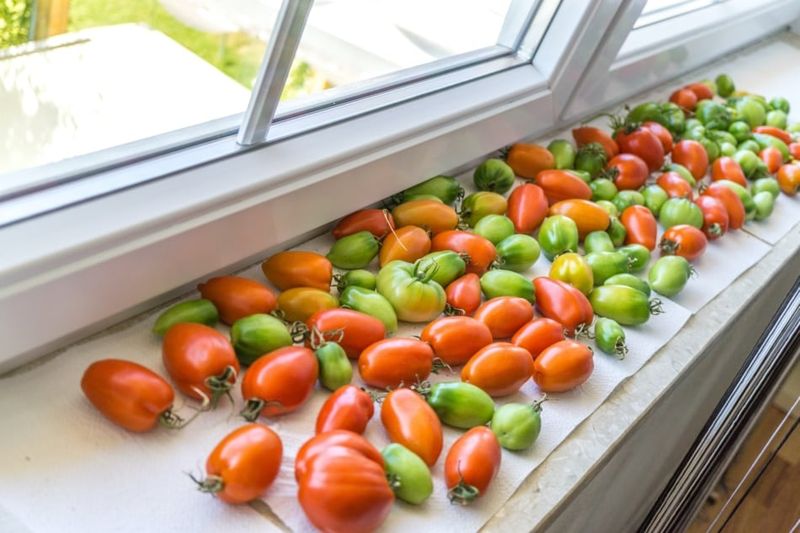
When extreme heat shows no sign of letting up, pulling fruit off the vine can actually protect your harvest rather than cut it short. The key distinction is developmental stage.
Fully immature green tomatoes, those that formed recently and have not yet reached full size, may not ripen well regardless of where they finish. Mature-green tomatoes, ones that have reached full size and show a slight color change at the blossom end, and breaker-stage fruit, those already showing pink or yellow color, can both ripen successfully indoors.
Penn State Extension’s tomato harvest guide explains the stages clearly and notes that mature-green and breaker-stage fruit can finish ripening at room temperature without the vine. CSU Extension’s growing-tomatoes resource advises against refrigerating tomatoes before they are fully ripe because temperatures below about 50 degrees Fahrenheit can damage texture and impair flavor.
A countertop or shaded spot indoors, away from direct sun, gives harvested fruit the temperature range it needs to finish without the added stress of outdoor heat, sunscald, cracking, or insect pressure.
Looking further ahead, cultivar choice is one of the most effective tools available for Southern fall production. UGA’s commercial tomato handbook recommends hot-set types for fall crops, and UF/IFAS cultivar research for North Florida notes that pollen can become sterile under extreme heat, making variety selection a front-end decision with significant consequences.
September timing and heat pressure differ across Florida, Texas, and Georgia, so matching your cultivar to your specific region’s fall window matters more than any single mid-season correction.
Use a decision rule instead of a fertilizer promise
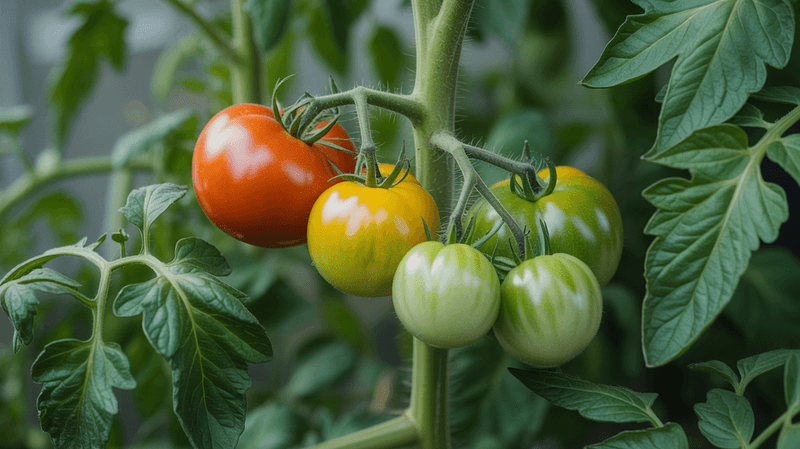
Matching the symptom to the actual cause is a more dependable strategy than reaching for a fertilizer bag when tomatoes stall. When flowers are dropping or new fruit is not forming during a stretch of very hot days and warm nights, heat-related flower failure is the leading possibility.
The response is canopy protection, steady moisture, and patience for cooler conditions, not a feeding. When existing fruit sits green on the vine during confirmed heat, the same logic applies: UMN Extension’s heat and vegetable garden research describes these color delays as temporary in many cases, with ripening resuming once temperatures moderate.
When the plant itself looks abnormal, with spots, distorted growth, unusual wilting patterns, or visible insects, investigate disease, pests, root condition, salt injury, and irrigation before assuming a nutrient problem. If a soil or tissue test, crop history, or a well-supported visible deficiency points toward a specific nutrient, apply only that nutrient at the label rate, following the application method that keeps fertilizer away from the stem and gets it watered in.
UF/IFAS potassium research and CSU’s soil fertilization guidance both support this targeted approach over routine complete-fertilizer applications in the absence of a confirmed need.
Cooler nights do more for a heat-stalled tomato than any product in a garden center. A plant that has been well-watered, mulched, and left with adequate foliage cover is already positioned to take advantage of that shift the moment temperatures drop into a friendlier range.