
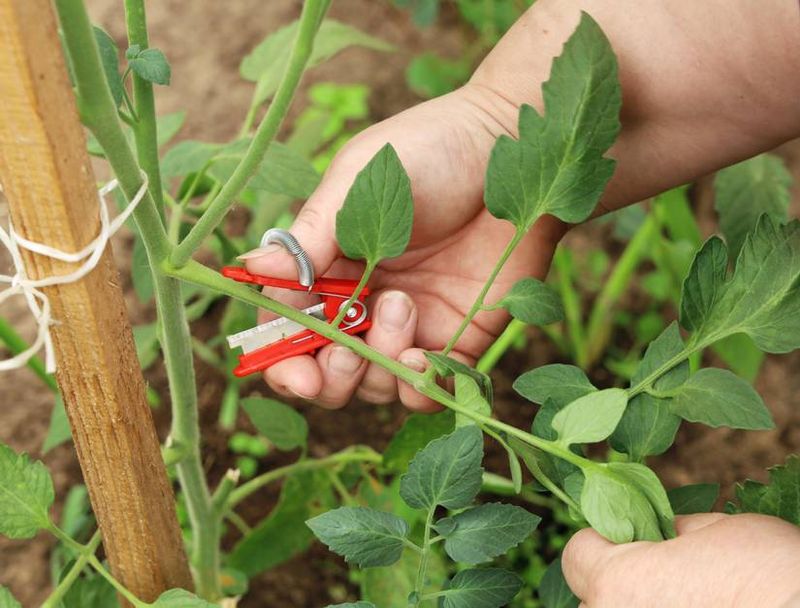
Watching your tomato plant shoot up past its cage while the fruit count stays stubbornly low is one of summer’s most frustrating garden puzzles. Before you grab the pruners, though, the answer is not always a quick snip at the top. The right cut depends on your plant’s growth habit, your timing, and what’s actually causing the slowdown – and getting those details right is what separates a helpful trim from one that costs you tomatoes.
Check the tomato’s growth habit before you cut
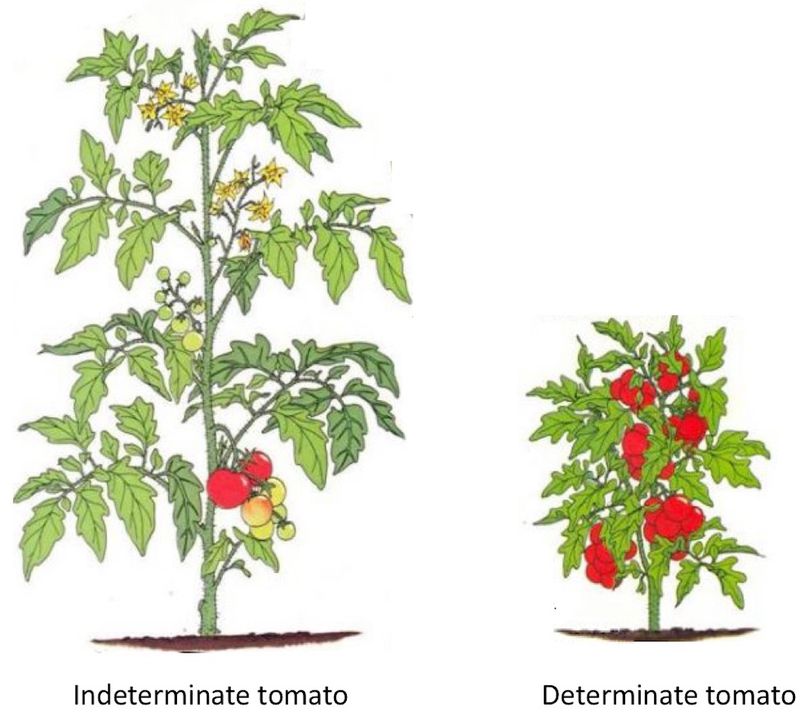
Grabbing the pruners the moment a tomato vine looks too tall is a move that can backfire badly, especially if you have not confirmed what kind of plant you are working with. The single most important step before any cut is identifying whether your tomato is indeterminate, determinate, or semi-determinate – and that information usually lives right on the seed packet or plant label.
Indeterminate tomatoes keep producing new stems, leaves, and flower clusters throughout the growing season, stopping only when cold or frost arrives. University of Minnesota Extension guidance on growing tomatoes explains that indeterminate varieties continue to grow and set fruit over a long season, which is why managing their height can become a genuine concern. These are the plants where topping has a legitimate, conditional role.
Determinate tomatoes work on a different schedule entirely. They grow to a set size, form a terminal flower cluster, and then put most of their energy into ripening that one flush of fruit. Colorado State University Extension is direct on this point: pruning or removing suckers from determinate tomatoes reduces the crop. Cutting the top off a determinate plant does not help it fruit faster – it removes productive growth the plant was counting on.
Semi-determinate varieties fall between these two and deserve particular caution. Their side shoots can carry real fruit, so treating them like a classic indeterminate vine and removing growth freely may cost you a meaningful portion of the harvest. When the label says semi-determinate, or when you are genuinely unsure, hold off and do more research before making any cut.
Understand what the topping cut actually does
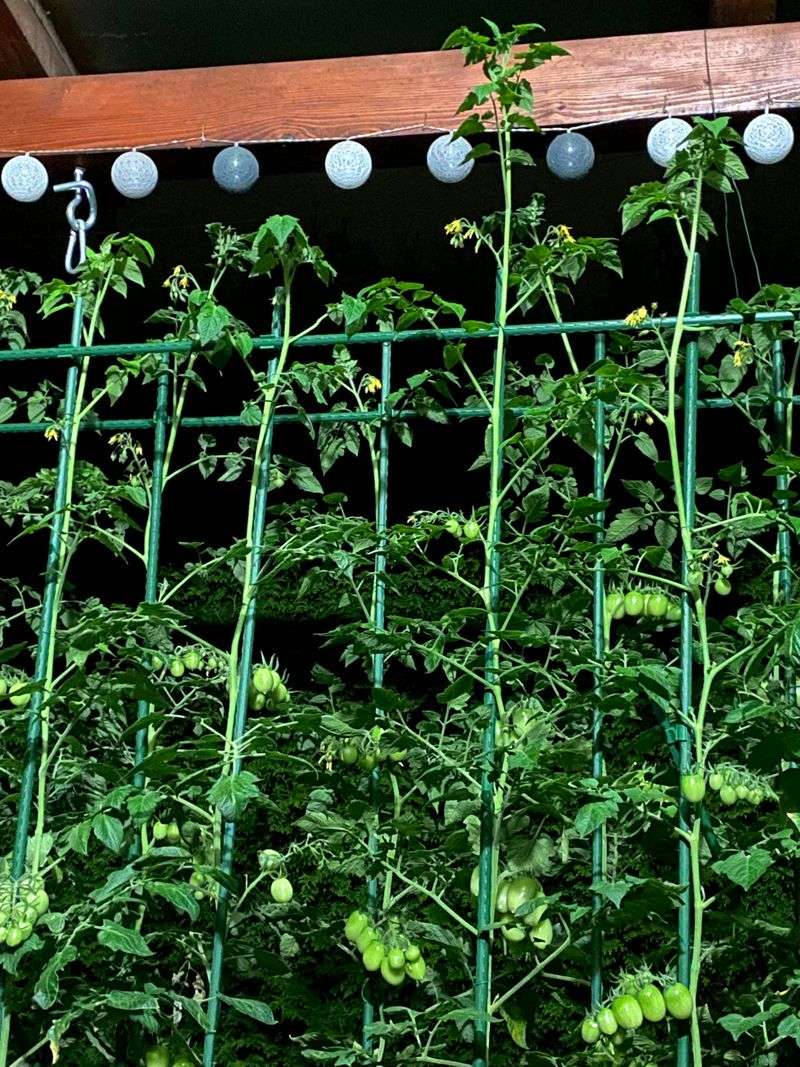
The topping cut has one straightforward job: it removes the apical growing point, which is the actively growing tip at the very top of the main stem. Once that tip is gone, the plant stops adding height at that stem. What the cut does not do is flip a switch that sends all the plant’s resources rushing into the fruit already hanging on the vine.
University of New Hampshire Extension’s pruning fact sheet describes removing the top of the plant when it reaches an overhead support, framing it as a practical height-management step rather than a fruit-production strategy. That framing matters. The cut can improve manageability and may give fruit already set a bit more time to develop before the season ends, but those are conditional benefits tied to specific circumstances.
An Oregon State trial with indeterminate ‘Early Girl’ tomatoes found that severe pruning produced earlier ripening and larger individual fruit but reduced yield per plant and increased cracking under uneven moisture. Earlier and bigger does not automatically mean more. If your goal is the highest total number of tomatoes from a long-season indeterminate vine, topping early works against you.
One more distinction worth locking in now: topping is not the same as removing suckers. Topping cuts the main stem’s growing tip. Sucker removal targets side shoots that emerge from the junction between a leaf and the main stem. These are separate techniques with separate purposes, and mixing them up leads to cuts you may regret.
Match the timing to your actual goal
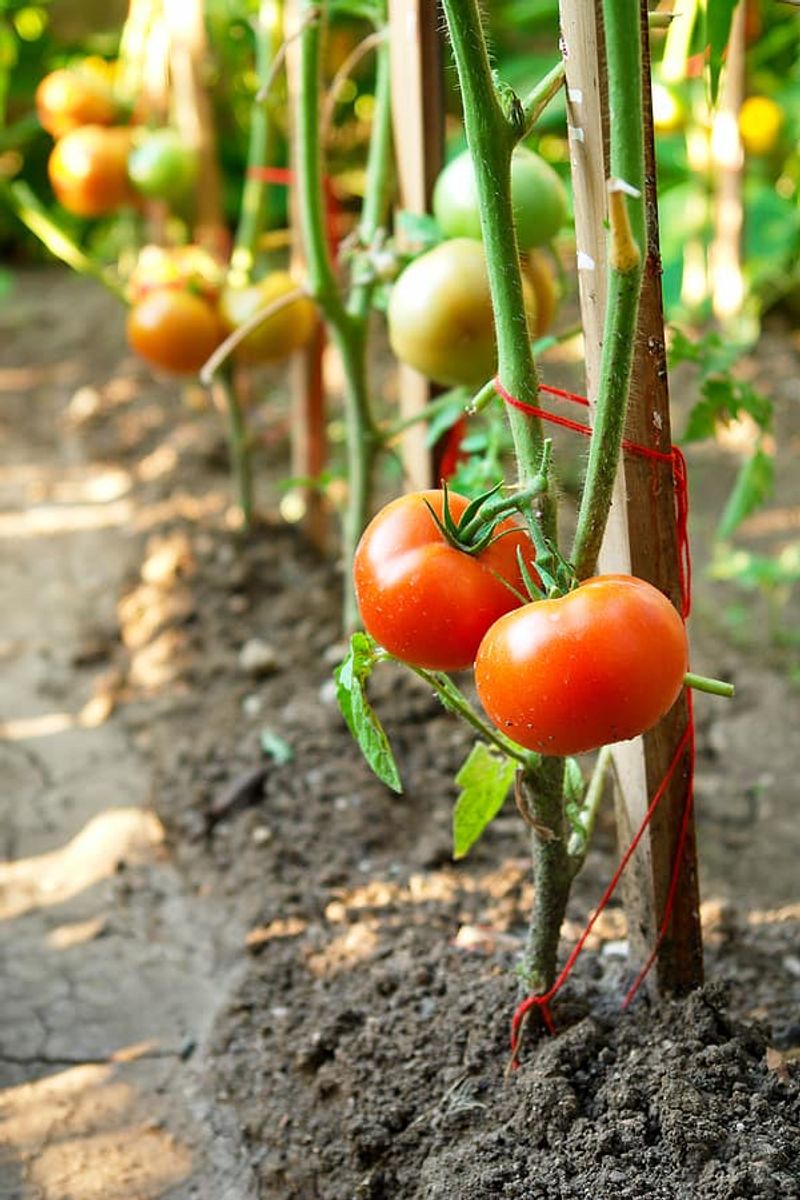
Timing the topping cut correctly depends entirely on what you are trying to accomplish, and those two goals call for different moments in the season. Treating them as interchangeable leads to cuts made at the wrong time for the wrong reason.
For height control, the trigger is physical: top the vine when it reaches the upper limit of its cage, stake, or trellis. University of New Hampshire Extension notes that one alternative to topping is lowering the vine so it can continue growing along a lower section of the support. If your setup allows that, it preserves more potential flower clusters while keeping the plant manageable. When lowering is not practical, cutting the main stem above a healthy leaf or fruit cluster stops the upward sprawl without stripping the plant of its productive lower growth.
For late-season ripening, the timing shifts to the calendar. Oregon State University Extension recommends removing the main-stem tip approximately one month before your expected first frost. The logic is that new flower clusters started after that point will not have enough time to mature before cold arrives, so stopping vertical growth may give the fruit already on the plant a better chance of ripening fully. Adjust that window based on your local frost forecast and the days-to-maturity for your specific variety.
Topping earlier than these two windows – say, midsummer on a healthy vine that still has room to grow – can remove flower-producing growth the plant would have used for weeks more. The Oregon State pruning trial found that earlier and more severe intervention reduced total yield per plant, which is a real cost if a long-season harvest is what you are after.
Make one careful cut while preserving the canopy
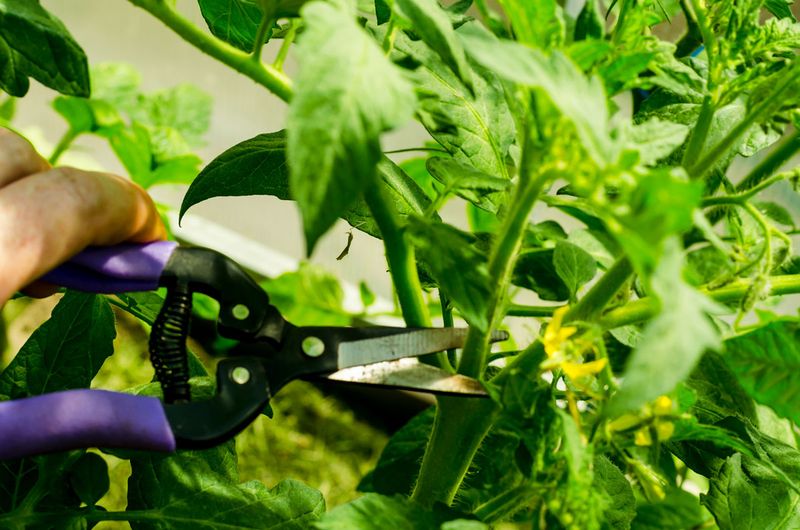
When you have confirmed you have an indeterminate plant and the timing is right, the physical cut itself is straightforward – but a few details make the difference between a helpful trim and one that stresses the plant unnecessarily.
Place the cut through the main stem just above a healthy leaf or a developing fruit cluster. That leaf or cluster becomes the new top of the plant, and the growth below it continues to support the tomatoes already hanging on the vine. University of New Hampshire Extension describes this as removing the top portion of the plant to stop upward growth, with the remaining foliage left intact to sustain the fruit below.
Resist the urge to clear out a large section of leaves along with the tip. Research on tomato leaf removal found that more severe leaf removal accelerated ripening rate but reduced yield, with the authors attributing yield losses to reduced photosynthetic leaf area. Leaves are not decorative – they are the plant’s engine for converting sunlight into the sugars that fill out your fruit. Stripping the canopy also exposes developing tomatoes to direct sun, which can cause sunscald on the side facing the sky.
After the cut, the plant still depends on the same inputs it always has. Consistent watering, adequate nutrients, good light, and healthy roots are what actually fill tomatoes out. Topping stops the stem from growing taller; it does not substitute for any of those conditions. Keep caring for the plant the same way you were before, and let the remaining foliage do its job.
Keep topping separate from sucker removal
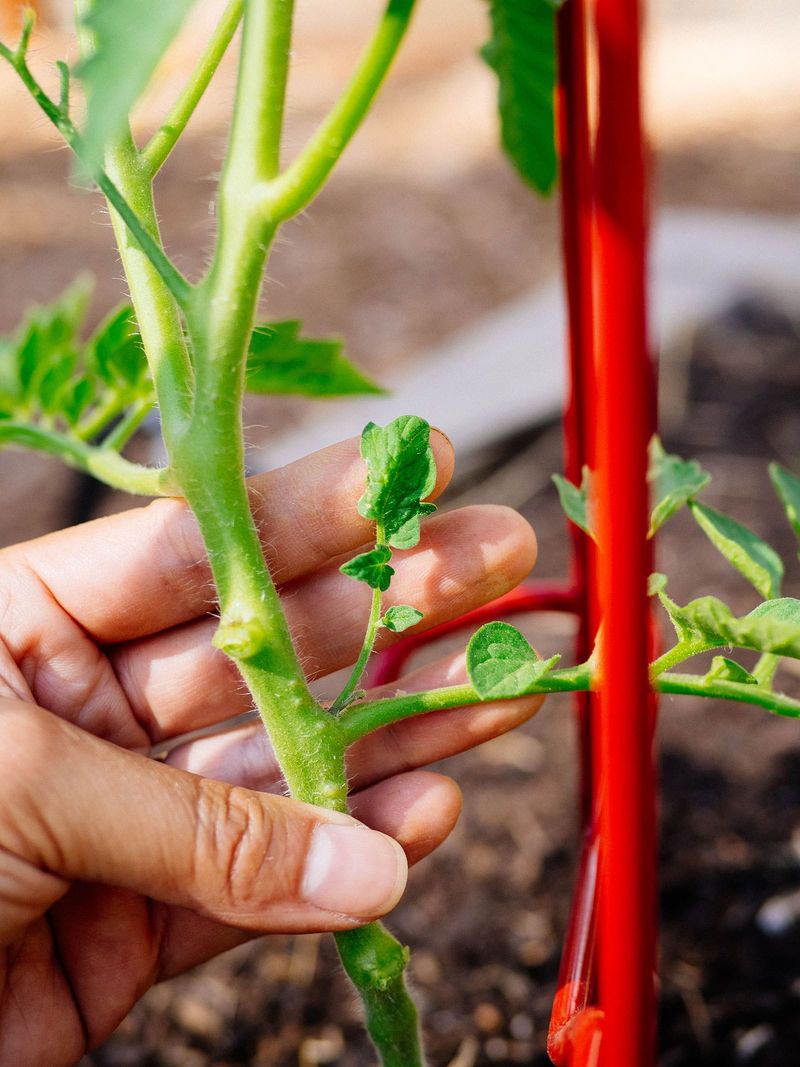
After making the topping cut, many gardeners immediately start eyeing every side shoot on the plant with the same pruners. That impulse is understandable, but sucker removal is a separate decision that deserves its own careful thought.
Topping removes the apical growing point of the main stem. Sucker removal targets side shoots that sprout from the angle between a leaf and the main stem, called the leaf axil. These are not the same structure, and they are not removed for the same reason. A sucker left in place can grow into a full secondary stem with its own leaves, flowers, and fruit.
Removing it is not automatically beneficial – it depends on your training system, plant health, and how much of the season remains.
Oregon State University Extension recommends checking indeterminate plants every 7-10 days and pinching off unwanted side shoots at their base while they are still small. The word “unwanted” is doing real work in that sentence – not every sucker is unwanted. University of New Hampshire Extension specifically recommends retaining the sucker just below the first flower cluster when training a plant to two leaders, allowing that shoot to become a productive second stem.
Selective sucker management can improve airflow through the canopy and make training on a stake or trellis easier. Those are legitimate benefits connected to plant health and manageability. Stripping every side shoot off an indeterminate plant, however, removes potential flowering sites and can reduce the total number of tomatoes the plant produces over the season. Remove suckers thoughtfully and early, when they are small and easy to pinch off, rather than in a wholesale clearout after topping.
Diagnose slow fruiting before blaming the vine’s height
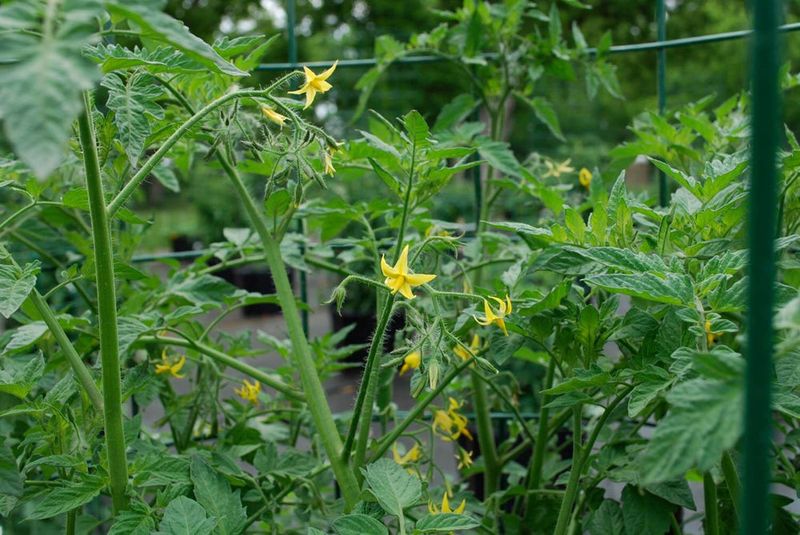
A tomato plant that grows tall while fruiting slowly is sending a signal, but that signal is not necessarily “top me.” Height and slow fruit development can have several unrelated causes, and cutting the top off a plant that has a different underlying problem will not fix anything – it may just remove growth the plant needed.
Light is one of the first things to check. When a tomato does not get enough direct sun, it tends to grow long, weak stems as it reaches toward a brighter spot. University of Minnesota Extension notes that tomatoes need full sun for best production. Topping a light-starved plant removes stem length but does nothing to solve the actual shortage.
Nitrogen is another common culprit. Oregon State University Extension points out that excess nitrogen encourages lush foliage and vine growth while delaying fruit maturation. If you have been applying a high-nitrogen fertilizer regularly, the plant may simply be responding to what you are feeding it. Switching to a lower-nitrogen, higher-phosphorus formula at the fruiting stage is a more targeted response than cutting the top.
Temperature plays a bigger role in blossom drop than many gardeners realize. University of Illinois Extension warns that tomatoes are sensitive to temperature extremes at bloom time. Penn State Extension similarly identifies cool nights below about 55 degrees F and very high daytime heat as conditions that cause flowers to drop before fruit can set. No amount of pruning corrects a pollination problem rooted in weather.
Watering consistency, root health, and disease can all produce slow or irregular fruiting as well. Before removing any growth, walk through this checklist: adequate direct sun, balanced fertilizer, consistent soil moisture, no obvious signs of disease or pest damage, and reasonable temperatures during bloom. Address what you find before reaching for the pruners.
Use topping selectively and protect the plant afterward
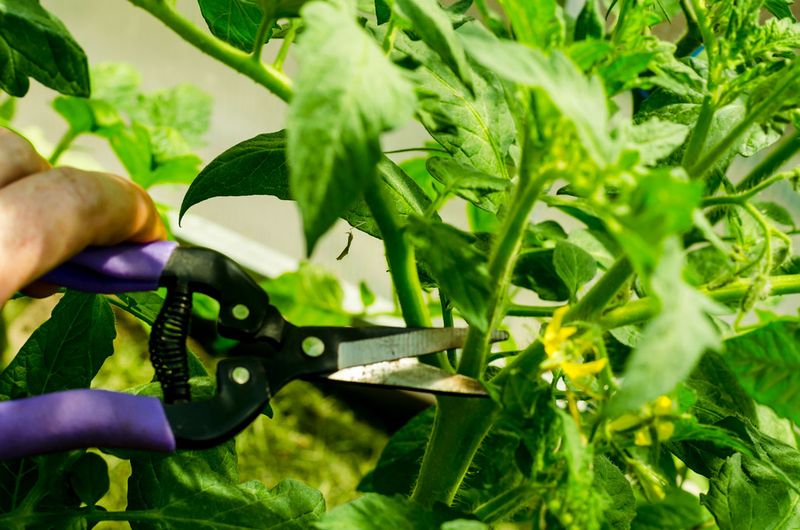
Topping earns its place in the toolbox when two conditions are both true: the plant is indeterminate, and the purpose is either height control or giving existing fruit more time to ripen before frost. Outside those two situations, the cut is more likely to cost you tomatoes than help you.
Determinate plants, early-season vines with plenty of growing time left, and any plant dealing with unresolved stress from poor light, excess nitrogen, irregular watering, or disease are all poor candidates for topping. The Oregon State pruning trial documented reduced yield per plant from severe intervention, and Illinois Extension notes that pruning can increase the risk of blossom-end rot and cracking when moisture management is inconsistent afterward. Keeping soil moisture even after any pruning is not optional – it is part of the same decision.
After the cut, maintain steady watering and avoid heavy fertilizer pushes that encourage the plant to try to regrow aggressively from side shoots. Oregon State Extension also recommends balanced nutrition throughout the fruiting period to support ripening without triggering excess new growth.
Tool hygiene matters every time you prune, not just when disease is obvious. University of Minnesota Extension explains that tomato viruses can spread through hands, tools, and clothing during routine tasks like tying, sucker removal, and harvesting. Disinfecting tools between plants is a simple habit that prevents a problem far harder to solve than a vine that grew too tall. A clean cut on a healthy, well-supported plant is the version of topping that actually earns its reputation.