
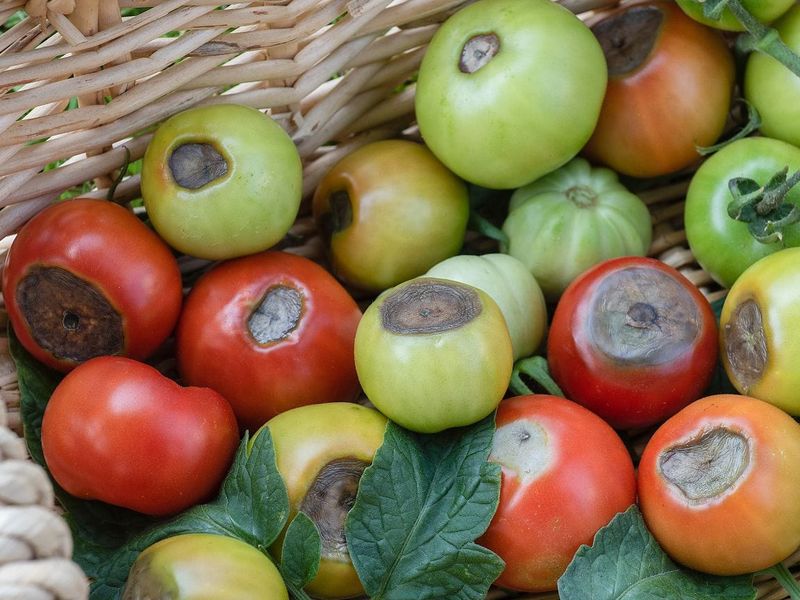
Spotting a dark, sunken patch spreading across the bottom of your tomatoes is one of the most discouraging sights in a backyard garden. That damage has a name – blossom-end rot – and the good news is that it is not a disease spreading through your plants. Understanding what actually disrupts calcium delivery to developing fruit can help you protect the tomatoes still growing on the vine.
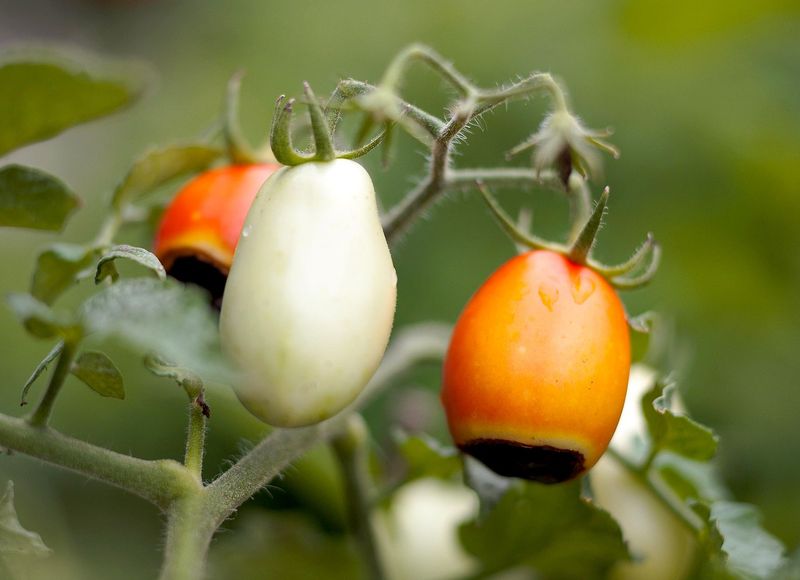
That sunken bottom spot usually signals blossom-end rot
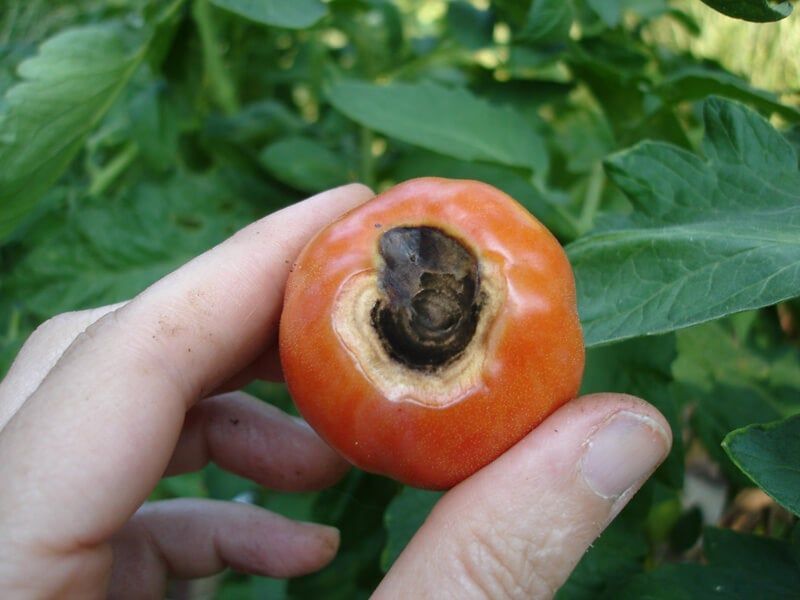
A small, pale or water-soaked area forms at the very bottom of the tomato – the end opposite the stem – and then spreads outward. Over several days, that patch darkens to brown or black, flattens inward, and takes on a tough, leathery texture that distinguishes it clearly from a bruise or surface scratch. University of Minnesota Extension guidance on tomato disorders describes this progression as the hallmark pattern of blossom-end rot (BER), a physiological disorder rather than an infectious disease or insect injury.
Early fruit clusters are often the hardest hit. Large slicing types and elongated paste tomatoes tend to show BER more frequently than compact cherry varieties, which move calcium more efficiently into smaller fruit. Penn State Extension’s overview of blossom-end rot notes that later fruit on the same plant may escape damage entirely once the plant’s growing conditions stabilize.
BER is the most likely working diagnosis when the lesion is centered precisely at the blossom end and the rest of the plant looks otherwise healthy. Treating it as a starting point rather than a certainty matters because other fruit problems can look similar at a glance, and the response differs depending on the actual cause.
Before treating the soil, rule out a different fruit problem
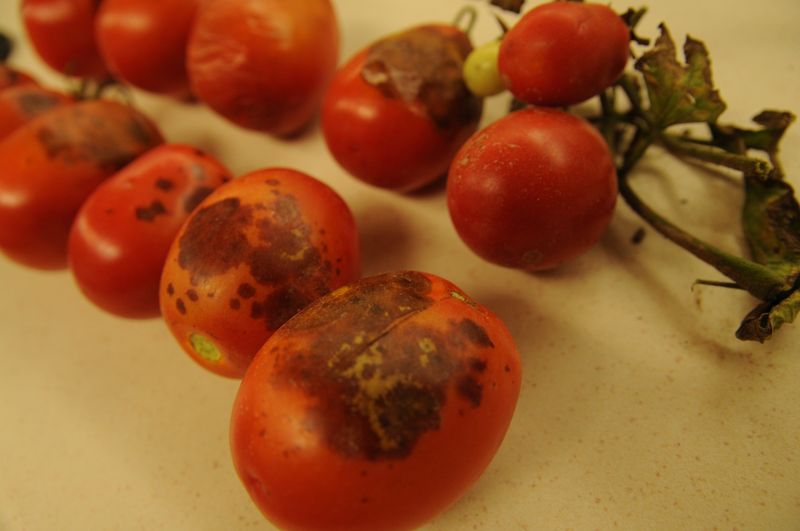
Not every dark or sunken spot at the bottom of a tomato is blossom-end rot, and misidentifying the problem leads to wasted effort. The location of the lesion is the first clue: BER originates precisely at the blossom end, centered on the small dried flower scar. Minnesota Extension’s tomato fruit-spot diagnostic tool walks through the differences between BER and fungal diseases that can produce similar-looking damage.
Anthracnose, caused by a fungal pathogen, produces small, circular, sunken spots that can appear anywhere on the fruit surface, often with a salmon-colored spore mass in the center as they mature. Alternaria fruit rot typically causes a leathery, dark lesion at the stem end or in cracks rather than at the blossom end, and it frequently follows mechanical injury or cracking. Late blight is different still: Penn State’s late blight guidance describes how this aggressive disease usually announces itself with water-soaked lesions on leaves and stems before spreading to fruit, producing a greasy, brown, firm rot that is not limited to the blossom end.
Secondary fungi and bacteria can also colonize a BER lesion after it forms, making a single physiological injury look far more extensive and rotted than it started. Minnesota Extension confirms that this secondary microbial activity does not mean BER has spread through the plant – it is confined to the already-damaged fruit. When lesions appear on leaves, stems, or multiple fruit areas without the characteristic blossom-end origin, look beyond BER for the diagnosis.
BER involves calcium delivery, but the initiating cause remains unsettled
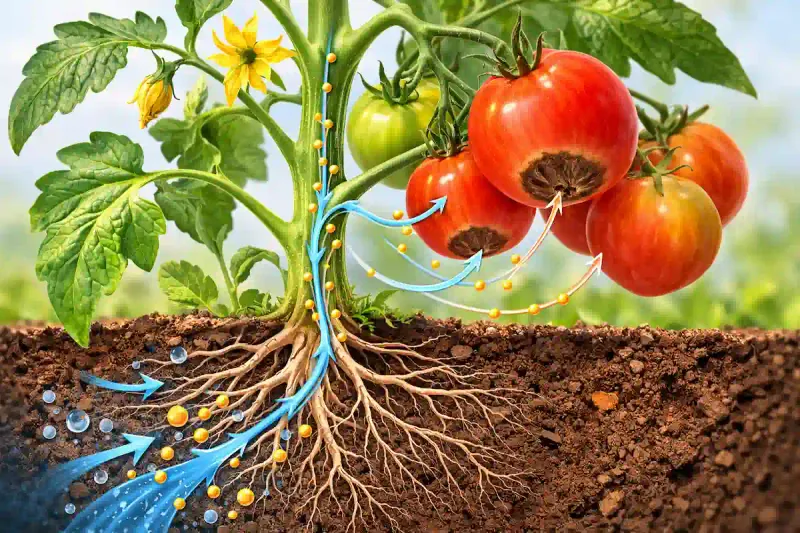
Calcium is essential to forming and maintaining cell walls in developing fruit tissue. When calcium cannot reach the rapidly expanding cells at the blossom end fast enough, those cells break down – and that breakdown is what becomes the visible lesion. Penn State Extension emphasizes that the problem is often impaired water uptake and calcium transport, not simply a soil short on calcium. Many affected plants grow in soil that tests with adequate calcium levels.
A range of stressors can interrupt that delivery process. Drought, alternating cycles of dry and wet soil, waterlogged or cold root zones, high heat, root injury, elevated soil salinity, and competing nutrients such as excess ammonium, potassium, or magnesium can all reduce a plant’s ability to consistently move water and calcium upward. Rapid vegetative growth driven by heavy nitrogen applications can also outpace calcium supply to fruit.
The underlying biology is still being worked out. Saure’s 2001 research framed BER as a calcium-or-stress disorder, questioning whether localized calcium deficiency is always the trigger. A 2014 follow-up review went further, arguing that abiotic stress – drought, heat, salinity – may damage cell membranes first, with calcium depletion occurring as a consequence rather than a cause. A recent century-spanning review of BER research confirms that the debate is ongoing.
What both sides agree on is the practical response: reduce root-zone stress, keep moisture steady, protect roots, and test before adding amendments rather than guessing.
Remove damaged fruit and stabilize moisture for the next crop
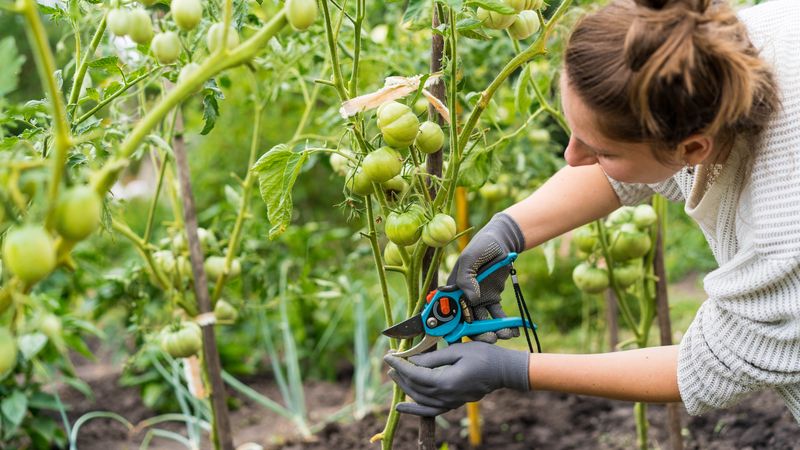
A tomato already showing BER will not recover. The damaged tissue is permanent, and leaving affected fruit on the plant does not help – removing it allows the plant to redirect energy toward the developing fruit that still has a chance. University of Minnesota Extension confirms that later-season fruit can develop without symptoms once the root-zone conditions that caused the stress are corrected.
Stabilizing moisture is the single most impactful step after removing affected fruit. Water deeply enough to reach the active root zone – typically the top 12 to 18 inches of soil – rather than applying a shallow sprinkle that evaporates before roots can use it. University of Illinois Extension and UConn IPM both highlight the importance of maintaining relatively consistent soil moisture rather than allowing plants to cycle through severe drought and then sudden flooding.
The benchmark of approximately 1 inch of water per week, including rainfall, is a useful starting point from Minnesota Extension’s irrigation guidance for vegetables, but actual needs shift with conditions. Hot, dry weeks demand more frequent watering. Sandy soils drain faster than clay. Containers dry out faster than garden beds.
Mulched beds hold moisture longer than bare soil. The target is consistently moist – but not soggy – soil in the root zone, not a fixed schedule. Avoid the pattern of letting the soil crack dry and then drenching it, because those swings are exactly what impairs calcium transport to developing fruit.
Mulch and drainage protect the roots that move water and nutrients
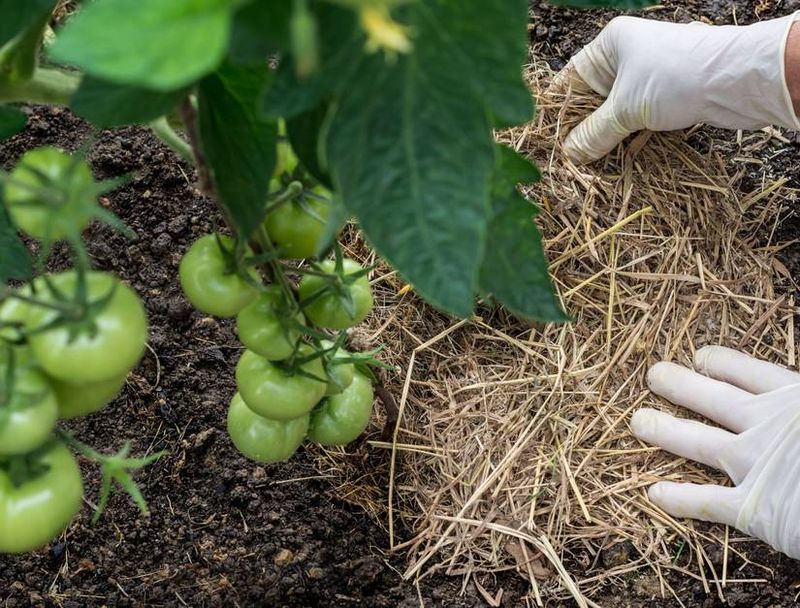
Roots can only move calcium into fruit when they are functioning well, and two physical conditions threaten that function most in a typical backyard garden: moisture swings from bare soil and poor drainage that leaves roots sitting in water. Mulch addresses the first problem directly. A 2- to 3-inch layer of straw, shredded leaves, or wood chips slows evaporation, buffers the soil temperature, and keeps the moisture level in the root zone from dropping sharply between waterings or rain events. Illinois Extension specifically recommends mulching as a BER prevention measure for this reason.
Keep mulch pulled back an inch or two from the main stem. Piling it against the base of the plant traps moisture against the stem, which can encourage rot or disease at the soil line. The goal is protecting the root zone, not burying the plant’s base.
Drainage matters as much as moisture retention. Waterlogged soil starves roots of oxygen and can shut down their ability to absorb water and nutrients even when both are technically present. Oregon State University Extension notes that restricted root function from poor drainage is a recognized contributor to BER. Raised beds or amended planting areas can help in spots where water pools after heavy rain.
Finally, avoid digging or cultivating within a foot of tomato stems during the growing season. Minnesota Extension warns that root injury from a hoe or trowel can directly impair water and calcium transport at a critical time.
Let a soil test decide whether an amendment belongs in the bed
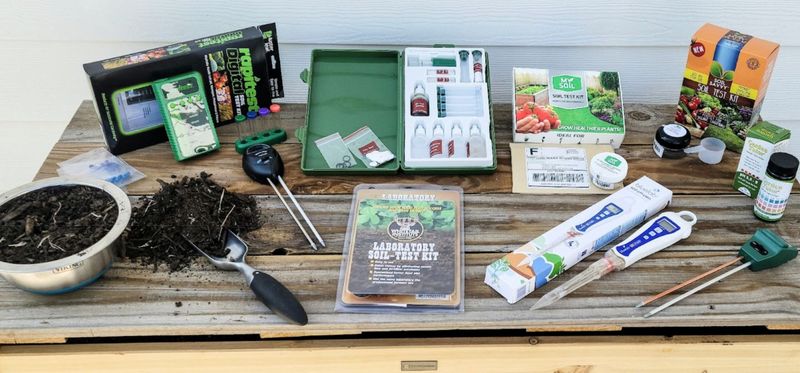
Reaching for a bag of lime, gypsum, or calcium spray is a tempting first response to BER, but applying amendments without knowing what is already in the soil can create new problems while failing to solve the original one. A soil test from your local cooperative extension service costs very little and tells you whether calcium, pH, or any other factor actually needs adjusting in your specific bed. Minnesota Extension and Illinois Extension both recommend testing before amending.
Excess nitrogen is a particular concern because it drives fast vegetative growth that can outpace the plant’s ability to supply calcium to fruit. High levels of ammonium, potassium, magnesium, sodium, or soluble salts in the soil can also compete with calcium uptake at the root level. Balanced fertilization based on test results avoids overloading any single nutrient.
Lime adds calcium but also raises soil pH, which can reduce the availability of other nutrients if the pH is already appropriate. Utah State Extension and Oregon State Extension both caution that gypsum, which supplies calcium and sulfur without the same pH effect, is not a universal BER cure and should be used only when a soil condition justifies it. Eggshells break down far too slowly to correct a calcium shortage during the current growing season, and many soils already have plenty of calcium – Minnesota Extension’s review of common soil remedies concludes that eggshells are not a reliable immediate fix. Foliar calcium sprays cannot repair fruit that already shows BER lesions, and Extension sources generally agree they should not replace moisture and root-zone management as the primary response.
Containers and cultivar choices can reduce future risk
Growing tomatoes in pots, fabric grow bags, or other containers introduces a specific challenge: the limited root volume dries out much faster than an in-ground bed, and the smaller the container, the sharper the moisture swings between waterings. Illinois Extension identifies containers as a higher-risk environment for BER precisely because consistent moisture is harder to maintain. Gardeners growing tomatoes in pots should check soil moisture more frequently – potentially daily during hot weather – while making sure the container has adequate drainage holes so roots are never sitting in standing water.
Using a potting mix formulated for containers rather than dense garden soil helps maintain the balance between moisture retention and drainage. Avoid the temptation to skip drainage holes or place saucers that hold water under the pot during extended rain.
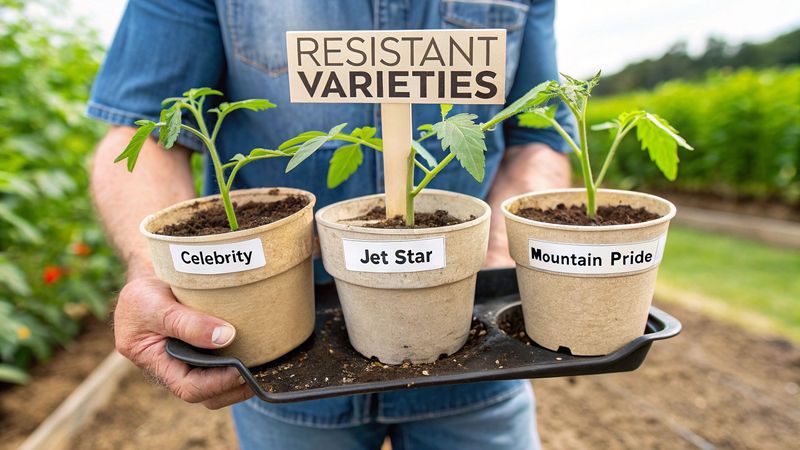
For future plantings, cultivar selection offers another layer of risk reduction. Penn State Extension identifies varieties such as ‘Celebrity’ and ‘Mountain Pride’ as generally less prone to BER, and cherry tomato types are also commonly less affected because their smaller fruit size makes calcium delivery more manageable. Choosing a less susceptible variety does not guarantee BER-free harvests – growing conditions still matter – but it reduces the odds when paired with steady moisture management, healthy roots, and soil-test-based fertilization. Treating cultivar choice as one part of a broader prevention strategy, rather than a standalone solution, gives you the most reliable results season after season.
Prioritize steady root-zone conditions over calcium shortcuts
Working through BER comes down to a clear sequence of actions. Confirm that the lesion matches the characteristic blossom-end pattern before doing anything else. Remove affected fruit – it will not heal, and holding onto it does not help the plant. Then focus on the root zone: stabilize moisture, preserve drainage, and protect roots from mechanical injury.
Manage fertilizer based on what a soil test actually shows rather than guessing, and resist the pull of quick calcium fixes that bypass the underlying stress. Minnesota Extension and Penn State Extension both reinforce that this sequence addresses the actual mechanism behind BER rather than treating symptoms.
BER does not move through a plant the way a fungal or bacterial disease does. Later fruit on the same plant can develop normally once the conditions causing root-zone stress are corrected. That is genuinely encouraging news for gardeners who catch the problem mid-season.
One practical note on food safety: fruit with only a small, firm, dry BER lesion and no secondary decay can often be trimmed and used. Discard any tomato that is soft throughout, smells abnormal, shows visible mold, or has extensive decay – secondary microbial activity in damaged tissue can make fruit unsafe, and trimming is not a reliable fix for fruit in that condition. A garden that produces fewer but fully healthy tomatoes later in the season is the real goal, and steady attention to root-zone conditions is the most direct path to getting there.