
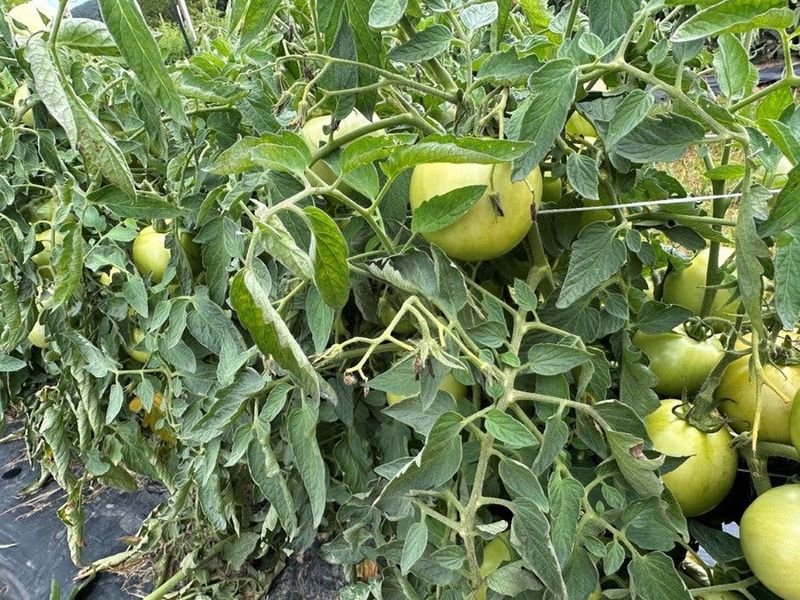
You water, you fertilize, and your tomato plants look perfectly green and healthy, yet the flowers keep falling off and almost no fruit is forming. Late summer in the South can turn a thriving garden into a frustrating puzzle almost overnight.
The problem is often happening at the flower level, not the leaf level, and the way many gardeners respond can actually make things worse.
A green tomato plant can still fail at the flower stage
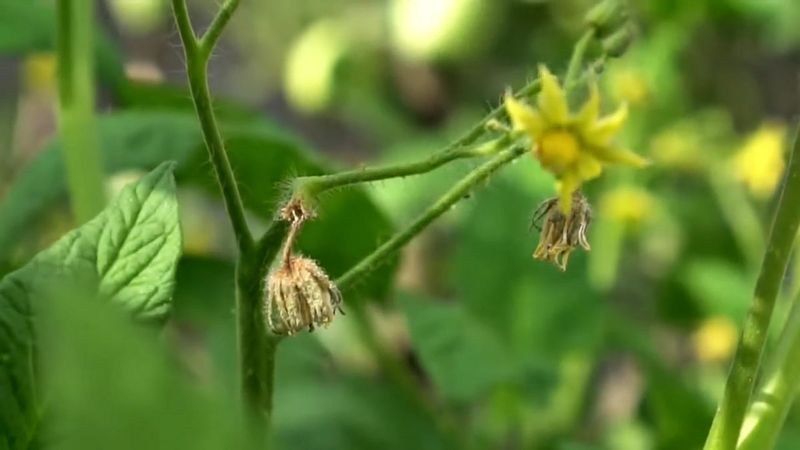
Healthy-looking tomato plants that drop their flowers without setting fruit are one of the most common late-summer complaints from Southern gardeners. The plant may be full and lush, with no yellowing leaves or obvious signs of disease, yet the flowers dry up and fall before any tiny green tomatoes appear.
That gap between a vigorous plant and a productive one is exactly where the trouble hides.
Blossom drop is the term for a flower that fails to develop into fruit. Alabama Cooperative Extension guidance on blossom drop identifies heat, cold, pollination failure, drought stress, fertility imbalances, cultivar sensitivity, disease, and pests as all capable of producing the same result.
No single cause fits every garden, and a plant that looks green and vigorous from the outside can still be struggling at the reproductive stage.
Tomato flowers and pollen are more sensitive to stress than the leaves and stems. A plant can keep growing new foliage while its ability to set fruit is quietly disrupted.
Recognizing that the failure is happening at the flower stage, rather than assuming the plant is generally unhealthy, is the first step toward a useful diagnosis.
Prolonged heat can damage pollen before leaves wilt
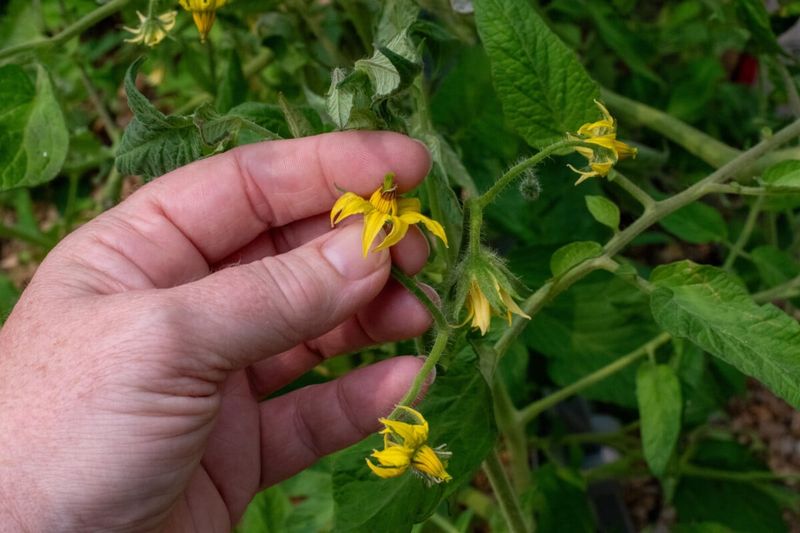
When daytime temperatures stay around 85 to 92 degrees Fahrenheit and nighttime temperatures remain near or above 70 to 75 degrees, tomato reproduction can run into serious trouble even while the rest of the plant looks completely normal. These are approximate risk ranges, not universal cutoffs.
How much heat affects a specific plant depends on the cultivar, how long the heat lasts, local humidity, the plant’s water status, and whether the flower was actively developing during the heat event.
Research on physiological factors limiting tomato fruit set under heat stress shows that sustained high temperatures can reduce pollen release, lower pollen viability, impair pollen germination, and disrupt normal flower development. The leaves and stems may stay green and firm throughout, giving no visible warning that pollination has already been compromised.
Hot nights deserve particular attention. A plant may handle hot afternoons reasonably well yet still struggle when nighttime temperatures stay elevated, because some recovery and pollen maturation processes depend on cooler overnight periods.
UF/IFAS research on blossom drop and reduced fruit set in tomato identifies warm nights as a significant risk factor alongside hot days.
Flowers that develop during a heat event may still fail even after temperatures begin to ease. The damage to pollen or flower structures can occur before the gardener notices any change in plant appearance, which is why heat stress can seem to come out of nowhere.
Question the reflex to add fertilizer or calcium
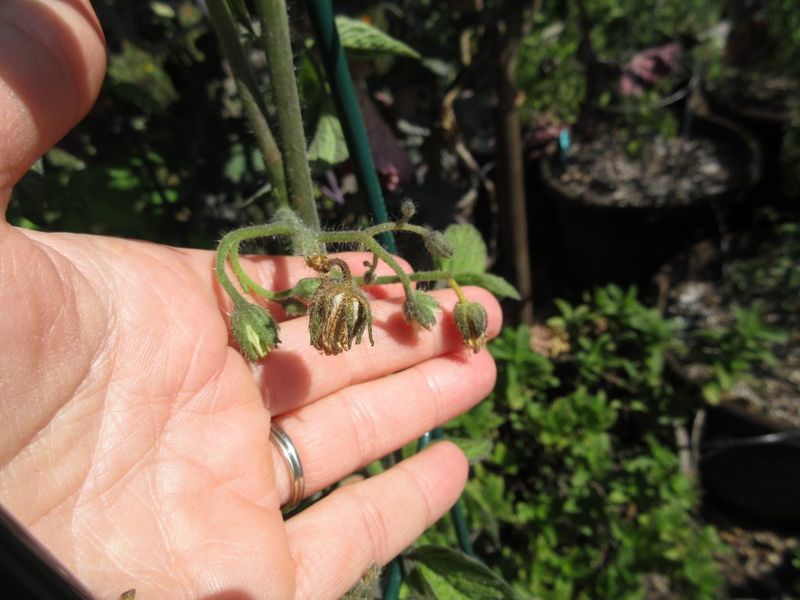
When flowers drop and fruit fails to set, some gardeners reach for calcium supplements, phosphorus fertilizers, or blossom-set products, hoping to restart production. That response is understandable, but those inputs cannot be relied on to reverse heat-related blossom drop.
Heat damages pollen and disrupts flower development at a biological level that no fertilizer product can directly repair.
Extension guidance on tomato blossom drop notes that fertility problems can contribute to flower failure, but they are one cause among many, and treating a heat problem as a fertility problem typically does not help. Before adding any product, look at the plant carefully.
Lush, deep-green foliage with few flowers can actually point toward excess nitrogen, which encourages vegetative growth at the expense of fruiting. University of Minnesota Extension guidance on growing tomatoes recommends avoiding heavy nitrogen applications once plants are flowering.
Calcium is worth understanding separately. It plays a role in blossom-end rot, a disorder that affects developing fruit rather than flowers, but calcium sprays or soil amendments do not restore pollen viability or repair flowers that have already aborted due to heat.
Oregon State University Extension on blossom-end rot connects that disorder primarily to inconsistent moisture and calcium transport, not simply to low soil calcium levels.
If a soil test or established feeding program identifies a real deficiency, treating it makes sense. Without that diagnosis, adding fertilizer or calcium to a heat-stressed plant is unlikely to restart fruit set and may create new problems.
Keep the root zone evenly supplied with water
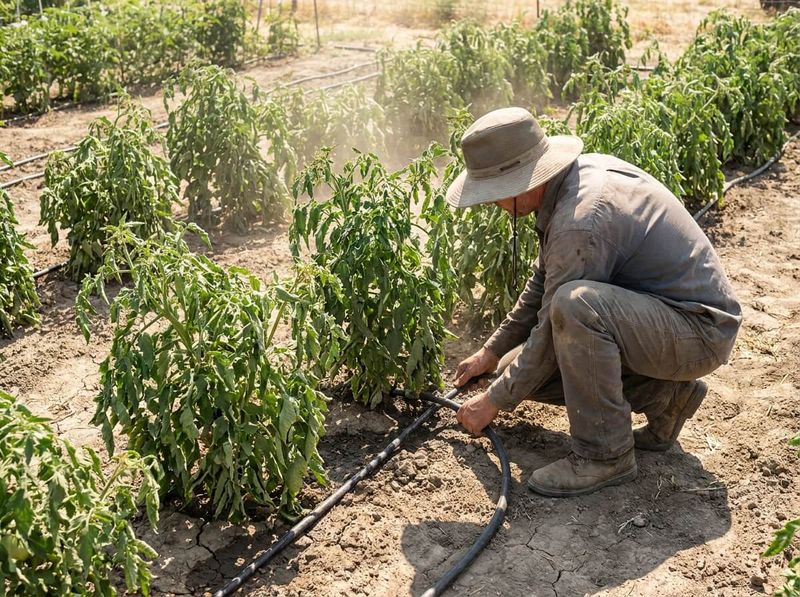
Water management is one of the most practical things a gardener can control during a heat stretch. Deep, root-zone watering encourages roots to grow further into the soil where moisture is more stable, while frequent shallow watering keeps roots near the surface where they are more vulnerable to heat and drying.
Letting the soil swing between very dry and waterlogged adds stress that can contribute to blossom drop and other fruit problems.
University of Georgia Cooperative Extension home gardening guidance commonly references around 1 to 2 inches of water per week for established garden tomatoes, but that range is a starting point, not a rigid rule. Containers, sandy soils, and periods of extreme heat all increase water demand.
Raised beds may dry out faster than in-ground plantings. Rainfall counts toward the total, and a rain gauge helps avoid both under- and over-watering.
Mulch is one of the most effective tools for steadying root-zone moisture. A 2 to 3 inch layer of straw, wood chips, or similar material slows evaporation, moderates soil temperature, and reduces the dramatic wet-dry swings that stress plants during heat events.
UC IPM cultural tips for growing tomatoes recommend watering at the soil surface when possible, which keeps foliage dry and reduces disease pressure without leaving the plant short of moisture. A plant that is genuinely wilting and dry should not be left unwatered simply to stick to a morning-only routine.
Use temporary afternoon shade, not permanent darkness
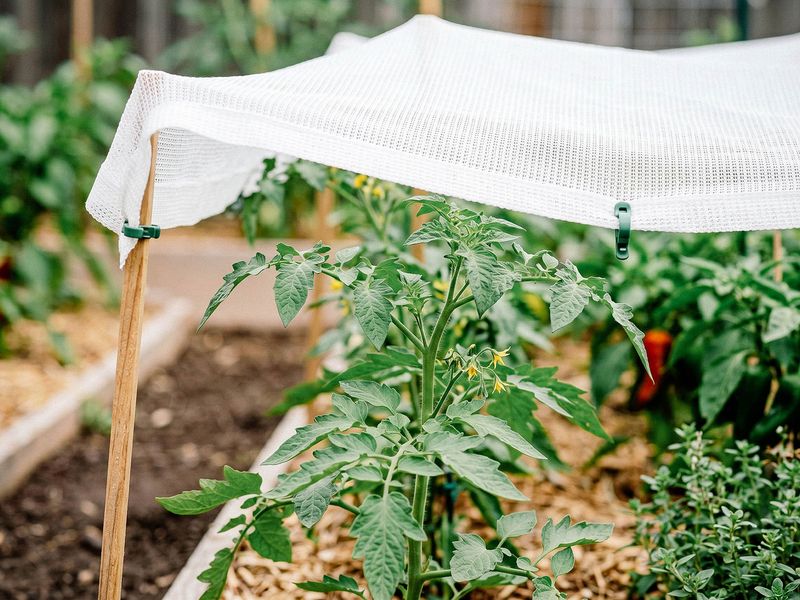
Afternoon sun in the Southern U.S. can push soil and air temperatures well beyond what tomato flowers can tolerate, even when the plant itself keeps growing. A simple piece of lightweight shade cloth, set up on the south or west side of the plant during the hottest part of the day and removed in the evening, can reduce heat exposure without cutting off the light the plant needs to photosynthesize and produce fruit.
University of Minnesota Extension guidance on keeping gardens thriving through heat suggests temporary 30 to 40 percent shade as a practical reference during heat events. That figure is a reasonable starting point, not a universal prescription.
The goal is to blunt peak afternoon heat while still allowing enough light for the plant to function normally. Covering tomatoes heavily all day, especially with dense material, can reduce photosynthesis and ultimately lower yield.
Pruning decisions deserve the same caution. UC IPM notes that cutting tomatoes back to a single stem can substantially reduce total crop and increase disorder risks.
Foliage that looks excessive may actually be shading developing fruit from sunscald. Removing large amounts of leaf cover during a heat event trades one problem for another.
Preserve the plant’s natural canopy and use shade cloth for the heat, rather than hard pruning.
Separate blossom drop from blossom-end rot and disease
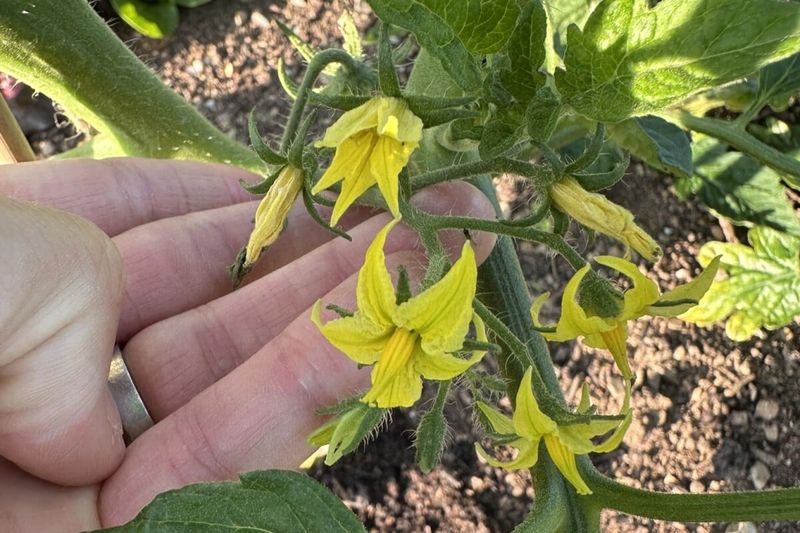
Not every tomato problem that appears during late summer is blossom drop, and not every case of blossom drop is caused by heat. Getting the diagnosis right before taking action saves time, money, and the plant itself.
Two problems that gardeners sometimes confuse are blossom drop and blossom-end rot, and they require different responses.
Blossom drop means a flower falls off before any fruit develops. Alabama Cooperative Extension lists heat, cold, drought stress, excess fertility, pollination failure, and cultivar differences as contributing causes.
Blossom-end rot is something different entirely: it shows up as a dark, sunken, leathery spot on the bottom of a developing fruit. Oregon State University Extension on blossom-end rot connects the disorder primarily to inconsistent moisture and disrupted calcium transport within the plant, not simply to low soil calcium.
Both problems can appear during the same season without sharing the same cause.
Florida gardeners face an additional layer of complexity. UF/IFAS guidance on tomato cultivar selection for Florida warns that late-season plants should also be inspected for bacterial and fungal diseases, whiteflies, tomato yellow leaf curl virus symptoms, severe leaf loss, and wilting.
A Florida plant that stops producing should not automatically be diagnosed with heat stress when disease or pest pressure may be the real driver.
Overlapping symptoms are common. Drought, unsuitable light levels, cold snaps, pest feeding, and cultivar sensitivity can all produce flower failure that looks similar from a distance.
Walk the plant closely before deciding on a cause.
Vibration helps only when pollen remains viable
Tomatoes are largely self-pollinating, which means a lack of bees is usually not the primary explanation when fruit set stalls. Texas A&M AgriLife Extension describes tomatoes as approximately 85 percent self-pollinated, so the flower generally does not need a bee visit to set fruit.
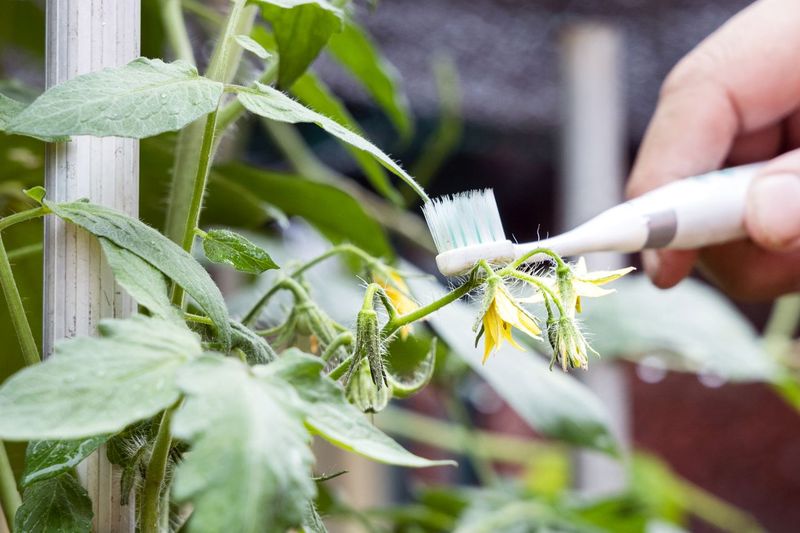
Pollen still needs to move within the flower, and vibration from wind, handling, or a gentle shake of the cluster can assist that process under the right conditions.
Gently tapping open flower clusters once or twice during the morning is an optional aid, particularly in protected growing environments where airflow is limited. UF/IFAS guidance on greenhouse tomato production in Florida notes that vibration can support pollination in enclosed settings.
What vibration cannot do is restore pollen that has already been damaged or sterilized by heat. When temperatures have been consistently extreme, the pollen itself may be non-viable, and no amount of shaking will produce fruit from a flower that lacks functional pollen.
Cultivar selection offers a more durable long-term solution. UF/IFAS cultivar guidance for Florida identifies heat-set varieties as better suited to hot bloom periods and notes that many heirlooms as a group perform poorly during extreme heat, though individual cultivar responses vary and some heirlooms may handle heat better than others.
Texas A&M similarly recommends regionally adapted hybrids for Texas gardens. Choosing a variety that was selected for heat tolerance in your specific region gives the plant a meaningful advantage before the summer heat arrives.
Fruit set may return when temperatures moderate
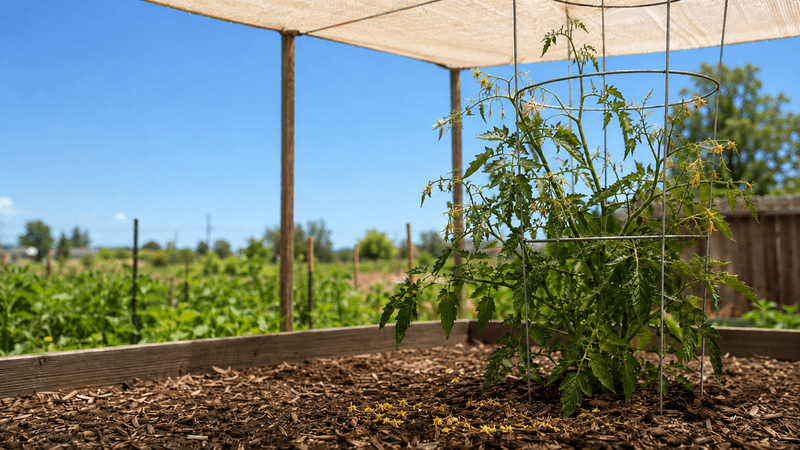
A pause in fruit set during a stretch of sustained heat does not necessarily mean the plant is finished for the season. University of Georgia Extension gardening guidance notes that tomatoes may drop blossoms during summer heat and resume production once temperatures ease.
New flowers that form after the heat breaks may have a much better chance of developing into fruit, particularly if the root zone has stayed reasonably moist and the plant has not been stressed further by heavy pruning or erratic watering.
The practical recovery plan comes down to a few consistent actions: stop reflexive amendments, stabilize moisture with deep watering and mulch, use temporary afternoon shade during the worst heat, and keep the plant’s foliage intact. University of Minnesota Extension reinforces that heat management and steady moisture are the most useful tools while conditions remain extreme.
Also inspect the plant for disease, pests, or other causes before concluding heat is the only factor.
For Texas and Florida gardeners considering a fall crop, Texas A&M AgriLife Extension fall vegetable gardening guidance is clear that planting dates, heat duration, first-frost timing, and variety suitability differ across regions. A tomato plant that survives the heat and holds its foliage is worth keeping – the window for new fruit may be closer than it looks.