
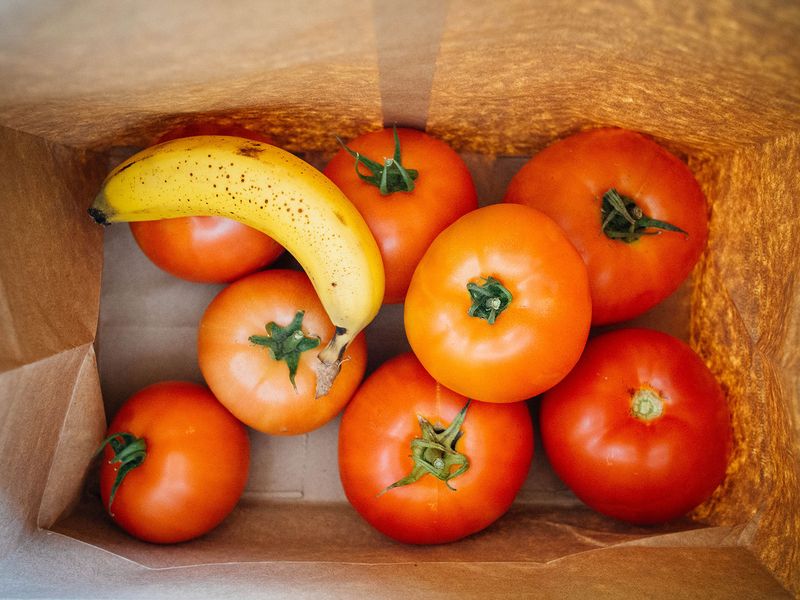
Hot September weather can leave your tomato plants loaded with stubbornly green or barely-colored fruit, even when the season should be winding down. When outdoor temperatures stay unusually high for days on end, the ripening process can stall in ways that have nothing to do with how well you’ve tended your garden.
The good news is that a common pantry item, a ripe banana, can help push mature tomatoes toward full color once you move them indoors. Understanding why the heat is the real problem, and how to use that banana correctly, makes all the difference.
Unusually hot September weather can slow tomato color
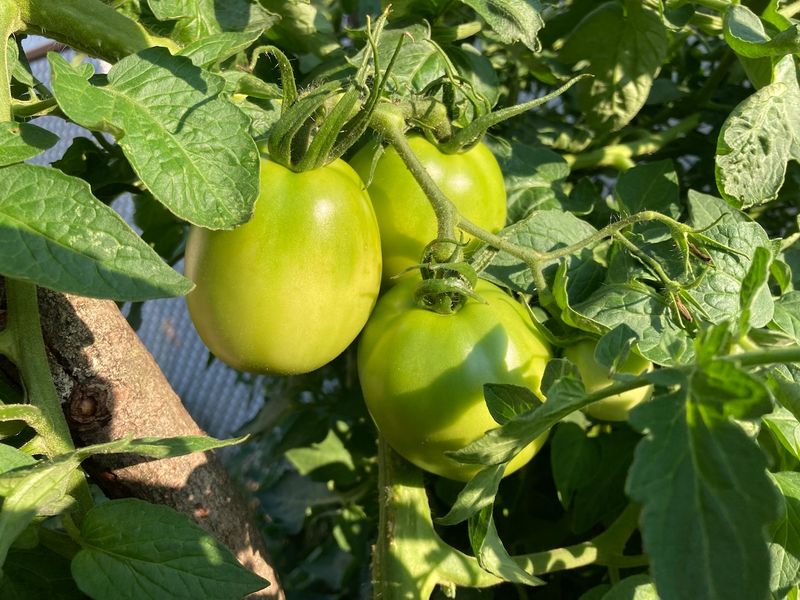
September does not automatically stall tomatoes. What matters is whether temperatures in your area have stayed unusually high for an extended stretch, because sustained heat above roughly 85 to 90 degrees Fahrenheit can significantly slow or even halt the normal color development that turns a green tomato red.
Tomatoes generally ripen best when temperatures stay around 68 to 77 degrees, and UF/IFAS guidance on handling Florida tomatoes identifies 68 to 72 degrees as the sweet spot for good red color development. When daytime and overnight temperatures push well above that range and stay there, multiple ripening processes can slow down at once, including the production of lycopene, the pigment responsible for that deep red color.
High heat does not just affect color. Peer-reviewed research on high-temperature inhibition of tomato ripening genes shows that extreme temperatures can reduce ethylene production, slow softening, and suppress the gene activity that drives ripening, though some of these effects can reverse once fruit returns to a cooler environment.
Cultivar, overall plant health, and growing conditions also play a role, so not every slow-ripening situation in September traces back to heat alone. Still, if your thermometer has been climbing past 90 regularly and your full-size tomatoes remain green or stubbornly orange, temperature is the most likely culprit, and moving suitable fruit indoors is the first practical step.
Check maturity before you pick
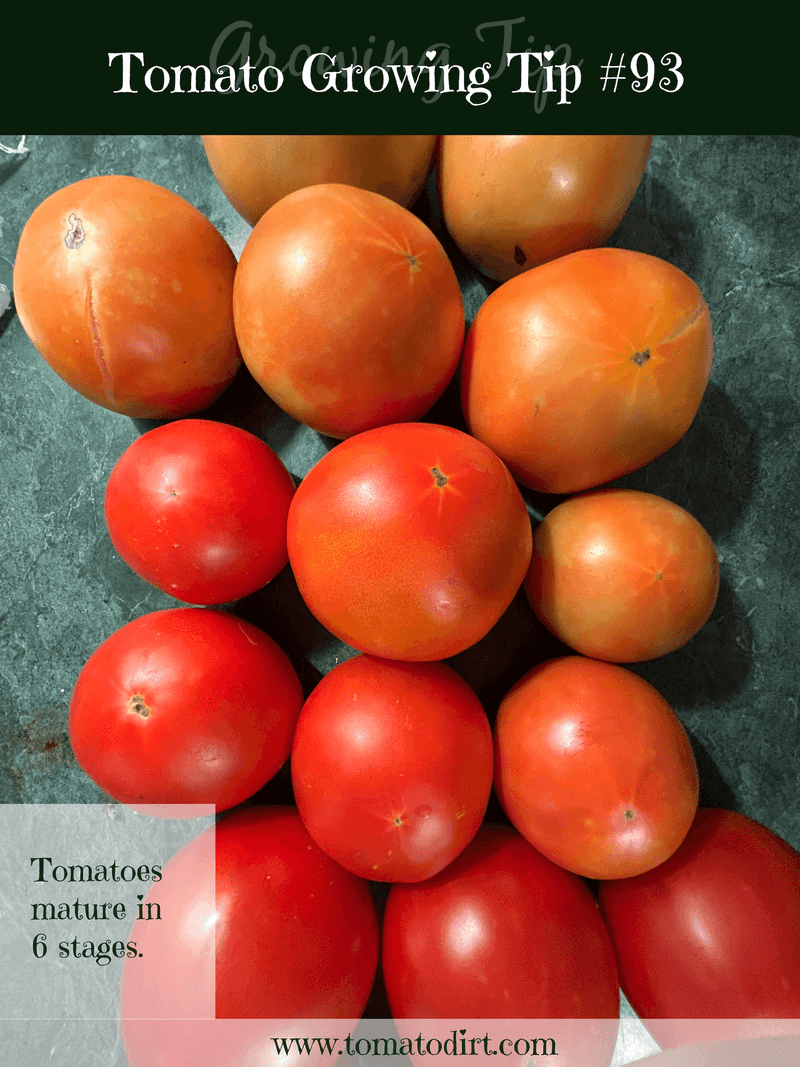
Before reaching for that banana, you need to know whether your tomatoes are actually ready to come off the vine. Not every green tomato qualifies, and picking too early is the most common reason an indoor ripening attempt fails.
The target is a full-size tomato that has reached the mature-green stage or is just beginning to show color. UC ANR harvest-timing guidance notes that tomatoes showing 60 to 80 percent of their final color are well-suited for kitchen ripening, and Florida extension guidance confirms that mature-green fruit can be harvested and successfully ripened off the plant.
Tomatoes are climacteric fruit, meaning they can continue ripening after harvest once they have reached physiological maturity inside the seed cavity.
A mature-green tomato will be full-sized for its variety, feel slightly firm but not rock-hard, and may show a faint color shift at the blossom end. UF/IFAS ripening research found that tomatoes requiring more than five days of commercial ethylene exposure to reach the breaker stage were immature at harvest and did not develop normal color and flavor.
Ethylene can initiate the ripening sequence, but it cannot manufacture the internal sugars, pigments, and cellular changes that only come with adequate maturity. A very small, hard, pale green tomato picked weeks before its time is not a candidate for this method, regardless of how many bananas you add to the bag.
Check your variety’s expected days to maturity and compare the fruit size to what the seed packet or plant tag described. When in doubt, Penn State Extension’s tomato harvest guidance recommends looking for a slight color change at the blossom end as a reliable signal that the fruit has crossed into the mature-green zone.
A ripe banana supplies a useful ripening signal
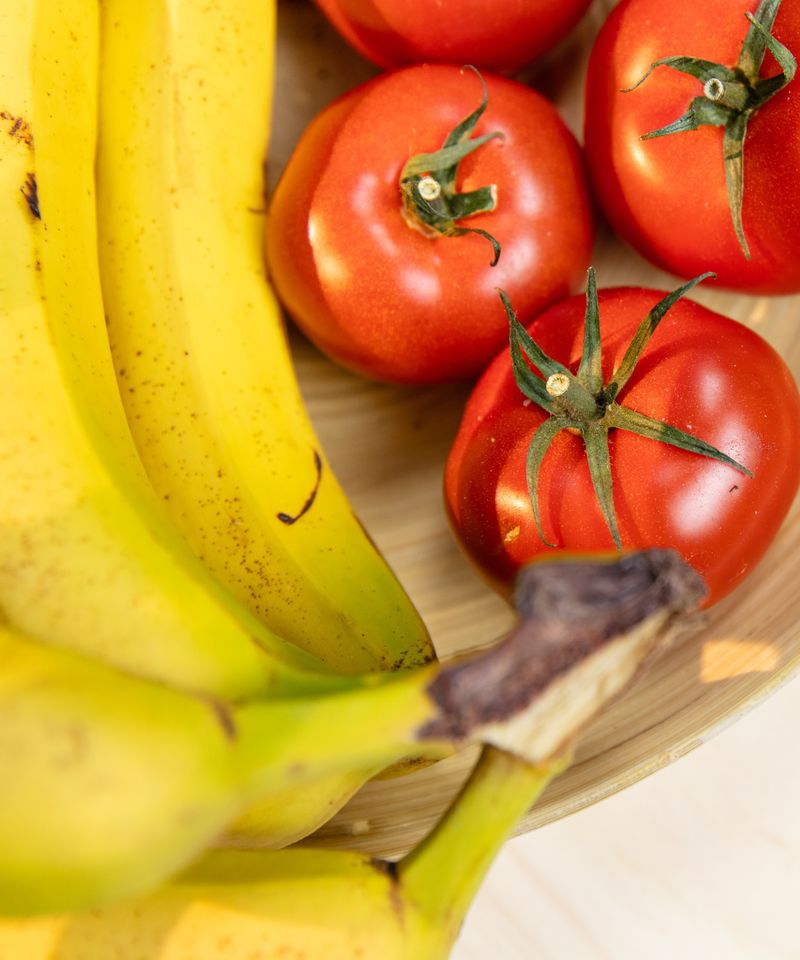
Here is the pantry ingredient: a ripe banana. Bananas that have fully yellowed, or better yet developed a few brown spots, are actively releasing ethylene, a natural plant hormone that signals fruit cells to begin or continue the ripening process.
When you place a ripe banana in a paper bag with mature tomatoes, the bag concentrates some of that ethylene around the fruit while still allowing limited air exchange. UC ANR harvest and ripening guidance specifically recommends placing mature tomatoes in a breathable paper bag with a ripe banana to encourage faster color development indoors.
Using a ripe banana is a practical household approach rather than a precisely calibrated dose, so the emphasis is on having a noticeably ripe banana present rather than on counting exactly how many you add.
A ripe apple can serve a similar role. Oregon State University Extension notes that bananas are a significant source of ethylene gas, and multiple university sources confirm that apples also release enough ethylene to support ripening in nearby fruit.
The banana earns its place here because most households have one on the counter, but knowing that an apple works too gives you a practical backup when bananas are not available.
Build a ventilated indoor ripening setup
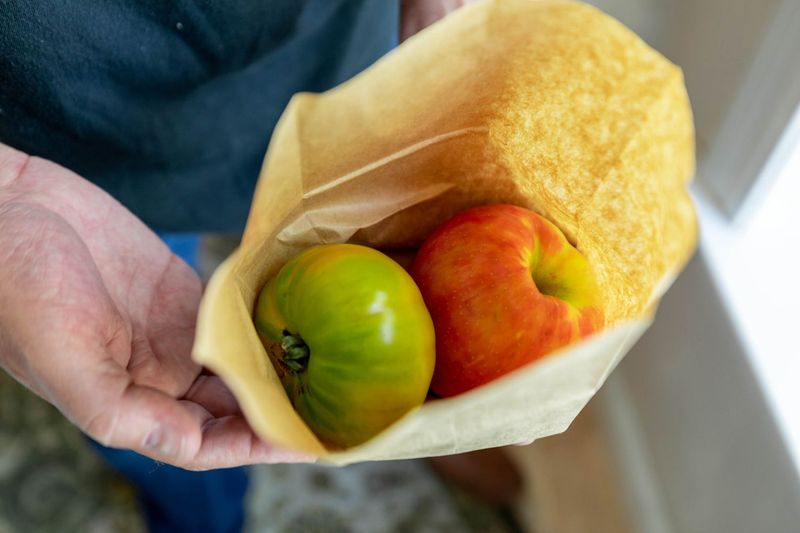
Once you have confirmed that your tomatoes are mature enough and gathered your ripe banana, the setup is straightforward. Harvest the qualifying tomatoes and bring them inside.
Place them stem end up in a brown paper bag, which keeps the most fragile part of the skin away from the bag’s surface and reduces the chance of bruising or moisture buildup at the stem scar.
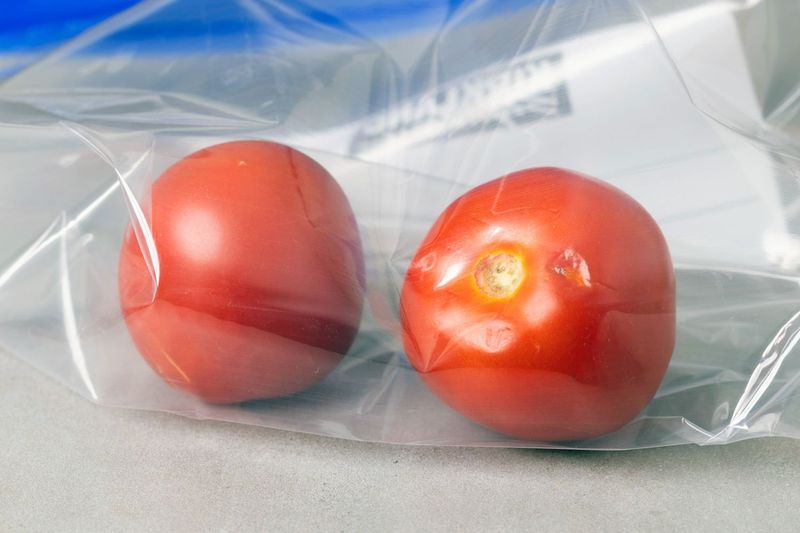
Poke several small holes in the bag or leave the top loosely folded rather than tightly sealed. UC ANR food-preservation guidance recommends a breathable paper bag with ventilation rather than a sealed plastic bag or airtight container, because excessive humidity and trapped carbon dioxide can encourage mold or actually interfere with the ripening process.
Add your ripe banana to the bag alongside the tomatoes.
Temperature control matters just as much as the banana. Keep the bag in a spot that stays close to 68 to 75 degrees indoors and away from direct sunlight coming through a window.
UC Davis Postharvest Research identifies 68 degrees Fahrenheit as an optimum ripening temperature for sensory and nutritional quality, while Illinois Extension recommends 70 to 75 degrees for ripening tomatoes during hot weather. A kitchen counter away from a sunny window, or an interior shelf, usually hits that range during summer months in most Southern homes.
Avoid placing the bag on top of the refrigerator if that spot runs warm, or near a stove or oven vent. Consistent, moderate room temperature is what allows the ethylene to work alongside the tomato’s own ripening chemistry rather than being undermined by heat spikes or cold drafts.
Check the bag every day
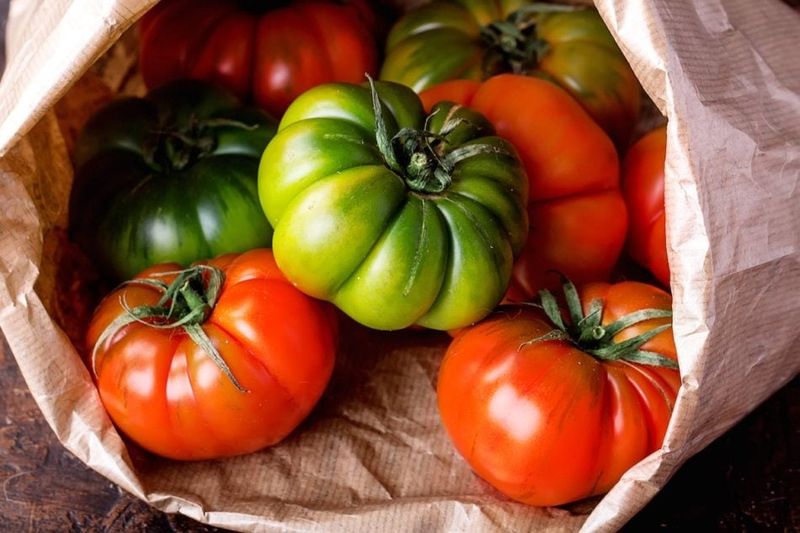
Opening the bag once a day takes less than a minute and prevents a promising ripening attempt from quietly turning into a spoilage problem. Each time you check, look for color change, slight softening at the shoulder, and any sign of mold or decay on the skin.
Remove any tomato that shows soft spots, cracking, or fuzzy growth right away. One decaying fruit produces its own gases and moisture that can speed spoilage in the rest of the bag.
Illinois Extension gives a one-to-five-day range for tomatoes ripening in a paper bag, but treat that as a variable guideline rather than a firm promise. A tomato that was already at the breaker stage when you picked it may color up closer to the short end of that range, while a fruit that was barely past mature green might need closer to a week or longer depending on indoor conditions.
When a tomato has reached the color and firmness you want, move it out of the bag and use it within a day or two at room temperature. UC ANR food-preservation guidance reinforces that daily inspection and proper ventilation are what keep the method working as intended, rather than a set-and-forget approach that leaves fruit unmonitored for days at a stretch.
Ripening is an active process, and a little daily attention protects the investment you made in growing the fruit all season.
Avoid shortcuts that undermine ripening
A ripe banana cannot rescue tomatoes that were pulled off the vine too early. If the fruit had not yet reached physiological maturity when you harvested it, no amount of ethylene will coax it into developing normal color, flavor, or texture.
UF/IFAS tomato handling research makes this clear: ethylene initiates ripening, but maturity is the prerequisite. The banana also cannot fix tomatoes that are still hanging on the plant in extreme outdoor heat.
Temperature management is the real intervention there, which means harvesting suitable fruit and moving it indoors.
Cold is another enemy of this process. Placing green or partly ripe tomatoes in the refrigerator can retard ripening and cause chilling injury that harms flavor and texture permanently.
Illinois Extension and multiple other university sources consistently recommend room-temperature ripening for tomatoes that have not yet fully colored. Wait until a tomato is fully ripe before refrigerating it, and even then, use refrigerated tomatoes quickly because cold dulls flavor over time.
Sealed plastic bags or airtight jars are also a poor substitute for the paper bag method. Trapped moisture and gas buildup create conditions that favor mold and may actually slow ripening rather than speed it up.
UC ANR food-preservation guidance is explicit about using a breathable container with ventilation.
Placing harvested tomatoes in direct sunlight is not a reliable strategy either. Cornell Cooperative Extension notes that light has little to do with ripening and that direct sun can heat the fruit surface enough to inhibit pigment development.
On the plant side, Texas A&M AgriLife Extension warns against erratic watering, noting that fluctuating moisture contributes to cracking and recommends consistent irrigation with mulch rather than withholding water to push ripening. Penn State Extension also cautions that adding fertilizer or extra potassium is not a general fix for stalled color development, though nutrient imbalances can contribute to specific disorders like blotchy ripening or yellow shoulders.
Use the banana as part of a temperature-and-maturity plan
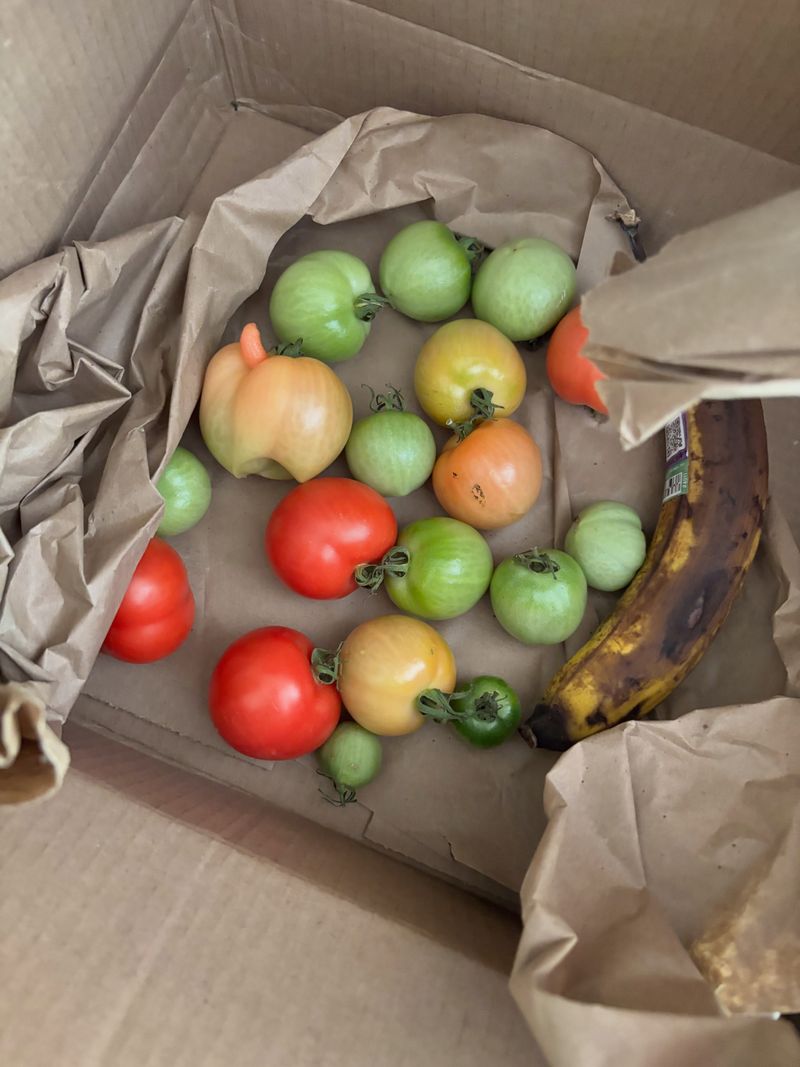
The method works best when you treat the banana as one piece of a three-part plan: confirm maturity, manage temperature, and add the ethylene source. UC ANR harvest guidance and UF/IFAS postharvest research both point to the same sequence: harvest fruit that has reached the mature-green or breaker stage when outdoor heat is suppressing color, move it to a moderate indoor temperature, and place it with a ripe banana in a ventilated paper bag.
Check it daily.
The banana accelerates a process the tomato already has the capacity to complete on its own. UC Davis postharvest research and Penn State Extension both note that off-vine tomatoes may not match the full flavor complexity of fruit allowed to ripen completely on the plant.
Even so, a mature tomato brought indoors at the right stage and given the right conditions can still develop good color, reasonable texture, and plenty of usefulness in the kitchen. When the heat outside has your garden stuck in neutral, that outcome is well worth the paper bag and one ripe banana it takes to get there.