
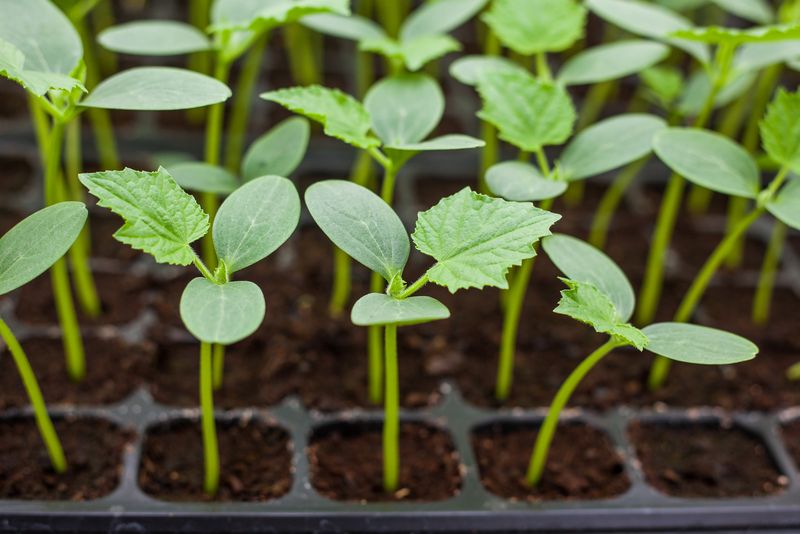
You planted your cucumbers weeks ago, watered them faithfully, and yet they just sit there like they hit the pause button. Stalled seedlings almost always point to a feeding problem, and the good news is that most of them bounce back fast once you fix what they are missing. Below are 18 specific feeding moves that wake up sluggish young cucumbers and push them into real growth. Try a few, watch your plants closely, and give them a week to respond.
1. Start With a Soil Test Before You Feed Anything
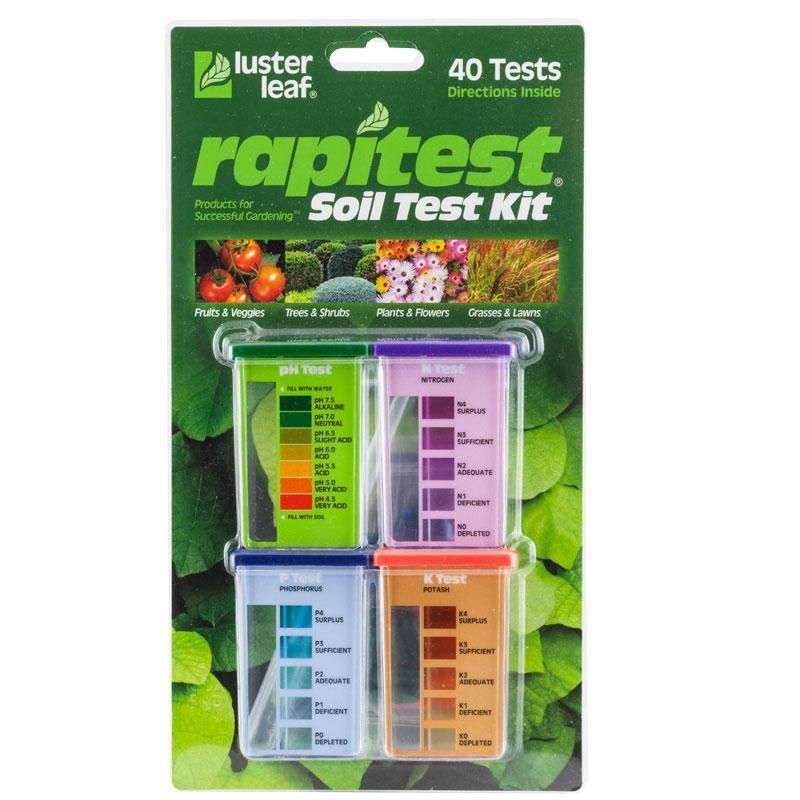
Guessing at fertilizer is like taking medicine without knowing what is wrong. A cheap soil test kit from the garden center tells you exactly what your cucumber bed is short on, which saves you from dumping nutrients your plants already have plenty of.
Cucumbers stall most often from a nitrogen shortage or a pH that locks nutrients away. Their sweet spot is a pH between 6.0 and 6.8. When soil drifts too acidic or too alkaline, roots simply cannot pull in food even when it is sitting right there.
Send a sample to your county extension office if you want the detailed version. Many US extension labs run tests for a small fee and hand back a report that spells out what to add.
Once you know your numbers, every other feeding move on this list becomes far more accurate. You will stop wasting money, and your young plants may perk up simply because you finally gave them the one thing they were actually begging for instead of a random handful of granules.
2. Mix in Finished Compost Around the Base

Nothing wakes up tired seedlings quite like a handful of dark, crumbly compost worked into the top inch of soil. It feeds slowly and steadily, so your cucumbers get a gentle stream of nutrients instead of one harsh jolt.
Compost does double duty. Beyond the nitrogen, phosphorus, and potassium it carries, it loads the soil with living microbes that help roots grab food more easily. That biological boost often explains why compost-fed plants recover faster than ones given synthetic feed alone.
Spread a half-inch layer in a ring about two inches out from each stem, then scratch it in lightly and water. Keep it off the actual stem to avoid rot.
Homemade compost works beautifully, but a bagged, fully finished product is fine too. Just make sure it smells earthy, not sour, since unfinished compost can rob nitrogen while it breaks down.
Refresh the ring every few weeks through the growing season, and you may notice steadier leaf color and quicker vine extension without ever reaching for a chemical bottle.
3. Give a Diluted Fish Emulsion Drink
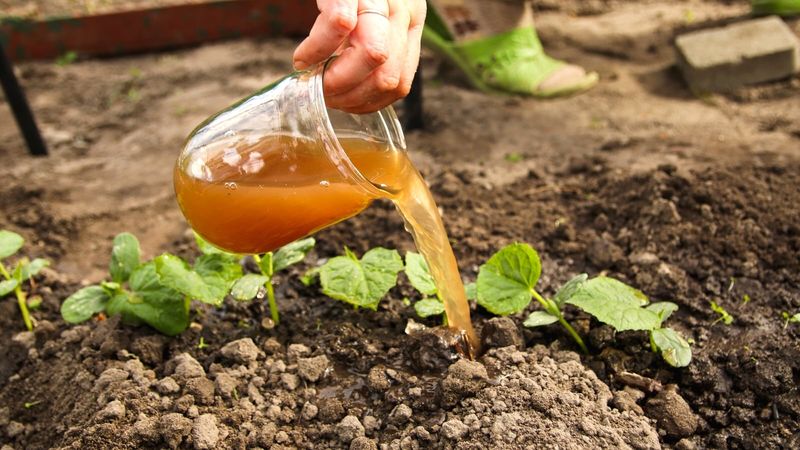
Fish emulsion smells like the ocean at low tide, but young cucumbers absolutely love the stuff. It delivers fast-acting nitrogen in a form roots can grab almost immediately, which makes it a favorite rescue for seedlings that refuse to grow.
Mix it weaker than the label suggests when plants are small, roughly one tablespoon per gallon of water. Tender young roots can burn if the dose is too strong, so going light is the safer play.
Pour it at the base in the morning, letting the soil drink it in slowly. Feeding early gives the plant all day to put those nutrients to work before cooler night temperatures slow everything down.
Repeat every seven to ten days during that slow-growth stretch. Many gardeners report a visible green-up within a few days, since the nitrogen often corrects the exact deficiency that caused the stall.
One heads-up for suburban yards: the fishy scent can attract curious raccoons or neighborhood cats for a night or two. Watering it in well usually keeps the interest to a minimum.
4. Brew a Batch of Compost Tea
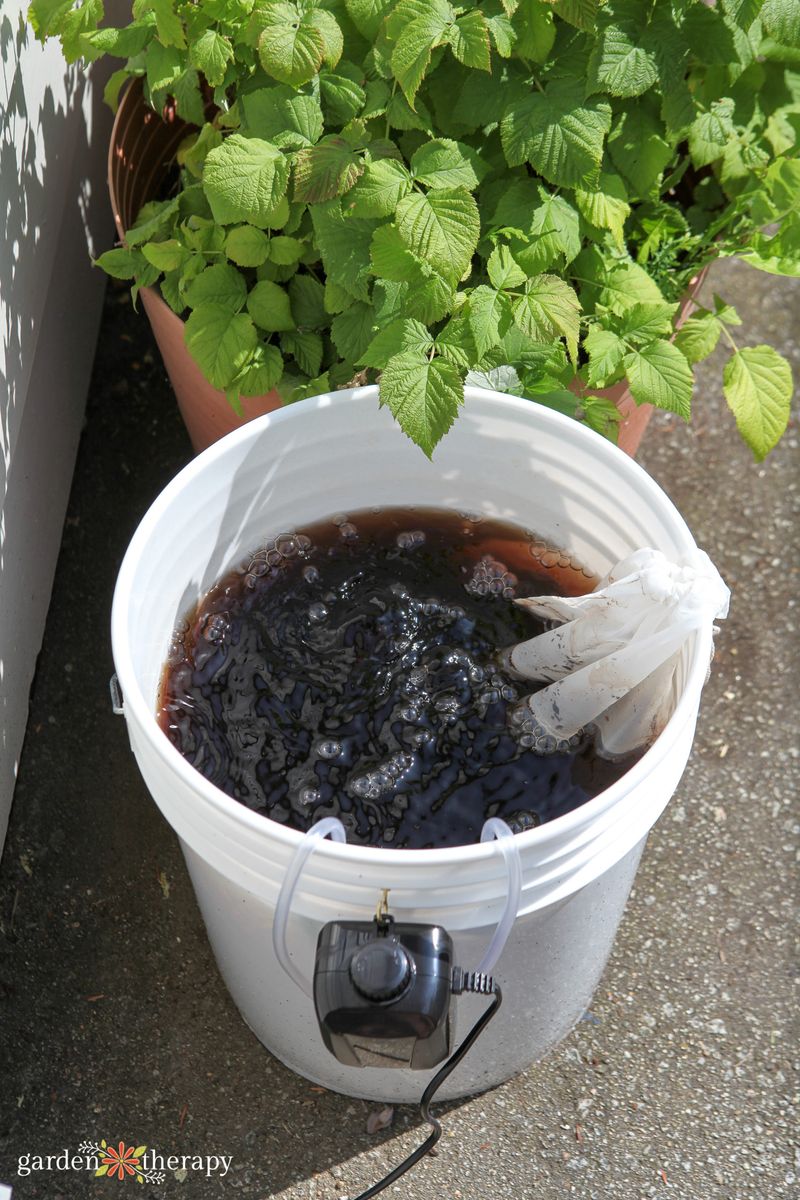
Think of compost tea as a liquid pep talk for the soil under your cucumbers. Steeping finished compost in water pulls out both nutrients and beneficial microbes, giving you a feed you can pour straight onto stalled plants.
The recipe is forgiving. Drop a couple of shovelfuls of good compost into a burlap sack or old pillowcase, sink it in a five-gallon bucket of water, and let it steep for a day or two, stirring when you walk by.
An aquarium air pump bubbling in the bucket helps multiply the good microbes, though it is not strictly required. Once the water turns the color of weak tea, strain it and use it within a few hours while the organisms are still alive.
Water it around the roots, and splash a little on the leaves too if you like. That microbial jolt can improve how well roots take up food, which often nudges sluggish seedlings back into motion.
Because it is so mild, you can apply compost tea weekly without much fear of overfeeding your young vines.
5. Side-Dress With Balanced Granular Fertilizer
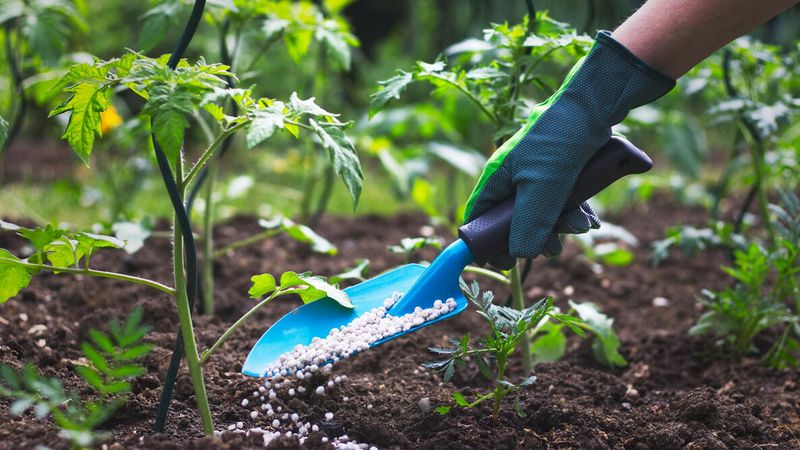
When you want a steady, no-fuss feeding, a balanced granular fertilizer earns its keep. A product marked something like 10-10-10 gives cucumbers equal parts nitrogen, phosphorus, and potassium, covering most of what young plants need to leave the starting gate.
Side-dressing simply means laying a narrow band of granules in a shallow trench about three inches away from the stems, then covering it and watering it in. Keeping the fertilizer off the plant itself prevents those fragile stems and leaves from getting scorched.
Use a light hand, around a tablespoon per plant, since more is not better with young cucumbers. Excess nitrogen can push leafy growth while delaying the flowers you actually want later on.
The granules release over several weeks as water breaks them down, so you get a slow drip of food rather than a single spike. That extended timing suits the growing-fast phase perfectly.
Reapply once the plants start vining and again when flowers appear. This measured approach often turns a stalled seedling into a climbing vine without any dramatic swings in soil chemistry.
6. Add Worm Castings for a Gentle Boost
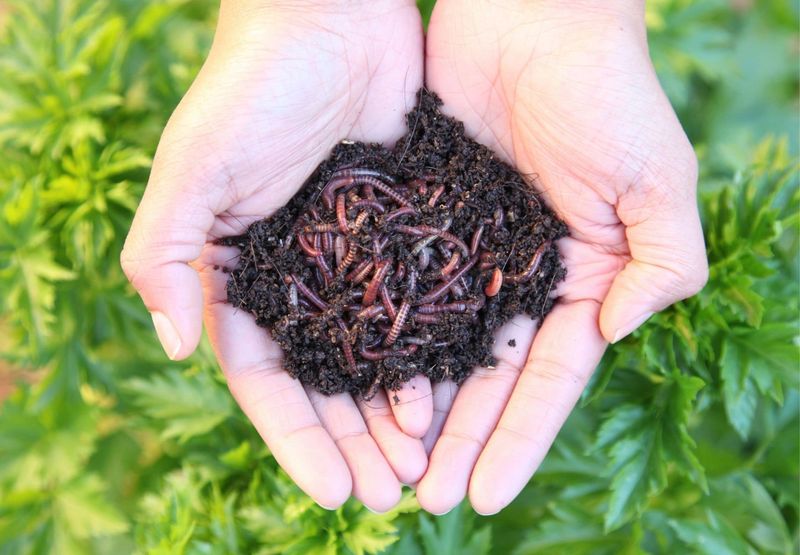
Worm castings look like ordinary dark soil, but they pack a surprising nutrient punch in a form so mild you almost cannot overdo it. For skittish young cucumbers that burn easily, this makes castings one of the safest feeds around.
They release nitrogen slowly and come loaded with beneficial microbes and natural growth compounds that seem to encourage stronger root systems. Healthier roots mean faster uptake of everything else you feed later.
Sprinkle a handful around each plant and scratch it lightly into the surface, or mix a cup into the planting hole for new transplants. Watering afterward carries the goodness down toward the root zone.
You can also stir castings into water to make a quick tea, roughly a cup per gallon steeped overnight. Poured at the base, it delivers a fast yet gentle drink that rarely shocks tender plants.
Fun bit of trivia: earthworms process organic matter through their gut, and the castings come out richer in available nutrients than the material they started with. That natural refining is exactly why stalled seedlings often respond so kindly to them.
7. Feed Extra Nitrogen When Leaves Turn Pale
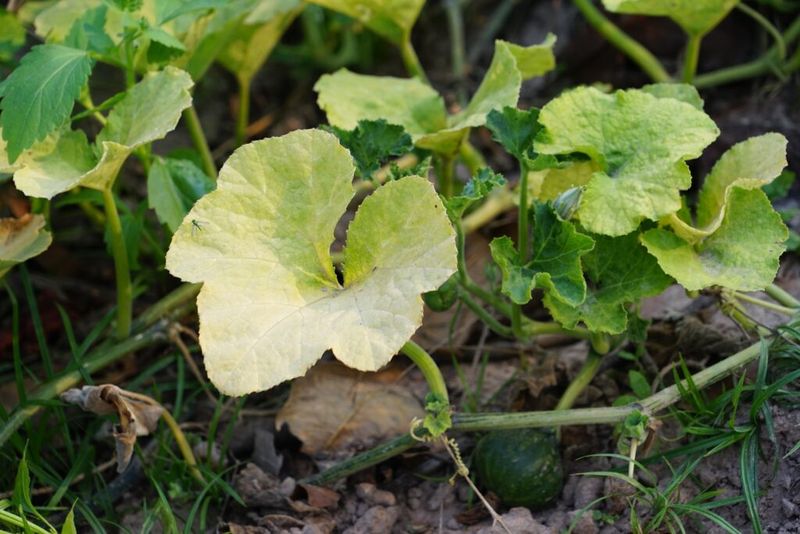
Pale, yellowing lower leaves on a stalled cucumber usually shout one word: nitrogen. When the oldest leaves fade first while new growth stays greener, the plant is likely robbing its old foliage to feed the tips because there simply is not enough to go around.
A quick nitrogen source can turn things around within days. Blood meal, a nitrogen-rich granular, or a diluted liquid feed high in that first number all work well for a targeted fix.
Scratch a light dose of blood meal into the soil around each plant, keeping it a few inches from the stem, then water thoroughly. Liquid options act faster if you need speed.
Go easy, though. Too much nitrogen may green up the leaves beautifully while stalling flowers and fruit, so aim to correct the shortage rather than flood the bed.
Keep watching the new leaves after you feed. If the fresh growth comes in a healthy green and the plant starts stretching, you nailed the diagnosis. Persistent yellowing despite nitrogen usually points to a watering or pH issue worth checking next.
8. Use Epsom Salt for a Magnesium Fix
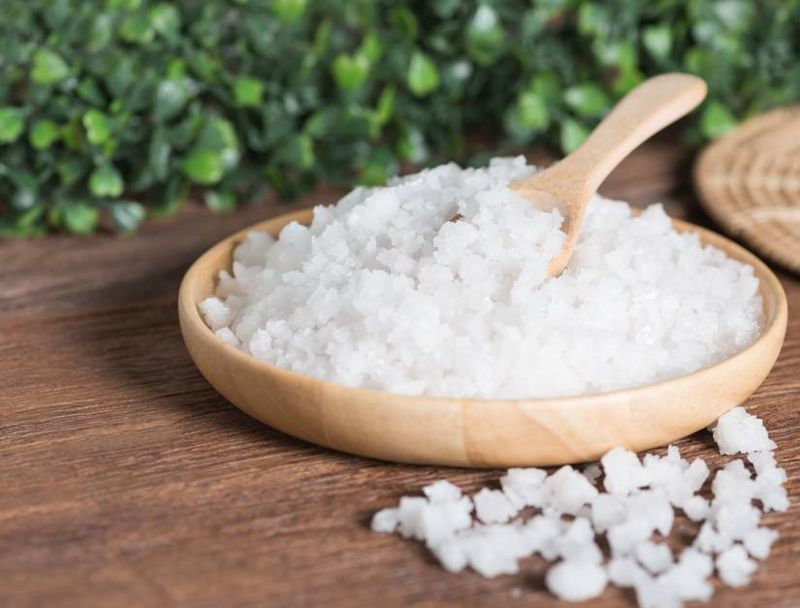
Yellowing between the leaf veins, while the veins themselves stay green, often signals a magnesium shortage rather than a nitrogen one. Epsom salt, which is magnesium sulfate, can correct that specific pattern and get stalled cucumbers moving again.
Magnesium sits at the center of every chlorophyll molecule, so a shortage directly limits how well leaves make food from sunlight. Fixing it may restore that green machinery and let the plant power its own growth.
Dissolve one tablespoon in a gallon of water and pour it at the base, or spray it lightly on the leaves for faster uptake. A single application often does the trick, with a repeat a couple of weeks later if needed.
A word of caution keeps this honest: Epsom salt only helps when magnesium is actually the problem. Dumping it on soil that already has enough does nothing useful and can throw off the balance with other nutrients.
Confirm the between-the-veins symptom before reaching for the box. When magnesium truly is missing, though, this simple pantry fix can be surprisingly effective on sluggish young vines.
9. Switch to a Bloom Formula When Flowers Start
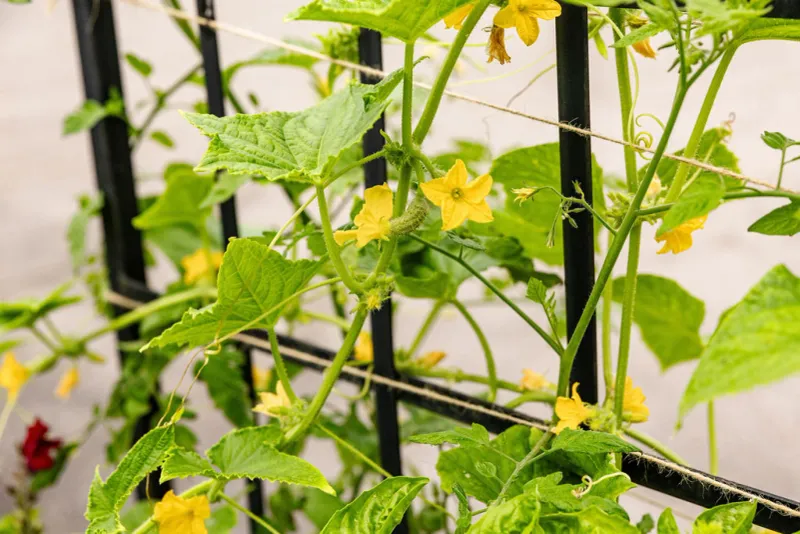
Once your cucumbers stop sulking and begin setting flowers, their appetite shifts. High-nitrogen feed that fueled early leaves now needs to step aside for phosphorus and potassium, the nutrients behind blooms and fruit.
Look for a fertilizer where the middle and last numbers run higher than the first, something along the lines of 5-10-10. That ratio tells the plant to pour energy into flowers instead of endless foliage.
Keeping too much nitrogen in the mix at this stage is a classic reason gardeners get lush green jungles with barely a cucumber in sight. Switching formulas at the right moment redirects that energy where you want it.
Apply according to the label, watering it in at the base every couple of weeks through the flowering and fruiting stretch. Consistency matters more than a heavy single dose.
Even though this move shines a little later than seedling stage, planning for it now keeps momentum going. A plant that just broke out of a stall can lose steam again if you feed it the wrong thing right as it tries to fruit.
10. Bury Banana Peels for Slow-Release Potassium
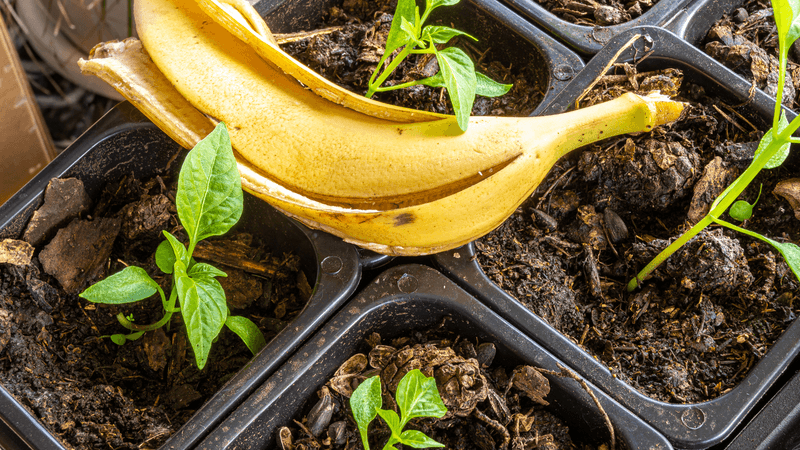
Before you toss that banana peel, remember your cucumbers might want it. Peels break down into a modest source of potassium and other trace minerals that support strong stems and better fruiting down the line.
Chop a peel or two into small pieces and bury them a couple of inches deep near the root zone, not touching the stem. As they decompose, they feed the surrounding soil slowly and quietly.
Do not expect an overnight rescue from peels alone. They act gently and gradually, so treat them as a supporting player alongside your main feeding routine rather than the star of the show.
Chopping small speeds up the breakdown and cuts the odds of attracting digging critters. In US backyards, squirrels and raccoons will happily excavate whole peels, so bury them well and keep the pieces tiny.
Some gardeners soak peels in water for a few days and pour that liquid around plants instead, which sidesteps the buried-scrap problem entirely. Either way, you are recycling kitchen waste into a mild potassium boost that can help keep recovering plants on track.
11. Try a Foliar Spray for Quick Uptake
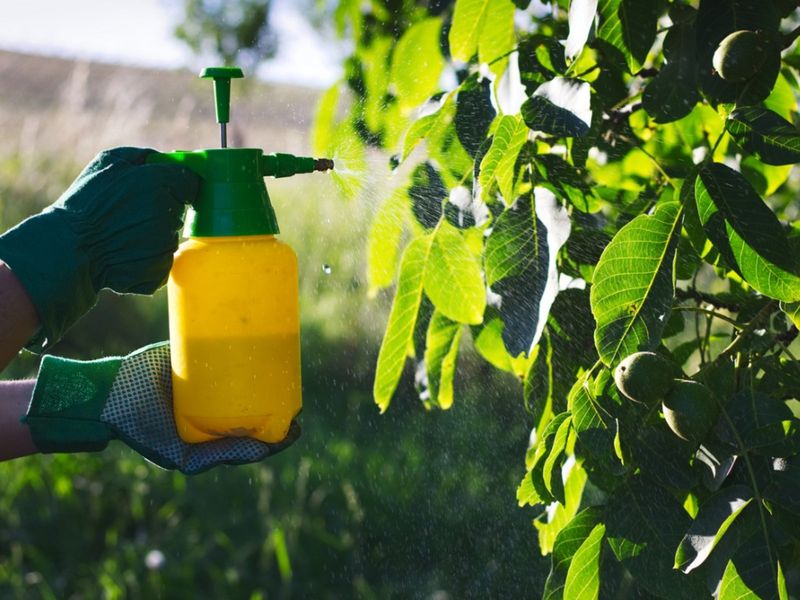
When a plant is stalled badly and you need speed, feeding through the leaves beats waiting on the roots. A foliar spray lets cucumbers absorb nutrients directly through tiny leaf pores, often showing results faster than a soil drench.
Mix a water-soluble fertilizer or diluted fish emulsion at roughly half the normal strength, since leaves are more sensitive than roots. Pour it into a clean spray bottle for even coverage.
Timing matters a lot here. Spray in early morning or on a cloudy, cooler day so droplets do not evaporate instantly or magnify the sun into leaf-scorching hot spots.
Coat both the tops and undersides of the leaves lightly, stopping before it drips. The underside holds more of those absorbing pores, so it is worth the extra angle.
Use foliar feeding as a short-term jump-start, not a total replacement for soil nutrition. It can quickly correct a visible deficiency and buy time while slower root feeding catches up. Many gardeners keep a bottle ready specifically for those moments when a seedling looks like it needs help right now.
12. Sprinkle Bone Meal for Root Development
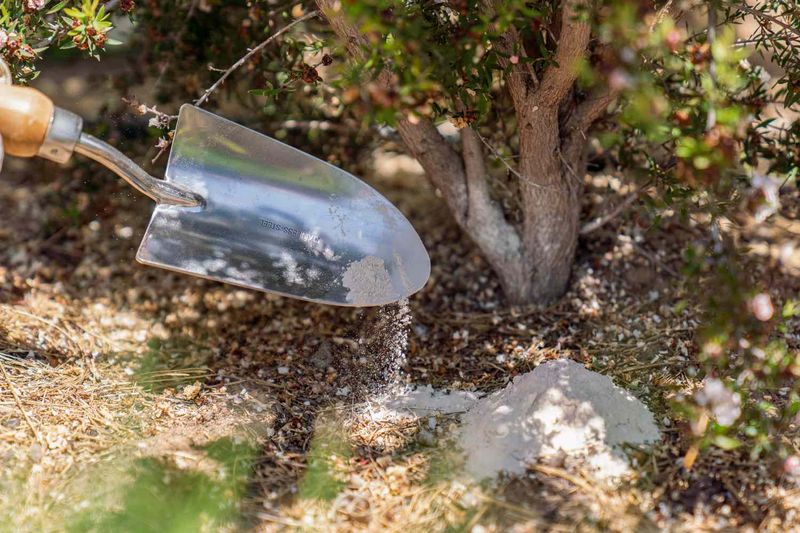
Strong roots are the engine behind fast growth, and bone meal is one of the classic ways to build them. Rich in phosphorus, it helps young cucumbers develop the underground network they need to pull in water and food efficiently.
Work a tablespoon or so into the soil around each plant, or drop a pinch into the hole at transplant time. Watering afterward starts moving that phosphorus toward the root zone where it does its work.
Bone meal releases slowly, so it will not shock a tender seedling. Instead it feeds over weeks, quietly encouraging the kind of root branching that supports everything above ground.
Keep the pH check in mind, because phosphorus becomes hard for roots to absorb in very alkaline soil. If your test came back high, bone meal may underperform until you correct the balance.
One practical note for suburban gardeners: the meaty scent can draw dogs and wildlife to dig. Mixing it well into the soil rather than leaving it on top usually keeps noses out and lets your plants get the phosphorus boost they were meant to have.
13. Water Consistently So Nutrients Can Move
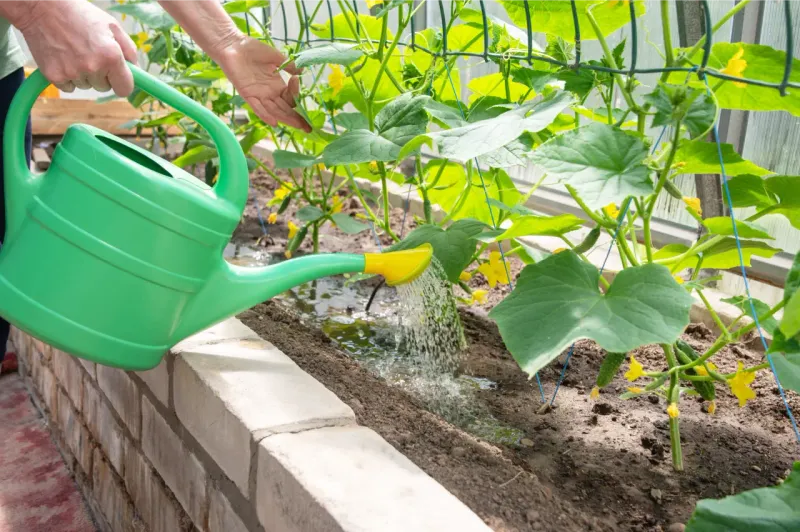
Here is the twist most people miss: feeding does nothing if the soil is bone dry. Nutrients only travel to roots dissolved in water, so inconsistent watering can leave a well-fed plant starving anyway.
Cucumbers want steady moisture, roughly an inch or two per week including rain. Deep, less frequent soakings beat quick daily sprinkles because they pull roots downward toward a bigger reservoir of food.
Uneven watering also stresses young plants in ways that mimic nutrient problems, including stalled growth and curling leaves. Before you add more fertilizer, make sure erratic moisture is not the real culprit.
Stick a finger two inches into the soil to check. If it feels dry down there, water thoroughly at the base rather than over the leaves, which helps keep fungal trouble away in humid US summers.
A layer of mulch smooths out the swings, holding moisture between waterings and keeping roots cooler. Once you dial in consistent watering, you may be surprised how much better every other feeding move on this list starts to perform.
14. Mulch to Protect the Feeding Zone
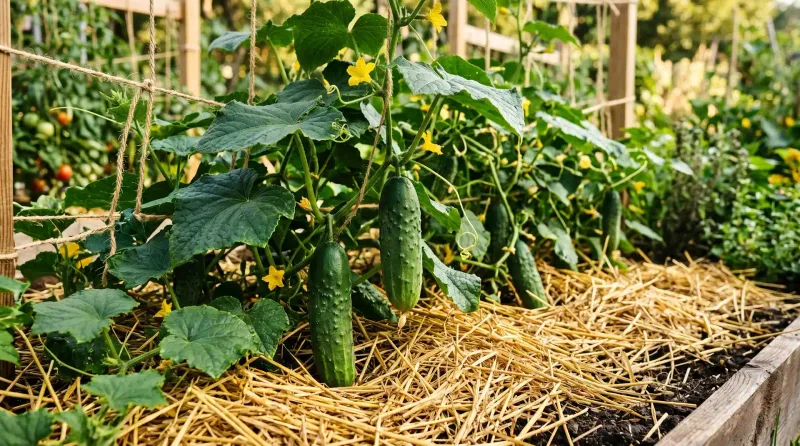
Mulch might seem like it has nothing to do with feeding, yet it quietly protects everything you put into the soil. A blanket of straw, shredded leaves, or grass clippings keeps nutrients from washing away in heavy rain and locks in the moisture that carries food to roots.
As organic mulch breaks down, it slowly adds nutrients of its own and feeds the soil life beneath it. That gradual enrichment gives recovering cucumbers a steadier supply than bare, exposed dirt ever could.
Spread two to three inches around each plant, leaving a small gap right at the stem so it does not stay wet and rot. Refresh it as it thins out over the season.
Mulch also keeps summer soil temperatures in a range roots actually like, since baking-hot dirt slows nutrient uptake and growth. Cooler, moister soil means happier roots.
For US gardeners battling weeds, the shade a mulch layer casts smothers competitors that would otherwise steal food and water from your young vines. Fewer weeds means more of every feeding move goes straight to your cucumbers.
15. Feed the Soil With Cover Crop Leftovers
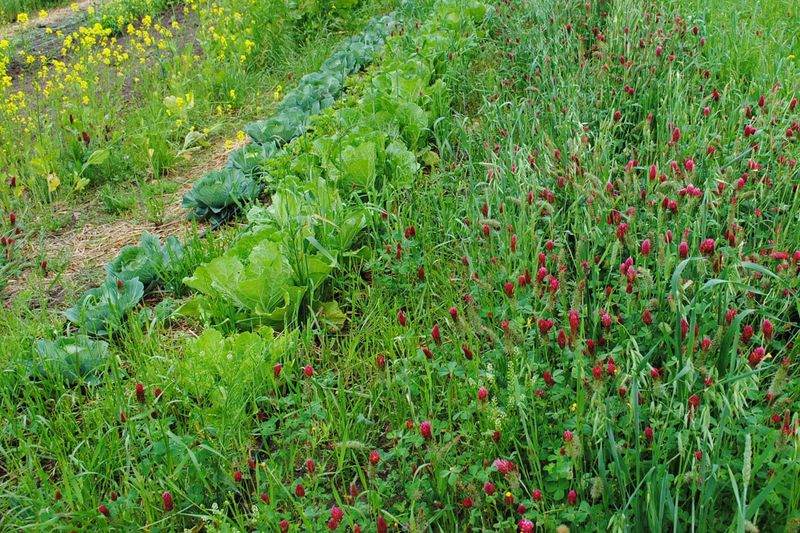
If you planted a cover crop like clover or field peas last fall, you are sitting on free fertilizer. Legume cover crops pull nitrogen from the air and store it in the soil, giving this spring’s cucumbers a built-in head start.
Chop the greenery and turn it into the top few inches of soil a few weeks before planting, or leave the roots in place to release nitrogen as they decay. Either method drip-feeds the bed naturally.
The breakdown also builds richer, looser soil that roots move through more easily. Better structure means better access to every nutrient, which helps explain why cover-cropped beds often grow more vigorous seedlings.
No cover crop this season? File the idea away for next fall and use one of the other feeding moves for now. Planning ahead like this pays off year after year.
Fun fact worth knowing: those legume roots partner with special soil bacteria that trap atmospheric nitrogen in little nodules. It is one of nature’s tidiest ways of fertilizing a future crop without a single bag of chemicals.
16. Apply Kelp or Seaweed Extract for Micronutrients
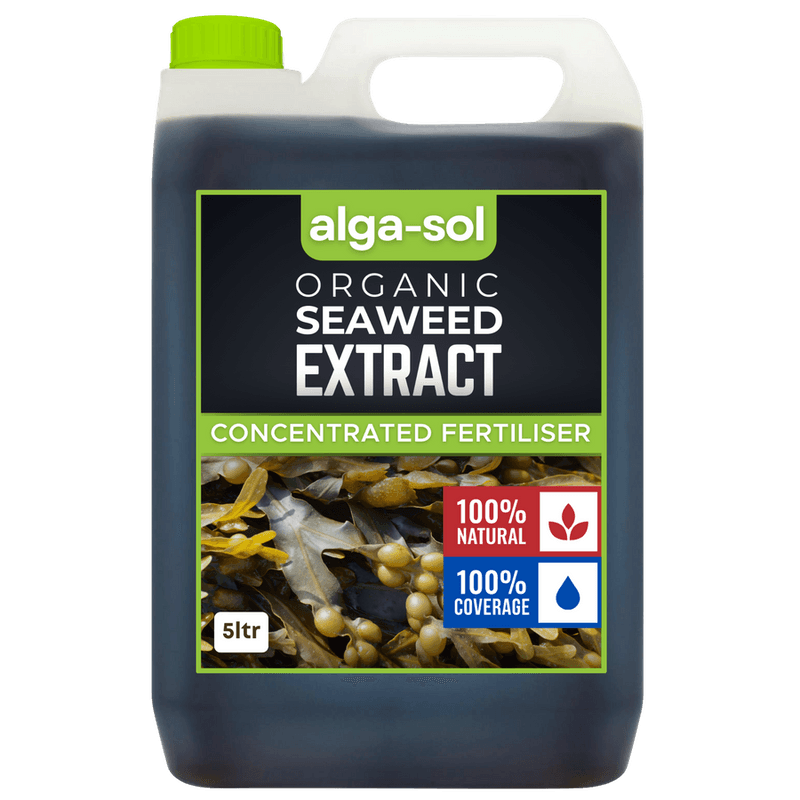
Big nutrients like nitrogen get all the attention, but stalled cucumbers sometimes lack the tiny trace elements that keep their internal machinery humming. Kelp and seaweed extracts deliver a broad range of those micronutrients in one easy pour.
Beyond minerals, seaweed carries natural plant hormones that appear to encourage root growth and help plants shrug off stress from heat or transplant shock. That stress relief alone can nudge a stuck seedling forward.
Mix a liquid kelp product per the label, usually a small amount per gallon, and apply as a soil drench or a light foliar spray. It is gentle enough to use every couple of weeks without worry.
Because it is so mild, kelp pairs nicely with your main nitrogen or balanced feed rather than replacing it. Think of it as filling in the gaps the big three nutrients leave behind.
Many gardeners swear their transplants settle in faster with a kelp drink at planting time. While results vary by soil, adding this micronutrient safety net rarely hurts and often gives sluggish young cucumbers exactly the small push they were missing.
17. Correct Soil pH With Lime or Sulfur
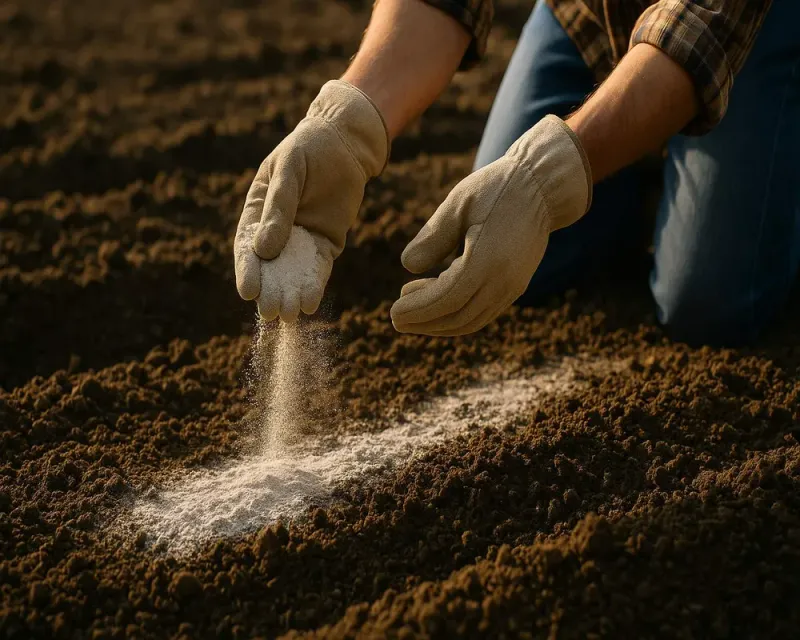
You can pile on the best fertilizer in the world, but if your soil pH is off, the roots simply cannot reach it. Cucumbers feed best between 6.0 and 6.8, and drifting outside that band locks nutrients away no matter how much you add.
Soil too acidic, showing a number below 6.0, gets a dose of garden lime to raise the pH. Soil too alkaline, above 6.8, comes down with elemental sulfur. Your soil test tells you which direction to go.
Both amendments act slowly, taking weeks to shift the numbers, so this is a patient fix rather than an overnight rescue. Apply according to the package rate for your soil type and water it in.
Retest after a few weeks to see how far you moved the needle, then adjust if needed. Chasing pH too aggressively can overshoot and create the opposite problem.
Once the pH lands in that happy range, every other feeding move suddenly works better because the nutrients finally become available. Plenty of mysterious stalls trace right back to this single overlooked number.
18. Ease Off Feeding When Plants Take Off
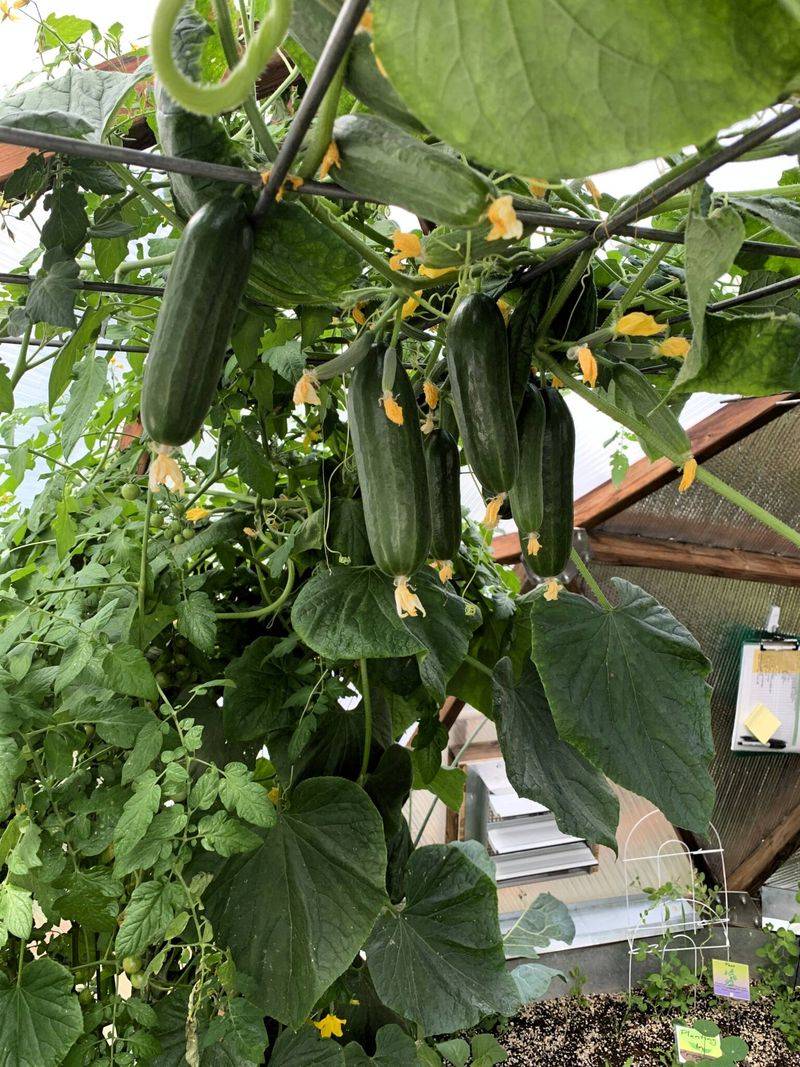
The final move is knowing when to stop, because overfeeding stalls cucumbers just as surely as starving them does. Once your plants surge into vigorous vining and dark green leaves, dial the feeding back to a maintenance rhythm.
Too much fertilizer, especially nitrogen, can burn roots, invite pests drawn to soft lush growth, and delay the flowers you have been waiting for. More is genuinely not better here.
Watch the plant for cues. Steady new growth, healthy leaf color, and forming flowers all say the tank is full and it is time to coast rather than keep pouring on food.
Shift to feeding every three or four weeks with a lighter hand, letting compost and mulch carry more of the load between doses. That relaxed schedule keeps momentum without tipping into excess.
Learning your plants’ body language is the real skill that ties all these moves together. Feed hard to break a stall, then back off once they are cruising, and your cucumbers will reward you with a long, productive season instead of a burnt-out sprint.