
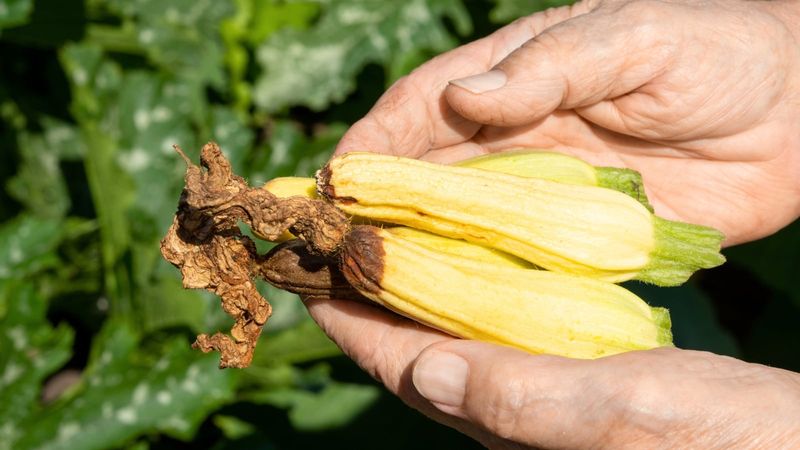
Few things are more frustrating than watching a tiny zucchini swell with promise, only to yellow, shrivel, and rot at the blossom end before it ever gets going. Most gardeners assume something is seriously wrong with the plant, but the culprit is often simpler than it looks. Poor or incomplete pollination is a common reason young zucchini abort early, though a few other problems can look nearly identical, so a quick inspection goes a long way before you take action.
A tiny fruit that stops growing often signals failed pollination
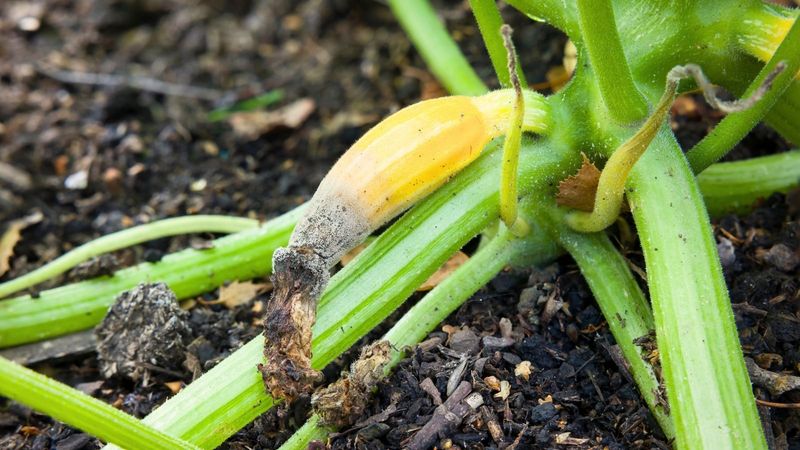
Picture a zucchini no longer than your finger, already starting to swell behind a bright yellow flower, then two or three days later it turns pale, softens at the tip, and collapses. That visible sequence, a brief period of growth followed by yellowing, shriveling, and rot at the blossom end, is one of the more disheartening sights in a summer vegetable garden. University of Minnesota Extension guidance on Choanephora rot identifies poor pollination as a common cause of small summer-squash fruit rotting, particularly during the first fruit flush of the season.
When a female flower does not receive enough viable pollen, the plant may allow the fruit to grow briefly before abandoning it. The young zucchini then begins to break down from the blossom end outward. That pattern, a small fruit that swells and then collapses without any obvious fuzzy mold, is often a sign of pollination failure, though it does not rule out other causes.
Wet-weather fungal disease, physiological disorders, physical damage, and excessive soil moisture can produce symptoms that look similar. Before assuming pollination failure, spend a moment inspecting the fruit. Look for fuzzy growth, a distinct lesion, or other clues that point toward a different explanation. The inspection step takes less than a minute and can save you from treating the wrong problem.
Zucchini needs pollen to turn a flower into a fruit
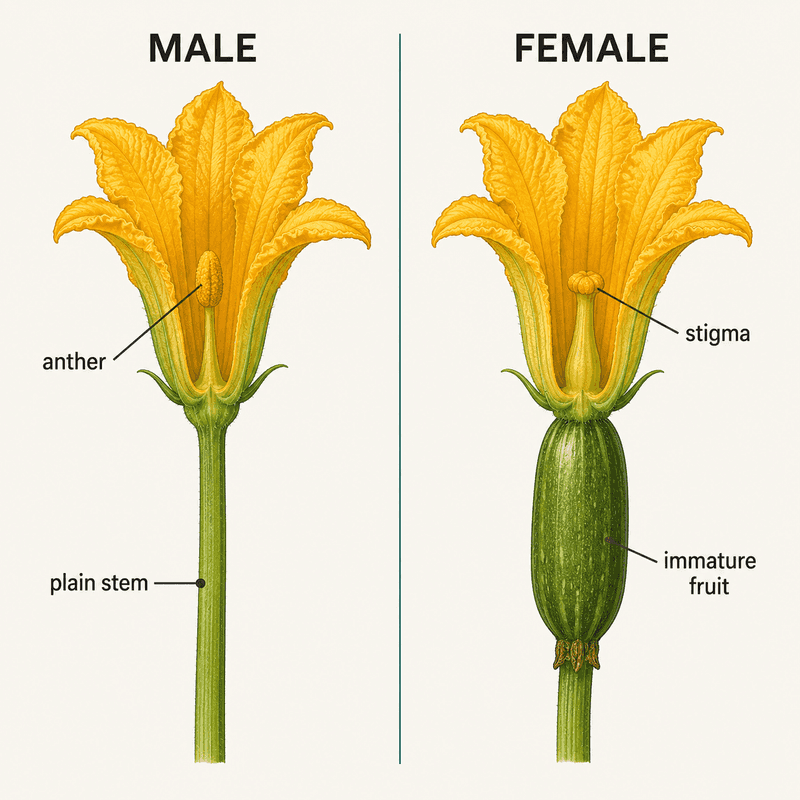
Zucchini is a bit unusual among vegetables because it produces two distinct flower types on the same plant. Male flowers appear on long, slender stems and carry a central anther coated in pollen. Female flowers sit on shorter, thicker bases, and right behind each female blossom is a tiny, undeveloped zucchini, the fruit-in-waiting. UMN Extension’s guide to growing summer squash and zucchini explains that only pollinated female flowers normally develop into full-sized fruit.
When a bee or other pollinator visits a male flower, it picks up pollen, then carries that pollen to a female flower. If enough pollen reaches the stigma inside the female flower, the fruit develops normally. If the transfer is incomplete or absent, the plant recognizes that fertilization has not occurred and begins withdrawing resources from the developing fruit.
One more thing worth knowing: male flowers tend to appear several days before female flowers on a young plant. Gardeners sometimes panic when the first flowers drop without producing fruit, but those early blooms are almost certainly male and cannot produce zucchini regardless of pollination. A failed first fruit or two is not automatically evidence of a serious plant problem. As the season progresses and both flower types are present at the same time, pollination becomes possible and fruit set usually improves.
Weather and timing can interrupt the pollination window
Zucchini flowers are open for only a few hours each morning, which creates a narrow window for pollination to happen. When weather conditions during that window are unfavorable, effective pollen transfer becomes much harder. Cold, rainy, or heavily overcast mornings reduce bee activity considerably, and wet flowers can make pollen clump or wash away before a pollinator ever arrives.
Heat stress at the other extreme causes its own problems. During stretches of very high temperatures, pollen viability can drop, flower timing can shift, and bees may reduce their foraging activity during the hottest parts of the day. UMN Extension’s vining vegetable growing guide notes that moisture fluctuations and environmental stress can contribute to fruit abortion beyond just pollinator absence.
Seeing bees near the plant does not guarantee successful pollination. Research published in Agriculture, Ecosystems and Environment found that pollination services to squash can be insufficient even when specialist bees are abundant, because effective pollination depends on the timing of visits, the species of bee, the amount of pollen deposited, and the condition of the flower, not simply on the number of insects present. A single brief visit during a narrow window may not deliver enough pollen to set a healthy fruit, which is why several consecutive cloudy or rainy mornings can produce a flush of aborted young zucchini even in a garden that normally has good pollinator activity.
Hand-pollinate the next open female flower
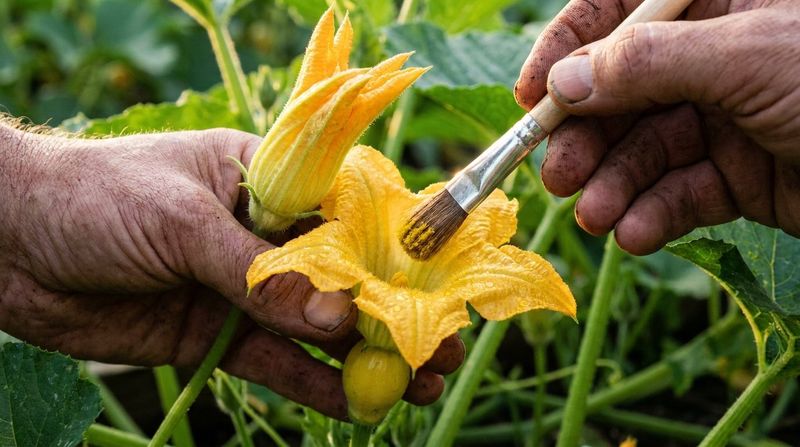
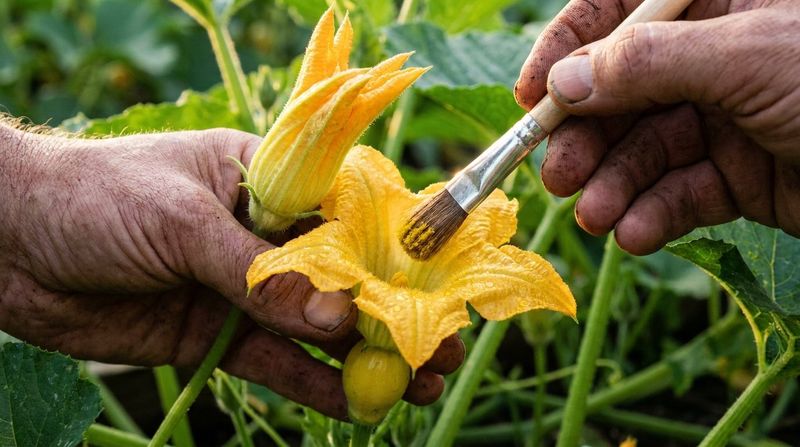
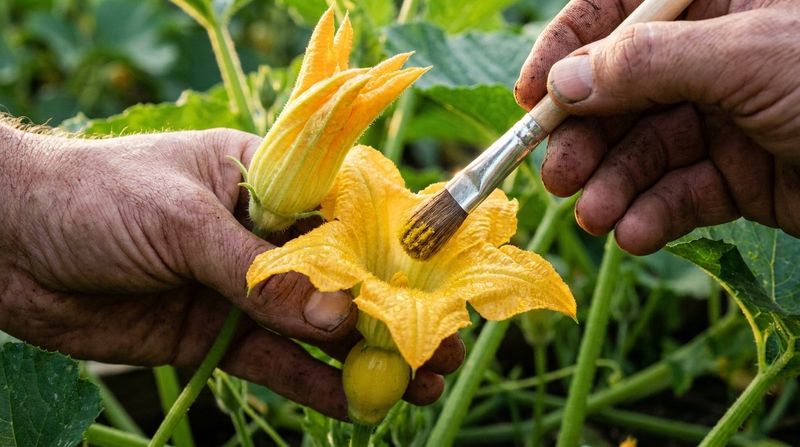
Hand-pollination gives you a way to step in when natural pollinator activity is not getting the job done. Utah State University Extension’s advisory on zucchini fruit abortion describes a straightforward method: go out in the morning while flowers are freshly open, find a male flower with a pollen-coated anther, and either pick the flower or fold its petals back so the anther is exposed. Gently brush the anther against the sticky stigma inside a female flower, making contact with the central structure rather than just the petals.
If you prefer not to remove the male flower, a small, clean paintbrush works well as a transfer tool. Dab the brush against the anther to collect pollen, then dab it onto the stigma of the female flower. Either method can improve fruit set when pollinator activity is low, including during rainy stretches, unusually cold mornings, or periods when row covers are still in place.
Keep realistic expectations about what hand-pollination can accomplish. Colorado State University Extension’s vegetable garden hints caution that plant stress, extreme heat, poor flower condition, and low pollen viability can still cause fruit abortion even after a careful hand-pollination attempt. The method raises your odds when the limiting factor is pollen delivery, but it cannot override a plant that is under significant environmental stress or producing flowers past their viable window.
Maintain even moisture without waterlogging the roots
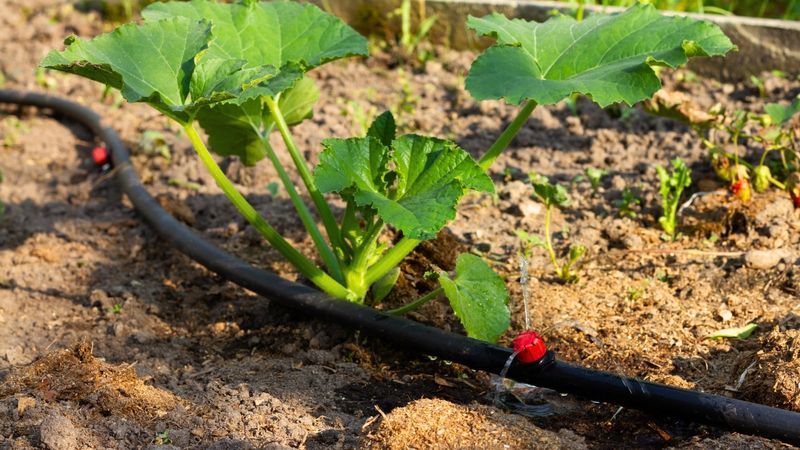
Water management plays a supporting role in fruit set that is easy to overlook when you are focused on pollinators. Drought stress tightens the plant’s resources and can trigger fruit abortion even when pollination has occurred. Sharp swings between bone-dry and saturated soil are equally disruptive, stressing roots and interfering with the plant’s ability to move nutrients to developing fruit.
UMN Extension’s summer squash growing guide recommends roughly 1 inch of water per week as a starting benchmark, adjusted for your soil type, current rainfall, and weather. Sandy soils drain faster and may need more frequent, shorter watering sessions. Heavy clay soils hold moisture longer and are more prone to waterlogging if you water on a rigid schedule without checking actual soil conditions.
Watering at the soil line, using drip irrigation, a soaker hose, or careful hand watering directed at the root zone, keeps foliage and flowers drier and reduces the conditions that favor fungal problems. Overhead watering that regularly wets the flowers and leaves is worth avoiding when possible. A 2-3 inch layer of organic mulch around the base of the plant can moderate moisture swings between watering sessions, keeping the soil from drying out too quickly between rains. Mulch is a useful tool, but it does not fix a drainage problem.
If your soil stays soggy for days after a rain, improving drainage is a higher priority than any watering schedule adjustment.
Inspect the fruit before calling it pollination failure
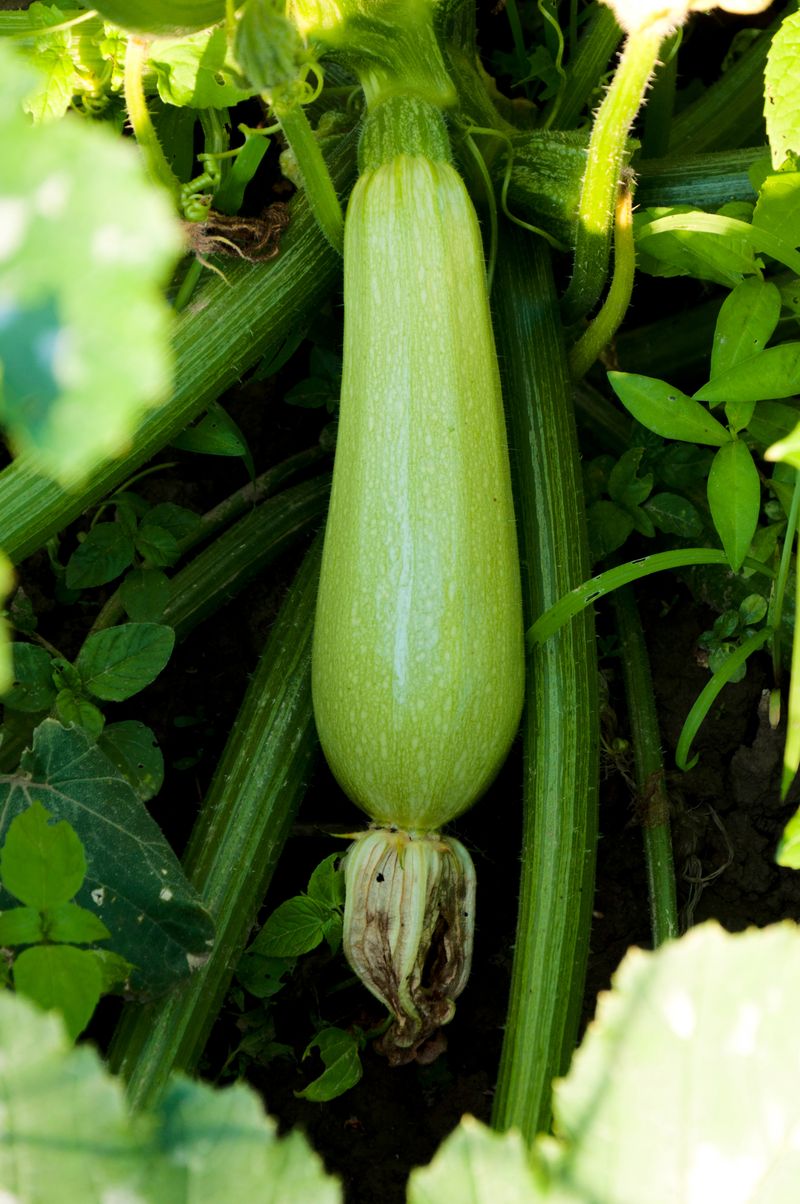
A careful look at the failed fruit before you decide on a response can save you from chasing the wrong problem. Poor pollination, fungal disease, and a physiological disorder called blossom-end rot can all produce rot at the tip of a young zucchini, but each has distinguishing features worth checking for.
When pollination is the likely culprit, the fruit typically swells briefly, then shrivels and collapses without any visible mold or characteristic lesion. The tissue may feel soft, but there is no fuzzy coating, no distinct color change on the skin beyond yellowing, and no sunken, leathery patch. UMN Extension’s Choanephora rot page describes a different pattern for fungal infection: the tissue becomes soft and watery, and conspicuous white, purple, or black fuzzy growth appears on the blossom or fruit surface, especially after prolonged wet conditions. Persistent wetness alone is a reason to look more closely, but fuzzy growth is the clearest sign that Choanephora rot may be involved.
Blossom-end rot is a third possibility. Utah State University Extension’s blossom-end rot resource describes it as a physiological disorder, not a contagious disease, that typically begins as a tan, water-soaked, sunken, leathery, or darkened lesion at the blossom end. Secondary bacteria and fungi can later move into that damaged tissue and make it look wetter and more rotten than the original lesion. Penn State Extension’s vegetable garden diagnostic guide notes that a zucchini fruit that rapidly aborts while still very small is more suggestive of pollination failure than classic blossom-end rot, though appearance alone cannot always draw a firm line between them.
Use sanitation and airflow when the fruit shows infection
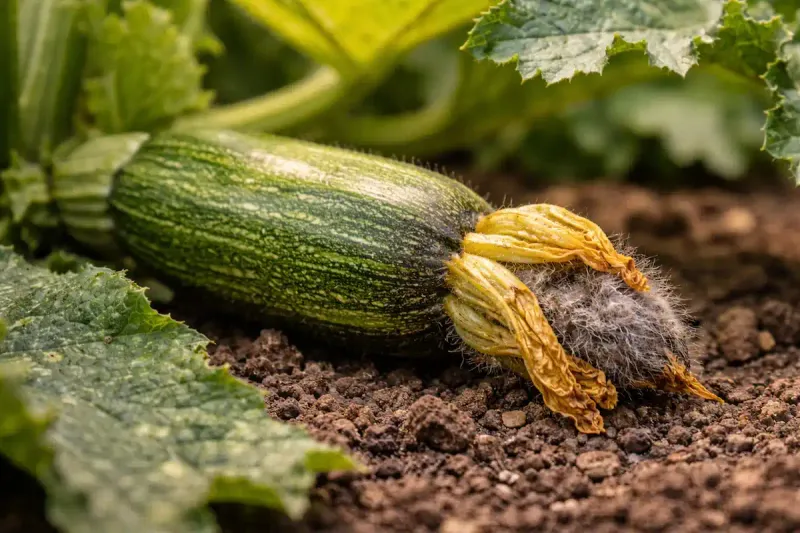
Not every failed zucchini fruit needs the same response. A small fruit that shriveled and dried up without any mold can be removed from the plant as a simple cleanup step. Removing non-moldy aborted fruit keeps the garden tidy and reduces excess plant load, but ordinary pollination-related abortions do not spread disease to neighboring fruit or flowers.
The calculus changes when a fruit shows suspected fungal growth. UMN Extension’s Choanephora rot guidance recommends prompt removal of infected tissue to prevent it from remaining in contact with healthy flowers and developing fruit. Remove the affected fruit carefully, bag it, and dispose of it away from the garden rather than leaving it on the soil surface. After handling infected material, wash your hands and any tools before touching healthy plant tissue.
Beyond removal, improving airflow around the plant reduces the humid, stagnant conditions that Choanephora rot favors. Avoid crowding plants closer than their recommended spacing, and trim any leaves that are blocking air movement through the canopy if the plant has become very dense. Managing overhead moisture, whether from irrigation or prolonged rain, also helps. Home gardeners should not count on fungicides to stop Choanephora rot in an active planting.
Because new susceptible flowers open every day, fungicide coverage cannot keep pace with the disease cycle. Sanitation, airflow, and moisture management are more practical and defensible responses for a backyard garden.
Protect the bees that make fruit set possible
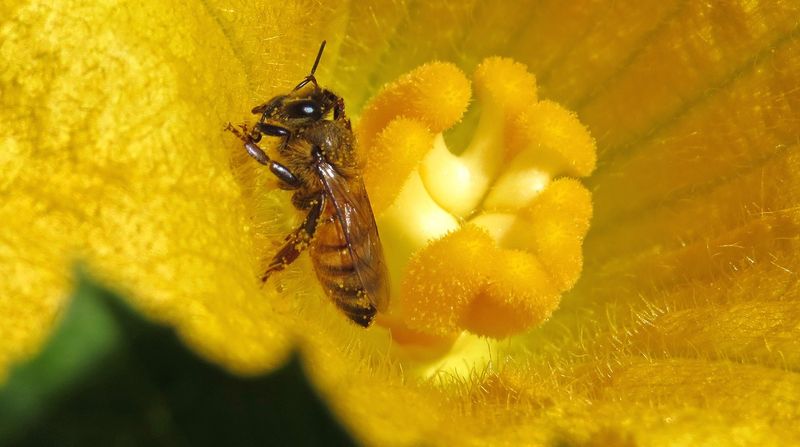
Row covers are a useful tool for protecting young zucchini plants from cucumber beetles and other pests, but they need to come off at the right time. UMN Extension’s zucchini growing guide advises removing floating row covers when the plant begins to flower, unless you are committed to hand-pollinating every female flower yourself. A cover that stays on during flowering blocks bees and other beneficial pollinators just as effectively as it blocks pests, and without pollinator access, fruit set will fail even on a healthy, well-watered plant.
Pesticide choices during the flowering period deserve careful thought. EPA guidance on protecting pollinators from pesticides emphasizes that spraying insecticides on blooming crops or while bees are actively foraging poses serious risks to the pollinators your garden depends on. Systemic insecticides can persist in pollen and nectar long after application, exposing bees that visit later-opening flowers.
If pest pressure genuinely requires a spray application, follow the product label precisely, apply in the early evening after bee activity has slowed, and prevent drift onto neighboring flowering plants. UMN Extension’s pollinator and pesticide guidance reinforces that no insecticide application can repair a pollination gap, and treatments that harm or repel bees will reduce fruit set on future flowers, compounding the original problem rather than solving it.
Inspect first, then match the response to the evidence
One or two failed fruits early in the season are common and do not signal a collapsing plant. Pollinators may not have located your planting yet, or a stretch of unfavorable weather may have compressed the window for effective pollen transfer. Give the plant a few days and check whether later fruits are developing normally before concluding that something is seriously wrong.
When you do find a failed fruit, run through the quick inspection: is there fuzzy growth pointing toward Choanephora rot, or a distinct sunken lesion suggesting blossom-end rot? If neither is present, poor pollination is the more likely explanation. From there, hand-pollinate open female flowers in the morning, maintain consistent moisture in well-drained soil, remove aborted fruit for cleanup, remove visibly infected tissue promptly, and keep bees safe by avoiding pesticide applications during bloom. UMN Extension’s zucchini guide and USU Extension’s blossom-end rot resource both reinforce that steady growing conditions and attentive observation resolve most early-season fruit problems.
Treat persistent wet rot as a prompt to look closer, not as automatic proof of disease. Matching your response to what you actually see, rather than to a worst-case assumption, is what turns a worried gardener into an effective one.