
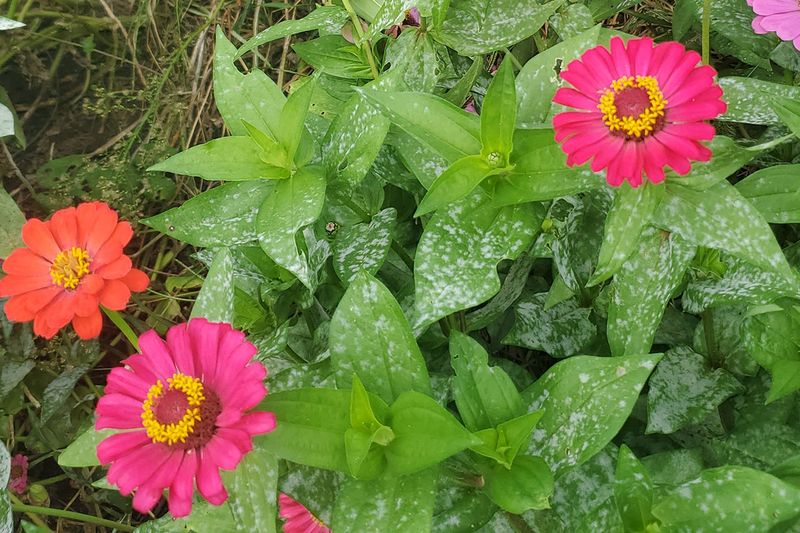
If your zinnias look great from a distance but show a chalky white coating up close, you are probably dealing with powdery mildew, one of the most common late-season problems for this flower. The good news is that a mild case does not automatically mean the plant is doomed.
Understanding what you are actually seeing, why it spreads, and what you can realistically do about it will help you protect the blooms still worth saving.
The white film usually signals powdery mildew
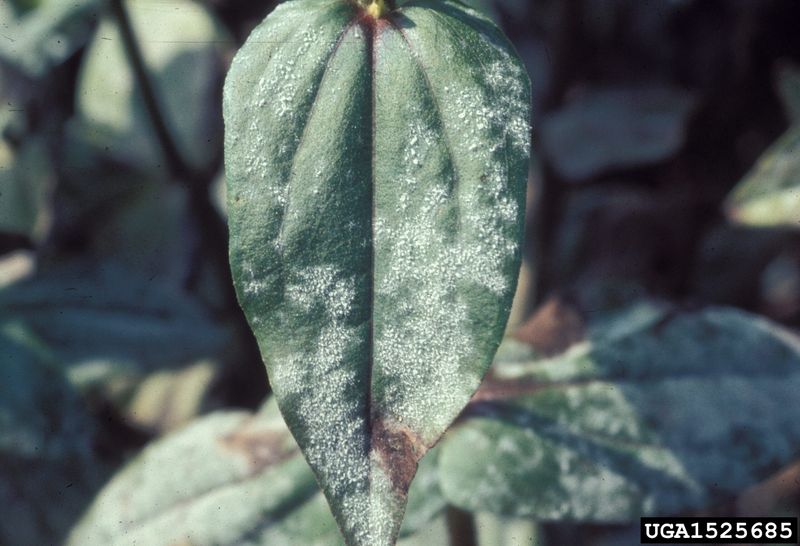
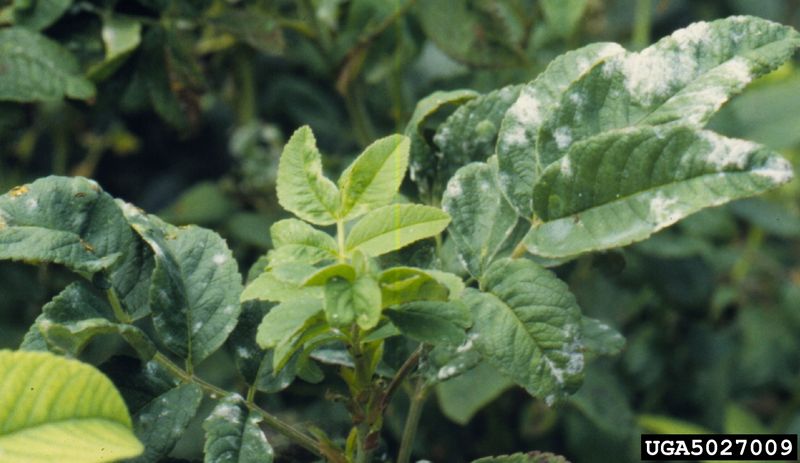
A chalky, flour-like coating spreading across zinnia leaves is one of the most recognizable symptoms in the late-season garden. University of Florida Extension specifically identifies powdery mildew as a common late-season problem on zinnias, and University of Minnesota’s plant diagnostic tool describes the typical symptoms as white-to-gray powdery growth that can appear on leaves, stems, buds, and even flowers.
As the disease progresses, affected leaves may yellow, curl, or drop from the plant.
That said, a white coating on zinnia foliage is not an automatic diagnosis. Downy mildew can also create pale growth on zinnias, but it tends to produce angular yellow, brown, or purple lesions and a fuzzy growth concentrated mainly on the undersides of leaves rather than the tops.
Bacterial leaf spot creates water-soaked or tan patches with defined margins, not a uniform powdery film. Insects such as whiteflies or spider mites leave stippling, webbing, or tiny moving specks rather than a coating.
Residue from a spray application can also leave a white film that wipes off cleanly without any fungal structure underneath.
Before treating, look closely at where the coating sits, whether it wipes away easily, and whether you can see tiny dark specks embedded in the white growth. Those small black dots, which can appear late in a powdery mildew infection, are fungal fruiting structures that confirm the diagnosis.
Matching the pattern to the right cause keeps you from applying the wrong treatment.
Why mildew spreads through an attractive planting
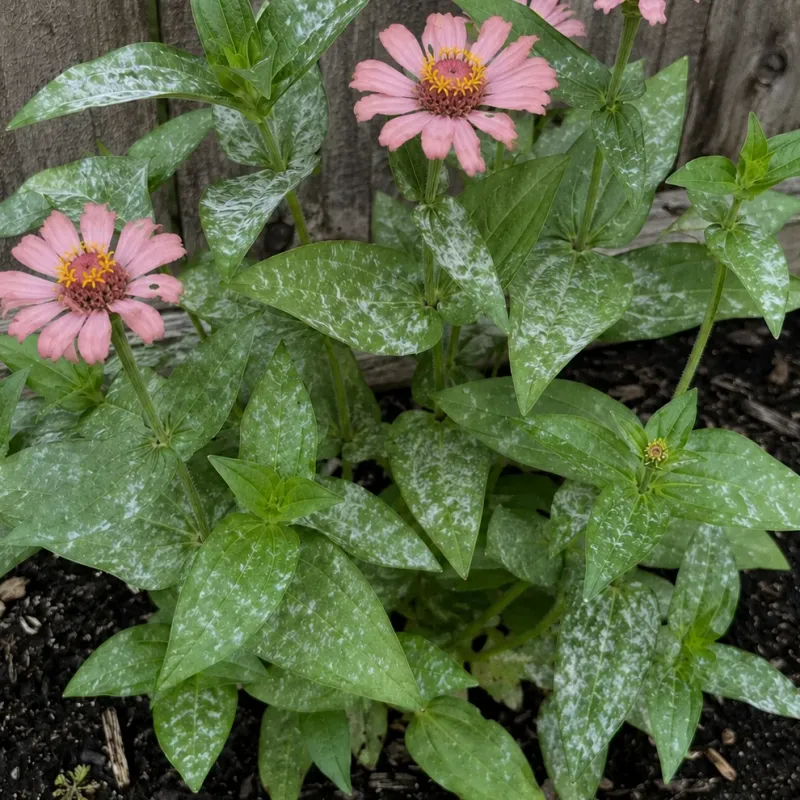
Powdery mildew thrives under a specific set of conditions that are surprisingly common in well-tended Southern gardens. Oklahoma State University Extension explains that the disease is favored by crowded foliage, reduced air movement, shaded growing areas, and the temperature swings that come with warm days followed by cooler, more humid nights.
A lush, full planting that looks beautiful in midsummer can quietly become the perfect environment for mildew to take hold as conditions shift later in the season.
One of the most misunderstood facts about this disease is that its spores generally do not need free water sitting on the leaf surface to cause infection. Unlike many fungal pathogens, UC IPM notes that powdery mildew spores can germinate and infect in relatively dry conditions, which is part of why it spreads so readily even during dry stretches.
High humidity in the air around the plant, rather than water on the leaf, is the more relevant factor.
Southern gardens in Florida, Texas, and nearby states face their own mix of variables, including intense afternoon heat, partial shade from fences or trees, and irrigation schedules that keep humidity near the soil high. Florida Extension points out that local temperature patterns and microclimate differences mean no single description fits every yard.
Humidity alone does not cause powdery mildew, and the same conditions that favor it in one garden may not trigger it in a neighbor’s bed planted just a few feet away.
Start with cleanup and more breathing room
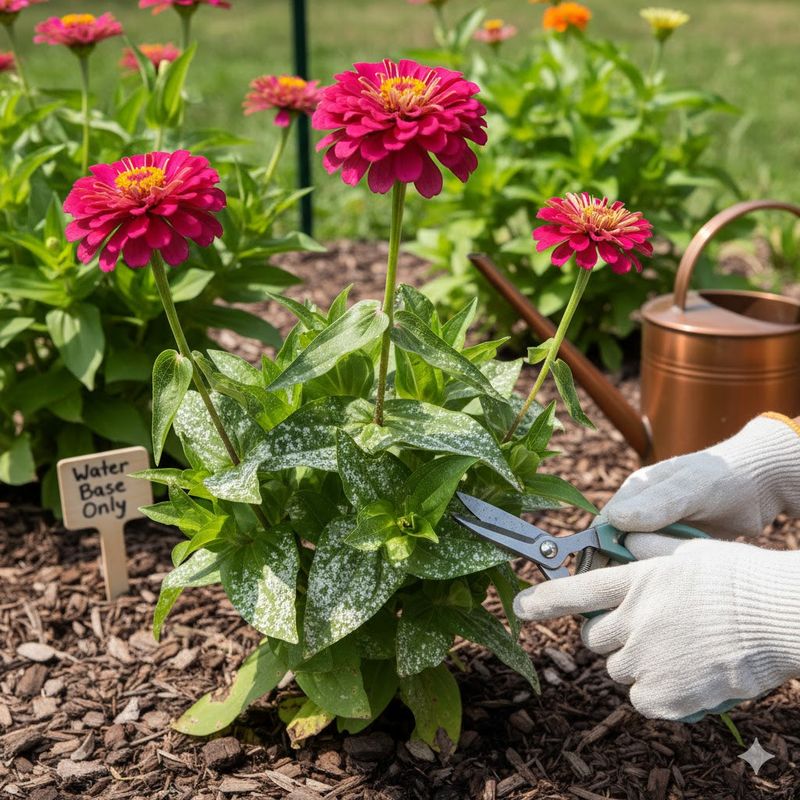
When powdery mildew is still limited to a portion of the plant, physical cleanup is the most immediate and lowest-risk response available. Removing leaves that are heavily coated, yellowing, or already dying reduces the number of spores available to spread to healthy tissue nearby.
University of Minnesota Extension confirms that removing severely infected plant parts can lower available spore counts, though it will not eliminate the disease by itself. Place removed foliage in a sealed bag or bin rather than composting it, since composting infected material can preserve spores.
After cleanup, look at how the remaining plant is growing. UC IPM recommends thinning or staking dense growth so air can move more freely through the canopy.
If nearby plants are crowding the zinnia, giving it a little more space – even just pulling a neighbor plant back slightly – can meaningfully improve airflow and reduce the humid microclimate that encourages new infections.
One important caution: aggressive pruning is not always the right move. University of Georgia Extension emphasizes that cultural practices work best when they support a plant that still has enough healthy tissue to function.
If most of the zinnia’s leaves are already coated or dropping, stripping away more foliage can leave the plant unable to support its remaining blooms. Cleanup is most useful when the infection is limited and healthy green leaves still make up the majority of the plant.
Change the conditions that keep new leaves vulnerable
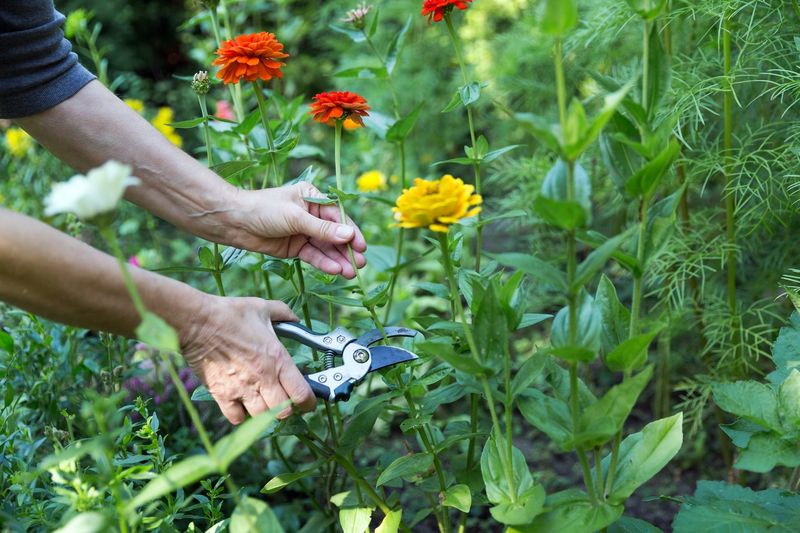
Slowing new infections after an initial cleanup depends on shifting the growing conditions that made the plant vulnerable in the first place. Keeping zinnias in full sun is one of the most reliable adjustments a gardener can make.
Powdery mildew spreads more readily in shaded spots where foliage stays cool and humid longer, so moving containers into a sunnier position or trimming overhanging branches that cast afternoon shade can make a real difference.
Fertilizer choices also matter more than many gardeners expect. Applying high-nitrogen fertilizers encourages the plant to push out lush, soft new growth, and that tender tissue is more susceptible to infection than mature leaves.
University of Georgia Extension advises avoiding unnecessary nitrogen applications when disease pressure is present. If the plant is already blooming and the season is winding down, holding off on feeding is usually the right call.
Watering habits are worth revisiting too, though not for the reason many gardeners assume. Powdery mildew does not require leaf wetness to infect, so overhead watering is not the cause of the problem.
UC IPM notes that midmorning overhead sprinkling can actually wash spores from foliage in some situations, as long as leaves have time to dry before evening. Even so, watering at the soil line remains the safer general practice for home gardens because extended leaf wetness does increase the risk of other leaf diseases that are more water-dependent than powdery mildew.
Use a labeled treatment to protect healthy foliage
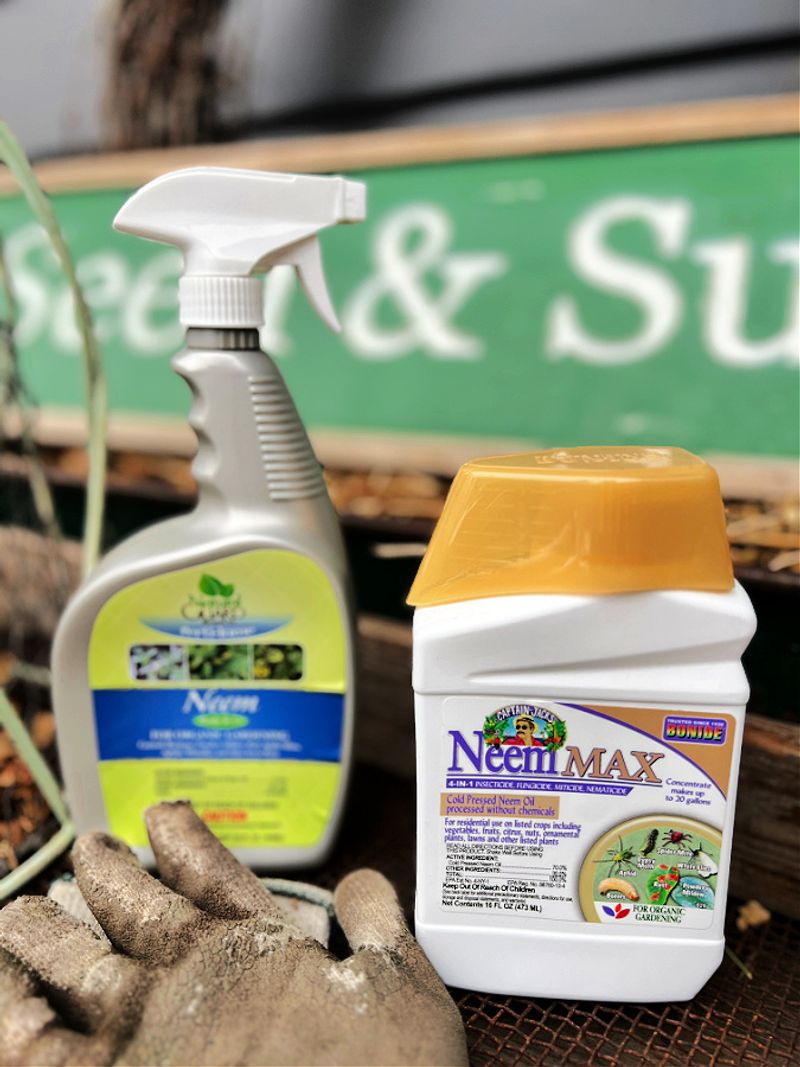
Spraying makes the most sense when the infection is still early or mild-to-moderate and the plant has plenty of healthy leaves worth protecting. Fungicides and other labeled treatments cannot restore foliage that is already coated and damaged.
What they can do is protect healthy tissue from new infections and, in some cases, suppress early fungal colonies that have not yet caused visible damage. Once most of the plant is covered, control becomes much harder and may not be worth the effort for an annual nearing the end of its season.
UC IPM lists several active ingredients used in labeled ornamental powdery mildew products, including horticultural oils, neem oil, potassium bicarbonate, sulfur, phosphonates, biological products, and some synthetic fungicides. Horticultural oils and some potassium-bicarbonate products may offer some eradicant activity against early visible colonies, while sulfur works primarily as a preventive that protects healthy tissue before infection takes hold.
Biological products vary in their activity and are generally best applied as part of a broader management program.
Because product availability and permitted uses change, focus on active ingredients rather than specific brand names when shopping. University of Georgia Extension reinforces that fungicide applications work best preventively or at the very first signs of disease.
Look for a product whose label specifically lists zinnias or ornamental plants and powdery mildew, and follow the label’s directions for rate, timing, and interval between applications. Treating a plant that is mostly healthy and still worth saving gives any labeled product the best chance of slowing further spread.
Protect Southern zinnias from spray and heat injury
Southern gardeners face a layer of risk that cooler-climate advice often skips: the products used to slow powdery mildew can injure the very plant you are trying to save if applied under the wrong conditions. UC IPM advises that horticultural oils should not be applied to water-stressed plants or when temperatures exceed 90 degrees Fahrenheit.
In Florida, Texas, and much of the South, afternoons routinely push past that threshold from late spring through early fall, which means timing your application for early morning on a cooler day is not optional – it is genuinely protective of the plant.
Sulfur carries its own heat restriction. UC IPM warns that sulfur can injure plants at temperatures near or above 90 degrees Fahrenheit, and the risk increases on days that are already warm when you spray.
UC IPM also advises keeping oil and sulfur applications at least two weeks apart to reduce the chance of combined phytotoxicity. Follow each product’s individual label for any additional restrictions, since those instructions are the legally enforceable standard.
The EPA explains that pesticide labels carry the force of federal law, and using a product inconsistently with its label is a violation regardless of what any general gardening guide recommends.
Potassium bicarbonate products can also injure foliage, particularly when the disease is already advanced and the leaf surface is compromised. Improvised household mixtures – baking soda solutions, vinegar sprays, hydrogen peroxide, dish soap, or bleach – are not supported by the authoritative sources reviewed here as reliable or safe treatments for zinnia powdery mildew.
Oklahoma State’s IPM guidance underscores that unlabeled homemade mixtures are not equivalent to tested, labeled products and can cause unintended plant damage.
Know when the annual is no longer worth treating
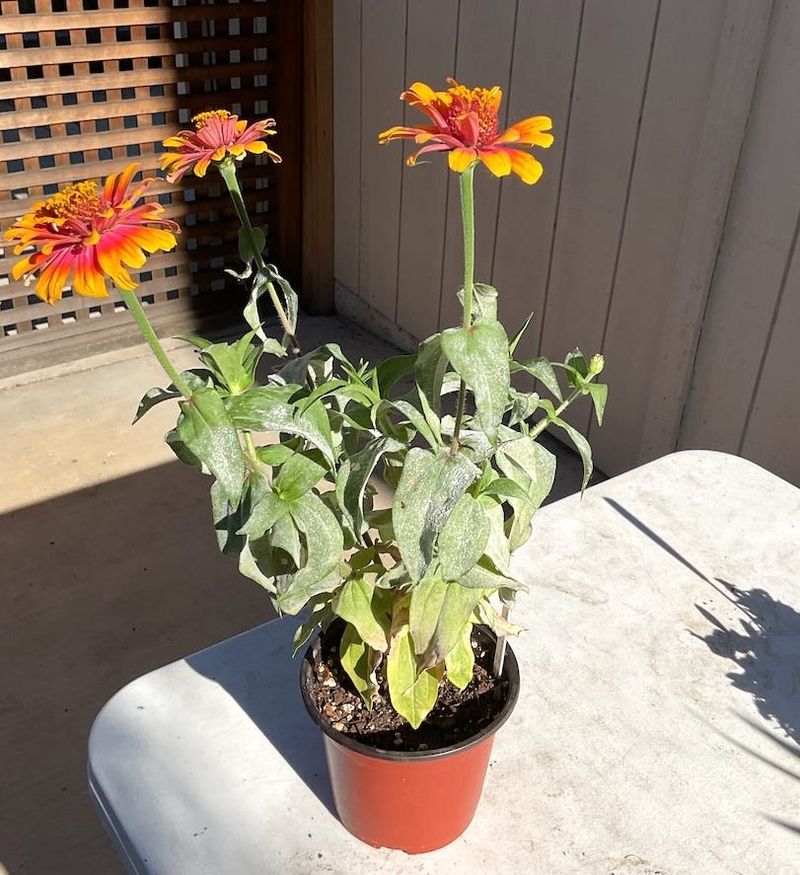
Not every mildew-affected zinnia deserves a rescue effort. A limited infection – where most leaves are still green and only a fraction of the foliage shows the white coating – is a reasonable candidate for cleanup and early treatment.
But the calculus changes quickly once the disease has spread across most of the plant. University of Minnesota Extension notes that powdery mildew often affects appearance without causing significant damage in mild cases, while severe infections can reduce growth, limit flowering, and cause extensive leaf loss.
Oklahoma State University Extension acknowledges that zinnia infections can become destructive under favorable conditions, particularly when bud damage and widespread defoliation occur together. At that stage, control becomes much more difficult, and repeated spraying on a heavily compromised plant is unlikely to produce meaningful results.
Stripping away most of the remaining foliage in an attempt to remove infected tissue can leave the plant with too little leaf area to sustain the blooms it is still trying to open.
For a late-season zinnia with few healthy leaves left, the most practical path is often to enjoy whatever blooms remain, then remove the plant after flowering is finished and clean up fallen debris from the bed. UC IPM supports this approach for annuals near the end of their season, where the cost of continued treatment outweighs the benefit.
Powdery mildew on zinnias is not a reason to panic, but recognizing when the plant has passed the point of a reasonable rescue saves time, money, and effort.
Choose less-susceptible zinnias for future plantings
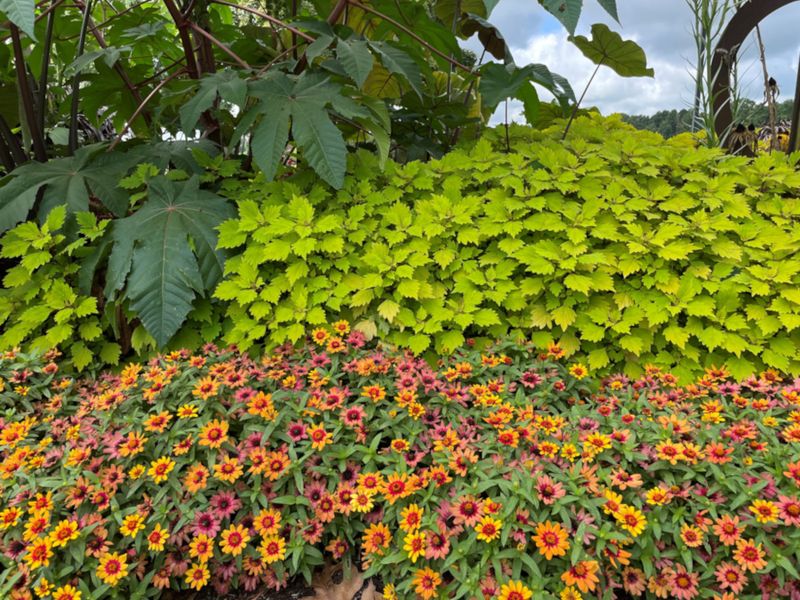
The most durable solution to repeat powdery mildew problems is selecting zinnias that are less likely to succumb in the first place. UC IPM lists Zahara and Profusion among zinnia varieties described as more resistant to powdery mildew, and Clemson Extension similarly identifies Profusion as having higher resistance to both powdery mildew and leaf spots.
Neither variety is immune, and research on zinnia disease resistance confirms that cultivar performance varies with disease pressure, local weather, plant density, and regional conditions.
Beyond cultivar choice, the basics of good site selection and bed management carry more weight than any single spray program. Planting in full sun, spacing plants far enough apart for air to move freely between them, and resisting the urge to push growth with heavy nitrogen fertilizer all reduce the conditions that favor mildew from the start.
These practices do not guarantee a disease-free season, but they shift the odds in the gardener’s favor before the first spore lands.
For this season’s plants, the decision is simpler: preserve a lightly affected zinnia with careful cleanup and early treatment if it still has plenty of healthy blooms and foliage worth protecting. For next season, start with a less-susceptible cultivar, give it room to breathe, and keep the soil fed moderately.
A garden built around the right plant in the right spot tends to need far less rescuing than one that relies on sprays to compensate for conditions the plant was never suited for.