
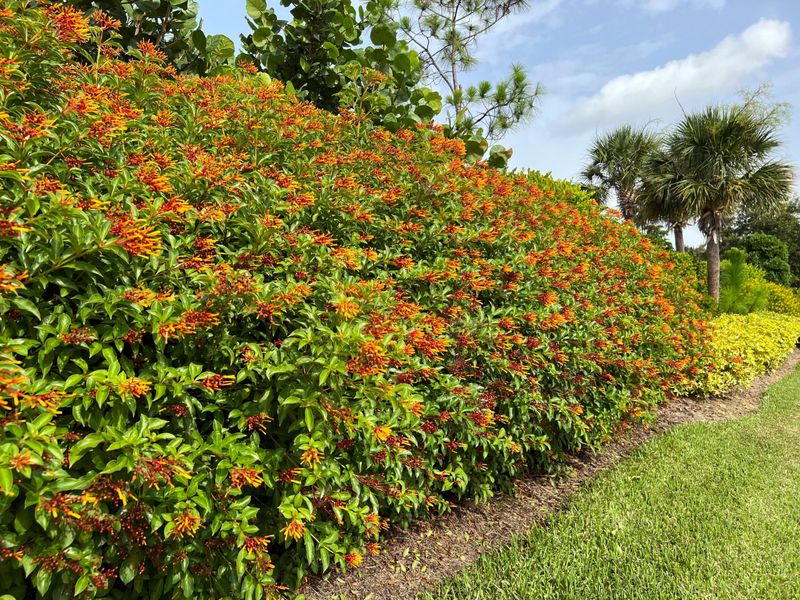
Areca palms can look full in spring, then open up just when you want privacy most. Florida native shrubs give you a stronger, more natural fence-line screen that handles sandy soil, storms, heat, and local wildlife better. Many also feed birds and pollinators instead of acting like a plain green wall. Here are seven native shrubs that can help you build privacy without the fall fade-out.
1. Simpson’s Stopper
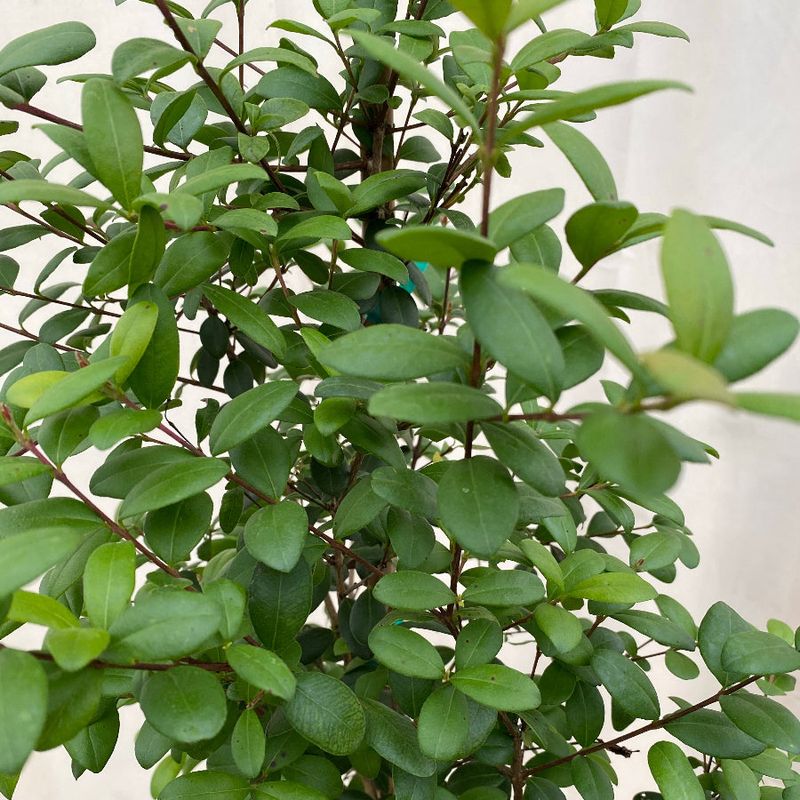
A fence line feels more alive when the screen brings in birds instead of just blocking the neighbor’s view. Simpson’s stopper does that with glossy leaves, small white blooms, and bright berries that birds notice fast.
For many Florida yards, this is one of the most useful native shrubs because it can be shaped into a neat hedge or allowed to grow looser and more natural. It usually reaches about 10 to 20 feet tall, depending on care and site conditions, so it can cover a wood or vinyl fence without looking stiff.
Coastal gardeners like it because it has good salt tolerance once established. Inland gardeners appreciate that it handles heat and typical sandy Florida soil better than many fussy ornamentals, as long as it gets water while young.
Plant Simpson’s stopper in full sun to partial shade, spacing plants based on how fast you want coverage. A tighter row gives quicker privacy, while wider spacing creates a breezier wildlife hedge. Unlike an areca palm that can look bare near the base, this shrub can keep leafy growth closer to eye level with light pruning.
2. Wax Myrtle
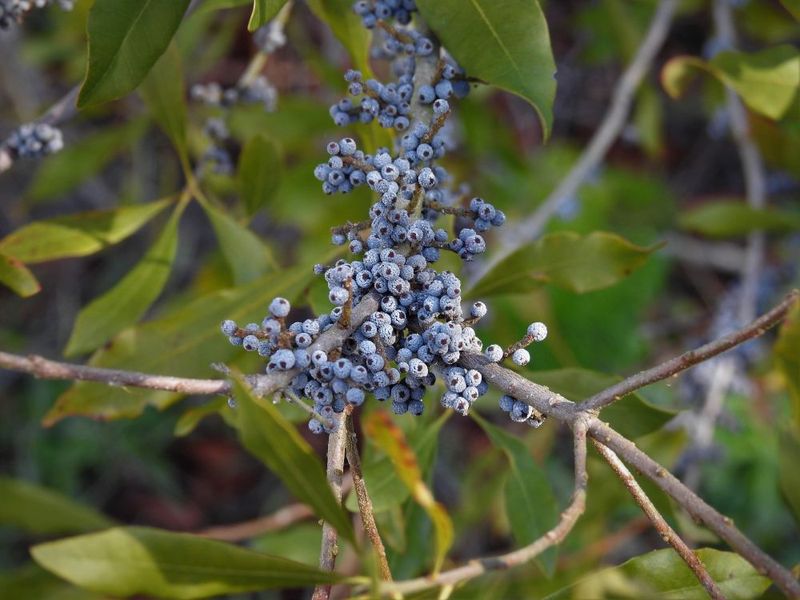
Need privacy in a hurry? Wax myrtle is the fast worker on this list, the kind of shrub that can make a bare fence feel less exposed before you forget what the yard used to look like.
Also called southern bayberry, wax myrtle is native across much of Florida and can grow quickly into a tall, informal screen. It often reaches 10 to 20 feet, sometimes more, and its fine-textured leaves give a soft look without the heavy, tropical feel of areca palms.
One practical bonus is its flexibility with wet and dry spells. Florida yards can swing from crispy sand to standing water after a storm, and wax myrtle is better prepared for that mix than many imported hedge plants. It also tolerates pruning, so you can keep it in bounds along a narrow side yard.
Birds are drawn to the waxy berries, especially in the cooler months when food sources matter. Give it sun for the densest growth, and avoid shearing it into a flat green wall every few weeks. A slightly natural shape is lower-maintenance and usually looks better after windy weather.
3. Florida Privet
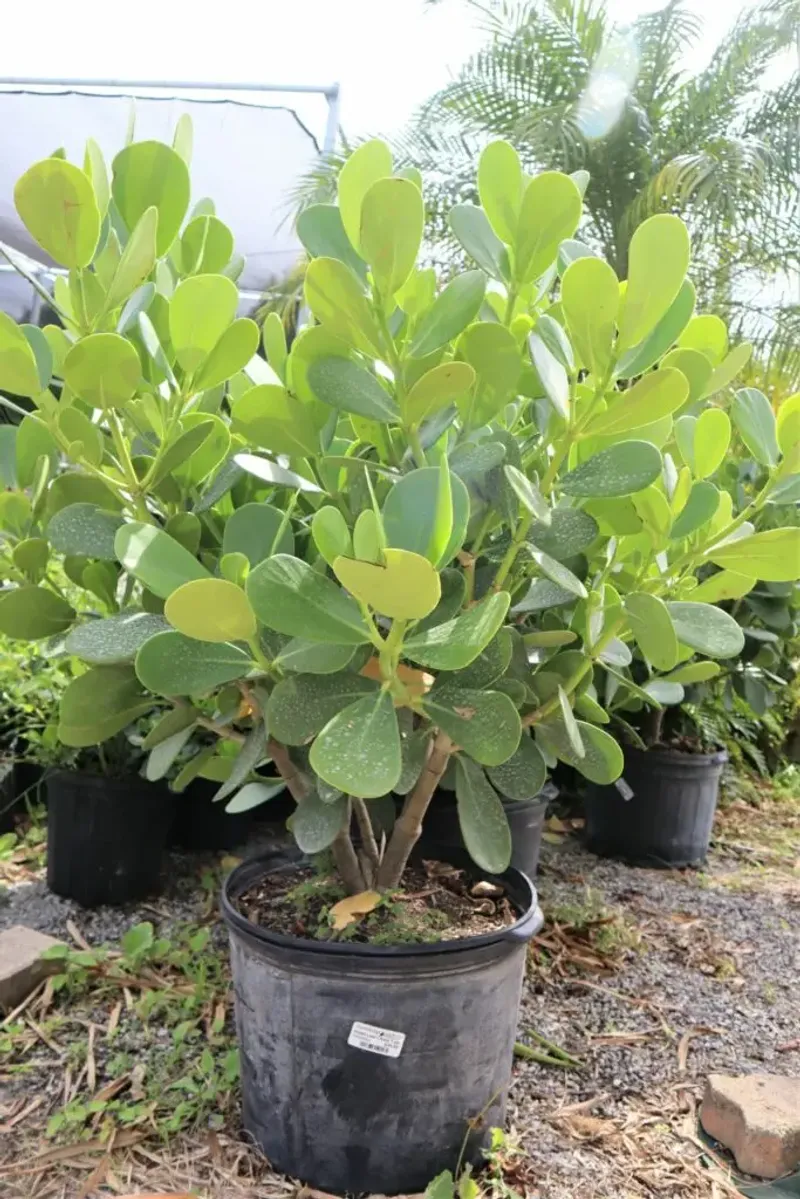
The name sounds almost too convenient, but Florida privet really does fit the job. It is a native choice for gardeners who want a cleaner, more hedge-like look without reaching for a high-maintenance exotic.
Florida privet, also known as forestiera, has small leaves and a naturally dense branching habit. That makes it useful where you want a screen that feels tidy near patios, pool cages, or side fences. It can be pruned into a formal hedge, but it also works as a relaxed native border.
This shrub is especially handy for gardeners who dislike the messy, top-heavy look that some palms develop. Because its growth is twiggy and layered, it can block views at standing and sitting height. That matters when the goal is privacy from a neighbor’s window or a busy sidewalk.
Florida privet performs best in sun to part shade and can tolerate dry conditions after it settles in. It is also a good fit for wildlife-minded yards, since its flowers support insects and its fruit can feed birds. For a strong fence-line screen, plant several in a staggered row rather than a single straight line if space allows.
4. Cocoplum
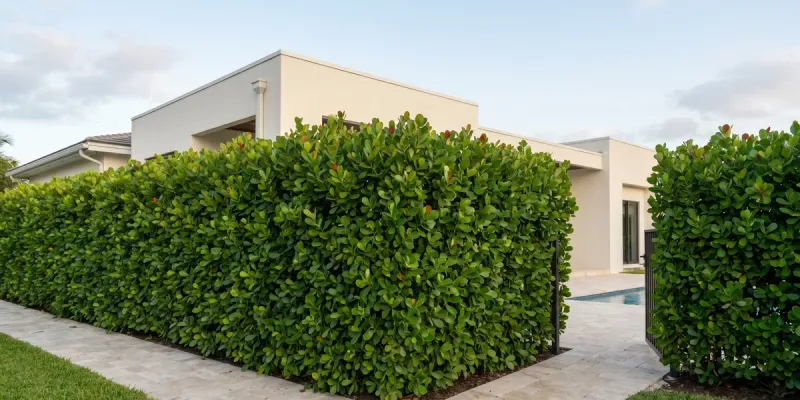
There is a reason cocoplum shows up around Florida neighborhoods, beach homes, and commercial landscapes. It looks polished without begging for attention every weekend.
Cocoplum has rounded, glossy leaves and can form a thick screen when planted in a row. The new growth may flush bronze, red, or pink, which gives the hedge more color than a plain green backdrop. In South Florida especially, it is a dependable native shrub for warm, sunny fence lines.
For privacy, choose the form that fits your space. Some types stay lower and wider, while others can grow tall enough to screen a fence and soften hard edges. With regular but not extreme pruning, cocoplum can stay dense from the middle down, which is where many palm screens start to disappoint.
Its fruits are edible for wildlife, and birds may visit when the shrubs are allowed to flower and fruit. Cocoplum also has good salt tolerance, making it useful near the coast. Give it full sun for the tightest growth, and water deeply during establishment so the roots can handle Florida’s dry stretches later.
5. Walter’s Viburnum
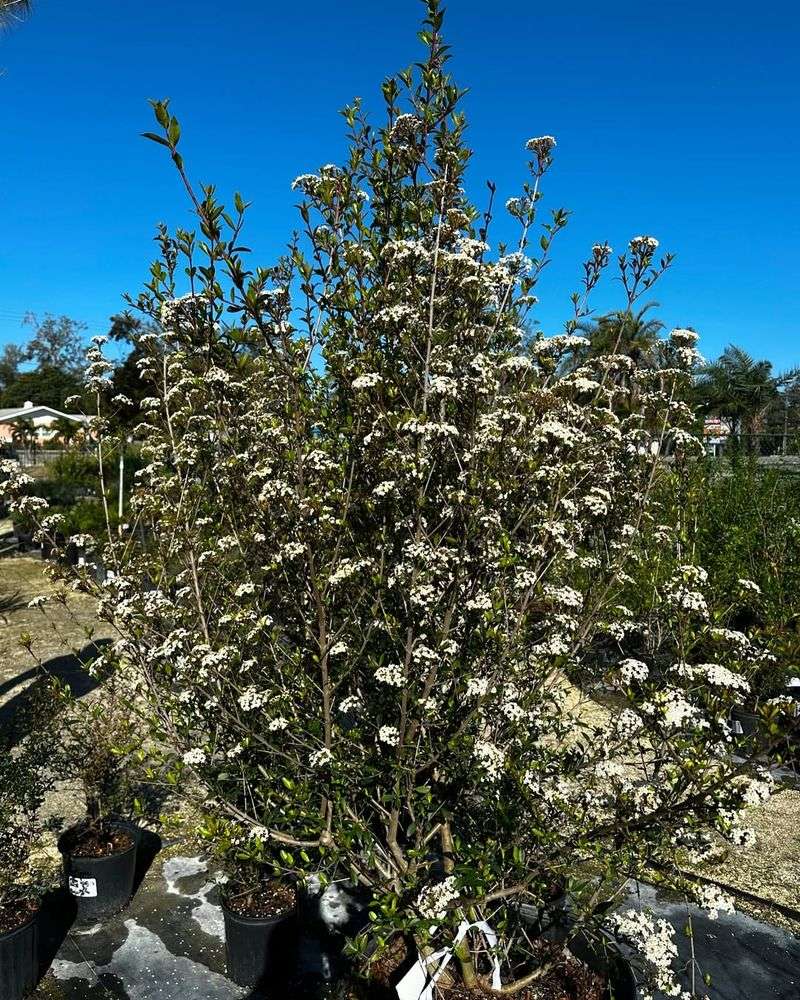
Spring can turn a privacy hedge into a little neighborhood event when Walter’s viburnum is in bloom. The white flower clusters bring bees and butterflies, then the plant goes back to being a useful green screen.
Walter’s viburnum is a Florida native with a lot of range in the landscape. Depending on the variety and pruning, it can be kept as a medium hedge or allowed to grow taller and more natural. Dwarf forms are better for low borders, while standard forms are the ones to consider for fence-line privacy.
What makes it stand out is its balance of beauty and structure. The leaves are small enough to create a dense look, and the plant responds well to selective pruning. Instead of hacking it into a box, thin and shape it so air can move through the branches before storm season.
It prefers sun to partial shade and does well in many Florida soils, though young plants need steady water while they establish. The berries can attract birds, giving your screen a second job beyond privacy. If your fence line borders a patio, this shrub offers a softer, more seasonal look than a plain palm row.
6. Marlberry
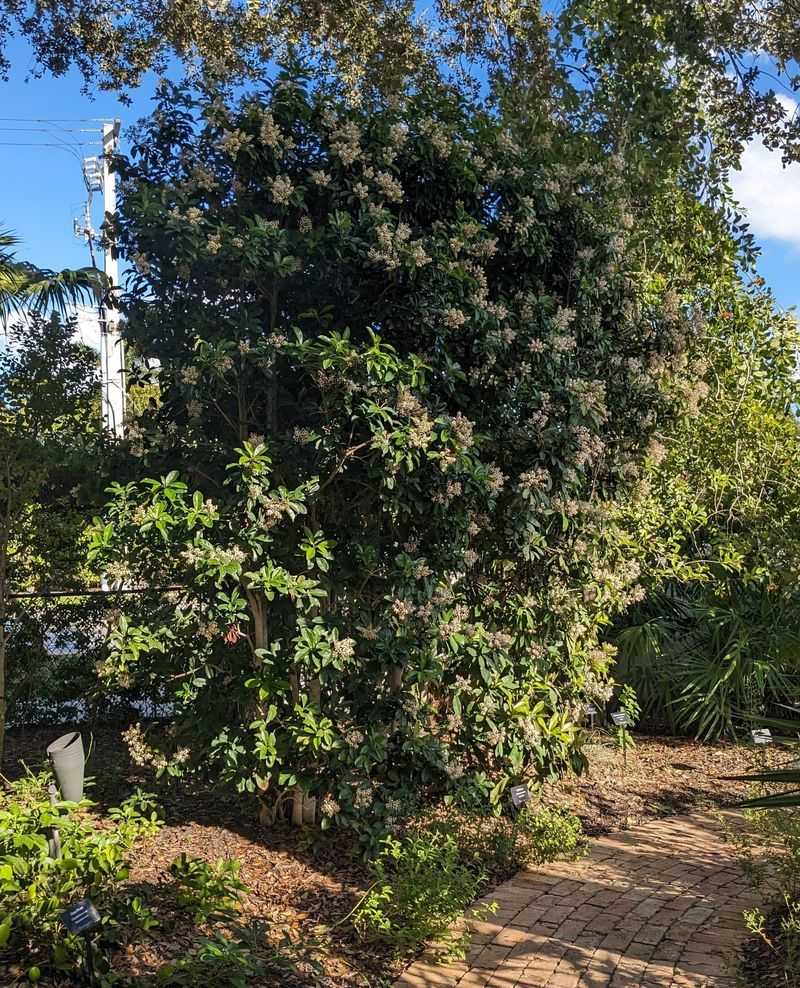
Shady fence lines can be tricky, and that is where marlberry earns its spot. While many screening plants sulk without full sun, marlberry can bring privacy to the darker edges of a Florida yard.
This native shrub has deep green leaves, fragrant white flowers, and dark berries that birds enjoy. It often grows as an understory plant in natural areas, so it is a smart pick along fences shaded by oaks, palms, or neighboring trees. In the right spot, it can reach screen-worthy height without needing constant fuss.
Marlberry’s look is more woodland than formal hedge. That makes it a good fit for gardeners who want a layered native border, not a clipped wall. Pair it with lower native plants near the front and taller shrubs behind it, and the fence starts to disappear into the planting.
Florida’s sandy soil can dry quickly, so mulch helps young marlberry plants hold moisture while they settle in. Once established, it is a practical choice for part shade and naturalistic landscapes. It may not be the fastest screen on the list, but it fills a role that sun-loving shrubs cannot always handle.
7. Seagrape
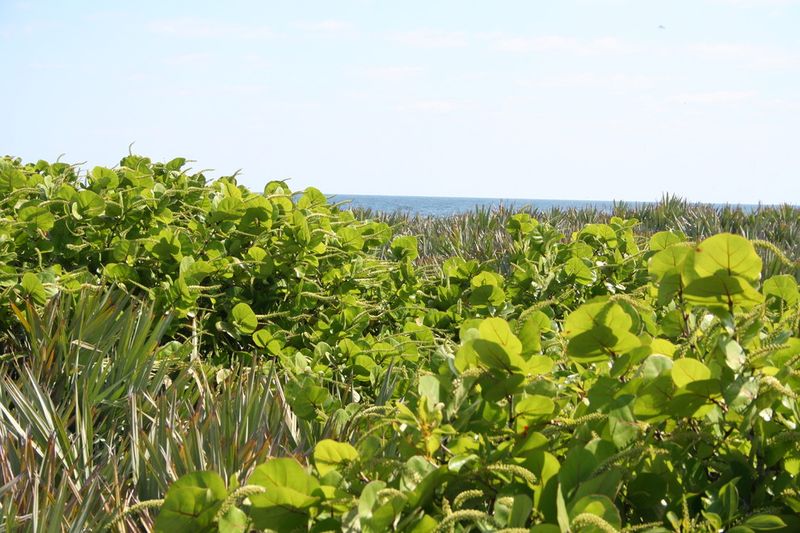
Big round leaves make seagrape feel almost architectural, like a living privacy panel with a coastal accent. For the right Florida yard, it can be bold, tough, and surprisingly useful along a fence.
Seagrape is best known near beaches, where salt, wind, and sandy soil can punish weaker plants. Its large leathery leaves block views well, and the plant can be maintained as a shrub or allowed to become more tree-like. That flexibility is helpful if your fence line needs screening above eye level.
Because seagrape can grow large, placement matters. It is not the best choice for a tiny strip between a fence and driveway unless you are ready to prune. Give it room, and it can create a strong native barrier that feels rooted in Florida rather than copied from a generic tropical landscape.
Wildlife also benefits from seagrape flowers and fruit, and the grape-like clusters add seasonal interest. Coastal homeowners may value its storm-tested toughness, but inland gardeners in warm areas can use it too where space allows. Prune selectively after fruiting or during active growth to keep the screen full without turning it into a hacked stump.